Calendrier de l'Advent - 13 December

Comment

Calendrier de l'Advent - 13 December

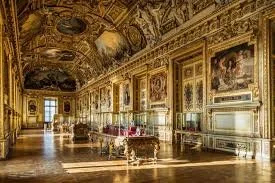
I couldn’t have an Advent Calendar dedicated to all my favorite things in Paris and leave out the Musée du Louvre, bien sûr. The famous museum known around the world is often skipped by tourists or they run into see a few of the most famous items, check off their list and onto the next thing. However, there is so much more to the Louvre than the Mona Lisa.

The Louvre itself began as a palace to the kings of France in the Middle Ages. Over time from each king changed it just a bit adding their own take until Francois I revamped the entire idea of the monarchy and the palace itself. Removing much of the medieval structure the Louvre that we know today began to take shape. Mostly left to his son Henri II to carry out, today you can admire the Salle des Caryatides on the ground floor of the Sully wing beautifully created by Jean Goujon and Pierre Lescot. Catherine de Medicis later added her touch with the Petite Galerie and the Palais des Tuileries and Henri IV would build the vast Grande Galerie connecting the two. Louis XIV famously started and left leaving the Louvre open to the rain of Paris and finally completed by the two Napoleon emperors.

el090560.orig_.jpg

Spending countless hours within the walls of the Louvre and studding everything I can get my hands on I can’t wait to share it all with you. Starting in January I will begin to give some live chats sharing all the history of those sacred walls.Are you interested in learning more about the Louvre, well beyond the Mona Lisa? Let me know in the comments.

Subscribe to my newsletter here on my website to keep updated.

Comment

Calendrier de l'Advent - 12 December

Comment

Calendrier de l'Advent - 12 December

Krystal Kenney isn’t just my podcast and livestream partner she is also an amazing photographer. When we aren’t in the middle of a pandemic and tourists aren’t roaming the cobblestones of Paris she is busy from sunrise to sunset taking beautiful photos of couples and families in Paris.

119455814_2175130492618784_634459440212376131_o.jpg

Since we can’t get there right now, you can bring a little bit into your home to hang on your wall to remind you of those carefree days in Paris. Now availible to print in ship from the US is a large collection of few of her gorgeous shots. Eiffel Tower, Sacre Coeur the beloved doors of Paris and so many more. It is the perfect gift for your loved one that is desperately missing Paris, or even for yourself. We all deserve a little something special this year.

https://missparisphoto.pixieset.com/printshopparis/

Comment

Calendrier de l'Avent - 11 December

Comment

Calendrier de l'Avent - 11 December

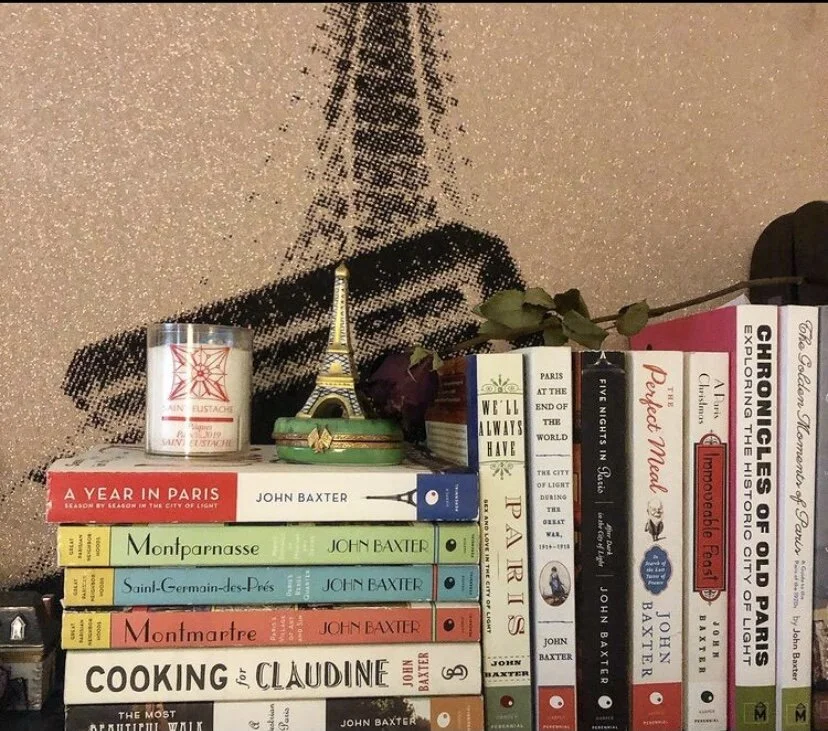
It's not hard to imagine that I spend a lot of time on reading everything I can on Paris and her history. Many years ago I came across The Most Beautiful Walk in the World written by Australian John Baxter and devoured it. It led me to find every book he wrote on Paris until one day I looked in the back of the book and found his website just in case there were any books I may have missed. In doing so I found that he also did literary tours in Paris. The thought of a guided walk with an author I admire was too much and signed up right away.

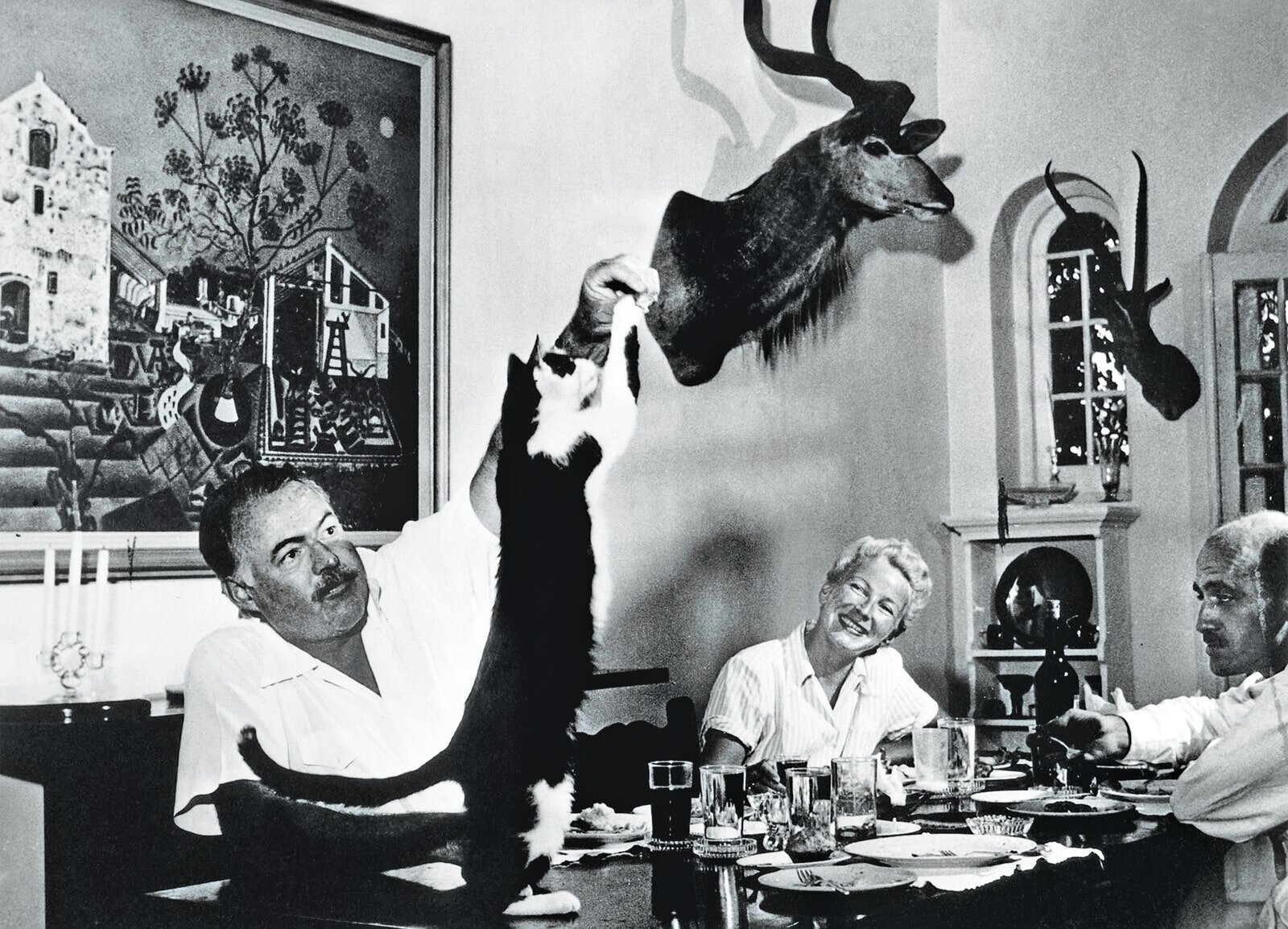
Taking a handful of fellow fans, John guides people through the streets of Montparnasse and Saint Germain des Près where the pages come alive before you. Each tour ends in his apartment with lunch and wine while you are surrounded by first editions of F. Scott Fitzgerald, and Hemingway. His apartment just happens to be located on Rue de l’Odeon where from his terrace you see the top of Notre Dame and as you look out you can imagine Hemingway on the same roof, taking out German soldiers that still held Odeon during the Liberation of Paris before he moved onto the Ritz and liberated many bottles of gin. Since that first tour, I never miss a chance to meet up with John, whether it is a long and lovely lunch at a tiny bistro to a quick coffee or wine in his historic building. For me, being in this building holds a huge significance from the generations long before me and walking in the footsteps of another Hemingway from long ago.

3D5DCB98-3056-40F4-B59D-92E78F1C96B4_1_201_a.jpeg

On my last visit John gave me his newest book, The Paris Men’s Salon, a collection of stories and his most personal book yet. Self published you too can grab one of these limited editions before they are gone, through his website. (link in my bio). I cherish every moment I can spend with John and has even become a mentor to me in my own writing. We can sit and talk about those old characters of Paris and I always leave him floating on air from such lovely chats.


Check out his website and his large library of books. Each and every one is fantastic.

John’s holiday book Immovable Feast is also our featured book the month for our La Vie Creative book club. Join the club now and at the end of the month on December 27th we will have a live zoom with the author himself.


Comment

Calendrier de l'Avent - 10 December

Comment

Calendrier de l'Avent - 10 December

Living in Paris, Landen Kerr fell in love with the lovely antiques found in the flea markets. The dainty flowered plates, delicate napkins and stunning crystal knife rests. Everyone needs a little touch of Paris on their table and Landen is bringing that directly to you.

During the confinement this year, Landen spent two months in Normandy where each and every day involved setting the perfect table for each meal. A ritual sadly forgotten in most American homes but kept alive on the tables of France. It only takes one or two beloved items to add to your table to take it up a notch. Many people keep these items locked away waiting for a special occasion, but there is nothing more special than each and every day of your life.

IMG-1804-1.jpg

After those weeks in confinement, Landen created La Porte Bonheur, her new adventure bringing these treasures to your home. Not only that, she has also held two auctions raising money for the beloved Bouqinistes of the Seine that need all our support so they can survive and continue to be a lasting imprint on the city of Paris.

Check out her website and auction at www.Laportebonheur.com

IMG-1806.jpg


Comment

Calendrier de l'Avent - 9 December

Comment

Calendrier de l'Avent - 9 December


On my second trip to Paris I stumbled upon Thierry Givone’s Wine Tasting Paris. Tucked into a small street of the Latin Quarter is his wonderful Wine Tasting Paris. Growing up in Dijon in the Burgundy region wine has always been in his blood and after a few years in the corporate world he decided to return to his roots. Opening in 2014, Thierry’s Wine Tasting Paris filled a void.

Thierry gives you all the tools needed to tackle any wine list like a pro. One of his classes is a Tour de France of wine, learning about each region the wine come from and the perfect pairing for each wine. Focusing on small independent producers, you will taste some wonderful handpicked wines and hear the stories of the wonderful winemakers behind them.

on-line.jpg

Like so many of us in 2020 Thierry had to switch his focus to online classes. In the comfort of your home you can have the perfect session with Thierry to prime you for your upcoming trip to Paris. When you are in Paris, be sure to take one of his classes and add on a cheese plate, because why not.

Check out his classes and website for more information.

Comment

Calendrier de l'Avent - 8 December

Comment

Calendrier de l'Avent - 8 December

Another wonderful person I have met through social media is Francophile Kim Godby. As a flight attendant for Delta, she is lucky enough to return to Paris multiple times a month. On her trips she scourers the flea markets for treasures to share with everyone in her lovely boutique My French Brocante located in Noblesville, Indiana.

127523072_1899414600214622_285970062397294491_o.jpg

Kim and I met through social media and my many stories of Paris giving her a moment back in her beloved city with each post. One day on Facebook she posted a photo of a croissant ornament painted blue, white and red with a touch of sparkle and I about died. Next thing I knew the ornament arrived at my door and now stays out all year long.

82888083_1754357654720318_2828932183032433794_o.jpg

Kim’s shop is filled with vintage hard to find items for your kitchen, dining table and walls as well as everything for your home you never knew you needed. With a sharp eye and a lover of the stories and history of each piece she creates a collection perfect for any Paris lovers home.

Check out my website www.claudinehemingway.com for links to her Facebook and Instagram where you can see her beautiful items and even order them.

Comment

Calendrier de l'Avent - 7 December

Comment

Calendrier de l'Avent - 7 December

Chef Véronique Bawol has the love of cooking running in her veins. Inspired by her grandmother and the classic dishes of France she enrolled in Le Cordon Bleu in London, but it was those early years that created her love of cooking.

Véronique began to cater events and parties and eventually started the Cuisine Elegante cooking school. Paris is filled with cooking schools and classes but Véronique’s offers something a little more special. Each of her classes involve a trip to the market and the streets of Rue Cler picking out each of the ingredients and return to her lovely kitchen to cook. Each class is followed by lunch dining over the fruits of you labor with your new best friends.

Veronique-85.jpg

Of course this year changed things and with an easy pivot Véronique took her classes on line into the kitchens of happy cooks around the world. She is also one of the nicest people you would ever meet and I am so lucky to have met her at a dinner party over some of her fantastic food. A fellow instructor for American Concierge and American Women’s Group, I couldn’t be in more lovely company.

Check out her classes on her website and when you can return to Paris, don’t miss a chance to meet this lovely lady.

ONLINECOOKING.JPG


Comment

Calendrier de l'Avent - 6 December

Comment

Calendrier de l'Avent - 6 December

I met Katrina Lawrence years ago through Instagram and we clearly shared a love of Paris. The history and stories hidden in so many of the streets begging to be told drew us together. In the spring of 2018 as fate would have it, we would both be in Paris at the same time resulting in a lovely stroll through the Parc Monceau.

Katrina, better known as Paris for Dreamers curates the most beautiful images of Paris even when home in Australia. Over the last few years she has written two books, Paris Dreaming: What the City of Light Taught Me About Life, Love & Lipstick a memoir about how her deep love of Paris came to be and Paris for Dreamers: Whimsical Walks Through the City of Light’s Delights. Each book is a wonderful trip through Paris for all the forced armchair travelers of 2020.

51stiNA6NtL.jpg

Check out her books and links to her website www.parisfordreamers.com and be sure to follower her on Instagram and Facebook for beautiful inspiration of Paris every day.

Hoping we are back together in Paris and chatting over glasses of champagne soon.

Comment

Calendrier de l'Avent - 5 December

Comment

Calendrier de l'Avent - 5 December

Everyone has been hit hard this year and one of the most beloved traditions in Paris was not immune. The Bouquinistes have lined the Seine for almost 200 years. With their Vert Wagon green boxes filled with books are as much a part of the landscape of Paris as the Eiffel Tower. I love to walk past them and stop and search through the books and even from time to time find a treasure you will never find in a book store.

Paris-Vu-Par-Les-Peintres-cover.jpg

The tradition dates back to the 16th century when the book sellers were mobile and forced from the Pont Neuf and under Napoleon the sellers became a fixture on the Quai's next to the Seine. In 1859 they were finally an official part of Paris and over the years a short list of stipulations were put into place. The boxes must all be painted the same Vert Wagon green and most sellers owned four boxes, with three that had to include books only. In the day of tourism, one box can include souvenirs. Today over 900 boxes belonging to more than 200 sellers brave the heat of the summer and the bone chilling cold of the winter.

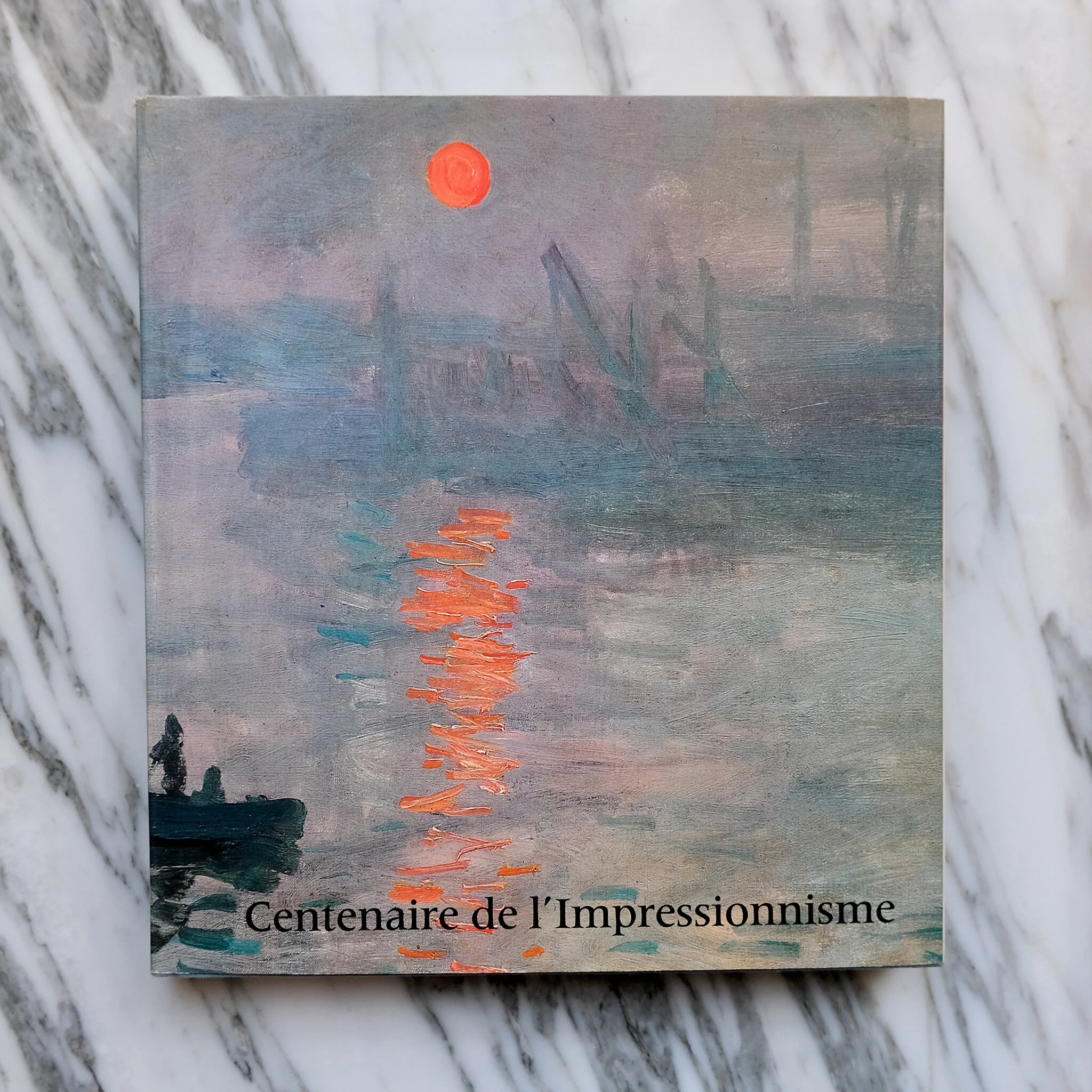
Centenaire-de-l-Impressionisme-cover.jpg

This year without tourists in Paris and the many lockdowns times are hard for the bouquinistes and we need to help save this beloved institution. Landen Kerr has organized a wonderful auction of some of these sellers favorite items that would make the perfect holiday gifts for all your Paris lovers. Make sure to check it out today and bid on a treasure that will help these humble quite fixtures of Paris.

Wonderful thing you are doing @pariswithlanden


Comment

Calendrier de l'Avent - 4 December

Comment

Calendrier de l'Avent - 4 December

My grandmother has always loved Christmas and decorating for it and it is something she passed on to me. This year I was excited to finally get my own decorations out of storage, it was like visiting old friends as I unwrapped each one. Years ago anytime my grandmother picked up a French theme ornament she also grabbed one for me. Sadly, she no longer decorates but I have taken on the task especially this year to recreate those magical moments. As I put up the tree I call her and ask her about many of the ornaments and their stories. Even at 98 years old on this very day, she remembers every single story.

IMG-1766.jpg

Now as I unpack my own ornaments I have double of many and enough Eiffel Towers to cover the real one, but I adore each and every one of them.

Luckily for all of us in the age of the internet we don’t have to wait until we return to Paris to add some beauties to your tree that remind you of walking down those cobbled streets. I have found a few for al the Paris lovers out there that you can add to your own tree and give you a special little reminder of a perfect day you spent in Paris.

IMG-1769.jpg

Comment

Calendrier de l'Avent, 3 December

Comment

Calendrier de l'Avent, 3 December

One of my favorite restaurants in Paris is just a short walk from the Musée du Louvre and Palais Royal. Willi’s Wine Bar has been in Paris for FORTY years, opening in 1980 it has been a staple of the first arrondissement and all those that have fallen in love with it.

Mark Williamson has put his heart and soul into making it a relaxed bistro with exceptional food and bringing one of the first wine bars to Paris. I have enjoyed Willi’s many times and it is a place I never miss and always pass onto travelers looking for a wonderful meal. The menu changes but you will no doubt find something delicious and don’t forget the wine. Mark and his staff curate the wine list with exceptional wines that may be new to you but ones you will always remember.

IMG-1742.jpg

In 1983, Willi’s began making a yearly poster with local artists that are inspired by wine and all the beauty that comes from a bottle. Past artists include one of my favorite Jean Charles de Castelbajac in 2005, Cathy Millet in 1986, Jacques de Loustal in 2004, Petronille in 2018 and MH Jeeves in 2016. You can purchase all of these wonderful photos at their website. These posters are so popular they are sometimes spotted on CNN in the background of the now normal in home studios.

https://shop.williswinebar.com/the-bottle-art-collection/?sort=featured&page=4

IMG-1737-2.jpg


My favorite of all the posters is the masterpiece by Anthony Palliser where used Delacroix’s Liberty Leading the People as inspiration.

IMG-1739.jpg

Earlier this year Mark released a book dedicated to the first 40 years of Wili’s. Immoveable Feast, 40 Years of Feeding the French covers the tales from the bar, recipes and many of the images from the posters. Check out the book and posters on their website. I can’t wait to get back to Paris for a long leisurely lunch and flip through this masterpiece.

IMG-1745.jpg

Make sure you add Willi’s Wine Bar to your list of must visit places. Open for lunch and dinner, 12h-14h and 19h-22h at 13 Rue des Petits Champs.

IMG-1740.jpg
IMG-1743-1.jpg

Comment

Calendrier de l'Avent, 2 December

Comment

Calendrier de l'Avent, 2 December

Molly Wilkinson decided to leave Texas and head to Paris to go to culinary school in 2013. Enrolling in Le Cordon Bleu just like another American, Julia Child did many years before. A return to Texas but the never ending pull to Paris had her on a plane and heading back to the city of pastries.

Sharing the love of pastries in an engaging and adorable way she gave classes around France and in her Versailles apartment until the pandemic hit. With a perfect pivot she brought all her wonderful classes straight into your kitchen anywhere in the world. Every month Molly gives lessons in sweets like Macarons and Bûche de Nöel and savory wonders like soupe a l’gonion.

Out now is her list of classes for January that include Gallette des Rois, just in time for the Epiphany and even a Croquembouche with all it’s wonderful choux puffs and pasty cream. Check out all her classes at mollyjwilk.com, perfect gift for your pastry loving friend.

And coming soon a Molly cookbook! Can’t wait to get my hands on that one.

check out all her upcoming classes before they sell out.

126025687_10103244106571404_7487865592222498543_o.jpg


Comment

Calendrier de l'Avent, 1 December

Comment

Calendrier de l'Avent, 1 December

Starting today and all through Christmas I am going to share with you some of my favourite books, restaurants, art and people inspired by Paris. I have a long list ready to go and can’t wait to share all of these wonderful things with you.

Kicking off the first day of December I couldn’t be more excited to celebrate the premier of my podcast partner and wonderful friend Krystal Kenney’s brand new, hot off the presses book released today! Paris, A Life Less Ordinary: A Memoir is a wonderful book, not just for lovers of Paris but for anyone looking for some inspiration in this nutty time. I was lucky enough to read a sneak peek of the book and I absolutely loved it. Krystal has a wonderful way of telling her story mixed with light hearted and funny moments as well as the harder trials of moving to another country.

The Kindle version is available today and the paperback is coming soon. Grab a copy today and sit back and read every single fantastic word.


Comment

Hemingway and Miró's The Farm

Comment

Hemingway and Miró's The Farm

When Ernest and Hadley Hemingway first arrived in Paris and met Gertrude Stein, she advised the young couple to spend their money on art. Stein and her brother Leo had been collecting art since they arrived in Paris in 1902 and had amassed quite a collection that included Matisse, Picasso and Cézanne. Hemingway took her advice but didn’t have a lot of money to spend and couldn’t afford any of the masters. Stein advised him to buy art from his contemporaries and suggested he look at Joan Miró. 

Stein took him to the studio of Miró and André Mason on Rue Blomet where he watched the two painters. Mason was known for his landscape paintings and card scenes and Hem took a shine to them right away and purchased four paintings including Le Coup de Dés. Mason would later ask to borrow it back for his one man show held on a snowy night at the Galerie Simon. Hem gladly allowed it and on the night of the show he and Hadley attended to proudly see their piece and also support their friend. The plaque on Le Coup de Dés,  said “loaned by M Hemmingway”, annoyed his name was spelled wrong. (It is a long family annoyance for sure) 

In April 1925 on a visit to Miró’s studio he first saw this painting, The Farm. It spoke to him in a way that a painting had never done before and he constantly thought about it. On June 12, 1925 Hem & Hadley went to Miró’s one man show at the Galerie Pierre. When he saw the painting again it said it belonged to Evan Shipman, which crushed him. At 3500 francs was far too expensive for the couple living off her inheritance from her uncle but that didn’t stop Ernest. That night he had an advance check in his coat pocket for $200 that was to pay for their summer in Spain. That night a  roll of the dice or a flip of a coin with Shipman giving the winner the chance to buy it, gave Shipman the advantage. He saw how much Hem wanted it and neither man could afford it, but he relented to his friend and let him purchase it.  The next day he visited the gallery and offered him 500 francs to put down on the painting. 

Hem would stop by and give the gallery a little bit of money, chipping away at the total owed until September 30, 1925 when he finally paid it off. However, not before visiting his friends and the bars of Montparnasse asking for a few francs from each person to complete the transaction. Hemingway wanted to get it in time for Hadley’s 34th birthday on November 9. And that is the most important part of this entire story.  The painting hung above their bed at 113 Rue Notre-Dame des Champs as a reminder of better times in their lives when they were in Spain. 

hemingways-miro-oct-18-embed03.jpg

Miró’s The Farm was a landscape of his family's home near Barcelona in Mont-roig del Camp painted in 1921. It was his personal love letter to a place he loved carried out in every paint stroke. The painting was 4 x 4 feet and was one of his best pieces he had done to date. When he arrived in Paris he brought it with him and showed it to an art dealer that told him he should cut it up into smaller pieces to sell. There was no way he would do that and held onto it for five more years. 

When Hemingway and Hadley split up the next year in 1926, she told him to keep it but he told her it was a gift to her for her birthday and he wanted her to have it. It would remain with Hadley and her second husband Paul Mowrer and return to Illinois with them in the 1930’s.  While still in Paris the Galerie Pierre attempted to purchase it back for a large profit. Although, Hemingway replied to them and said NO and to “shove the $1000 up their ass”.  Hadley and Paul did loan it to the Art Institute of Chicago for many years until Galerie Pierre asked yet again to borrow it on behalf of their art dealer in New York. Asking Hemingway and not Hadley again, but this time he said yes. Hadley had it sent to New York but would have no idea it would be the last time she ever saw it again. 

After the loan, The Farm was returned to Hemingway in Key West and not Hadley. When Hem and Martha Gelhorn set up their home in Cuba, he brought the painting with him hanging it on the wall of the dining room. 

hemingways-miro-oct-18-embed02.jpg

In 1958 he agreed once again to loan it out this time to the Museum of Modern Art in New York but getting it out of Cuba was another story. The MoMa planned to send a curator to Cuba on January 4, 1959, but little did they know Cuba was going to collapse and fall into a revolt on the final day of 1958. Hemingway called it off and after a few weeks of negotiation he acquiesced and let them try again only if they promised that  if it was destroyed they would compensate him for it. On February 1, Curator David Vance arrived in Cuba and had located an armored truck that would take them to the Finca Vigia, obtain the painting and return to the airport. A special crate was created and sent ahead, but arrived in Panama instead of Cuba along with the customs paperwork. 

Getting it to the airport through the roads and paths that had been destroyed was a harrowing experience and they thought they were in the clear with the painting in hand sitting on the plane. About to take off, Cuban soldiers sped down the runway and stopped them removing the painting and not allowing them to take off. The museum was able to convince the embassy that the painting was on loan and would return on a specific date, but it never would return to Cuban soil. 

With the painting safely at the MoMa, curators looked at it and saw what horrible shape it was in. The paint had faded and cracked and mildew from its former tropical home was moving through the canvas. Hemingway’s fourth wife Mary had told them it was in great condition, which would later cost Hemingway over $1500 that he personally had to pay to restore it. She was livid they were forced to pay for it and said it was their fault. 

The painting was on loan to the MoMa’s permanent collection at the time of Hemingway’s death in July 1961. In December of that year Hadley & Paul Mowrer sent his widow Mary a letter asking for the painting that belonged to Hadley returned. Mary was outraged and said that the painting belonged to Ernest and in a letter to her lawyer was shocked that the Mowrer’s even had the nerve to ask. 

1*Wa0rFwUtATnTOPTn3eQpLQ.jpg

A year after his death Paul and Hadley decided to take Mary and the estate to court for the painting that rightfully belonged to her. Once they contacted the MoMa and let them know, it forced the museum to hold onto the painting until the legal proceedings concluded. Hemingway being a pack rat and saving every single piece of paper he ever touched. Mary had someone go through his papers to see if there was anything that mentioned Miró’s The Farm. Valerie Hemingway had found a letter that Hem had sent to Hadley asking her if he could borrow it for 6 months and he would return it afterwards because it belonged to her. Hadley and Hem had a close relationship until the end of his life. He frequently confided in her and asked for her advice and they was always a steady stream of letters between them. 

When Mary found this letter with the proof of ownership of The Farm, she destroyed it. 

Wanting to end the fight and legal battle the Mowrer’s settled with Mary in 1963 resulting in a payout of $25,000 that Mary begrudgingly paid, which was less than 10% of the current value of the painting. Mary was a constantly angry woman and when she knew how the MoMa responded to the lawsuit and didn’t side with her she threatened to loan the painting to another museum. 

She had no intention to let them keep it and wanted it for her new apartment in New York to once again hang in her dining room. It had been five years since it left Cuba and two years since it’s biggest fan took his life. The MoMa asked yet again to borrow it for a Miro retrospective, Mary of course said no, she was keeping it. However, she would allow the National Art Gallery to display it in 1976 which I am sure irritated the MoMa. 

She had never gotten past her belief that the MoMa ruined it and in her will she made sure they would never see it again. In 1986, when Mary died she bequeathed it to the National Gallery with one stipulation, it had to name her Mary Hemingway as the donner. It still hangs in the National Gallery of Art with her name, who was never the rightful owner. 

joan-miro-the-farm-1922-print-L-21788-fn5_30x27.jpg


Comment

Favorite  French Cookbooks

Comment

Favorite French Cookbooks

As we begin to settle into the long dark days of autumn and winter and dream of the days filled with cherry blossoms, it is a great time to pull out the cookbooks. Of course I mean the French cookbooks. Nothing sounds better on a cold dark night then a hot bowl of Boeuf Bourguignon as authentic as you can get paired with some French wine and a crispy baguette, bien sur. 

There are a lot of French cookbooks out there but I wanted to share some of my favorite time tested and a few of my favorite recipes. From Julia Child to François-Régis Gaudry. 

You can never have a list of French cookbooks without mentioning the queen, Julia Child. Her entire catalog of French cookbooks are great but there is only one Mastering the Art of French Cooking, ok we can say two since there are two volumes. Julia is my go to every time I make Boeuf Bourguignon, quiche and they always turn out delicious. 

IMG-0681.jpg

Ina Garten’s Barefoot in Paris is filled with the classics and a few adaptations. Who doesn’t want to transport themselves into her idyllic life with her charming husband Jeffrey and their beautiful apartment in Paris. The Provencal Vegetable Tian is easy, tasty and a show stopper on any table. I have been making this for years and it’s so delicious, come to think of it, I need to make that this week. Other favorites include the Gougères, those perfect little puffs of cheesy goodness. Pissaladière, the delicious combination of caramelized onions, Niçoise olives and anchovies, perfect with a glass of rosé any time of the year. 


Long before Anthony Bourdain opened up the world for us, he was a chef at the French restaurant Les Halles in New York City. In 2004 he wrote Les Halles Cookbook about many of the classic French dishes with a small twist. Each recipe is written in his voice, which I adored when I first bought over fifteen years ago and love even more now that he is gone. Bourdain’s recipe for escargot is my go to every time, it’s a pretty easy thing to make but you must read what he wrote about them, classic Bourdain. Soupe à l'oignon, salade Niçoise and steak tartare can help fill that void in your heart and stomach while away from Paris. 

51l+fsxYrqL._SX378_BO1,204,203,200_.jpg

Dorie Greenspan normally spends her time writing lovely baking books, but back in 2010 she published Around My French Table. Living in Paris and very close to my beloved L’Avant Comptoir I ran into one day while having lunch. I got the nerve up to say hello and tell her how much I loved this specific cookbook. She was as lovely and gracious as one would imagine. Every page of this book is a highlight but a few of my favorites include Gérard’s Mustard Tart, Moules Marinière, Skate with Capers, because everything is better with capers and how about some Speculoos to transport you to a terrace with your afternoon café. 

The Country Cooking of France by Anne Willan is a beautiful book that could also be left on your coffee table. Anne captures all of the specialties from every corner of France. When I was doing the Tour de French Cuisine many years ago her book was always nearby. Not only does it have beautiful recipes but it is also filled with stories on the regions, chefs and history of many of the dishes. If you had to choose one book about classic regional French cooking, this is the one. 

51p54qV6agL._SX353_BO1,204,203,200_.jpg

Délicieux, the Recipes of France by Gabriel Gaté. In this book Gabriel also showcases many of the dishes of France. I love how for each recipe he also included where the dish was originally from and in French. Canard grillé, pommes de terre sautées, salade frisée from the Languedoc region is divine. Poulet de Bresse aux morilles and for the perfect winter treat, Fondue les Alpages. All of his books are fantastic and beautifully compiled and can be found in French and English. 


Another baker we all love David Lebovitz also turned to writing a book about the classic French dishes in My Paris Kitchen. Poulet à la Moutarde, Gratin de Pommes de Terre au Bleu et à l’Ail Confit and when I need to pretend I am back at l’Avant the Salt Cod Fritters take me right back to the zinc bar. And for dessert lovers, have no fear, because it is David and he loves desserts, the Tarte au Chocolat et Confiture de Lait is perfection. 

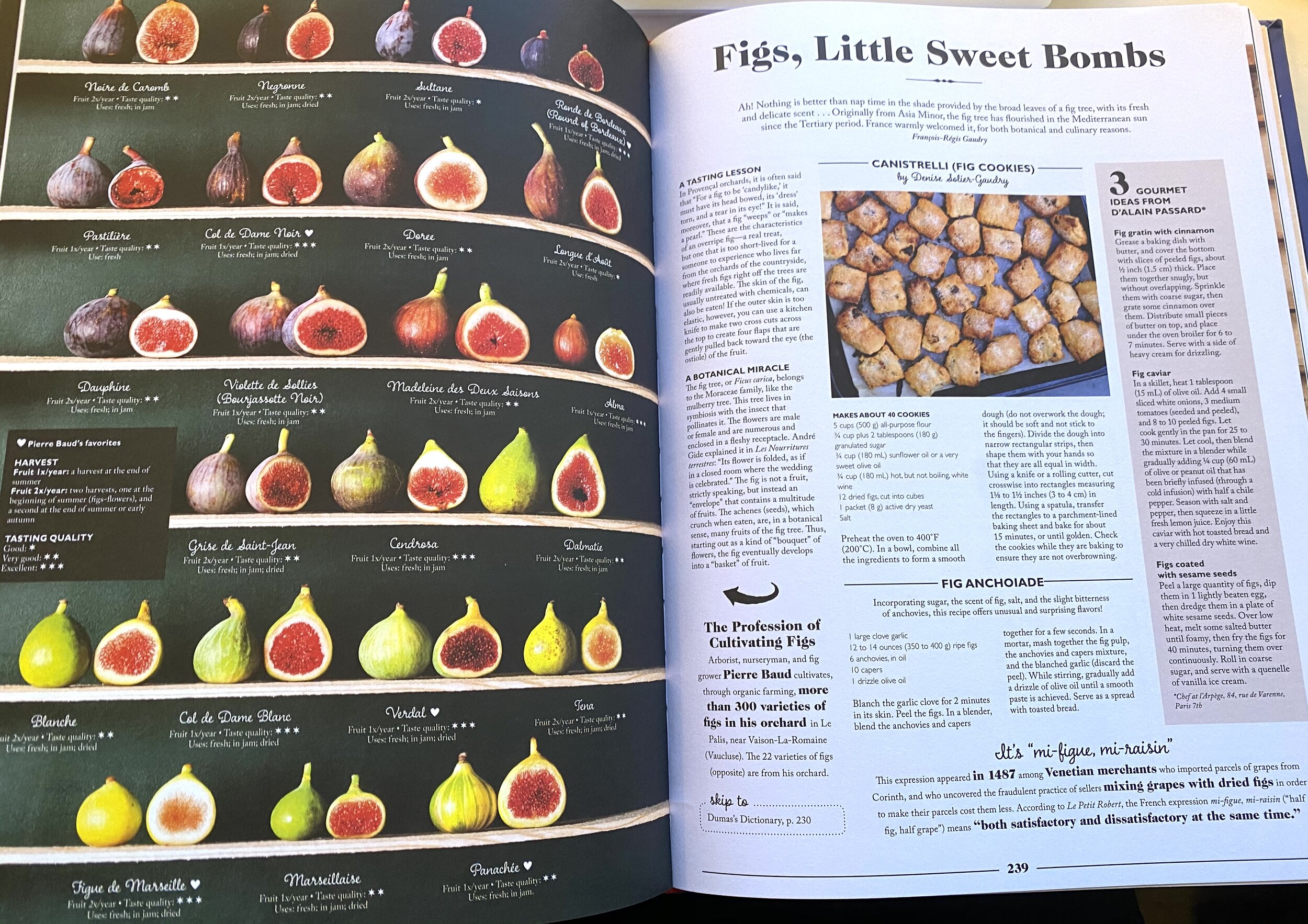
One last goodie is François-Régis Gaudry and Friends is Let’s Eat France!. This is the kind of cookbook you can curl up in bed with. Not only does it have great recipes it also has cocktails,  everything you want to know about French wine, and the great chefs of France, and that is just the start. Even my favorite Yves Camdeborde contributed. Nothing is missed in this amazing book, a must for any Francophile.

IMG-0675.jpg

Find all of these and more in my Boutique

Comment

Le Modèle Noir an exhibition  long overdue

Comment

Le Modèle Noir an exhibition long overdue

Spring of 2019 the Musée d’Orsay held a long awaited and amazing exhibition, Le modèle noir. Giving a voice to the black models that have been depicted and “invisible” in some of the most recognizable pieces of art and also gave them a name. The first exhibit of its kind, looking back through three major stages of history. The abolition of slavery from 1794-1848, era of new paintings of Manet, Bazille, Degas and Cézanne and the early 20th century avant garde. Giving a long awaited moment to one of the most overlooked and ignored members in art history. 

Théodore Géricault, Etude d’homme, d’après le modèle Joseph

Théodore Géricault, Etude d’homme, d’après le modèle Joseph

Théodore Géricault one day visited the acrobatic troupe of Madame Sagui in 1818. Géricault spotted a strong young man and asked him to come to his studio. Joseph was  born around 1793 in Saint Domingue, he arrived in Marseilles before finally moving to Paris. Working as an acrobat, learning how to control his body and stand he would make a  perfect model. Géricault would use Joseph as the central figure of his monumental Raft of the Medusa, standing on the raft bare chested and waving a scarf, a sign of salvation and hope. In his early studies of the Raft he only had a black model, the central figure, as it was accurate to the historical event. In his final piece it now included Joseph and two other black figures. It was Géricault’s way of stating his feelings and capturing his solidarity. 

Gèricault, Etude de dos pour Le Radeau de la Mèduse

Gèricault, Etude de dos pour Le Radeau de la Mèduse

Géricault painted him many times including a portrait. Until now many of these paintings were titled, “portrait of a man”. However after the diligent work of art historians that can now give them a name. Joseph is as recognizable as Victorine and should be. Joseph would also model at the Ecole des Beaux-Arts from years where many other artists would find him and would sit for Theodore Chasseriau as well. 

Première esquisse pour le tableaus exposé au Salon de 1819

Première esquisse pour le tableaus exposé au Salon de 1819

Marie Guillaume Benoist painted Portrait of a Black Woman in 1800. The painting of the beautiful woman, that was never given a name when the artist was alive hangs in the Louvre. Madeleine, born in Guadeloupe was an emancipated slave and arrived in Paris to become the domestic servant in the home of the artist's brother in law. Madeleine with the piercing glance exposes a breast, a symbol of slavery. I wish the artists felt it was more important at the time to give these images and the model the respect of a name. 

Marie-Guillemine Benoist, Portrait de Madeleine

Marie-Guillemine Benoist, Portrait de Madeleine

Jeanne Duval, a woman of Haitan heritage, was involved with poet Charles Baudelaire for close to twenty years. She was his muse and inspiration for Flowers of Evil and Spleen and Ideal, and their relationship would make it onto the pages of A Phantom and Exotic Perfume. Their relationship was dramatic most of the time, filled with public arguments. His “vénus noire” and “mistress of mistresses” was never far from his side. When she became ill, he took care of her and paid for any doctors she needed.  Manet would paint her on a couch in Baudelaires home in 1862. In Courbet’s l’Atelier du peintre he painted his poet friend Baudelaires and Jeanne Duval into the corner. Through restoration over the years her silhouette has been uncovered from overpainting. 
Edouard Manet, Jeanne Duval

Edouard Manet, Jeanne Duval

One of the most recognized paintings of Manet, is surely Olympia, the painting that caused quite a stir at the 1865 Salon. The naked woman was a usual subject in art as far as we can go back to cave drawings but it was the look on Olympia’s face, the pose of her body and the implied job that she has that made a few turn their heads in disgust. Manet painted Le Déjeuner sur l’herbe the same year as Olympia and used the same model for both, Victorine Meurent . Victorine as Olympia is laying on a bed of crisp white sheets and oriental shawl beneath her, with a beautiful heeled slipper on, one discarded and laying on the bed. The flower behind her ear, the gold bracelet on her arm and the black ribbon and jewel hanging around her neck all give the impression of a seductive and wealthy Parisian courtesan. For Olympia, Manet gave every aspect of the painting the same importance. The cat, a symbol of prostitution, the gaze on her face that seems to say “next” and the bouquet flowers that are just as vibrant as the oriental shawl beneath her naked body.  For over one hundred years, it has always been known simply as Olympia, with no name given of her maid that is presenting her with flowers from what we assume is a client. The exhibition finally gave her a name, Laure. Laure posed for Manet three times after metting him while walking through the Jardin des Tuileries. Her name is only known today from a diary Manet kept, and only her first name and her address in Paris. “Laure, very beautiful black woman, 11 rue Vintimille 3rd floor” written around 1862. 

Manet, Olympia

Manet, Olympia

However it was Manet that painted her and gave her the “invisibility”, but with Laure we get a better impression of what the entire painting is trying to tell us. With the addition of Laure, Olympia now has high social standing as a courtesan. Laure presents the flowers of her gentleman caller, giving a slight bow as she enters the room. 

Frédéric Bazille, Jeune Femme Aux Pivoines

Frédéric Bazille, Jeune Femme Aux Pivoines

Frédéric Bazille would also use, we assume Laure in two paintings he did in 1870. Young Woman with Peonies, a closer look at Laure’s beautiful face. Bazille had taken a page from Manet’s book with his painting La Toilette that also enraged the Salon with its strong impression of Olympia on Bazille. 

Cézanne Une Moderne Olympia

Cézanne Une Moderne Olympia

Olympia, the painting that shocked Paris would stay in the procession of Manet hanging in his studio until his death. Claude Monet would purchase it from his widow, Suzanne and give it to the Musée du Louvre. An image many know so well, went from the hand of one master to another and then lucky for us, on view to share with the world. It’s breathtaking to see up close and no wonder it has been copied many times by other artists including Cézanne. Cézanne took a spin at Olympia with a behind the scenes glimpse before Manet took to the canvas. 

IMG-3623.jpg

The Orsay did an amazing job with Le Modèle Noir and gave names to the beautiful faces long forgotten in the art world and their stories that should be told.

Comment

Dante's Divine Comedy in Art

Comment

Dante's Divine Comedy in Art

Dante’s Divine Comedy would be published in 1472. Dante spent more than 12 years writing the narrative poem and finished it in 1320 less than a year before he would die. Recanting the three levels of afterlife, Inferno (hell), Purgatory and Paradise (heaven) he follows the characters as they navigate their destined ending. Many have been moved by Dante’s piece including many artists. In Paris you can find him in the museums and even on the streets. Around 1307, for two years Dante attended the University of Paris living in the 5th, not far from the street that now holds his name. Walk a few blocks towards the school and in the Place Marcellin Berthelot you will find the bronze statue of him by Jean-Paul Aubé complete with his signature laurel wreath. 

IMG_1371.jpg

In 1822, Eugene Delacroix completed his first major painting. Dante et Virgile, that now hangs in the Louvre, shows the poet and his trusty guide Virgile on a boat crossing the River Styx while the City of the Dead burns behind them. Dante stands in the boat while Virgile holds him as the waves and the wind are crashing around them. At their feet the damned can be seen fighting for life or resigning to their fate. Pulling the story from the 8 canto of Inferno it would appear at the Salon of 1822 where the French State would buy it and it would hang in the Musée du Luxembourg, later in the Louvre. 


IMG-3822.jpg

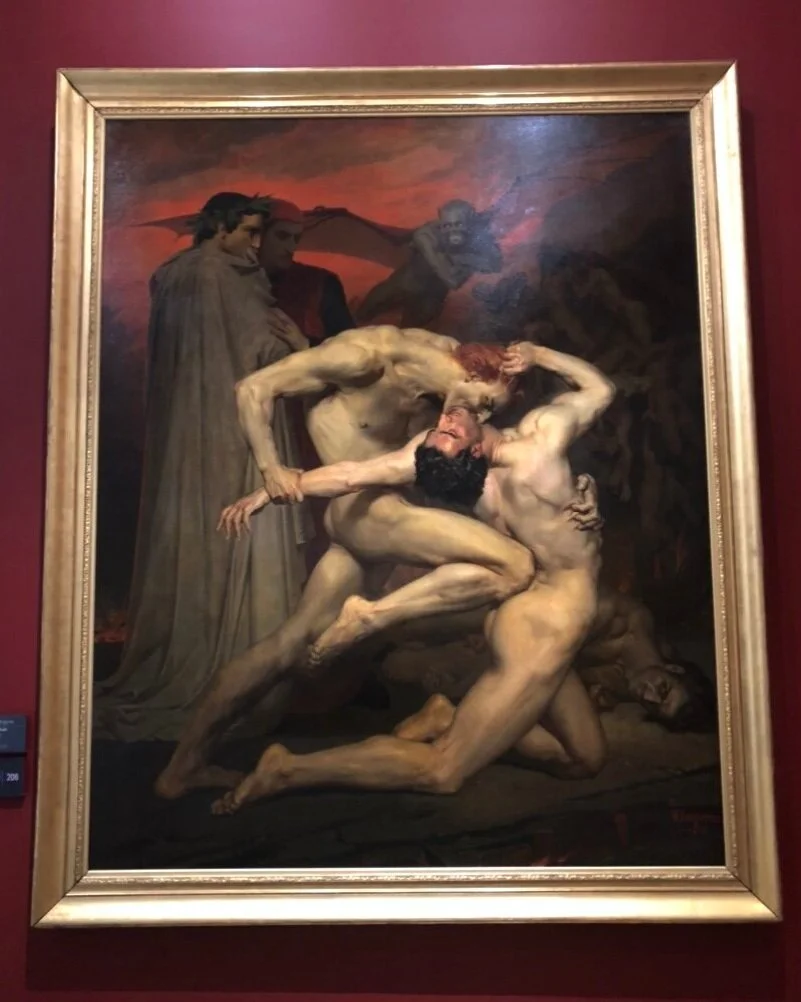
William Bouguereau in 1850 also depicted a scene from the Inferno in one of the most thought provoking paintings in the Orsay. Dante et Virgile captures the moment in the 8th circle of hell that was for the falsifiers and counterfeiters. Dante and Virgil look on while Capocchio, a heretic, attacks Gianni Schiecchi who had taken on the identity of a man in hopes to steal his inheritance. The incredible forceful nature of the scene is intense. You can almost feel his knee in your own back. Get close enough to really take in this amazing painting. The way Bourguereau captures their bodies and muscles is astounding and adds to the dimensions of feelings you get when looking at it. 

IMG-3816.jpg

One of the best paintings Ary Scheffer ever did could be his Les Ombres de Francesca de Rimini et de Paolo Malatesta Appraissent a Dante a Virgile. From the 2nd level of Hell reserved for the lustful he captures the moment after the death of the two lovers, Francesca and Paolo. Francesca was married to Giovanni Malatesta but fell in love with his brother Paola. Giovanni caught the two together and killed them. In this painting you can see a wound on his chest and her back a reminder of the horrific crime. The two are seen floating as Dante and Virgil look on, it is almost too beautiful looking to be hell. Scheffer’s piece was also displayed at the Salon of 1822, in the same room as Delacroix’s painting which received all the accolades. However today, they both hang in the Louvre for millions of people to appreciate each year. 

IMG-3824.jpg

Perhaps the most famous piece of art based on Dante’s Divine Comedy would be that of Rodin’s Porte de l’Enfer  and all the pieces that accompany it. You may have recognized the story of Francesca and Paolo as they are the subject of La Baiser. Paolo and Francesca are locked in their embrace holding a copy of Lancelot and Guinevere in his hand. Carved from sparkling white marble it appears to be the perfect image of love, but evil awaits them. Just as they lean in, Giovanni kills them.  

IMG_2970.jpg


It was to be a part of August Rodin’s monumental work The Gates of Hell, commissioned for the Decorative Arts Museum in 1880. He would work on it for 37 years, until his death and the museum for which it was intended would never be finished. Today a plaster copy sits in the Orsay and a large bronze model at the Musée Rodin.

IMG_3165.JPG

At the Rodin as you stand and admire his stunning piece filled with the chaos of the moments he so perfectly captured lurking over your shoulder is what Rodin originally called  "the poet". The Thinker was imagined to be Dante himself, holding the characteristics of Adam and Prometheus. He wanted a grand figure reminiscent of Michelangelo and one that would reflect the intelligence of the subject. At first the statue was to be a standing full length Dante, but he changed to the crouching and tense figure we know today. The Gates of Hell based on Dante's Inferno would never fully come to fruition, but the Thinker and the Kiss would go on to become two of the most famous statues in the world.

IMG_2853.jpg

Comment

Re-opening of Paris Museums and Monuments

2 Comments

Re-opening of Paris Museums and Monuments

Slowly Paris is beginning to reopen and one more wonderful step to get to back to the Paris we love is the openings of the museums and monuments. Many of the fantastic temporary exhibits have been extended into the winter and even start of 2021. So if you are like me and were dying to see the Christian Louboutin at the Palais de la Porte Dorée you are in luck!

I will be updating this list daily when new announcements come in

Musée du Louvre opening July 6 **Reservations online need to be made in advance

  • Figure d’Artiste - until the end of summer

  • Soleils Noirs - until January 25, 2021

  • Albrecht Altdorfer, Maitre de la Renaissance Allemands - tbd

  • Le Corps et l’Ame, Donatello a Michel-Ange - tbd 

Musée d’Orsay opening June 23 

  • James Tissot. L’Ambigu Moderne - until September 13

  • Léopold Chauveau - until September 13

Grand Palais, opening July 1 

  • Pompei until September 28 

Atelier des Lumières, open NOW 

Musée des arts décoratifs (MAD Paris) opening June 23 for special exhibit, July 7 for perm. collection

  • Harper's Bazaar exhibit extended  to January 4, 2021 

Musée national Eugène Delacroix, opening June 22 

Musée de l’Orangerie, opening June 22 (Water Lilies only) 

  • Giorgio de Chirico September 16 - December 14

Petit Palais opening June 16

  • La Force du dessin, Prat collection until October 4 

Musée de la Vie romantique opening June 16

  • Coeurs du romantisme dans l’art contemporain until September 13 

Musée national Picasso opening 3rd week in July 

  • Picasso Poet & Picasso and Comics until January 3, 2021 

Musée Rodin opening July 7 

Musée du Luxembourg opening September 23 

  • Man Ray et la Mode September 23 - January 17, 2021

Musée Jacquemart-André open NOW 

  • Turner, paintings and watercolors until January 11, 2021 

Musée Marmottan Monet opening June 2 

  • Cézanne et les maîtres. Rêves d’Italie until January 3, 2021  

Musée d’art et d’histoire du Judaïsme opening June 6

  • Chagall, Modigliani, Soutine moved to Spring 2021

Musée Maillol opening June 10 

  • Spirits, are you there? Until November 1 

Musée de Montmartre Open NOW

  • Otto Freundlicj, la revelation de l’abstraction until January 31, 2021

Musée de la Libération de Paris opening June 16 

Musée Bourdelle opening June 16

Musée du quai Branly-Jacques Chirac opening June 9 

Musée Gustave Moreau opening 3rd week in June 

Musée Nissim de Camondo opening June 17

  • Le 61 rue de Monceau, l’autre hotel Camondo until September 13 

Centre Pompidou opening July 1

  • Christo et Jeanne-Claude until October 19

  • Global resistance until January 2021

  • Jeremy Shaw until July 27 

  • Matisse October 21 - February 22, 2021

Musée de l’Armée opening june 29 

Musée d’Art moderne  TBD 

Palais de la Porte Dorée – musée national de l’Histoire de l’immigration opening June 16

  • Christian Louboutin : L’Exhibition[niste] until January 4, 2021 

Maison de Balzac opening June 16 

Cité de l’architecture et du patrimoine opening June 17 

Fluctuart opening June 2 

Musée Grévin  opening June 18

National Natural History Museum  opening June 24th

Espace Lafayette-Drouot World of Banksy until December 31

 Catacombes opening June 16 

Versailles opening June 6 

Chateau de Chantilly open NOW 

Chateau Vaux le Vicomte opening June 13

Château de Fontainebleau gardens opening June 2, Chateau opening July 1 

Musée de la Monnaie de Paris , free entry the entire month of June

Museums that were under construction at the start of the pandemic will open later into the year 

Musée Carnavalet 

Maison Victor Hugo 

Palais Galliera opening Fall 

Musee Zadkine opening in the Fall with the Chagall exhibition 

Monuments

La Grande Arche de la Défense  NOW

Tour Eiffel opening June 25, stairs only

Domaine de Saint Cloud NOW

Conciergerie opening June 15

Arc de Triomphe opening June 15

Basilique Saint Denis opening June 15

Pantheon opening June 15

Chateau de Vincennes opening June 15

Sainte Chapelle opening June 23

Chapelle Expiatoire reopening June 17


2 Comments

My Favorite Paris History and Research Books, part une

Comment

My Favorite Paris History and Research Books, part une

I’m often asked where  all the information about these wonderful tales I share of Paris come from. It’s hard to answer because I dig deep for some of the info online, in the libraries of Paris but mostly in the many books that fill my office.  Many people go to Paris to shop the latest trends at the fancy boutiques on Rue Saint Honore, but I am happiest digging through the bouquinistes and the many bookstores in Paris to find the treasured pages of French history.  Many days my walks back to my apartment are weighed down with the books I find in the Louvre bookstore convinced I couldn’t possibly leave without that huge book about the Sacre de Napoleon although I have yet to buy the large book I want so badly about Delacroix. I can show some restraint, but barely. Every trip I leave with an extra suitcase  filled with books and also ship 2-3 boxes back. Once you master being able to read in French then the whole game takes a giant leap forward and why I leave with so many. However inside these treasures is where I find the answers to questions I have been dying to know and what makes me giddy with excitement every single time. 

There are many lists out there of the favorite books about Paris and they all have the same titles on them every time, I may have one or two of those on here but this list is for all you lovers of Paris that want to dig deeper and learn just a little bit more. When I sat down to gather my favorite titles it was almost impossible to stop at only 5 or 6. So, I will break them out for you a bit over time, first up my favorite books I use for research and history of Paris books. 

IMG-4340 (1).jpg

These first three books, all in French, I grab anytime I need to find out anything about a certain street or address. The first is Jean-Marie Cassagne’s Paris Dictionnaire du Nom des Rues. Every single street, square and passage is in this book. From Rue de l’Abbaye to Boulevard de la Zone complete with the history of who or what it was named for. It is fascinating and you will never walk down a street in Paris the same again.  Oscar Lambert’s Rue des Salauds is another great book for the street hunters. Focusing on a few specific streets like Rue de Richelieu and Rue Mazarine, the pages are filled with the history and stories of some of my favorite streets in Paris. 

Jacques Hillairet’s Connaissance du Vieux Paris, this gem of a book digs even deeper into the streets and addresses of Paris, originally published in 1951. I saw this book in the stores many times and had a small bit of self control and then one day while walking along the Quai de Mégisserie there it was at one of the iconic bouquinistes, all wrapped up and waiting for me. Broken out by areas, this book will go into the smallest detail noting architectural features as well as the history of the address sometimes going as far back as what stood there before. It is a fascinating view of old Paris. 

It is almost impossible for me to narrow down history books focused on Paris, but these are some of the best that stay with you long after you read that final page.  How Paris Became Paris by Joan DeJean. Focusing on a few specific events in the history of Paris that made her what she is today. The very first chapter of this book is about the Pont Neuf, I read this book years ago and I still remember every detail I learned in this chapter alone. I don’t want to spoil it for you, but if you have ever walked across the oldest bridge in Paris and fallen in love with it, this chapter and book is for you. Filled with historical etchings and photos you will learn about everything from the Place des Vosges to Haussmann, I now need to read this goodie again. 

IMG-4339 (1).jpg

Alistair Horne’s Seven Ages of Paris, much like How Paris Became Paris takes a few specific slices out of the moments in Paris history and the men that left their mark on it. Starting with Philippe Auguste and his great wall it also includes the time of Henri IV, Louis XIV, Napoleon, The Commune, Treaty of Versailles and De Gaulle. Very well done and researched but not overly technical you will learn a lot at the same time as being entertained. 


Susan Cahill wrote two wonderful books for the Paris explorer Hidden Gardens of Paris  and The Streets of Paris. I love the Jardin du Luxembourg and the Tuileries but there are countless number of small green treasures with their vert wagon benches just waiting for you to come sit on a sunny day. Her book highlights a few of the details in the park, what you can find nearby and even a great place for lunch.  The Streets of Paris take you on a stroll to some beautiful streets in the stories of the people that shaped them. Filled with tips on the best time to visit and the details to look out for. Both books are also filled with gorgeous photos of each street and garden.

Ina Caro’s Paris to the Past, Traveling Through French History By Train, is another one of my favorites I have read a few times. Ina takes a fascinating trip through French history through its many chateaux and palaces. Beginning with the Basilique Saint Denis, the birth of French Gothic and chronologically traveling the ages until Napoleon. Her descriptions are mouth watering for the armchair history and architectural buff. I have even downloaded this book and listened to it as I walked through Fontainebleau. Another I want to reread again now. 

Paris the Secret History by Andrew Hussey tells its tale through the people that left their mark on the city from the lowest to the nobilist. Palaces, brothels, cemeteries and churches and the lurid tales that sprang from each of them. From Lutecia to the riots of 1968, this book will give you a taste of the “other” Paris. 

Eric Hazen’s The Invention of Paris takes you on a romp through history by way of its many quarters and villages in the eyes of its many writers and artists. Victor Hugo, Manet, Balzac, Baudelaire and Doisneau. Paris wasn’t much bigger than the Ile de la Cité when it first began, over time it began to swallow up the small areas that sat “outside” each with their own exciting tale to tell.

Find all of these books in my La Boutique, I do make a tiny bit of wine money if you buy it through my website.

https://www.claudinehemingway.com/la-boutique

Comment

Déjeuner sur l'herbe par Pablo Picasso

Comment

Déjeuner sur l'herbe par Pablo Picasso

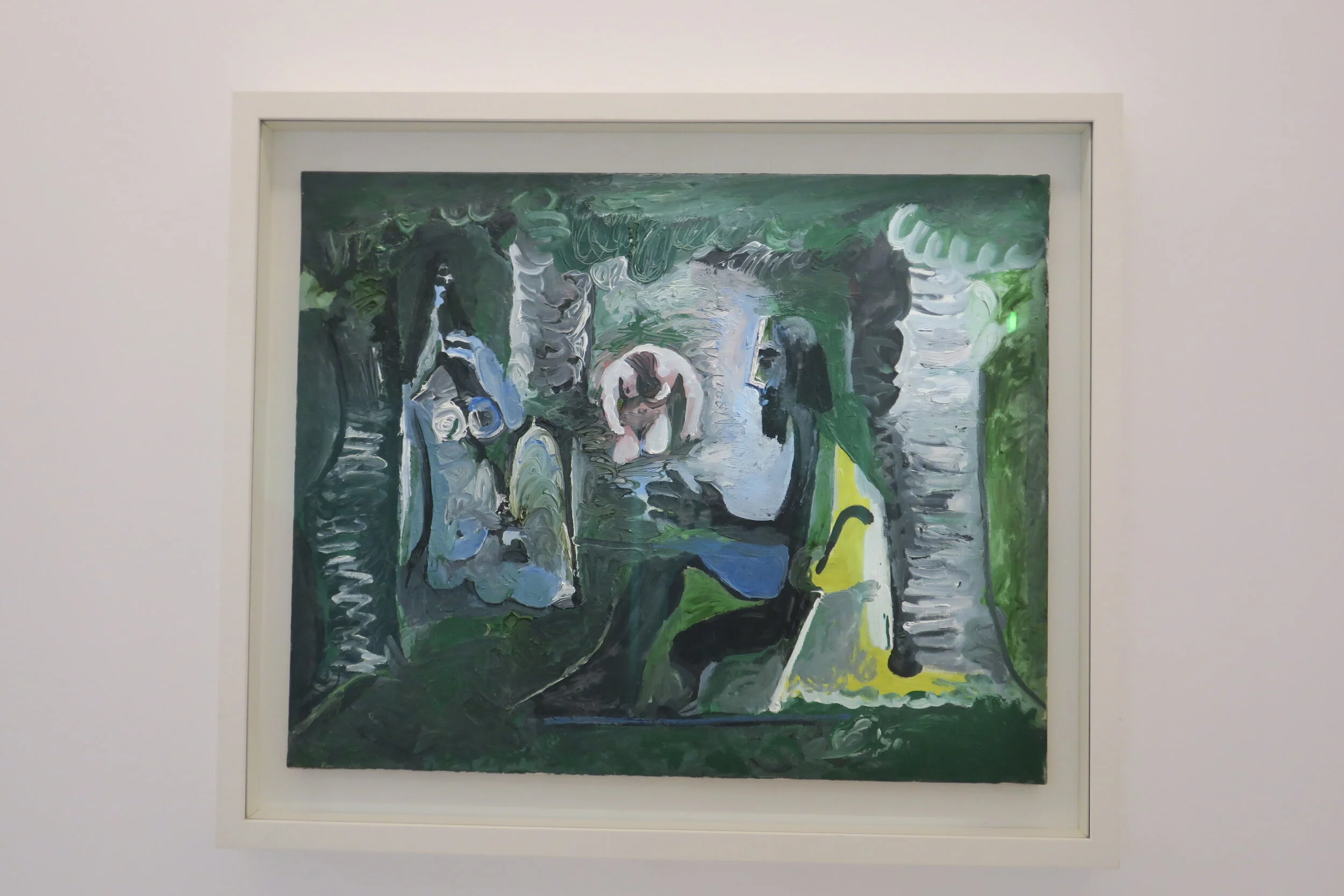
Towards the final years of Picasso’s life, he spent a lot of his time re imagining some famous pieces by other artists. In 1958 Picasso was discouraged by the building up around his beloved La Californie home in Cannes and one night after being with some friends he set his sights on a new home and bought it the next day. The Château de Vauvenargues near Aix-en-Provence, would be where he and his second wife Jacqueline would live from 1959-1962. He fell out of love with it as fast as he fell into it and they moved onto a home in Mougins. However, while he was at Vauvenargues he spent the bulk of his time from 1959 to 1961 on 140 drawings and 27 paintings, lino-cuts and cardboard models all on the theme of Manet’s Le  Déjeuner sur l’herbe

When Manet painted this monumental piece in 1862, much like his painting Olympia, this one also was met with much controversy. Rejected from the Salon and displayed at the Salon des Refusés with his other Impressionist friends in 1863, the subject of a nude woman sitting between two fully clothed men was a scandal for the time. Although, Émile Zola proclaimed it “the greatest work of Édouard Manet”.

800px-Edouard_Manet_-_Luncheon_on_the_Grass_-_Google_Art_Project.jpg


In 1932 Picasso said "When I see Manet's Luncheon on the Grass I tell myself there is pain ahead". On August 1, 1959 he began his dive into Manet’s masterpiece with a small drawing. The subject and structure of the painting was a bit out of the box for Picasso. He normally focused on one subject or model. Manet’s painting with four people was not what he was used to doing. His first drawing was the closest to Manet’s with all four subjects, but he quickly moved away from Manet’s original structure.

IMG_4375.JPG


Picasso was known to be an extremely fast painter, when he would tackle this theme he would work in torrents of activity for months at a time before putting them down to come back to them later. He would play with the theme and the amount of people in the landscape, sometimes with three women in the back. Picasso would add the woman washing her feet that he would continue into other paintings. Removing the men all together at times, making the trees larger than life, but most of the time staying with the blue and green palette. He had never spent so much time devoted to one theme in his entire life.   

IMG_4376.JPG

In March 1960, Picasso painted his first larger version of Déjeuner. Mostly green with a bit of blue focusing on the main figure, Victorine. Later versions included the men who Picasso decided needed to be nude as well. In the Musée National Picasso-Paris on the upper floor is a room dedicated to his Déjeuner paintings. They do change them out during the year and is one of my favorite rooms of this well done museum. Every time I walk into this room it brings a huge smile to my face. Hanging on the walls are just a few of his paintings, drawings and even a cardboard model. I usually spend a half an hour in this one small room, listening to the people as they walk in and comment on the paintings. Some even see the resemblance to Manet which pleases me to no end. I love how Picasso dated his paintings and drawings, knowing now when he started this series you can see how the paintings displayed fit into his timeline. 

IMG_4373.JPG


On this date in 1973, the great Spanish painter would take his last breath in Mougins. He would be laid to rest at the Château de Vauvenargues, high above the hill in Provence. 


Comment