On December 2nd, 1804. Napoleon Bonaparte crowned himself Emperor of France in the Cathédrale Notre-Dame de Paris. Napoleon wanted to set his own rules and traditions, and not wanting to "descend from anyone,” he bucked the old ways of French rulers crowned in the Cathedral Notre Dame de Reims and set his sights on the historic cathedral of Paris. Napoleon was adamant about having Pope Pius VII in attendance, but as the ceremony began, to the audience's surprise, he snatched the crown from the altar beside the Pope and placed it on his head.
The declaration of the First French Empire was set in stone on May 18, 1804, naming Napoleon Bonaparte its leader. Now Napoleon needed to pull his sword from the stone and take his crown, and he wanted to do it in the most lavish way possible.
Since 816, the kings of France had been crowned in Reims, and while Napoleon loved the pomp and circumstance of the Ancien Régime, he knew attaching himself to anything that reminded people the former kings of France had been toppled just 11 years earlier wouldn’t bode well for him.
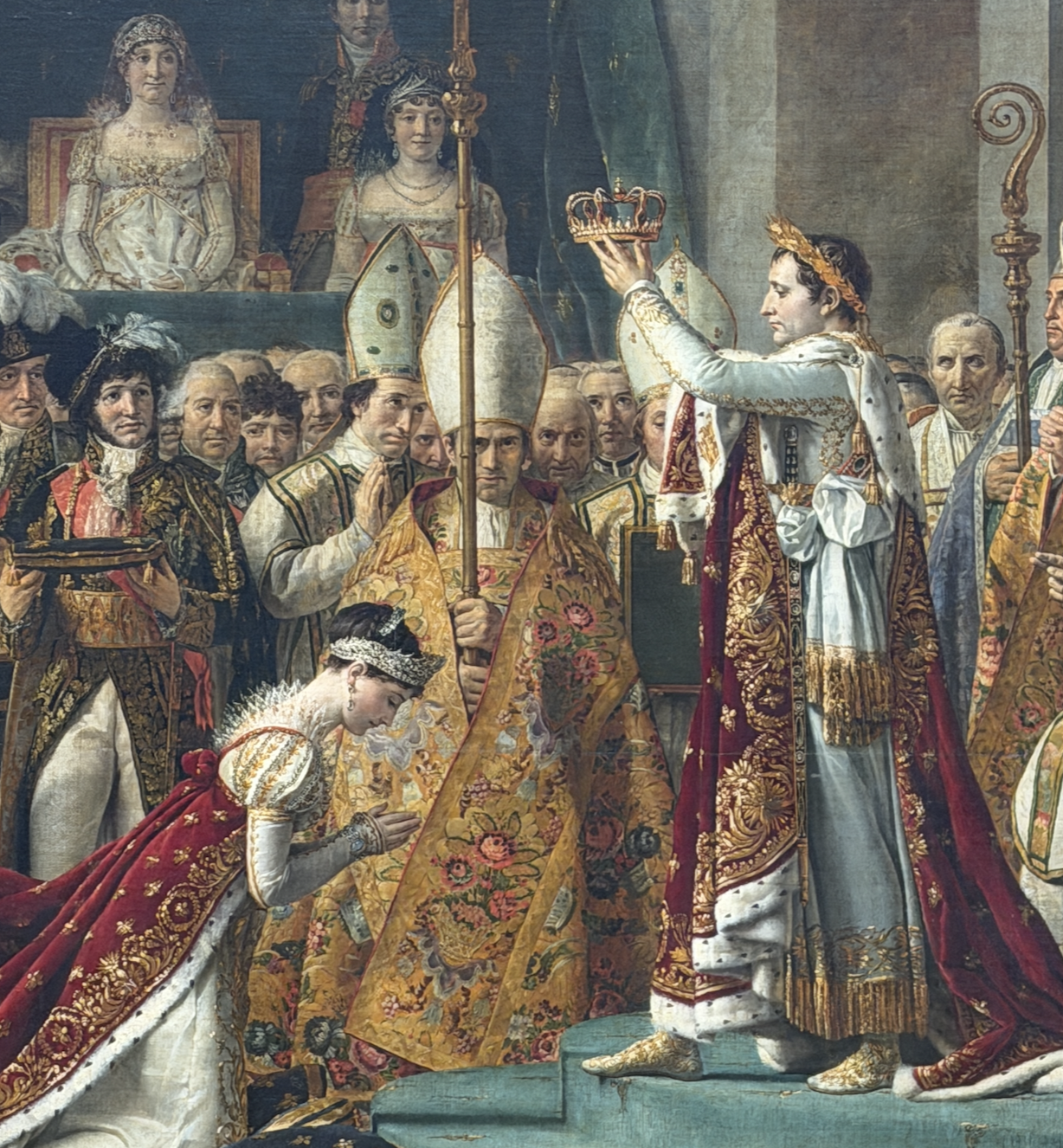
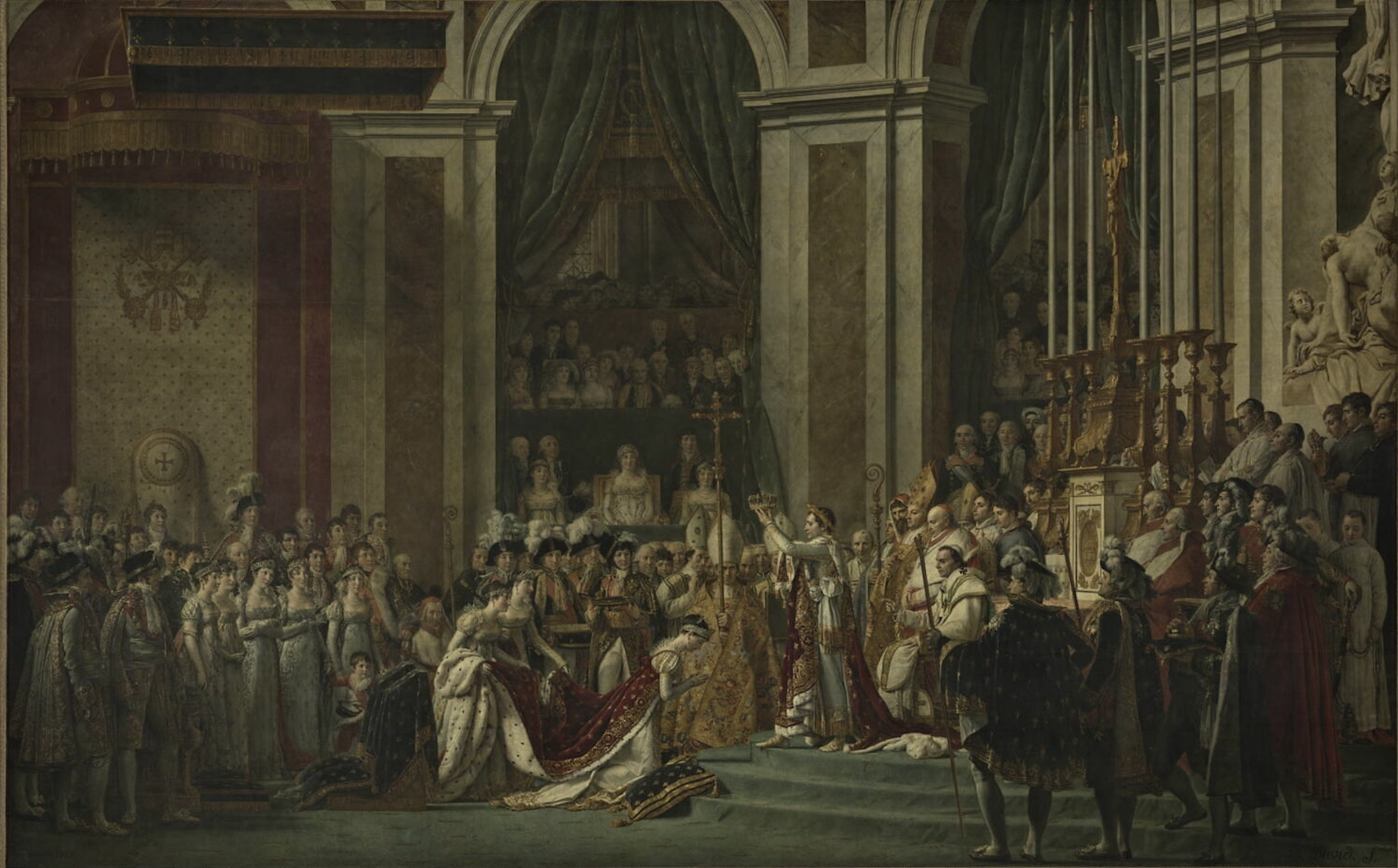
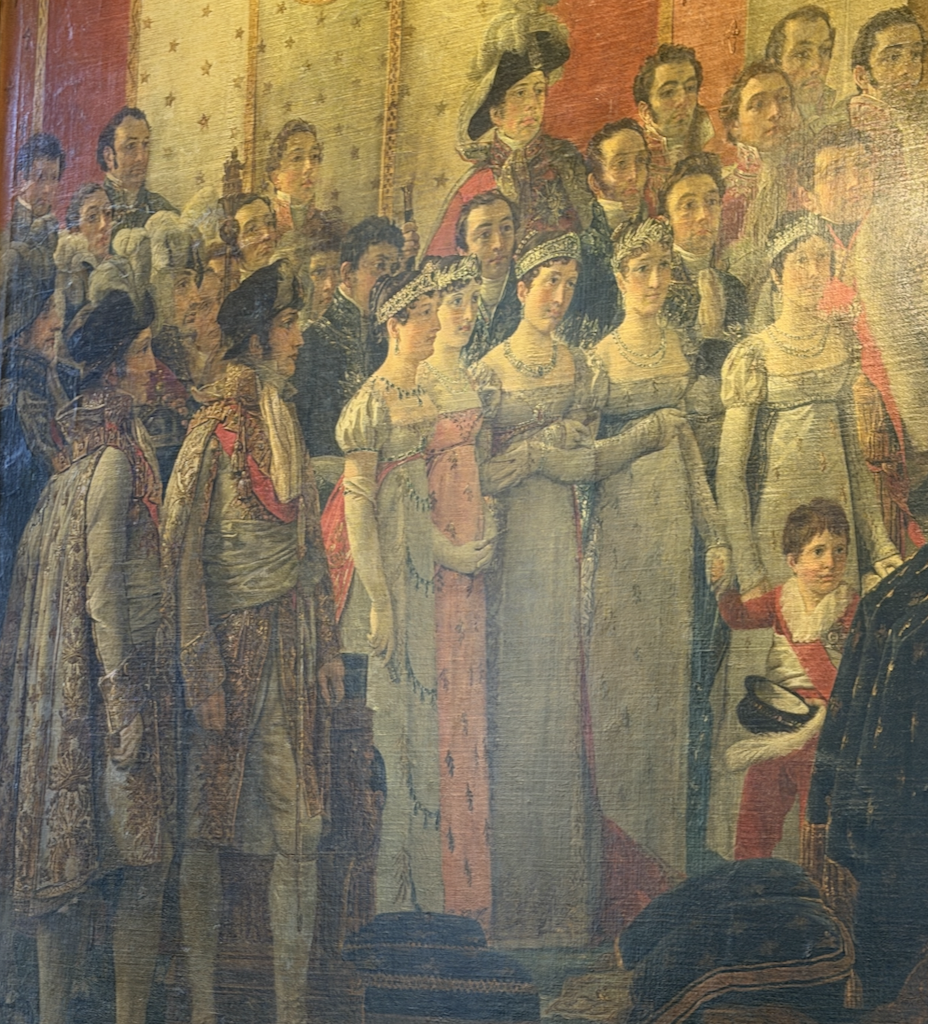
Many know the event from the massive canvas that hangs on the wall of the Salle Daru by Jacques-Louis David. While it’s not a perfect rendering of the event, it includes the figures in attendance, as well as the regalia, costumes, and the sentiment Napoleon wanted to convey.
The former kings of France claimed their throne through birthright. From the Capetians to the Valois, Orléans, and Bourbons. The Bonaparte line was not rooted in the French aristocracy; they were, in fact, Italian until just before Napoleon was born. Exactly one year before Napoleon’s birth on August 15, 1768, Louis XV brought Corsica under the French flag.
To give his own rule legitimacy, Napoleon went down a rabbit hole of all things Charlemagne. The true master of propaganda wove his history with that of the first Holy Roman Emperor, letting it inspire the regalia and even the event itself, including a moment everyone thinks they know.
On Christmas Day in the year 800, Frankish King Charlemagne was crowned the first Holy Roman Emperor by Pope Leo III. The ceremony took place during the Christmas Mass in Saint Peter's Basilica, with Charlemagne kneeling before the Pope as the crown was placed on his head.
The Kingdom of the Franks, which encompassed most of the Europe we know today, was ruled by Charlemagne since 768. The title of Holy Roman Emperor was mainly symbolic, and the Pope didn’t have the power to create the position, but that hardly stopped anyone. In August 800, the Pope had been attacked, had his tongue cut off, and was in need of protection. Charlemagne was a staunch defender of the church and a perfect new symbol to unite followers and save the Pope.
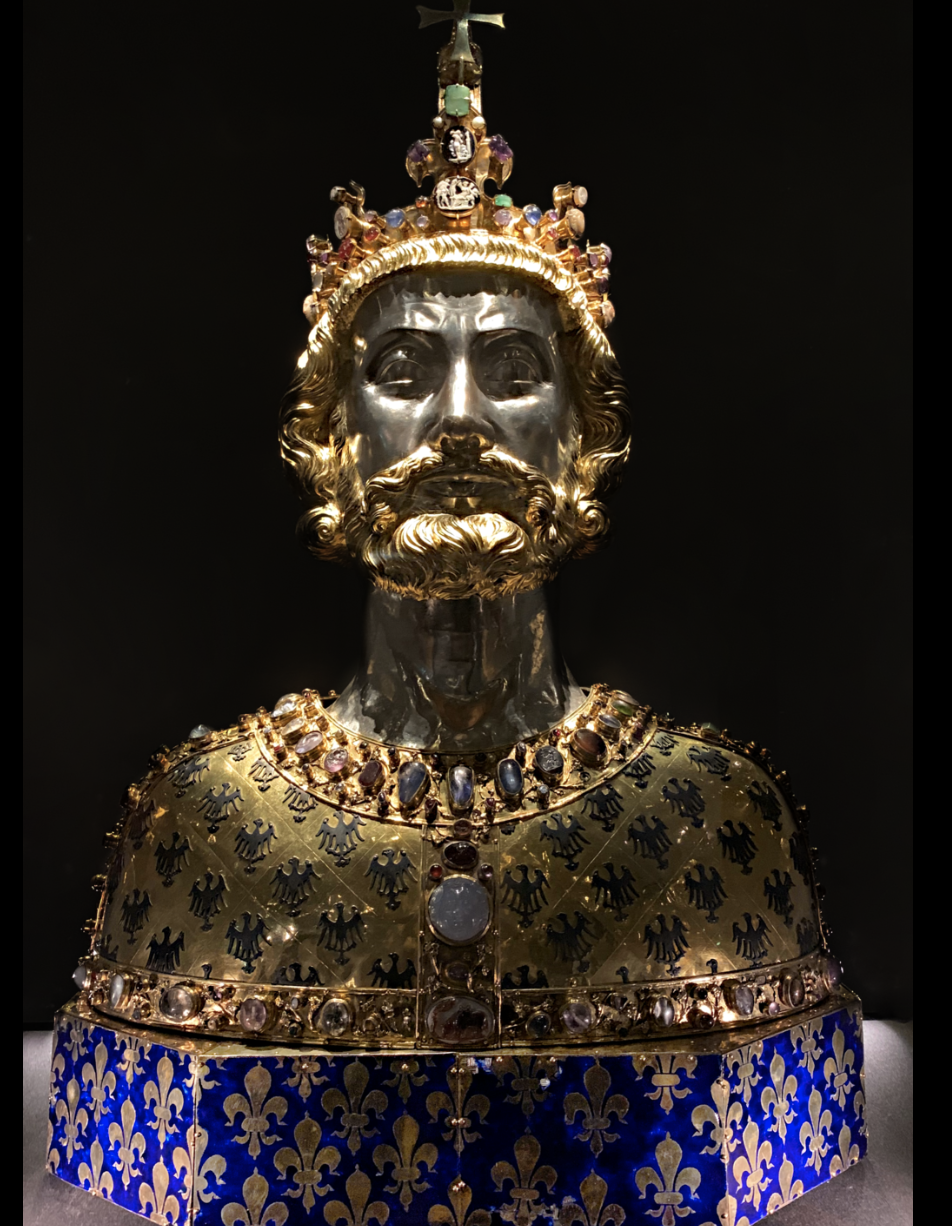
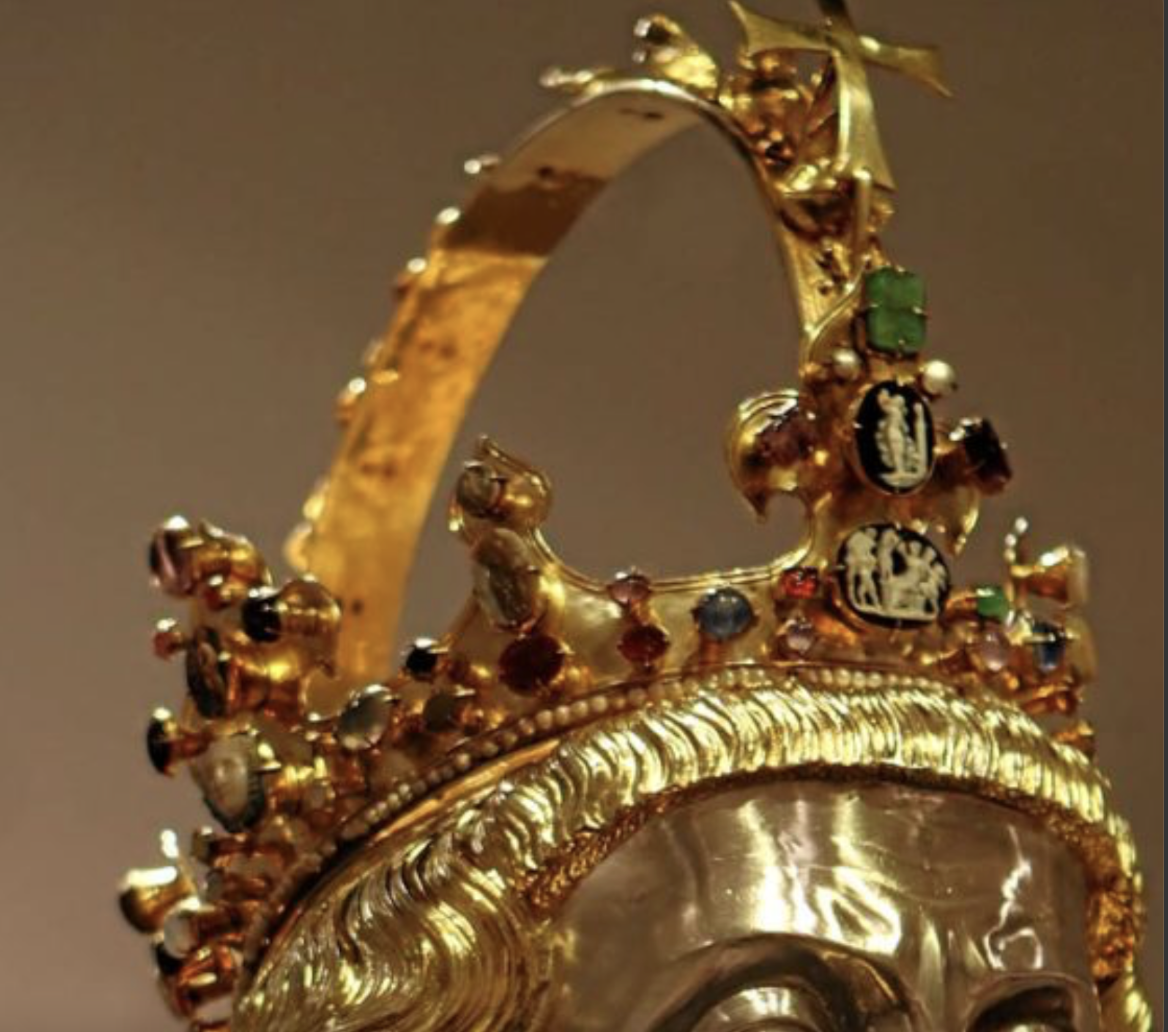
On September 7, Napoleon visited Aachen, where Charlemagne is buried, and was presented with the relics of the former Emperor. The 14th-century reliquary bust is topped with a stunning crown that inspired Napoleon.
Napoleon originally considered holding the ceremony at Les Invalides, where he lies for eternity today. However, in true Napoleonic form, he chose the Notre Dame de Paris, which was symbolic in many ways. During the Revolution, the Catholic Church had been stripped of its meaning, and relations with the Holy See had deteriorated. Under Napoleon, in 1800, they worked with Pope Pius VII in Rome to sign a new Concordat, returning the Church's importance to France on August 15, 1801. (Napoleon’s birthday)
Napoleon was a master of propaganda, and his image was used to secure his place in history; the event of December 2, 1804, is a perfect example of how he did that.
By selecting Notre Dame, he also cemented his name to that of restoring the church in France, as well as alongside Louis XIII, who placed France in the protective hands of the Virgin with his Vow in 1638. In doing so, he reminded everyone that he was the one who returned religion to the people.
Listen for more on the Vow of Louis XIII
At the time, Notre Dame was crumbling. After barely surviving the Revolution, when it became the Temple of Reason and was badly damaged, the city tried to sell it off for parts, but luckily there weren’t any takers. But Napoleon had lofty goals, and while he couldn’t tie his image or anything else to the Ancien Régime, he did want the pageantry associated with it.
Napoleon brought in his favorite architects, Charles Percier and Pierre François Léonard Fontaine, and artist Jean Baptiste Isabey, as well as Louis Philippe de Ségur, who served as the master of ceremonies. The Grand Chamberlain Talleyrand had attended the coronation of Louis XVI in Reims in 1775 and was consulted on many of the formal procedures.
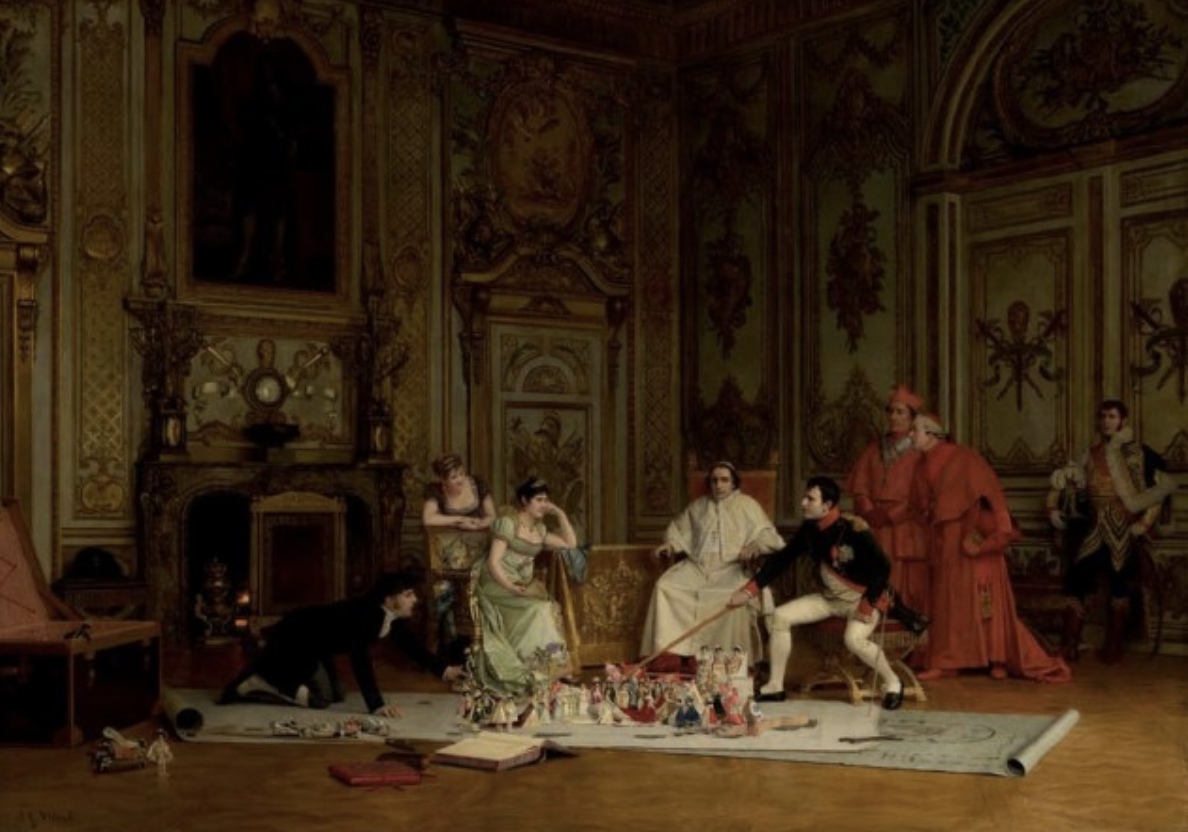
A painting and an engraving by Jean Georges Vibert lavishly set the scene. A week before the ceremony, Napoleon had asked Isabey to create drawings of each of the seven ceremonies that would be a part of the day. Each ceremony included over 90 people, and to create seven variations in just over a week was insane. However, you never told Napoleon that.
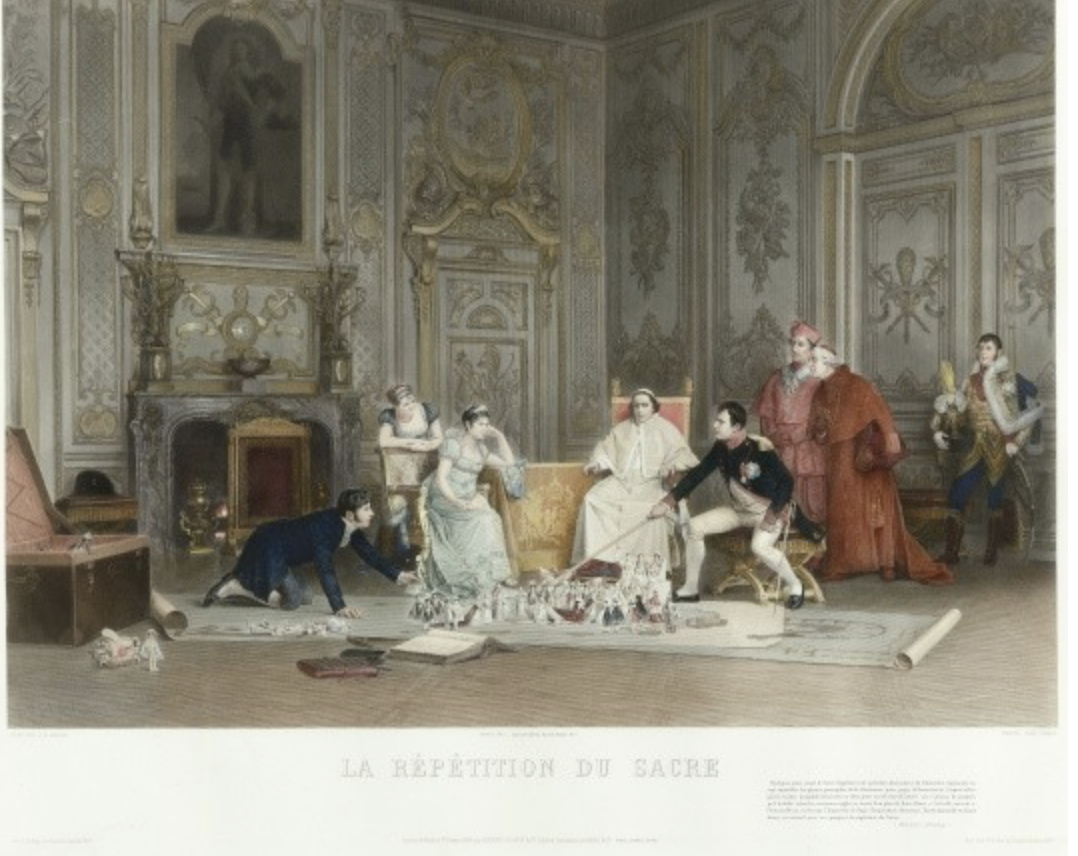
Isabey came up with another idea. He purchased as many small wooden dolls as he could get his hands on and created paper costumes for each to represent the various figures. He then found a large plan of the interior of Notre Dame and the Galerie de Diane of the Palais des Tuileries, and returned to Fontainebleau just two days later, to everyone's astonishment.
The painting includes Napoleon and Josephine dressed to the nines, as well as her daughter Hortense. It also includes Pope Pius VII, who looks thrilled, Cardinals Antonelli and Fesch, and General Junot. Isabey is on his hands and knees, placing the figures in their appropriate spot as the Emperor uses a cane to topple a few of the religious figures. The Pope really should have found a ride home at this point. The scene most likely took place in the Throne room at Fontainebleau but was also painted in 1895, long after the actual event and great liberties were taken, although I still love it. Check out my website to see the image.
Meanwhile, back at Notre Dame, Percier and Fontaine were working overtime to cover the crumbling cathedral. The ceremony would take place in the choir before the high altar. The cathedral we see today underwent a massive restoration in the mid-19th century by Viollet-le-Duc, but in 1804 it was in pretty bad shape. The architects covered the columns in cardboard painted to look like marble, hung massive pieces of silk embroidered with the emperor's emblems, including bees, covered the floors in carpet, and hid as much as they could. From the ceiling, 24 large crystal chandeliers hung to light the ceremony.
Just inside the entrance, under the western rose window, a large platform with twenty very steep steps was built, with two thrones at the top for the Imperial couple. Napoleon’s rather plain throne was created to match the throne of Charlemagne he had seen in Aachen. They sat under an arch topped with the Imperial eagle, but out of view of the altar, so they couldn’t be seen by the Pope during the Mass that followed the ceremony. Josephine almost didn’t even make it to the top, but we will come back to that. Percier and Fontaine really had their work cut out for them; it also extended to the cathedral's exterior in the forecourt, as well as the north side.
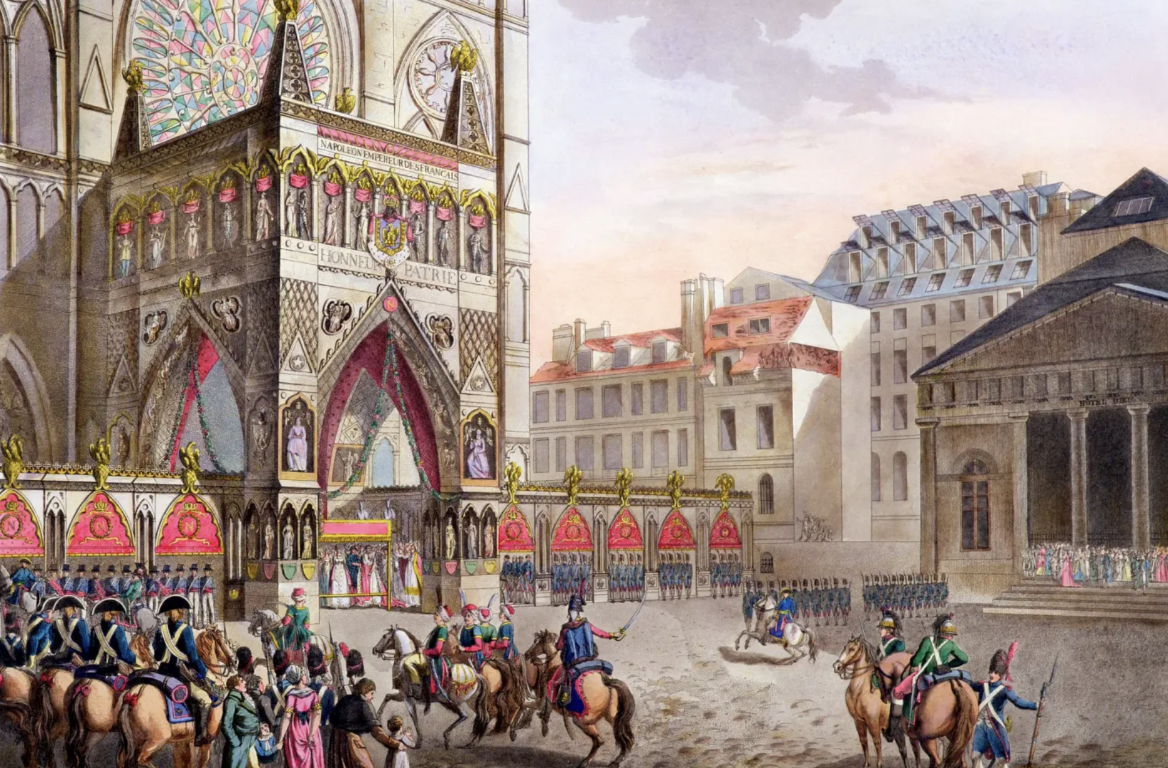
At the front of the cathedral, Percier and Fontaine built a massive entrance topped with statues, imperial images, and even a relief of the emperor on his throne, all placed in front of the Last Judgment door. The ceremony began before the more than 3,000 guests entered the historic building. On the north side, tents constructed and covered in fabric battled the wind in the days leading up to the event and would be used for the arrival of Pope Pius VII and the Imperial couple.
The poor Pope was roped into attending the event in Napoleon's need to legitimize his rule. The Pope left Rome on November 2, a full month before the event. Arriving in Lyon on November 15, where Cardinal Fesch, who was also Napoleon’s uncle, awaited the Eminence. On November 25, 1804, the papal procession arrived at the Château de Fontainebleau, where Napoleon had a suite of rooms created just for him, which you can still see today.
The next day, Napoleon held an over-the-top dinner for the Pope; in reality, it was the Emperor's way of stating his dominance. In the following days, while the pope roamed the halls of Fontainebleau, Josephine confided to him that the Imperial couple had never been married in the church. The Pope was not happy. Since the two were not wed in the eyes of the church, he could not attend or perform the coronation. Napoleon was even less thrilled and agreed at the last minute, on the eve of the coronation, to be married. This was also a very calculated move on Josephine’s part. Having her marriage recognized by the church also makes it much harder to divorce.
Listen to episode 9 for the story of their civil wedding.
On November 28, the Pope and his entourage moved to the Pavilion des Flores of the Palais des Tuileries to another suite of rooms created for him, overlooking the Seine.
On December 1, 1804, the night before the big event, in the chapel of the Palais des Tuileries, Napoleon's uncle, Cardinal Joseph Fesch, performed a quick wedding ceremony to the Bonapartes' dismay.
The family was going through a bit of turmoil in the weeks leading up to the event, and it spilled out onto the canvas. On November 19, during a family meeting at Saint Cloud, tension grew between the family and Napoleon. His four brothers were angry about how he treated Lucien and Jerome, and his mother refused to attend.
Lucien married a widowed aristocrat, and Napoleon was furious because he should have married a dynastic heiress. Baby brother, Jerome, had been in the United States, where he married Elizabeth Patterson, an American woman and daughter of a wealthy Irish immigrant from Maryland. When they returned to France, Napoleon refused to let them enter the country or the continent unless he divorced her. Jerome traveled to Italy, where he tried to change his brother's mind to no avail. Elisabeth stayed in London and gave birth to their son, Jérome Napoléon Bonaparte. She never saw her husband again, and he never met his son. The wedding was annulled by Napoleon. It drove a wedge in the family, pitting two brothers and their mother against Napoleon.
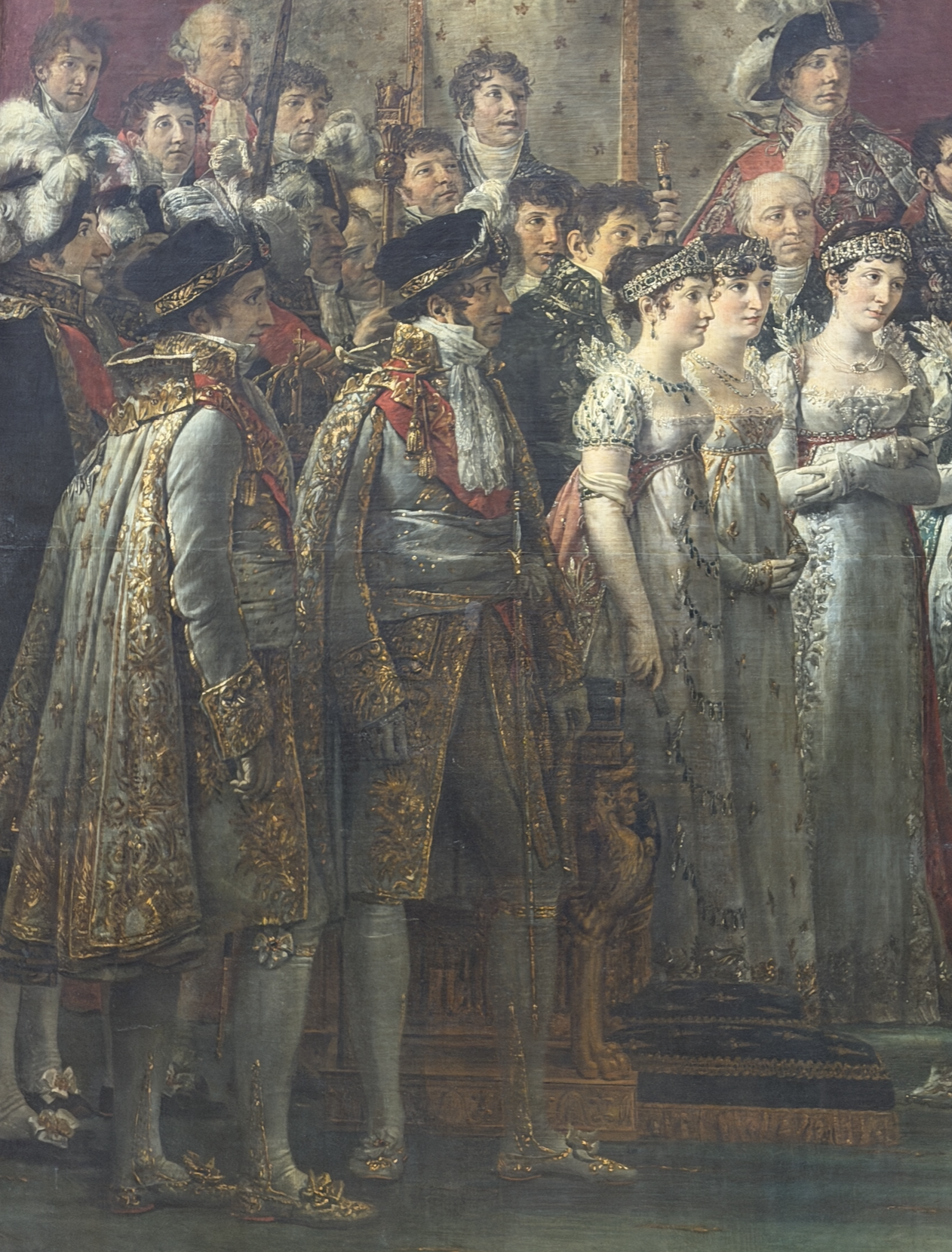
As for the sisters, Elisa, Pauline, and Caroline, they were angry about not having official titles. They were told they had to carry Josephine's train, which they refused. The family didn’t like Josephine and the control she had over their brother. Napoleon put his foot down and told his sisters that they would attend and do as they were told, or they would be exiled from France and be left with nothing. They finally agreed, as long as they would not be immortalized in the painting holding her train; they did not want to be captured as being subservient to her.
The big day arrived on December 2, 1804. It was a very cold and overcast day in Paris, but it didn’t deter the 50,000 people who filled the streets.
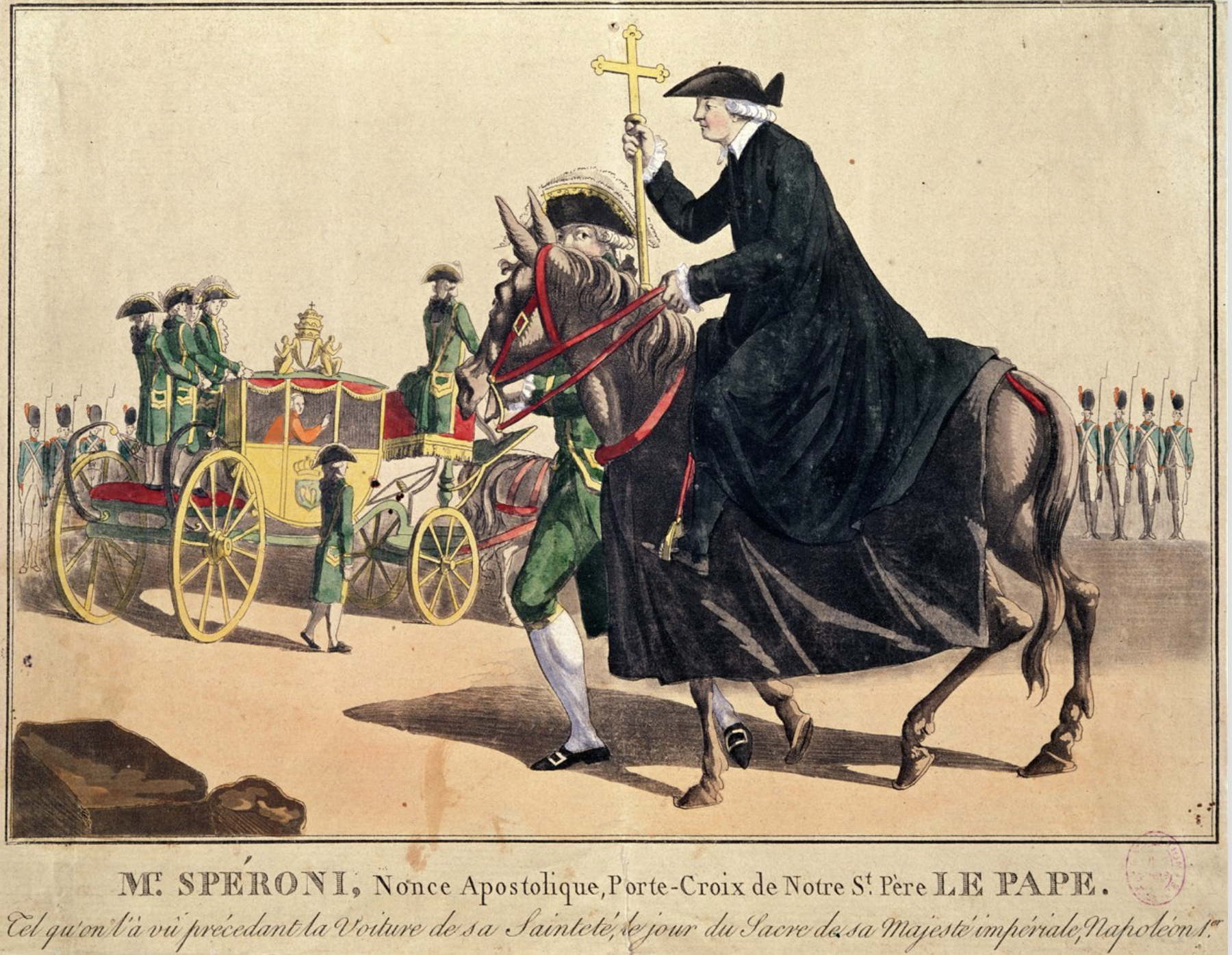
The procession began at 9 am when Pope Pius VII left the Palais des Tuileries. Napoleon wanted to reduce his role to that of a head of state, as the excitement over the Pope being in Paris was overshadowing him, but he was told that would be a very bad idea; he had another plan in mind. The Pope headed out into the cold Paris streets in a coach decorated with the Imperial emblems and surrounded by the French Dragon officers. Monsignor Speroni preceded the Pope riding on a grey mule. It was supposed to be a white mule,as it represents Christ entering Jerusalem but in the last days before the event, they scrambled to find one. It drew many looks and laughs from the thousands who braved the elements to catch a glimpse of the dignitaries.
Once the Pope arrived on the northern side of the cathedral, he entered the sacristy where he was dressed in his ceremonial robes. Napoleon had a lavish papal tiara created as a gift thanking him for his attendance. A white silk miter covered in pearls, diamonds, sapphires, and rubies, although Napoleon had it made a few sizes too small and the Pope was unable to wear it. It can be seen in the painting and held by the Comte Rogari just behind the Pope.
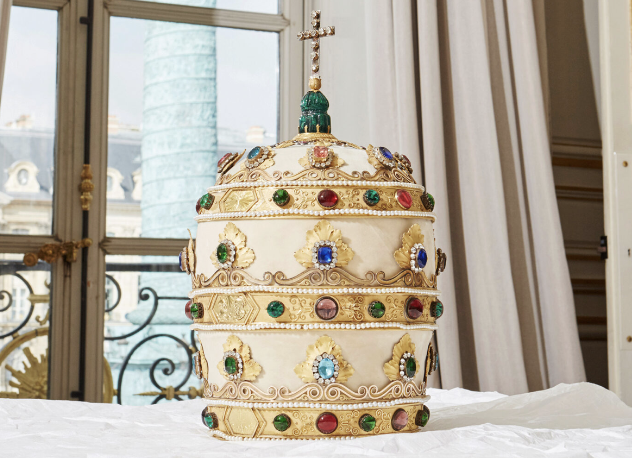
Recreation of the papal tiara
At 10 am, it was now Napoleon and Josephine’s turn to leave the palace in a golden coach pulled by eight white horses in red Moroccan leather harnesses with bronze fittings and white feather plumes. The inside was lined in white velvet embroidered with the Napoleonic bees and gold-gilded mirrors. The massive Imperial procession of 25 carriages led by Joachim Murat traveled along the Rue Saint Honoré to the Rue du Roule and over Pont Neuf. The buildings lining the streets were draped in banners, and every inch of the route had been cleaned, and even a few buildings destroyed.
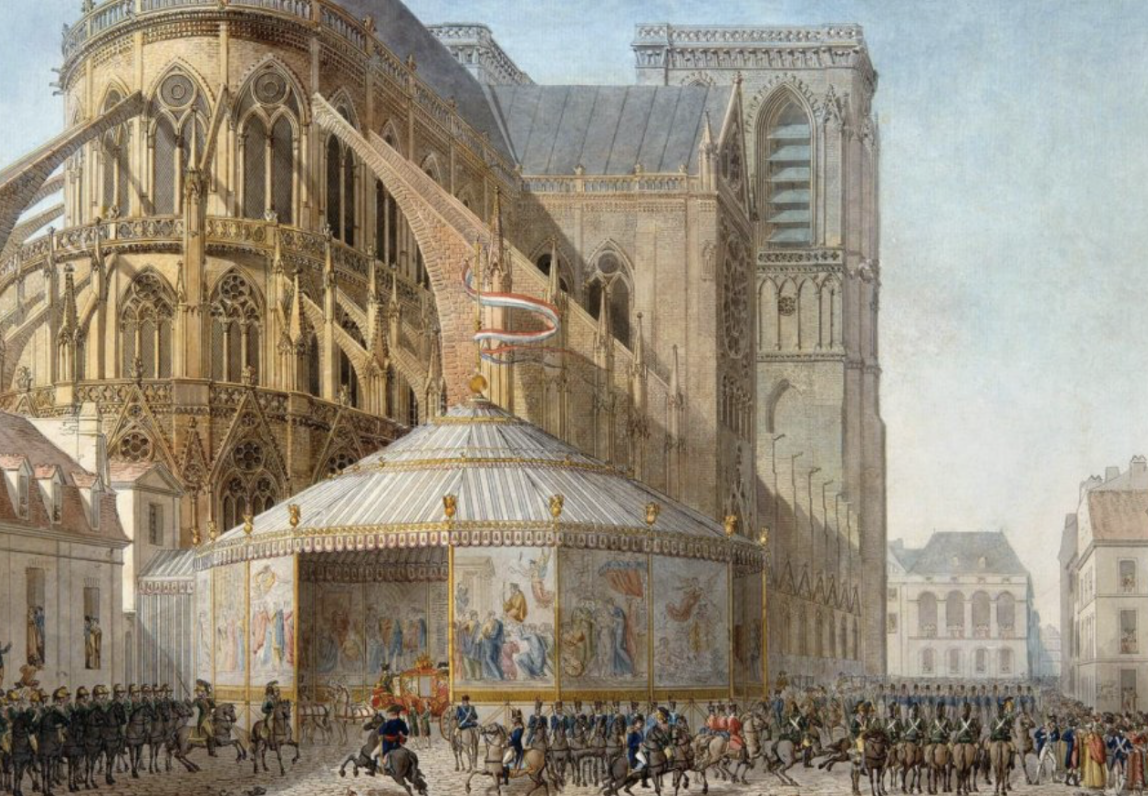
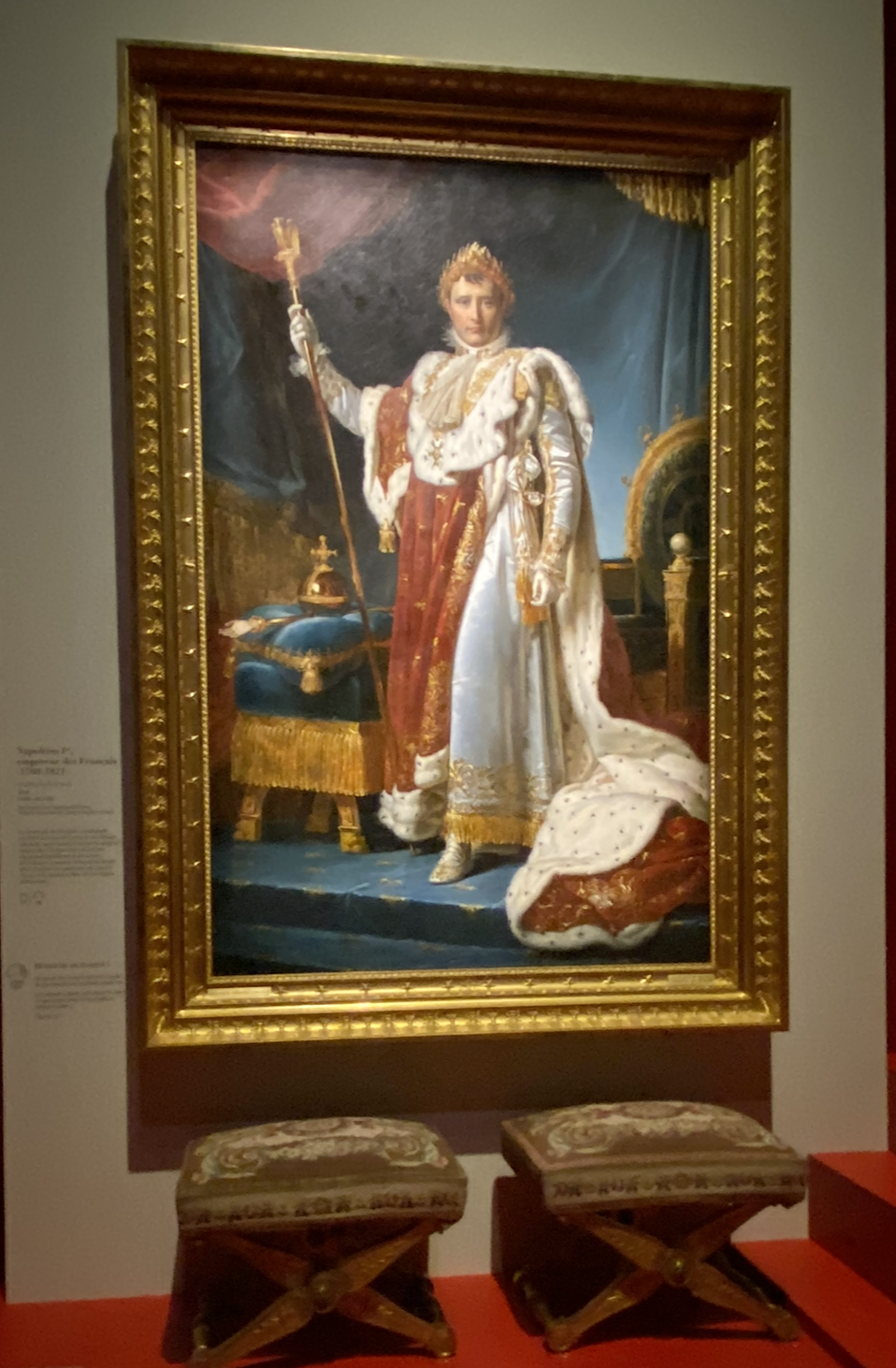
They turned left just south of the Place Dauphine as they neared the cathedral. The short journey took an hour, with their arrival at 11 am on the northern edge of Notre Dame, where the carriage pulled into the tent out of view of onlookers. In the Archbishop's apartment, they changed into their ceremonial attire. The Emperor wore white silk stockings with gold embroidery, white satin boots, and a dark red velvet mantle lined with ermine fur.
The two then walked down a corridor built by Percier and Fontaine connecting the palace to the cathedral, covered in Gobelins tapestries. Meanwhile, the poor Pope Pius VII sat in the freezing cathedral, awaiting the arrival of the man of the hour.
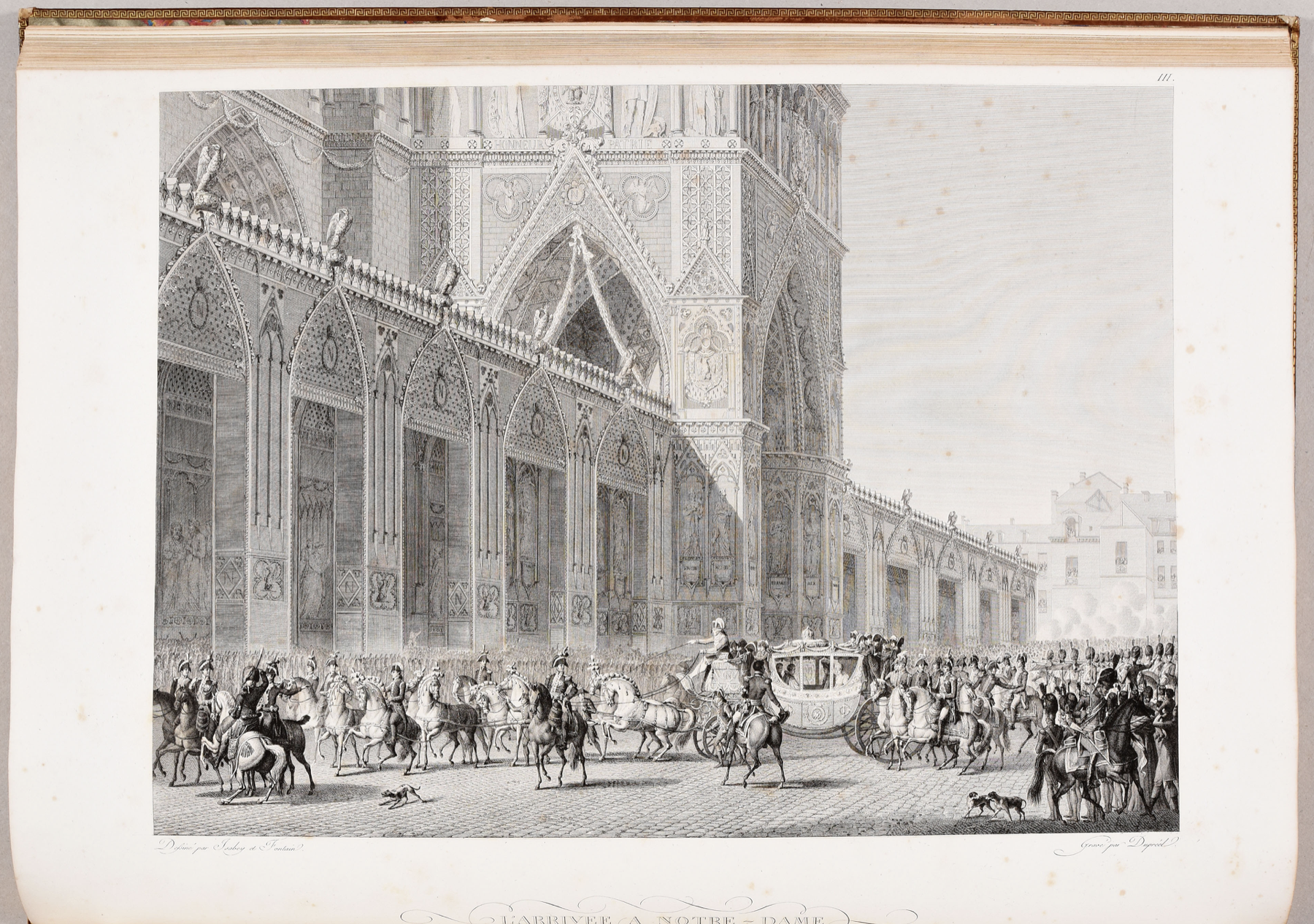
Napoleon didn’t want the Pope to perform any of his usual tasks, keeping him as just an honored guest, but that wasn’t going to happen in the Pope’s house. As the two entered the cathedral, the crowd rose and erupted into Vive l’Empereur!
The music filled the air thanks to two orchestras of 300 members and a choir of more than 500 singers. Outside of Te Deum and regular songs of a Catholic mass, The music was composed by Abbé Rose, Jean François Le Sueur and Paesiello.
Upon reaching the altar, the Pope blessed the couple as they knelt before him with holy water and oil. Something he could only do after they had wed in secret the evening before. The Pope then blessed each piece of the regalia as well as the mantles and rings. After this, the most shocking moment happened that drew an audible gasp from the large crowd.
We know many details of the ceremony from the written description of Laure Junot, Duchess of Abrantes, who attended and kept very detailed diaries. Later, when she became the lover of the Honore de Balzac, he convinced her to complete and publish her 18-volume memoirs.
She had said, " But just as the Pope was about to take the crown, Napoleon seized it and placed it on his head! At that moment, he was handsome, and he lit up with an expression that no words could convey an idea. "
The Pope was given explicit instructions for his role that day, which weren’t many. With both gold laurel wreath crowns sitting on red velvet pillows, it has been widely shared that the Emperor did, in fact, grab his laurel wreath crown. That did happen, but it wasn’t as shocking as many have thought.
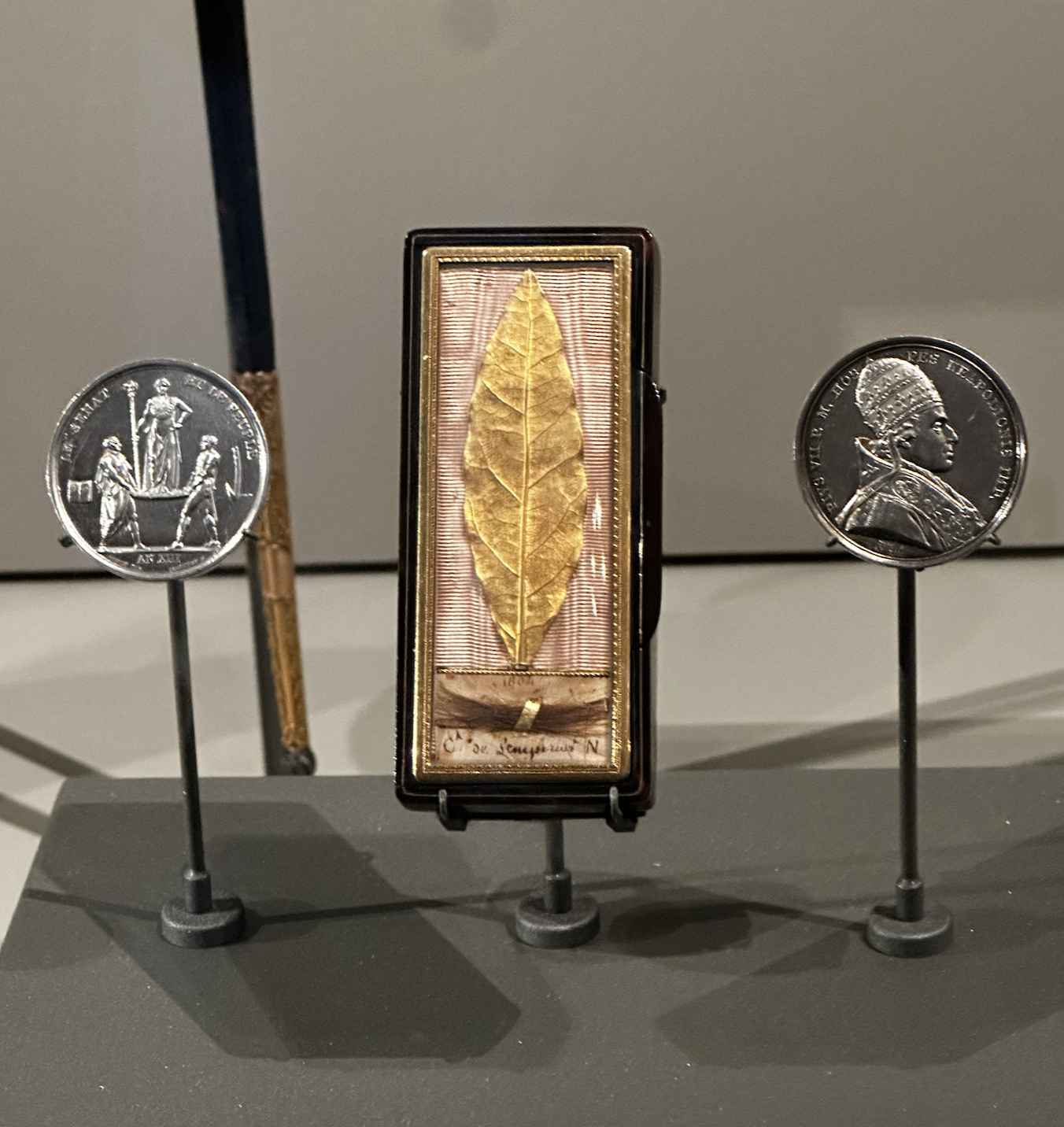
The gold laurel wreath crown had been created for the event by MartinGuillaume Biennas (B-N-A). The wreath was originally made up of 47 large gold laurel leaves, 12 small leaves, and 42 detachable berries placed on an oval band. When Napoleon tried it on, it was too heavy. He asked Biennas to remove three of the large leaves. Napoleon then told his jeweler that he had many beautiful pieces for him to keep the three leaves and give them to his three daughters. On the day of the ceremony, one of the leaves fell off, and the Emperor gave it to his chief party planner, Isabey. This one is now in the Napoleon museum within the Château de Fontainebleau along with other pieces from that day including the sword, sans Regent diamond.
We have to go back to Charlemagne and his coronation on Christmas Day, 1,004 years and 23 days before this moment. As the first Holy Roman Emperor, Pope Leo III crowned him in Saint Peter's in Rome. Did he have to? No, and in fact he only did it to give his fleeting power a boost. Charlemagne was angry and regretted that moment for the rest of his life. Once Napoleon learned of this in the days before the coronation, he made a decision. The Pope would not be the one to place the crown on his own head; he would do it himself.
From the Pope to Isabey, to the marshals and clergy surrounding the altar, everyone was aware of this change. The pamphlet handed out to those in attendance still said the Pope would crown the couple, which caused gasps throughout the cathedral.
It was now Josephine's turn, Napoleon’s great love and first wife, and the devoted subject of his hundreds of love letters. She ascended to the throne with his sisters reluctantly behind her. Junot stated, "One of the chief beauties of Empress Josephine was not merely her fine figure, but the elegant turn of her neck, and how she carried her head, presented so perfect a personification of elegance and majesty." Josephine clasped her hands and lowered her head as tears fell down her face, and just then, he placed the crown on her head over her tiara.
After the ceremony, the couple headed to their throne at the entrance. Napoleon’s platform was just a tad bit higher than Josephine’s, of course. As Josephine walked up the very steep stairs, Napoleon’s three sisters reluctantly carried her train. The sisters gave her train a little yank as she ascended the steps. As she took her first few steps, she staggered back and almost fell.
The entire ceremony was followed by a full Mass led by the Pope. Following Mass, the Pope and Cardinals left the Choir, and Napoleon returned to the altar once again. Alone, he stood and declared that he would uphold the integrity of the Republic and respect and uphold the laws and the freedom of worship.
After five hours at 3 pm, the Imperial couple walked out of the entrance of Notre Dame to a 101 canon salute.
The entire procession wound its way through the streets of Paris, lit by 20,000 torches. After 6 pm they arrived at the Palais des Tuileries, where they celebrated with a lengthy meal and plenty of wine.
The occasion was celebrated for the next thirty days. Six months later, on May 26, 1805, they would do it all again in Milan as Napoleon was crowned the king of Italy.
The entire event might have been left in the history books if it weren’t for the painting by Jacques-Louis David. While it is not a true recreation of the event, it conveys the grandeur of what it was within the crumbling walls of Notre Dame, hidden behind tapestries, fabric, and faux marble.
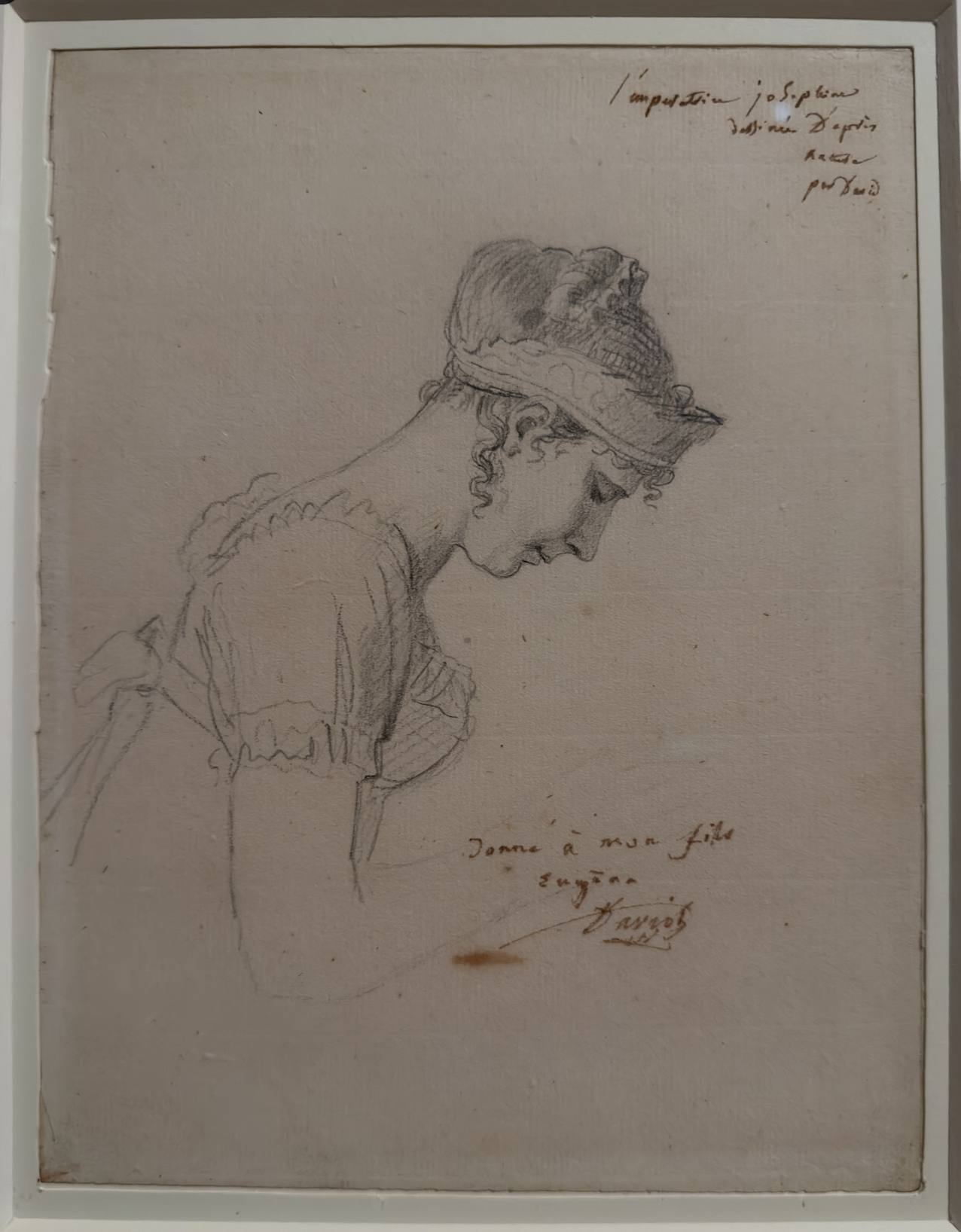
Jacques Louis David played hard to get for over four years before being named the official painter to the Consulate and later the Emperor. On November 1, just a month before the coronation. Napoleon commissioned him to do four large-scale paintings of significant moments of his reign; only two were completed in the end. The other is the Oath of the Eagles, which occurred three days later on December 5, 1804. That painting hangs in the Château de Versailles.
From the start, David knew he wanted the piece to be grand and set his sights on creating what he thought would be the largest painting. His current atelier, since being kicked out of the Louvre on August 21, 1801, by Napoleon, was too small. David argued that his atelier was essential and was able to delay his final eviction for four years. After accepting the position as the government's artist, he was given a new atelier on th Place de la Sorbonne, in the former chapel of the College de Cluny.
The large space, with its northern windows, was the perfect place to bring the ceremonial scene to life.
David attended the coronation and sat above the scene in the balcony, but that wasn’t his original seat. Louis Philippe Ségur, the master of ceremonies, originally had David seated behind a pillar, which ticked him off and led to a fistfight. David eventually secured his seat in history, with his assistant Georges Rouget alongside him.
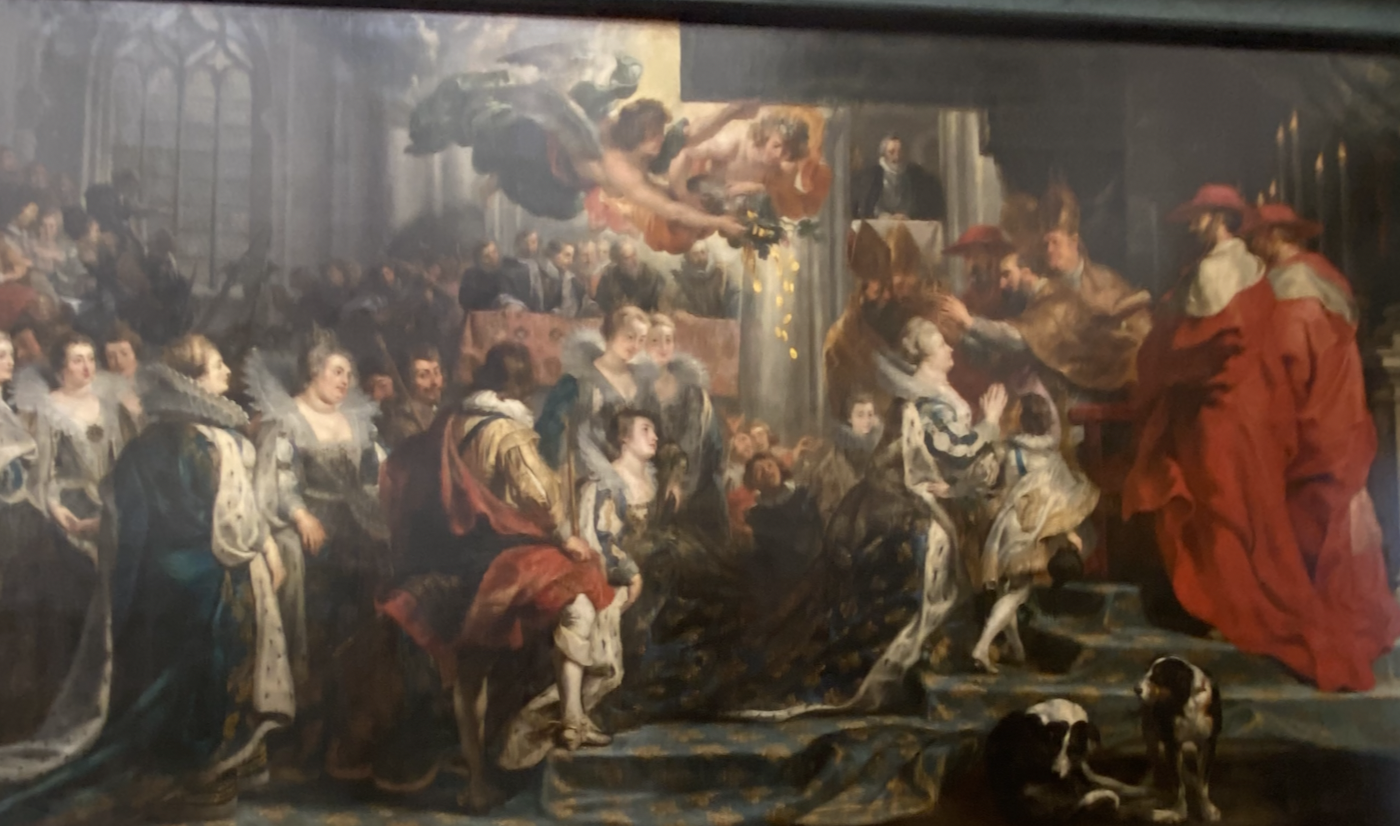
David was greatly inspired by Peter Paul Rubens's massive painting of the coronation of Marie de Medici. On May 13, 1610, in the Basilique Saint Denis, Marie kneels on steps covered with a blue tapestry embroidered with gold fleurs-de-lis. Seated above her is my man, Henri IV, looking down on her. The scene would inspire David as he constructed his own painting.
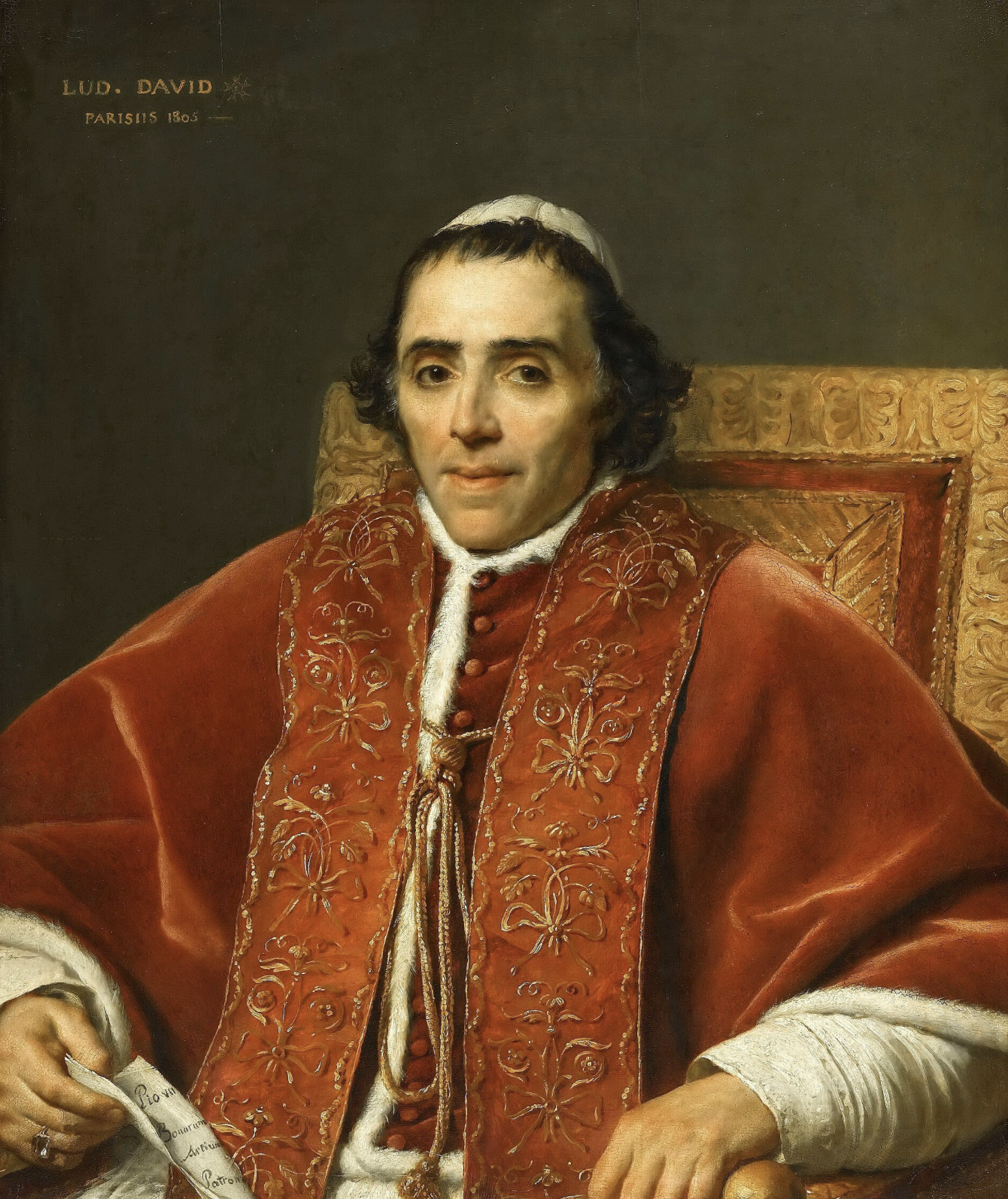
As soon as the event was over, David began sketching the entire composition. More than 90 of the main figures visited David’s atelier to pose. Each session lasted two hours if they were to be sketched head to toe, and many arrived in their ceremonial attire. Pope Pius VII arrived and sat for far longer, and David painted a portrait of the Pope that now hangs in the Louvre opposite the Sacre.
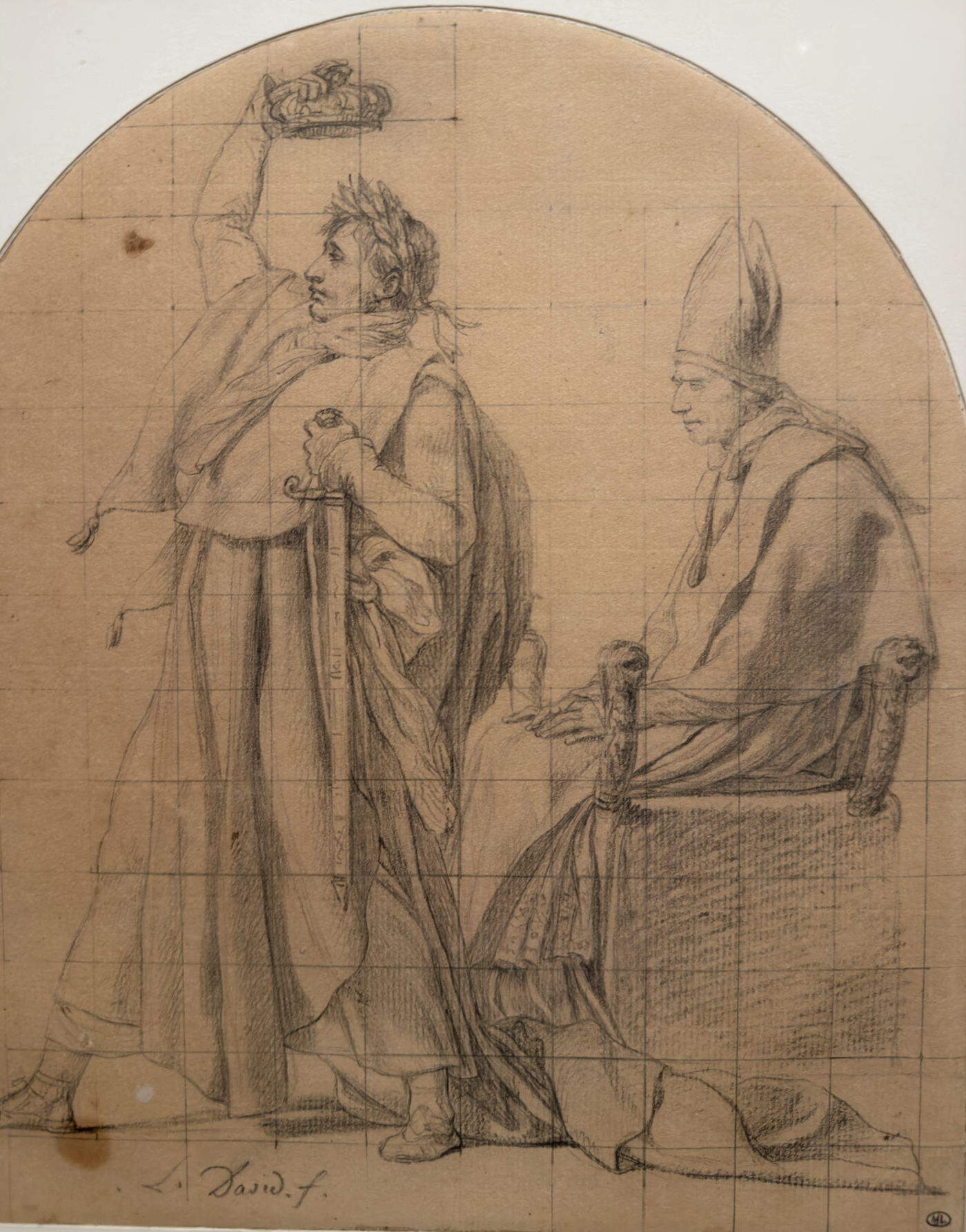
To capture the regalia, David requested that many pieces be brought to his atelier. Napoleon finally agreed, under high security, with Xavier Esteve, the chief treasurer to the crown, who never let them out of his sight.
David began working on the painting on December 21, 1805. The Emperor made a few changes and additions to the painting, which differed slightly from the actual event. The biggest change was the addition of his mother, sitting on the balcony above him. Due to the family feud, Letizia Bonaparte remained in Rome and didn’t attend the event.
The original sketch that David presented to the Emperor had the Pope sitting and looking on with his hands in his lap, and the little Emperor said, "I didn't bring him here to do nothing,” so he was altered in the final piece to anoint the ceremony.
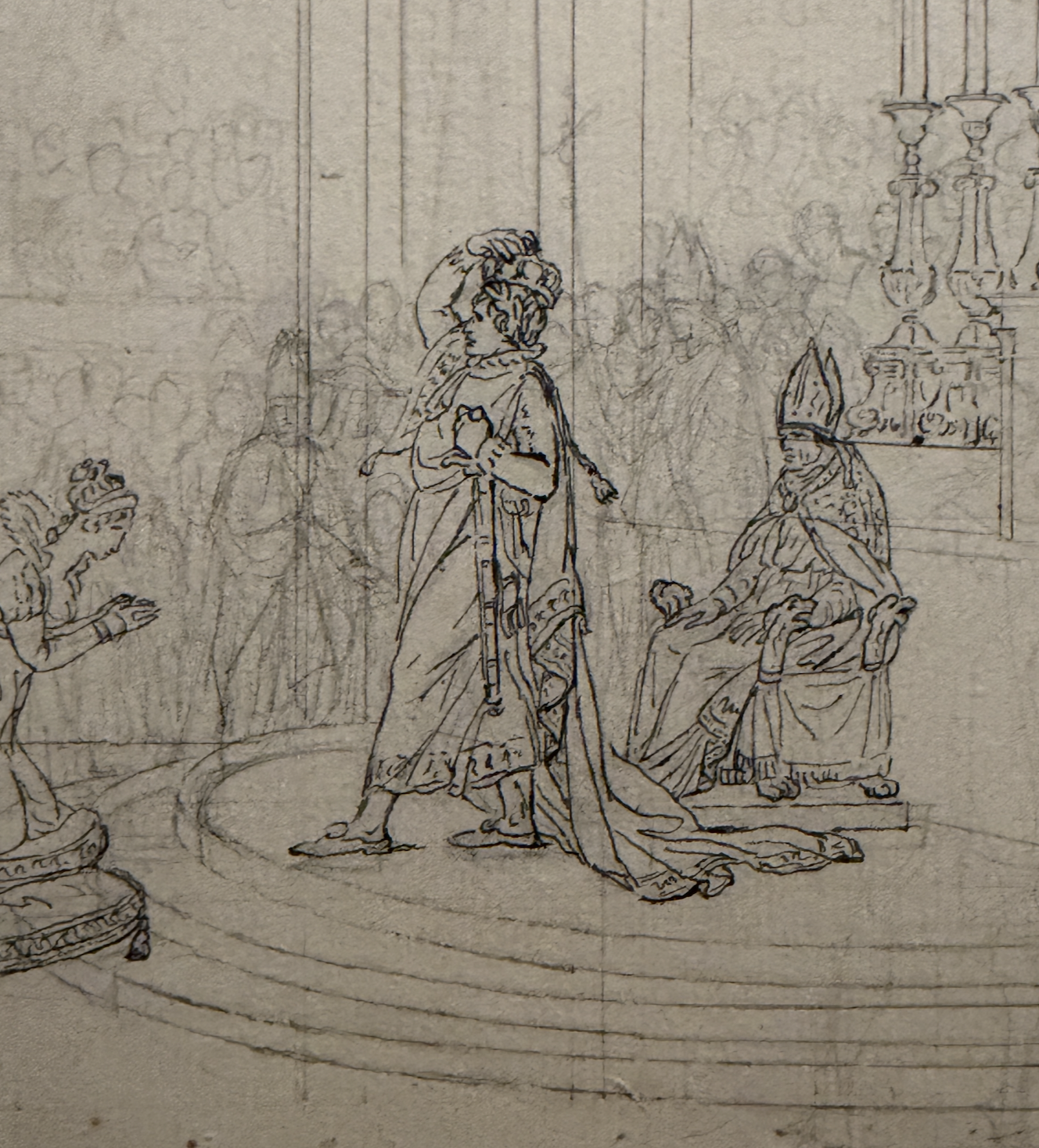
Then there is that gasp-worthy moment. In many of the first sketches, David captures the moment that Napoleon raised the crown over his own head. Leaning back in defiance, his right foot stepping forward, he raises the crown in his right hand, and his left hand is placed on the ceremonial sword that he pulls closer to his heart.
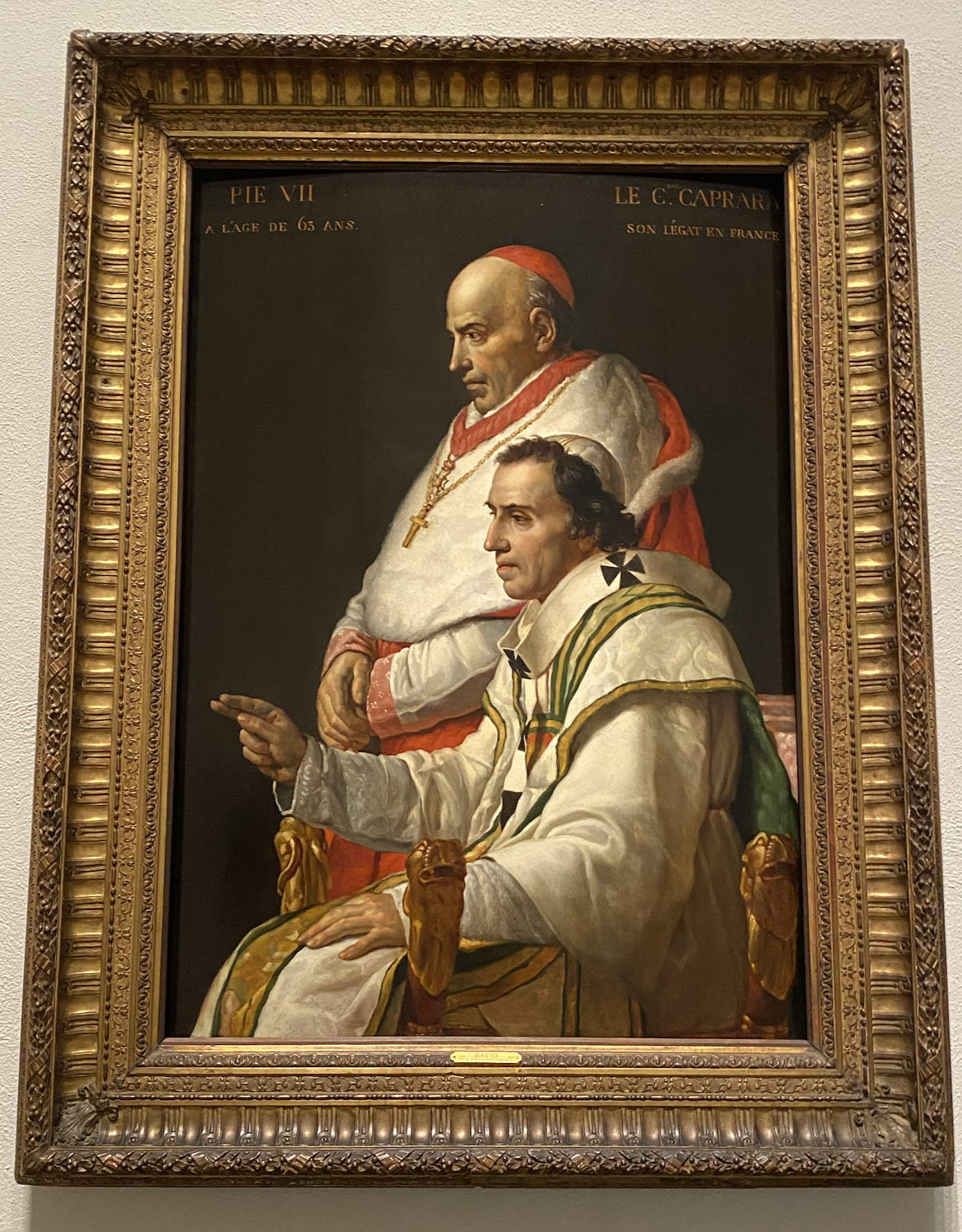
David also painted the Pope and Cardinal Caprara, found in the Philadelphia Museum. Years ago, an early drawing of Napoleon holding the crown over his head was discovered when X-raying the painting (see black & white photo)
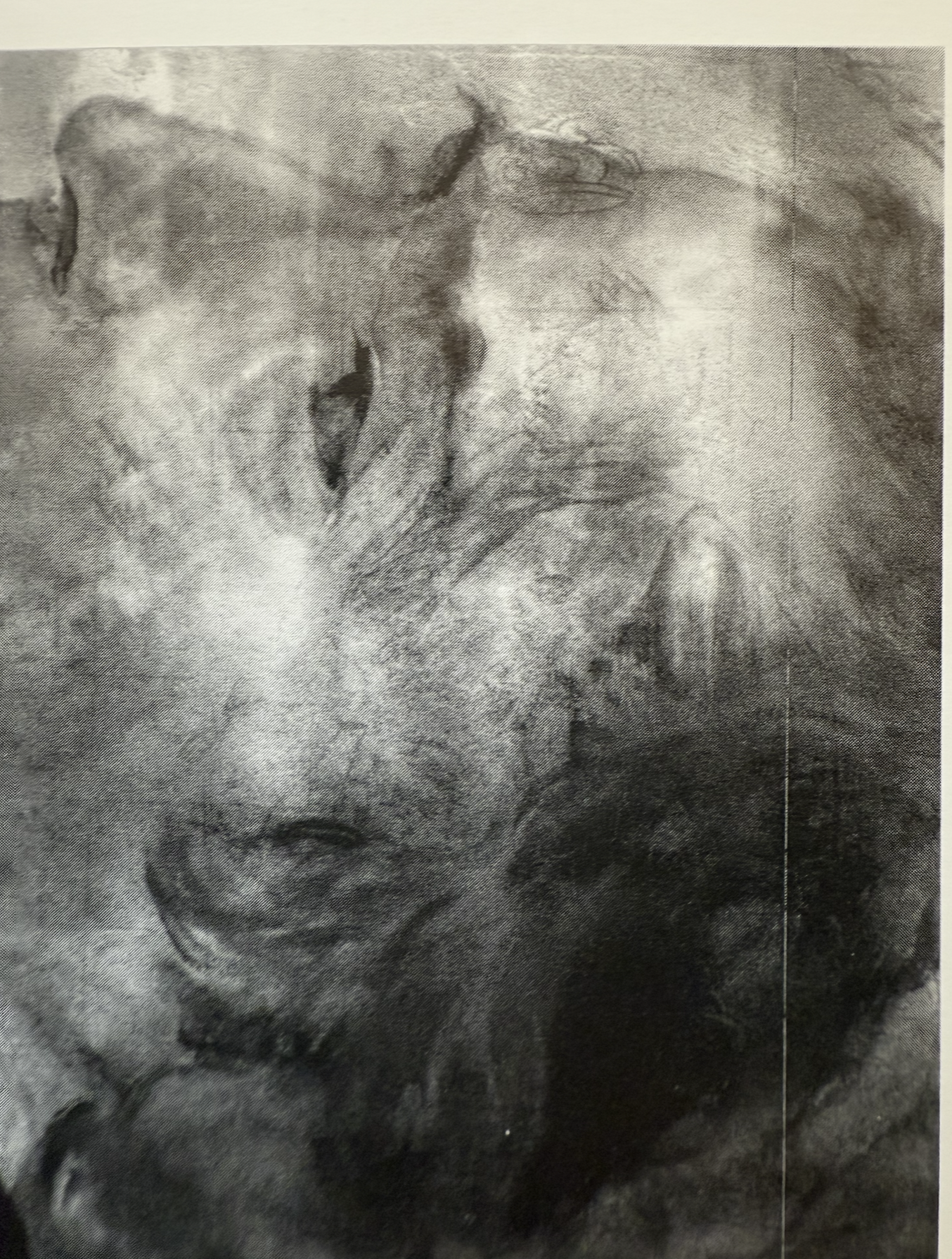
When Napoleon saw the early sketches, even the man who was the master of propaganda and the ego that was far larger than the man himself said, " It's a bit much.” David then changed it to the moment when he crowns his Empress Josephine, who is stunning in this painting.
Once David made the change, it opened a portion of the painting behind the Emperor's back. It is one of my favorite hidden treasures in this painting, and few catch it. Behind Napoleon, at the height of his shoulders, is a short man in white, glancing up towards the crown. That, my friends, is Julius Caesar. The great Roman Emperor who died in 44 BC, who clearly wasn’t at the event, but it was another way to align the new French Emperor with one of the greatest in history. Also, Napoleon is inches taller than him. David used a sculpture of the Roman Emperor in the Louvre, which he had sketched, for the likeness.
In total, there are around 200 figures in this painting, and a majority are the actual people in attendance. In the upper balconies, David filled those in with the faces of his friends and family
Starting from the left, you will notice it is darker than the right. It is done to pull your eyes to the light and the moment of the coronation. First are Napoleon’s two brothers: Joseph, who would become king of Naples in 1806, and Spain in 1808. And Louis Bonaparte, who became king of Holland in 1806 and had married Josephine’s daughter Hortense in 1802. Between them, seated on a pillow, is the Crown of Charlemagne that Napoleon had created.
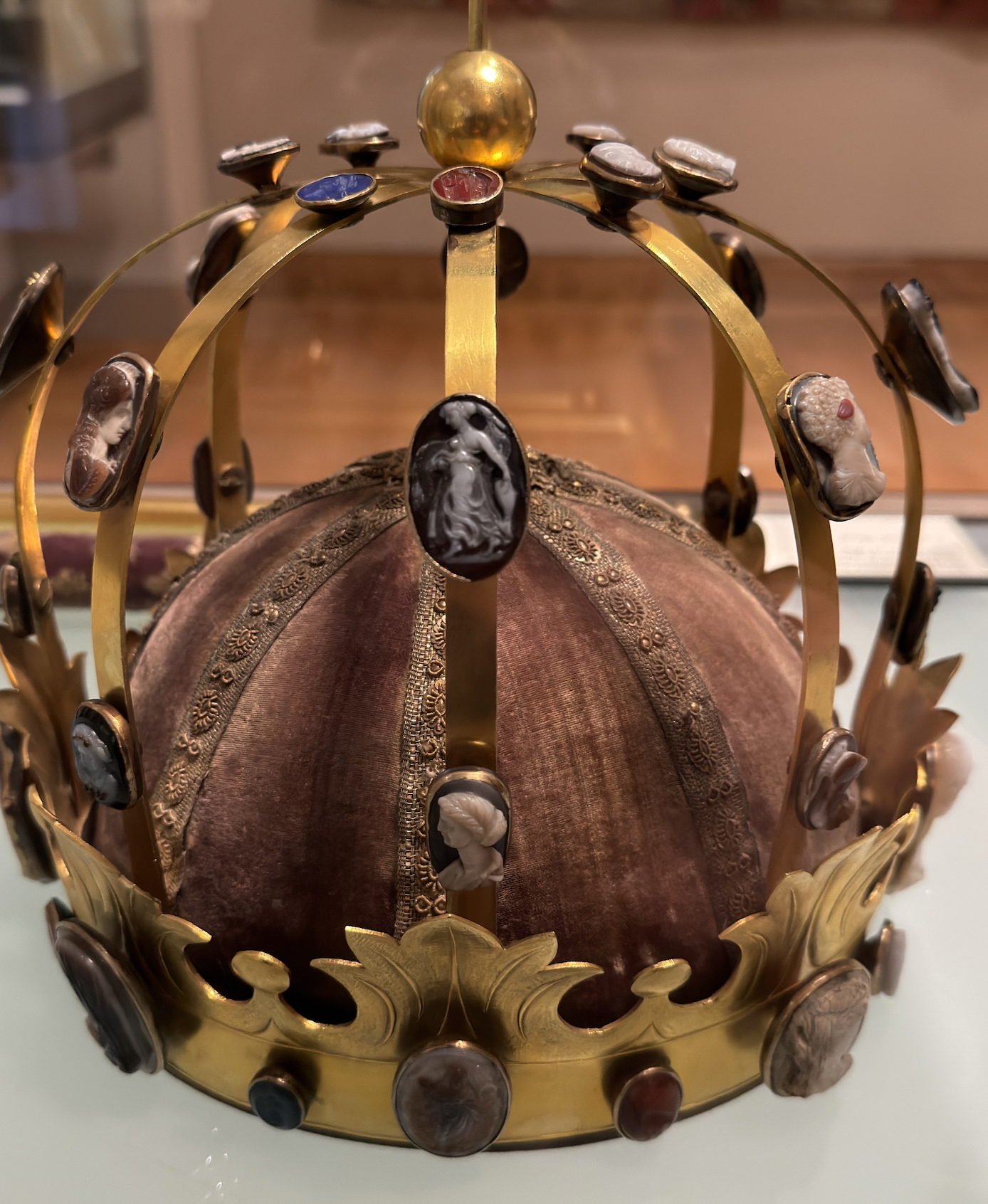
The Crown of Charlemagne was the name given to the coronation crown of the Kings of France, dating back to 1237. Named for the great medieval King of the Franks and Holy Roman Emperor Charlemagne, it was first used to crown his grandson, Charles the Bald. Over time, a simple band topped with fleur-de-lis was added with jewels and a velvet cap. A matching open-worked crown was made for the coronation of the queens, but only one would survive the 1590 Siege of Paris. The surviving crown would be used until Louis XVI was crowned in Reims and destroyed during the French Revolution, never to be seen again.
When it was time for Napoleon to take his throne in France, he needed a crown. Martin-Guillaume Biennais was given the task. The design drew on 15th-century drawings of Charlemagne and a bust Napoleon had once seen in Aix-la-Chapelle, which showed the Emperor crowned with cameos and carnelian jewels.
Eight cameo-covered arches attached to a band come together at the top and are met with a gold cross. The crown is adorned with forty precious stones and engraved cameos. Many came from the reliquary bust of Saint Benedict, created in 1401 and given to the Basilique Saint Denis by Jean, duc de Berry. Other cameos from the treasuries in Arpajon, Bourges, and a few from Aachen are said to have belonged to Charlemagne.
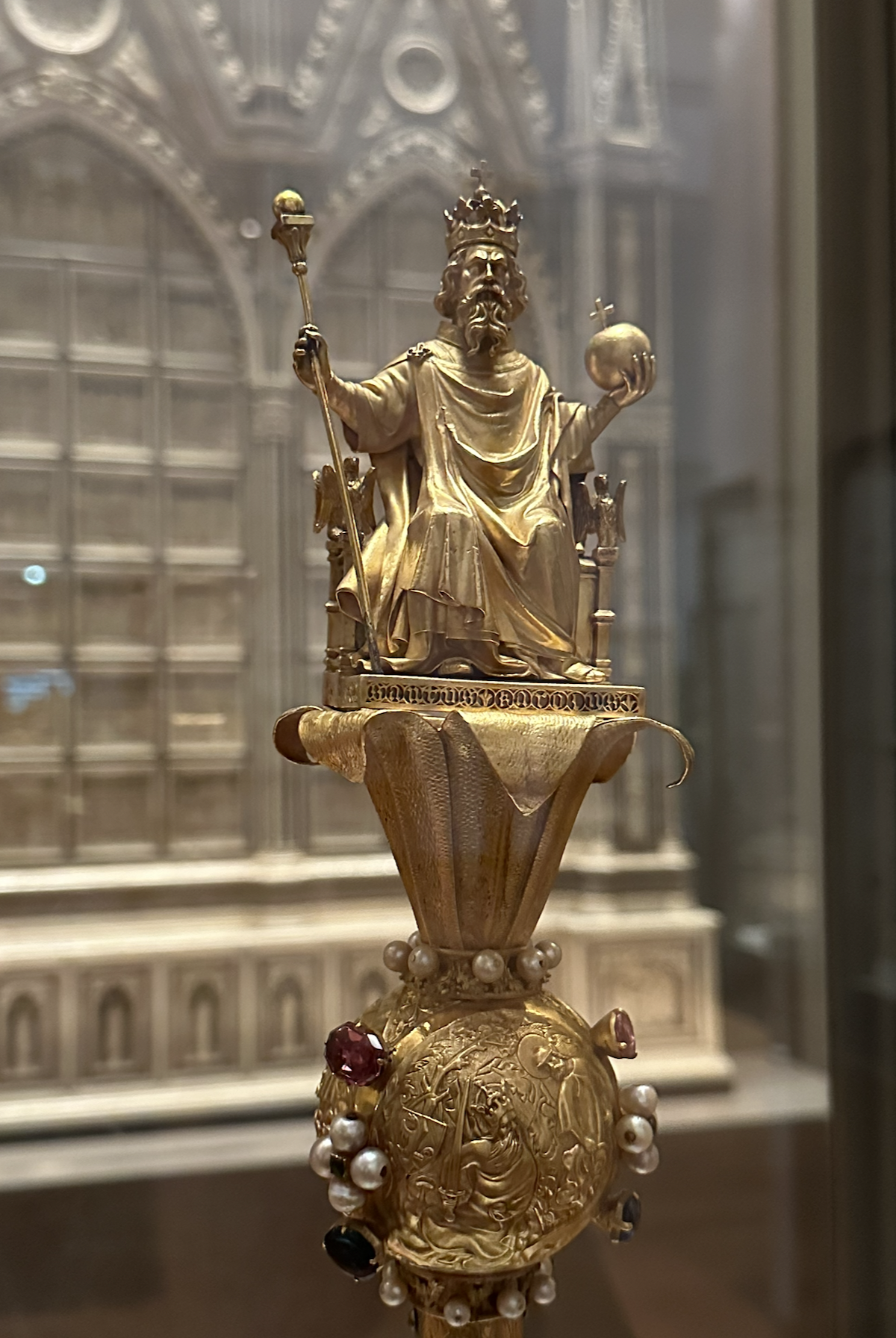
Above the head of Louis is one of my favorite pieces of regalia,, the scepter of Charles V, which dates back to the 14th century and is one of the few surviving pieces of the medieval French reliquary. Created for the coronation of Charles V's son in 1380, it was used by every ruling sovereign until the very last, Charles X, in 1825. Sitting on a lily that was initially enameled white, Charlemagne sits on a throne. He holds an orb that represents the world in his left hand, topped with a cross. In the large painting, David depicted the wand in the hands of Le Maréchal Pignon just to the right above the Crown of Charlemagne. The scepter can be found in numerous paintings of the former kings and emperors, as well as over the mirror in the Apartments Napoleon III we shared last week. It is currently locked away for safety since the theft of the Crown Jewels in 2025.
Next we have the sisters, attending in protest. First is Caroline, who married Joachim Murat in 1800 and became the Queen Consort of Naples when her husband took over the throne from her brother in 1808.
Pauline Bonaparte’s second husband was Camille Borghèse, a Roman prince, whom she married in 1803 after her first husband, Charles Leclerc, was killed in battle.
And last but not least, Élisa, the oldest of the sisters, married Felix Baciocchi, one of the few marriages at the time based on love. He was named Grand Duke of Tuscany in 1809. In the end, these sisters did more than okay for themselves.
Hortense Beauharnais, daughter of Josephine and adopted daughter of Napoleon, looks on and holds the hand of her son, Napoleon Charles Bonaparte, the heir to the Empire, who would die on April 5, 1807. (he is the older brother of Louis Napoleon, better known as Napoleon III)
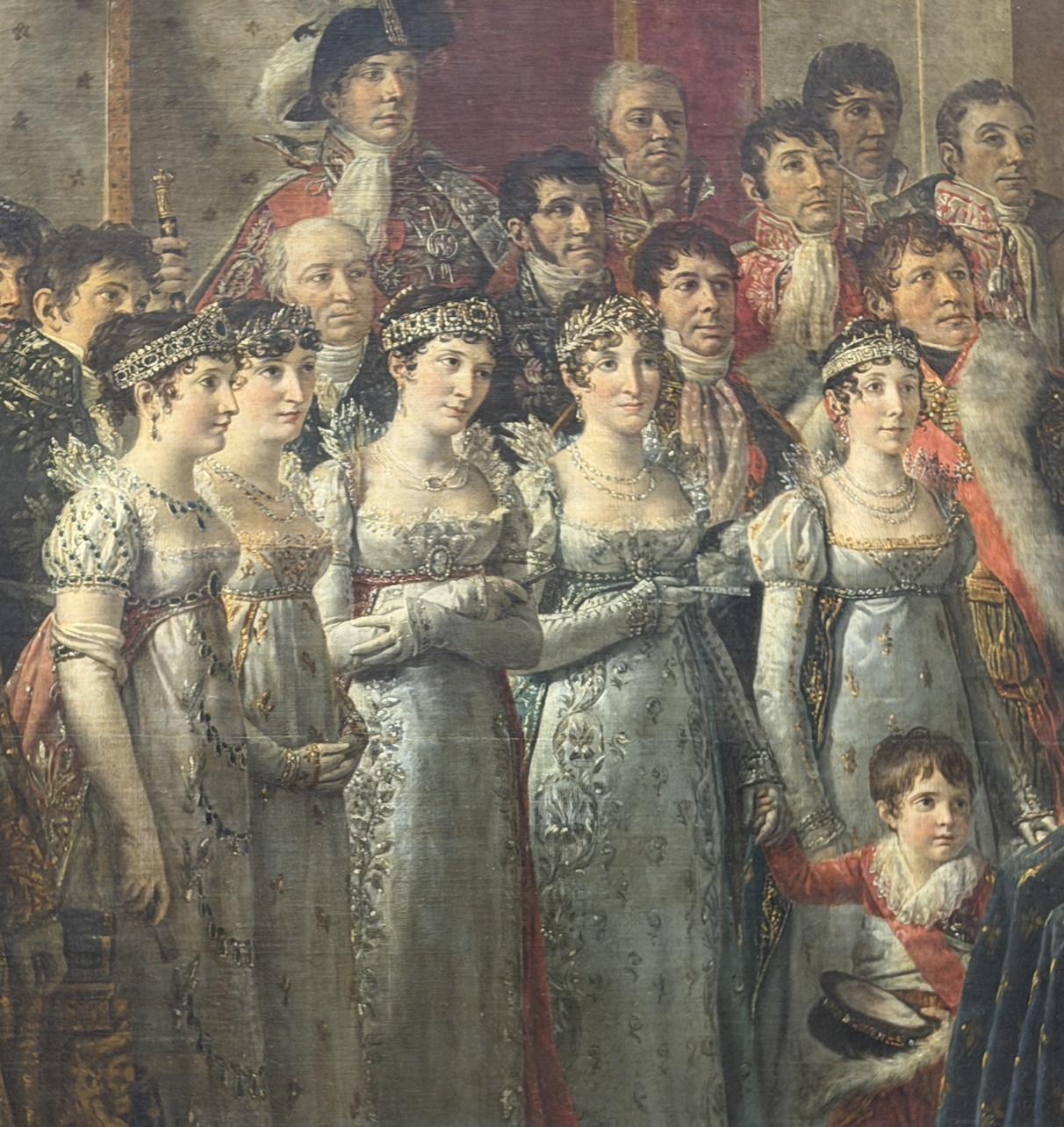
The last lovely lady is Julie Clary, wife of Jerome and future queen of Naples, Sicily, Spain, and India.
The seated figure is Cardinal & Archbishop of Paris Jean Baptiste Belloy, who was 95 at the time.
The two ladies behind Josephine, holding her train, are her cousins and ladies-in-waiting. On the left, Adelaide Marie Françoise de La Rochefoucauld and Emile de La Valette.
While the event did occur in Notre Dame, it's hard to compare it to the cathedral we know today. On the far right edge, a bit of the Pietà created by Nicolas Coustou for the Vow of Louis XIII added in 1723.
Another favorite addition is the candlesticks sitting on the altar; those also remain and can be found in Notre Dame. I remember clearly, many years ago, before the fire, wandering through the cathedral early in the morning, coming across the candlesticks and crucifix in the Chapel Saint Georges, and reading on the plaque that they were the same candlesticks from the coronation.
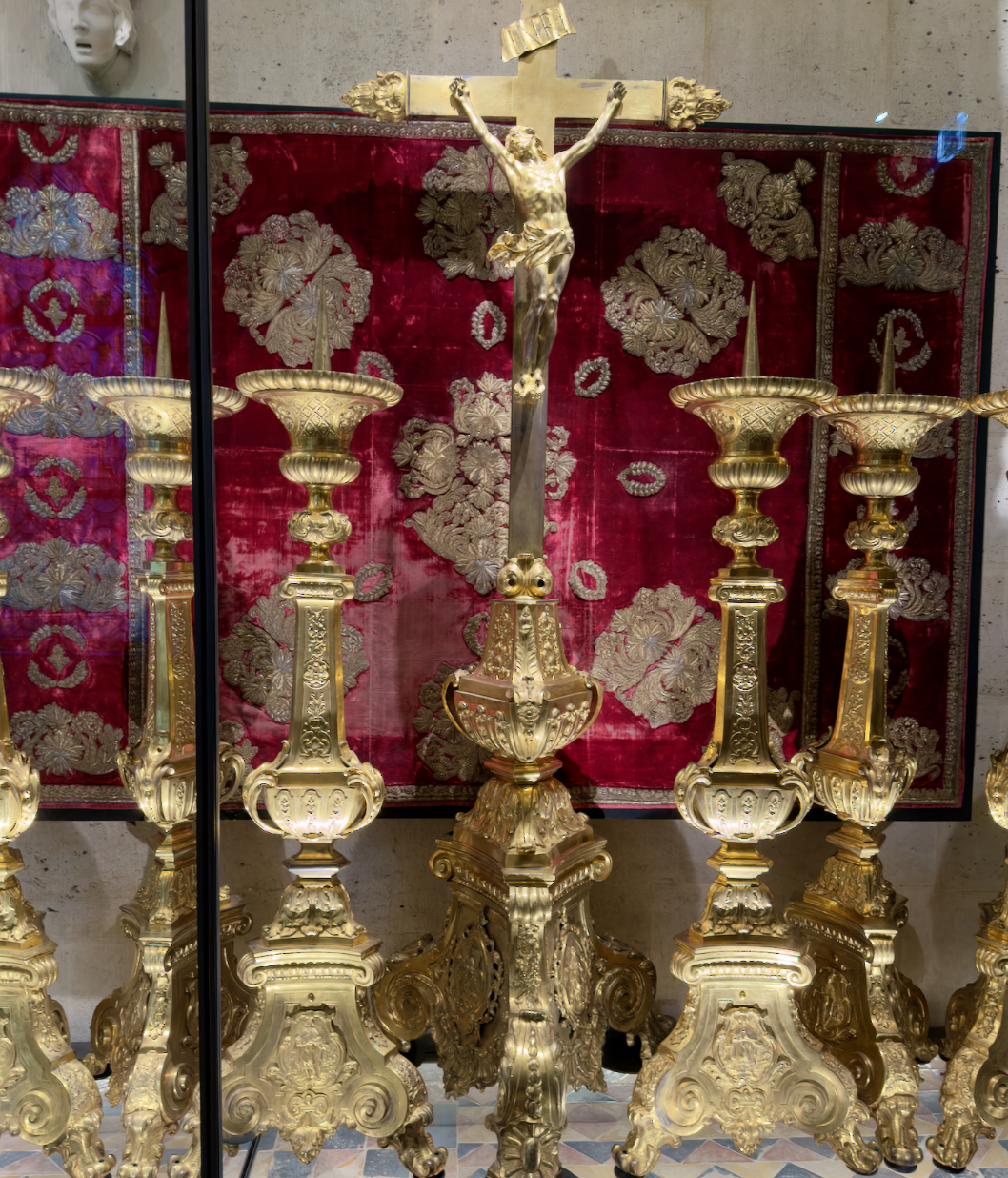
The set of six candlesticks and the crucifix, brought from the Arras Cathedral in Northern France, would be placed on the new altar. They were originally silver, and Napoleon had Louis Olivier gild them in gold. In 1811, during one of the many lootings of the treasury of Notre Dame, the crucifix and candlesticks were thrown onto the marble floor, severely damaging the bases. They were repaired in 1838 and have remained in Notre Dame since. They can now be found with the processional cross in the Treasury of Notre Dame, along with other items from the ceremony, including the gorgeous embroidered liturgical cope worn by Abbé Salamon, who holds the processional cross by Loque and Cahier.
David felt the piece was finally finished on November 18, 1807. His immense painting stretches 32.12 feet across the Pompeian red walls of the Salle Daru in the Denon wing. It is 20.37 feet high, and while he wanted it to be the largest painting, he missed it by a matter of inches. Veronese's Wedding Feast at Cana is 22.21 feet by 32.6 feet. Also hanging in the Louvre.
David had thought of everything, including the height at which the painting would hang and the average height of viewers.
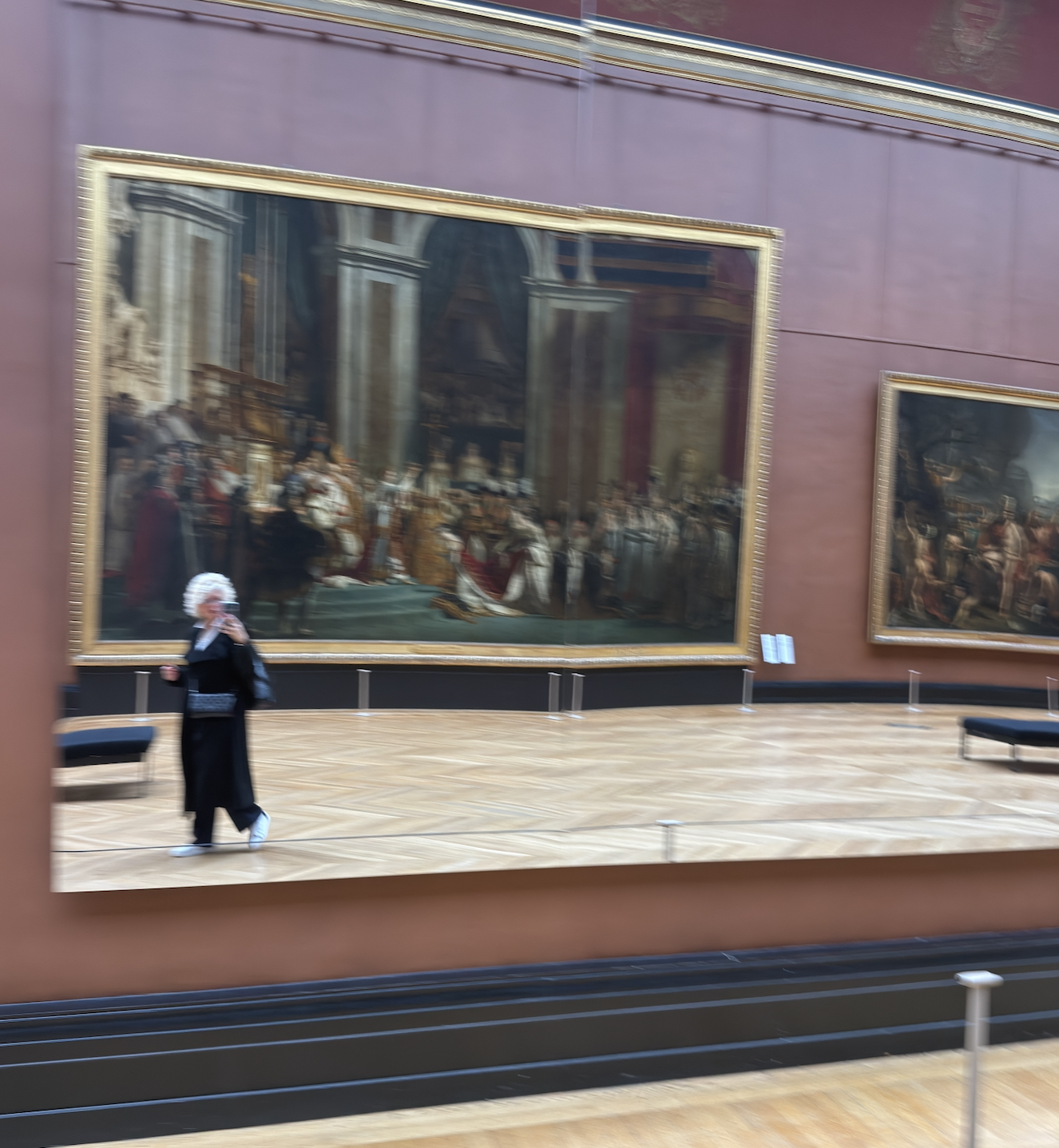
For the 2025 exhibition dedicated to David, the Louvre placed three curved mirrors opposite the painting to draw viewers into the scene.
On January 4, 1808, four years after the event, Napoleon saw the completed masterpiece; he said, “It is not a painting; we can stroll around in this picture.”
A month later, on February 7, 1808, the masterpiece was seen by the public for the very first time. Hanging in the Musée Napoléon (the Louvre today) for six weeks, the painting drew thousands to witness the scene, including many who had been there that day. It reappeared in the fall of 1809 and again in 1810.
The painting remained with David and even went with him to Brussels during his exile in 1815. In 1819, it was purchased by the state but was hidden away, as Napoleon wasn’t everyone's favorite during the Restoration.
In 1807, before the original was finished, a wealthy American group commissioned a full-size copy that would travel across the states. David began working on it with his trusty assistant Georges Rouget in 1808 and finally finished it in 1822 during his exile.
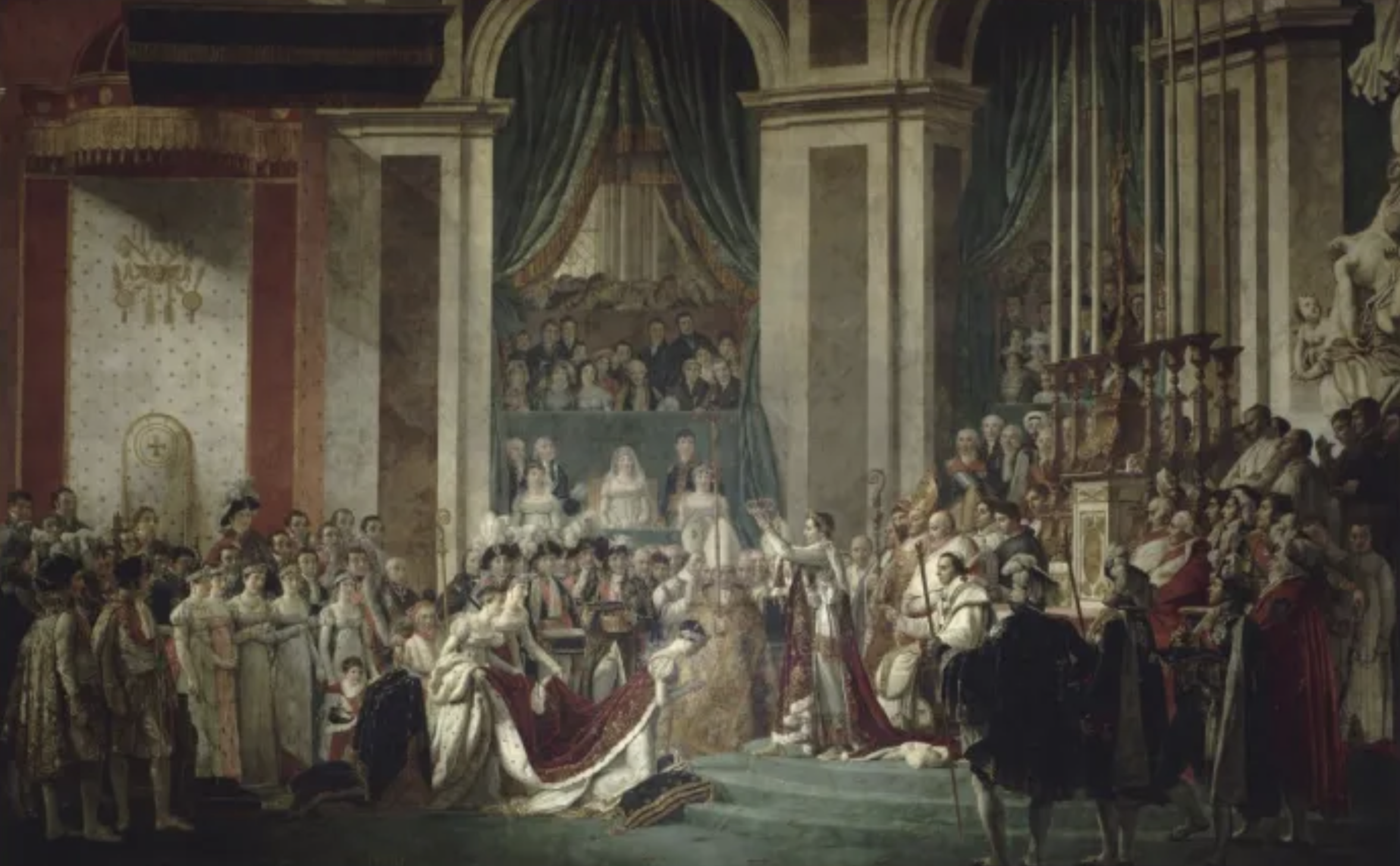
The American business group never paid for it, and it also remained with David and, after his death in 1825, with his children. His son Eugene did, in fact, have it sent to the US, where it was seen in NYC, Boston, and Philadelphia. Upon its return to France, it was sold by the Georges Petit Gallery to Paris Eugene Singer, of the sewing machine family, for 32,000 francs. After his death in 1932, the painting remained in England with his family until it was finally sold to the Château de Versailles in 1943. Five years later, on June 14, 1948, it was inaugurated and hangs today in the Salle de Coronation.
Look closely; there are a few changes. The most notable is Pauline's dress, which in this version is pink. David changed a few of the faces, replacing notable figures with the faces of his friends. The upper balcony where Madame Mere sits is also much lighter, and the faces are easier to define. One thing I also noticed is that is seems that he also replaced the Crown of Charlemagne with the Orb. More in-depth research is needed on that.
A 3rd copy was to be made for the Gobelins, which would eventually be turned into a tapestry, but it never came to light.
Seeing David’s fantastic work of art, filled with symbolism, history, and regal touches, is one of the many must-sees every time I am in the Louvre. I could never tire of sitting on the bench so perfectly placed in front of it and taking in every face and detail each time I find something new.