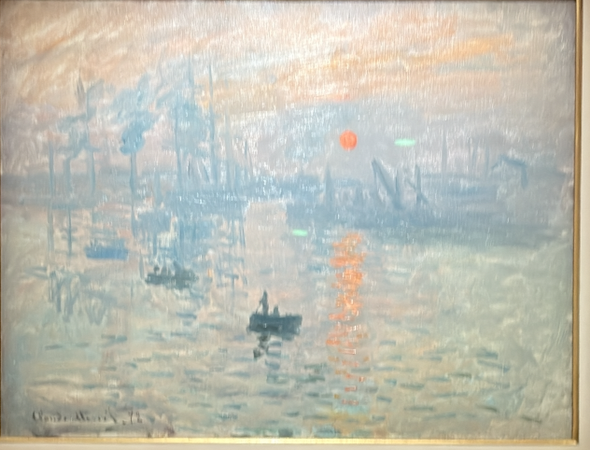
On November 13, 1872, the day before his 32nd birthday, Claude Monet sat in the window of his hotel in Le Havre and captured the sunrise. This wasn’t just any sunrise; it was the sunrise that would name an entire movement.
The Limited Company of Artists, Painters, Sculptors, Engravers, etc., was established on December 27, 1873, by Monet, Pissarro, Renoir, Sisley, and Beliard. On April 15, 1874, they held their first exhibition in Nadar's former photography studio at 35 Blvd des Capucines. The first 10 days were quiet, and the people who did visit came to laugh at this new so-called style of art. Ten days into the exhibit, journalist Louis Leroy from Le Charivari attended and wrote an article that was published on April 25, 1874.
"Impression, I was sure. I also thought to myself that, since I am impressed, there must be something in it... And what freedom, what ease in the bill! The wallpaper in the embryonic state is even more done than this.” As an artist and engraver himself, he was a bit harsh, but everyone was against this band of rebels.
At the time, the academic art world thought these ragtag groups of artists who painted outside in the elements were nuts, and the name didn’t help.
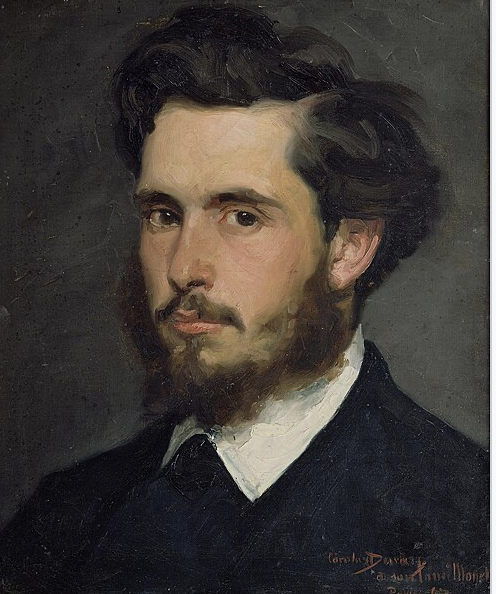
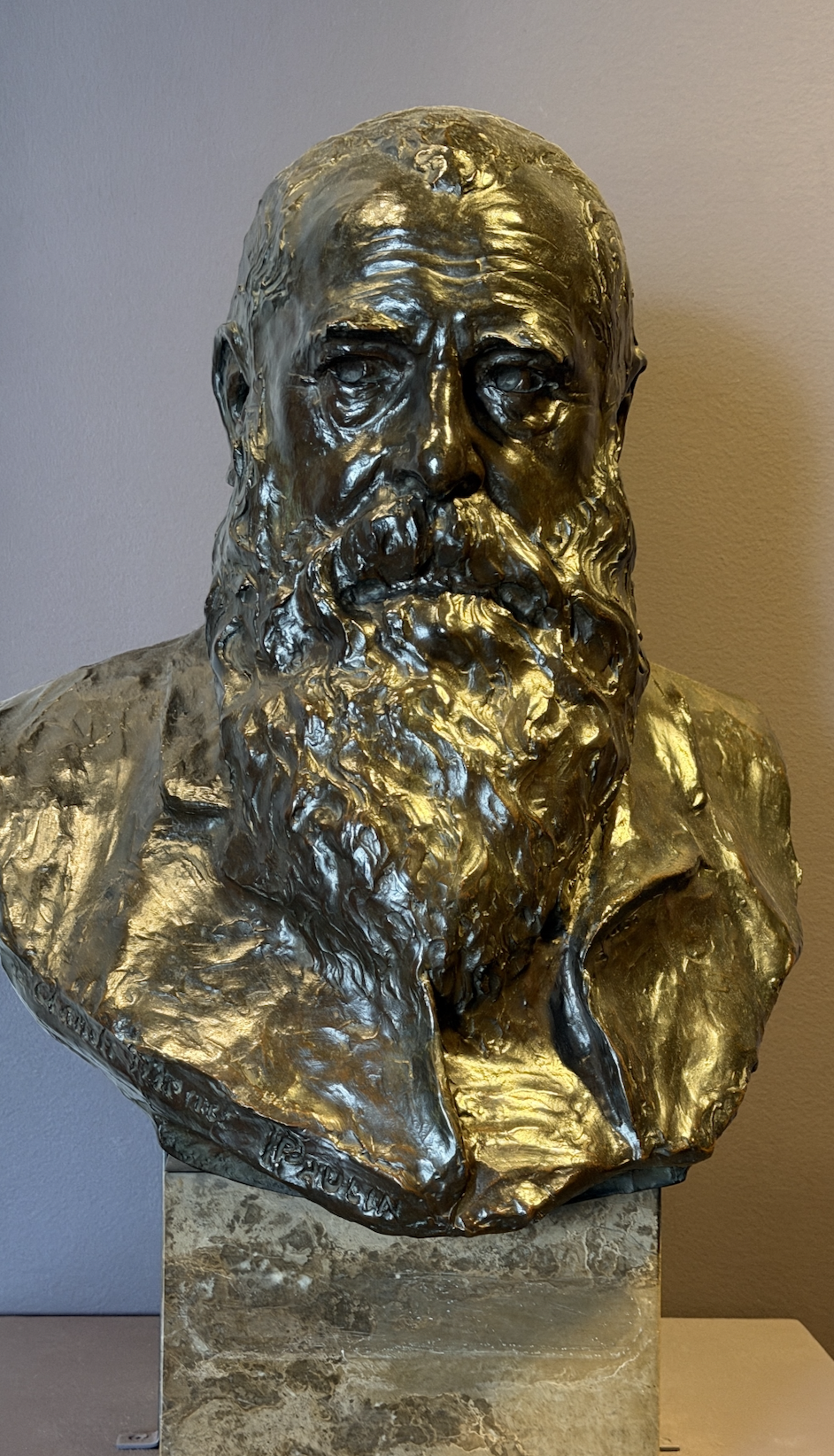
Portrait de Claude Monet par Carolus-Duran, 1867
Oscar Claude Monet was born on November 14, 1840, in Paris at no. 45 Rue Lafitte, a street later famous for its art galleries that supported the Impressionists. In 1845, the Monet family moved to Le Havre, and at age 11, he began sketching in the margins of his schoolbooks and creating caricatures of people in town. After his mother's death in 1857, he devoted himself full-time to art and returned to Paris in 1859.
For years, Monet struggled to earn a living. After his father cut him off because of his relationship with Camille, he borrowed from many friends. One of his most famous paintings in the Orsay, "Dejeune sur l’Herbe," was his response to Manet’s version, which was used as collateral for a house he rented and was almost destroyed. It’s hard to imagine that, with the legacy Monet left behind, he contemplated ending his life in 1868 by jumping into the Seine when his financial difficulties became too much.
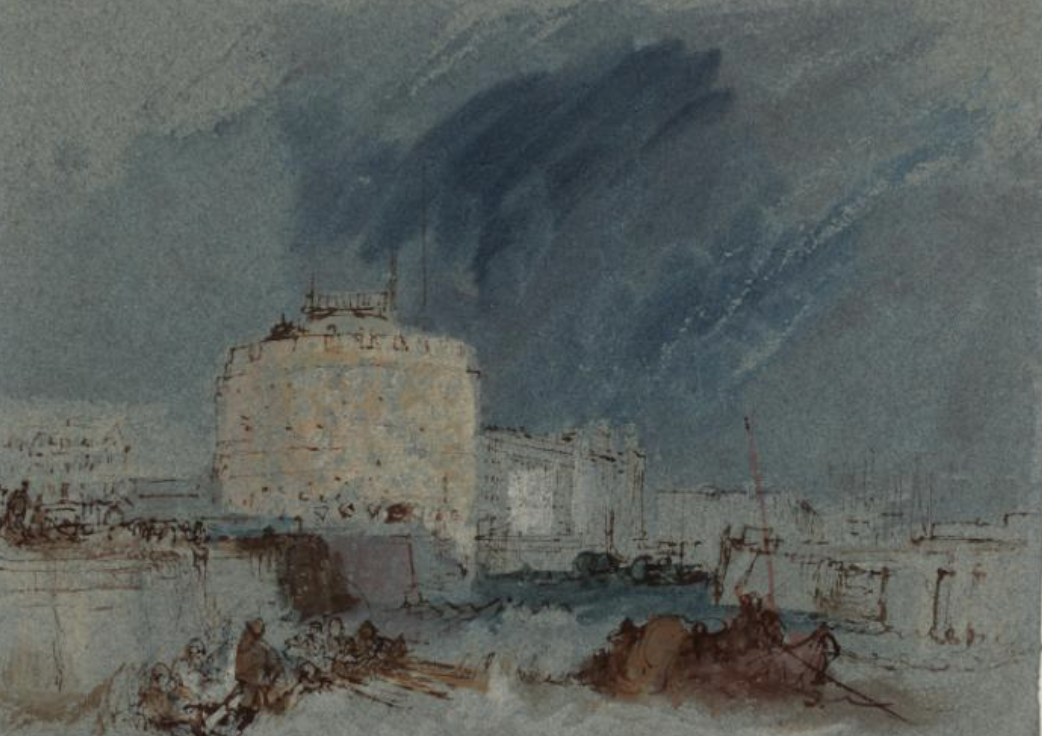
The Tower of François I at Le Havre, Normandy c.1832 Turner
In late September 1870, after the Franco-Prussian War leading to the Prussian Siege of Paris, Monet and a handful of other French artists fled to London. Gallerist and friend to the artists, Paul Durand-Ruel followed soon after and opened a gallery on New Bond Street in London. It was at this time that Durand-Ruel met Claude Monet and purchased many of his paintings that were displayed in his gallery and exhibitions. This marked the beginning of a more profitable period in Monet’s life. After the Commune and the Bloody Week all but destroyed Paris at the end of May 1871, Monet finally returned home.
While in London, Monet was introduced to Joseph William Turner's paintings at the National Gallery. Turner visited Le Havre several times between 1821 and 1832 as he prepared a published book of his engravings, “Wanderings by the Seine, from Rouen to the Source in 1834”. Turner captured a horizon filled with moody fog, clouds, and the life within it.
While in London, Monet created six paintings of the River Thames long before his more famous paintings, with a more colorful view of London and the House of Parliament. A few are currently on display in the Musée de l’Orangerie exhibit dedicated to Monet’s relationship with capturing time until January 25, 2027.
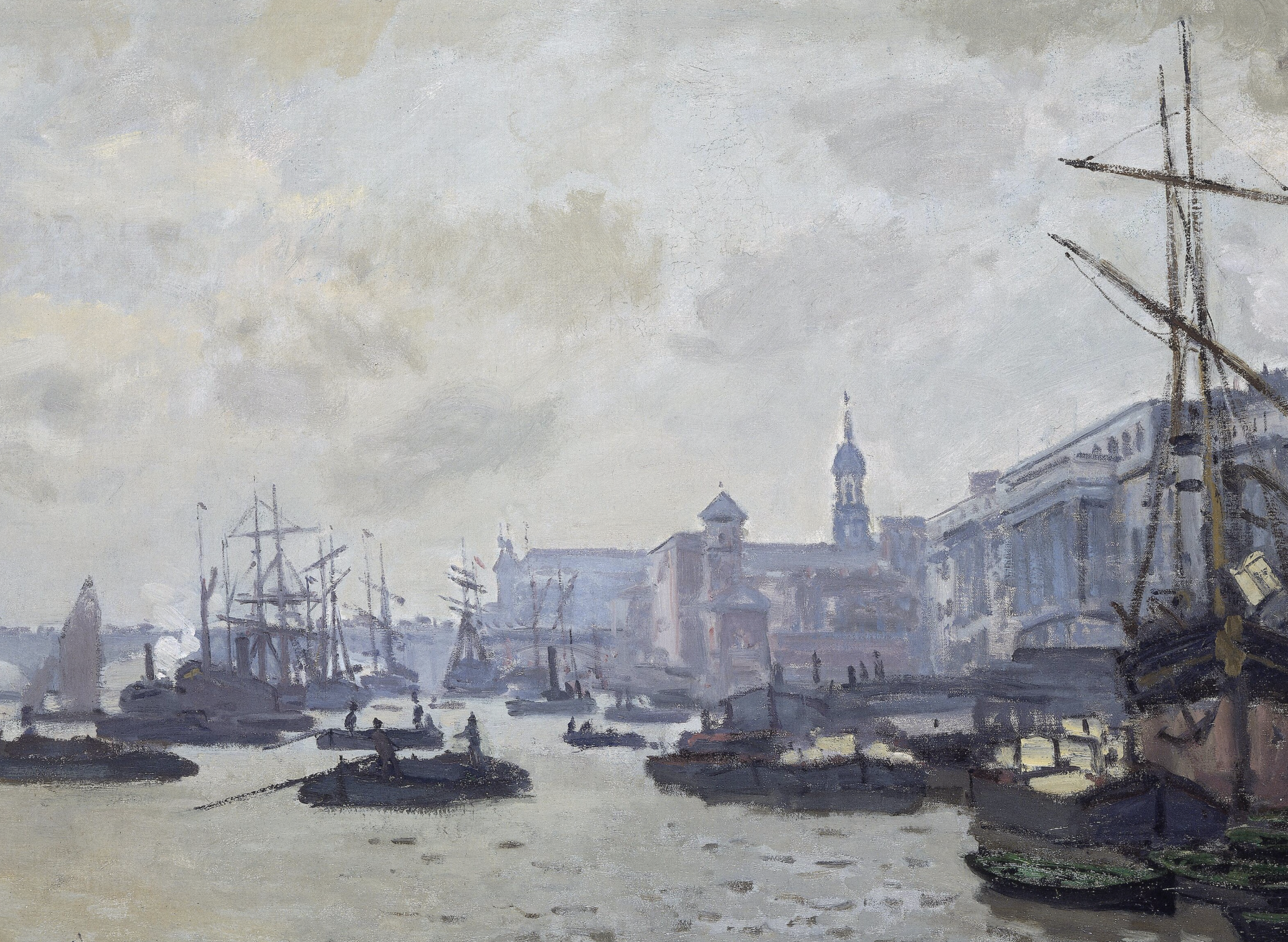
Le Bassin de Londres, 1871 Monet
By 1872, the tides had turned, and Monet began to make a bit more money thanks to his new relationship with Durand-Ruel. Following his return, Monet and his wife Camille moved to Argenteuil, where they lived until 1878. Inspired by Turner, Monet traveled along the Seine, stopping in Rouen and eventually Le Havre.
It was the waning years of the Industrial Revolution and the beginning of the Belle Époque, and the horizon looked far different when Monet arrived than it did for Turner, but it was still the same inspiring vista.
Turner stayed in a hotel along the Grand Quai, and Monet would do the same when he arrived in mid-November 1872. Cold air from the English Channel flowed into his room.
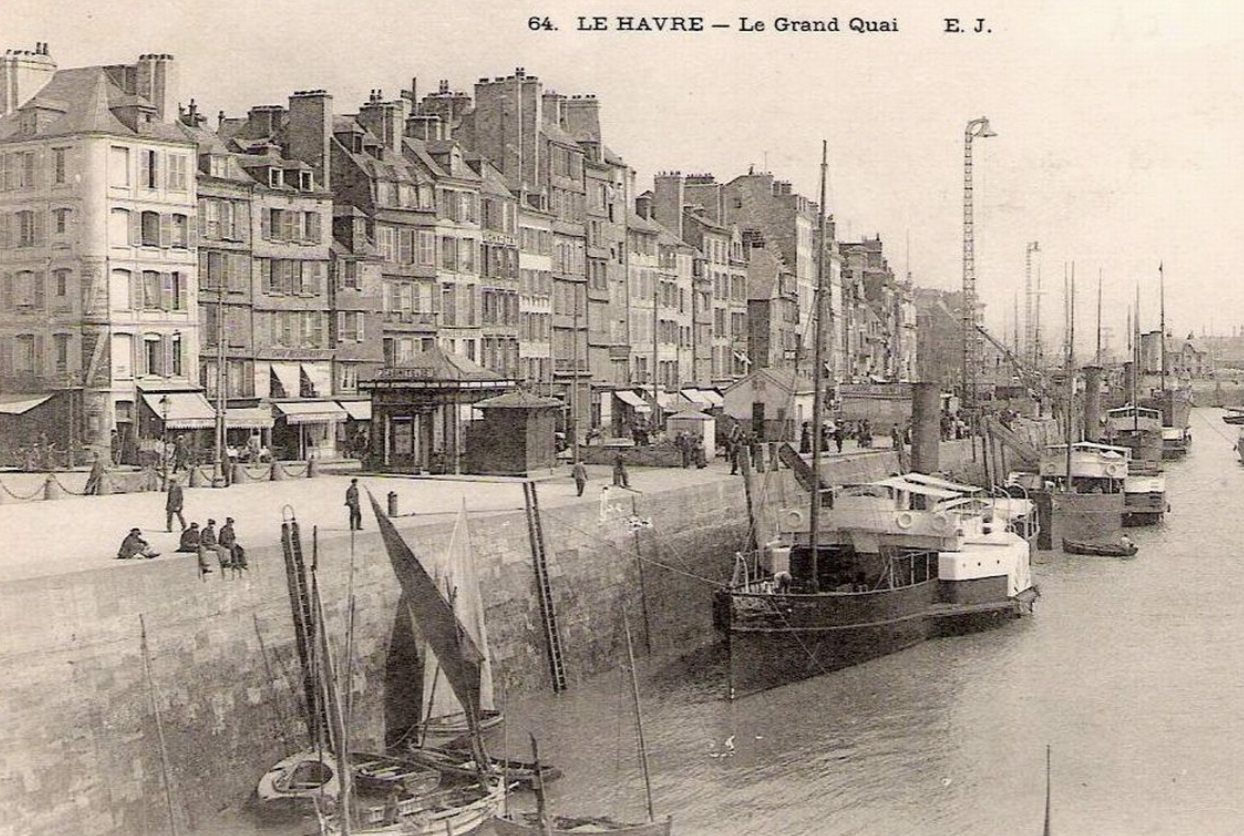
One early morning, as Monet looked out his window with his easel at the ready, he saw in the distance, through the foggy horizon, the Quai au Bois and the Citadel Basin on the left of the canvas, the Transatlantic Lock in the center, and the Courbe dock on the right. Today, much of that view has sadly changed, and the hotel is no longer there, but stand before this canvas and let your mind wander.
It was November 13, 1872, at 7:35 am in the harbor of Le Havre, out the window of the Hotel de l’Armirauté at no. 43 on the Grand Quai, Monet captured the sunrise. A quick passing moment in time on a quiet morning.
The exact date and time were deduced by researchers at the Musée Marmottan Monet by consulting tide charts and weather history as well as building records. The smoke from the smokestacks flowing west nailed the exact moment of the day, which also happens to be before the master of color’s birthday.
Much of Monet’s life is documented through his letters, but a gap exists in the period he spent in Le Havre, and two different periods are noted through other records. Monet stayed in Le Havre in November 1872 and again in January of 1873.
The sun's angle and height change every day. The sun is highest in the summer and lowest in the winter. They believe Monet painted this between 30 and 45 minutes after sunrise. Also add that the Transatlantic lock was open, which happened only an hour before high tide and two hours after.
Researchers considered all of this and narrowed it down to three periods. It was either January 21 to 25, 1872, November 12 to 15, 1872, or January 25, 1873.
Monet signed the piece with his name and ‘72, which some would later argue about a century later. Again, using his letters, the Widenstein catalog published in 1974 believes that it was painted in 1873. However, they were the only ones who thought that.
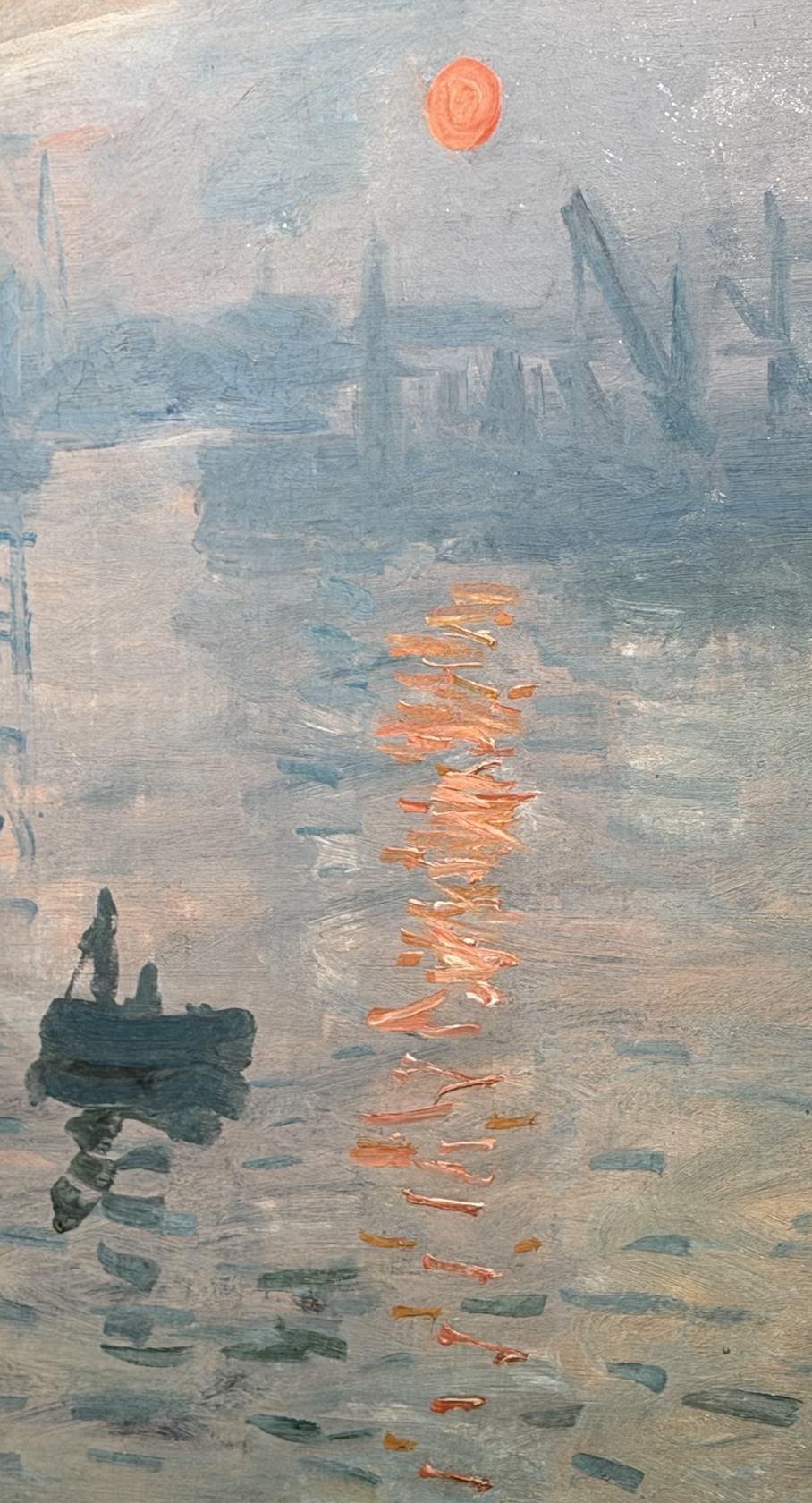
That morning, Monet worked quickly, layering paint one wet layer after another. The predominantly grey and blue-scale painting’s most important element was added later, after the painting had dried. The glowing orange sun rising over the dock is essential to the feeling the painting evokes, but the reflection on the water truly moves the soul. Can you even imagine this painting without it?
In 1874, when it was presented for the first exhibition, Monet was asked to give a title [to my painting], for the catalog; It could not really pass for a view of Le Havre. I answered, “Put Impression”.
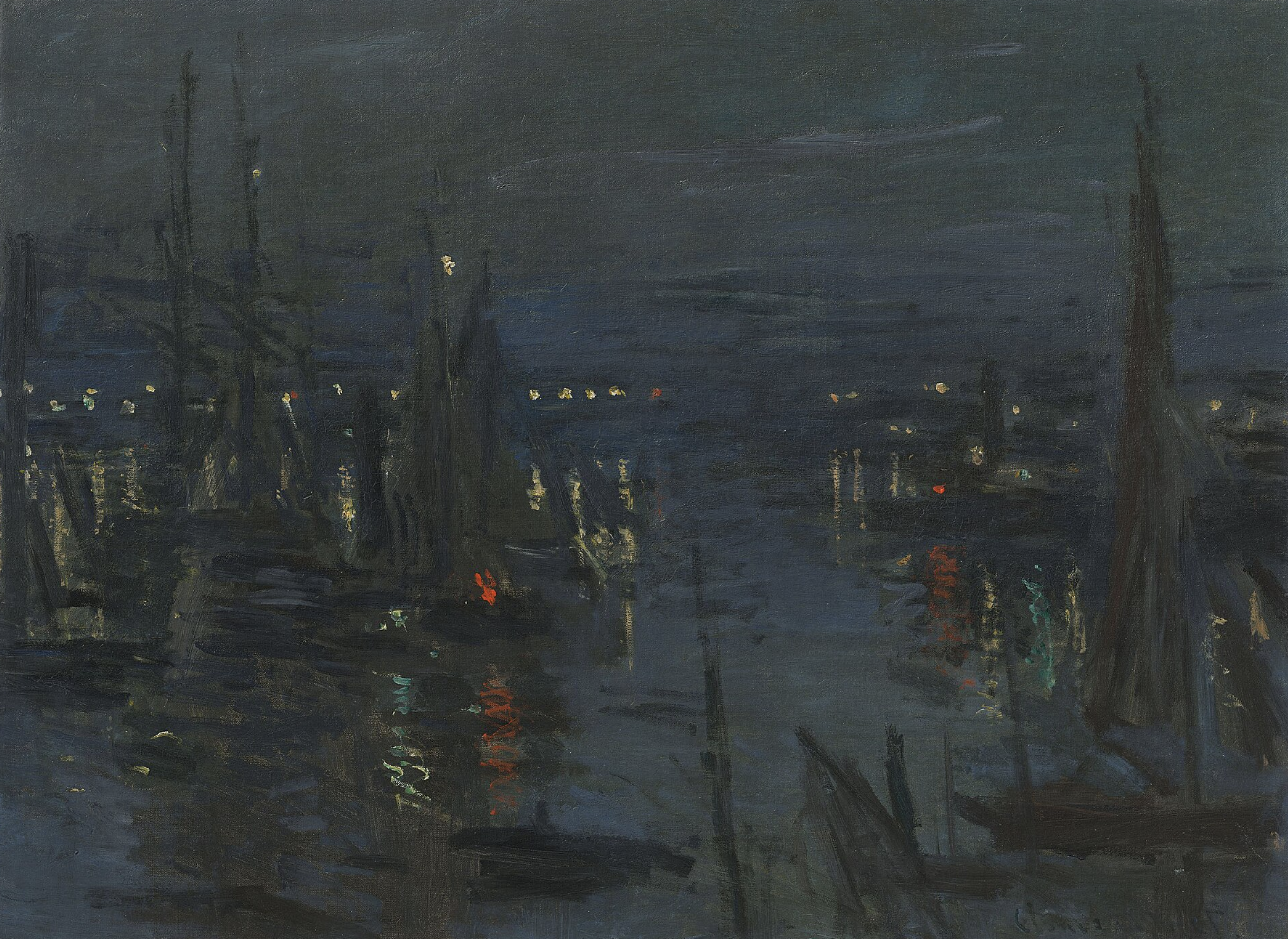
Monet captured the landscape of Le Havre many times, and even a few from the same window. Le Port du Havre, Effet de Nuit was painted on the same trip. Today in the Musée Barbier-Mueller in Germany. Other daylight scenes are found at the J. Paul Getty Museum in LA.
The First Impressionist exhibit ran from April 15 to May 15, 1874, in photographer Nadar's studio on the Boulevard des Capucines. Wealthy Parisian Ernest Hoschedé arrived one day and found a painting that spoke to him, and he purchased it immediately for 800 francs (3700 euros today)
Hoschedé was born in Paris on December 18, 1837, in the 9th arrondissement to a family that made its fortune in the textile industry and department stores. By 1861, Ernest headed the family business and bank account. On April 16, 1863, he married Alice, who came from an even wealthier family and also owned a chateau eleven miles outside Paris in Montgeron, which was a gift upon their marriage.
The Chateau de Rottembourg needed an update, and Ernest used his large checkbook to invite the artists to his home to decorate the walls. He had already invited Édouard Manet to his chateau earlier that year and commissioned him to paint a few pieces. Manet’s pieces were never hung and remained in his atelier until his death.
Monet, always hustling for money, heard about it over drinks at the Café Guerbois with Manet, and a friendship began that would have a life-changing effect on them all.
Hoscehdé met Claude Monet in the Parc Monceau and offered him the same opportunity. Since Monet needed the money and Manet told him it was a pretty cushy job, he took him up on the offer. Hanging on the wall upon his arrival was Impression, Sunrise, a painting that, in retrospect, was a monumental moment but barely registered more than a mention for close to 100 years.
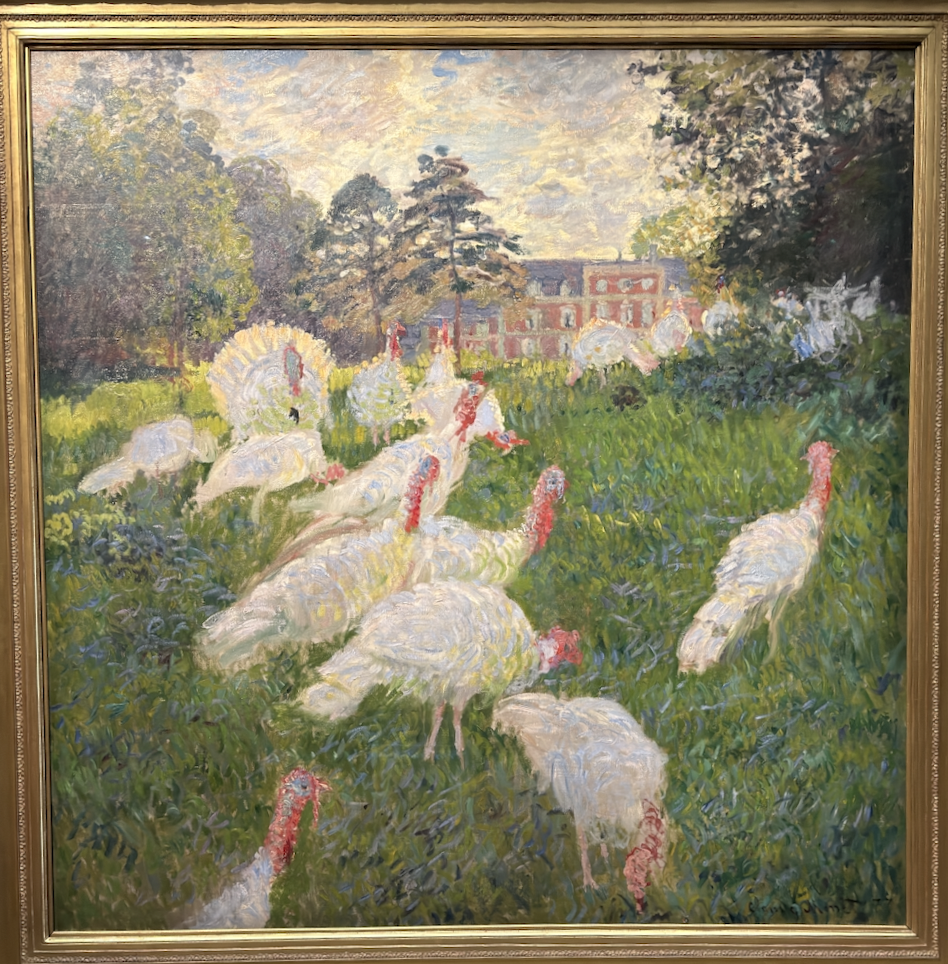
Les Dindons, 1876
Ernest burned through all their money and was forced to hold two anonymous auctions for a few dozen paintings by Sisley, Monet, and Pissarro, which didn’t reap the rewards he had hoped for. In 1877, his chateau and collection were seized and sold. 138 pieces by Renoir, Sisley, Morisot, Pissarro, Manet, and Monet were sold, including Impression. Sunrise. On June 6, 1878, the painting was sold at auction for just 210 francs; Dr. Georges de Bellio, who had also attended the 1874 exhibition, was the lucky winner of such a bargain. At the time, the market was flooded with Impressionists, and few were buying them. This drove down the value of many of them and left many artists bitter.
On a side note, when Monet left, he took Ernest’s wife with him. Alice would be his second wife and a real piece of work.
Georges de Bellio, a Bucharest art collector born on February 20, 1828, moved to Paris and became a naturopathic doctor, opening a small shop while amassing art. His only child, Victorine, was born in 1863 and would add her name to the long story of Monet’s Sunrise.
Bellio and Monet began a friendship over letters and vowed to keep the paintings until his death. Frequently asking for money, Monet always repaid the doctor in art, a deal that was very beneficial for Bellio. His collection would include everything from Botticelli to Hubert Robert and Delacroix to Manet & Morisot. On January 26, 1894, he died, and his entire collection was passed down to his daughter, Victorine, and her husband, Eugene Donop de Monchy.
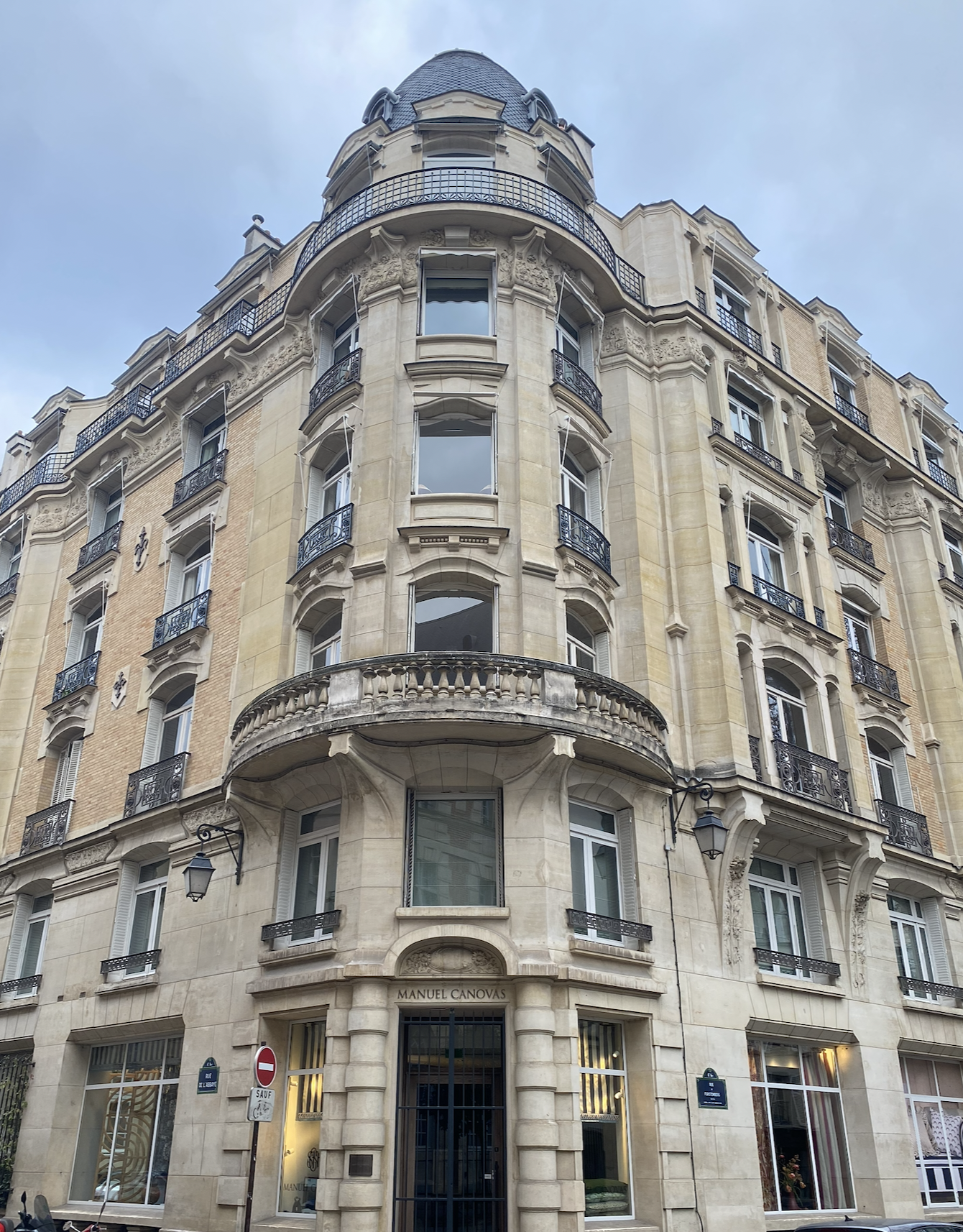
The two lived at 6 rue de l’Abbaye on the corner of the Rue de Furstemberg, where the atelier and museum of Delacroix are located. Impressions hung on the wall alongside Le Gare Saint Lazare and Le Pont de l’Europe, which were the real stars of the collection and highly sought after for exhibitions.
Records show the two were insured for as much as 250,000 francs, but Impression, Sunrise was rarely asked for and insured for under 15,000 francs. A painting so closely linked to one of the world's most beloved schools of painting didn’t matter.
In 1939, as Hitler marched toward Western Europe and grew thirsty for art, it wasn’t just the Louvre that sprang into action. Jacques Jaujard also helped other museums, including the Musée Marmottan, and collectors protect their art.
(Listen to episode 34, Saving the Louvre for more)
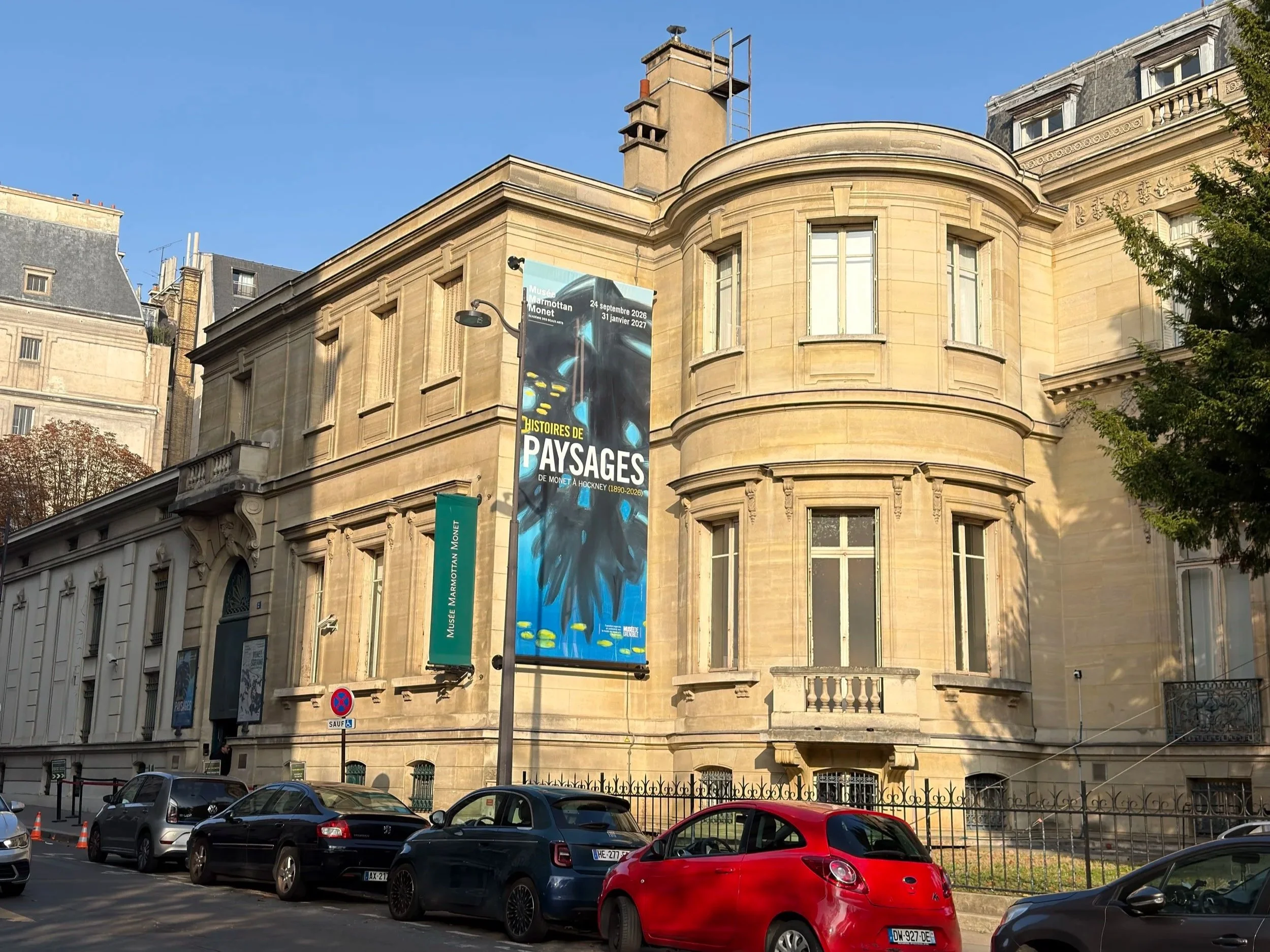
The Musée Marmottan Monet is a gem of a museum on the edge of Paris. Originally a hunting lodge for the Duc de Valmy, Jules Marmottan purchased it in 1882 and built a large collection of items from the First Empire. His son, Paul, expanded the collection, and upon his death, the home and collection were bequeathed to the Académie des Beaux-Arts.
In 1934, it was opened as a museum, and over the years was greatly enhanced by two generous donations. Victorine had already talked with the museum about giving a portion of the collection to the one she remembered visiting with her father. Director Henri Le Riche urged her to add her painting to the convoy headed to the Chateau de Chambord in September 1938. After the Munich agreement, which was expected to end the conflict by month's end, the plans were halted. However, within less than a year, it had evolved into a full-scale movement.
On August 28, 1939, two cases were sent to the Château de Lauroy, a location specifically chosen by the Marmottan. Victorine sent 6 Monets and a handful of Pissarro, Sisley, Morisot, and Renoir that would spend the war next to the collection of the Louvre.
During the war, on May 23, 1940, she decided to give the two cases to the Marmottan, intended for a room of the museum dedicated to her father. Her husband died during the war in 1942, and she made another gift, valued at 4 million francs, including Chinese pottery, furniture, and more Impressionist art.
Although not so fast, said the Academy of Art. The Marmottan is run by the Institut de France and the Academy of Art and has the right of refusal on donations. They felt a room named for her father was a step too far and refused the donation. Over the next five years, many lawyers, along with the Minister of Education, stepped in.
After the donation was rewritten in 1947, it was accepted but reduced to just 10 paintings and a few objets d’art.
On February 29, 1949, at 4 pm, the collection opened, and Impression, Sunrise was seen for the 6th time, though it was still referred to as an “impression.” However, few were impressed.
To celebrate the exhibition's 100th anniversary in 1974, Hélène Adhémar, curator of the Louvre, and Jeu de Paume organized a temporary exhibition. She wrote a catalog that included a full-page reproduction of Sunrise for the first time. In 1946, John Rewald wrote the first comprehensive history of the Impressionists, mentioning the moment when Louis Leroy coined the term, but still didn’t give the painting "Mona Lisa" its status.
Arguably, it is still pretty unknown and was only mentioned recently, with the 150th anniversary of the exhibition.
Much like the Mona Lisa, Impression, Sunrise had its moment in the spotlight but didn’t gain the same fame upon its return.
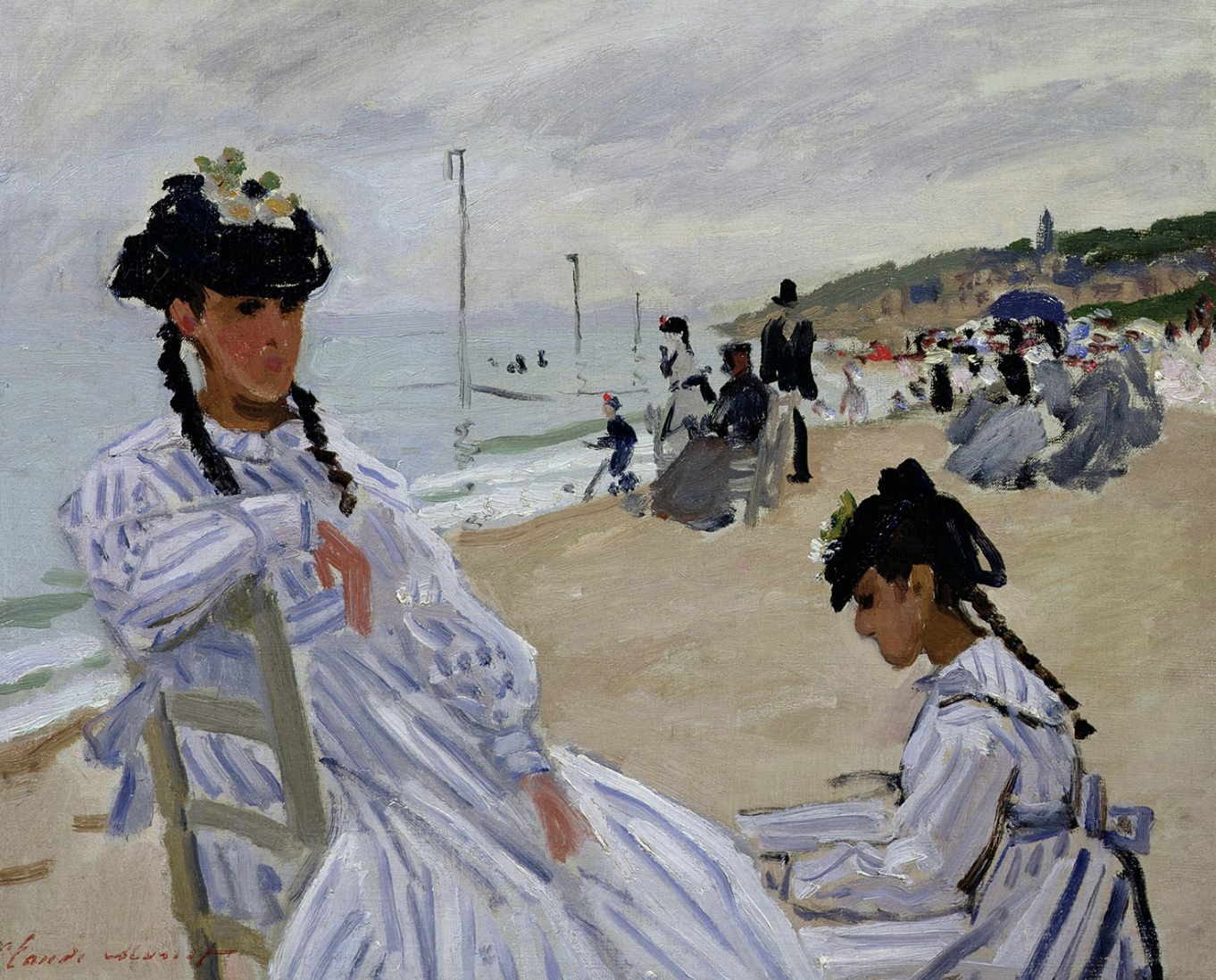
Sur la Plage à Trouville 1870 Monet
It was an early Sunday morning, just after 10:00 a.m. on October 27, 1985, when two ticket-holding gentlemen strolled into the Musée Marmottan Monet. A few minutes later, three masked men with guns pushed their way in, forced everyone to the ground, and quickly searched for nine specific paintings that they ripped from the wall. Two Renoirs, a painting by Berthe Morisot, and five Monets, including Impression, Sunrise, were gone in under 5 minutes.
For two years, there wasn’t a single lead until the commissioner of the art theft department, Mirielle Balestrazzi, tracked down four stolen Cortot paintings in Japan. Stolen from the Musée de Semur-en-Auxois in Eastern France in 1984, the paintings were linked to the head of the Yakuza, a Japanese crime syndicate, Shuinichi Fujikuma. Fujikuma had his hands in everything, and in 1978 he was caught with over 7 kilos of heroin in France and sentenced to five years in a French prison. Locked away, he met two other French prisoners, Philippe “Fifi” Jamin and Youssef Khimoun, who were imprisoned for art thefts, and they hatched a plan.
Fast forward to 1987, and Balestrazzi visits Japan after Fujikuma's arrest for stealing fur coats. Under questioning, he admitted he might know something about the stolen Cortots. A man he met in prison, Jamin, sold him the paintings, which he sold for a larger profit in Japan.
The Cortots were recovered; Jamin was arrested in Mexico. Investigations into his phone records revealed unusual details. It didn’t help that they found the Marmottan museum catalog where he had circled each of the 9 paintings that were stolen.
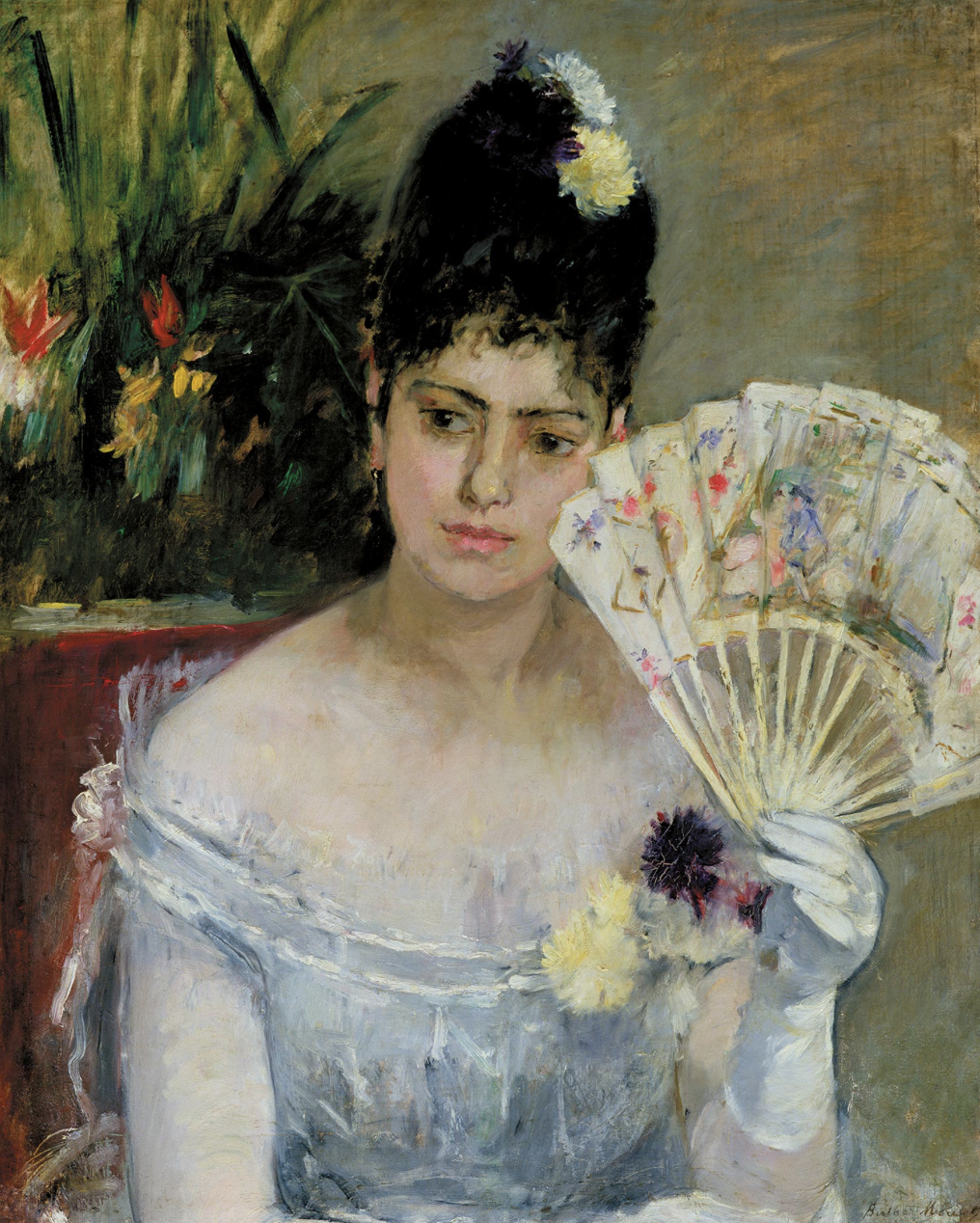
At the. Ball, Berthe Morisot. Badly damaged and sliced through the center of the painting
Five of the paintings were by Monet, including Sur la Plage à Trouville of Camille and her cousin, painted in 1870. A sweet painting of his son Jean Monet, 1880. The Portrait of Poly, Fisherman of Belle-Ile, 1886, and a Field of Tulips in Holland, 1886. Renoir’s painting of Claude Monet was also stolen, as well as his Bather Sitting on a Rock, 1883. The thieves also took a portrait of Monet by Seiichi Naruse and Berthe Morisot’s At the Ball, 1875.
In 1988, Charles Pellegrini, once the head of the OCRB in Corsica, still kept his hands in the crime-fighting world. Over the years, many false leads kept investigators busy but never led anywhere. One day, a call came in: they knew who had the Monets, and if they wanted them back, they needed to release a handful of prisoners from the Brise de Mer gang. If they declined, the paintings would be set ablaze at the Place de la Concorde. Pelegrini didn’t take the bait.
Two more years would pass, and with that last lead, Mirielle Balestrazzi felt they had to be on Corsica. The Parisian art brigade arrived on December 4, 1990, and tracked down two of the men believed to be part of the heist. In their apartment, they found the five polaroids of the Monet paintings.
It’s unknown how they got there or if they were in Japan. They were discovered in an empty villa in Porto-Vecchio on December 6, 1990. They were packed inside a large wooden trunk, with the painting placed on top: Impression, Sunrise.
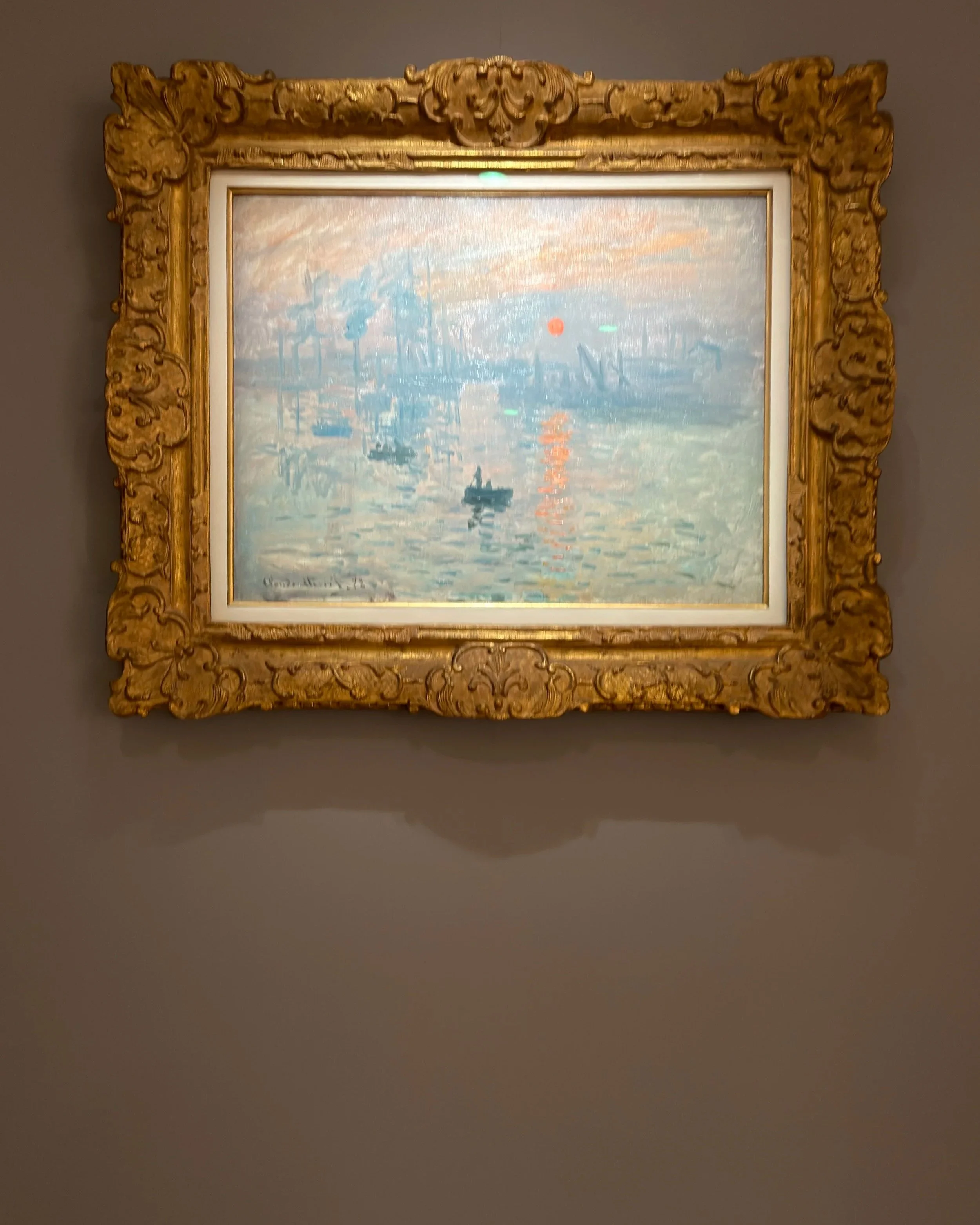
On April 17, 1991, after some minor restoration, Impression, Sunrise returned to the walls of the Marmottan, and you can see it in all its glory. Impression, Sunrise sits downstairs on the lower level, and you can’t miss it as you walk down the stairs. When I first saw it, they didn’t allow photos, but I snuck a quick, very crooked pic. Now you can snap away as much as you want. However, make sure you sit there on the bench in front of it and take it all in.
When it comes to art, it’s not just the painting you see on the canvas that is so fascinating. It is the story with all its twists and turns that is so wonderful that the piece is just waiting for you to discover.
In 1966, Michael Monet, the only surviving child of the great artist, gave his entire collection, which is the largest concentrated catalog of Monet in the world, to the Musée Marmottan Monet. In 1985, Nelly Duhem, the daughter of artist Henri Duhem, bequeathed her father’s vast collection of Impressionist and Post-Impressionist paintings by the French masters.
In 1993, another important collection arrived from Annie and Denis Rouart. Denis, who passed in 1984, was the son of Julie Manet and grandson of Berthe Morisot. In 1993, after the death of Annie, the collection, which included over 160 pieces, became the largest of Morisot’s paintings given.
The Rouart family continued with gifts from Thérès and Julien Rouart, Julie's second son, given in 1996. Furniture, including the mahogany Psyché standing mirror and other Morisots
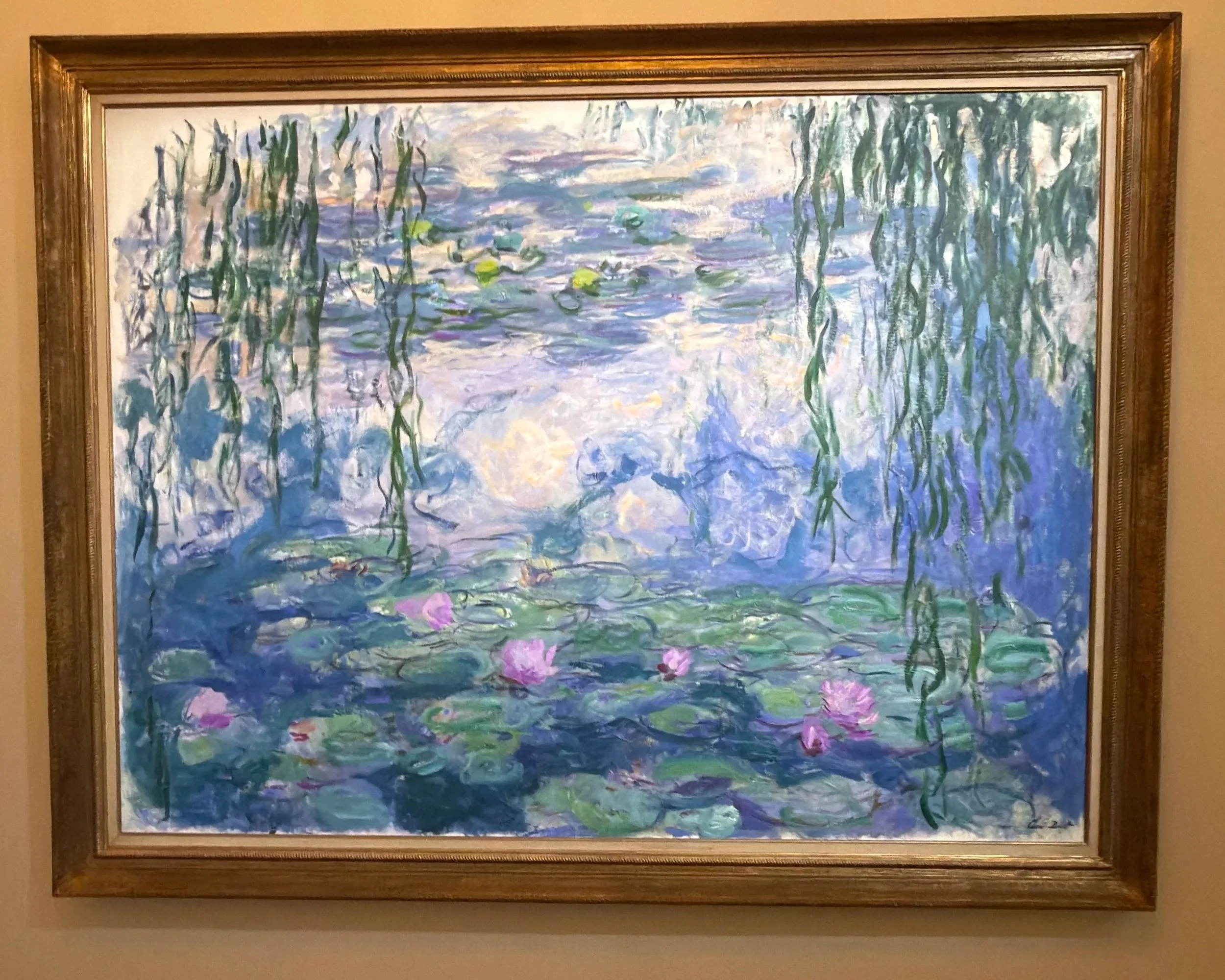
Visit the Musée Marmottan Monet at 2 rue Louis Boilly, 16th arrondissement, open Tuesday to Sunday, 10 am - 6 pm. They also hold two fantastic exhibits a year.
The 100th anniversary of Monet's death of Monet is coming up next month, and many of the museums are holding special exhibits to mark the event.
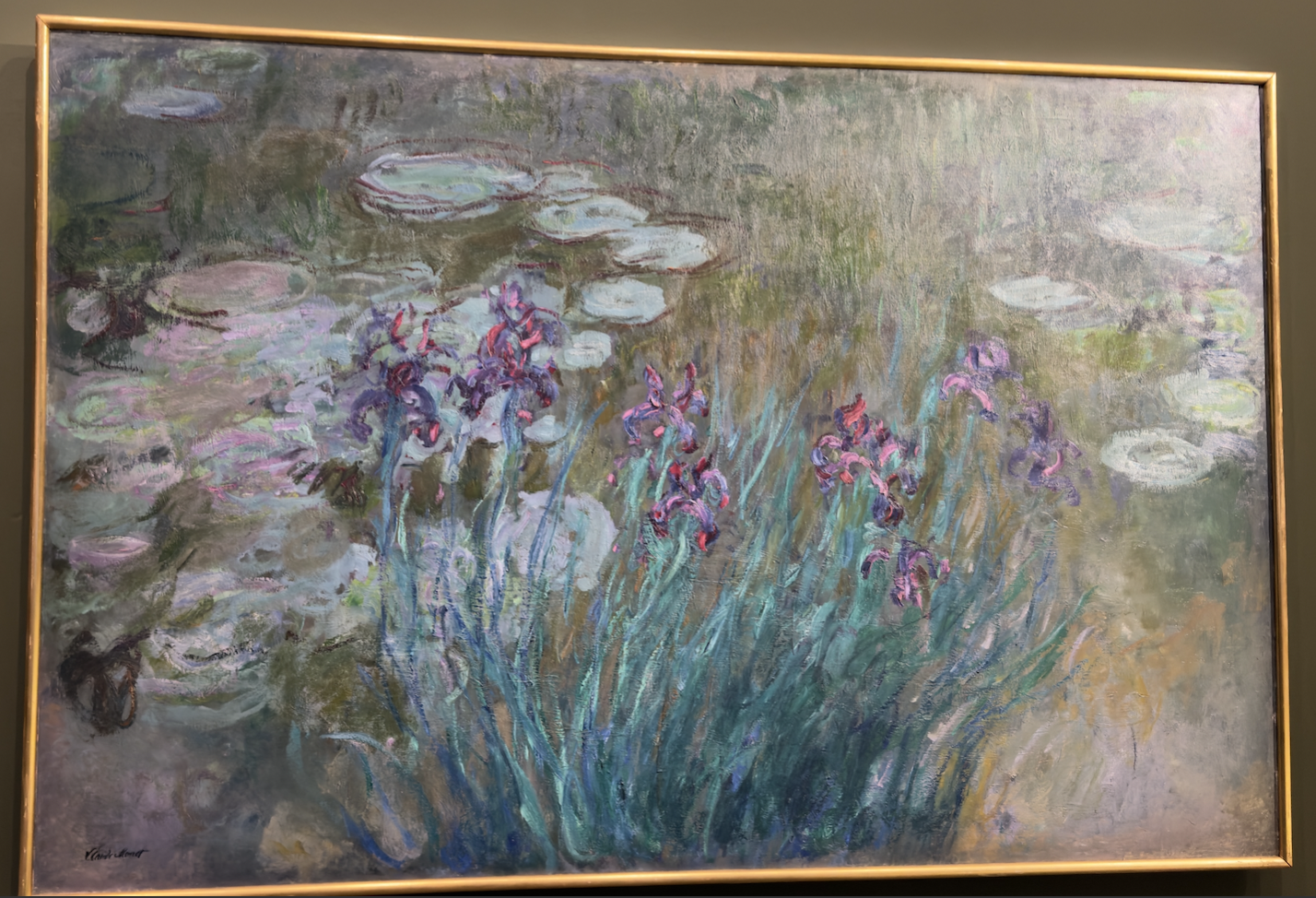
Iris et nymphéas 1914-1917
At the Musée de l’Orangerie, Monet, Painting Time runs until January 25. It explores the series of paintings Monet returned to again and again. Water Lilies, Rouen Cathedral, London in the Fog, and the Haystacks.
The exhibit is small but incredible, and don’t miss the large water lilies and willow tree paintings in the rooms above, especially designed by Monet himself.
The exhibit runs until January 25, 2027. Don’t miss it!
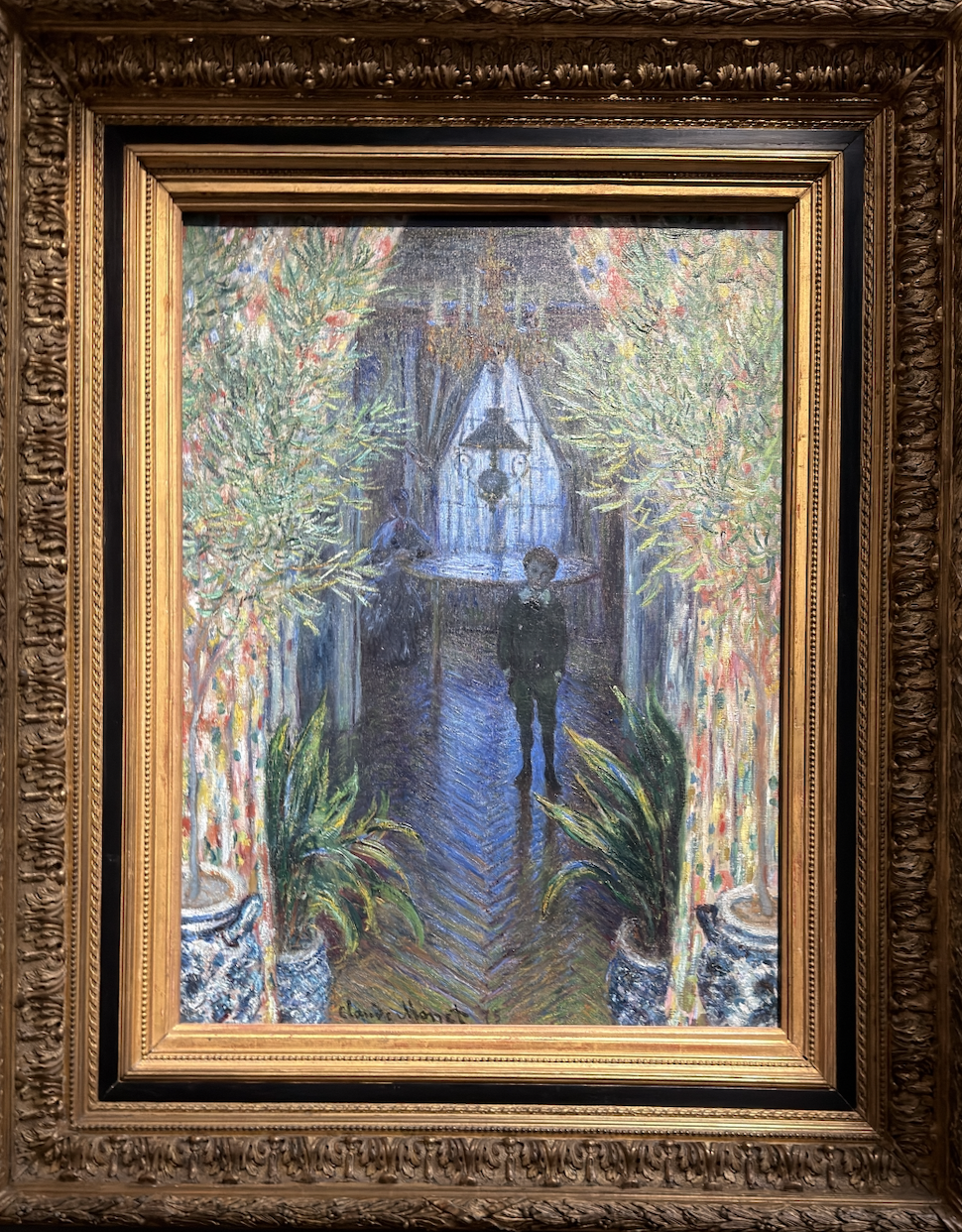
Intérieur d’appartement 1875
However, the Orsay won’t be left out in the celebration. The 5th floor, normally dedicated to the Impressionists, has been mostly turned over to the man himself. A few Renoirs, Sisleys, and Caillebotts remain, but Monet takes center stage.
Centered around 5 recently restored paintings, along with many pieces not normally on view, it’s an incredible collection not to miss. The Orsay also added a few banners with great information, photos, and X-rays from before and after the restoration.
Don’t miss the restored Cathedral of Rouen. Le Jardin de l’artiste à Giverny with its bed of gorgeous purple irises and the moving portrait of Camille Monet painted by her husband in the final moments of her life. And in the center of the room, one of my very favorites, Les Dindons, the Turkeys, painted in 1876.
The current installation runs until January 24, 2027, on the Orsay's fifth floor.
The Marmottan Monet is also holding an exhibit, Monet to Hockney, A History of Landscapes. The most stunning Water Lily I had ever seen opens the show, but after the first three paintings, there aren’t any other Monets. It’s more of an exhibit on other artists' interpretations of landscapes, and much of it is contemporary.
Running until January 31, 2027