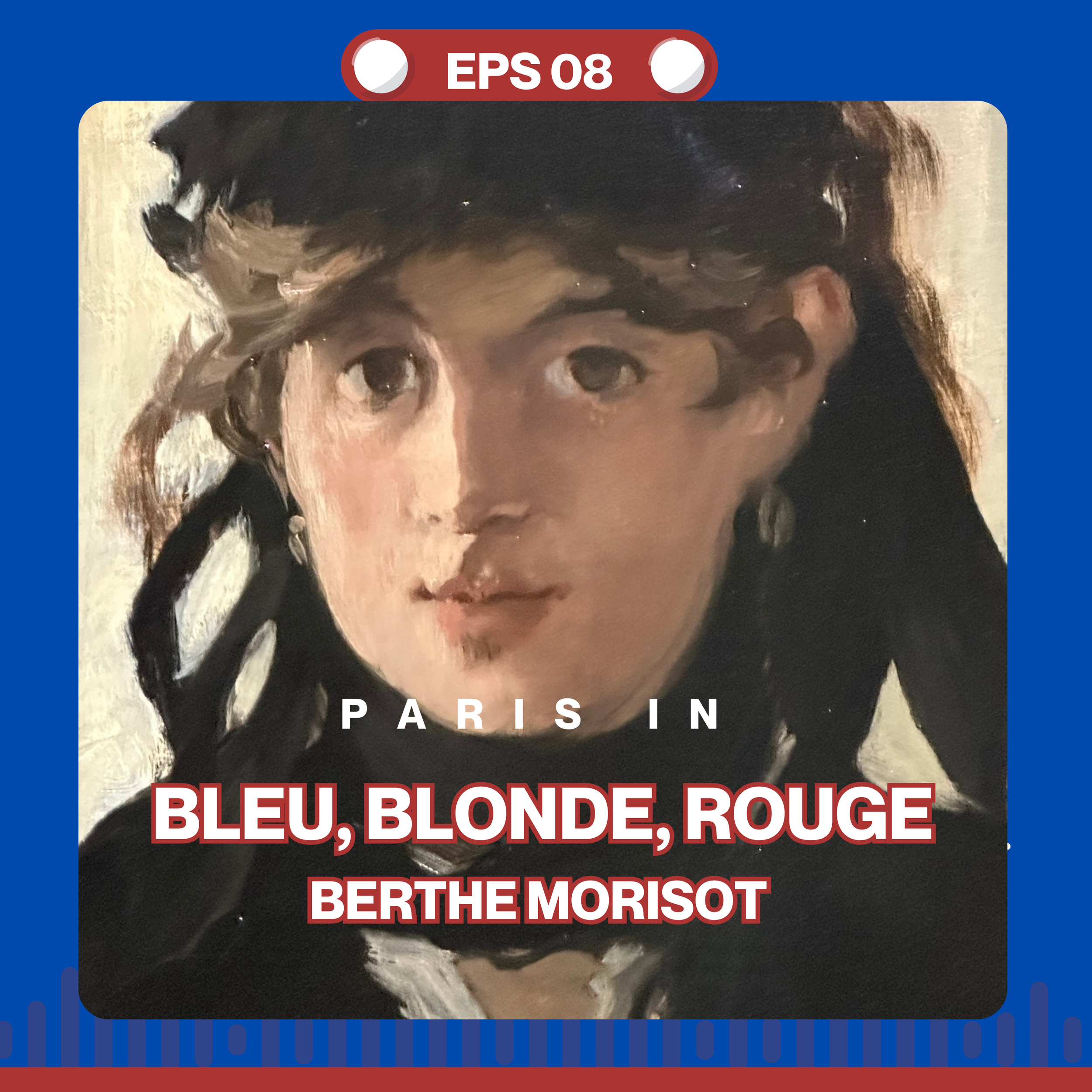
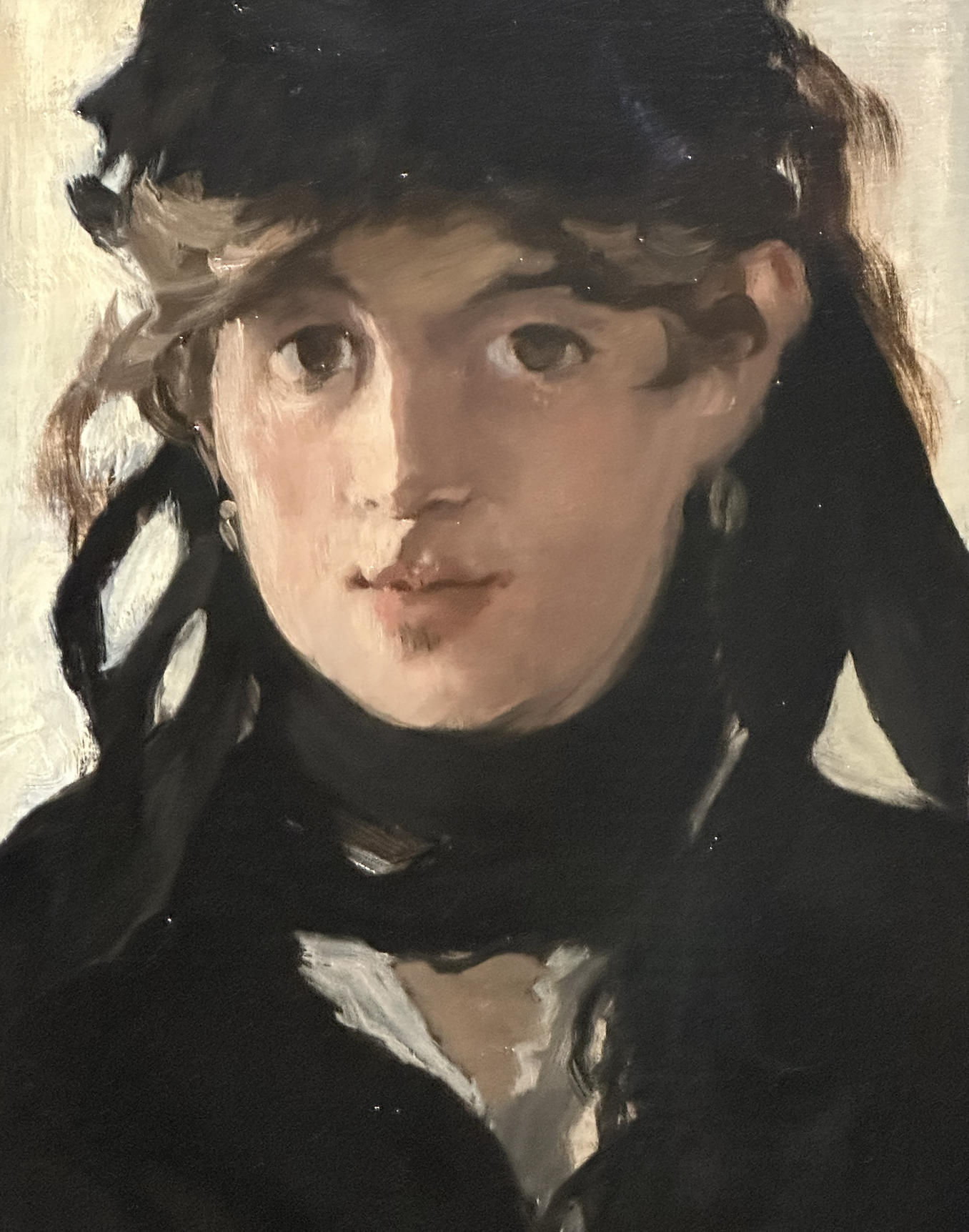
Berthe Morisot, one of the few women of the Impressionist Movement, with her dark locks and stunning gaze, was the perfect model for Édouard Manet. However, unlike most female models-turned-artists, she is actually known as one of the first incredible female Impressionists.
Born on January 14, 1841, in Bouges to Mother Marie-Cornélie Thomas Morisot and father Edmé Tiburce Morisot, a prefect and architect. Berthe is the youngest of three daughters. Older sisters Yves, born in 1838, and Edma, born in 1839. Her brother Tiburce was born in 1845. Due to her father’s role in the government, the family moved frequently from Bouges to Limoges, Paris, Caen, Rennes, and finally, on July 3, 1852, back to Passy, then a city just outside of Paris.
In 1857, Marie-Cornélie, often referred to as the great-niece of Rococo master Jean-Honoré Fragonard, enrolled her three young daughters in drawing classes with Geoffroy-Alphonse Chocarne, who taught many young girls who weren’t allowed in the Ecole des Beaux-Arts. The two youngest Morisot girls quickly outgrew the drawing lessons of Chocarne and moved on to the atelier of Joseph Guichard.
Guichard arrived in Paris in 1822 from Lyon at 16 and visited the Salon held in the Salon Carré of the Louvre. At first sight of Delacroix’s Virgil and Dante, he knew that was the direction for him. He first joined the atelier of Ingres, focusing on the academic style, but his heart was drawn to the styles of Delacroix and Rubens, enraging Ingres.
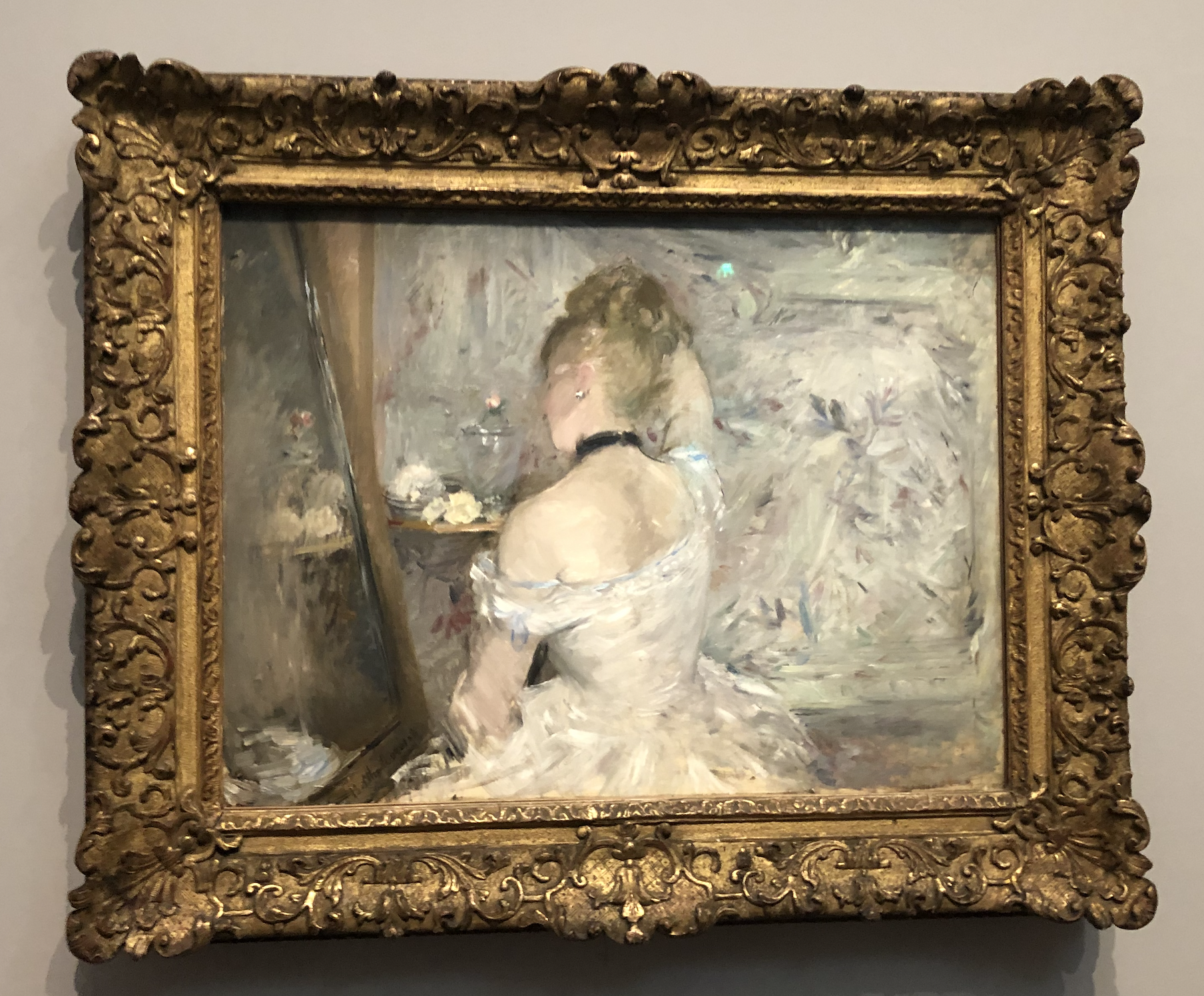
Guichard was very impressed with the talents of Edma and Berthe and focused more of his time on sharing art and the Italian greats within the Louvre. At the time, many of Paris's artists flocked to the Louvre to recreate the masters' works. Women had few options in those days. Not allowed to attend the Ecole des Beaux Arts, they couldn’t be alone in an atelier with a man or a nude male model and couldn’t even visit the Louvre without a chaperone.
Since the Louvre opened in 1793, there has always been a large focus on the training of artists. During the opening years under the Revolutionary calendar of ten-day weeks, the Louvre was open three of those days only for the artists. They could freely set up an easel in front of any of the masters in the Grande Galerie and copy each detail.
Copiest became so popular that, in 1872, for just under two years, the Musée des Copies was opened in the Palais de l’Industrie on the Champs-Élysées. The first exhibit included 130 paintings copied from Italian masters of European museums and the Vatican. The idea came from Charles Blanc and most likely included many of the works of the once-unknown Impressionist artists.
Today, you can still be a copyist within the Louvre, but you have to jump through many hoops to get the chance. You have to be a talented artist; of course, you can’t copy the size or signature, and they limit what you can copy. No longer will you find an artist in front of a Titian like Berthe and Edma would have; it’s far too crowded in the Salle des Etats due to the lady of the Louvre who resides there. And the waiting list is quite long, at least three years. I do love coming upon them and watching their progression over multiple visits.
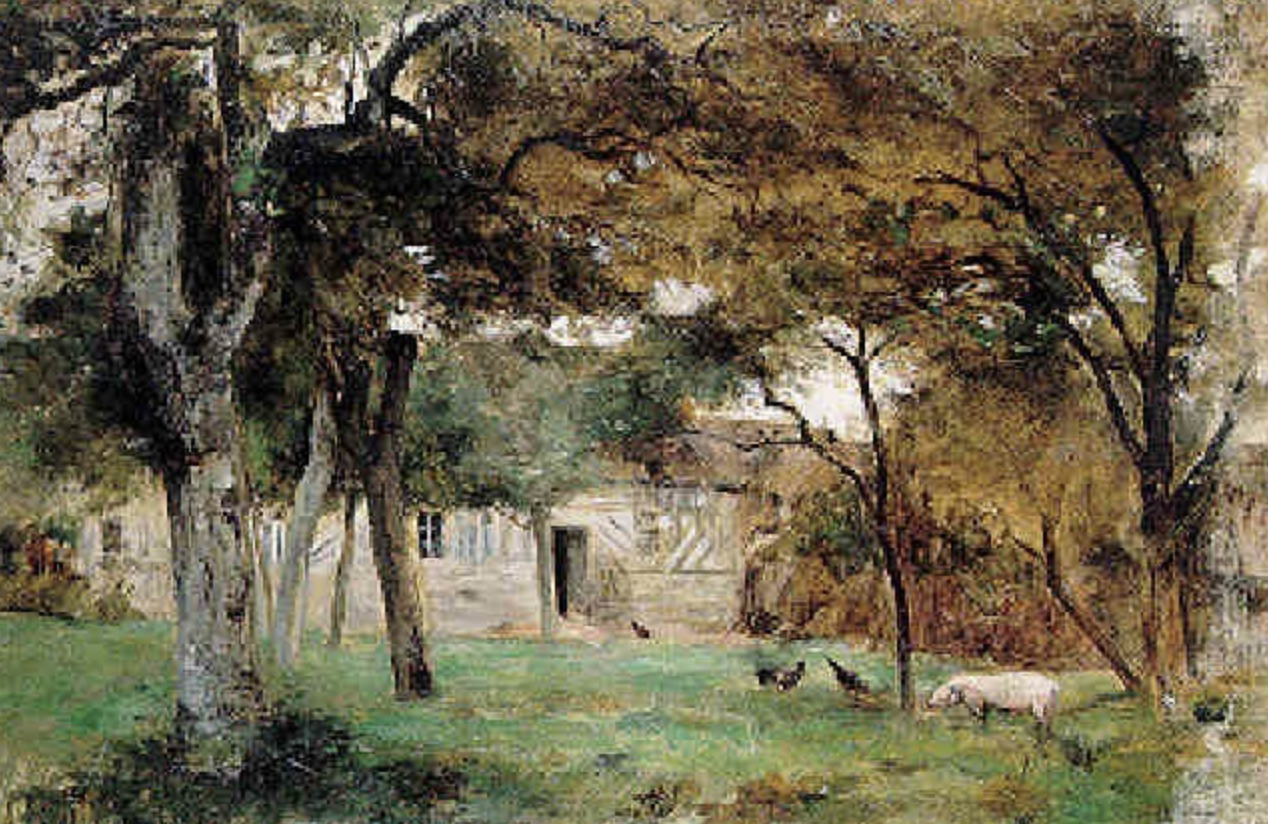
The earliest painting by Berthe that still survives, Ferme en Normandie, was created in 1857 and is in a private collection. The countryside and landscapes drew Berthe & Edma in, and Guichard felt he had taught them all that he could and suggested they study with Jean Baptiste Camille Corot in 1860.
Long spring and summer days were spent outside in the Ville d’Avray, painting the horizon. A few years later, in 1863, Corot introduced the sisters to his student Achille Oudinot. Oudinot and Morisot girls spent time outside Paris in Auvers-sur-Oise, three decades before Vincent Van Gogh would arrive and spend his final years there.
Returning often to the Louvre since they had registered as copyists in 1858, Berthe and Edma drifted toward the Venetian artists and Rubens, and the eruption of colors. It was in front of one of Rubens's twenty-four paintings of the life of Marie de Medici in 1868 that Edouard Manet came into their lives.
Manet shared a bond with the artist Henri Fantin-Latour, who had both been rejected from the Salon. Fantin Latour might not be as well-known as Édouard Manet today, but his paintings of flowers and his group portraits that can be found in the Orsay are some of my favorites. As part of the Batignoles group, you can only imagine the conversation one morning over coffee between Manet and Fantin-Latour at the Café Guerbois on the Avenue de Clichy. Henri had told Manet about the two young artists who had already been displayed in the Salon and proposed that they visit them inside the Louvre.
There are multiple versions of this story, but I am choosing to stick with the version told by the Morisot family that dates the meeting to August 1868. In a letter dated August 26, 1868, from Manet to Fantin -Latour the artist said, “the young Morisot ladies are charming. It’s a bother they’re not men, but as women, they could still serve the cause of painting by marrying an academian each. Give them my compliments.”
At first, Manet was enamored of Edma, but it was Berthe's haunting, deep, dark gaze that pulled him in. Following a trip to Spain, Manet fell in love with the works of Velázquez and Goya and the dark features on his Spanish subjects. Morisot’s deep-set black eyes and hair reminded him of the exotic Majas on the Balcony by Goya, painted in 1808
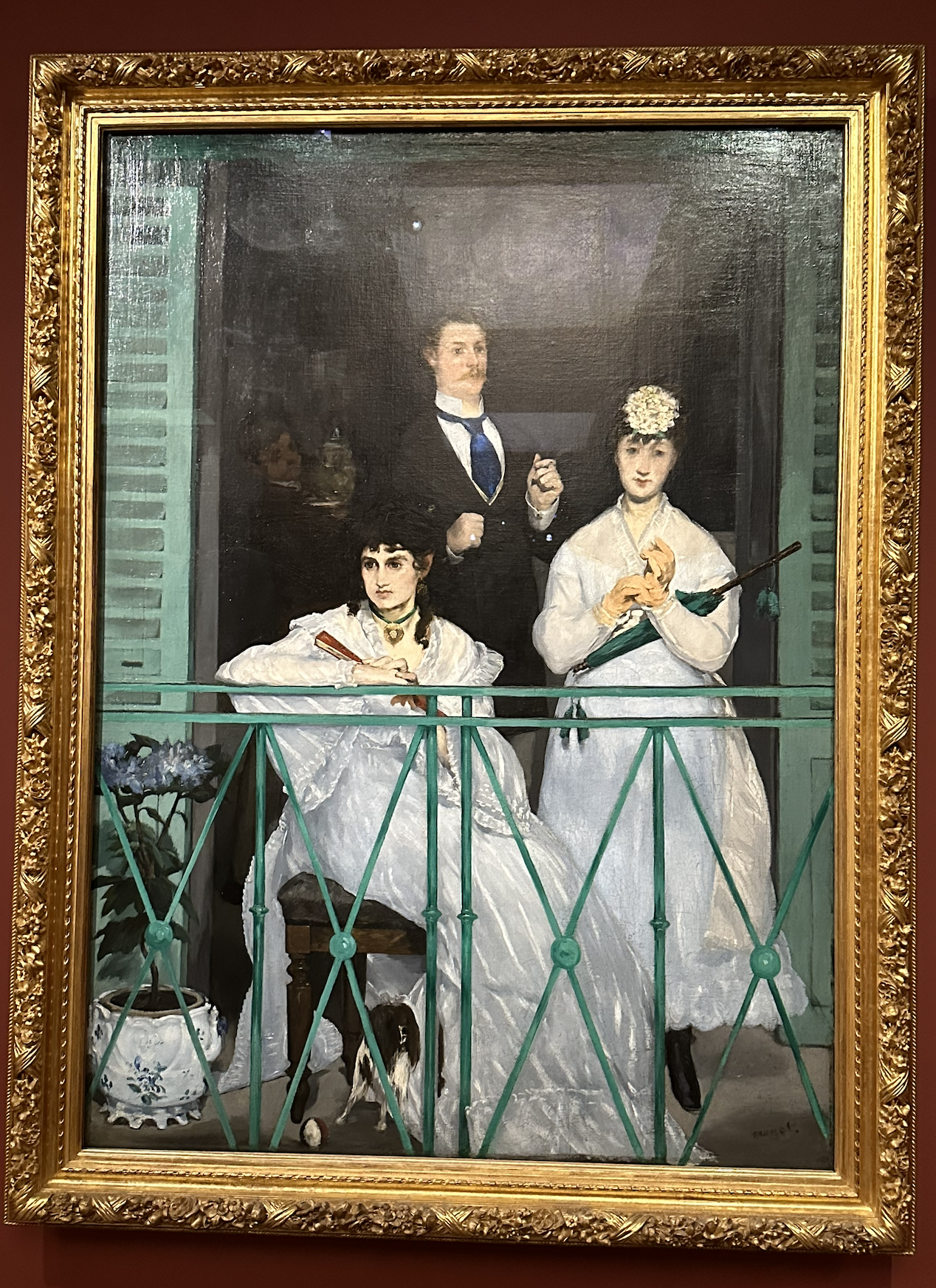
Following Manet’s shock at the Parisian Salon of 1865 with Olympia and Déjeuner sur l’herbe, he was looking for a new model, and Berthe would have everything he wanted. In 1868, Manet painted The Balcony which Berthe would pose after much apprehension. Being a model for an artist was not a profession for a woman of society in Paris at the time. After much convincing, Berthe agreed, as she would be just one part of the group portrait.
The man in the center is the artist and friend Antoine Guillemet. A landscape painter who studied under Corot and Courbet would become one of the leaders in the transition from Realism to Impressionism. Unfortunately, Guillemet is remembered more for being in this painting than for his own work.
The other lovely lady is Fanny Claus, a violinist and close friend of Manet’s wife, Suzanne. Fanny was in the first all-female string quartet, but in the painting, she holds an umbrella. Her husband, Pierre Prins' family, made their fortunes in umbrellas and sculpted the handles for many of the high-end umbrellas. Manet painted her holding a green umbrella, thus adding a touch of his friend Pierre as well.
In the dark background to the left, you can spot Manet’s wife, Susanne’s son Léon, bringing some drinks to the disconnected trio. Manet even added his beloved dog, Tama, next to the porcelain planter with a blue hydrangea that blends so well with the green shutters and railing. And that is where the art elite drew the line. They couldn’t stand the “acid green” color, and the three main subjects looked more like still life than friends. One critic even reduced Manet to a “house painter”. Appearing in the Salon of 1869, it didn’t attract a single buyer. Manet would keep it in his studio until his death in 1884. Fellow artist Gustave Caillebotte bought it and kept it until his death, when it was given to the State and found its eventual home in the Musée d’Orsay.
From this point on, the lives of the Morisot and Manet families would be deeply entwined. Weekly dinners at the Morisot family home saw many of the Parisian artists, including Degas, Zacharie Astruc, and Pierre Puvis de Chavannes.
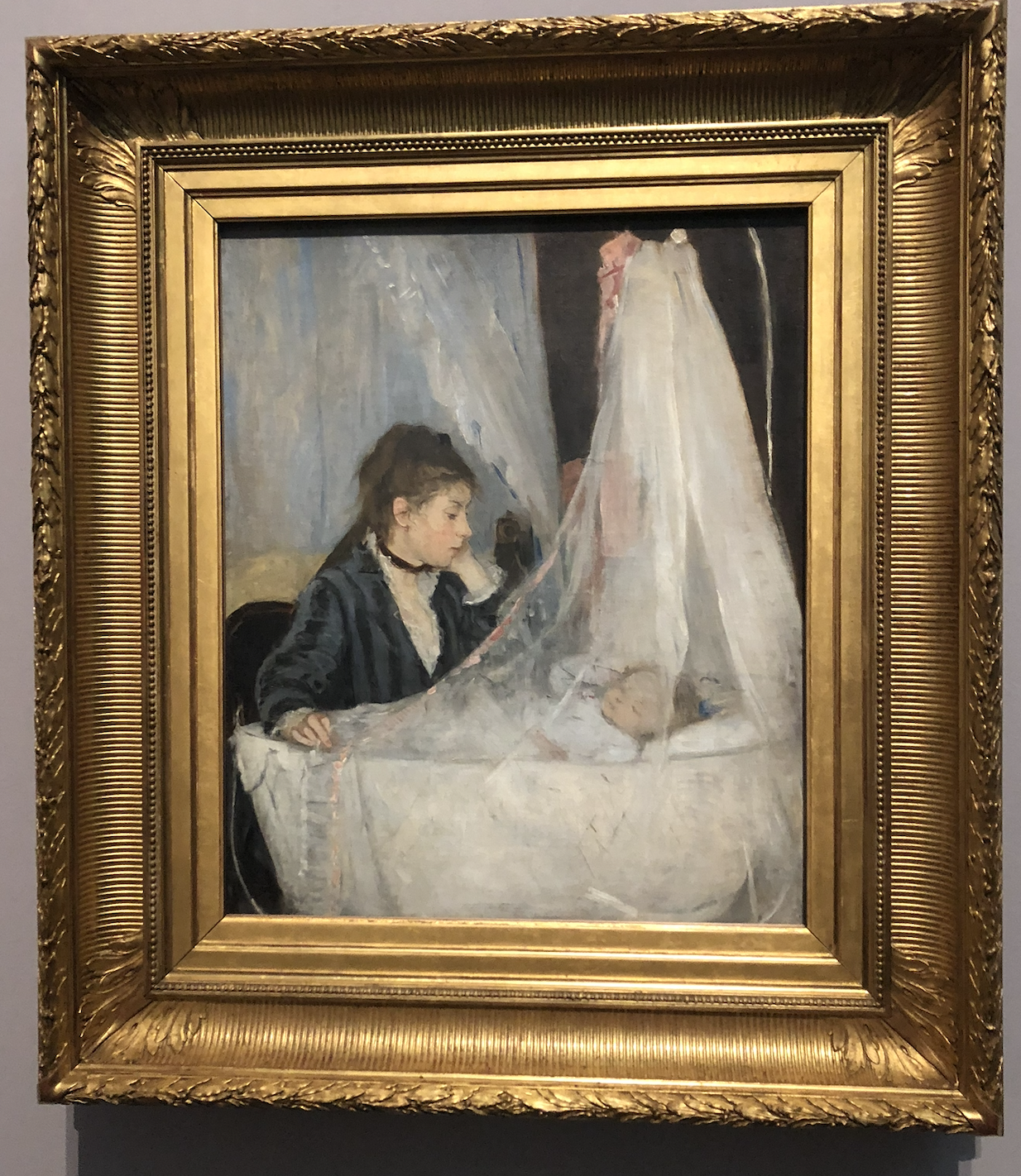
Berthe lost her closest painting companion, her sister Edma, when she married Adolphe Pontillon, a good friend of Manet’s, on March 8, 1869. The couple moved to Lorient, Brittany, when they started a family. Letters from Edma to her sister ache with her boredom and her wish to return to painting. Berthe visited often and was captured many times, and in one of her most iconic works. In 1872, Berthe painted The Cradle, with Edma looking into the white lace-draped cradle, her daughter, Blanche, beside her. (in the Orsay today)
In an August 1871 letter to her sister Edma, Berthe said, “Once again, Manet finds me not so ugly and would like to have me back as a model. In the end, out of boredom, I suggested it myself.” From 1868 to 1874, Manet captured Morisot on canvas and in drawings numerous times. Morisot said, “Manet’s charming wit kept me alert through the long hours”. As they sat, she soaked up all his wisdom and advice for her own artistic adventure.
The year 1874 was a big one for Berthe. At the start of the year, on January 24, she lost her beloved father. Manet would capture her “Berthe Morisot in mourning” the same year in a somber, quickly dashed painting, which is held today in a private collection.
There has always been a lot of speculation on the relationship between Berthe and Édouard. Many of the model-to-painter dynamics ended in a physical relationship. However, these two had a deeper and more intimate non-sexual relationship based on respect, love, creativity, and mutual inspiration that would continue until his last breath.
While Berthe’s two sisters, Yves and Edma, married and started families, including Yves’ daughter, Claudine, named after their great-grandmother. Being a female artist in the 19th century wasn’t easy. It was looked down on, and if they married, they needed to give up their craft and raise a family. Berthe had no desire to settle down and wanted to keep her independence.
In May 1869, she told her sister Edma that she had a greater desire to have children. An early suitor was Pierre Puvis de Chavannes, whom Manet tried to encourage to no avail.
Between August and September 1869, the Morisot and Manet families spent time in Fécamp. Edouard Manet missed the trip, but his brother, Eugène, arrived with his own canvases. Berthe and Eugène spent time on the coastline painting the horizon, and In a villa by the Sea with Edma as a model, once again.
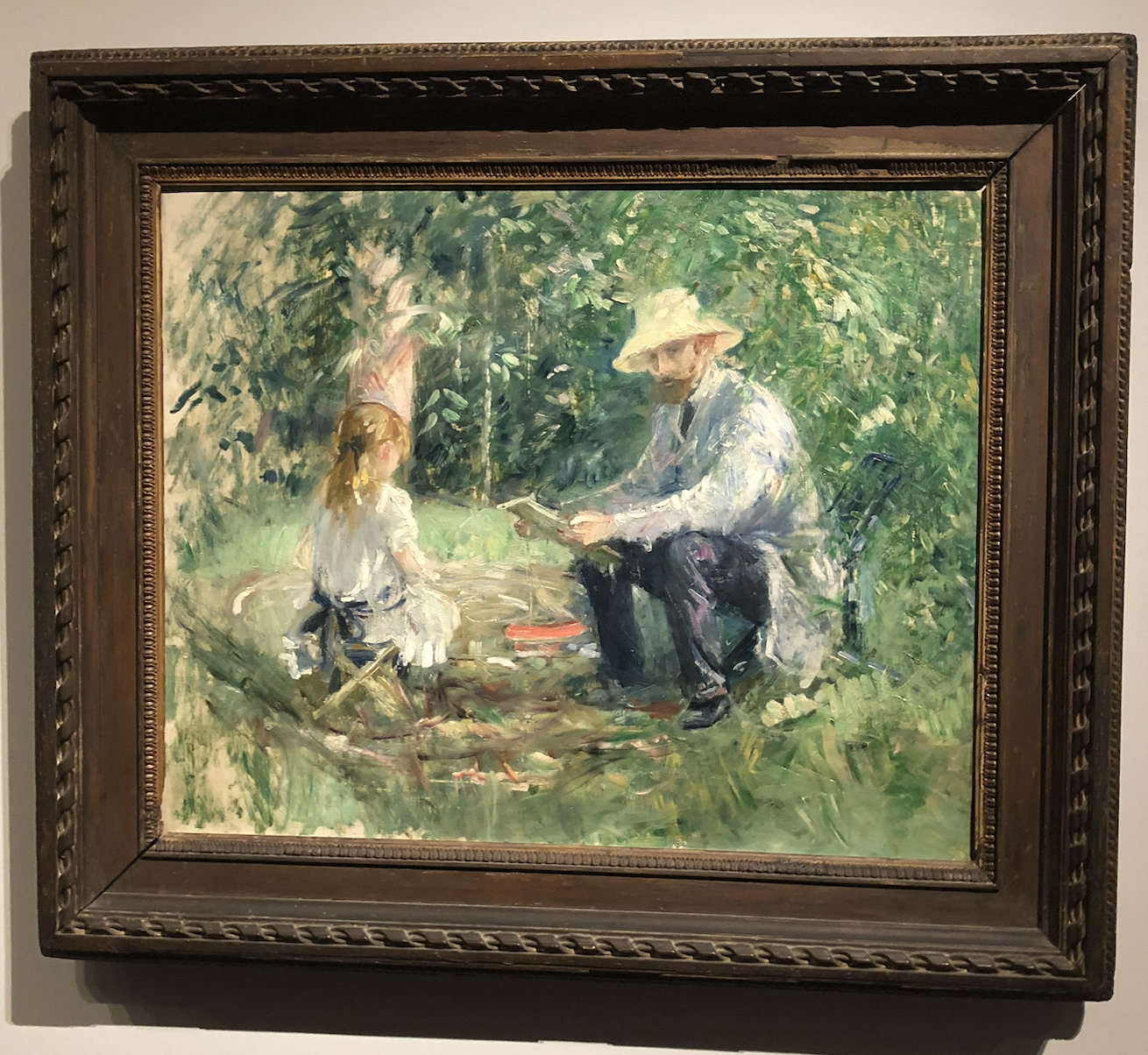
Eugene et Julie Manet
It was far from love at first sight for the two. Edma’s admission of married life being the most boring thing in existence was constantly repeated in Berthe’s head. Although, eventually Eugène or more likely her closeness to Édouard, wore her down.
On December 22, 1874, Berthe and Eugène were married in Passy. She would forever be attached to the Manet family, but she wouldn’t give up her name. Marrying a man who was an artist as well as the brother of an artist was a wise move, as it brought her an understanding of her world.
Eugène became a model for her paintings in gardens, looking out windows, and eventually as a father.
Although the biggest event of 1874 was also the first exposition of the Impressionist Painters at 35 Boulevard des Capucines in the former studio of photographer Nadar. In February 1874, Edgard Degas invited Morisot to join the Société Anonyme des artistes peintres, sculpteurs, graveurs, etc., a group of artists who were being turned away from the official Salon.
On April 15, 1874, thirty-one artists exhibited, Morisot was the only woman alongside Monet, Degas, Pissarro, Sisley, Cézanne, and Monet, but never Manet. The exhibit ran for one month, concluding on May 15, and 3,510 visitors mostly visited to make fun of the event. With ten pieces on display, Berthe would leave a lasting impression on visitors, but the exhibit was a failure; only four paintings were sold, none of which were Morisot’s.
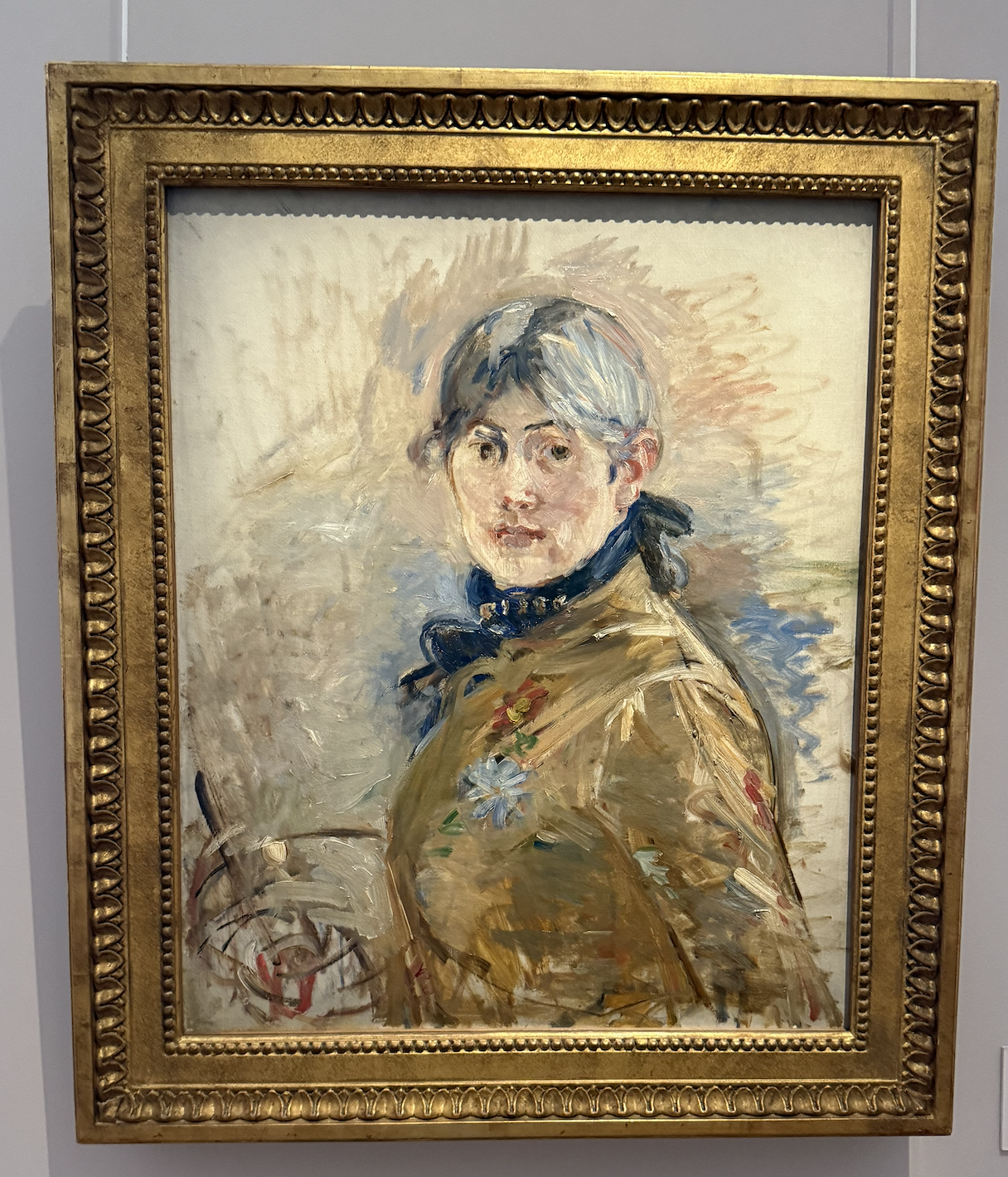
Self Portrait 1885
The academic Salon opened on May 1st, and Manet’s Railway was included, while he still stayed away from the group that would come to be known as Impressionism, a painting by Monet shown in Nadar’s studio.
In March 1875, at an auction at the Drouot auction house, twelve of her works were up for sale alongside Monet, Renoir, and Sisley. It caused a scandal, and one viewer even called her a prostitute. Fellow artist and friend Camille Pissarro took such offense that he punched the man. In the end, her paintings sold better than theirs with some notable buyers, Ernest Hoschedé, Henri Rouart, and her brother-in-law, Gustave Manet.
Four female artists broke into the Impressionist movement: Mary Cassatt, Eva Gonzalès, Marie Bracquemond, and Berthe. They are still remembered today. As you can imagine, they give their paintings a softer look and give a closer insight into domestic life. Few were better than Morisot,and in 1878, she turned her attention to a new subject, her daughter.
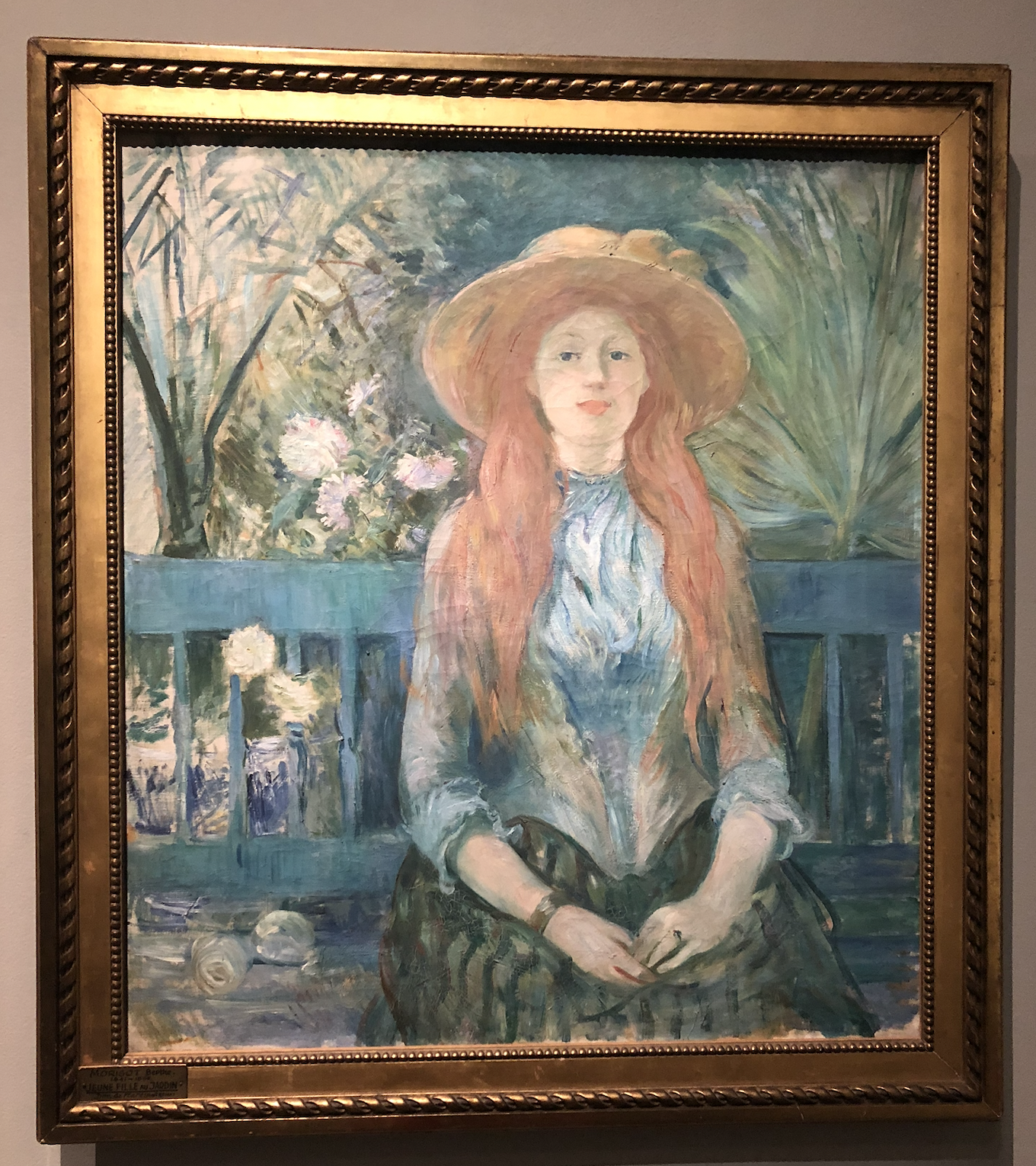
On November 14, 1878, her first and only child, Julie Manet, was born. Berthe documented her life from the time she was fifteen months old. After the birth, Berthe suffered from various health issues and took a break from painting until April of 1879. Through her canvases, we can see Julie grow into a beautiful young woman. In 2021, the Musée Marmottan Monet held an exhibit dedicated to Julie and her life as a child of Impressionism. It was incredible, and I highly advise also reading her published diary. (More next week)
Berthe continued to participate in the Impressionist exhibitions, joining all but one of the eight between 1874 and 1886. Motherhood didn’t slow her down; she now produces paintings in her studio with Julie, with domestic life as the main subject.
The entire Manet family was dealt a blow on April 30, 1883, when Édouard died.
His last years were filled with suffering from the symptoms of syphilis. His gangrenous left foot was amputated on April 19, 1883, just eleven days before he died. Refusing his last rites, he was surrounded by his wife, Suzanne, and loved ones, including Berthe, Julie, and Eugéne. He died in his home on Rue de Saint-Pétersbourg in the 8th, twenty years to the day Le Déjeuner sur l’herbe was shown at the Salon des Refusés.
On January 5, 1884, a massive retrospective exhibit of Manet’s work opened at the École des Beaux-Arts, including Déjuner, Olympia, and his last painting, Un Bar aux Folies-Bergère. On February 4 & 5, the remaining contents of his studio were sold at auction at the Hotel Drouot. Morisot and her husband bought 8 pieces, and other members of the Manet family grabbed many of the others. The sale was a disaster, and many went for next to nothing. Oh, to be able to travel back in time to that sale.
With the loss of her mentor and friend, Berthe spends more time with Renoir, who often paints and sketches Julie. In the Orsay, Renoir’s sweet portrait of Julie holding her cat always makes me smile.
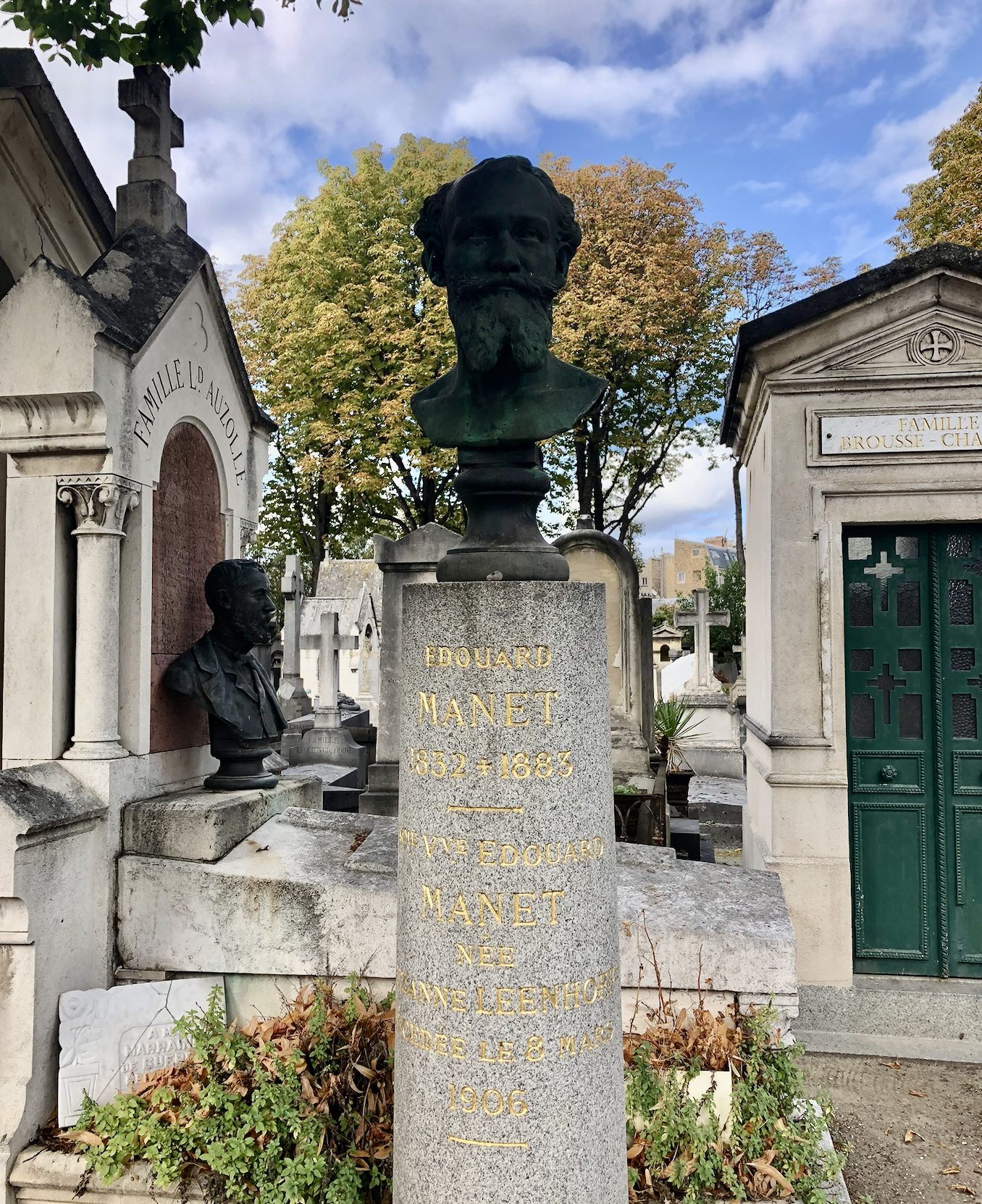
In Manet’s lifetime, he was never one to shy away from controversy, none more so than in 1863 with the completion of Dejeuner sur l’herbe and Olympia. After his death and the dismal success of the auction of his work, Susanne Manet had plans to sell Olympia to a wealthy American buyer for 20,000 francs. Claude Monet led a campaign with the help of Berthe and Eugéne to raise funds to purchase Olympia, and urged the Musée du Luxembourg and the Louvre to step in to save the painting and keep it in France.
Letters survive today, written by many of the artists, including John Singer Sargent, to Monet, which was recently exhibited at the Sargent exhibit at the Orsay. A handwritten list of artists that donated includes Proust, Pissarro, Sargent, Rouart, Moreau-Nelaton, and Rodin. Raising 19,415 francs and purchased in March 1890 by the Luxembourg and is now in the Musée d’Orsay.
The trio that was Berthe, Eugéne, and Julie often spent time in the countryside, including Giverny, to visit Monet. On November 29, 1891, Berthe and Eugéne purchased the Château du Mesnil Saint Laurent in the town of Juziers, one hour northwest of Paris. Although she wasn’t fond of the drafty 16th-century chateau.
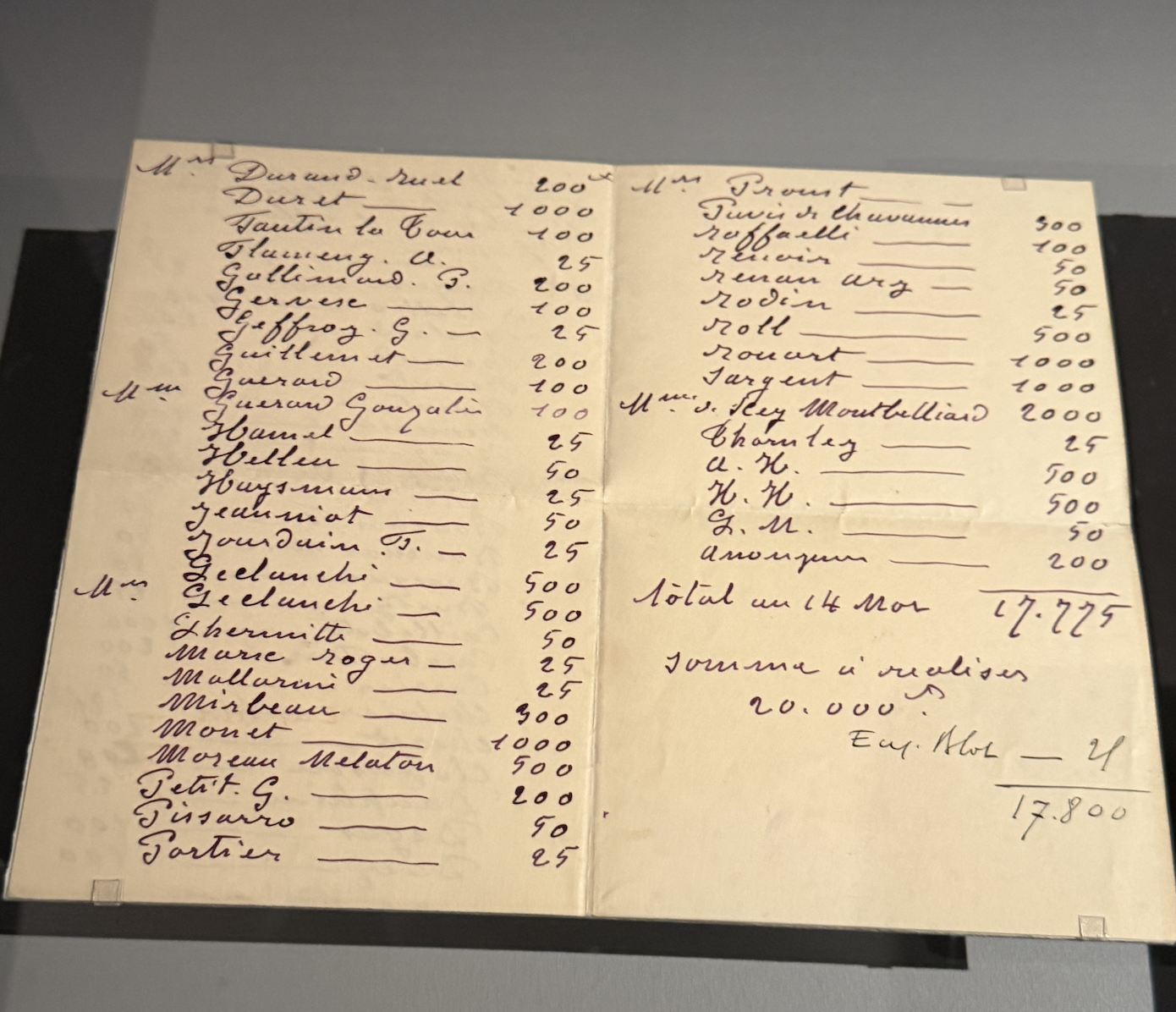
When Julie was just 5 years old, Eugéne Manet died of syphilis, the same thing that took his brother and father on April 13, 1892. He was just 59, and Julie would have a wide group of “uncles” who would look after her. Degas, Monet, Renoir, and the poet Stéphane Mallarmé stepped in as her new guardians, along with her mother.
Julie continued to grow up on the canvases of her mother and Renoir. In 1894, Renoir painted Mother and Daughter together for the last time.
In January 1895, Julie became quite ill with the flu. Berthe took care of her but also became ill. Berthe died on March 2, 1895, at 54, at 10 rue Weber, on the edge of Paris. It is normally mentioned that she died of pneumonia; however, it was most likely syphilis that also took the life of her husband three years before.
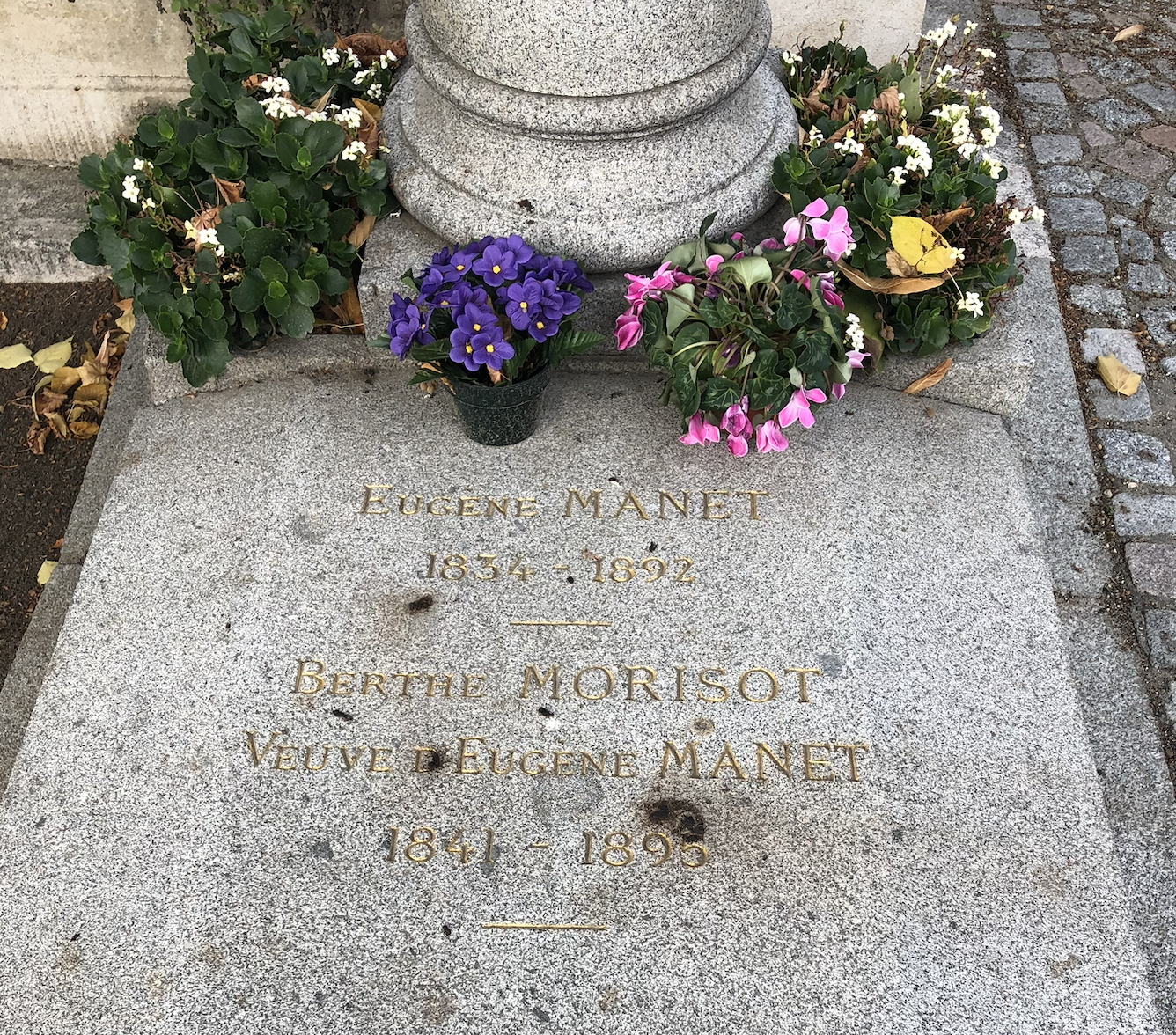
Three days later, Morisot was buried in the Manet family tomb at the Passy Cemetery in the Trocadero in the shadow of the Eiffel Tower. With her husband, Eugène, and brother-in-law, Édouard, the two artists would spend eternity together.
Julie was 17 years old and, with the help of her “uncles,” would do all she could to keep her mother's legacy alive. In 1896, with the help of Monet, Renoir, and Degas, 390 of the more than 400 paintings and drawings by Berthe Morisot were brought together in the Durand-Ruel Galerie for a retrospective.
Julie became an artist in her own right and, like her mother, worked at the Louvre as a copyist. On one visit in 1897, she met artist Ernest Rouart. The two married on May 29, 1900,
Through Julie and a large family of artists who looked after her, Berthe’s art lived on. Whether she was in front or behind the canvas, she was an amazing woman whom we are lucky to enjoy today.
You can find many of her pieces in the Musée d’Orsay, Petit Palais, and the Musée Marmottan Monet, where you can also find some of the sketches Manet did of her.
Manet’s paintings of Morisot
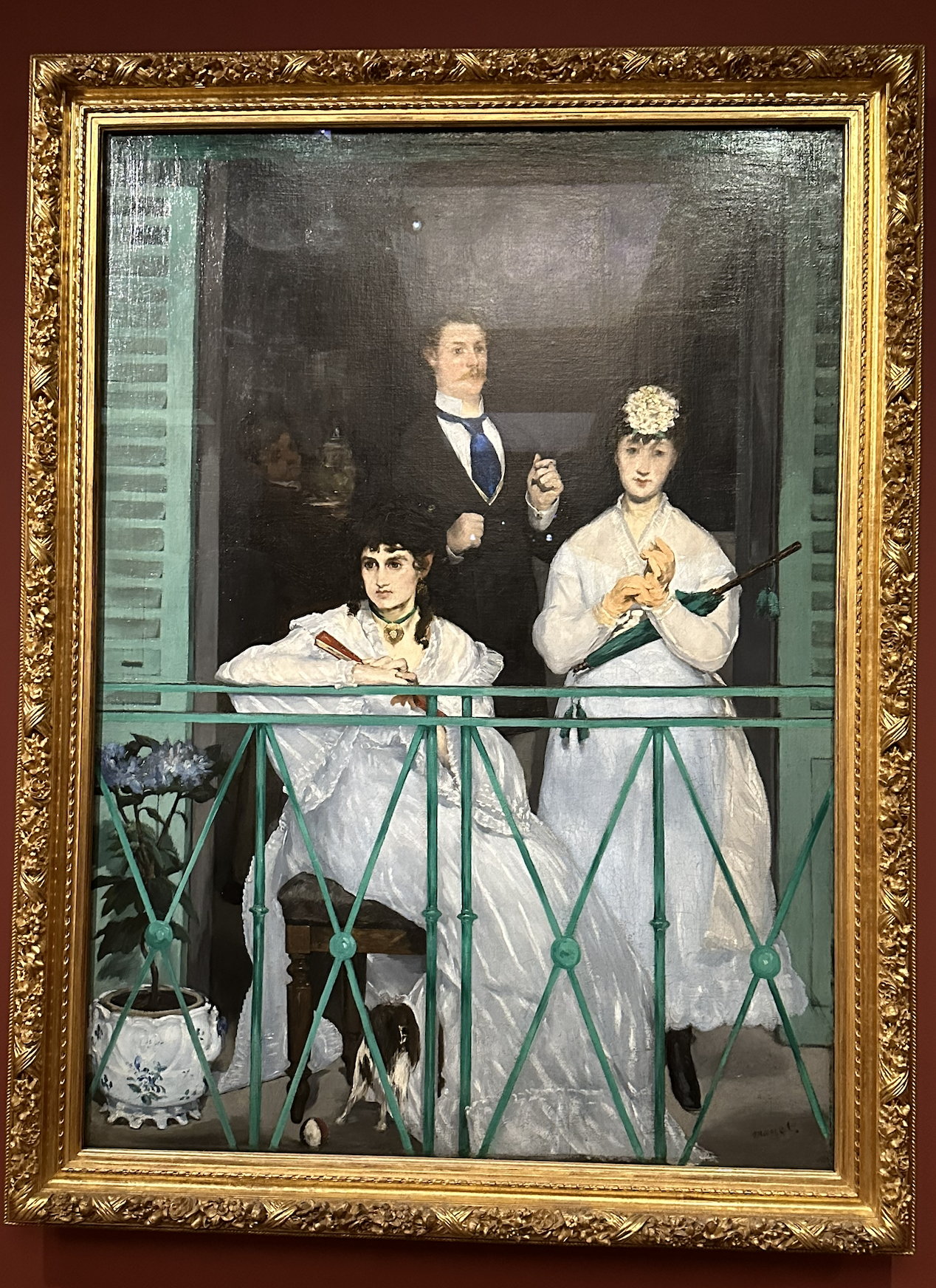
The Balcony 1868- 1869. Purchased by Gustave Caillebotte and left to the French state and held in the Orsay today.
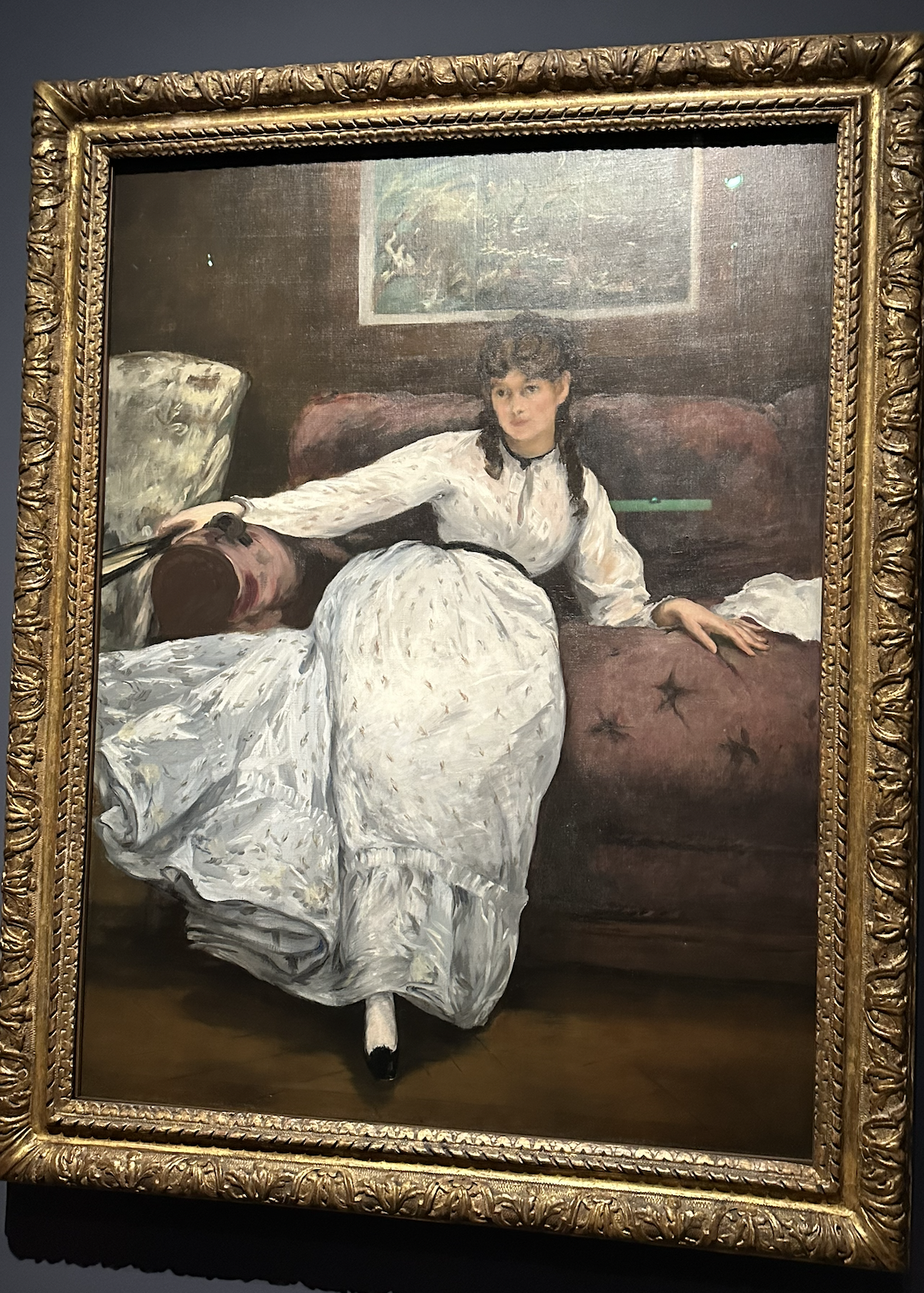
Repose 1870, the one painting Manet did of Berthe that she wanted more than any other, but never owned. Now in Rhode Island School of Design.
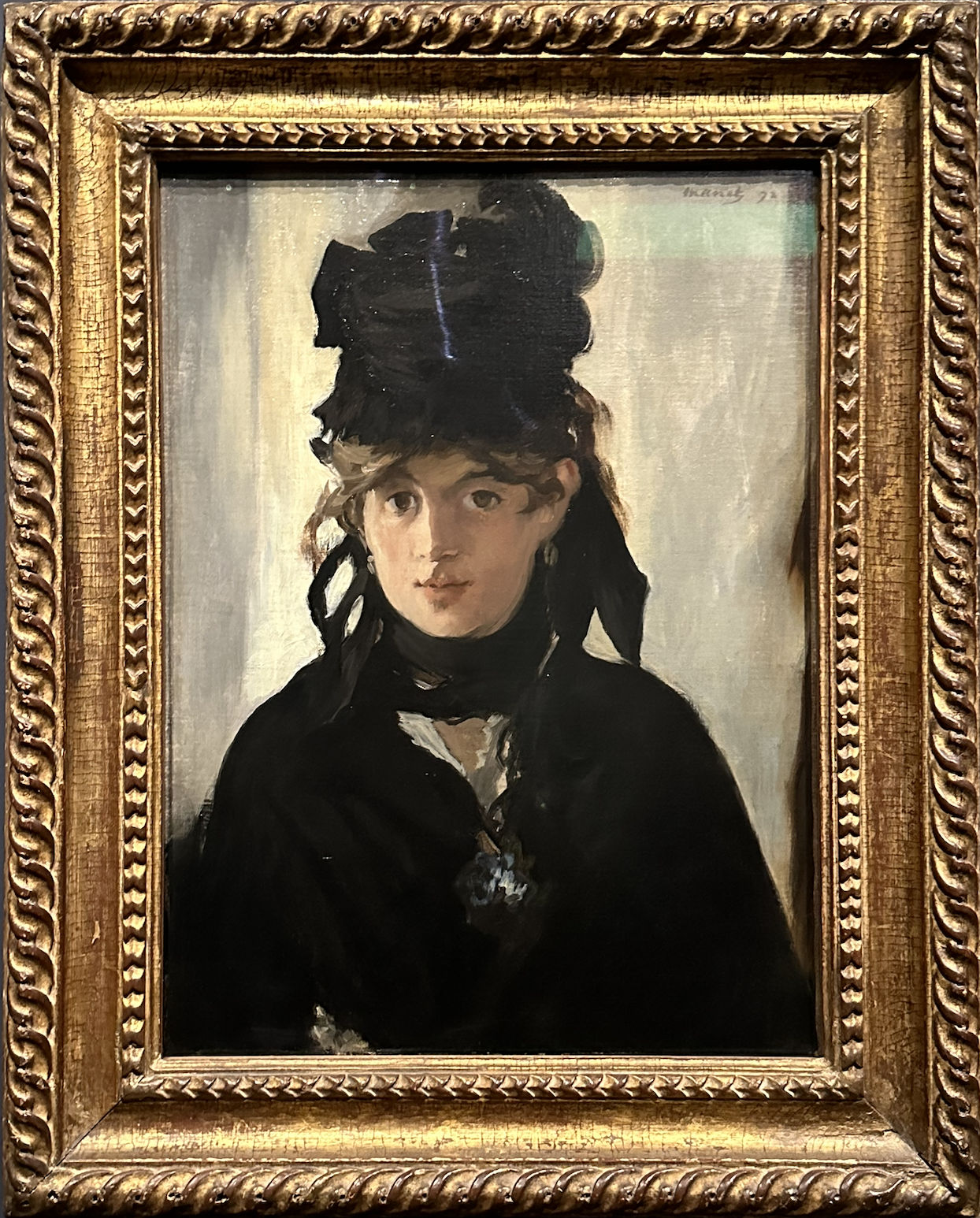
My very favorite Berthe Morisot with Violets, painted in 1872, was purchased by Theodore Duret from Manet was purchased by Berthe just before her death and remained in the Morisot-Rouart family until Julie’s son, Clement, sold the painting in 1998. It was purchased with the Meyer Foundation's help and given to the Orsay. She is currently traveling between San Francisco to Clevelend until she returns home in July.
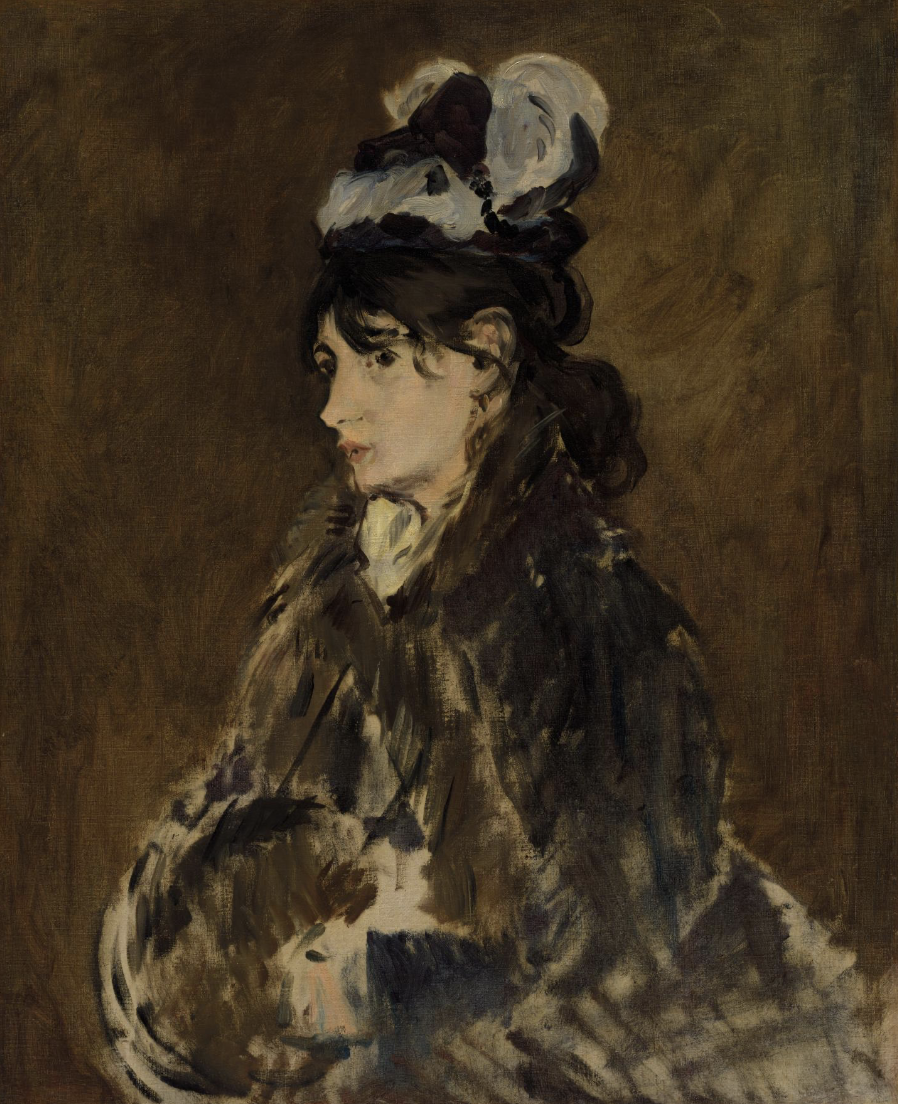
Berthe Morisot with a Muff, 1871-1872, sold at the February 1884 auction and now held in the Cleveland Museum of Art.
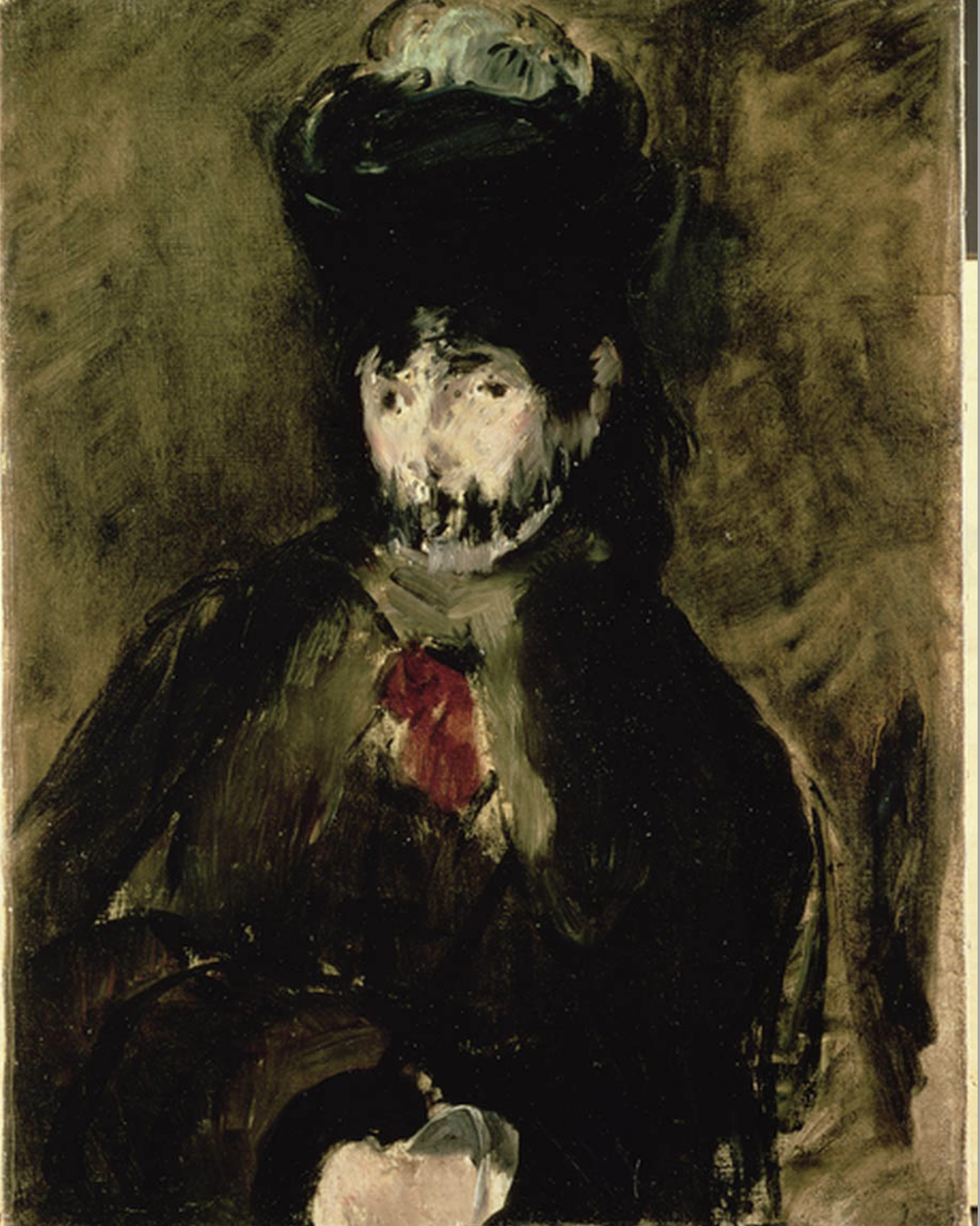
Berthe Morisot with Half Veil 1871-72, also sold at the February 1884 auction and now in the Petit Palais, Geneva.
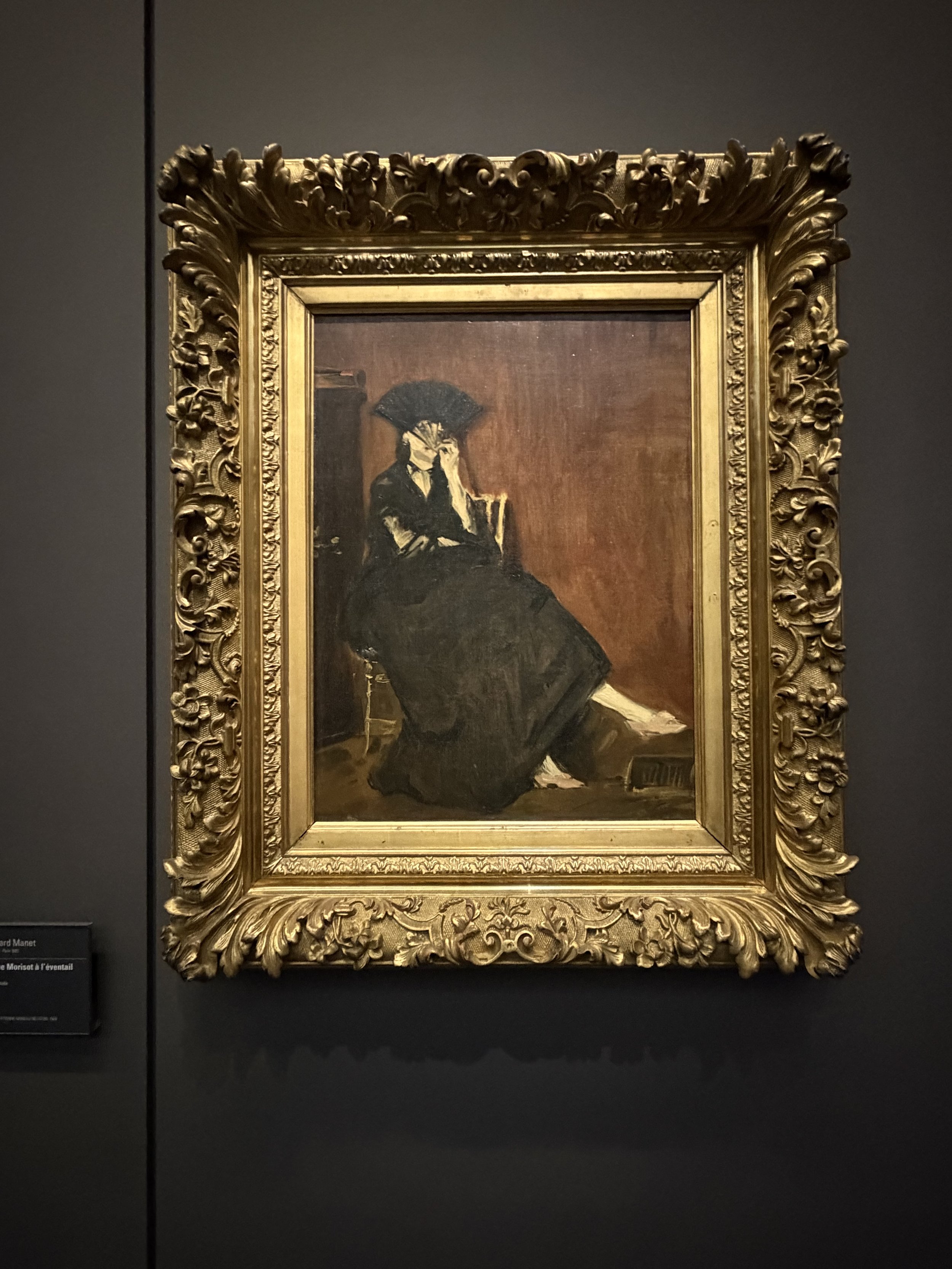
Berthe with Fan 1872 was owned by one of my favorite collectors, Etienne Moreau-Nelaton, and left to the Louvre in 1906, which also altered the perception of Impressionism. In the Orsay today.
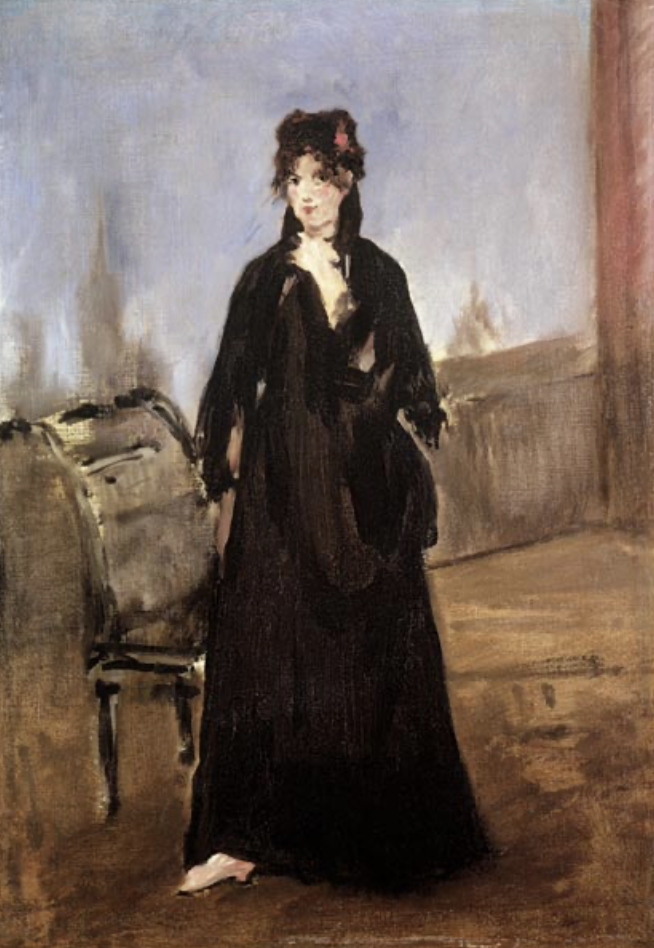
Berthe with Pink Slippers, 1872, is now in the Horishima Museum of Art and is currently on exhibit in the US.
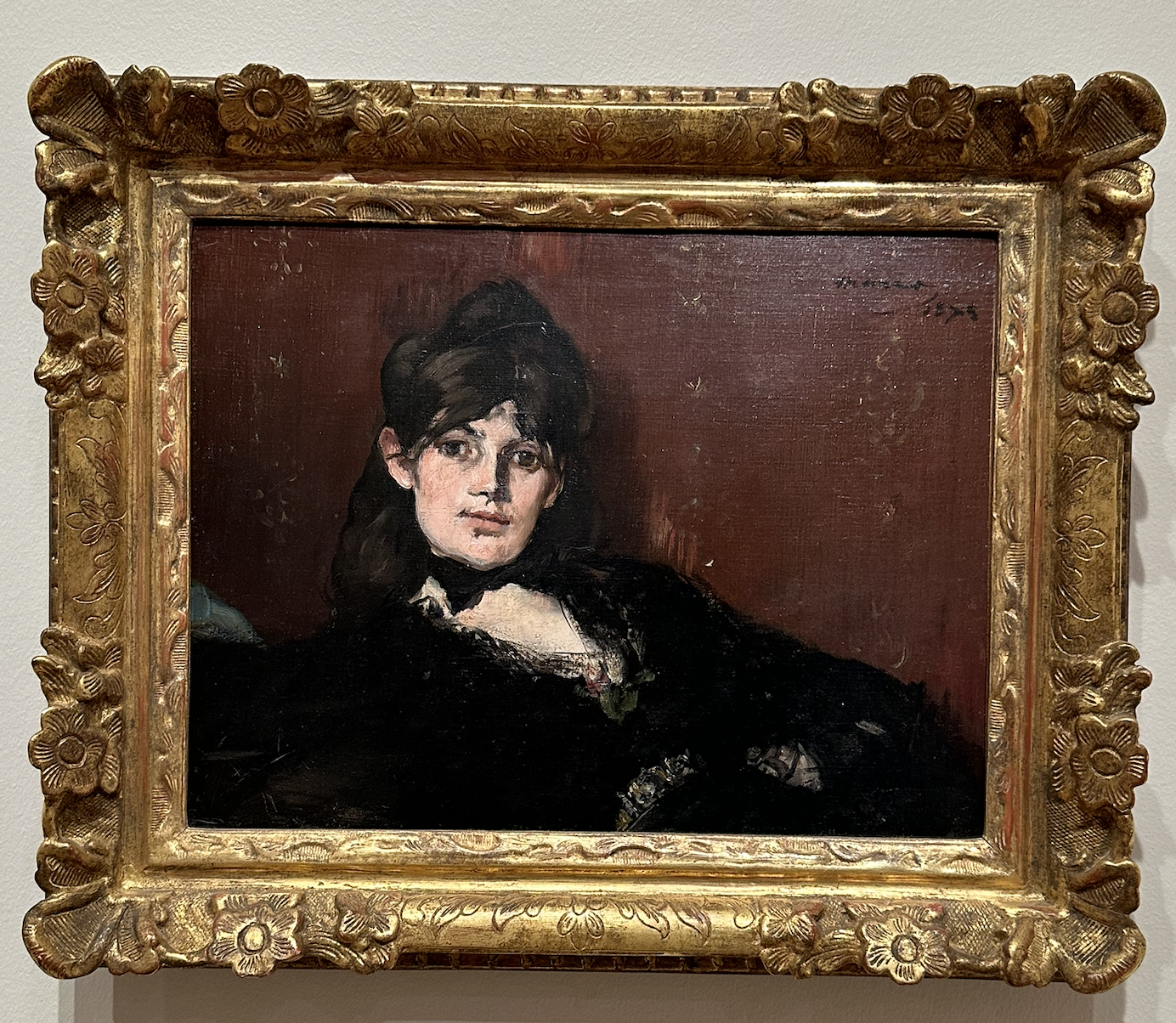
Berthe Morisot Reclining (1873), the only painting that Manet gave to his subject, remained in the family's collection until 1993 and was given to the Marmottan Monet by her grandson, Denis Rouart.
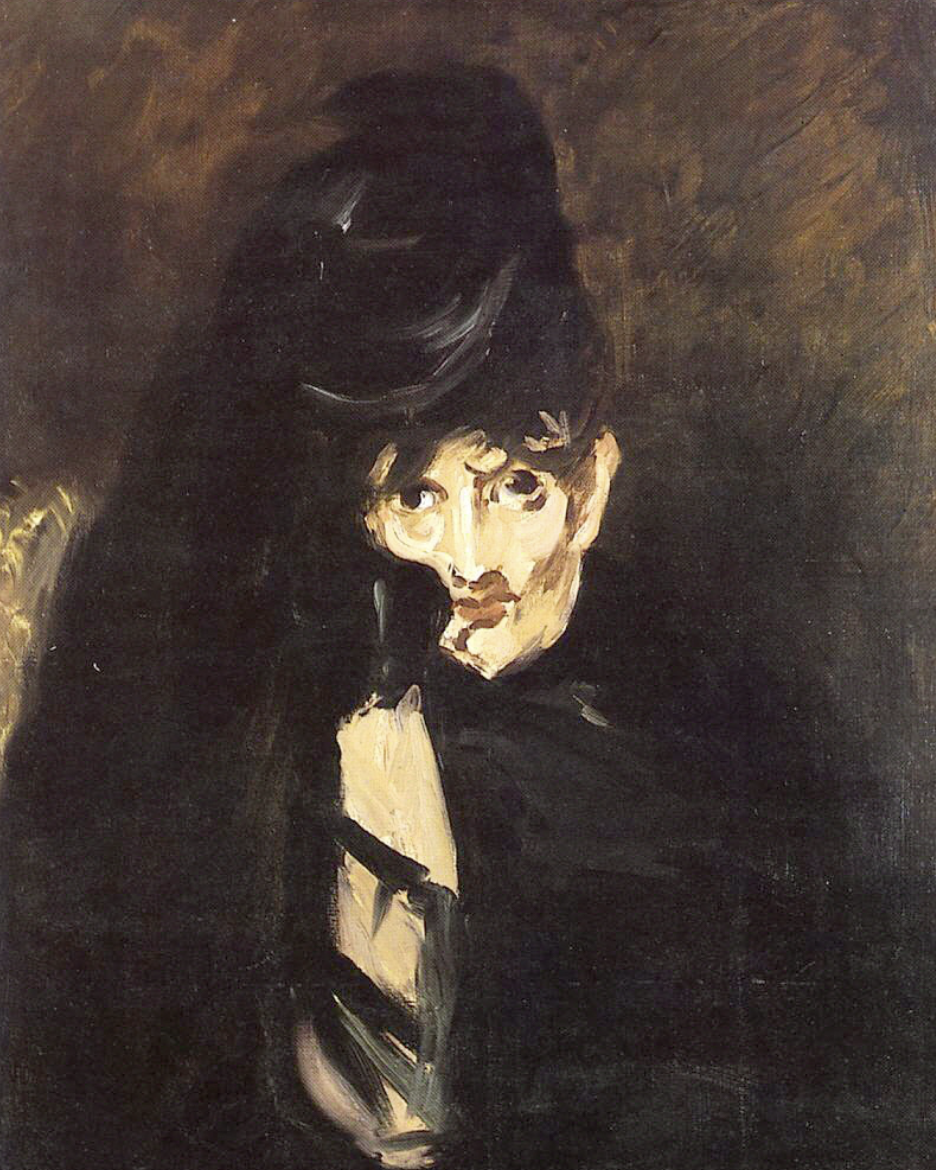
Berthe in Mourning, 1874, was painted just after the death of her father in January 1874. It was held in the collection of Dr George de Bellio and later his daughter Victorine. It was refused by the state in the donation made in her father’s name to the Musée Marmottan Monet in 1940. Now held in a private collection.
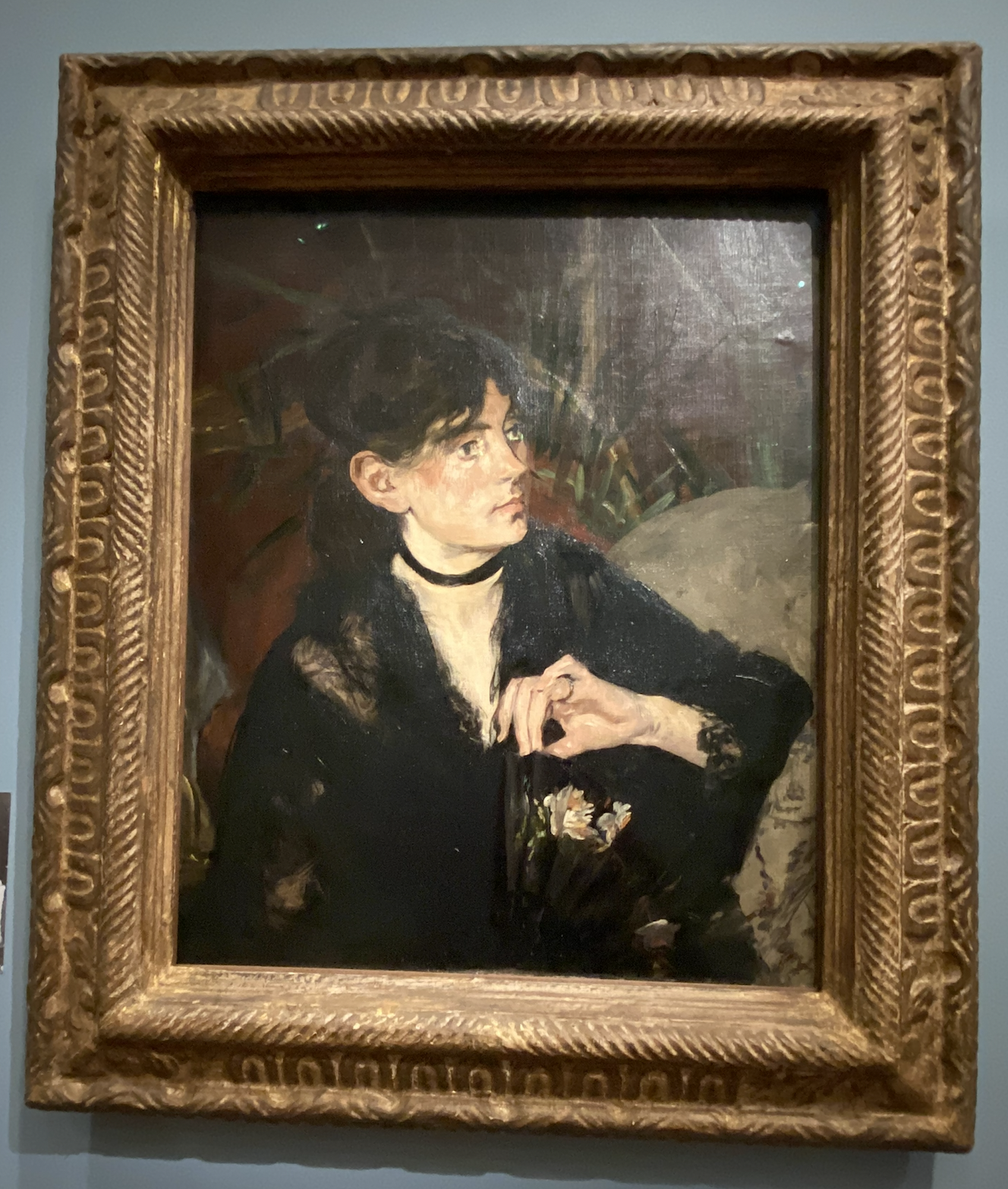
The last painting, Berthe with a Fan, 1874, was likely painted after her engagement with Eugene. It stayed with the Manet-Morisot-Rouart family until 1999, when it was given in lieu of inheritance taxes. Today, it is on display at the Musée des Beaux Arts in Lille.
If you are near Cleveland visit the Manet & Morisot exhibit that opens March 29 and runs until July 5, then hopefully all my babies return to Paris.