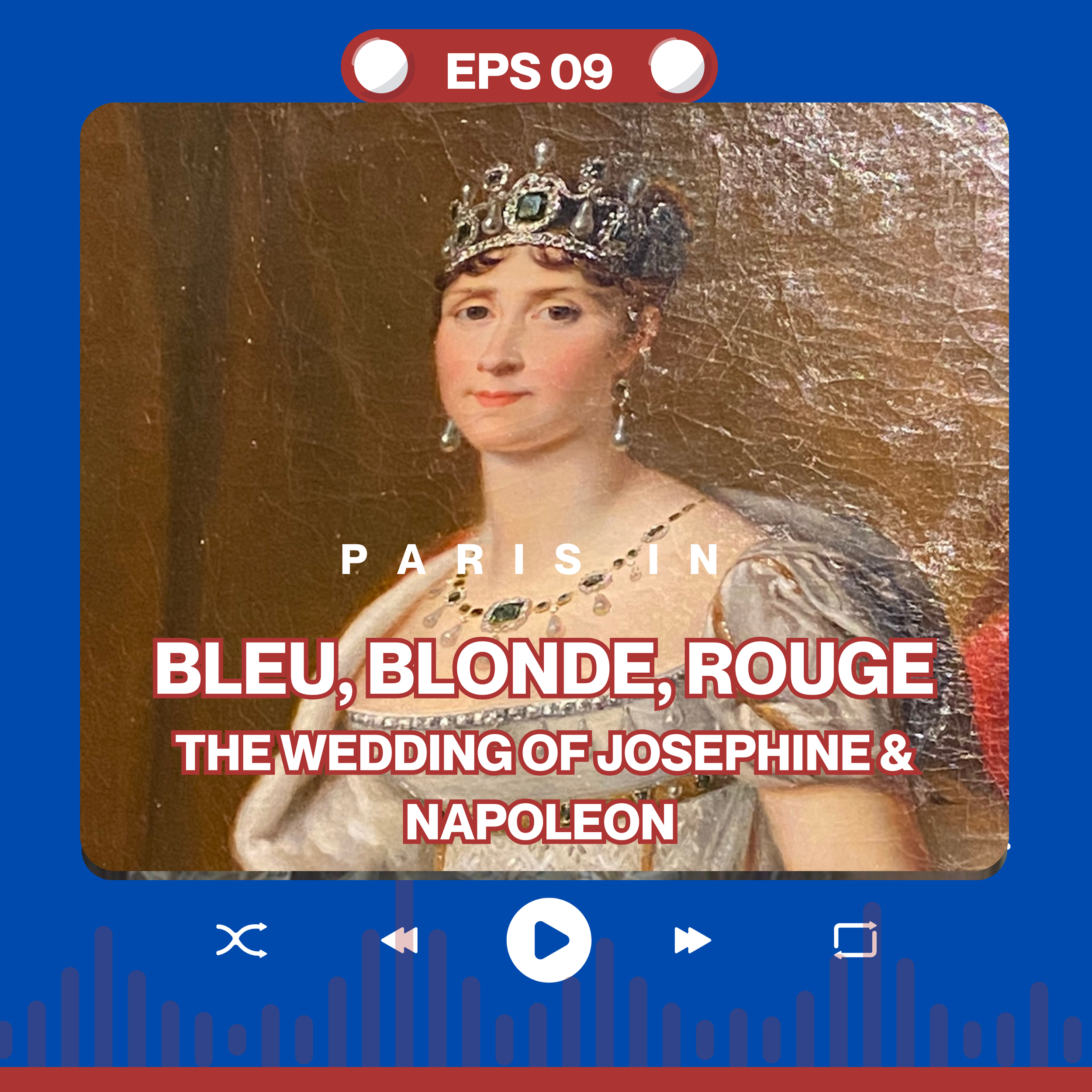
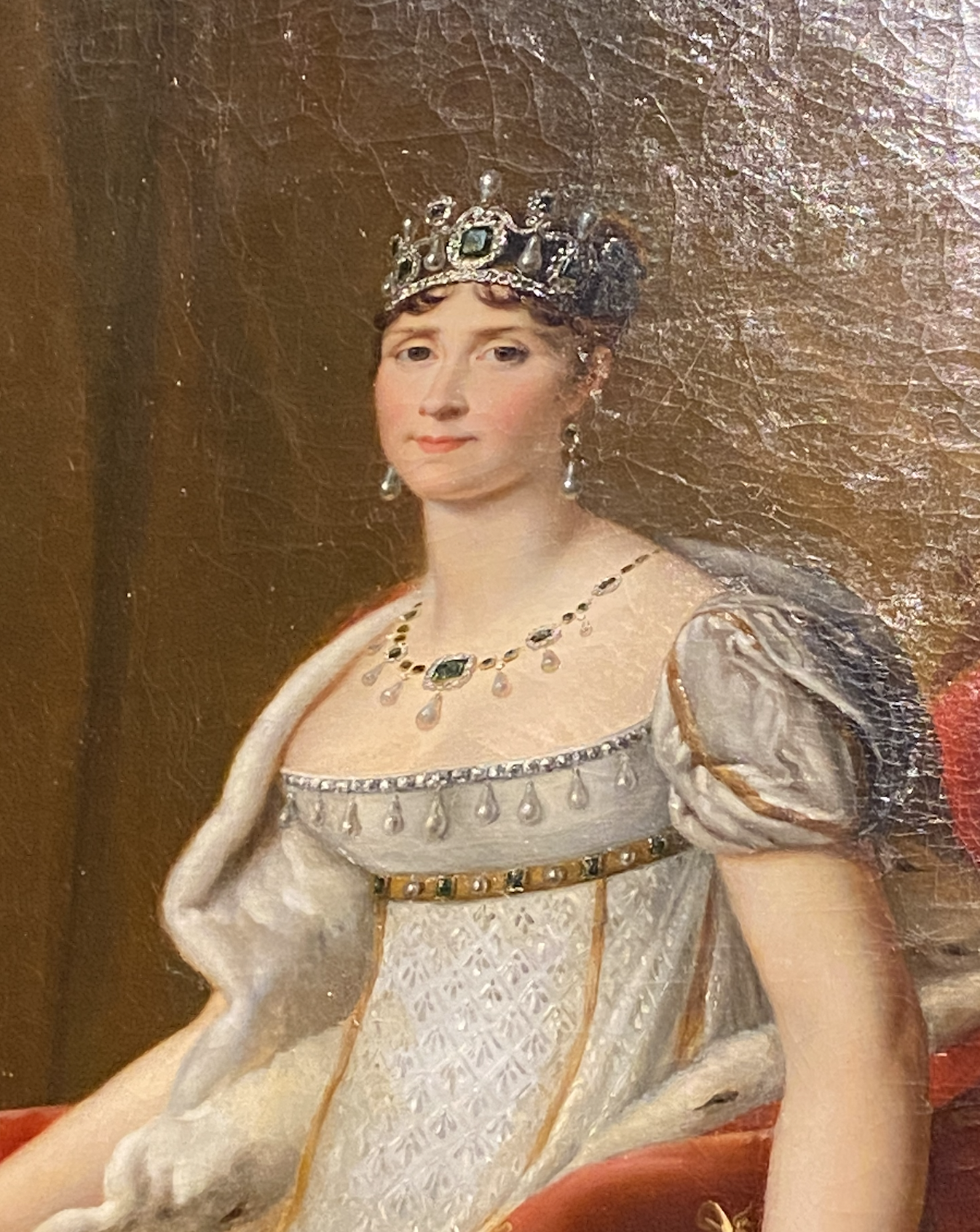
On March 9, 1796, Marie Josèphe Rose de Tascher stood in the drawing room of the second floor of the Hotel de Mondragon and watched a taper candle melt to the end of its wick.
It was 7 pm, and the civil wedding of Napoleon Bonaparte and Rose, as she was known at the time, was to start, but things didn’t go quite as planned. You might know her more as Josephine, a woman whom Napoleon would love until his last breath.
The Paris of 1795 was a mix of living under the Revolution's rules, those who survived the Terror, and figuring out how to forge ahead and survive, especially for a woman.
Marie Josèphe Rose was first married to a real cad of a man, Alexandre de Beauharnais. The arranged marriage was originally intended for her sister Catherine and Beauharnais, but she died in 1777 before she could sail from Martinique to France. Rose and Alexandre were married on December 15, 1779, in Noisy-le-Grand, outside Paris.
Rose, as she was then known, discovered a taste of the high life. Lavish surroundings, fashion, and parties, but at a price. Alexandre, a Lieutenant General of the Army, was later arrested and tried for treason and killed by the guillotine on July 23. 1794.
Josephine was also arrested due to her husband's actions, but escaped the terror and was released on August 6, 1794, four months after her arrest and the fall of Robespierre. As a widow with two young children, she didn’t have many avenues to provide for herself and her two children. A small income came from her husband's pension, but her taste for the good life cost a bit more.
Women didn’t have many options back then; they couldn’t go out and get a job, at least not a respectable one. Josephine had a few men who showered her in gifts and money, including politician Paul Barras. Their relationship was short-lived when he couldn’t afford the lavish spending on Josephine. Active in the Revolution, Barras voted for the death of Louis XVI and served on the Directory while Napoleon rose to power.
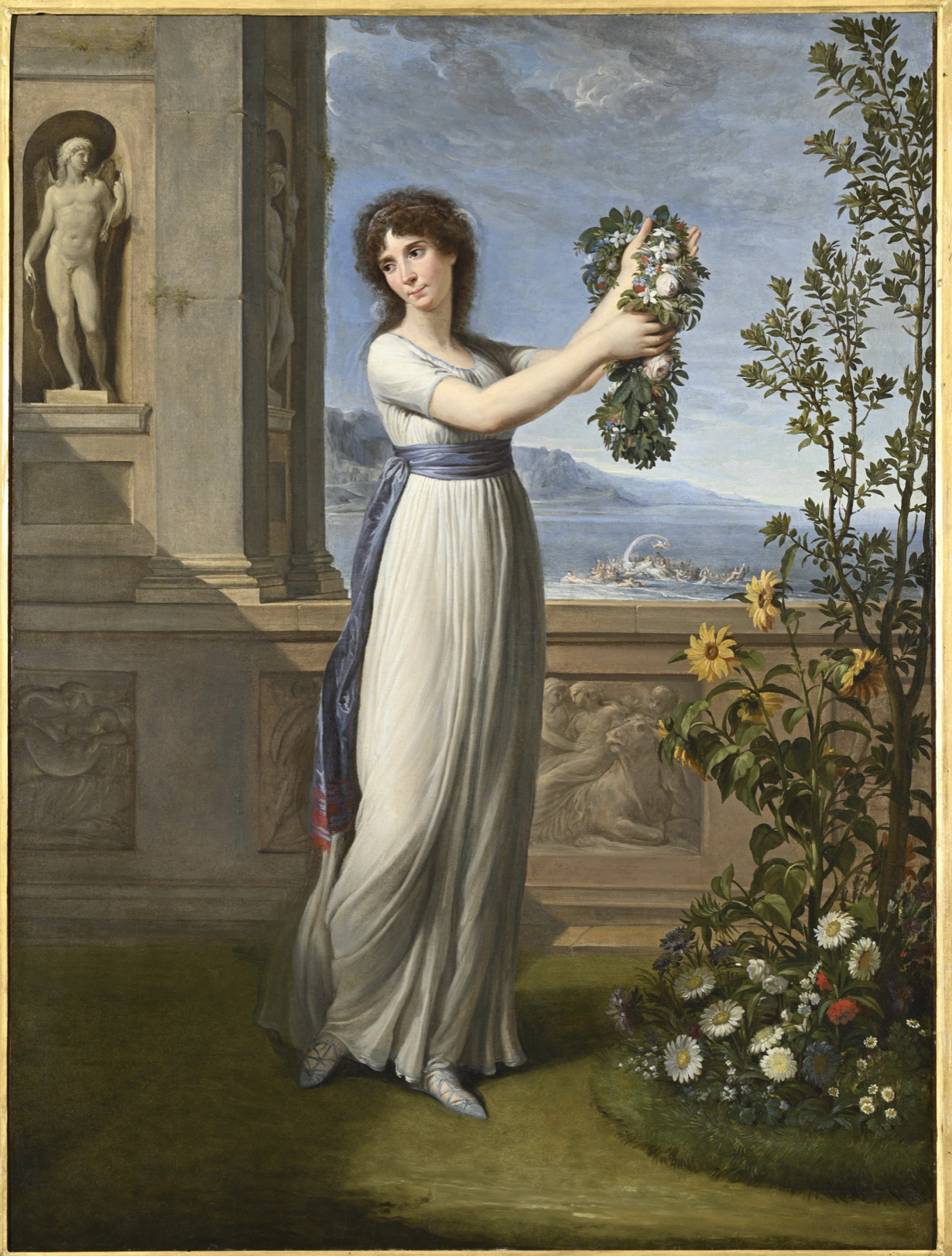
Josephine in 1796 by Andrea Appiani
It’s thought that the first meeting between Napoleon and Josephine could have been in the Salon held at the home of Thérésa Tallen, the belle of the Parisian Salons and often described as the bestie of Josephine.
Thérésa Tallen came from a wealthy Spanish family and was sent to France at twelve. Ahead of her time, she wove through society, dodging the guillotine during the Terror and creating a Salon that drew the movers and shakers of Paris. From Lafayette to Napoleon, it was one of the most influential gatherings in Paris on what is now the Rue Matignon.
Described as the beautiful Thérésa, she garnered the gaze of every man from Bordeaux to Paris, including Paul Barras (who really got around), with whom she had one of her many affairs with the French elite. It was at one of her legendary salons that Barras would bring Josephine. Napoleon Bonaparte had his eyes on the lovely hostess Thérésa, but she wasn’t too interested. Did Napoleon meet his Rose that night? We don’t know for sure.
The most likely event also included Barras and Thérésa at a dinner party on October 15, 1794, inside the Palais du Luxembourg, where he was living. Barras, ever the politician, knew how to keep Napoleon near and happy.
However, the meeting that would make the most impact came a year later. Napoleon was called up by Barras, then commissioner of the French Army, to help quell the Royalist uprising. It would end in the legendary “whiff of grapeshot” episodes when he launched into the crowd and onto the facade of the Eglise Saint Roch on the Rue Saint-Honoré, injuring and killing many but also ending the uprising against the government. Today, you can still see some of those marks on the facade of Saint Roch. The event launched Bonaparte’s career and an office on the Place Vendôme.
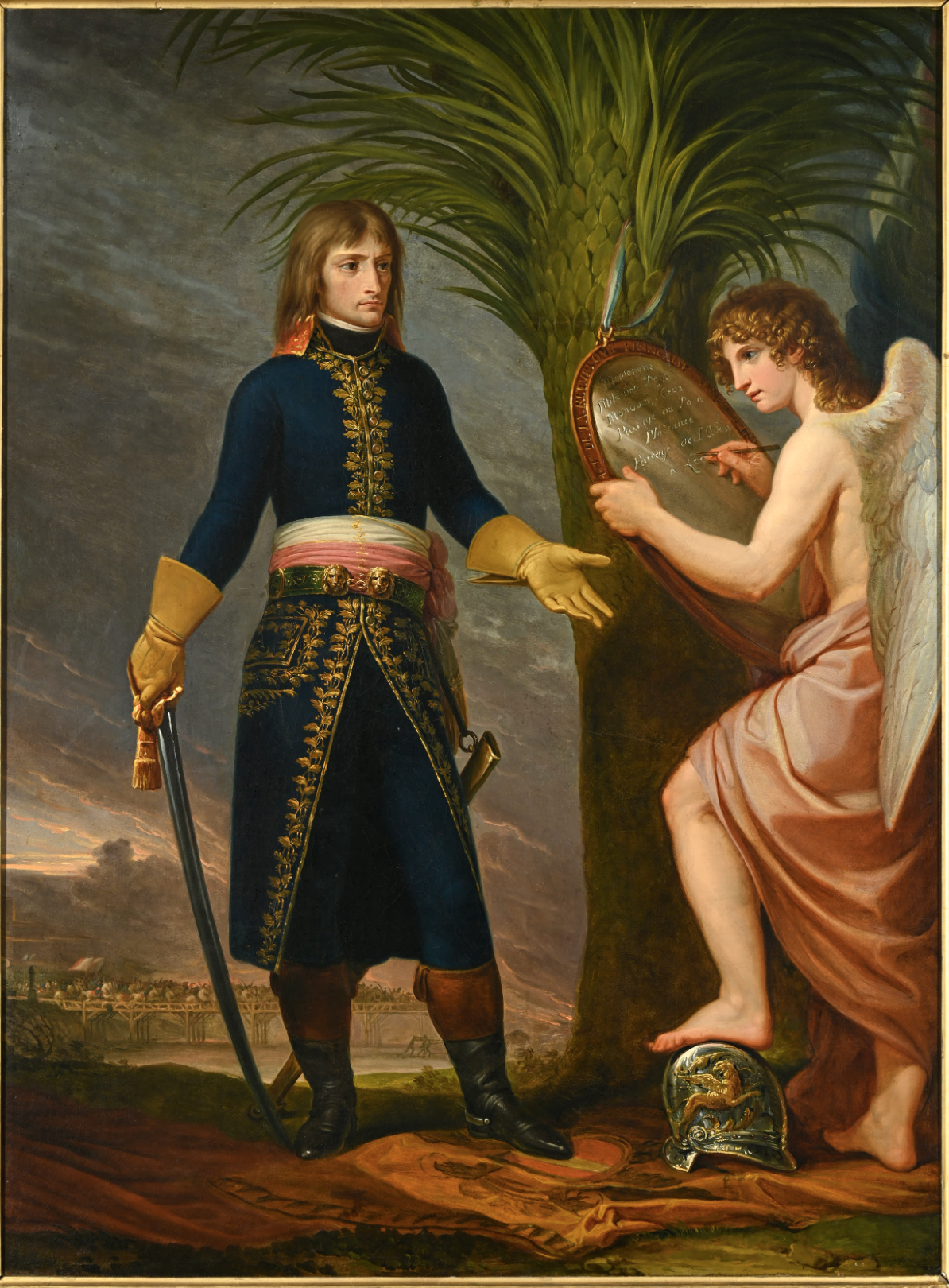
Napoleon 1796 by Andrea Appiani
A week after the uprising, all citizens were to abandon any and all weapons. Every home in Paris was searched, including the small home at 6 rue Chantereine (60 rue de la Victorie) where the widow Beuharnais and her two children lived. Eugène, born in 1781, and Hortense, born in 1783, were left with very little of their father. His property and possessions were seized, with a few items being returned after the end of the Terror. Eugene was thirteen when his father was killed and held tight the sword that once belonged to him and begged the soldier that he be allowed to keep it. The request was denied, but if he wanted, he could plead his case to the Department of War at the Place Vendome.
The next day, the young Eugène (although not so young, at 13 you could serve as the king and be married back then) visited no. 7 Place Vendôme, now in the shadow of the Vendôme column, topped with Napoleon himself. Eugene entered the office of Napoleon and asked for the return of his father’s sword. Touched by the request of the young man, Napoleon later wrote, “I granted his request. Eugène burst into tears when he beheld his father’s sword. Touched at his sensibility”.
Josephine was so impressed that she paid General Bonaparte a visit the next day to thank him.
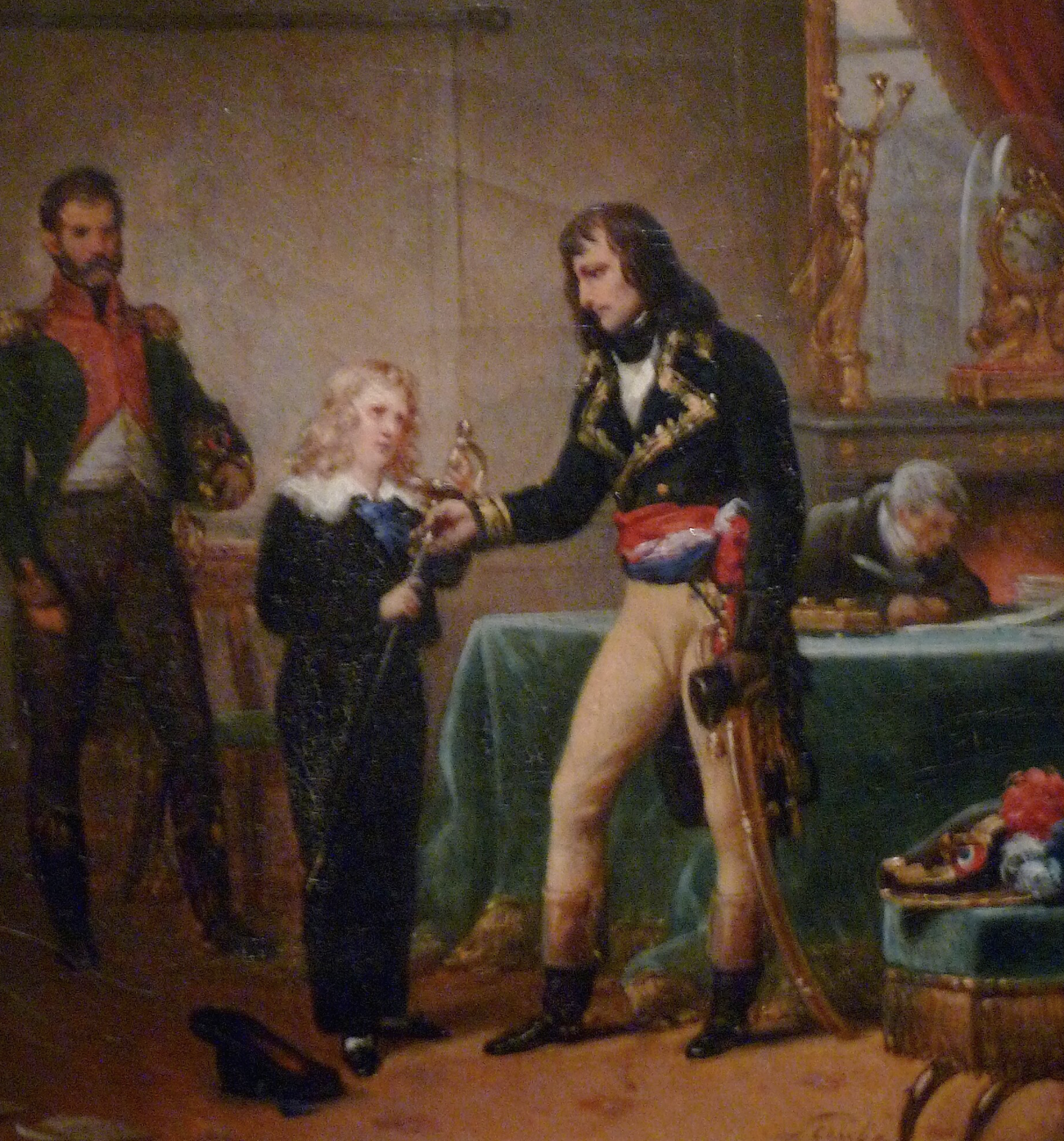
Napoleon returning the sword to Eugene 1795 Charles de Steuben
Napoleon continues writing, “Everyone knows her extraordinary grace, her irresistibly sweet, attractive manners. The acquaintance soon became intimate and tender”.
The early Napoleon was far from the myth that has been created over time. Standing at 5” 6’, not at all short for that time, quite a normal French height. The longstanding rumor was created by his English enemies and has survived until this day. He was quiet, rather awkward, and shy, and Josephine would serve as his muse, bringing out the inner general and future Emperor.
The intimate relationship between the two began quickly, as did talk of marriage. Napoleon was about to leave on another campaign, but first, he wanted a wife. Josephine wasn’t sold on the idea, but she did need to be taken care of. Paying another visit to Place de Vendome, this time to her notaire Jean Raguidau. Looking for advice on whether she should get married, he advised her that the young general had little to offer and was against it. She decided not to listen to him and married Napoleon anyway on March 9, 1796, two hundred and thirty years ago today.
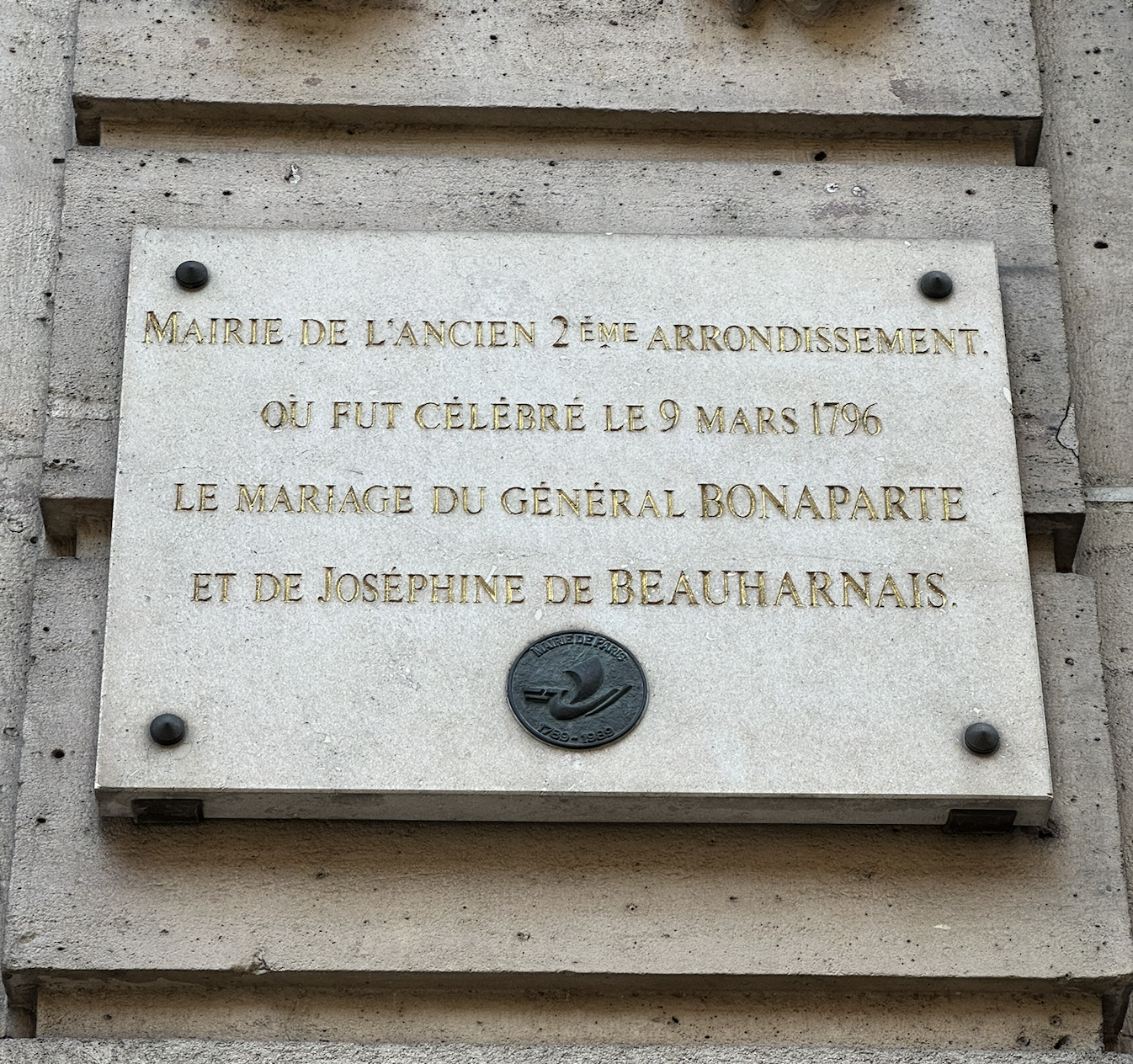
The Mairie of the 2nd arrondissement was once located in the Hotel Mondragon, built in 1723. The beautiful building once covered the entire block and was built for Pierre Etienne Bourgeois de Boynes, secretary of the Navy under Louis XV. Sold in 1776 to Louis Duval del l’Epinoy,secretary to Louis XV, and remained in his family after his death until the start of the Revolution.
One of the hundreds of confiscated properties in Paris it became the Mairie (mayor's office) of the 2nd arrondissement in 1795, as it was on the historic day that aligned Bonaparte with Marie Josèphe Rose de Tascher.
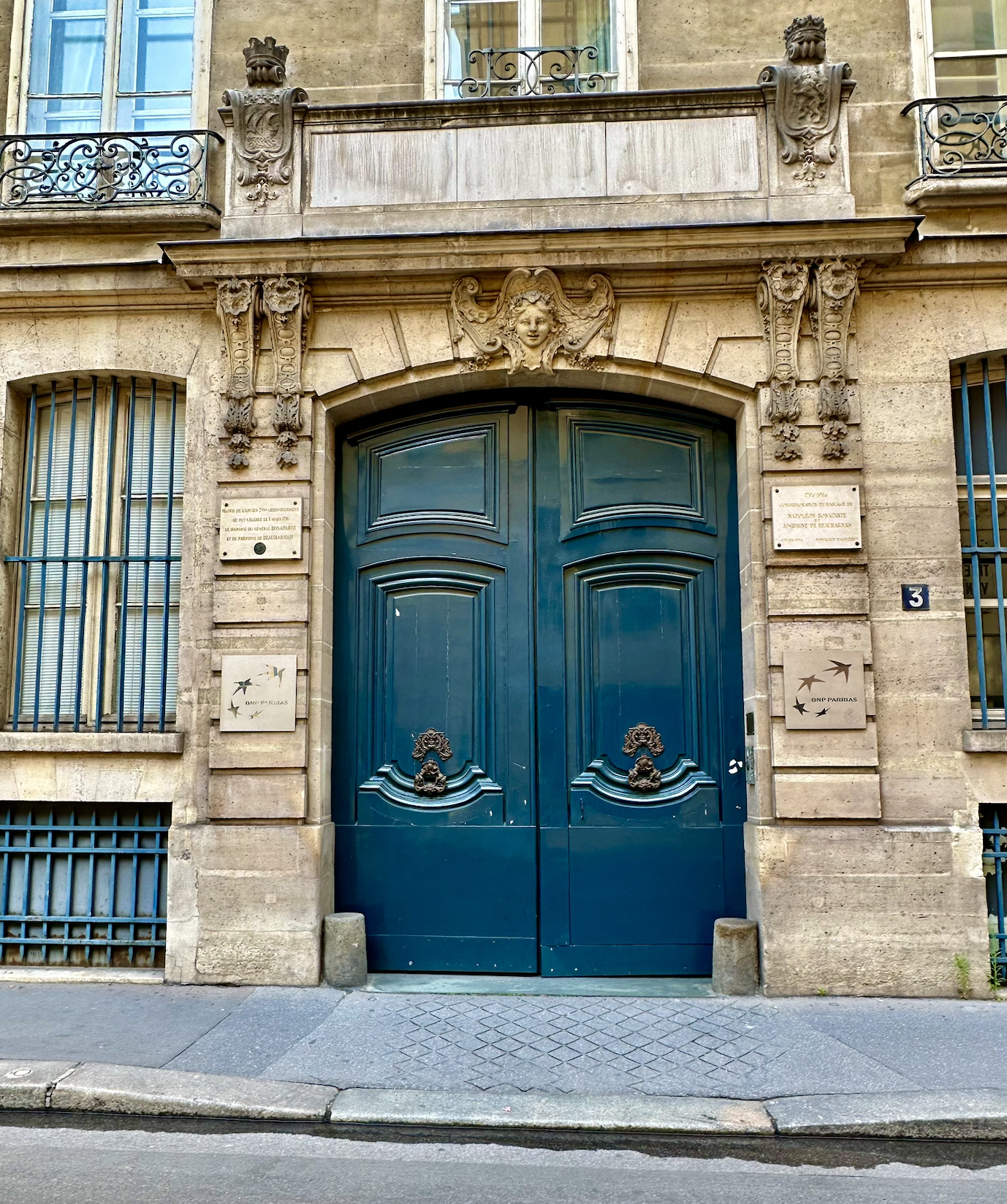
Hotel Mandragon 3 rue d’Antin
Napoleon preferred to call her Josephine, and how she has been known and remembered through history.
For three hours, Josephine waited in a long white gown with a blue, white, and red sash and wearing a gold enamelled medallion or ring with “au destin” inscribed. A ring that is attributed to the wedding with NB engraved was later given to Hortense, Josephine’s daughter by Napoleon and passed to her son, Napoleon III. It was buried with him when he was buried on January 10, 1873 in Farnborough Abbey, Kent, England
Josephine recalls watching the single taper candle burn down to nothing as they waited for Napoleon to arrive. He finally arrived after 10 pm and said, “Marry us quickly”. The official had already given up waiting and left, and his fill-in may not have had the right to perform the service.
It’s thought and told by some that he was late because he was having two fake birth certificates made. Josephine was thirty-two at the time, born on June 23, 1763, and Napoleon was twenty-six, born on August 15, 1769. Napoleon’s birthdate was changed to February 5, 1768, which also changed his place of birth was changed from Corsica to the Republic of Genoa. Exactly one year before Napoleon was born on August 15, 1768, Louis XV brought Corsica under the French flag. Josephine’s birthday was changed to August 15, 1769, the date of Napoleon's actual birth. Not exactly the best and the brightest altering official documents. Maybe this is why we have to have our birth certificates translated every other hour here in France today.
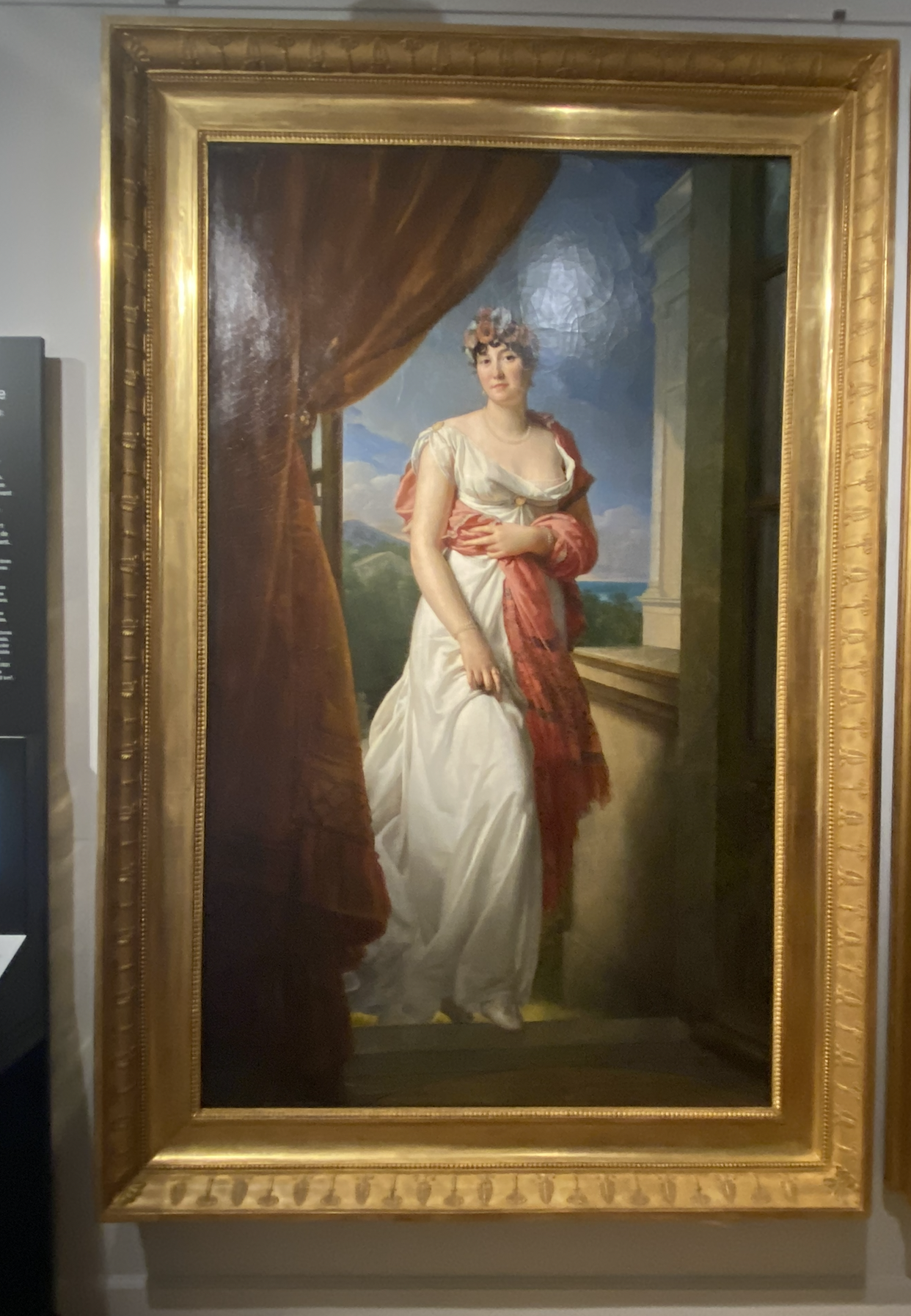
Thérésa Tallen by François Gérard in th Carnavalet
The Bonaparte family was unaware of the nuptials but would never have approved if they had been. Only a few people watched the ceremony, including the former lover of Josephine, Paul Barras, Jean-Lambert Tallien and his wife Thérésa, whom we can give the unofficial title of maid of honor, and Etienne Jacques Jerome Calmet, a family friend of Josephine.
During the Revolution, religious ceremonies had been outlawed. A civil ceremony made it easier to get a divorce, which Josephine wanted, but would also use this to her advantage eight years later on the eve of the Coronation.
Once married, the couple lived in Josephine’s home at 6 rue Chantereine, now 60 rue de la Victoire. The honeymoon would have to wait as Napoleon was off to Italy to lead the army.
Fast forward eight years to November 25, 1804, when the Pope arrived at the Chateau de Fontainebleau, as Napoleon didn’t want him to make a grand entrance into Paris. Having the Pope there was nothing more than a staged moment for the new Emperor. Linking his coronation to that of Charlemagne, the first Holy Roman Emperor, named by Pope Leon III on Christmas Day 800.
As for that whole grabbing-the-crown story, that’s not exactly accurate either and is also tied to Charlemagne and the Pope, but that's for another day.
While the pope roamed the halls of Fontainebleau, Josephine confided to him that the Imperial couple had never been married in the church. The Pope was not happy. Since the two were not wed in the eyes of the church, he could not attend or perform the coronation. Napoleon was even less thrilled and agreed in the 11th hour on the eve of the coronation.
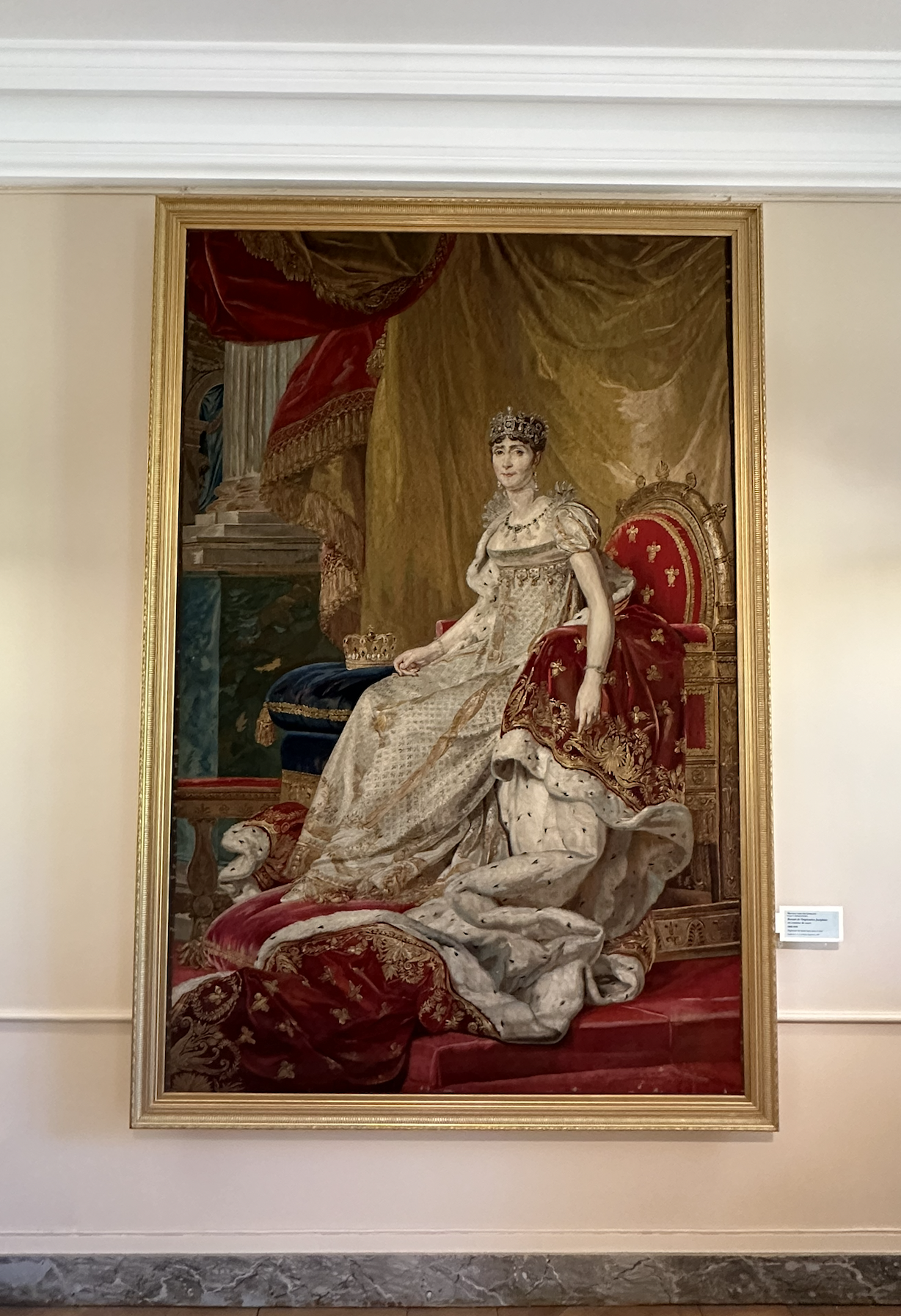
Josephine in Coronation dress in tapestry apres François Gérard
On December 1, 1804, the night before the big event, in the chapel of the Palais des Tuileries, Napoleon's uncle, Cardinal Joseph Fesch, performed the quick ceremony to the dismay of the Bonaparts.
The official love story of Josephine and Napoleon ended with the annulment of their marriage on December 15, 1809, in the throne room of the Tuileries, steps from where the rushed Catholic ceremony had taken place just five years earlier.
Unable to give Napoleon an heir to the Imperial throne, Josephine was cast out of the palace and his life, but never far from his mind. His final word on his deathbed, Josephine