The fall of Napoleon III in 1871 also marked the end of the throne. No more kings, no more emperors, and the new government wanted to be sure it would never happen again. And what might inspire a young man with dreams of royal power? JEWELS, lots and lots of jewels.
The political climate of the years after the fall of the last emperor was shaky at best. The Third Republic began on September 4, 1870, but the descendant of Charles X and monarchists still had their eyes on the prize: returning to the throne of France. There are still three descendants who believe that even today, that is for another day, I promise Susan. :)
During the Siege of Paris by the Prussians and the Commune of 1871, the vast number of jewels belonging to the crown and former rulers were moved from Paris for safekeeping. On August 10, 1870, the jewels were placed in a box labeled “assembly crates, special projectiles” and hidden on a boat off the coast of Brest. Returning in 1872, they fell under the protection of the Ministry of Finance, which just so happened to be located in the Palais du Louvre in what is the Richelieu wing today.
The events of 1870 & 1871 took a massive toll on Paris and the rest of France. In Paris alone, government buildings include the Hotel de Ville, the Palais des Tuileries, the Palais d’Orsay, and many on the Rue de Rivoli were destroyed during the Bloody Week of May 1872. The country was running out of money and needed to rebuild the government.
In 1875, with the jewels locked away, it was decided they needed a full inventory. The last one was done in 1832 during the reign of Louis Philippe, and if you listened to the first episode of the podcast, you know that Napoleon III added quite a few gems to the royal jewel box.
What the Ministry of Finance had in its possession far exceeded the property of the crown in 1875. Many of the pieces were retained after the hasty escape of Napoleon III and Eugenie and would be returned to the Empress in cash.
In 1875, the inventory totaled 77,486 gems, which included diamonds, pearls, emeralds, amethysts, opals, turquoise, rubies, and topazes. Worth a vast fortune, one that the country could really use.
As early as the 18th century, the Revolutionists sought to sell the crown jewels in their effort to rid France of anything associated with the monarchy, but the massive theft from the Garde Meuble in 1792 helped save many of the jewels, which were recovered.
In 1848, François-Vincent Raspail ran for the presidency of France. He was overwhelmingly defeated by Louis Napoleon, later known as Napoleon III. The same year, he encouraged anyone who would listen that the jewels needed to be sold. Incredibly outspoken, he served time in prison, and upon his release, he and his family were exiled to Belgium.
In 1876, his son Benjamin was elected as a French deputy for the Seine. In 1882, he once again took up the family cause of destroying the jewels of the crown, just as the last ruling emperor destroyed his family. Benjamin Raspail took it a step further and wanted everything melted down, sold, or destroyed, and the money used for social causes
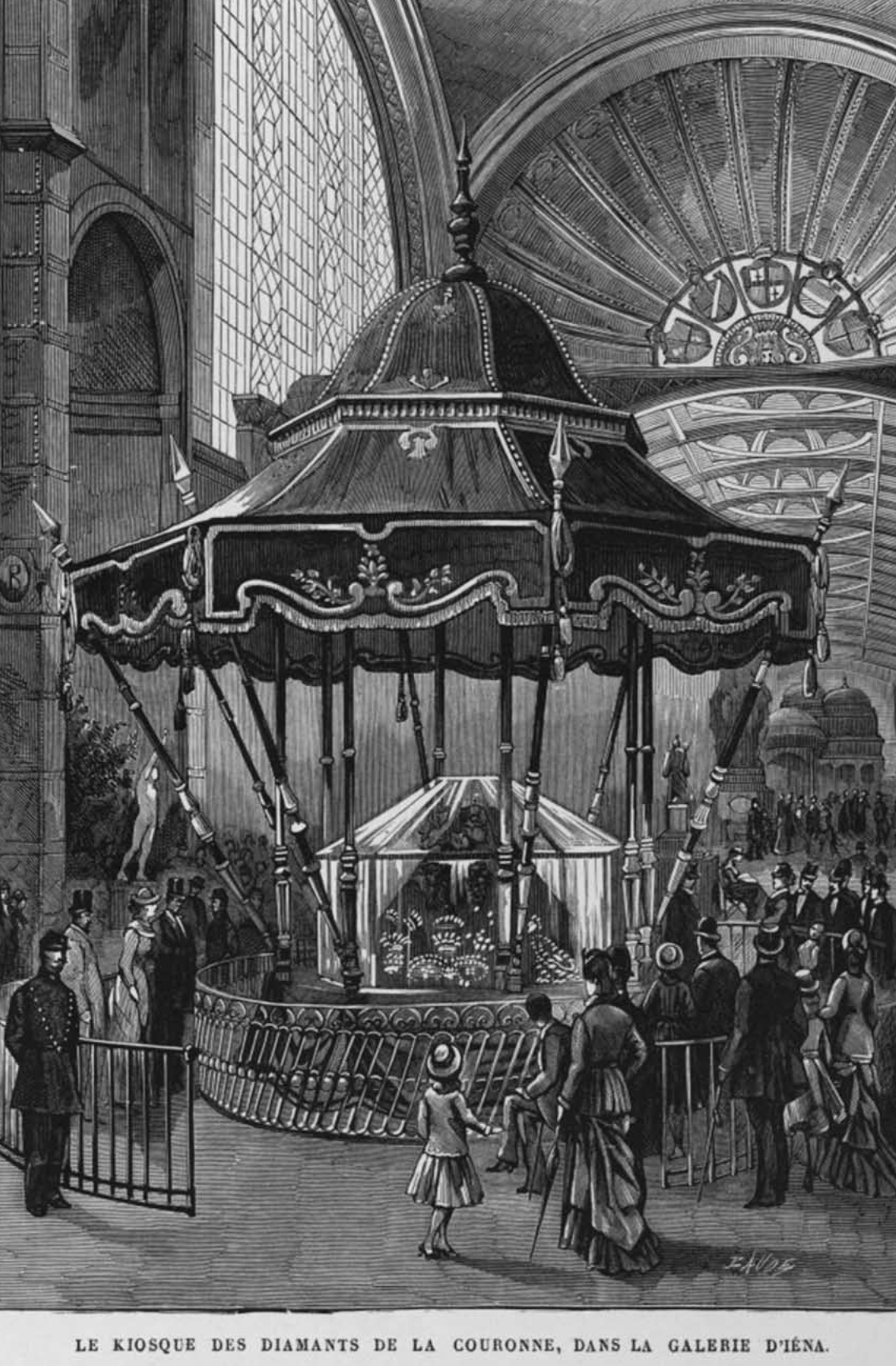
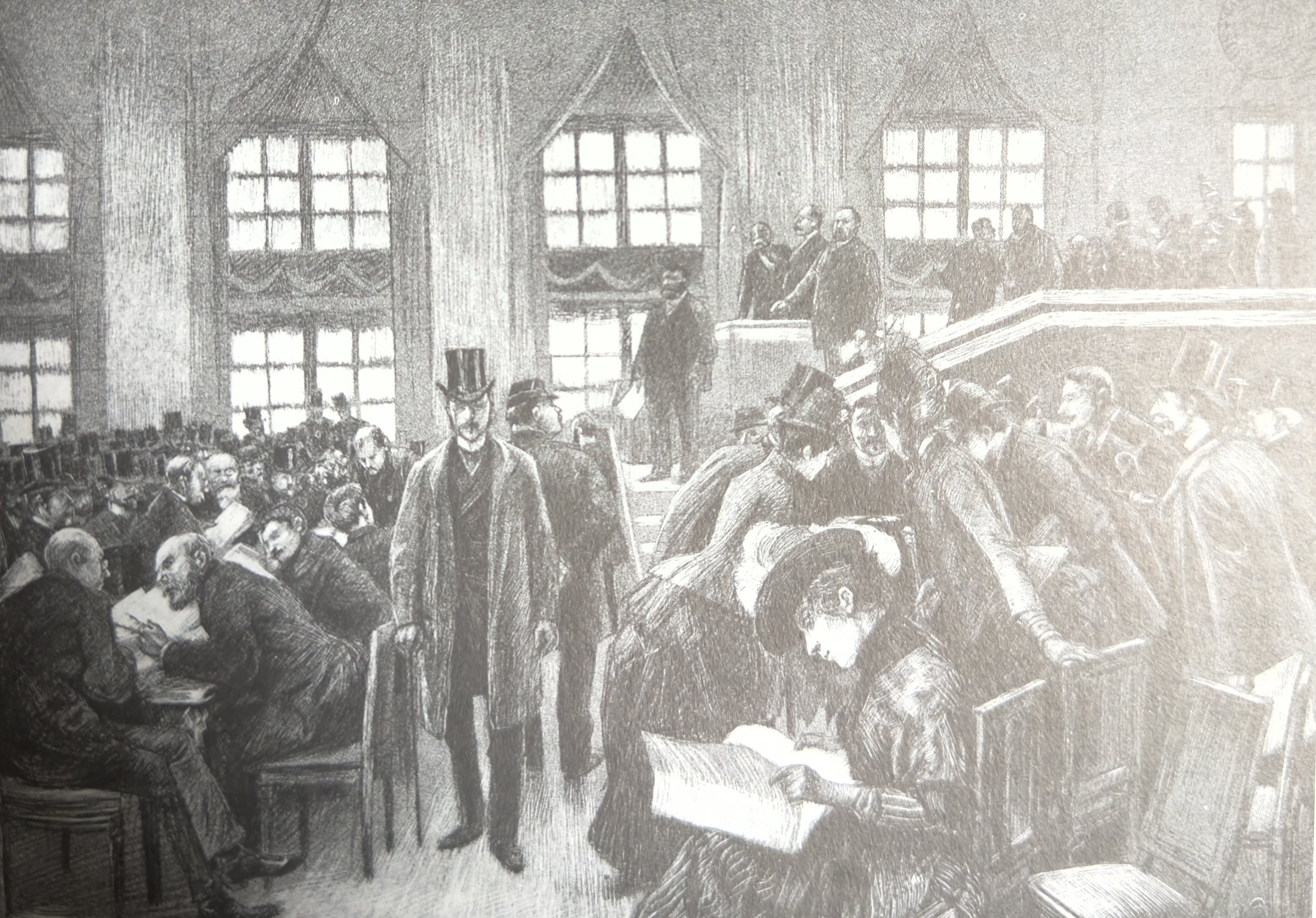
In 1878, the jewels returned to the Universal Exposition one last time. Many of the jewels that once belonged to Napoleon III and Eugenie were created for the 1855 Exposition. A specially designed octagonal case with eight compartments, covered in red velvet, was created.
The case was equipped with a winch, and the jewels sat on an iron plate that would be lowered into a reinforced stone “basement”. Equipped with an alarm system that would warn of a break-in or any sudden strikes. The case was topped with a red-and-gold canopy designed to resemble the custom leather boxes that held each jewel. A few of the boxes were on display in the Galerie d’Apollon prior to the theft.
Not to be outdone, the British brought a few of their own crown jewels, including the infamous 105-carat oval Koh-I-Noor diamond that was set in the tiara of Queen Victoria.
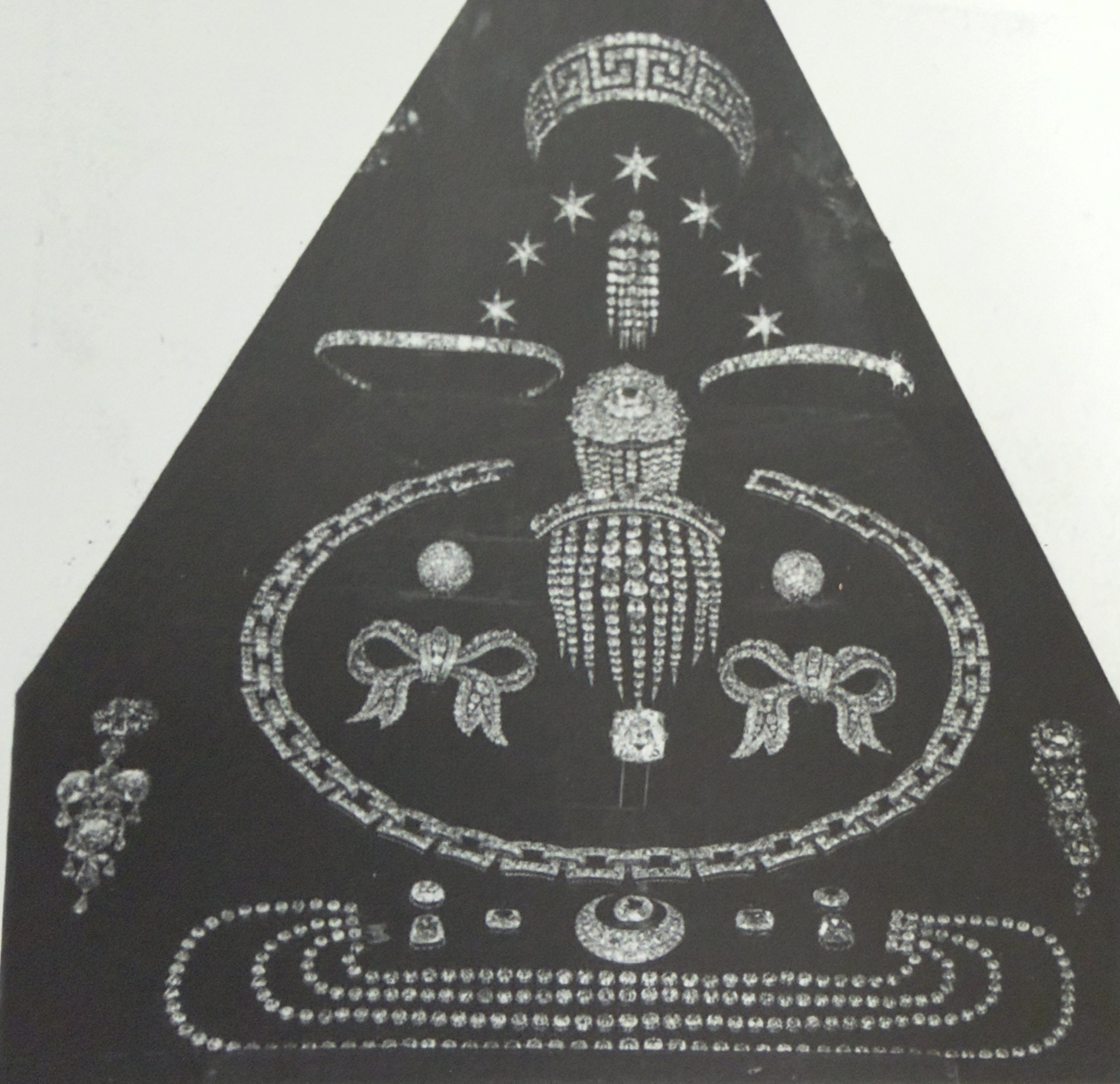
The last time they would be viewed by the public was on May 31, 1884, in the Salle des États, as a benefit for the School of Industrial Arts. Hundreds of people lined up three hours before the event opened to see the Crown Jewels. The clamor to see the treasures also led to their demise. The far-right politicians took it as a warning sign. If the people wanted to see the jewels, what would stop those in hopes of returning to power?
The President of France, Jules Grévy, and his advisors became increasingly aware that they needed to rid themselves of these gems, which meant much more than an exquisite necklace or brooch. There were, of course, other political agendas pushing the sale and deciding where the money should go, and everyone involved had their own agenda. Each year, it was proposed before the National Assembly and the Senate, but didn’t reach a majority and was shelved until the next year, until 1886.
On December 7, 1886, the law was passed that the jewels would be put up for auction. When the announcement was made, it brought a mix of reactions from royalists, historians, and, of course, wealthy collectors.
An 1882 inspection of the jewels resulted in a plan on what, if any, jewels would be kept and where. The rest would be sold or melted down to avoid becoming a focal point for those seeking the return of the monarchy.
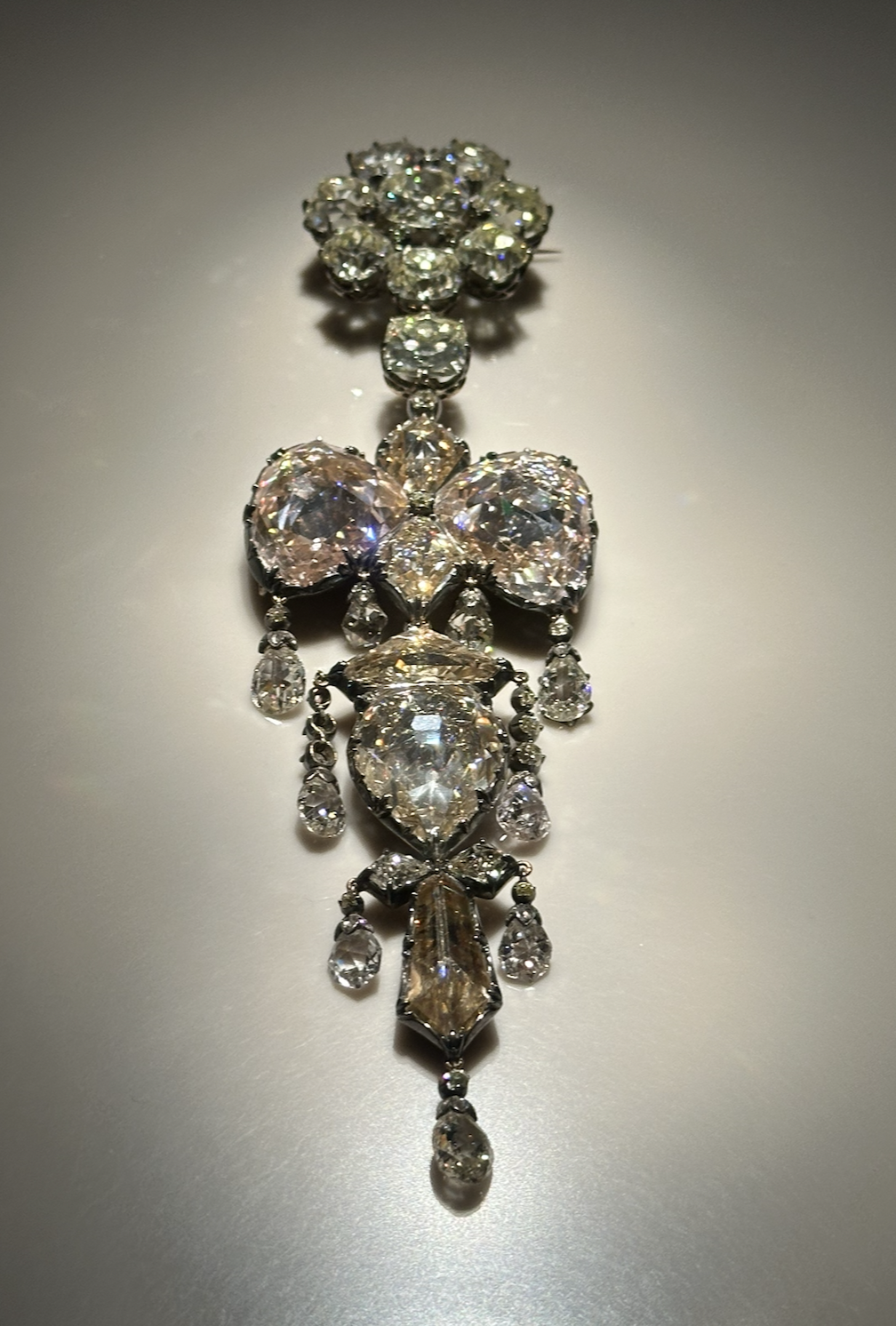
The saved Reliquary brooch. Safe from the 1887 sale, but not from the thieves on October 19, 2025
Group A items to be kept and displayed in the Louvre
Group B Items transferred to the Natural History Museum and School of Mines
Group C items intended for casting
The official proclamation for the “alienation of a portion of the crown jewels”, dated January 11, 1887, stated that the “diamonds, precious stones and jewels forming part of the collection known as the crown Diamonds and not listed in schedules A, B or C shall be sold at public auction.
To prepare for the sale, many of the historic settings were torn apart, melted down, and destroyed, destroying any significance they once held. The community of jewelers and historians was outraged with the idea of the sale and the loss and destruction of such an important heritage. A letter sent to the minister of finance asked that this be reconsidered, and, if that wasn’t an option, that high-quality photos be taken of all the pieces before they are destroyed or sold. Luckily, they took some photos, but not of every single item.
The sale would be held in the Salle des États in the western end of the Denon wing above the Seine, where the Spanish painting collection is today. The location held its own political weight. The room of state under Napoleon III served as his throne room. What better place to send a message than to sell the items that set the monarchy apart from the French population in the very room the last Emperor ruled from?
Side note, that same room later would house the 24 paintings of the Medici cycle in beautiful gold frames hanging on red leather-covered walls.
Before the sale, it was decided to open the collection to the public. Opened from April 21 to May 8 for previews by the major jewelry houses that had sent representatives to buy on their behalf, government officials, and the general public. Six thousand people came each day to view the jewels on display before the auction. The auction itself was the most coveted invitation in Paris.
Beginning May 11, the Salle des États was transformed for the auction itself. Platforms for the auctioneer, chairs for the audience, and a table for the inspector of the jewels, who would weigh and verify each purchase.
The same display case that was created for the Universal Exhibition was reupholstered in thick blue velvet by M. Giraudon. The cement “basement” used to safely store the jewels was built into the floor. The security was incredible and involved the prefecture, the gendarmes, and the staff of the Louvre. (The security of 1887 was better than that of 2025). The walls were covered with Gobelins tapestries, once created under the Bourbon kings, although they didn’t seem to be upset about that.
At 2 pm on May 12, before a packed house, the auction began with auctioneer Eugene Escribe calling the items. Jewelers from all over Europe and America came to bid on items for themselves and their wealthy clients. Jewelers representing the royalty of Europe, including England, Germany, and the Habsburgs of Hungary. Sitting alongside was every Parisian jeweler, and a few like the Bapst brothers, who wanted to purchase the pieces their earlier generations created for the crown.
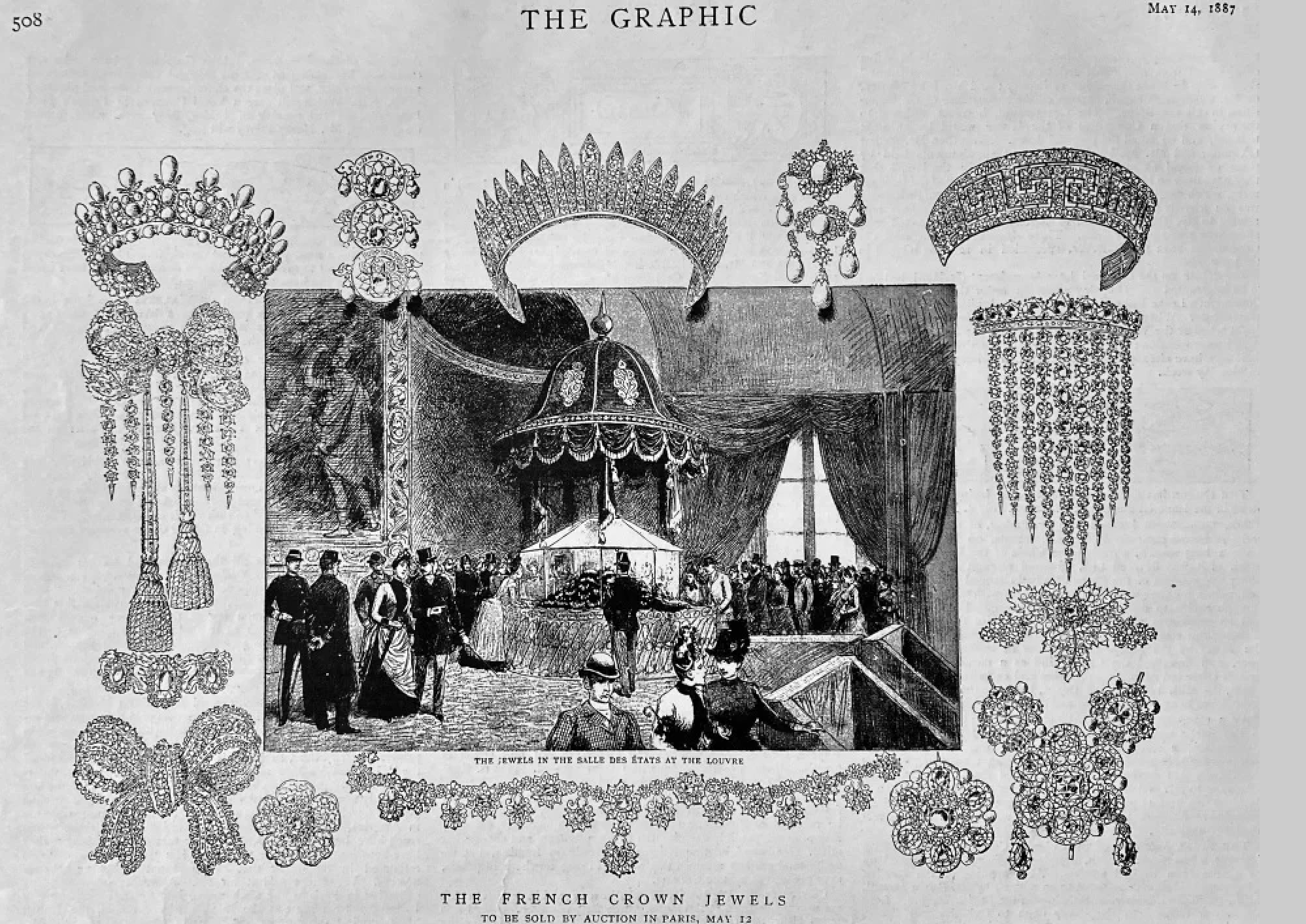
All sales had to be paid in cash within 48 hours of the sale, or the lot went to the runner-up.
Sold over 9 sessions, a few exceeded, but many fell far below. Had these items been sold today, they would each go for millions and millions of dollar,s especially if kept intact.
The first, Thursday, May 12, 1887, produced 505,700 fr.
The second, Friday, May 13, 44,500 fr.
The third, Saturday, May 14, 652,000 fr.
The fourth, Monday, May 16, 636,700 fr.
The fifth, Tuesday, May 17, 360,000 fr.
The sixth, Wednesday, May 18, 839,100 fr.
The seventh, Friday, May 20, 1,564,900 fr.
The eighth, Saturday, May 21: 991,100 fr.
The ninth, Monday, May 23, 668,050 fr
The sale yielded a total. 6,864,050 fr
Plus 5 euros imposed on the purchasers, 343,203.50 francs
Gross proceeds 7,107,350 francs
Expenses of 293,851 francs
Louis Comfort Tiffany purchased a third of the lots, spending more than 1.4 million francs, including four Mazarin diamonds. Many items were intended for the new money Americans of the Gilded age, like Katherine Pulitzer and Cornelia Bradly Martin, Countess of Craven, and Marjorie Merriweather Post.
Garrard, the jeweler to the British crown, was there on behalf of Albert, the Prince of Wales, known as Dirty Birtie here in Paris for his debauchery. Garrard won lot 32, Diadème Russe of Maison Bapst for Eugenie, for 180,000 francs for the prince.
Bonynge Jeweler purchased the lot of seven anguilettes and culots in the style of Marie Antoinette, created for Empress Eugenie of 222 brilliant-cut diamonds by Bapst for Queen Victoria, for the bargain price of 25,100 francs.
The government officials in charge of the sale labeled it a triumphant success, but it was anything but. After covering expenses, they raised 6,927,509 francs, which is around 15,982,117 euros today. Just one of the pieces attached to Marie Antoinette would sell for more than that at auction.
In 1895, funds were allocated to the old-age pension, and the Reunion des Musées Nationaux was founded that year.
Of the Emperor’s crown, the cross from the top, and the remaining diamonds were sold in 1887. The frame was broken, sent to the Monnaie to be melted down, and used for the 20 franc coin of the Republic. (more on that in episode 1)
Since the theft of the jewels from the Louvre on October 19, 2025, the term “Crown Jewels” has been repeated millions of times. Technically, only one of the eight stolen pieces could be called a Crown Jewel. The reliquary brooch created for Eugenie included two of the Mazarin diamonds that were given to Louis XIV after the Cardinal's death in 1661.
The 1887 sale was the destruction of France's history. The true pieces labeled crown jewels would have been worn by multiple kings, queens, emperors, and empresses. Luckily, the Regent, the most historic of them all, was saved although Raspail wanted it sold.
Since the sale, the Louvre has done what it can to find and return many of the pieces to France. The one rule they must follow is that they have to be set in their original setting prior to the sale. Since 1973, seven items sold in the auction have returned to the Louvre with five of those in just the last twenty-five years. Sadly, two were stolen on that horrible morning seven months ago.
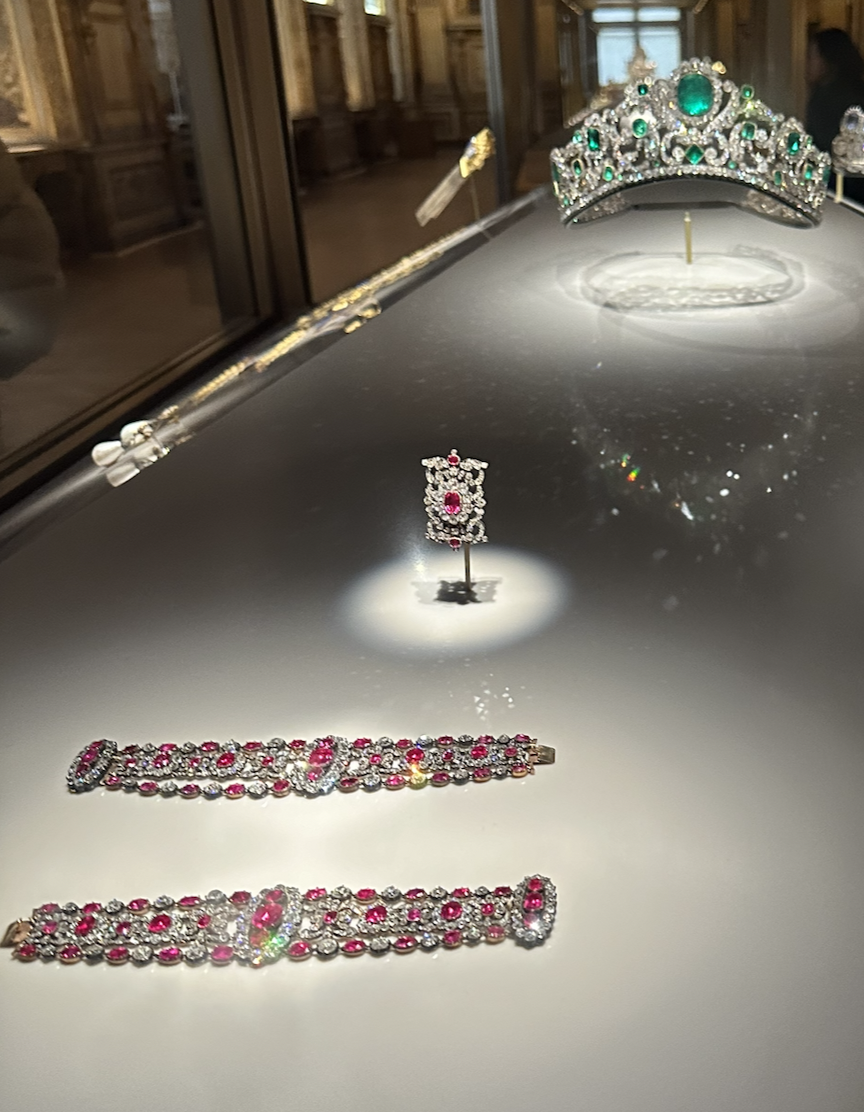
In 1973, Paul-Nicolas Menière redesigned a set of ruby bracelets for the Duchess d’Angoulême, the daughter of Marie Antoinette. The rubies originally belonged to Empress Marie Louise, Napoleon's second wife. Jeweler Jacques-Evrard Bapst used 24 rubies, 451 brilliant diamonds, and 60 rose-cut diamonds. The set also included a diadem, necklace, comb, crown, earrings, bracelets, and belt. Sold on May 20 in lot number 45 for 42,000 F to Tiffany, who bought it on behalf of Bradley Martin for his daughter Cornelia, Countess of Craven. Later sold at Sotheby’s on November 30, 1961, and donated to the Louvre in 1973.
Two of the belt pieces are also now in the Louvre. The forty-four pieces were sold in lots of 2, 4, or 6 plaques. The first was purchased by the Louvre in 2019. The second donation in 2025 by Sabine Fèral-Dubrac.
Lot number 37 was the complete set that once belonged to Marie-Louise and had been a gift from Napoleon to his new bride in 1810. Francois-Régnault Nitot designed the very delicate and exceptional gold leaves and clusters of grapes separated by ten small glass mosaics of ancient Roman ruins. Pierre-Antoine Chadat worked with Nitot on the fine details of the set, which includes a comb, necklace, earrings, and two bracelets.
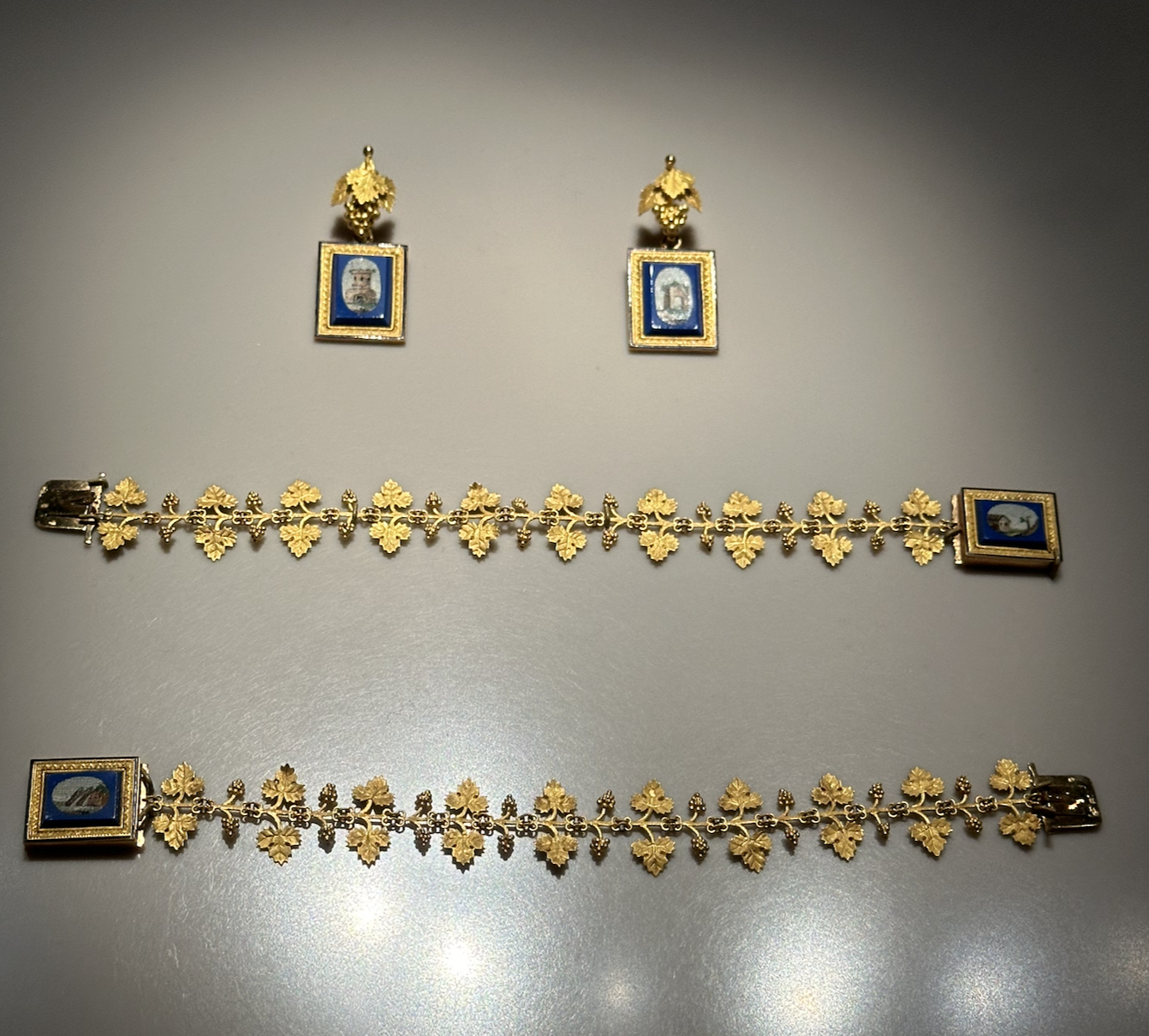
The mosaics, created in Rome from engravings by Domenico Pronti, depict many Roman ruins, including the Forum. The original lot also included two amethyst and diamond dress clasps and belt pieces.
After Marie Louise fled France following Napoleon's expulsion, the jewels were returned to the government and sold in lot 37 to jeweler Henri Bain for 6200 F, who kept them in their original state. Sold again in 1964 and in 2001, when purchased by the Amis du Louvre and entered the Louvre collection on June 7, 2001.
Placed on the southern end of the central case that was breached in the theft, they were within reach, but the thieves must not have thought they were worth as much as the emeralds and sapphires. Thank goodness
Another item once owned by the daughter of Marie Antoinette, the Madame Royale was the beautiful emerald and diamond tiara created by Christophe-Frédéric Bapst and Jacques-Evrard Bapst, from a family of jewelers dating back to Louis XV. The tiara was also worn by Empress Eugenie.
Sold on May 14 to Hungarian jeweler Bachruch for Count Andrássy. It stayed in the family until sold at Sotheby’s in 1954. It arrived at the Louvre in 2002 when it was purchased by the state.
A beautiful diamond-and-pearl brooch, created in 1853 for the Empress Eugenie, narrowly escaped theft. Designed by her personal jeweler, François Kramer, it was inspired by the designs of Gilles Légardé in 1663. After the death of Madame Royale in 1851, her diamond-and-pearl set was dismantled and repurposed. A tiara containing 212 pearls and 1,998 diamonds was born from the original jewels, the same tiara that was stolen on that horrible morning.
The remaining diamonds and pearls were used to create five brooches. Two large button pearls, surrounded by 8 diamonds, form two rosettes. Two pear-shaped pearls hang from the delicate scrolls covered in diamonds of the top rosette and three from the lower.
The five brooches were sold on May 17 in lot 39to the Bapst et Fils jeweler, who had also made other pieces for the Empress. It belonged to Marie Louise de Bourbon-Parme, the daughter-in-law of Clémentine d’Orleans. In 2015, it was purchased and returned to the Louvre.
The brooch was located next to the pearl and diamond tiara, but was not stolen. From video footage, it looks like it might have been out of reach, but also odd that it wasn’t grabbed in their hasty attack.
The last two items that have returned after the 1887 auction that destroyed the heritage of the crown jewels met the same fate on October 19, 2025
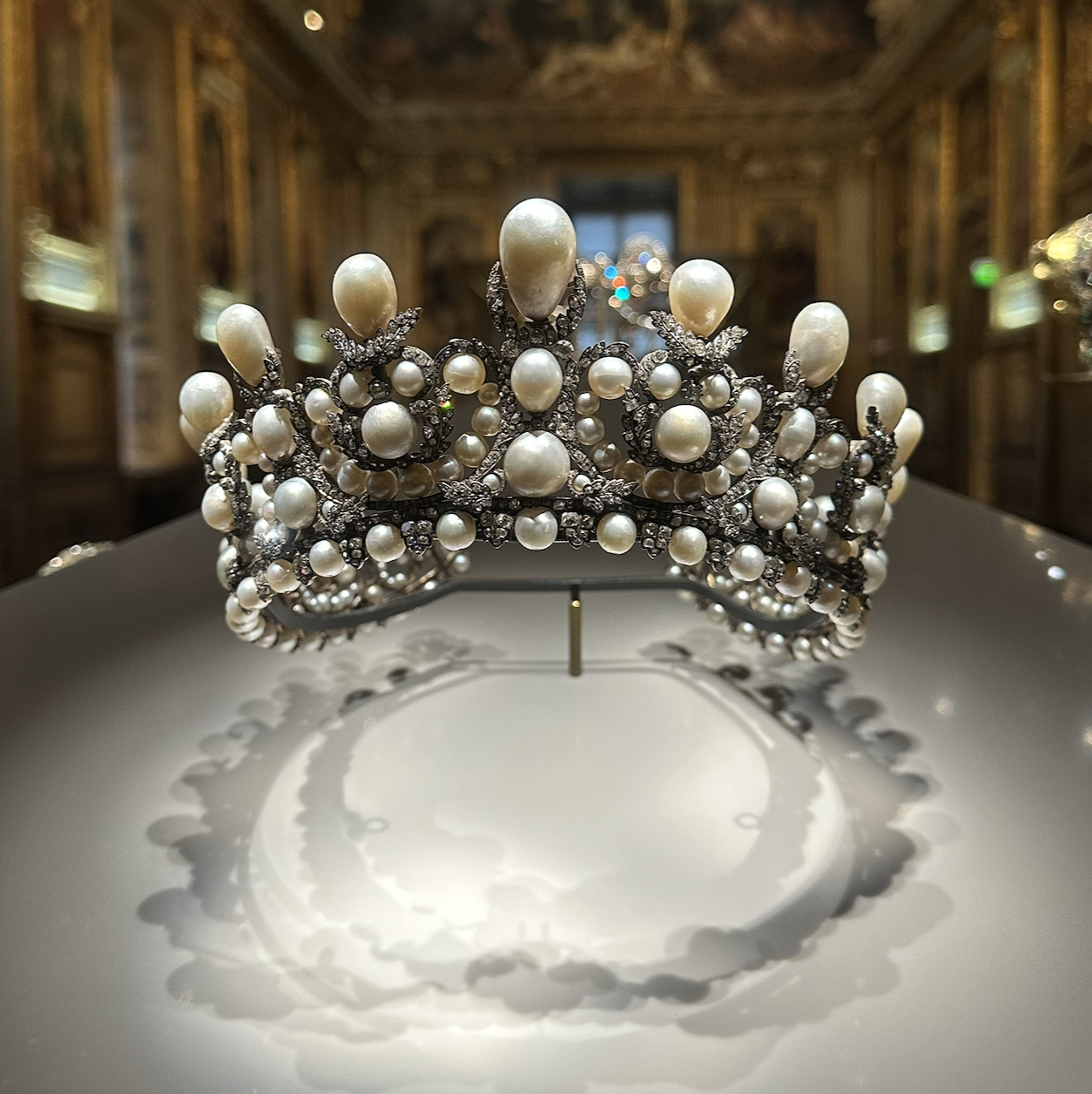
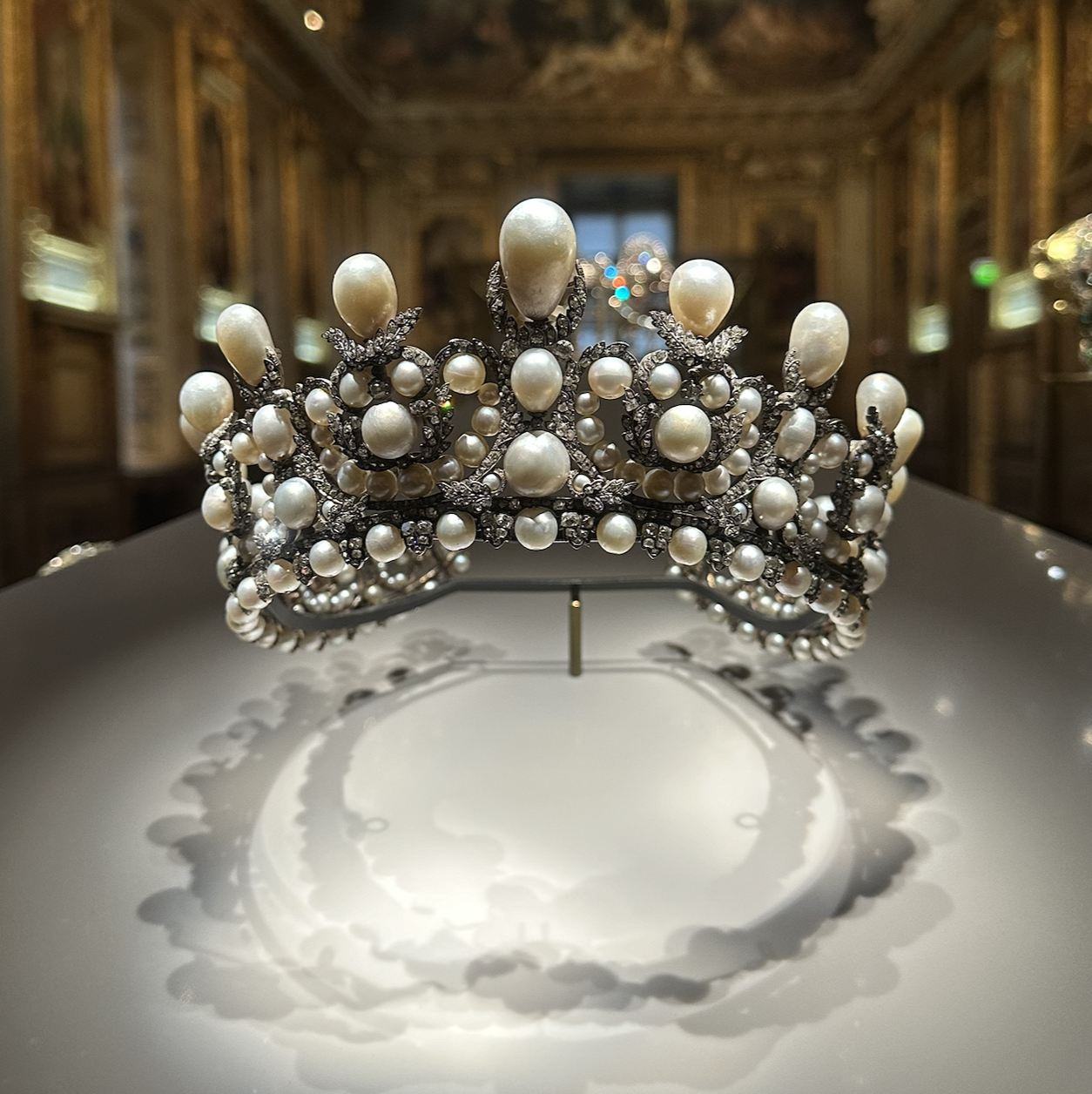
The stunning pearl-and-diamond tiara created for Eugénie by Alexandre-Gabriel Lemonnier, who also made the Imperial Crown, which was luckily recovered. Commissioned in 1853, shortly after the wedding to Napoleon III. Designed using many of the Crown pearls from a set that once belonged to the Duchess d’Angouleme, Madame Royale
Lemonnier’s contemporary design of the time featured natural elements, including diamond-covered “leaves” and 17 large pear-shaped pearls, totaling 212 pearls and 1998 diamonds. Eugénie wore it often, including at the opening of the 1855 Universal Exhibition, where her other jewels, including the Imperial Crown, were on display.
The tiara was sold in lot 41 on May 12, 1887, to jeweler Julius Jacoby for 78,100 francs, who sold it to Prince Albert of Thurn et Taxis for his wedding to Archduchess Marguerite. For over 100 years, it remained in the family until sold by Sotheby’s in 1992 and purchased by the Amis du Louvre.
The last piece was the first violently grabbed from the case on that Sunday morning.
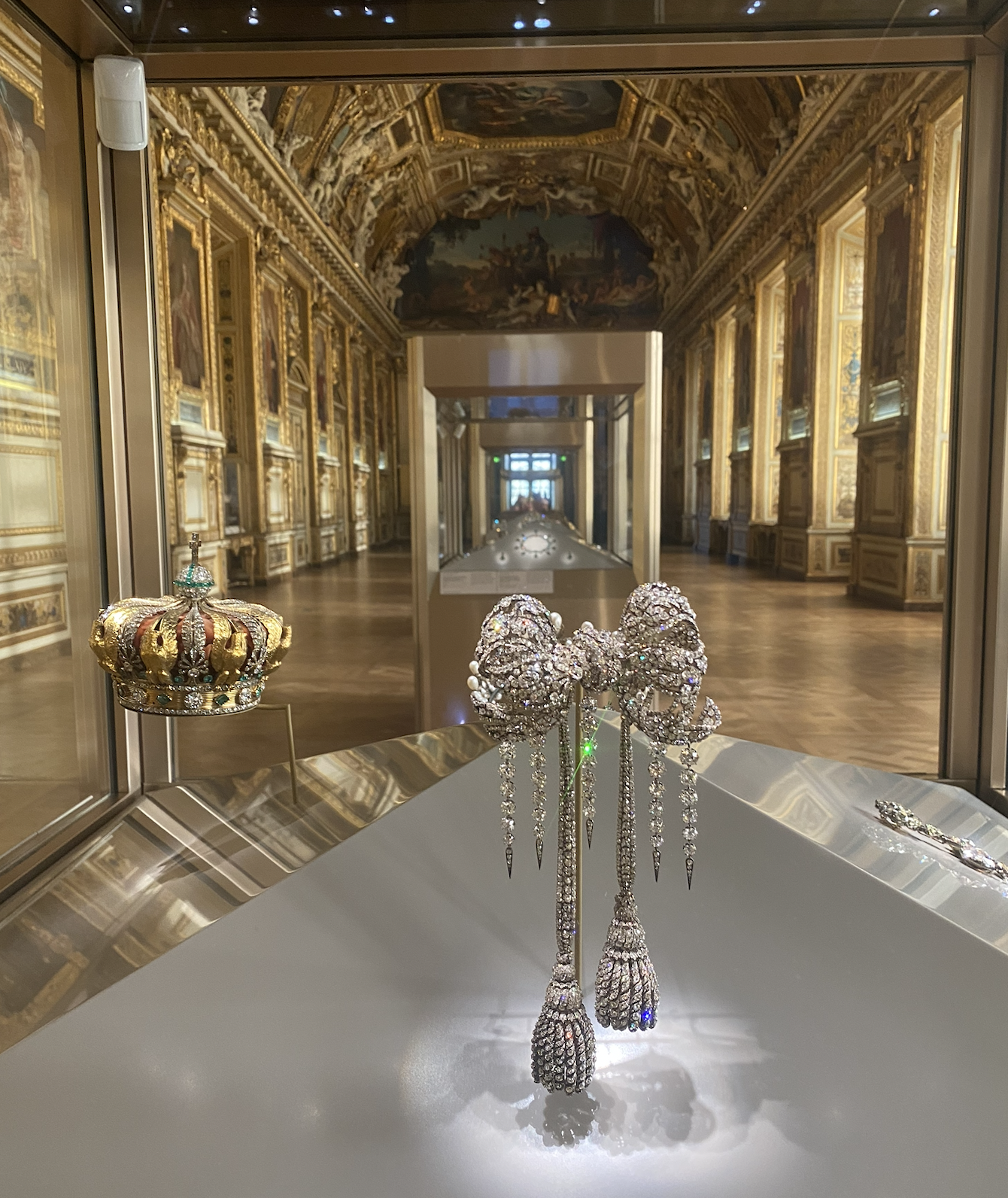
I always loved getting as close to the glass as possible to take in the details of this gorgeous brooch, literally covered in diamonds. The jaw-dropping item was the Grand Corsage Bow Brooch of Eugénie. Napoleon III ordered four pieces from jeweler François Kramer to be completed for the 1855 Universal Exhibition and for his wife. Although the piece was originally designed as a belt with the bow and tassels, and a staggering 4,790 diamonds totaling 386 carats.
Eugénie loved the history of Marie Antoinette, and the bow was designed to emulate the fashion of the former queen and her love of bows and ribbons.
The bow was sold in lot 5 on the first day of the sale, May 12, 1887, and purchased by jeweler Emile Schlessinger for Caroline Astor. In 1902, it was sold to the Duke of Westminster for his daughter, Lady Lettice Grosvenor. It passed through many hands until purchased on April 16, 2008, by the Amis du Louvre with a large bequest from Mr. and Mrs. Rauffet.
Sadly, we may never see the tiara or bow brooch again.
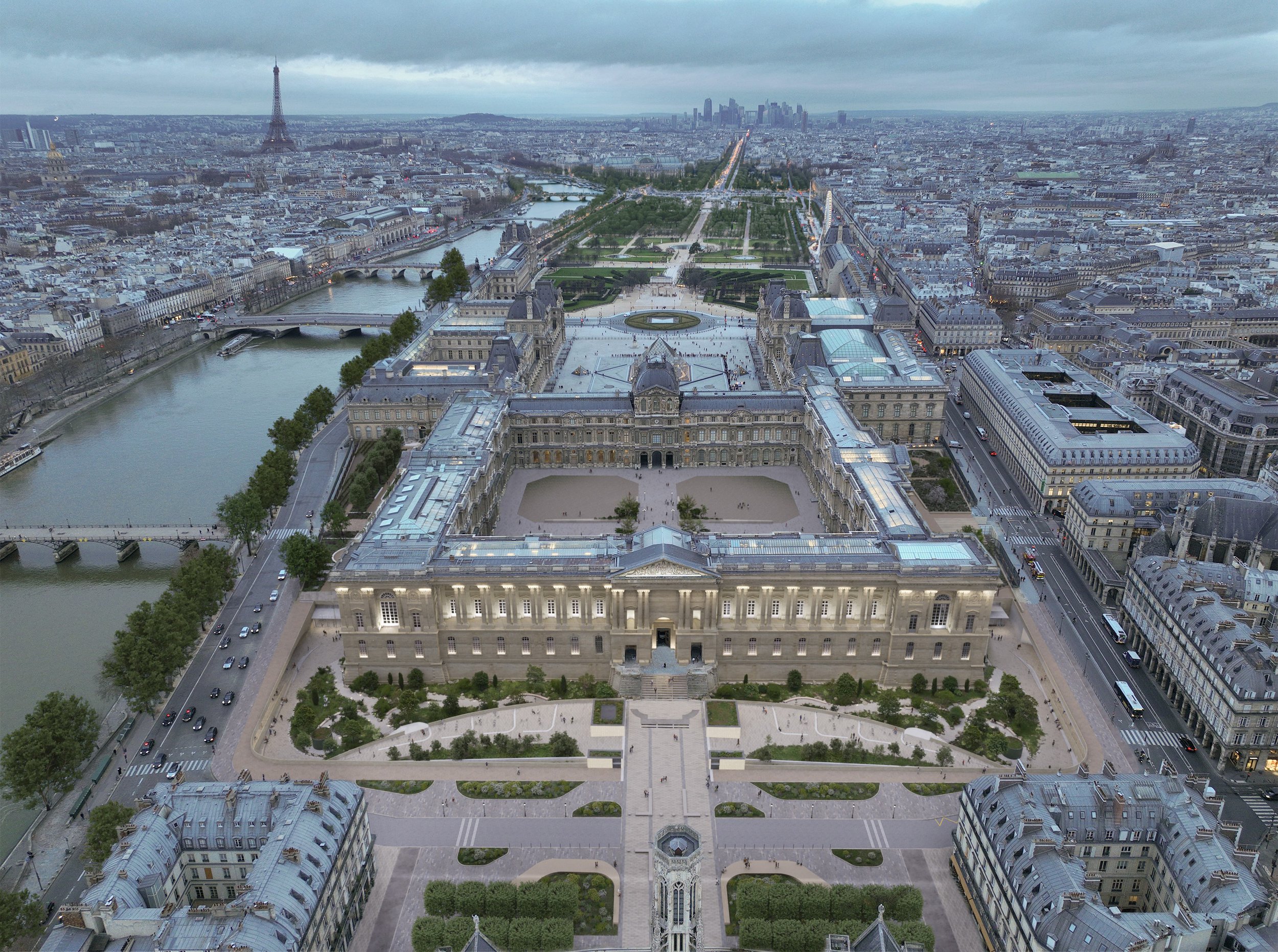
And hot off the press, the Ministry of Culture announced at 10 am on May 18 the winning architects for the Louvre Nouvelle Renaissance project that was first soft-launched in January 2023 by Laurence des Cars on French radio. Two years later, it was presented in the Salle des États in front of the Mona Lisa on January 25, 2025, by President Macron, and the press ran with it as a brand new idea.
The project would create a new space for the Mona Lisa as well as a new entrance below the eastern end at the Collonade to help alleviate the pressure on the pyramid, which, as we know from episode 16, The Pyramid was created to handle 4 million people a year, and the Louvre now gets close to 10 million. A second exhibition space is also planned, along with a restaurant and a gift shop.
The project was originally said to cost 400 million euros for the Mona Lisa space, and 400 million euros for the entrance. The court of auditors released its report in November, stating that the project would cost more than 1.1 billion euros and that it should be shelved.
Well, we got a little surprise yesterday with the announcement of the architects as well as a new amount of 600 million euros.
The panel of 21 judges, including Louvre president Christophe Leribault, Paris mayor Emmanuel Grégoire, and minister of culture Catherine Pégard. My favorite is that they also included Li Chung “Sandy” Pei, son of IM Pei.
"The project submitted by New York’s STUDIOS Architecture Paris and NY based German Selldorf Architects was selected for the quality of its architectural proposal and its heritage, urban and landscape integration, fully integrating the issues of public reception quality, clarity of the paths, sobriety and vegetation, all with a relevant consideration of security issues," said the ministry in a statement.
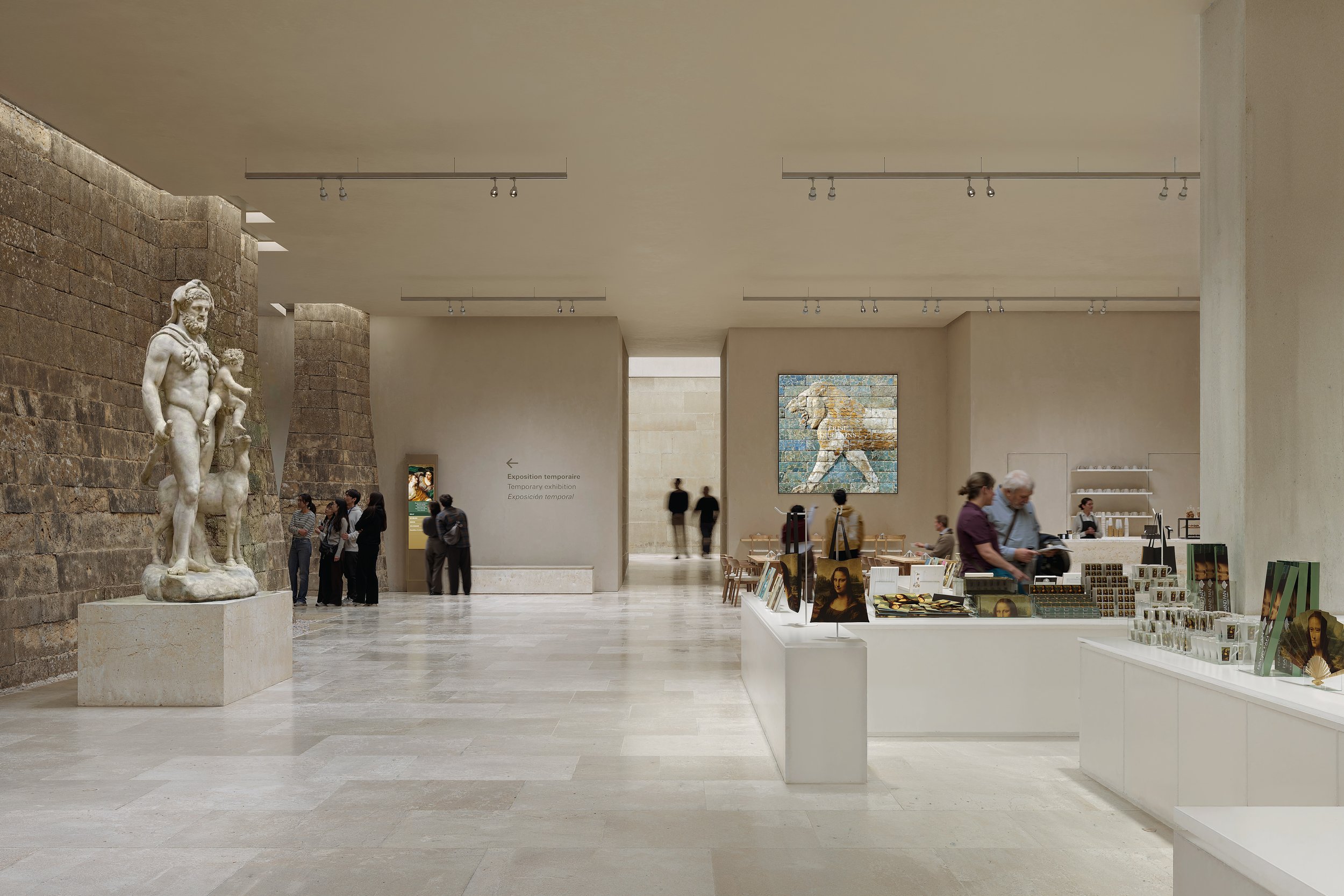
President of the Louvre Christophe Leribault said just two weeks ago "We are not going to make a good entrance to arrive in a museum subject to all kinds of damage and embolism. But we cannot repair the Louvre without opening new access points to address the flow issue. The Louvre is a whole. His construction site is a whole."
If it is "imperative to review the infrastructures, redo the roofs and technical installations in the perimeter of the Cour Carrée", the Louvre-Nouvelle Renaissance is a "capital and necessary project for the Louvre".
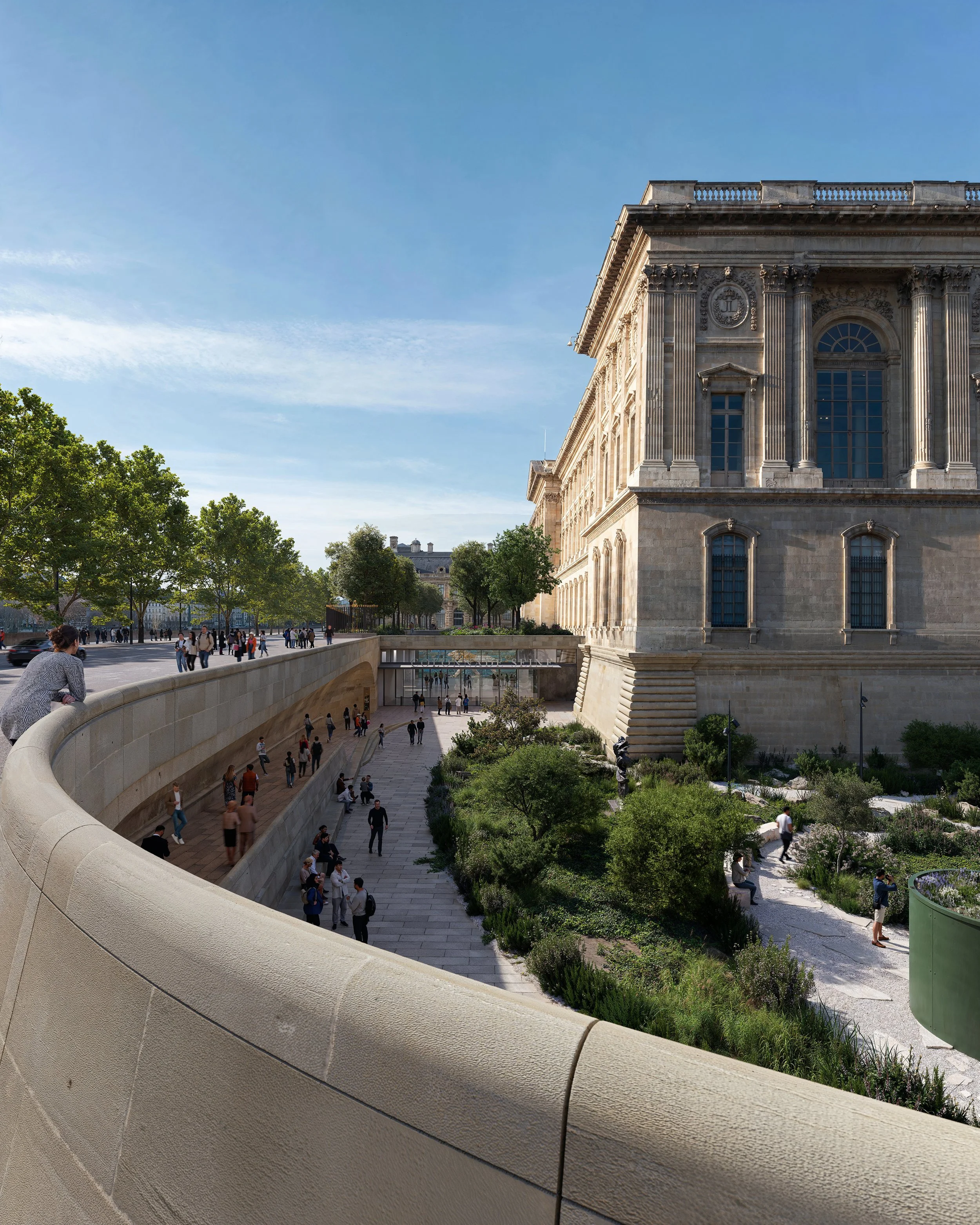
The winning architectural firm STUDIOS includes two entrances on either side with a sloping ramp along the edges and the center filled with green space and “contemplation”. Sure, guys… that’s going to happen.
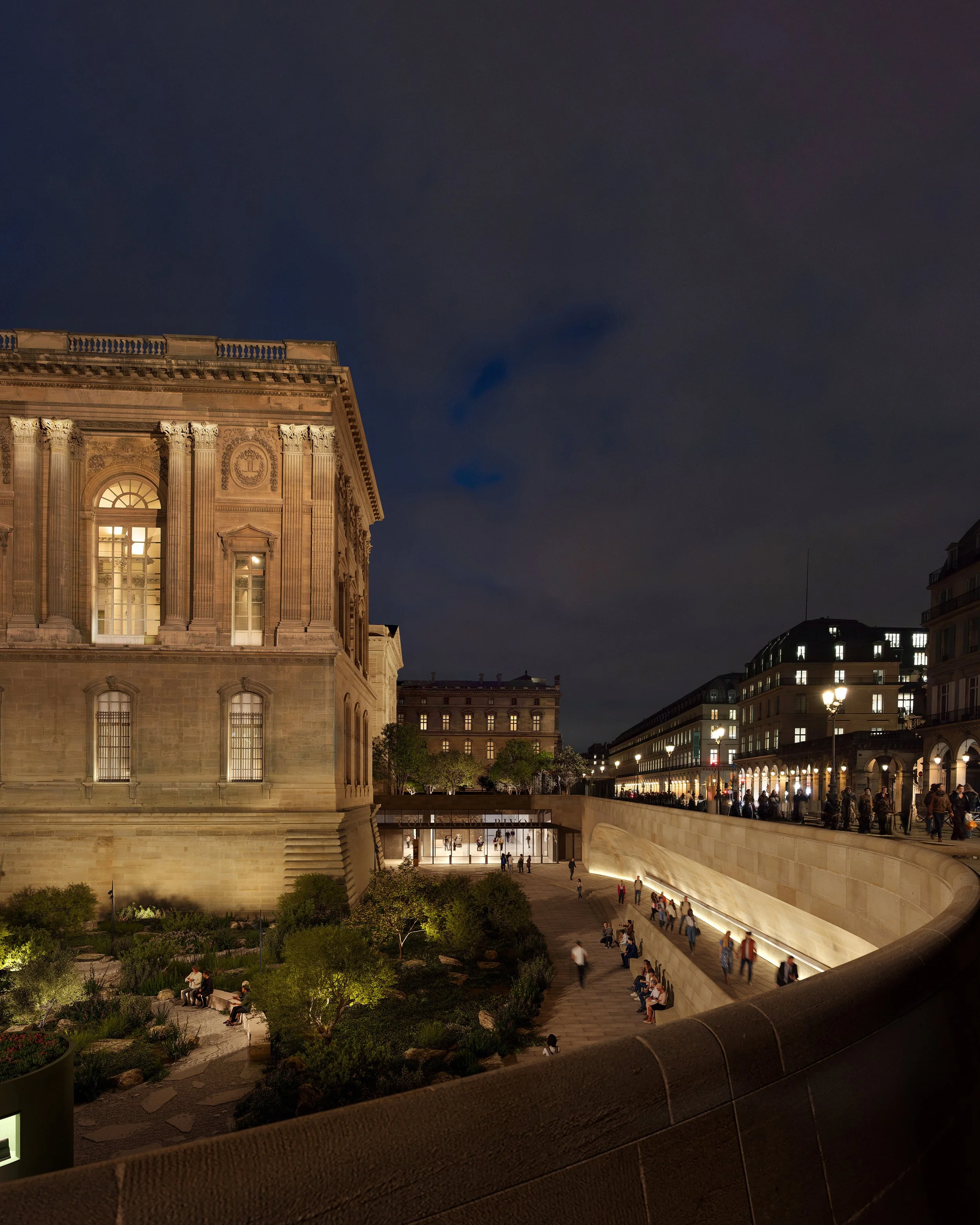
The new access will allow visitors to go directly to the Mona Lisa, which will require a separate timed ticket at no additional cost. When 90% of visitors each day come to see just the Mona Lisa, you are just changing one clogged entry for another. The Pyramid will then become the ideal entry for everyone else.
The start of construction might be as early as 2028, with a portion of the money coming from the January 2026 increase in price for foreign visitors as well as the 150 million euros from the state for the project, but a lot more is needed. It will take at least five years to finish.
Mayor of the central district, Ariel Weil, was a “little disappointed,” saying that it looks like endless concrete walls. Check out the photos on my website
It is needed, but the project will destroy a large part of the Egyptian collection rooms, especially with the addition of a new double entrance.
I will be following this very closely and will keep you all updated.