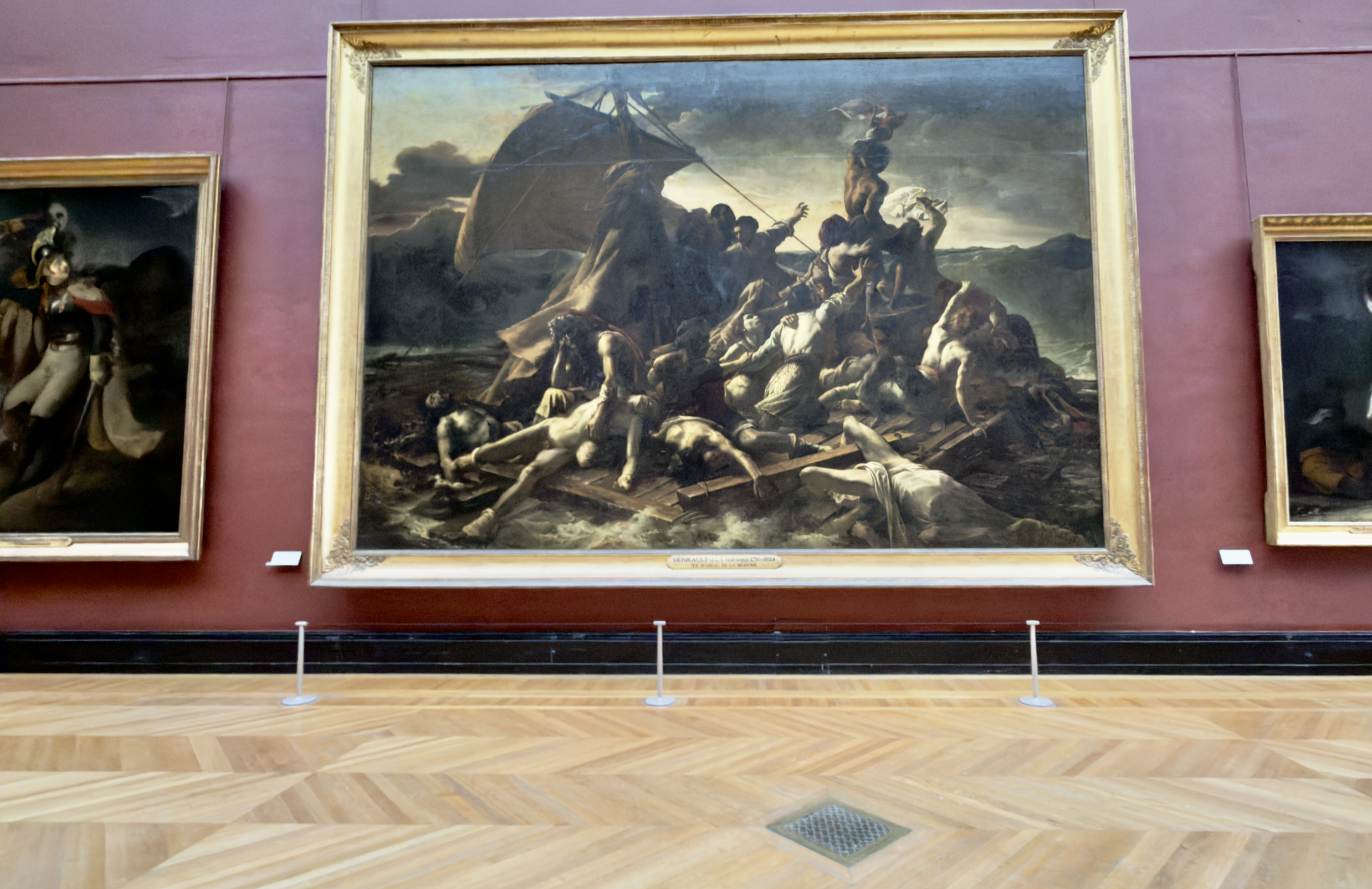
Many are familiar with the large painting hanging in the Salle Mollien of the Louvre by Théodore Géricault, but did you know it was based on a true story? Le Radeau de la Méduse (The Raft of the Medusa) was painted in 1818 when Géricault was 27 years old. It depicts the story of the French ship Medusa, a 40-gun frigate used during the Napoleonic Wars in 1810, which was intended as a decoy for his escape to America.
However, the Medusa would become the very example, shining a light on what was wrong with the Restoration of the Bourbons, even as they tried to hide it. It was in their attempt to erase it that would bring the entire affair to the forefront and inspire the young French artist.
Theodore Géricault had just returned from Rome in November 1817 and wanted to make his mark in the Parisian art community. His fellow artists, Jean-Antoine Gros and Horace, the son of his mentor Carle Vernet, were finding their own commissions. Géricault wanted something big, and the legacy-making theme would fall right into his lap.
In 1816, France was trying to move forward and past the First Empire. Napoleon was finally exiled far, far away in Saint Helena, and the Bourbon Louis XVIII returned to the throne once more. In March of 1815, when Napoleon had returned for 100 days, Louis XVIII had fled Paris, and those who remained close to him and defended him would be rewarded later.
Hugues Duroy de Chaumereys was just one of those men. Born on December 20, 1763, into a wealthy family, he entered the navy with the help of high-ranking members and friends of his father. At the start of the Revolution, he fled France for England and returned only when Louis XVIII came into power in 1814.
Granted a full pardon for his departure from France, he became a close defender of the king.
After Napoleon's abdication on April 6, 1814, the government sought to roll back the clock. The Treaty of Paris was signed on May 30, 1814, and restored France's borders to those of 1792. Territories that had changed hands with the British and Dutch were returned, including the interest in Senegal. Although slavery had been abolished in France on February 4, 1794, Napoleon would reinstate it in the French colonies in 1802.
Retaking Senegal from the British and establishing a French colony were top priorities for the king, and he needed trusted individuals to carry out the mission.
Which brings us back to our villain, Chaumareys. Chosen by the king on April 22, 1816, to lead an exploration and to establish Senegal with a French governor and community.
Based in Rochefort on the Charente river in the Southwest of France, the voyage was delayed due to weather. Beginning on June 15, 1816, 365 people were loaded into small boats from the port of Rochefort and ferried out to Île d’Aix. The same island Napoleon visited before his exile, just a year before, in July 1815.
On June 17, 1816, the Medusa left the port of Aix alongside three other ships in the fleet.
The Medusa, the largest frigate, the Echo, a corvette and smaller warship, the Argus, a sailboat, and the Loire, which carried supplies.
The four ships were filled with everyone you would need to restart a French base. Potential governor Julien Désiré Schmaltz, his wife Reine, and daughter Eliza were on board, as well as doctors, teachers, explorers, engineers, scientists, gardeners, and of course, a few bakers.
One week into the voyage, a teenage sailor fell off the Medusa and into the sea. The recovery attempt by the captain was so badly handled that the young man died and was lost to the sea. It was the first but not the last crack in the captain's control. Rumblings on board had already destroyed the confidence of many under his leadership.
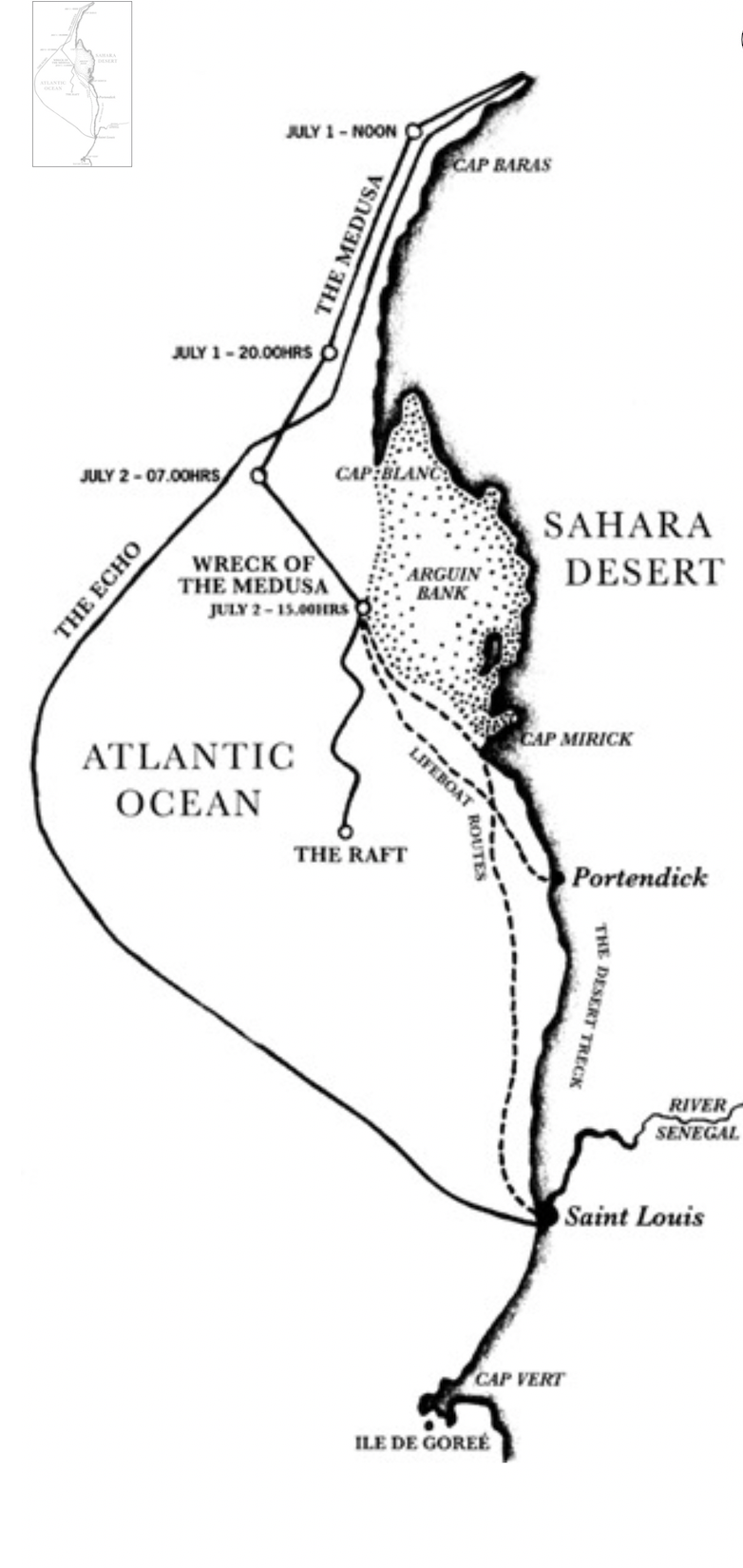
Timeline of the wreck
On July 1st, the four ships started the day together, with the smaller Echo the closest. The Medusa was off the coast of Mauritania just after Noon and by nightfall made the tragic mistake of breaking off at the southernmost tip of the peninsula at Cape Blanco. It’s thought that Governor Shmaltz was anxious to get to Senegal and encouraged the captain to speed up.
The Echo would remain close to keep an eye on the Medusa until the poor decisions of the captain made it difficult; they knew of the terrain and didn’t want to end up with the same fate as the Medusa. At 3 am on July 2, the Echo disappeared. A few of the sailors and officers attempted to trick the captain into getting the ship back on course.
As the sun rose on July 2nd, the crew began to spot rocks and notice that the water became clearer and shallower. One even told the captain they had to be near the Argun reef and sandbar, but it was quickly ignored. It was also high tide, which could have been the worst luck of all. A storm was rolling in, and the waves crashed against the Medusa; at 3 pm, the ship brushed the edge of the sandbar. They managed to quickly navigate away, but it was brief. At 3:15 pm, scrapes, groans, and jolts, then the final blow came, and the frigate was lodged into the sand bar. On board, it was utter silence.
They tried everything, but the combination of the storm, high tide, and an idiot for a captain left the 365 people on board in a panic. The hull was filling with water, and only one option remained. One of the members brought in to build new homes in Senegal was carpenter Valery Touche-Lavilette, who quickly sketched out a plan to build a raft to hold supplies, while the boats would be used for people. Using whatever could be found on board, the mast was removed, along with many of the deck boards.
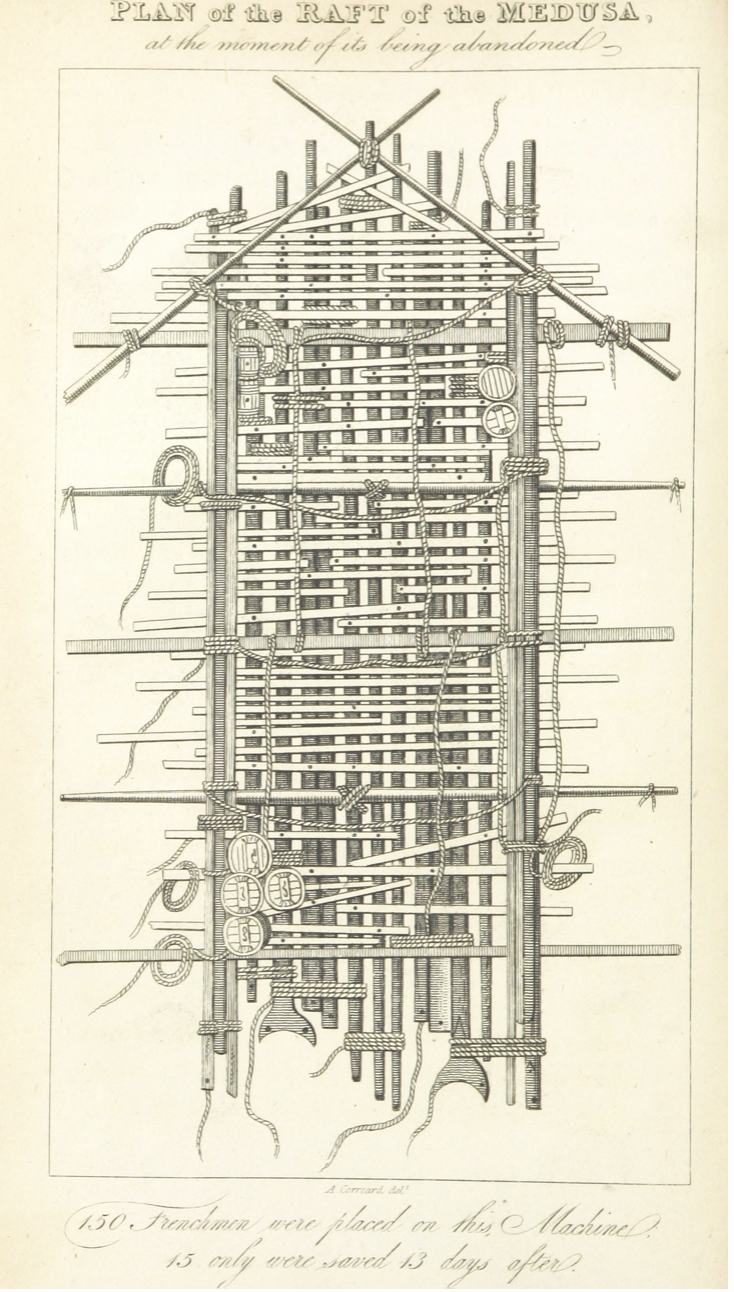
For two days, Lavillette and his men built the raft directly into the water. A railing around the massive raft was added to hold supplies, and the deck itself was partially open to the water, with boards haphazardly spaced and water splashing through every few inches. Nicknamed “the Machine”, it was a massive undertaking in less than ideal conditions.
Measuring 65 by 23 feet, it was first loaded with barrels of guns, casks of wine, water, and food, and tied to the raft. Once the first few dozen men climbed on board, the raft quickly sank further into the water. The barrels of food were removed as more men came on board, but the raft continued to sink as deep as 4 feet while still remaining afloat. The voyage should be short; in a few hours, they should be at the shore and on to a new life.
The construction of the raft with its limited supplies also made it very dangerous for people. The massive crowd had to stand on the boat because it was submerged by more than 4 feet of water.
On July 5, as water filled the hull, the decision was made to abandon the ship quickly.
Only six small boats were available, which could hold only half of their crew, and were reserved mostly for the elite and high-ranking officers.
Future governor Schmaltz and his family took one of the boats, which could have held 15 more people. To make matters worse, a second boat was used just for their luggage.
Just after 8 am, the six boats and large raft pushed off from the ship. Without any steering capability, the raft was attached to four of the small boats, but within two hours, the upper crust on the boats realized that the raft was slowing them down and cut it loose just 6 miles from the Medusa.
As the sun went down late into the evening, a storm rolled in, and 20 people died from falling into the ocean. Screams could be heard from the water below.
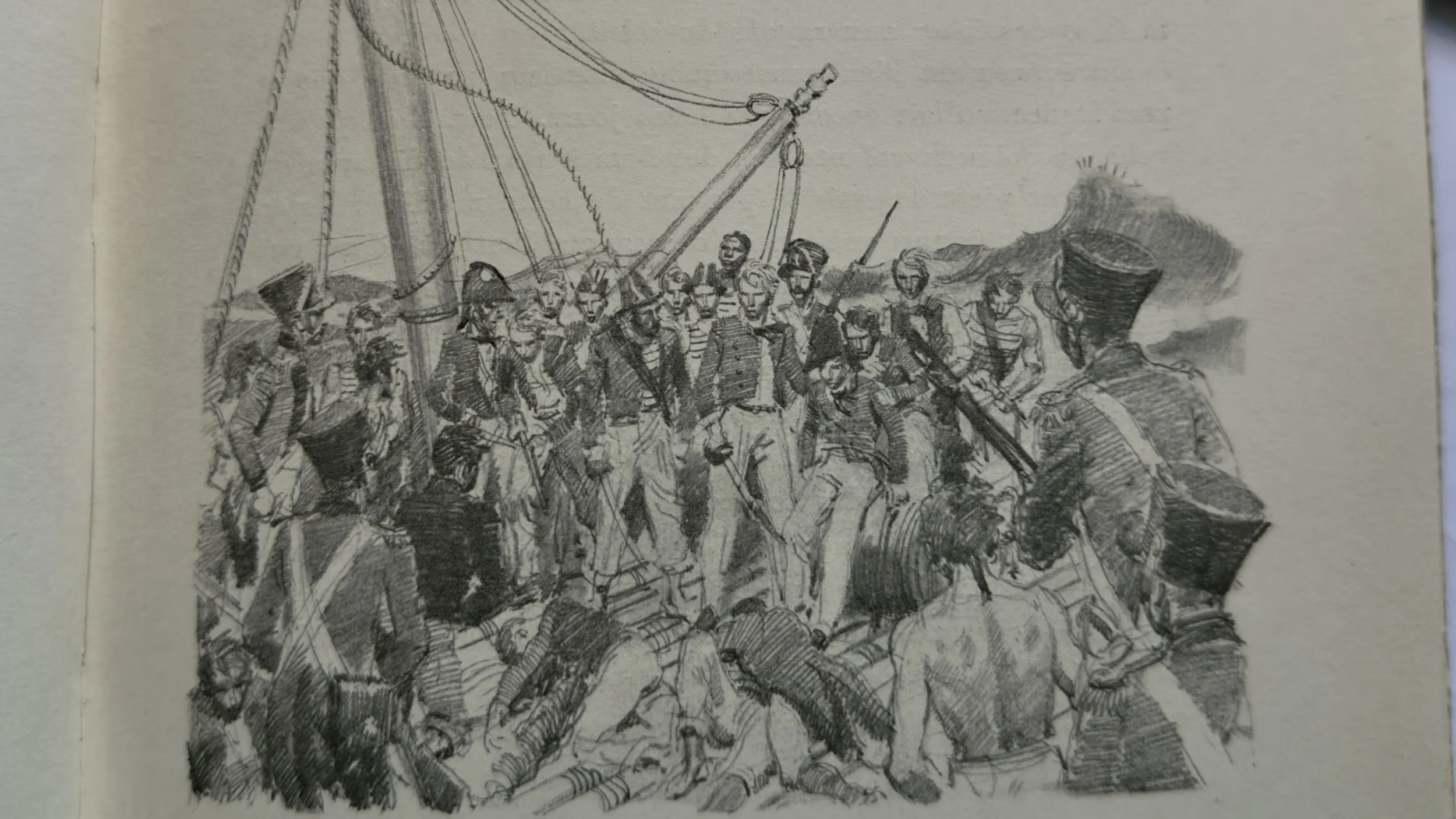
Between the sun beating down on them and drinking the seawater, delirium set in quickly. On July 6th, the second night of being adrift at sea, the panic and fight for power began. The raft had five barrels on board at the start, two of which were filled with wine. Either for survival or boredom, the rafters dipped into the wine. Chaos ensued, and a battle for control between the officers and the men resulted in the death of 65 men as well as the only woman on board, who had broken her leg and was pushed into the sea.
Three days before, as the raft was loaded, a case of biscuits was tossed from the Medusa and fell into the sea. Recovered, the flour biscuits inside turned into a salty paste. For the first two days, it was all the food they had.
On the third day, July 7, the real horror began. Fewer than half of the original passengers remain on board. Starving, the men ate pieces of clothing, leather, and even bits of rope that had been cut during the battle the night before. Two barrels of wine were left, the only remaining source of calories. Now the hardest decision was made.
On day three, just over 60 people were left on the raft, many of whom were injured and on the edge of death. The self-appointed leaders of the raft decided that, to survive, they would need to consume the unfortunate raftmates. At first, many officers refused to be a part of it, but after another day or so, they had no choice if they wanted to survive. Pieces were cut away and left to dry in the sun to make it a bit easier to consume.
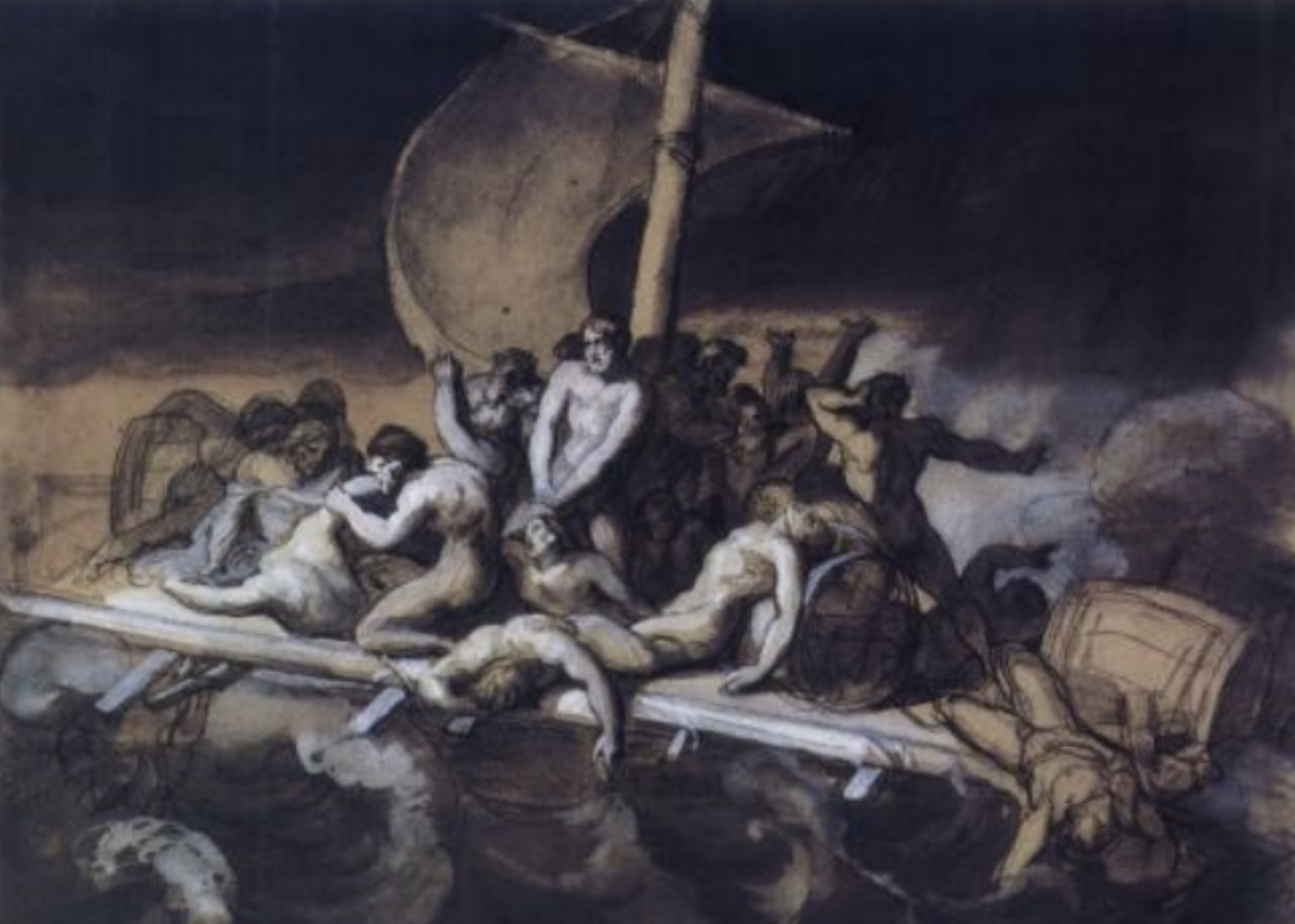
Gericault captures this moment in a sketch that is held at the Louvre but is not on display. It’s hard to imagine this moment and those that follow. I think every one of us would say we would never do that, but in that moment, when your only chance of survival is at stake, it's hard to say. A horrific thought at that.
As the sun rose on day 4, only 30 people remained.
The raft continued to float at sea for days. More and more men succumbed to the elements. A brief sign of hope when a school of flying fish landed on the raft, but many used the raw fish as a side dish to get the other source of meat down.
On July 12, 27 men remained. It was decided that only 15 were in good enough shape to survive a few more days. Between the wine and the few bottles of cognac on hand, they realized that 12 men needed to go. Three sailors and one soldier were given the job of ending the lives of the remaining men, many of whom were already close to death.
In the final days of the ordeal, the 15 men had become emaciated, were delirious, and were barely holding on. Surviving on the little wine that remained, flesh, one lemon, and 30 cloves of garlic. On the final morning, a white butterfly flew over the raft and sat on the mast. A few thought about eating the tiny creature, but many saw it as a sign that they were close to land.
On the 12th day, a smaller raft was built and barrel staves fashioned into oars, but the structure sank into the ocean. It was the last hope they had.
On July 17th, the 13th day into the ordeal, with only 15 men left alive, the sun rose on a perfectly clear day.
Meanwhile, the more than 200 people who fled the Medusa in lifeboats were settling in Senegal. Captain Chaumerys had sent the Argus out to find the raft, but not to rescue the people. He wanted the three crates filled with 90,000 francs of gold and silver coins.
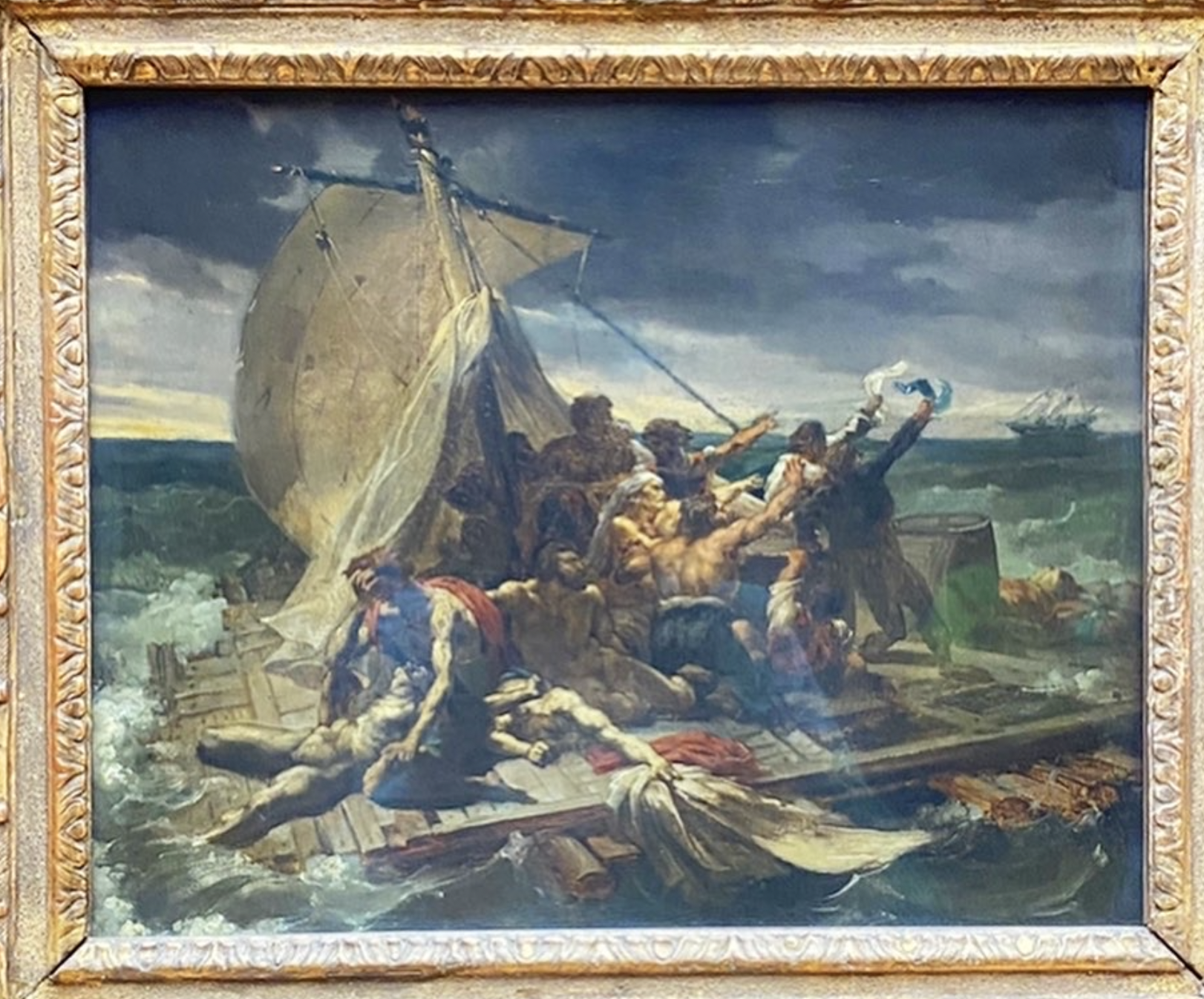
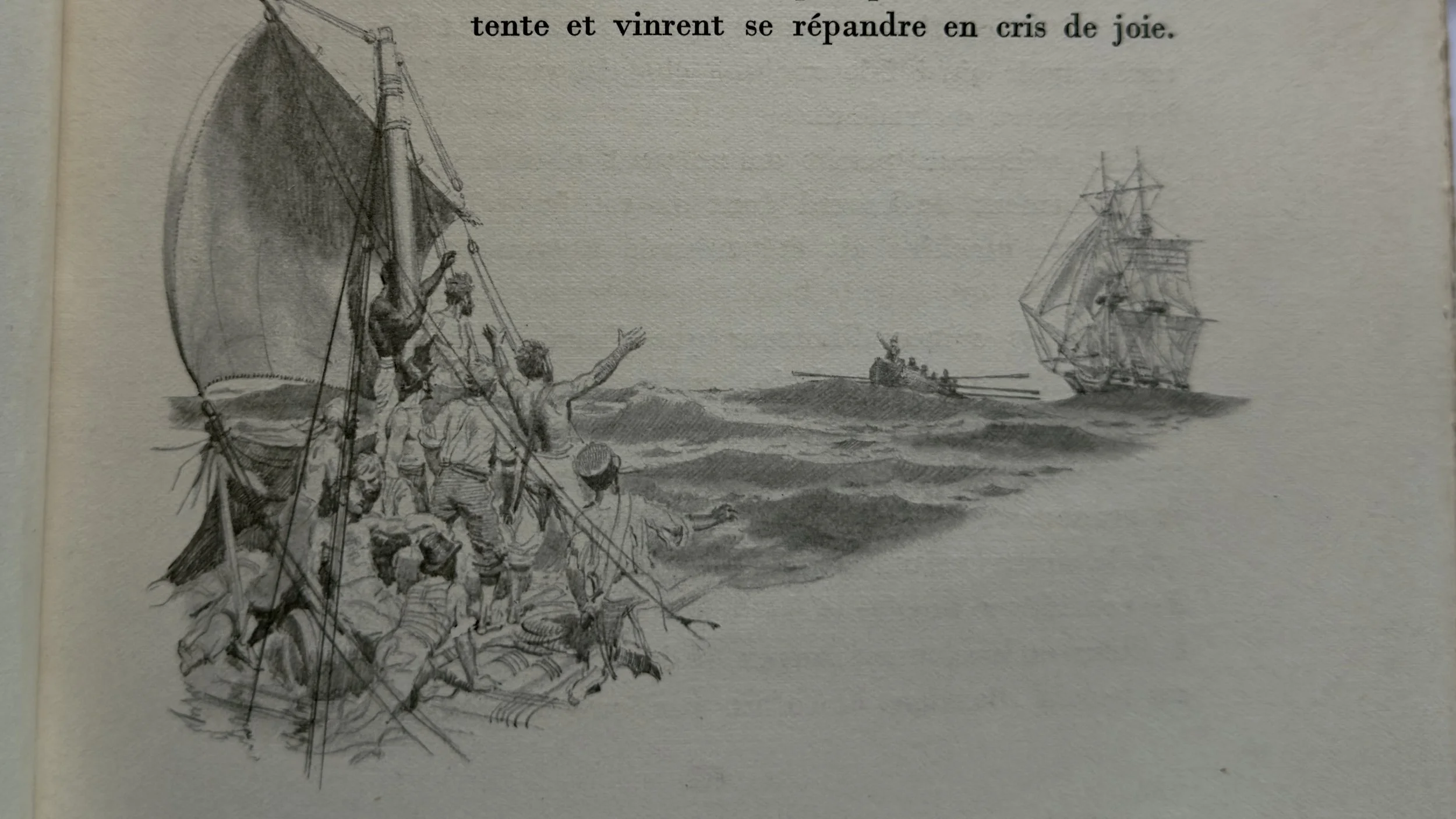
Suddenly, a ship appeared in the distance. Unsure if it was real or just their delirium, they stacked up the remaining barrels, tied cloth around a barrel ring, and waved it in the air, hoping to be spotted. This is the moment that Géricault decided to paint. The Argus had, in fact, given up its search and changed course to head back to Senegal.
Two hours later, the Argus would spot them and head straight for them, and they would be saved. The men were treated and given food, but Doctor Savigny cautioned them to eat only a small amount. A few men gorged on the food, and their emaciated bodies couldn’t handle it. Of the 15 found, five died over the next few days, leaving just 10 survivors.
The raft was found 104 miles from the initial wreck and 32 miles from shore.
On July 19th, they arrived at the port of Saint Louis, no doubt happy to see land once again. Governor Schmaltz took the glory of finding the survivors at his direction.
17 people had remained aboard the Medusa, and 12 survived for 42 days before they were found. They were left with food, water, and shelter from the elements.
Two of the raft's survivors play an important part in this story. Alexandre Corréard, an engineer and journalist, wrote the eyewitness account of the tragedy and published it. That act led to his dismissal from his job as an engineer, prompting him to become a publisher. Doctor Henri Savigny was one of three who volunteered to take the raft. On his arrival in Paris, he testified at the Ministry of the Navy against the captain. When he co-authored the detailed account with Corréard, he found instant fame.
News traveled much more slowly than it does today. At the start of September 1816, the Echo arrived in Paris with Corréard and Savigny as well as the 8 other survivors. Corréard and Savigny wrote the definitive account of the horrific event for the Navy. By September 11, 1816, the ordeal appeared in every paper across France, including the acts of cannibalism. However, they barely scraped the surface of what really happened.
Chamereys returned to France in February 1817 and was arrested immediately. Before the war council on February 25, 1817, the entire affair was discussed behind the locked doors of the king and the government. On May 3, he was found guilty of abandoning the Medusa as well as the raft of 147 people. He should have been given the death penalty, but he was sentenced to three years in prison and stripped of any honors.
Outraged by how the entire ordeal was handled, Corréard and Savigny were up in arms. Out of the shadows would come an unlikely aid. Police minister Élie Decazer obtained Savigny's report and leaked it to the Journal des Débats, where it appeared on September 13, 1816.
The story captivated all of France, and Corréard and Sauvigny published the entire account in November 1817. The young Théodore Géricault was drawn in fresh from Rome.
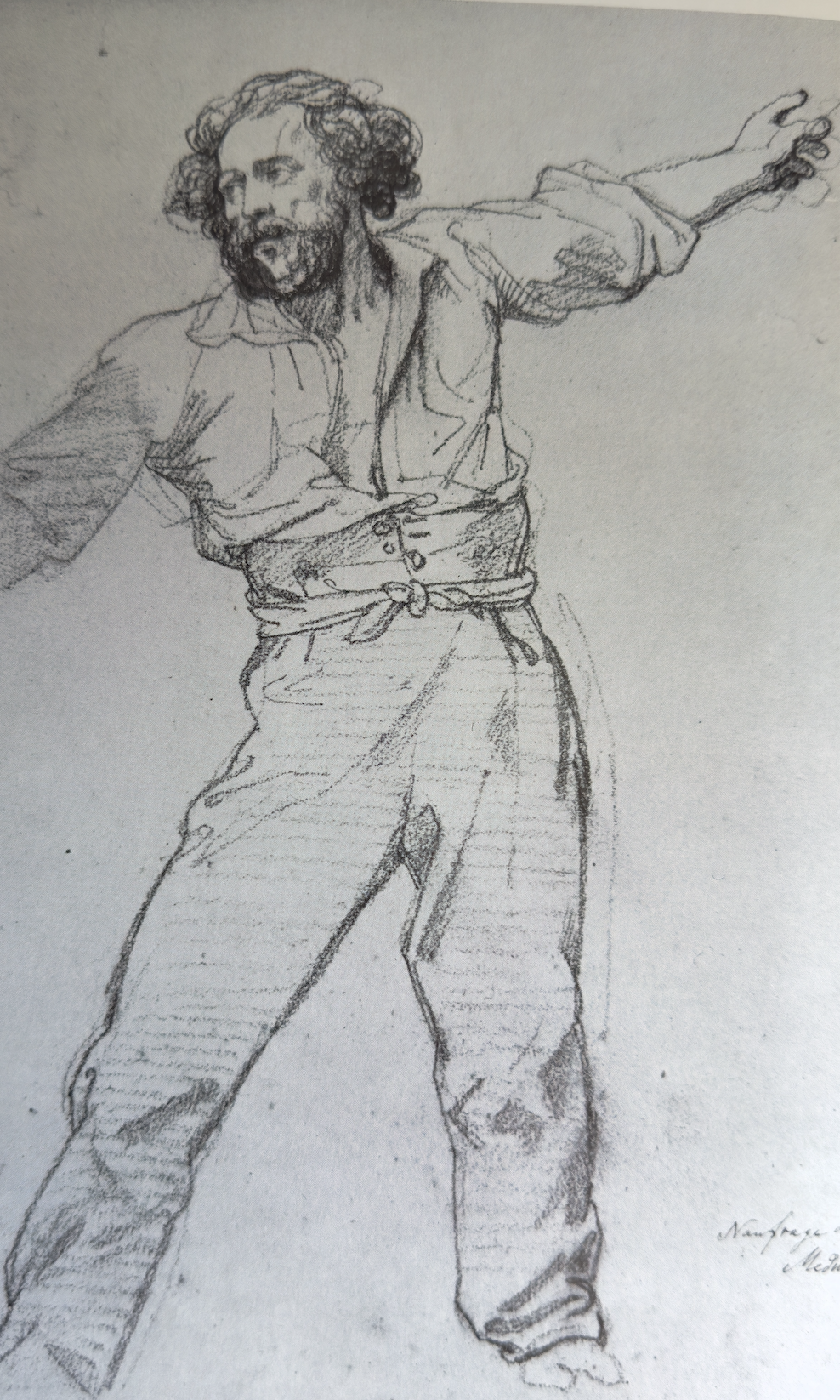
Alexandre Corréard by Géricault
Géricault was a young and very handsome gentleman known for his red, curly hair and fine legs. (No evidence of this, so Hot Leg Henri is keeping his title. Attracted to art from a very early age, his father tried to steer him toward a more lucrative career. It would be his uncle Jean Baptiste Caruel and his wife who would help him follow his passion in more ways than one.
His uncle married the young and beautiful Alexandrine Modeste de Saint Martin in 1807. She was 22 and closer in age to her new nephew, Géricault, who was 16 at the time. The two became very close friends, and Alexandrine convinced her husband to give the young artist a cover job in the tobacco business steps from the Louvre.
The two became quite close and became involved. Caruel purchased the Château de Grand Chesnay near Versailles, where Géricault set up a small workshop to paint and spend any free time with his aunt. To help cover their relationship, the artist began dating Madame Montgolfier, daughter of Joseph and creator of the first air balloon I shared last week in episode 25.
On April 10, 1812, Géricault’s beloved grandmother died, leaving him with a large inheritance, allowing him to return to Paris, rent an apartment and atelier, and create a bit of distance between him and his aunt.
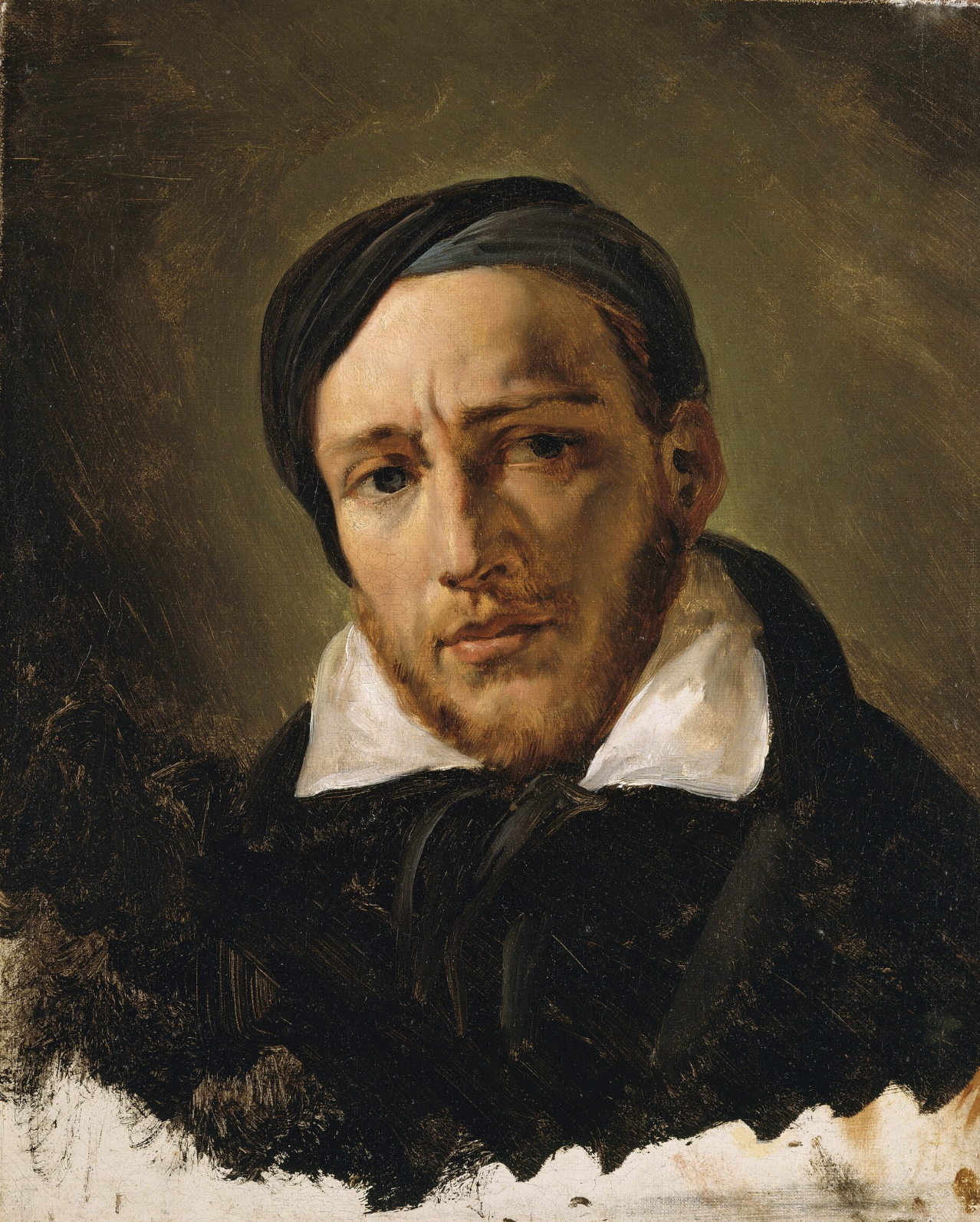
His first foray into the official Paris Salon came in 1812, when his painting The Officer of the Chasseurs won him the gold medal. (The painting hangs in the Louvre across from the Medusa)
The relationship with his aunt morphed into a full afair and resulted in a pregnancy upon his return from Rome. His uncle was well aware of the situation and turned his back on his nephew, writing him out of his life. On August 21, 1818, Georges Hipolyte was born on the Rue Pavee Saint André des Arts. His birth certificate left his parents' identities unknown.
Géricault never saw his son, and little is known, although after the artist's death in 1824, Georges fought to take his father's name. He died on December 31, 1882, without ever meeting either of his parents.
The news of the pregnancy sent Géricault into a frenzy. Without it, we may not have this stunning painting. He shaved his head, locked himself away in his atelier, and worked around the clock for days without sleep or food.
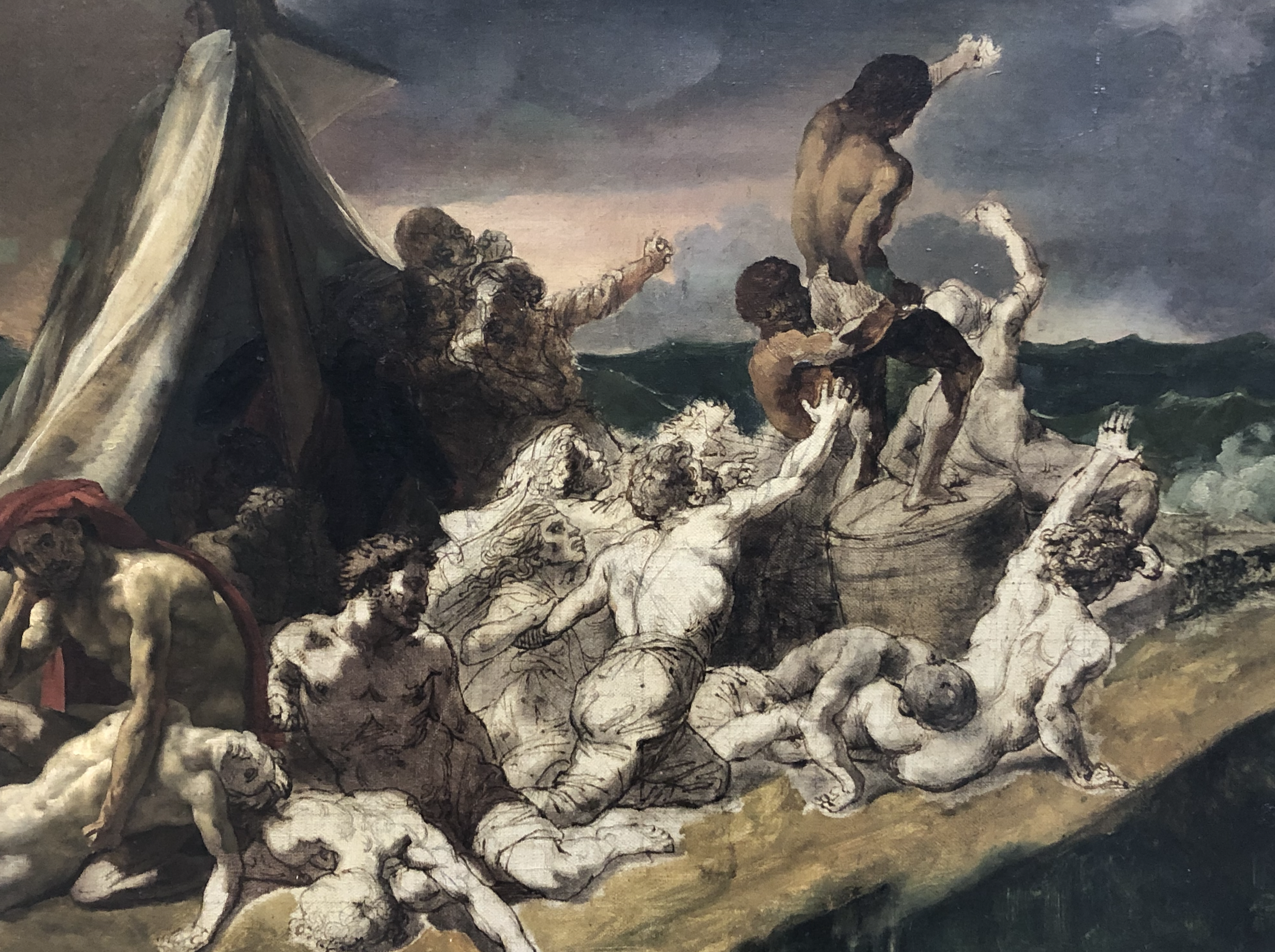
At the beginning of 1818, Géricault contacted the two survivors and authors, Henri Savigny and Alexandre Corréard, who recalled their harrowing tales in minute detail. Corréard would be a frequent visitor and close friend, advising him on even the smallest of details. Builder Valery Touche-Lavilette joined in, recreated a scale model of the raft, and added a few anecdotes from the story, but remained mostly silent.
With their help, he began sketching and even carving figures in wax to place on the scale model, capturing the moment that had occurred just two hours before they were saved. Corréd, Savigny, and Lavilette serve as models for a few of the men huddled under the mast in the final painting.
So dedicated to getting every detail correct, Géricault spent months researching every aspect. Traveling to Le Havre, he sketched the sky and the sea and interviewed sailors. To understand what could happen to the human body, he visited the morgue and hospitals, sketching people in each stage of death from the moments before and after.
On June 28, 1818, Géricault moved to a larger studio to hold his large 16 x 23-foot canvas, purchased on February 24. The studio was located at 80 rue du Faubourg-du-Roule, now Faubourg Saint Honoré, and directly across from the Élysées Palace. A short walk away, Géricualt visited a friend and pathologist who worked at the Hôspice Beaujon at 208 Faubourg Saint-Honoré. On one visit, he was gifted a severed head that he kept on the roof of his atelier and frequently sketched as it decayed.
Spending time at the morgue, he sketched severed arms and legs, many of which he turned into paintings as well. One was on display at the Louvre in 2022 for the Still Life exhibit. I was quite excited to see it up close, only because of how it is tied to the raft.
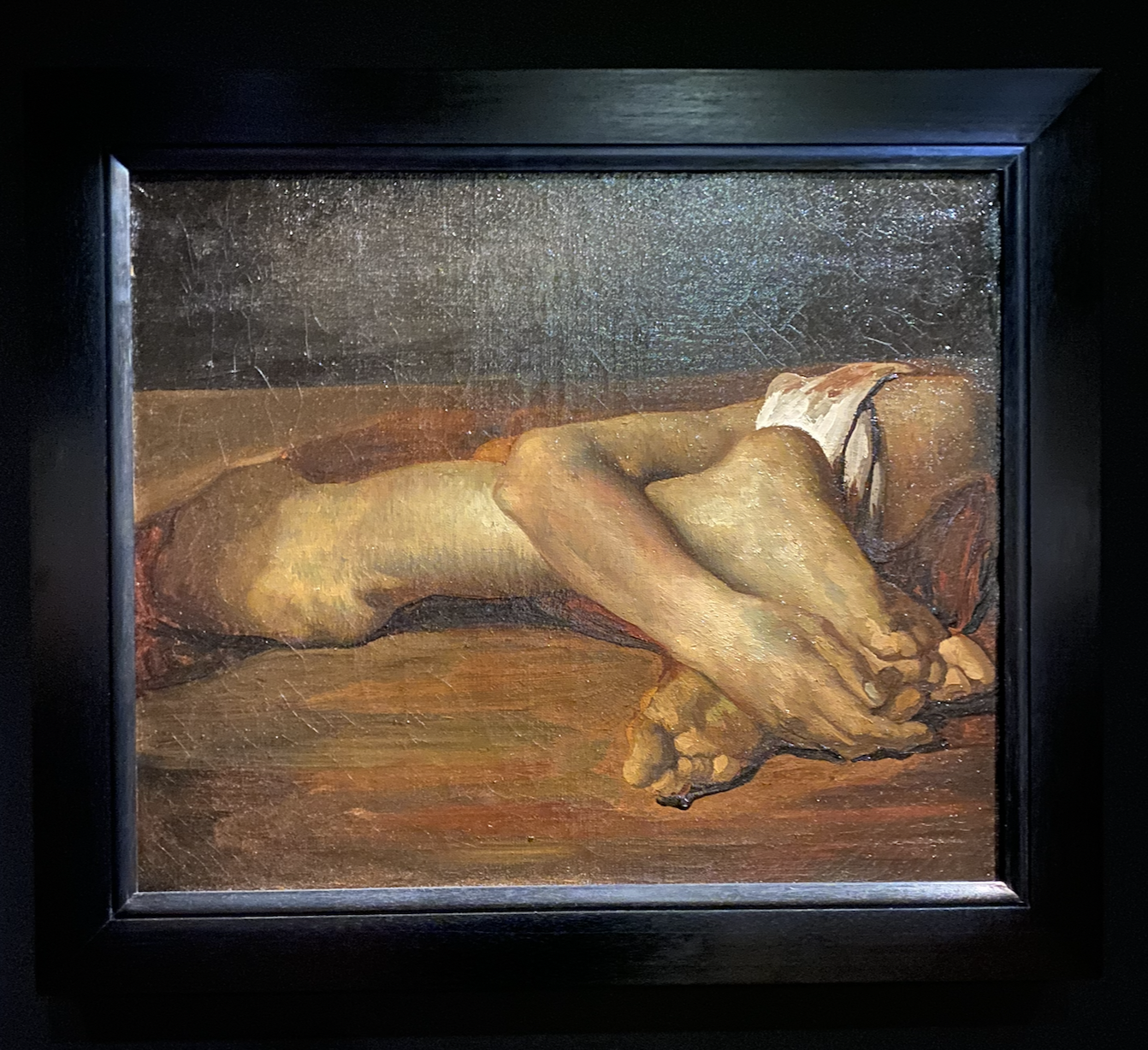
All of these gruesome details Géricault sketched and painted never actually end up in the painting. When it came time to bring the scene to life, he pivoted to depicting the unwitting sailors as strong, well-built men. Not the emaciated, struggling-to-survive men they really were.
Within the painting, Géricault created four groups. The lower portion of the raft, which almost spills over the frame, holds six figures in various stages of death. On the left side, the older man with a red cloth draped on his head holds his dead son's body at the edge of the raft with a look of total despair. To his right is a torso of a man added at the last minute and one of the only reminders of the cannibalism that would occur on the raft. On the right, the body of a man whose leg is trapped between the boards hangs into the sea. Just above him is a bloody axe, another grizzly reminder.
Eugène Delacroix, paid a visit to the atelier on the Rue Saint-Honoré, and after seeing the piece, he ran home through the streets, amazed and inspired. The handsome neck you see on the dead man with his hand draped over the board is Delacroix himself, who posed for his friend.
Géricault had such a hard time painting the feet of the young dead man on the left, which sits just above the water, that he gave up and covered his feet in socks. In 1830, Delacroix would pay homage to his friend in Liberty Leading the People; you see Géricault’s influence in the lower left of the painting.
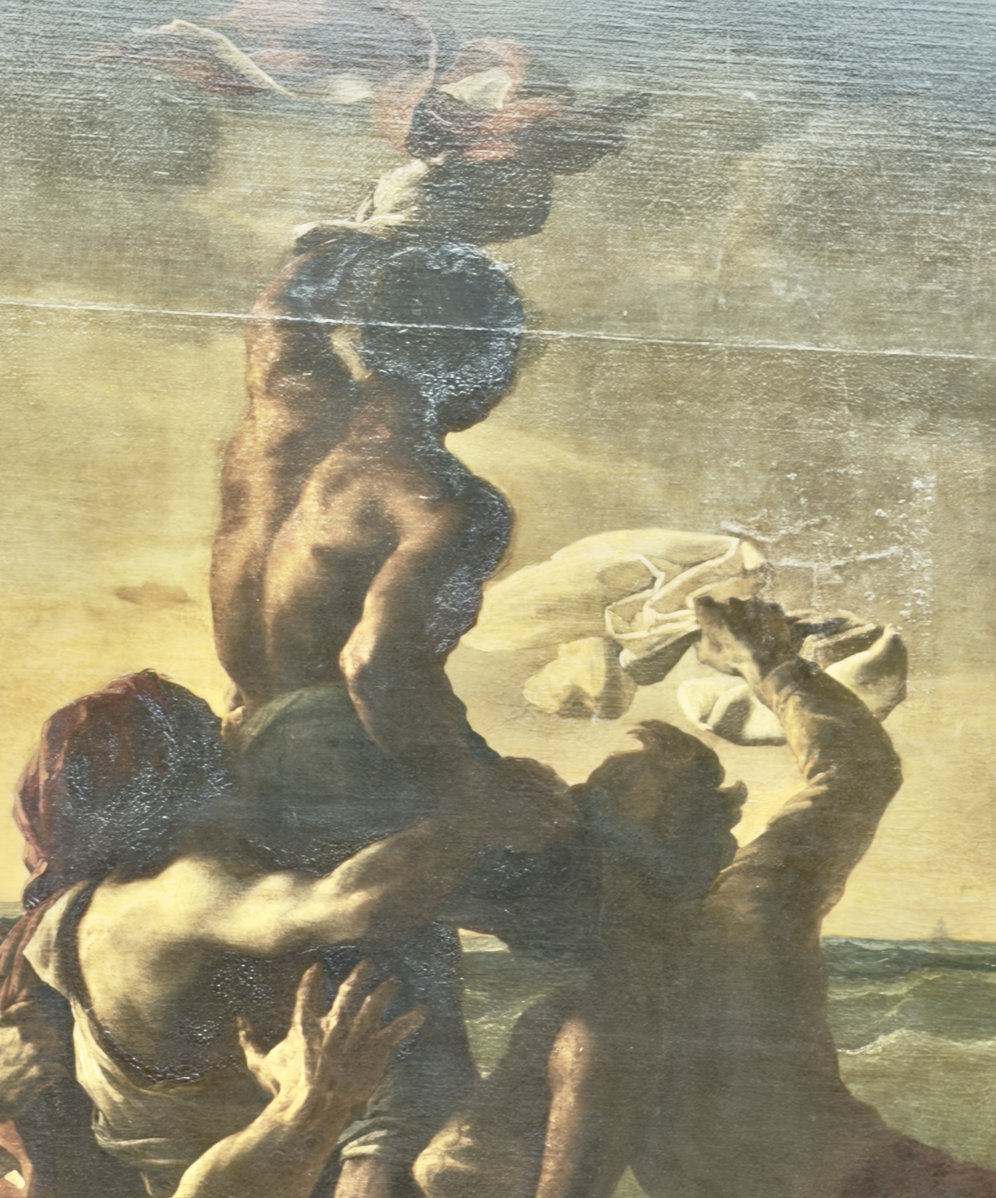
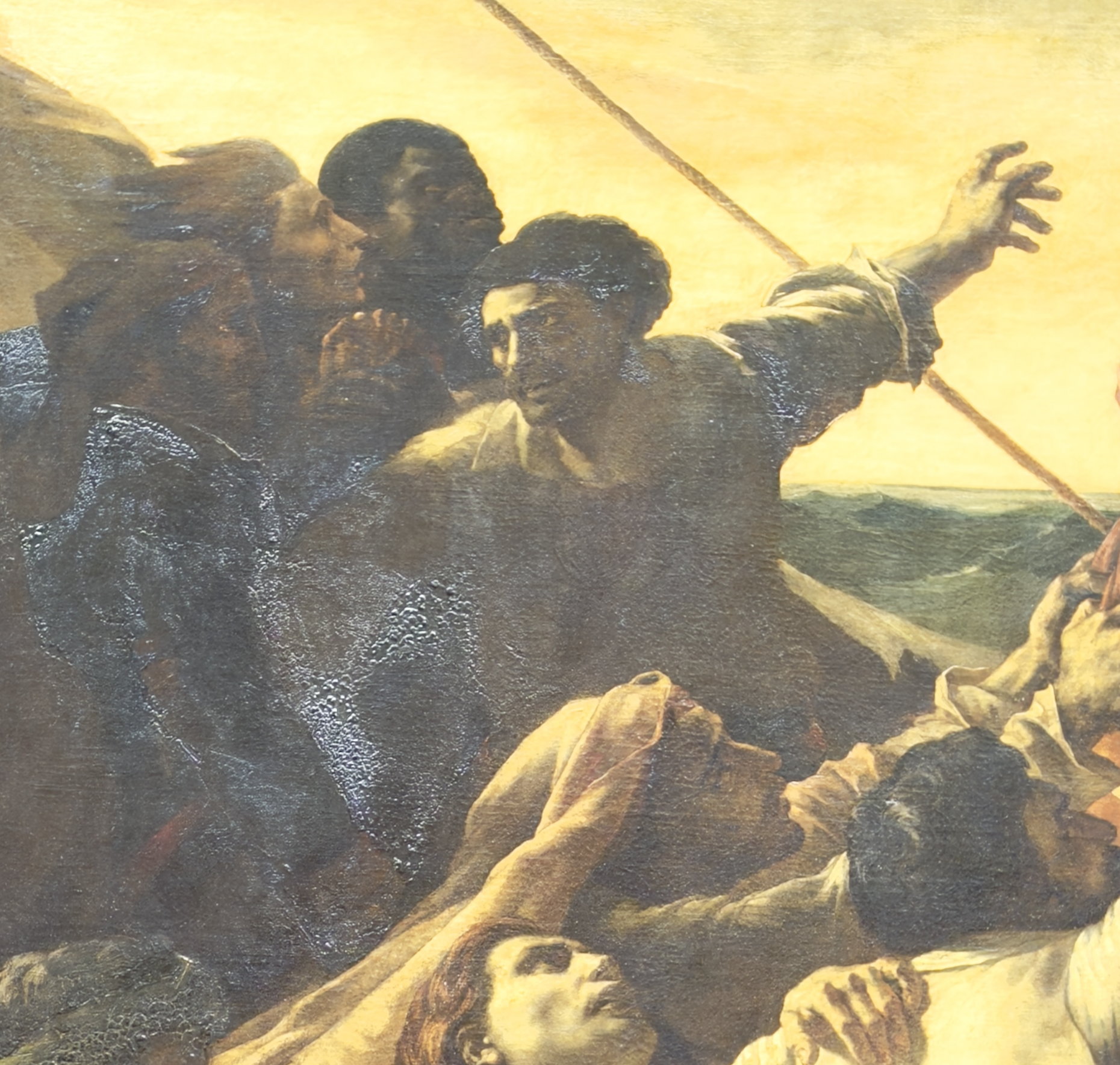
In the center, the tight group is in a perfect pyramid presentation and looks to be trying to pull themselves up in a last-ditch effort to survive. The group under the mast is a blend of fright and hope. Three of the four figures were the actual survivors of the horrible ordeal.
The large painting perfectly captures the fear and urgency of the effort to survive. Upon closer examination, it can evoke a range of emotions. Géricault added twenty figures when, in fact, there were only fifteen historically at the time.
In the center of the painting, the men have discovered a ship, leading your eye to the horizon and pointing it out to the others. At the top of the pyramid, the hero of the tableau is a black man. The tale of Medusa and the Machine rocked the monarchy and the government. It took down a captain and a governor and caused more distrust of those in power. While Corréard and Savigny wrote about it, it inspired Géricualt to create his own painting in revolt, but for a reason few may notice.
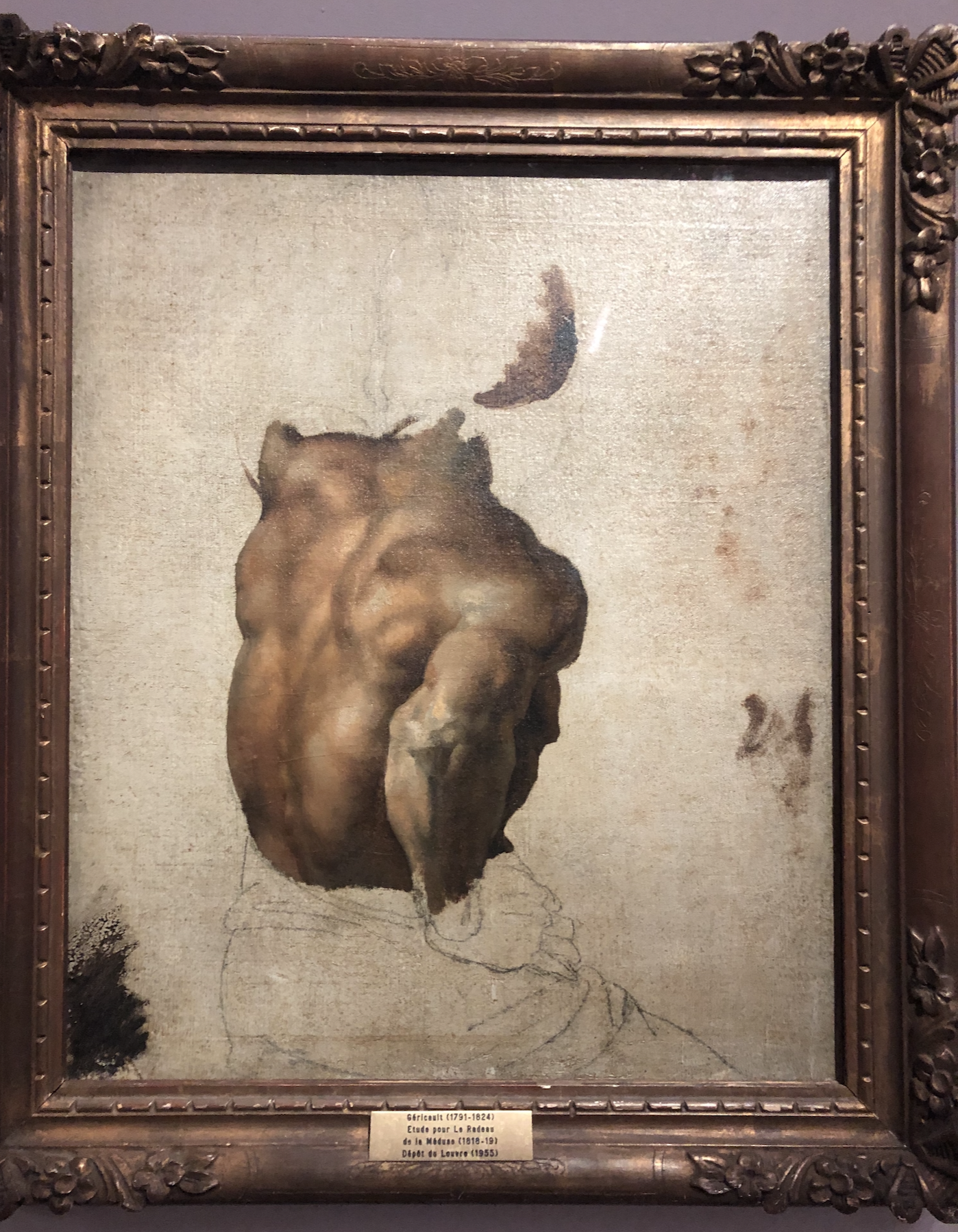
The voyage to Senegal was about reestablishing France's presence in the country, but it was also about slavery. There was, in fact, a black sailor on the raft, Jean Charles, but was he the one who reached up on the barrel to signal the ship? We don’t know for sure, but Géricault was going to speak out in his own way against slavery and how France continued to take part in the slave trade at the time and add three black figures.
For each of the three figures, he used Joseph, a stunning model from Santo Domingo who arrived in Paris in 1804. In 2019, the Orsay held an exhibit titled “Le Modèle Noir”. It was amazing, and I think about that exhibit every week. Curators researched many paintings from the 18th and 19th centuries and gave us names for many of these models that, until then, were unknown.
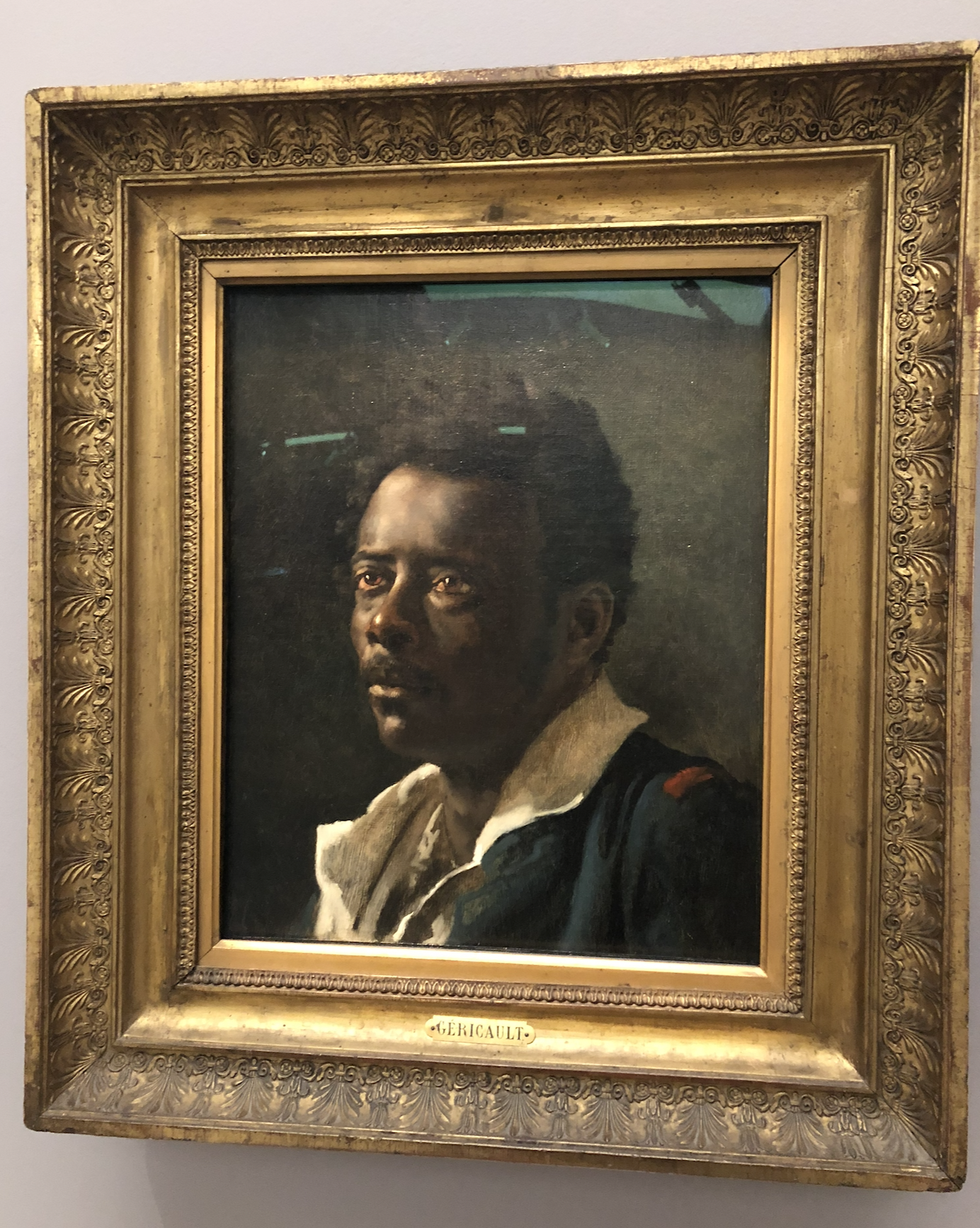
If you are ever in LA, find the stunning portrait of Joseph painted by Géricault at the same time as the Raft of the Medusa.
By June 1819, Géricault had moved his painting to the Théâtre-Italien, where he finished his masterpiece in July 1819. Within a month, it would make its grand debut to the public. Few had seen the painting beyond those who modeled for it, but because of its subject matter, it was already making waves within the art world.
On August 25, 1819, the Salon opened in the Louvre and included 1305 paintings with more than 110 showcasing historical moments, battles, or figures. Traditionally, the government was the largest purchaser of works at the Salon, and historical paintings were the favorites for filling the many offices, palaces, and churches.
The annual/bi-annual artistic salons began in the 17th century and were among the few ways for artists to display their work for purchase by the State or wealthy individuals. Beginning with the king's artists, it morphed into jury-selected artists and the famous diversion of the Impressionists.
The Salon of 1819 was a reflection of the political climate happening in France at the end of the First Empire. The largest salon since the fall of Napoleon, his return, and the rise of the Bourbons once again would include many historical paintings.
Géricault saw the success his fellow artists had with the genre and wanted in on the action as well as to make a statement. With the large inheritance from his grandmother, he was able to do just that. Few would take on such a large project without a commission in place. It was a risky move that wouldn’t pay off as he expected or secure the pride of placement in France until after his death.
To submit the painting to the Salon, he renamed it “Scene of a Shipwreck” to avoid political issues or expulsion from the event. Anyone who saw the painting, as well as the largest in the Salon, knew exactly which event it referred to. Hanging high above the western door of the Salon Carré, leading to the Grande Galerie, it was hard to miss due to its size. As a few paintings were sold, it was moved to eye level for the last six weeks of the salon, which ended on November 30, 1819.
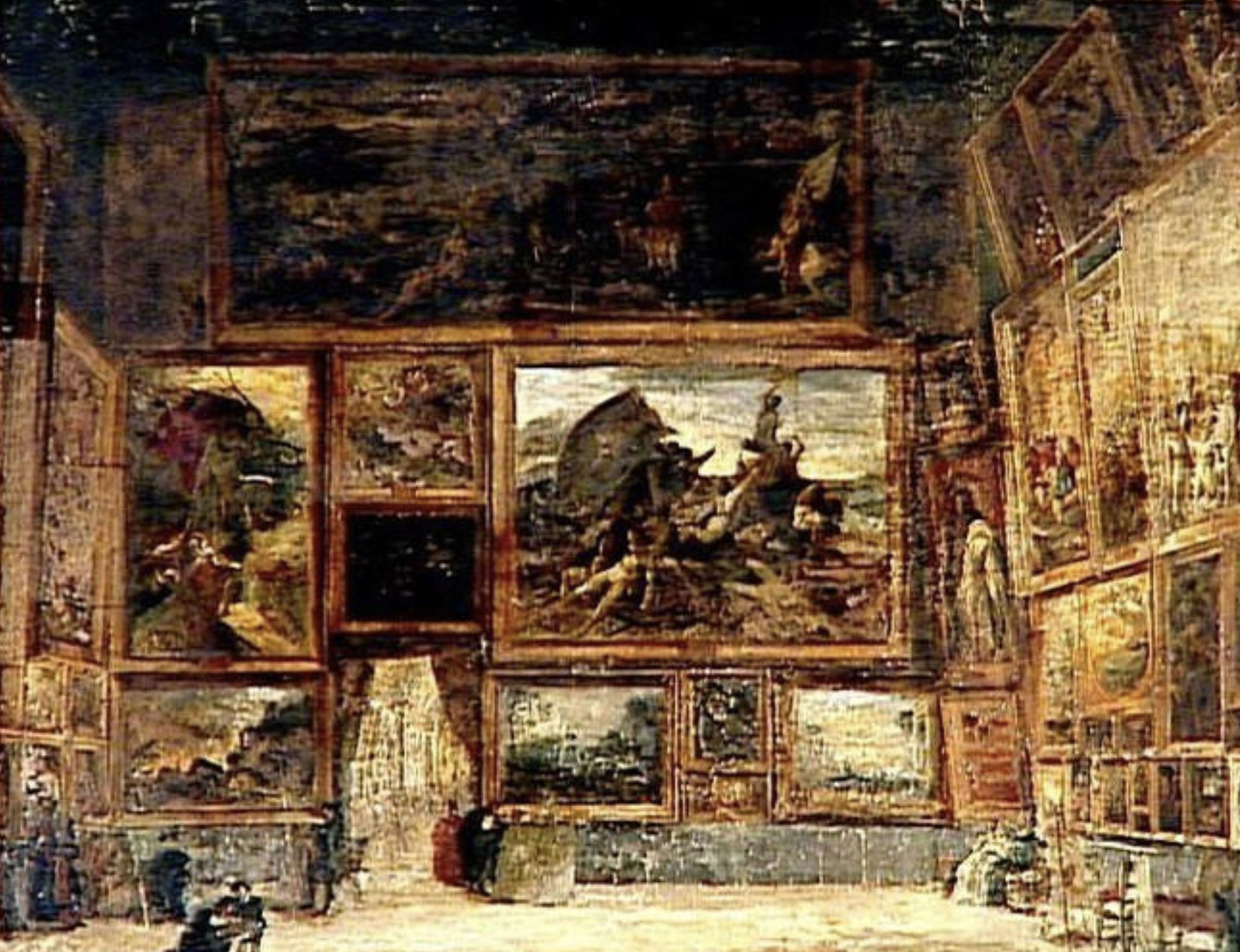
The painting won Géricault another gold medal but failed to get a coveted sale. Deflated and depressed, he took the painting back to his atelier
At the beginning of the next year, Géricault was contacted by James William Bullock, who requested that the painting be a part of his exhibit at the Piccadilly in London. Bullock proposed what proved to be a very lucrative deal in the end, in which Géricault would be compensated with a portion of the ticket sales. Beginning in June 1820, the painting was seen over the next six months by tens of thousands of people, resulting in a check for 20,000 francs. More than he would have ever made by selling it to the French government.
Bullock then took it to Dublin, where it was displayed, but it had less impact, as many people had traveled to London to see it the year before. Returning to France, Géricaut attempted to sell it a few more times, and the Louvre and government officials continued to turn it away.
Théodore Géricault wouldn’t live much longer after he painted his masterpiece. Died at just 32 years old on January 26, 1824, after suffering from a fall from his horse (or syphilis).
The Louvre, on behalf of the director general, Count Auguste de Forbin, purchased the painting on November 12, 1824, for 6,000, and since then it has hung in the Louvre. It was sadly 10 months after Gericault died.
In 1859, the Louvre commissioned a copy,s. Pierre-Désiré Guillemet and Étienne-Antoine Ronjat, who can be seen today at the Picardy Museum in Amiens, created the copy.
Géricault used a substance called bitumen, which made the dark browns and blacks appear even darker. Bitumen never fully dries, so the painting could not be rolled; it would stick to itself and tear. During the evacuation of the Louvre on September 3, 1939, the large canvas traveled through Versailles on a truck used to move stage scenery. As it went through town, it struck a tram power line, knocking out power in the golden town.
The Raft was hidden away in the Château de Chambord during the war. Since its return in 1945, it has hung on the first floor of the Denon wing in the red room of the Salle Mollien, just a few steps from the Mona Lisa. Look at all the paintings in this room, including those by Delacroix and the other Romantic artists, and see how they speak to one another.
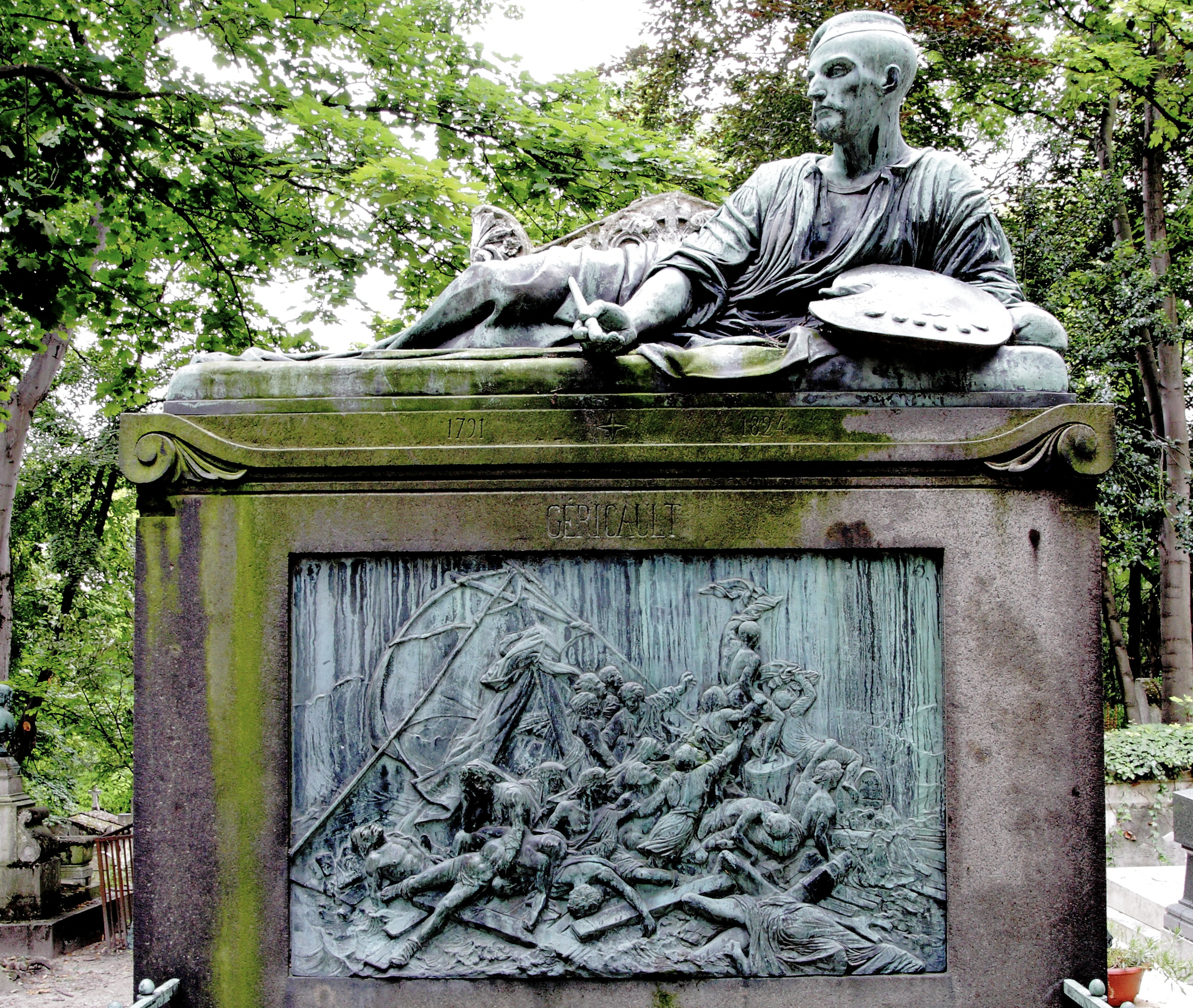
You can visit his tomb at the Père Lachaise and find a bronze bas-relief of the Raft done by Antoine Étex, but notice that they covered the naked, naughty parts of the gentleman falling into the water.
The painting is also a good test of how you see the world. Which parts strike you the most? Are you an optimist or a pessimist? Do you know the hope and elation at the top, or is it the despair at the lower portion? Either way, it is a masterpiece, and I never get tired of sitting in front of it alone on an early morning before the room is filled.
As for those crates filled with gold and silver coins, they have never been found.