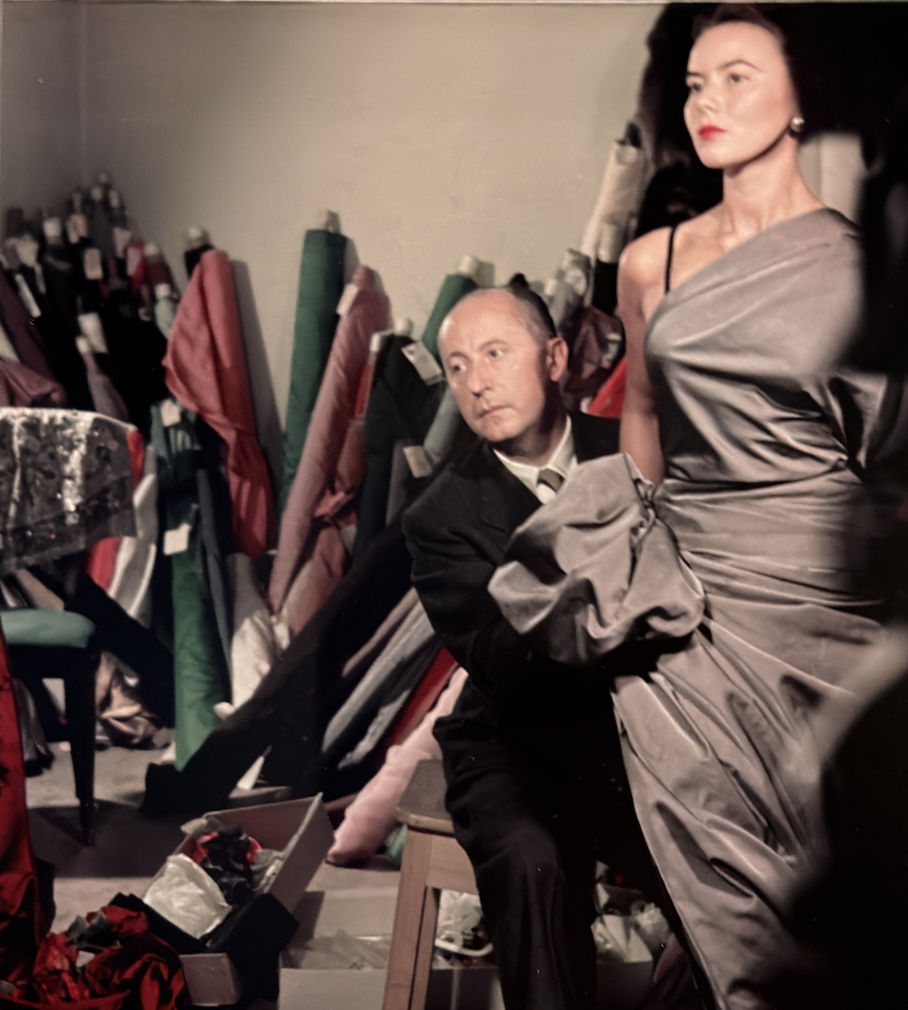
On April 18, 1946, Christian Dior was walking down Rue Saint Honoré and stumbled upon a cast-iron star on the edge of the sidewalk. It was the sign he needed to take the biggest leap of his life.
Christian Dior was born on January 21, 1905, in the Normandy town of Granville. He was the second of five children of Madeleine and Maurice Dior. Before the Dior name was made famous on the Paris runway, it was known for fertilizer, one of the finest in France. Created by his great-great-grandfather, Louis Jean Dior, in 1832, the L. Dior Company also offered bleach and laundry detergent.
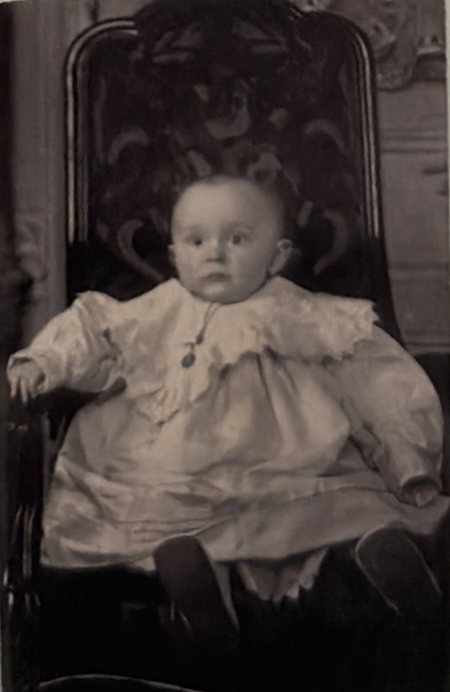
Baby Christian
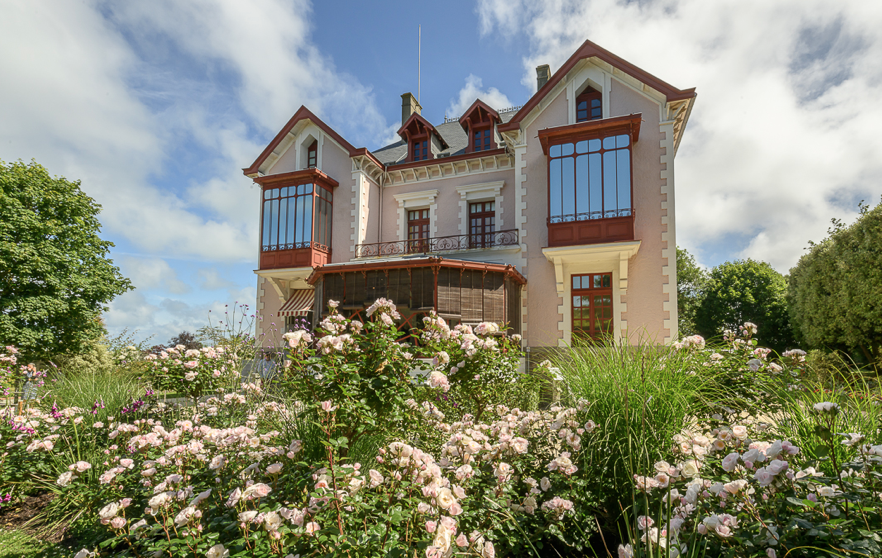
In 1906, the family moved to Les Rhumbs, a small villa in Granville. Decorated by Madeleine in pinks and soft colors, with a surrounding garden of flowers. The house and garden would have a lasting impact on Christian Dior, and one still seen in the fashion house, 80 years later. As a toddler and into his teenage years, young Christian spent endless hours in the garden his mother created with its beds of roses, lilacs, and his favorite lilies of the valley.
In 1910, the family moved to Paris and lived in an apartment at 9 Rue Louis David, a few blocks from the Trocadero. As he grew up, his mother's influence drew him to a life in the arts, but in 1923 his father redirected him to Sciences Po to find a “real career.” His parents wanted him to become a diplomat, but you can’t keep a man from his calling.
In 1928, after his obligatory military service, he returned to Paris and dipped into art, opening a gallery with financial help from his father. Although the gift came with a caveat: he couldn’t use the name Dior. With friends and gallerists Jacques Paul Bonjean and later Pierre Colle. The perfect location fell into their lap at 34 Rue La Boétie, a block from Paul Rosenberg's famed gallery and Picasso's atelier.
Their gallery represented many of the era's leading contemporary artists, including Braque, Raoul Dufy, Joan Miró, Matisse, and Picasso. In 1932, they opened another location at 29 rue Cambacérès, just two blocks away. In Dior’s autobiography Dior by Dior, published in 1956, he wished he still had many of these paintings that “his family thought were worthless”. The gallery led to many fights with his father that worried he would tarnish the family name.
The Dior family fortune was lost in the wake of the US depression once the effects reached the shores of France. His father's gambling didn’t help either. His family returned to Granville when Paris became too expensive, but Christian was determined to stay. It was 1931, and by the end of the decade things were going to get far worse. Couch-surfing at night, Christian sold the gallery's inventory to the few buyers he could find, far below its value. He and his art-loving friends spent their evenings in the Boeuf-sur-le-Toit, where the kind owner Moyses extended a few deals their way while they sat alongside the richer Parisians.
Dior and his friends were young, broke, and having a great time in Paris before he became quite ill. Leaving Paris, he headed to the mountains to “take the waters,” as they liked to say in the 19th century. When money ran out, he headed south to the Balearic Islands off the Spanish coast in the Mediterranean. It was on this retreat that he recalls finding his artistic calling and considering venturing into tapestries. However, his lack of funds or the fact that nobody was looking for tapestries to decorate their homes led him to move past that dream.
With encouragement from friends and designers Jean Ozenne and Max Kenna, Dior began sketching and drawing and, to his surprise, sold his work to magazines. In 1935, while in the south of France, he finally discovered his artistic voice. For endless days he worked to master and center his designs and thoughts into gowns, cocktail dresses, and hats.
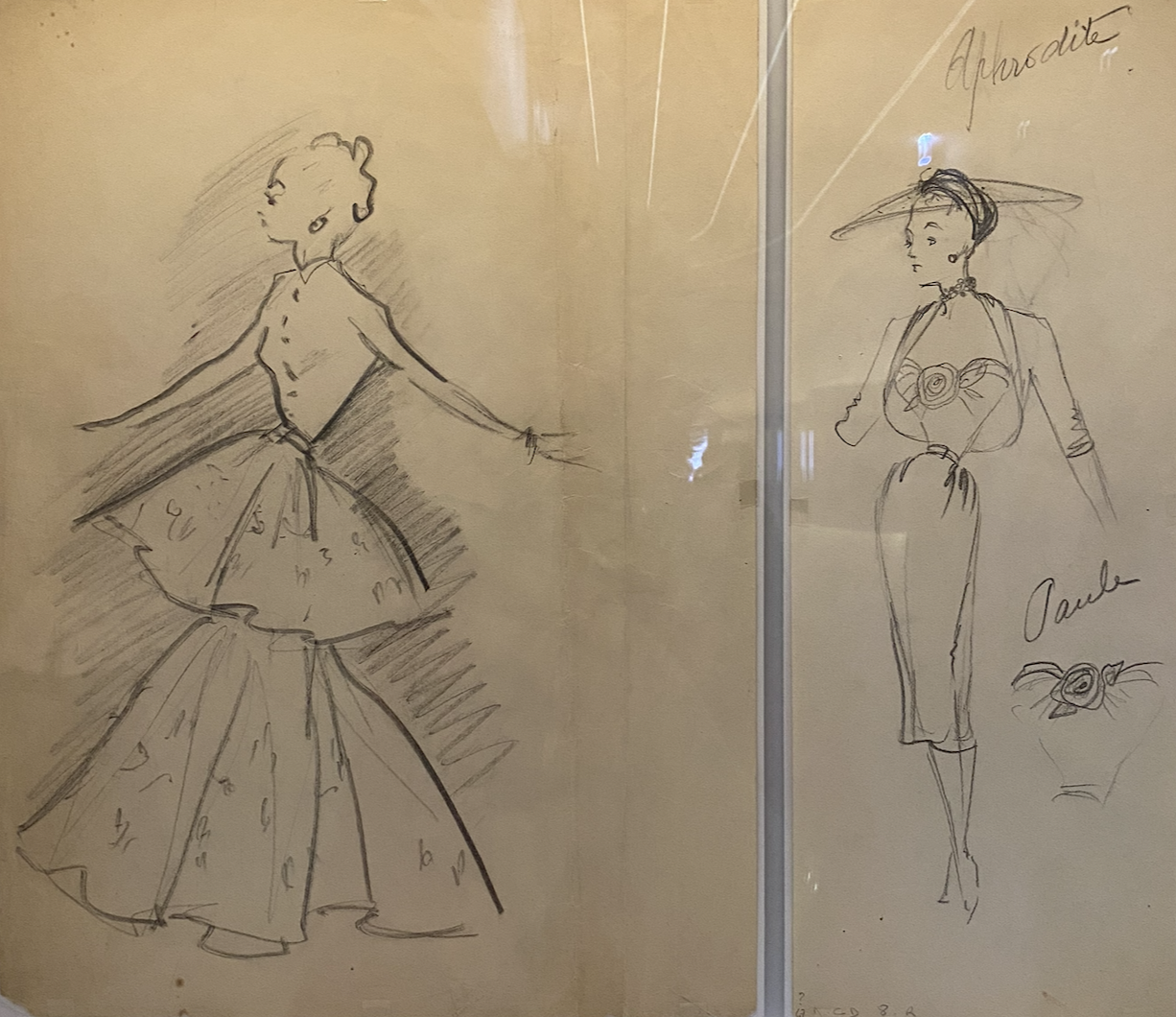
Claude Saint-Cyr was the first to notice his hat designs. Simone Naudet adopted the name Claude Saint-Cyr and found great fame in Paris hatmaking in the years just before the war. After the war, she made hats for Queen Elizabeth and her sister, Princess Margaret. Designing hats for Simone put Dior’s designs in front of many people.
Slowly, people noticed his designs, and his name spread among Paris's couturiers. Balenciaga, Schiaparelli, Charles Frederick Worth, Nina Ricci, and many more purchased designs for their clients. It gave Dior time to understand what people wanted and to fine-tune his designs.
Christian finally got his foot in the door and his first job in fashion as a pattern maker for couturier Robert Piguet in 1938, where he learned how to bring his designs to life from paper to model. It was the perfect place to understand how a couture fashion house works. A year into the position, at the start of WWII, he was called up for military duty in 1939, but by 1940, he left for Callian in the south to help his father and sister with their property. Dior picked up extra money illustrating the latest fashions for Le Figaro and Vogue, which kept him tied to the fashion world.
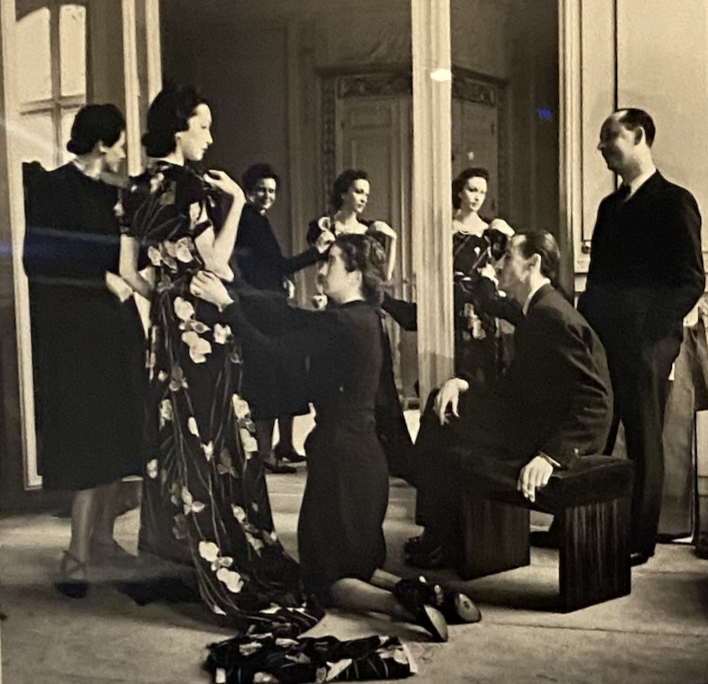
Dior in the House of Piguet 1939
In the winter of 1941, Dior returned to Paris, but his former job at Piguet was no longer waiting for him. Dior heard through dear friend Madame Raymonde Zehnacker that Lucien Lelong might have a position for him, and Lelong had one of the few fashion houses that was thriving through the war. Hired as a pattern maker, Dior fine-tuned his designs and let his creativity flourish, although hidden behind the name of Lelong.
Lucien Lelong grew up in the fashion business; both his parents and uncle held positions ranging from fabric dealer to designer. He set up his own house and was to debut his first collection, but the start of WWI changed everything.
By 1924, he had established his couture house on the Avenue Matignon, a street Dior would come to know well. Lelong built quite an empire, including perfume and shops in France and the United States, as stage and screen stars wore his designs. Business was booming and led to hiring young designers to sketch creations that would be under the Lelong label.
After the First World War, American purchasing power was higher, and Neiman Marcus and Bergdorf Goodman had clients who wanted custom couture creations and had the money to pay for them. Lelong and many other fashion designers capitalized on this. The industry peaked in 1929 before it all came crashing down.
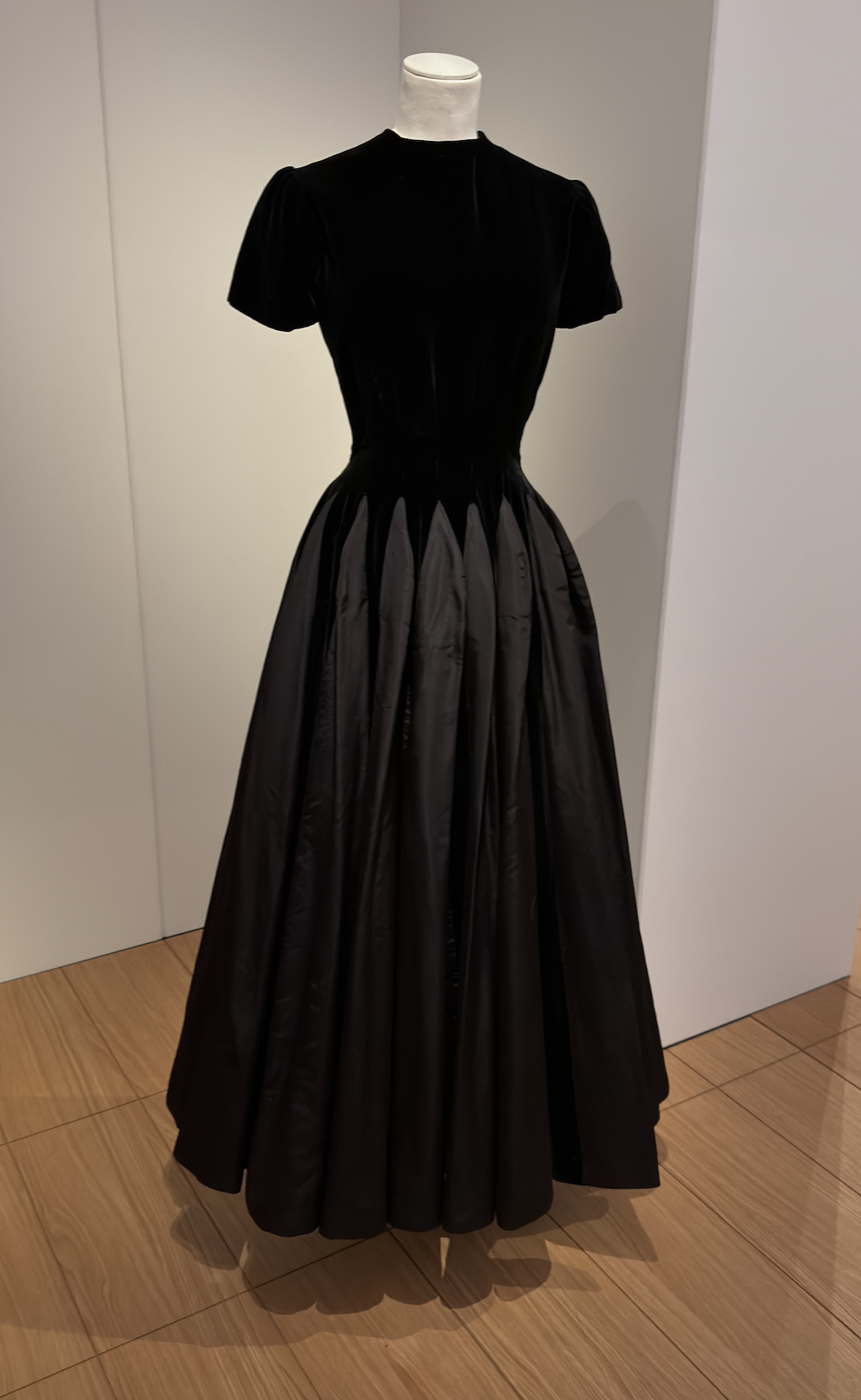
Christian Dior for Lucien Lelong 1945
At the start of WWII, Lelong served as president of the Chamber of Haute Couture and did everything he could to save the industry during the occupation. Hitler had wanted to move the fashion industry to Berlin or Vienna, and Lelong did all he could to keep it in Paris, including dressing the wives and mistresses of the Nazi elite. Fashion houses were allowed to continue to operate but were forbidden to sell to any international clients, only locals, which left them with very few options.
Lelong, of course, worked around this by sending sketches and samples to private clients in the US. As the head of French Couture, he made a few brilliant plays to keep Paris the capital of fashion even through the endless dark years. Lelong was able to employ many of the seamstresses by working for the army and creating uniforms.
Dior arrived at the door of the Maison Lucien Lelong in 1942, in the midst of the war, and worked as a stylist alongside Pierre Balmain and Hubert de Givenchy. Glad to have a job, they worked through endless shortages and wondered whether their atelier would last another day. By 1942, the business was brisk, and they were turning people away. Everyone wanted to wear a one-of-a-kind creation by Lelong, at least those who could afford to, including the women tied to the Nazis. This didn’t sit well with Christian, especially since his dear sister Catherine, who fought in the Resistance, was arrested on July 6, 1944, and taken to a camp. Thankfully, she survived and returned to her brother on April 30, 1945.
The legacy of Dior is often criticized for designing for Nazi women, but it wasn’t his decision, and the Lelong house is far from the despicable legacy that Coco created.
Immediately after the Liberation of Paris, restrictions on fashion houses became stricter, making it harder to get much-needed supplies and staff. As the houses reopened, staff left for better jobs and started their own businesses.
It was at this time that Dior and Balmain talked of opening their own house together, but Dior was too nervous to step out on his own after the unstable years before and during the war. Balmain opened his own house in 1945 at 44 rue François Ier, just up the street from the location Dior would also open. Back at Lelong, Dior’s name began to shine beyond that of the house's owner.
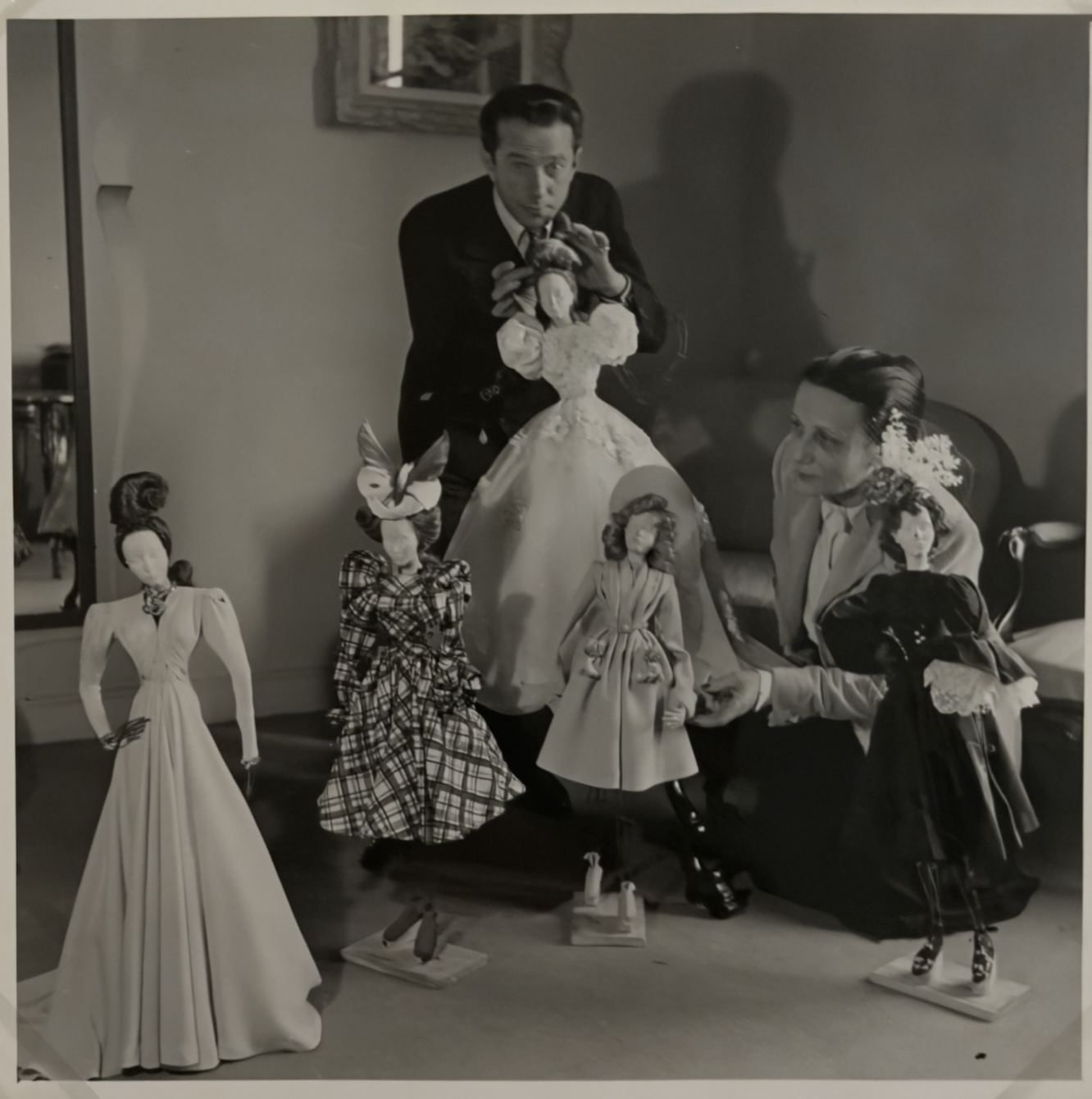
Emerging from the fog of war, the fashion business was unsure where to go. While people were celebrating the end of nazi occupation, Paris was still under a very dark cloud. As head of the Chambre Syndicale de la Couture Parisienne, Lelong had an idea: create a fashion show without models, using dolls instead. In his position, he could round up most of the Parisian couture houses, including Schiaparelli, Balenciaga, and Lanvin. As well as jewelry from Cartier and Van Cleef + Arpels and bags and gloves from Hermés. Lelong was, of course, part of it, with Dior designing two of the most popular looks of the entire show. More than 175 wire-and-plaster dolls, twice as tall as a Barbie, were dressed to the nines. The haute couture beauties were set up in front of theater sets created by Christian Bérard depicting scenes of the streets of Paris, the Opera House, parks and cafes.
The show opened in the Pavillon Marsan of the Musée des Arts Décoratifs on March 28, 1944, and was a rousing success. The exhibit traveled around Europe and eventually to the United States. The new exhibit, Look! 40 years of Fashion in the MAD has two of the dolls on display, along with one of the backdrops and a few of the wire limbs. I was so excited when I saw them. More on this another day, but if you are in the Pacific Northwest, you can see more of the dolls at the Maryhill Museum.
At the start of the first spring in Paris following the war, Dior ran into a childhood friend from Granville, Georges Vigouroux, while walking on the Rue Saint Honoré. Dior was living at 10 Rue Royale, on the wide street between the Madeleine and the Place de la Concorde. Vigouroux worked in the Gaston fashion house on the Champs Elysees.
Originally named the Philippe & Gaston house, started by Philippe Hecht and Gaston Kauffmann, who opened their atelier in 1922. It flourished with its Art Deco style and new, relaxed silhouettes until 1937, when the business suffered. Renamed the Gaston House, it barely survived the war. In 1946, the wealthy Marcel Boussac swooped in and took over the business and wanted to breathe new life into the old house with his money and textile business behind it.
Dior’s old chum, Georges Vigouroux, told him it was the most unbelievable coincidence: the Gaston house was looking for a new designer. Dior pushed it off. Over the next few weeks, they had two more chance encounters in the exact same spot, and Dior finally agreed to meet the owner, Marcel Boussac. Dior had talked to his former colleague Pierre Balmain, whose own house had really taken off and got him thinking.
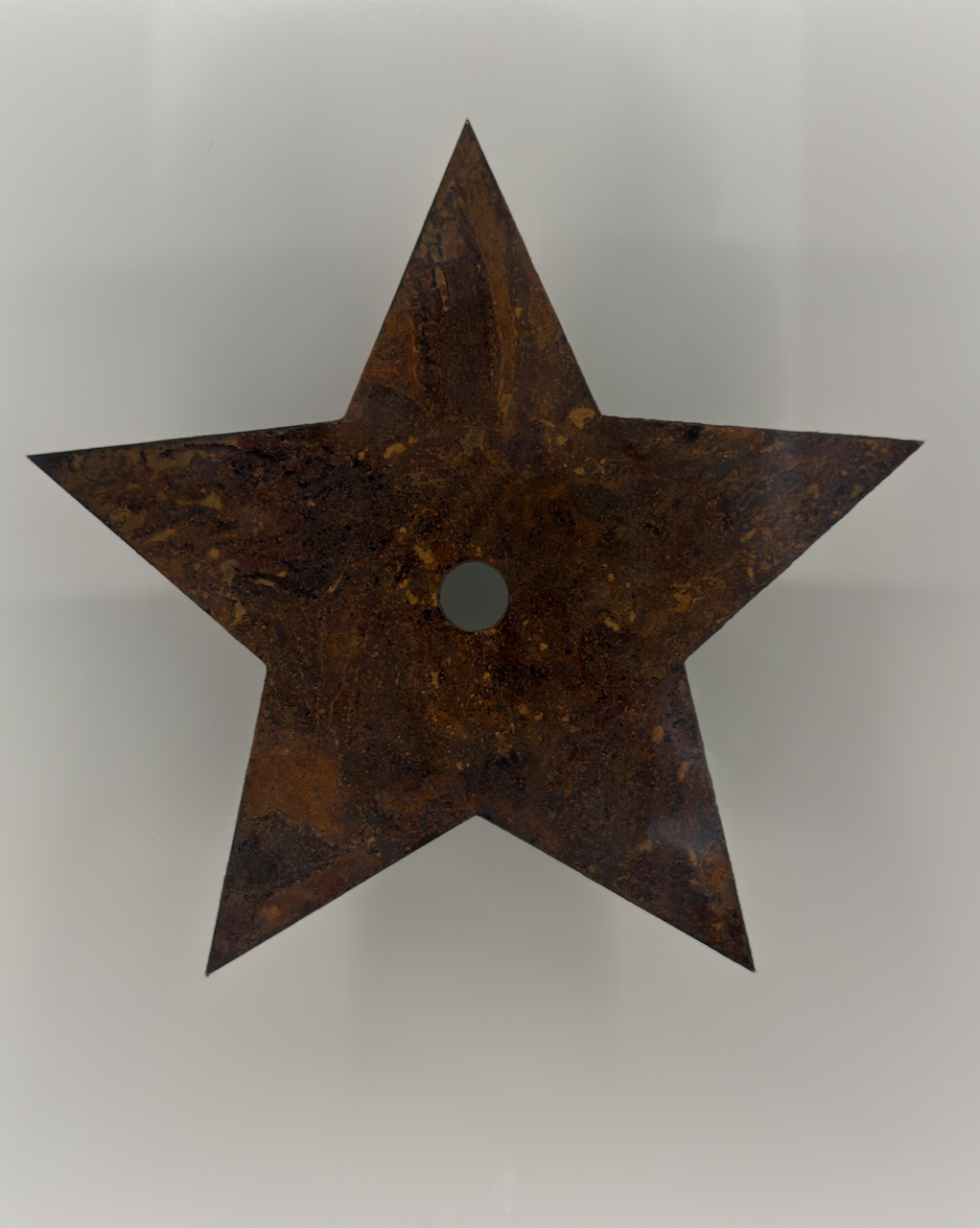
On April 18, 1946, a lovely Thursday morning in Paris, Christian Dior walked along the Rue Saint-Honoré between the Rue Saint Florentin and the Rue Royal and came upon a star; he knew it was a sign. It was also the same spot where he had run into his old friend Vigouroux three times in the past month. Christian was on his way to meet Monsieur Marcel Broussac.
Marcel Broussac’s father was a tailor and plunged his money into creating textile factories around France. At 18, Marcel joined the family business and grew it into a thriving industry and became one of the richest men in France. He also dabbled in the sport of kings, horse racing, and a prize-winning stable.
Dior was ready to turn down the offer the day he walked in the office of Marcel Broussac. Maybe it was the lucky star he found or a sudden boost of confidence, but the incredibly shy Dior asked the unthinkable. Dior didn’t want to work for another house; he wanted his own label under his name.
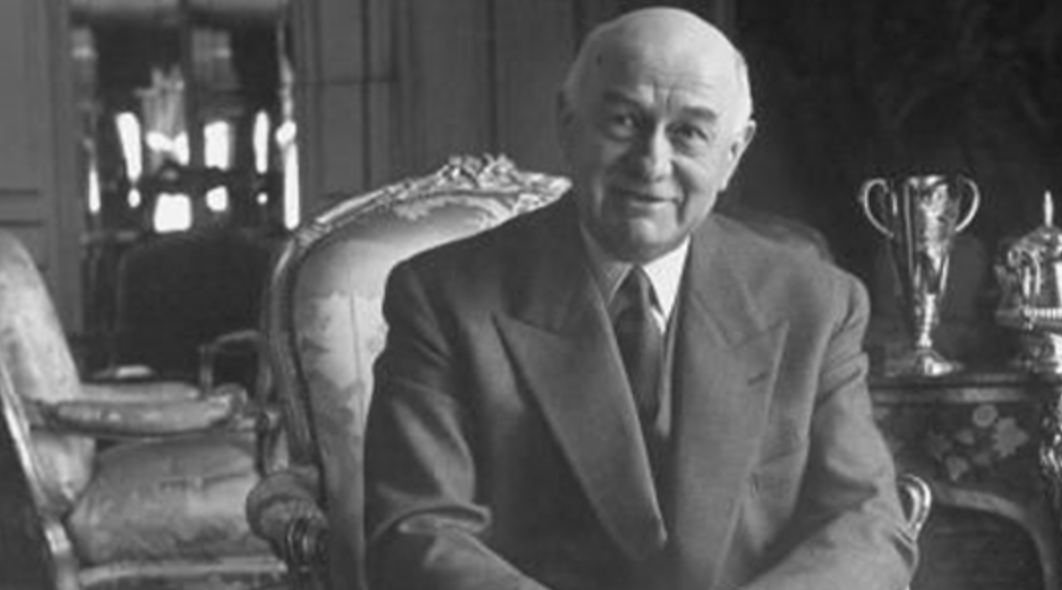
Dior describes the meeting in his own words in his autobiography, Dior by Dior. “I suddenly heard myself telling him that what I really wanted to do was not to resurrect Gaston, but to create a new couture house under my own name, in a district of my own choosing. I wanted a house where everything would be new: from the ambiance and the staff to the furniture and even the address. All around us, life was beginning anew: it was time for a new trend in fashion. Greatly daring, I described the house of my dreams. It would be small and secluded, with very few workrooms; within them the work would be done according to the highest traditions of haute couture; the clothes, which would give an impression of simplicity, would in fact involve elaborate workmanship and would be aimed at a clientèle of really elegant women. After the long war years of stagnation, I believed that there was a genuine unsatisfied desire abroad for something new in fashion. In order to meet this demand, French couture would have to return to the traditions of great luxury: which was why I envisaged my house as a craftsman's workshop, rather than a clothes factory.”
“Out of breath, and amazed at my own temerity, I stopped short. Marcel Boussac had heard me out with great patience and, before escorting me to the door, he told me that although I had outlined quite a different plan to him from the one he had envisaged, and mine was perhaps rather over-ambitious, nevertheless my ideas interested him and he would like to have time to think them over. Secretly I felt that he must have been amazed at my own high opinion of myself! As for me, I was still suffering from the shock of discovering that, having gone to see him in order to say'no', I ended up outlining a plan which sounded very much like 'yes '.
Dior left the meeting and waited day after day for any response from Boussac. Severely doubting his out-of-the-blue gumption, he was a nervous wreck. To make matters worse, he and Lucien Lelong were both friends with Boussac. Still without a word, he decided to send a telegram rescinding his request.
Dior was a superstitious man. In 1919, a fortune teller told him, “Women are lucky for you, and through them you will achieve success.” He continued to see fortune teller and one of his closest advisors,Madame Delahaye. He hoped she could help calm his nerves. She quickly told him he must accept the offer coming and that “nothing anyone will offer you later will compare with the chance which is open to you now”.
Immediately, Dior reached out to Boussac’s office and explained his haste and that he did not want to exit any future negotiations. From there, things moved briskly. And on October 8, 1946, 80 years ago this week, the House of Dior was founded.
The news spread quickly across the pond. Dior had already made a name of himself, and partnering with the incredibly wealthy Boussac brought a lot of attention and expectation.
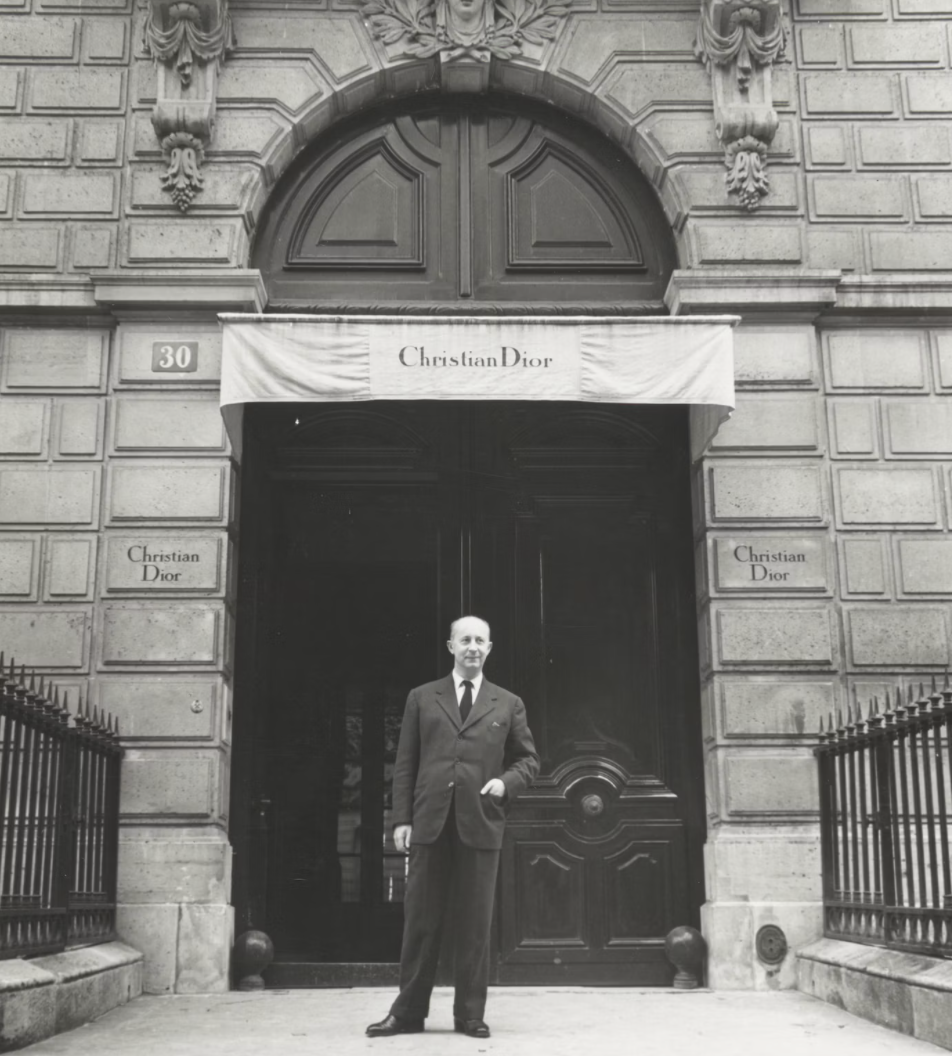
Now it was time to find this diamond in the rough, with his lengthy list of wishes that would shape Dior's atelier. Dior said, “Many years before my decisive interview with him (Boussac), I had in fact stopped short in front of two small houses side by side on Avenue Montaigne, numbers 28 & 30.” Dior was walking with friend Pierre Colle, who had the gallery in the 1920s. “I pointed out their neat, compact proportions, and air of sober elegance without the least hint of ostentation”. Christian Dior said at that moment, “Pierre, if your idea of having my own atelier comes off, I am determined to set myself up here and nowhere else!”
Boussac and his team of real estate agents showed Dior one building after another, none of which fit the bill. A few on the Champs-Élysées, Place François Ier, and also on Avenue Montaigne, but all were too large. Discouraged and knowing he needed to decide quickly, he had a casual encounter that led him to learn that the hat shop at 30 ave Mantignon was in the process of moving out.
And the man, guided by a cast-iron star, found his perfect building, the one that still serves as its headquarters today.
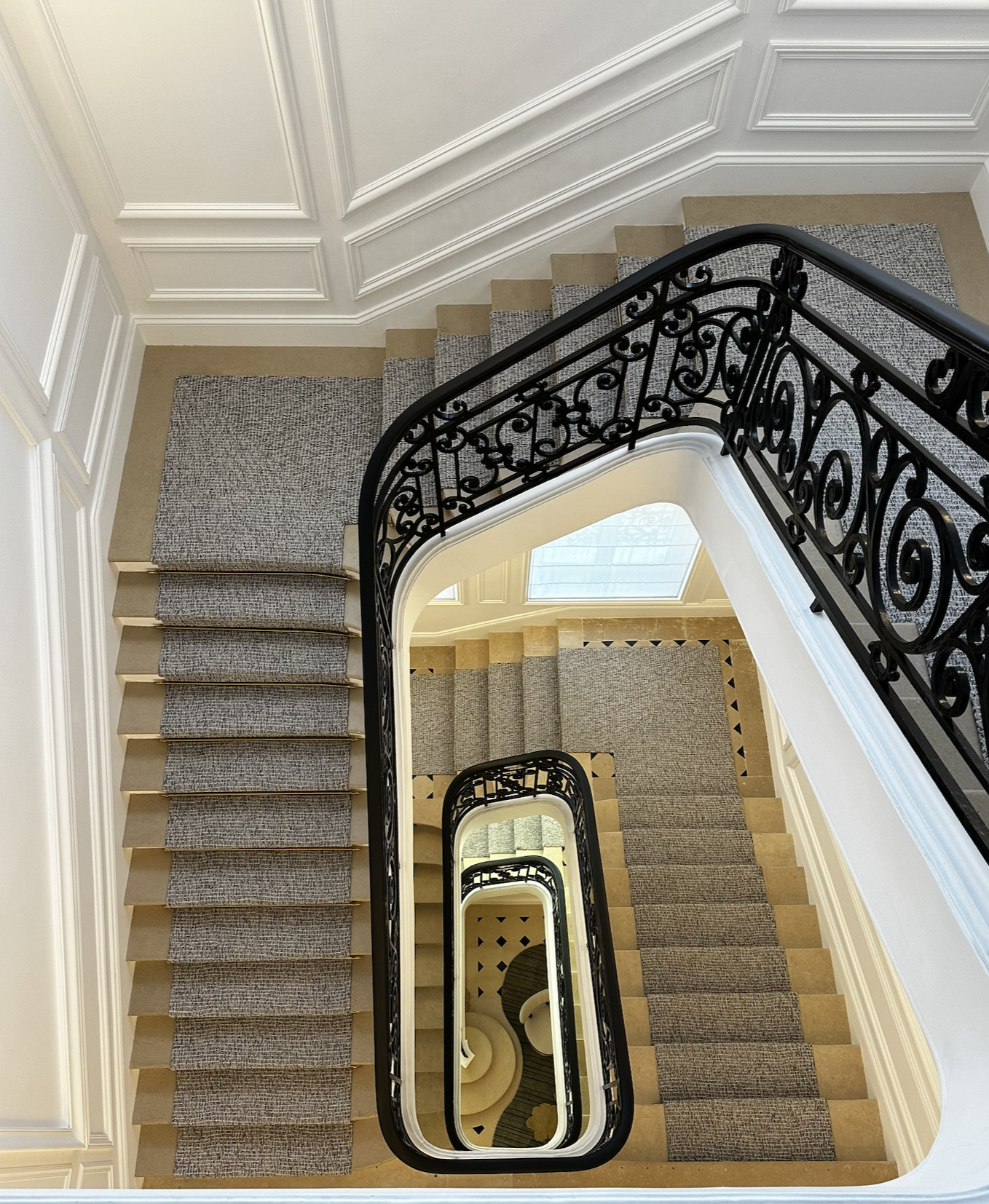
Dior fell in love with the five-story neoclassical hôtel particulier, originally built in 1865 for Alexandre Walewski, Napoleon Bonaparte's first child. He died in 1868, months before it was finished, but his widow, Maria Anne Ricci Walewski, moved in and lived there until her death in 1912. It passed through a few more hands until 1939, when it held the Coralie Couture maison de Chapeau, which luckily departed in the autumn of 1946
He quickly took possession and worked to restore and decorate the interior in a Louis XVI meets 1910 style in his favorite gray, pale pink, houndstooth, and creamy white. A rebirth of the Trianon, with all its elegance, in the heart of Paris's haute couture houses.
Now Christian had to build a staff, and he would take one of his most trusted confidants and “guardian angel” with him from Lelong, Madame Raymonde Zehnacker. Dior said, “She plays reason to his fantasy and order to my imagination, discipline to my freedom and foresight to my recklessness.” Madame Raymonde started as a fashion apprentice at 14, then worked her way up to become the true leader behind the Lelong label.
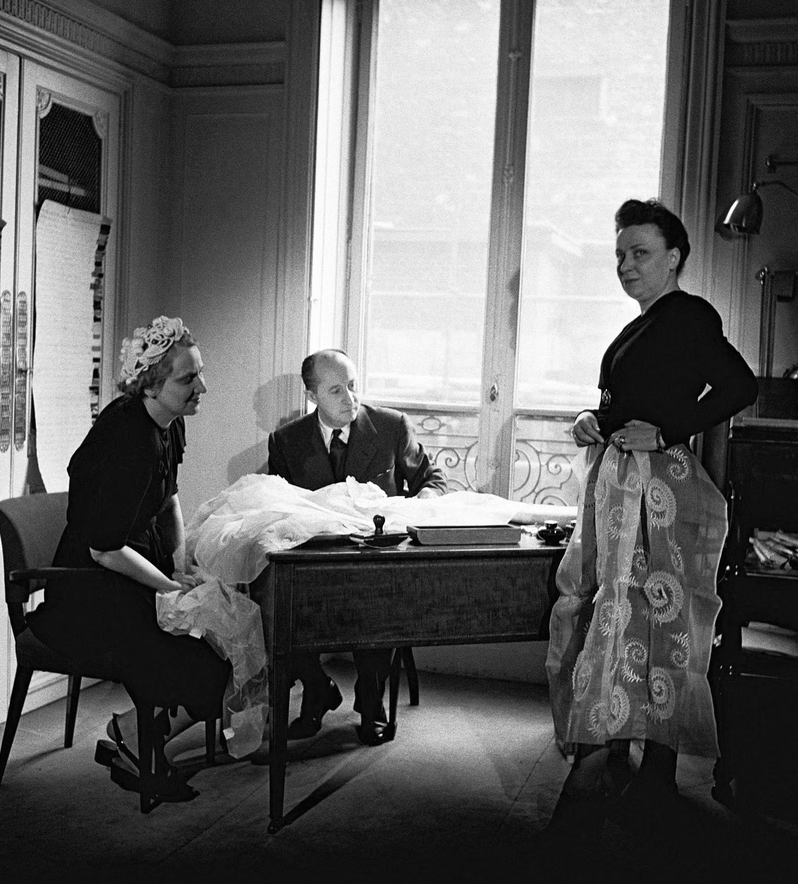
The relationship with Dior was so close that not only did she rule over his atelier with her satin glove, but she also helped oversee his entire life. Anyone wanting to get close to Christian first had to get through Madame Raymonde. She stayed at the atelier after his death in 1957, helping to guide the young Yves Saint Laurent, who carried the torch and vision of Dior.
The second of the trilogy of powerhouse women Dior brought on was Madame Marguerite Carré, who had worked at the house of Patou and Charles Worth. Dior called her Dame Couture, and she was the Dior whisperer. When it was time to create a new collection, Dior would retreat to his country home near Fontainebleau, or lock himself away in his apartment. Once he emerged, he would have hundreds of sketches that he would give to Madame Marguerite, who then handed them to the appropriate ateliers that would bring the designs to life.
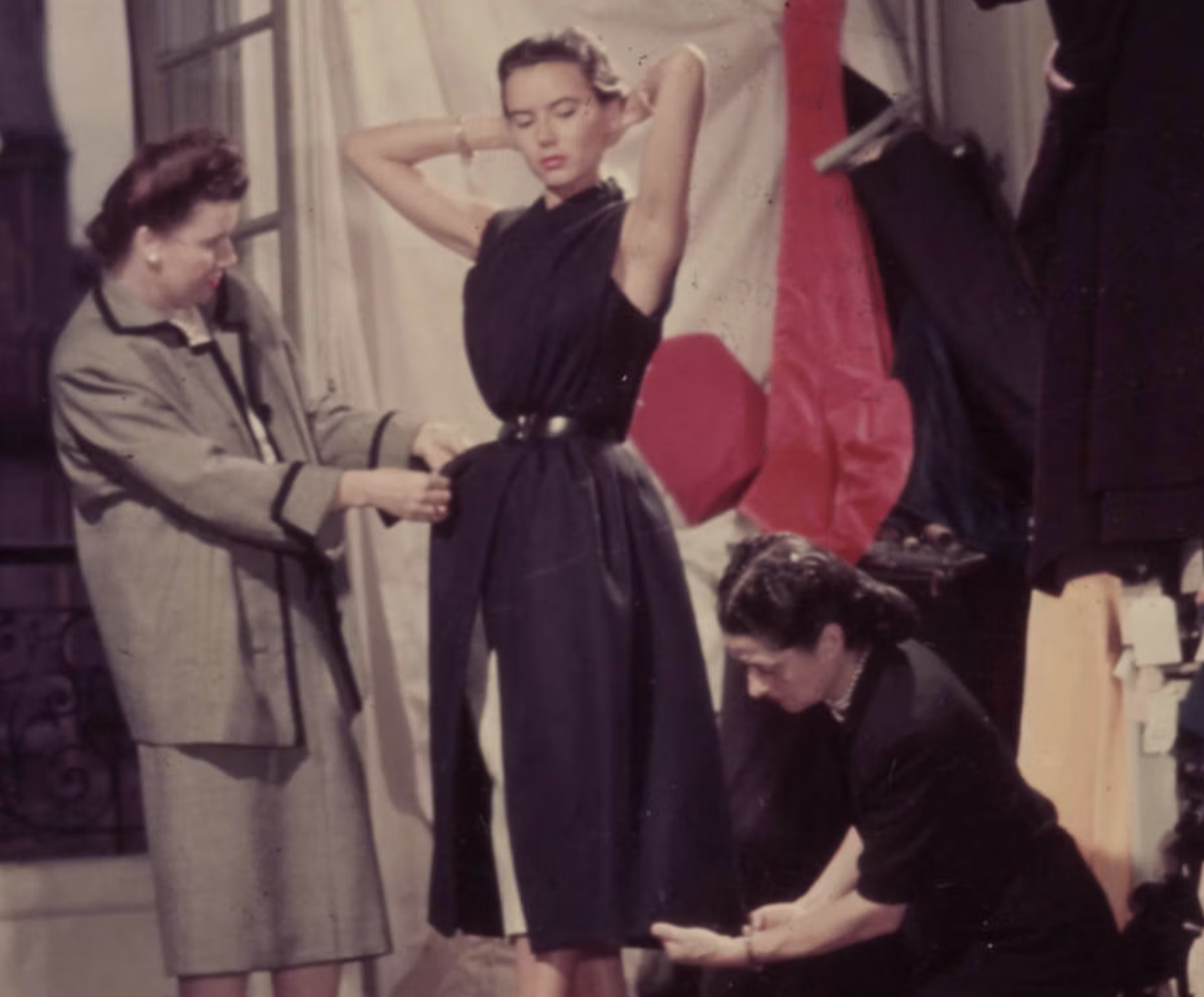
The last piece was Madame Mizza Bricard, the wild card. While Dior was more conservative in style and wanted to return fashion to a sense of civility, it was Bricard who brought the edge. Hired as the hat maker, she quickly became much more. As models dressed, she whisked into the dressing room, adding the icing on the cake with jewelry and hats. Dior trusted her voice so much that if she didn’t like something, he heard about it and fully trusted her opinion.
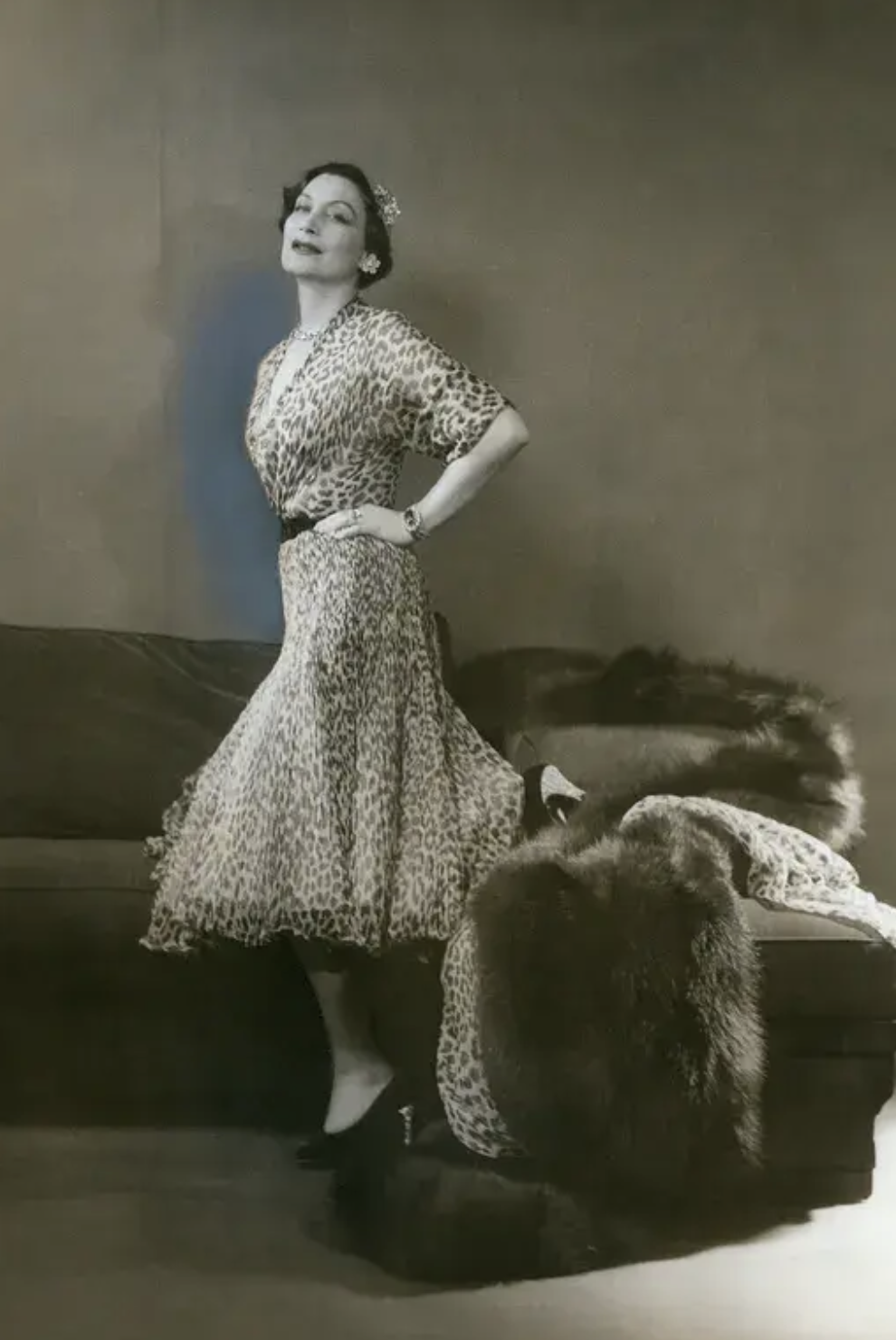
I mean really?! Mizza is an icon
Mizza was said to have had many husbands or lovers and was a bit of a 20th-century courtesan, living in expensive hotels and arriving daily in a veiled hat and always wearing leopard print; it is a neutral, after all. She’s my kinda gal.
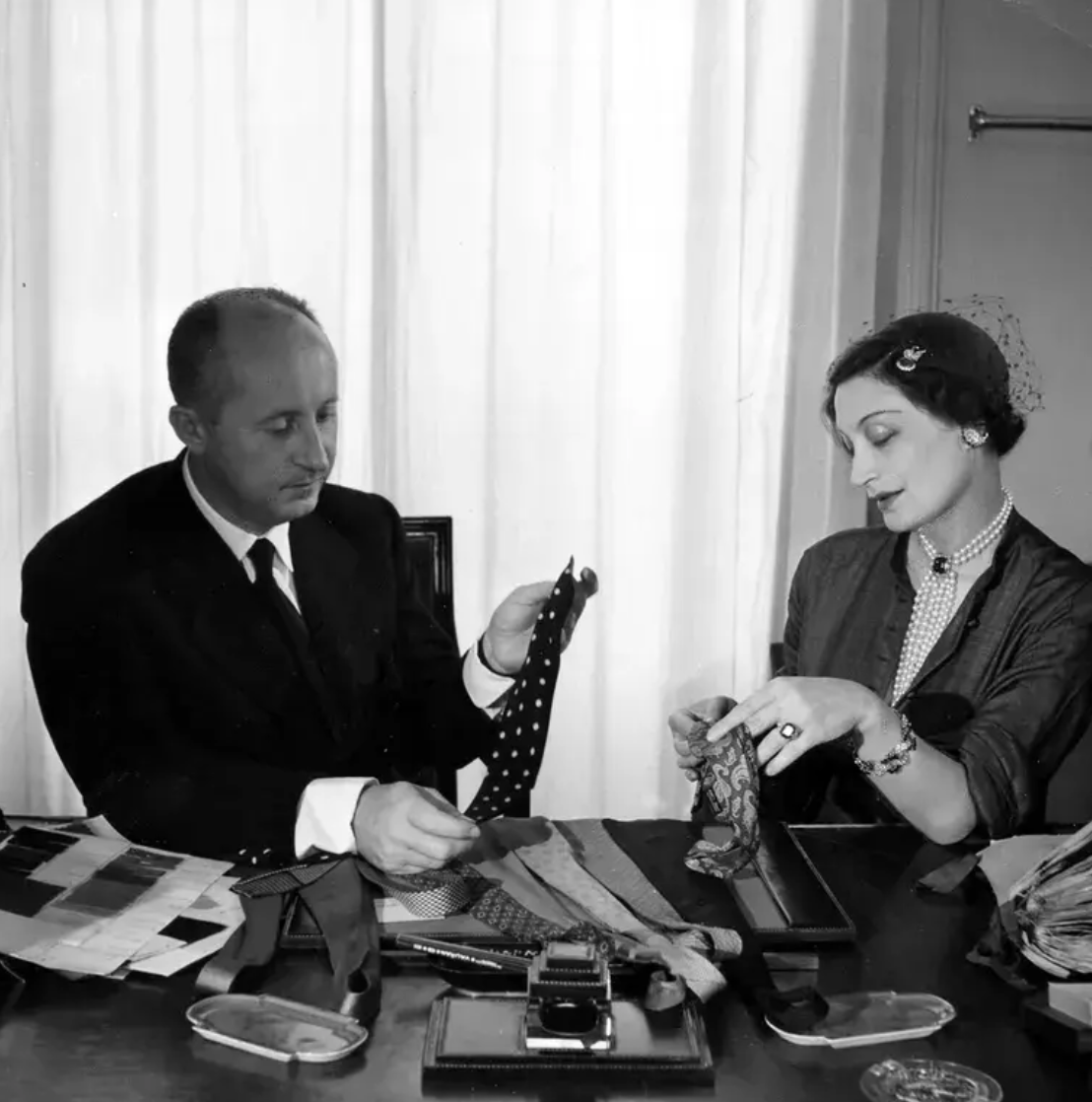
Little is known about these three women outside of the doors of Dior, but I will get to the bottom of it. For a man who was so devoted to his own mother and sister Catherine, it’s no doubt that he surrounded himself with strong women and counted them as his closest confidants.
From there, Madame Raymonde and Marguerite helped fill the ateliers with seamstresses and brought on their first tailor, Pierre Cardin. By the first collection in 1947, the staff numbered more than 60 people; in less than nine years it would be a few thousand.
Next came the models. In a mid-20th-century Haute Couture atelier, you won’t find racks of dresses and designs; models wore the pieces. The day would be filled with appointments by loyal clients, and the models would parade out in looks. If a client chose something, they would try on the piece, or you would take their measurements, and they would return later for a fitting.
After the war, many young ladies needed a job, but the top models were already snatched up by the other houses, and Christian didn’t want to take girls from his fellow designers. Dior had an idea to place an ad in the paper. It was November 6, 1946, and the same day it was announced that all of the brothels of Paris must be closed. When Christian arrived at the door that morning, the “unmistakable cohorts of ladies of the streets” were waiting, as Dior said in his autobiography. He went on to say that Madame Raymonde was appalled but he wanted to see each and every one of them.
In the end, he found one lovely young lady, Marie Thérèse, who “became one of our best models”. Although at a special showing of his debut pieces to close friends, the sweet Marie Therese was the first model to step out into the room of eager visitors and fall to the floor. She recovered and went on to model daily in the atelier.
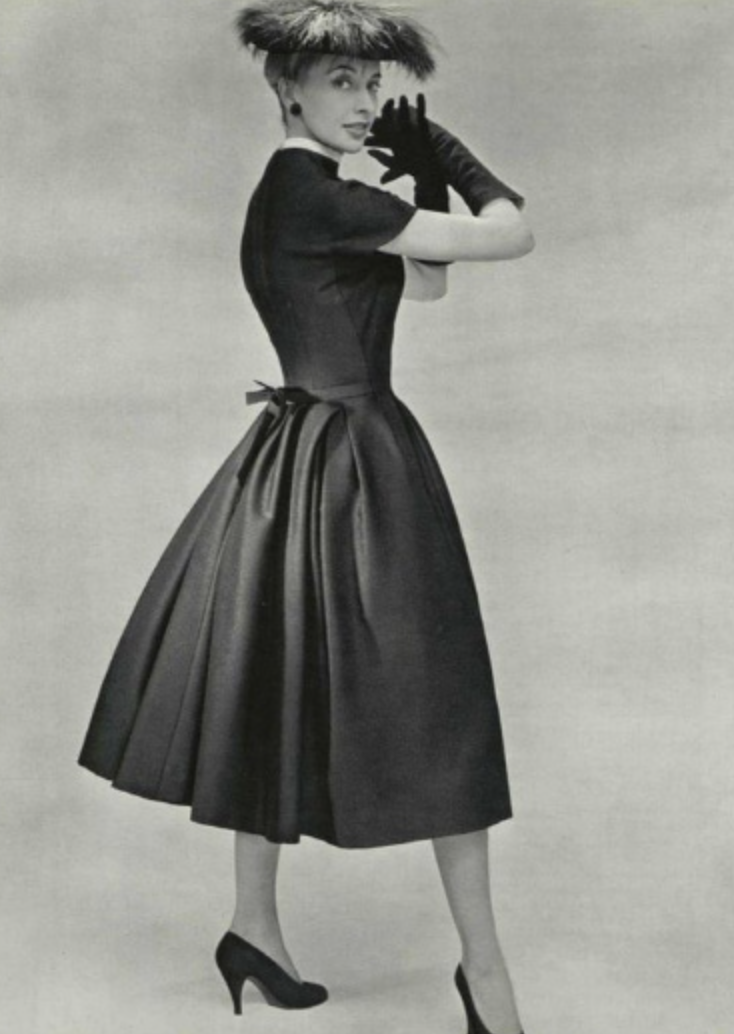
Marie Thérèse for DIor
Dior remained working for Lelong until December 1, just two weeks before his own house opened. The two had a very close friendship, and Lelong would be there to support him at his very first show in the start of 1947.
The doors opened at 10:30 am on December 15, 1946, with Dior showing a few of his in-process creations for his close friends. The word quickly spread across Paris that what they witnessed was a fresh and needed vision of fashion in the postwar years.
As the house expanded quickly, Dior purchased the neighboring building at 32 Avenue Montaigne, and eventually 13 rue François Ier around the corner, plus the stables on the corner, which were later transformed into a 7-story store and offices.
A few short months later, the New Look would take the fashion world by storm, revolutionize fashion, and build an empire.
Christian Dior would keep that cast-iron star in his pocket, along with other lucky charms, including two hearts, a gold medallion, and, always, a sprig of lily of the valley.
To this day, both the star and the lily remain essential elements in Dior's collections.
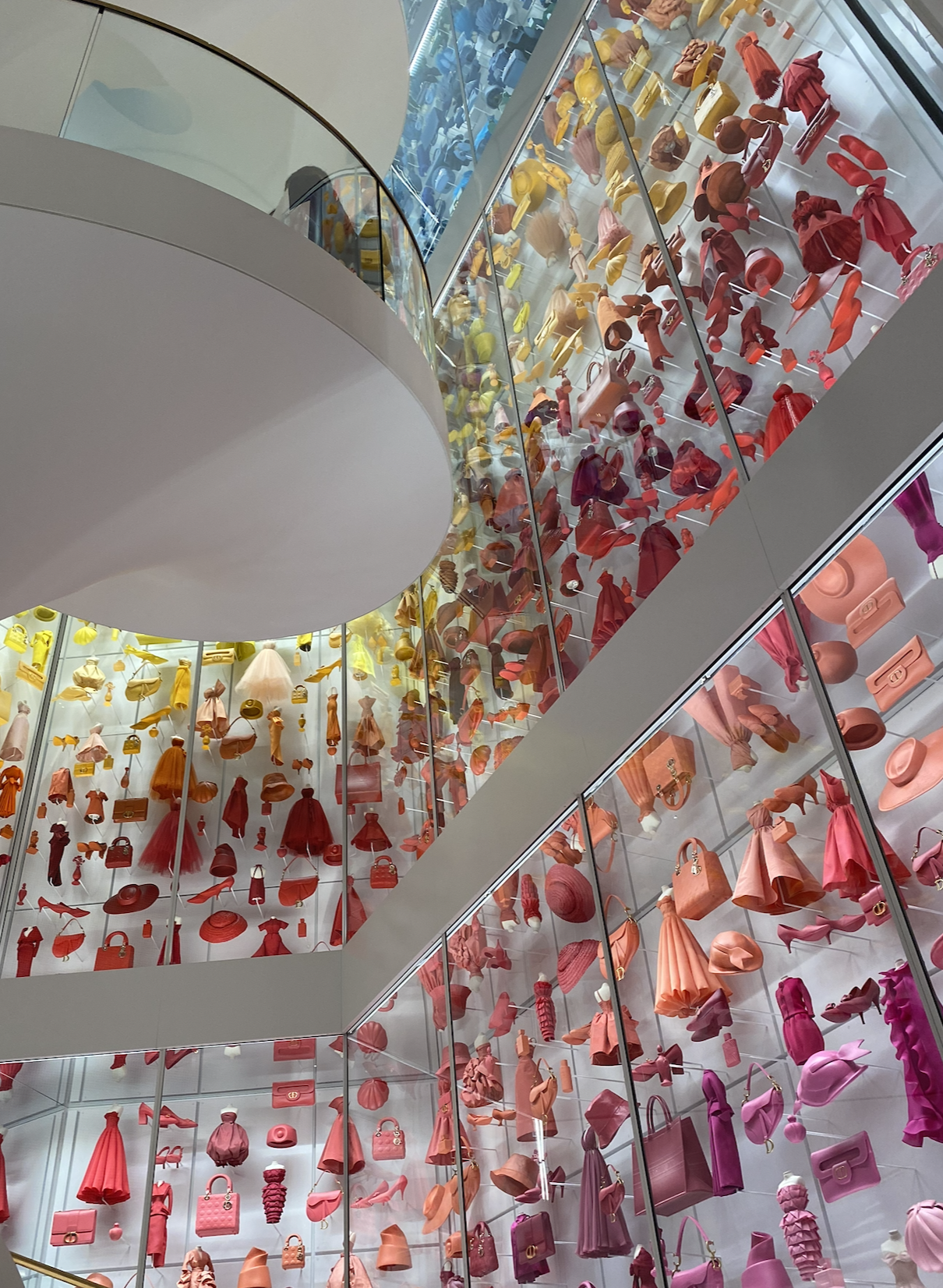
La Galerie Dior
At the Galerie Dior museum in Paris, you can find a replica of the star at the start of the exhibition dedicated to his life.
In 2017, the Musée des Arts Décoratifs held an unforgettable exhibition dedicated to the first 70 years of the house of Dior. The same exhibit traveled around the world for years. I will never forget walking into the nave of the Musée des Arts Décoratifs and seeing all the incredible pieces. I thought few things could top that, but the Galerie Dior does.
Even if you are not a fashion fan, it is still worth seeing. It follows the history of Christian Dior the designer himself, and what the label has become. It's a multimedia wonder filled with stunning fashion. Open Wednesday- Monday, 11 am - 6 pm. They close for a few weeks every 3 or 4 months to completely recreate each room.
Tickets are highly recommended in advance and sell out a month in advance. You can arrive early and wait in line if you don’t have tickets.
You can also head out to Normandy and visit the former childhood home of Dior,
Les Rhumbas. Purchased by the city after his father lost most of his money in gambling to open the gardens to the public. Since 1997, it has served as a museum dedicated to Dior and focusing on Dior perfume

Listen to the full episide by clicking on the image