On February 25, 1841, Pierre-Auguste Renoir was born in Limoges, France, into a large family. Moving to Paris in 1844, the Renoir’s lived on the Rue de la Bibliothèque, steps away from the Louvre. The street was removed during the construction of the Rue de Rivoli, where the Fondation Cartier is today.
At just 13, he entered Lévy Frères porcelain co as an apprentice, learning to paint tiny floral elements on porcelain to help support his family. In the evenings, he took free drawing lessons from sculptor Louis-Denis Caillouette. He would go on to paint fans and window blinds and work with his brother Henri, who painted heraldic coats of arms. Throughout his adolescence, he also took singing and music lessons and once thought that would be the creative direction he would take, but, as we know, it was not.
In 1860, he entered the Musée du Louvre as a copyist, where he was drawn to Renoir, Watteau, and Boucher, artists who would have a major impact on future Impressionists. I am often asked what time in history I would want to travel back to, and I think it would be the 19th century, and of course, to be inside the Louvre. Manet, Morisot, Monet, Degas, Sisley, Renoir, and so many more spent their days in the Louvre copying the paintings of the masters as they perfected their own technique.
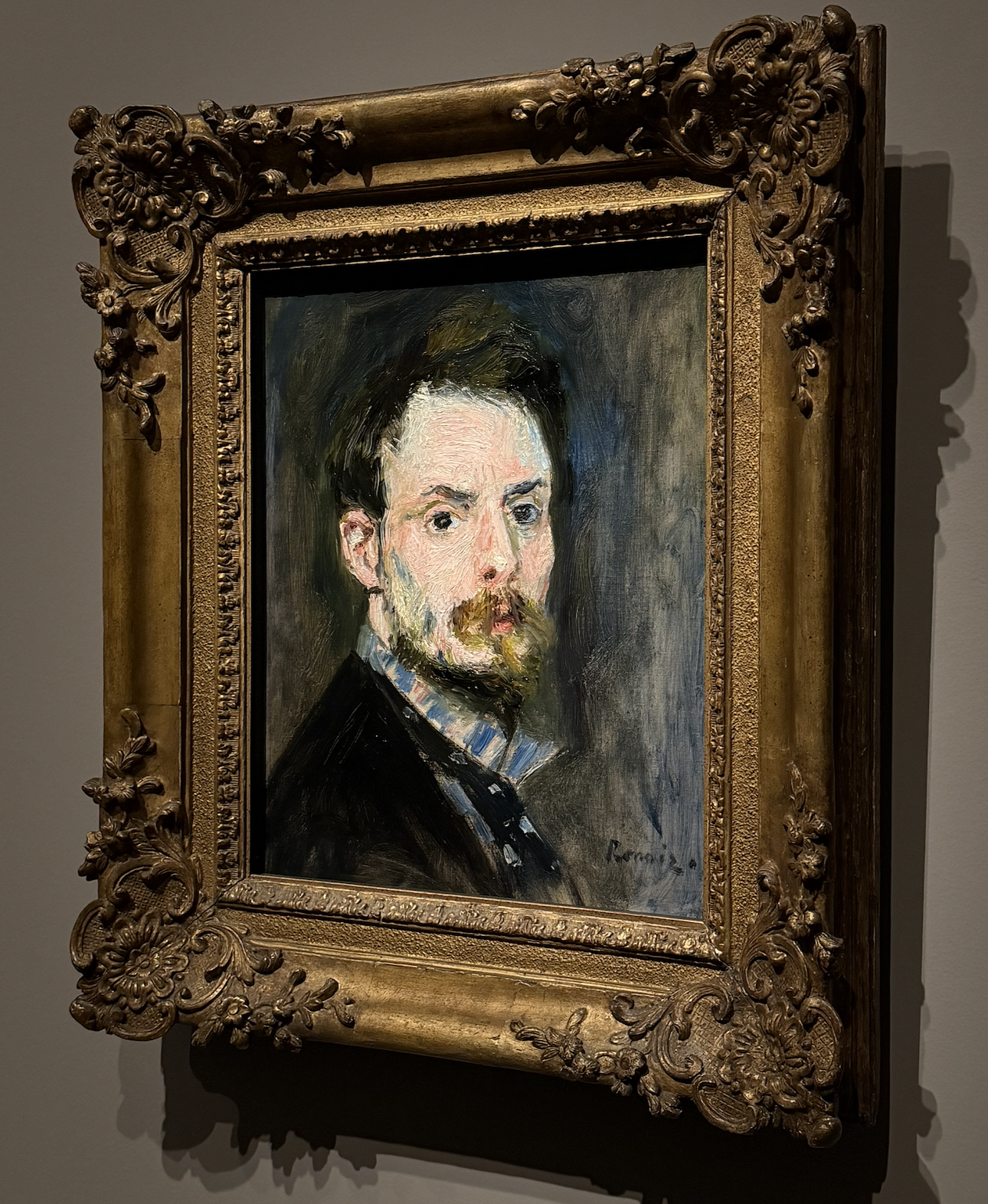
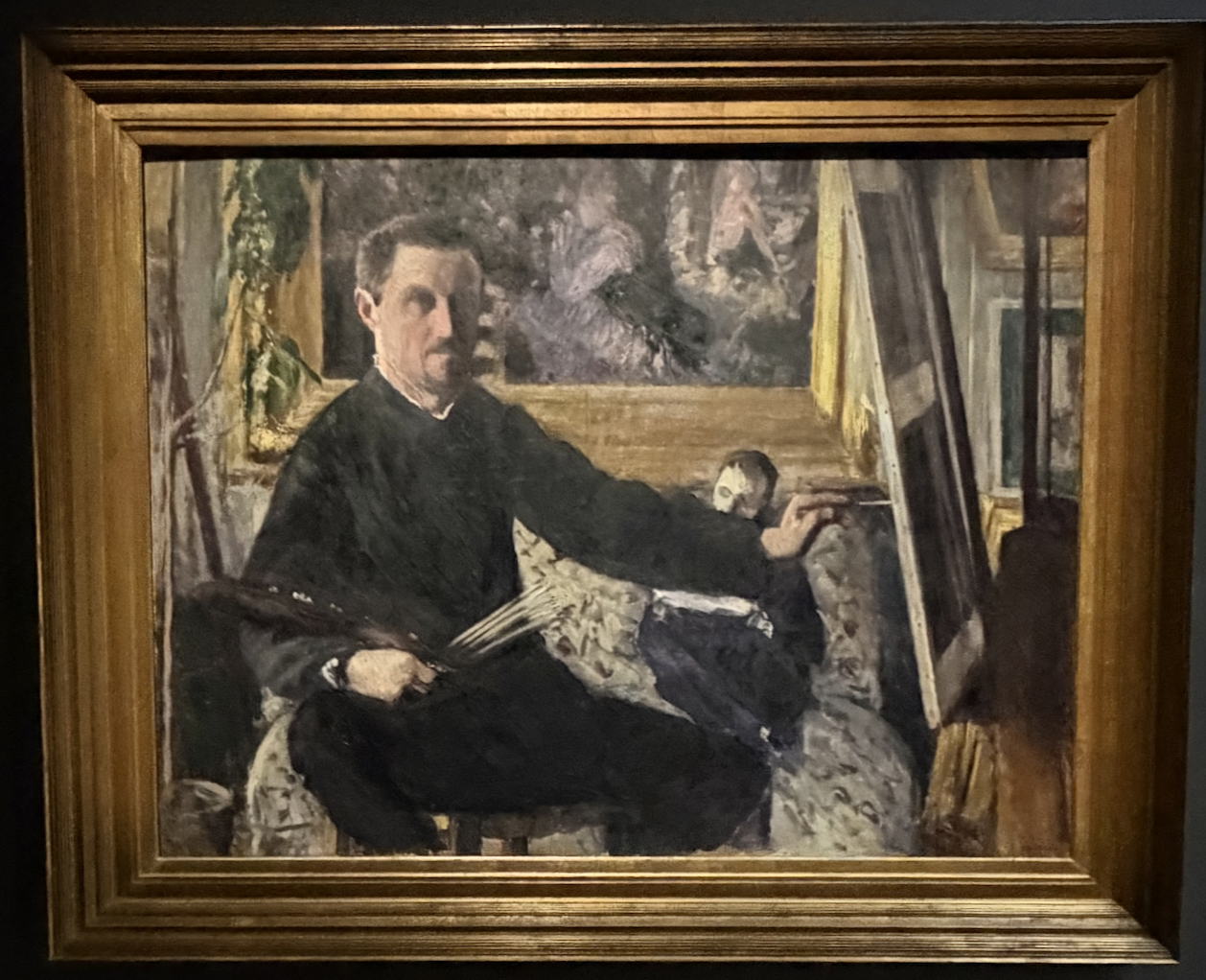
Self Portrait 1875
In 1843, Swiss artist Charles Greyer taught classes at the École des Beaux-Arts and opened his own studio on the Rue de Vaugirard, blocks from the Jardin du Luxembourg. In 1861, Renoir walked through his door and met fellow artists Claude Monet, Frederic Bazille, and Alfred Sisley
Renoir and Sisley ventured out to the forest of Fontainebleau, painting landscapes, but unlike his fellow future Impressionsts he didn’t take the countryside and en plein air painting. A close friendship with Claude Monet led the two artists to paint together, including portraits of each other. A Renoir portrait of Monet is often on display on the 5th floor of the Orsay.
Renoir's first submission to the academic Salon was in 1863 and was quickly rejected, as were most of the soon-to-be Impressionists. The same year, artists' complaints reached Napoleon III, who commissioned a new exhibition, the Salon des Refusés. In 1864, accepted for his painting of Esmeralda from Victor Hugo's Notre Dame de Paris. Immediately after the exhibition, he destroyed it as it was critically panned.
In 1865, the jurists of the Salon relaxed the rules and accepted a few more Impressionists, including Manet’s Olympia and Renoir's, Portrait of Madame M.W.S., and Summer Evening. In 1868, he exhibited in the Salon at the Musée du Louvre. Lise with a Parasol appeared but brought him very little recognition. After a decade of strife, the famed Salon began to fight back against the Impressionists, and in response, they banded together to create their own show, the Impressionist Exhibition of 1874.
On December 27, 1873, Renoir and his fellow snubbed artists met for the first time to organize an exhibit of their works. The Société Anonyme des artistes peintres, sculpteurs, graveurs, etc., was a group of artists who were being turned away from the official Salon. In the spring, the first exhibition of the artists would be held at 35 Boulevard des Capucines, in the former studio of the photographer Nadar.
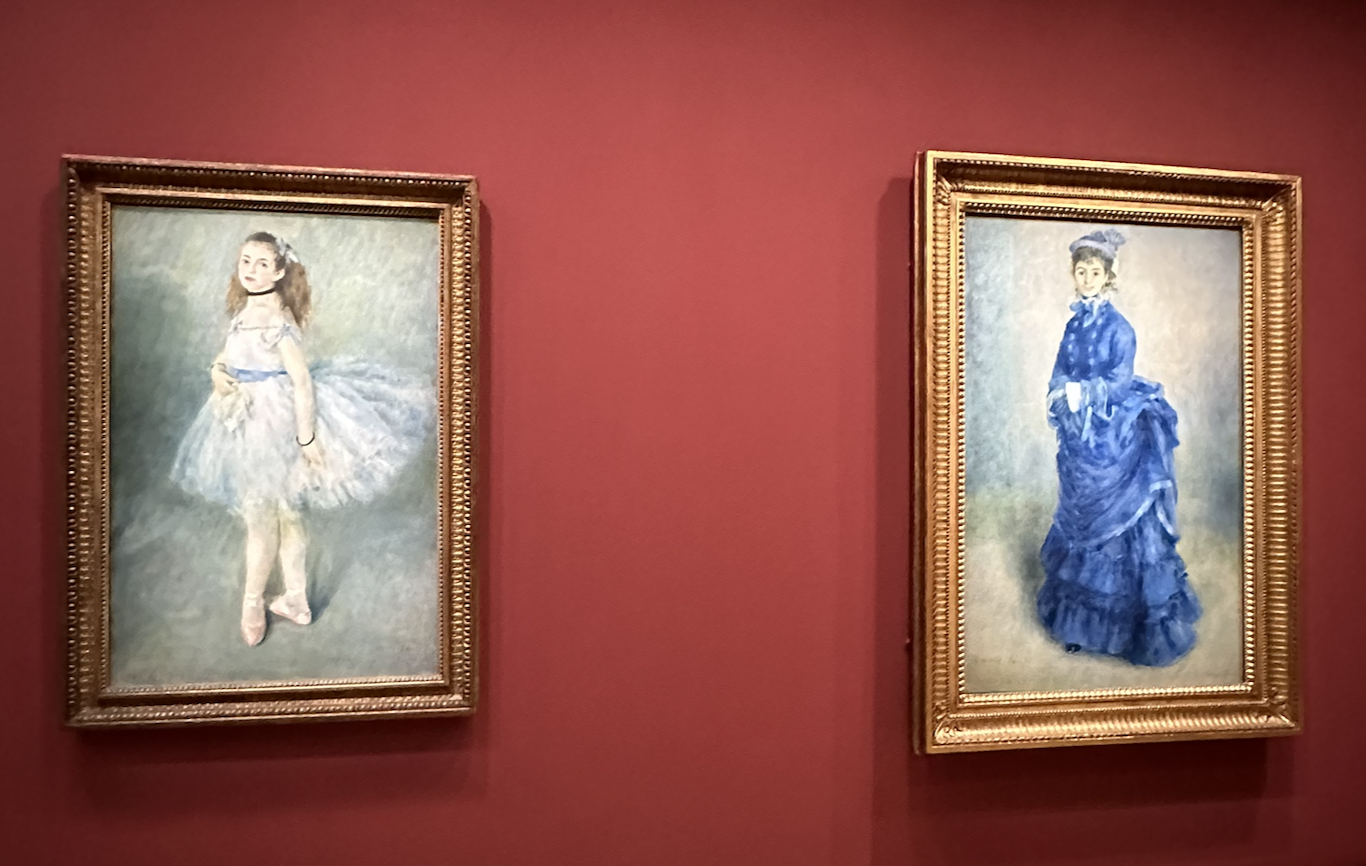
On April 15, 1874, thirty-one artists exhibited, including Renoir, Monet, Degas, Pissarro, Sisley, Cézanne, and Morisot, but not Manet. The exhibit ran for one month, concluding on May 15, and 3,510 visitors mostly visited to make fun of the event. Renoir exhibited six paintings and a pastel, including La Danseuse and La Parisienne, that opened the exhibit. Both figures, seen head to toe, something Renoir rarely did in portraits, have a softness that Renoir captured so well.
Renoir was one of the few artists who continued to participate and be accepted at the Academic Salon and Impressionist exhibits.
The early years spent in the Louvre influenced his paintings and resurrected the “galanterie” style of the Rococo period.
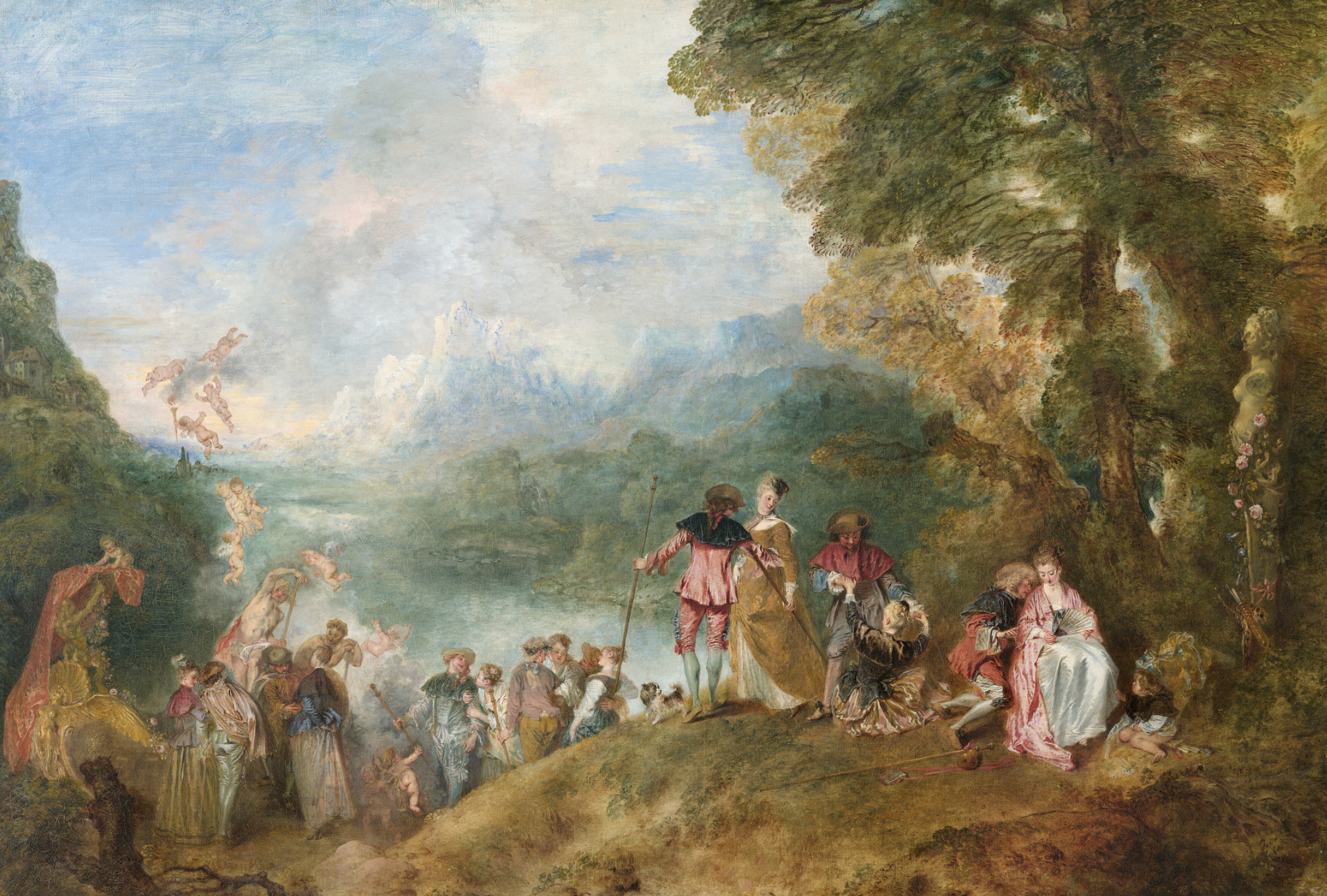
Watteau, Voyage to Cythera
Growing up during the reign of Napoleon III as president, then Emperor, and the extravagance of the Second Empire led to the Siege of Prussia and the Commune that brought incredible hardship for everyone.
On August 26, 1870, Renoir was drafted into the 10th regiment of the French Army in the Franco-Prussian War, serving until March 10, 1871. Following the fall of Napoleon III and the Bloody Week of the Commune in May 1871, Paris slowly crawled out of the darkness into the Belle Époque. Everything began to change.
Parisians returned to the cafes and music halls once again. There was a lightness to the city, and the social rules began to relax.
The year 1876 was a few years into what we call the Belle Epoque, the beautiful era in France. The gayest of times in Paris. Woody Allen’s Midnight in Paris depicts the period at Maxime’s with Gauguin and Toulouse-Lautrec living it up at a can-can. Traveling back to that night, Adriana says it was the best time to be in Paris, and she wanted to stay.
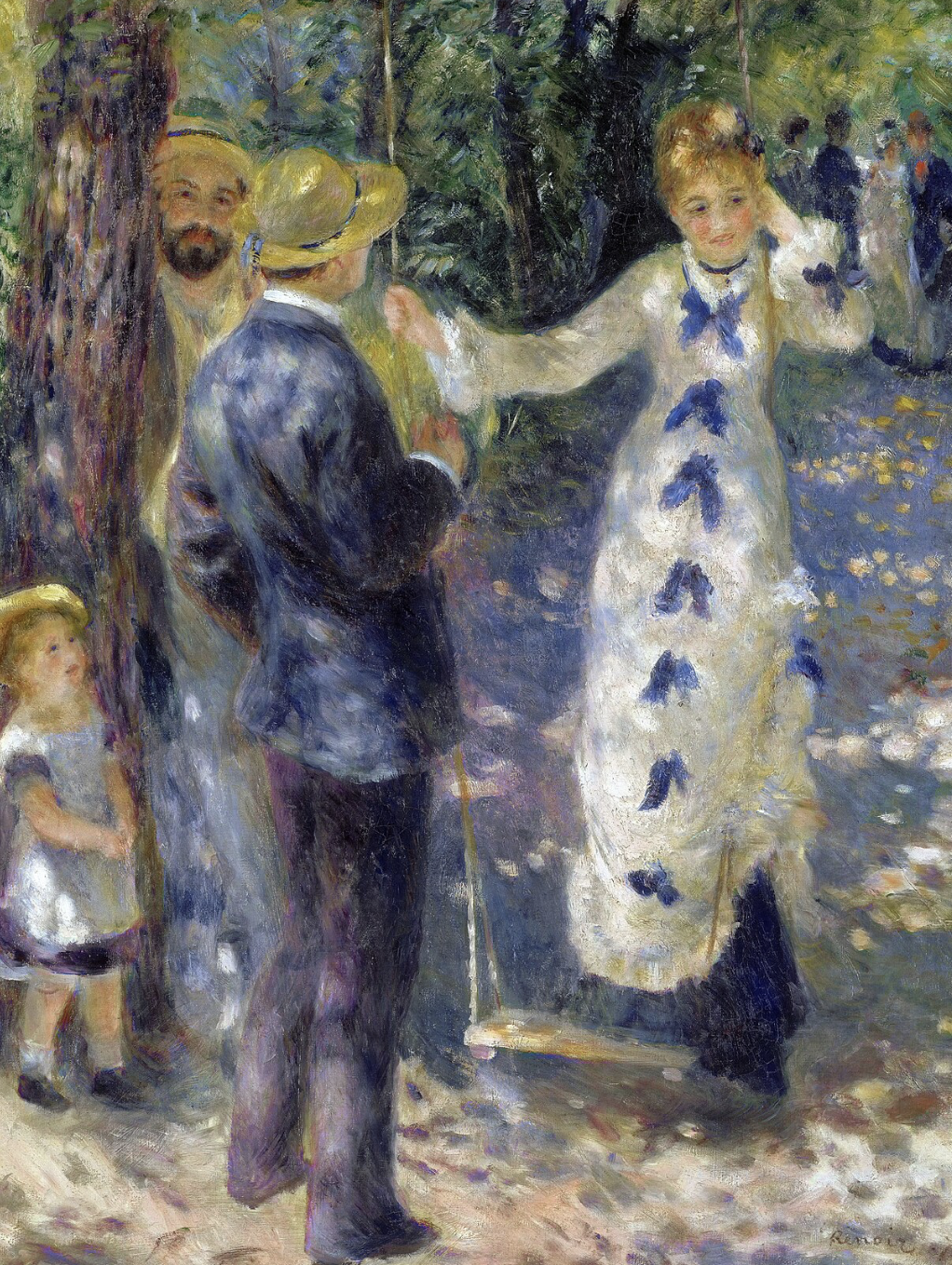
One hundred and fifty years ago, in the spring of 1876, Renoir rented a house on the slope of th Butte Montmartre, behind Sacré-Cœur, on the Rue Cortot. Today, it is the Musée de Montmartre, and you can visit and step right into one of his famous paintings, La Balançoire (The Swing), which was painted in the Jardin Renoir. The location was chosen by the artists for its proximity to the Moulin de la Galette, a guinguette just five minutes away.
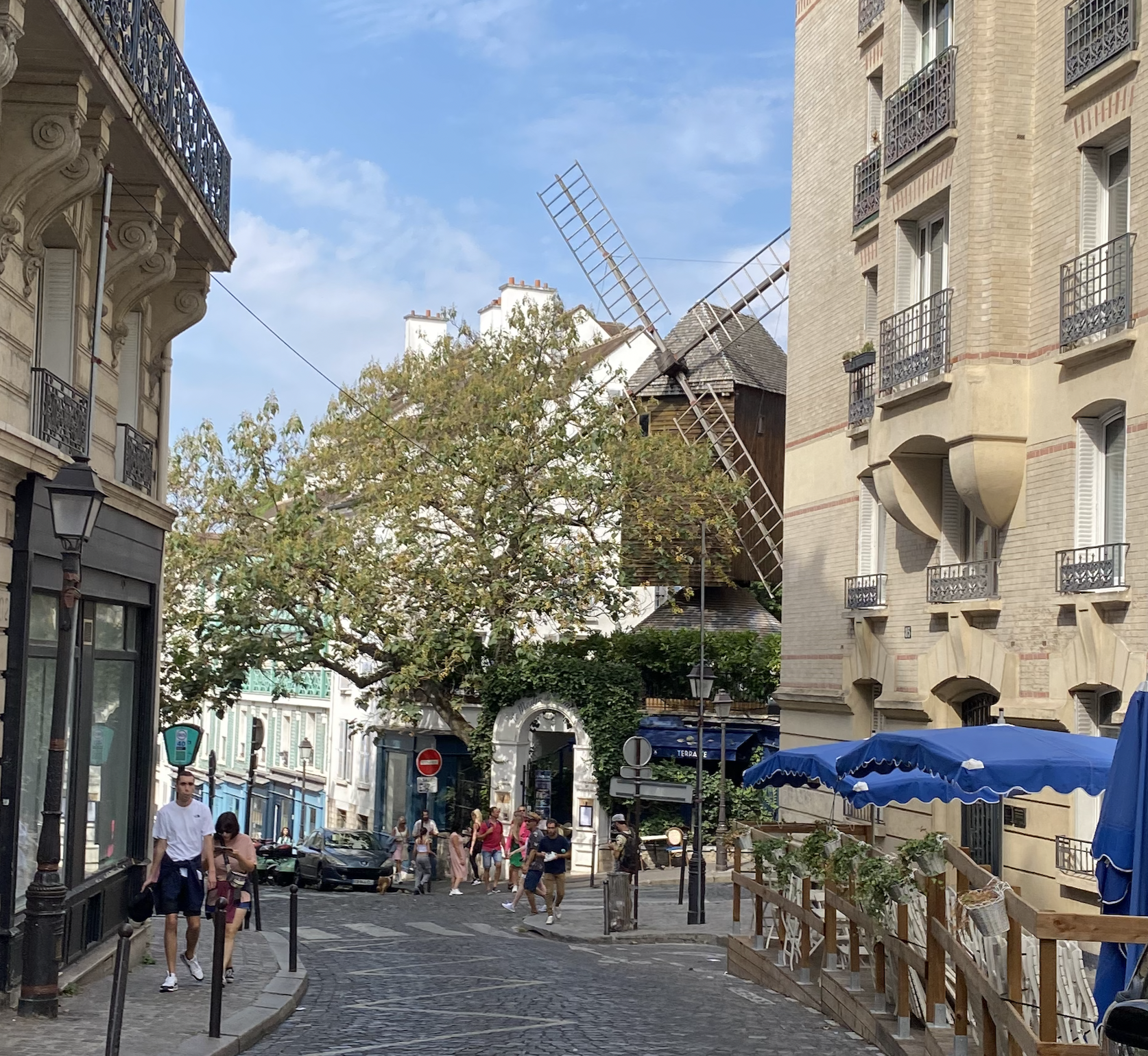
In the 17th & 18th centuries, the hill of Montmartre, outside the city of Paris, was covered with more than 30 windmills used to grind flour, pepper and spices. As early as 1622, on the rue Lepic that snakes up the hill, two windmills sat. The Bluefin and Radet. In 1809, the Debray family purchased the plot of land that stretched a few blocks further than the restaurant sits today.
The Radet windmill, which still stands today, has been in many places on the hill. Dismantled and moved a few times, including once by the Debay family, who moved it into a garden, and again in 1924, when it became nothing more than a decoration installed on the roof of the restaurant.
Head down Rue Lepic a few doors, and you will find a white stone wall that holds back the lush green trees and bushes. Rarely open to the public, the garden hides the Moulin Blue-Fin inside and shows how far the guingette stretched and was filled with artists and working-class residents of Montmartre on Sunday afternoons.
Nicolas-Charles Debray turned the slightly run-down location into the Bal Debray in 1833. Each Sunday afternoon, people would gather and eat small cakes made from the flour of the mill with a glass of donkey milk. The attraction became quite popular, featuring music and dance lessons, and the milk eventually gave way to the wine made nearby. A platform was built by Moulin Blue-Fin, where they could even take in all of Paris while listening to the music below.
Only open on Sundays and public holidays, everyone from van Gogh to Toulous Lautrec and the dancers of the Moulin Rouge could be found. The weekly event was a break from the once-rigid rules of society. Women were now seen dancing with men they weren’t married to and even arriving on their own. Something they couldn’t do on the streets of Paris. A new “free love” and a new way for people to meet were beginning to emerge in Paris and would find its way onto the canvases of Renoir.
Many had painted the famous windmill include Vincent van Gogh and Maurice Utrillo, but Renoir captured a different view without the blades.
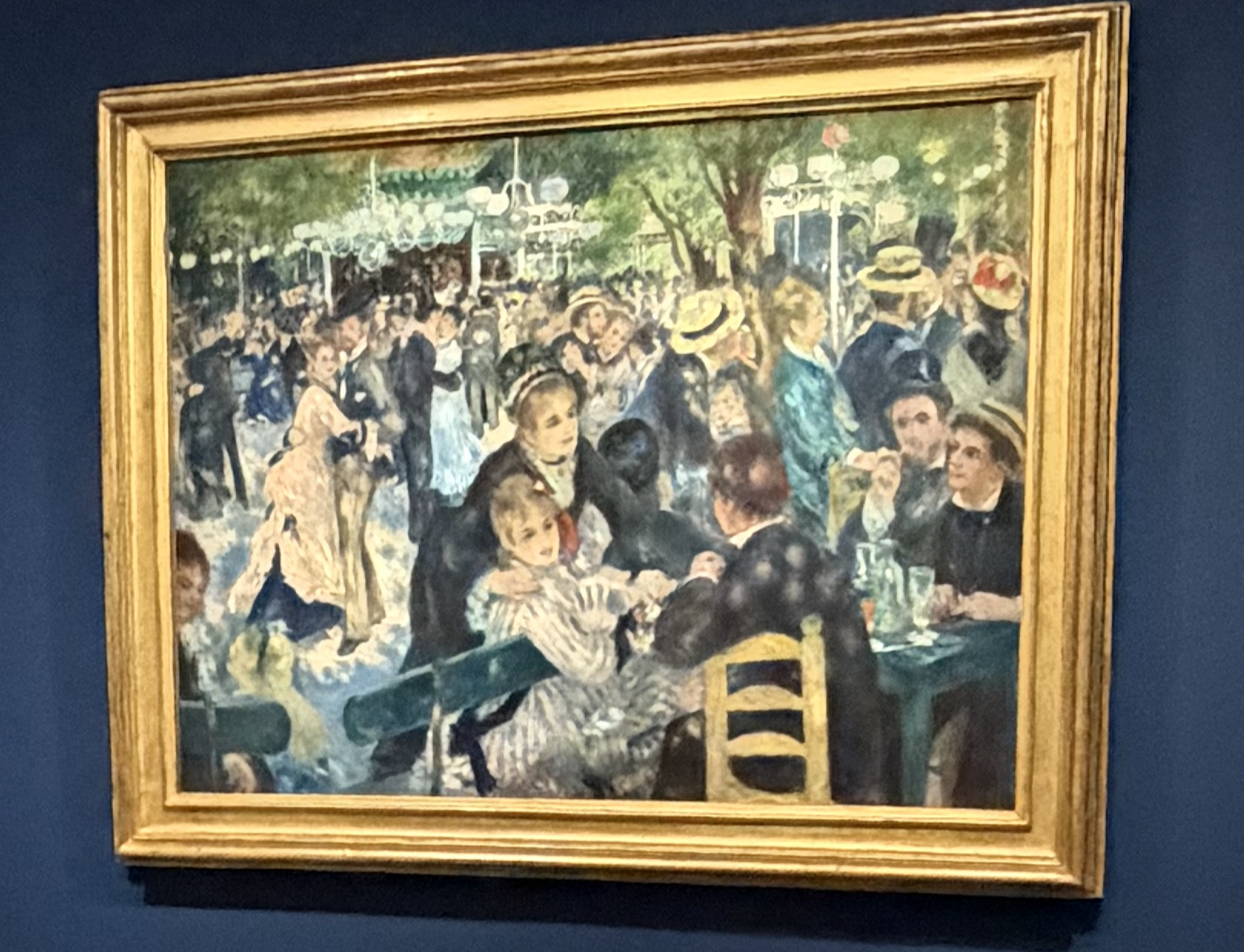
In his young formative years, Renoir often visited the largest painting in the Louvre by Veronese, the Wedding Feast at Cana. Painted in 1563, Veronese filled the large canvas with as many figures as possible against an architectural background. Of the more than 130 figures, we see Christ in the center, but Veronese purposely didn’t leave a legend of the whos who. It was also the paintings of Watteau who captured the scenes of the “fetes galantes” of the Rococo period of excess and pleasure under the Regency and later Louis XV. The famous Voyage to Cythera, painting by Watteau in 1717, combined with the idea of the Wedding Feast rootted an idea within Renoir.
n the late spring of 1876, Renoir set up a large canvas and an easel on a staircase overlooking the garden under the moulin and painted a scene of his friends enjoying a sunny Sunday afternoon. The current exhibit at the Orsay, which just opened on March 17th, has done a great job of sharing more insight on three of his group paintings.
In the Bal du Moulin de la Galette, he captured the Sunday afternoon gathering of his fellow artists enjoying a day of drinks, dances, and dancers as far as you can see. Models Margot and Jeanne, who also posed for The Swing, and her sister Estelle, in a blue striped dress, modeled the numerous female figures. For the many male figures, artists Georges Rivière, Henri Gervex, Franc-Lamy, and Norbert Goeneutte, who also posed for The Swing. Journalist, close friend, and frequent model Paul Lhote, as well as Pierre-Eugene Lestringuez, all stand out in this masterpiece by Renoir.
Look closely at the main figures; Renoir purposely connected them to each other through a glance or touch. In 1879, his brother Edmond said that “Auguste would settle down there for six months, building relationships with all the people of this little world, and their unique style… he will convey its frenzied motion with dazzling energy.”
Renoir showed it at the 3rd Impressionist Exhibition in 1877. No. 186 in the catalog received a lukewarm reception. Later that same year, wealthy artist, friend, and supporter of the Impressionists, Gustave Caillebotte, purchased the painting and kept it in his studio until his death in 1894, when his collection, or at least part of it, was accepted by the French State.
A recent acquisition of the Orsay of a self-portrait of Caillebotte, painted in 1879, includes a partial view of the Moulin painting in the background. This painting stayed within the family until sold at public auction in 1986
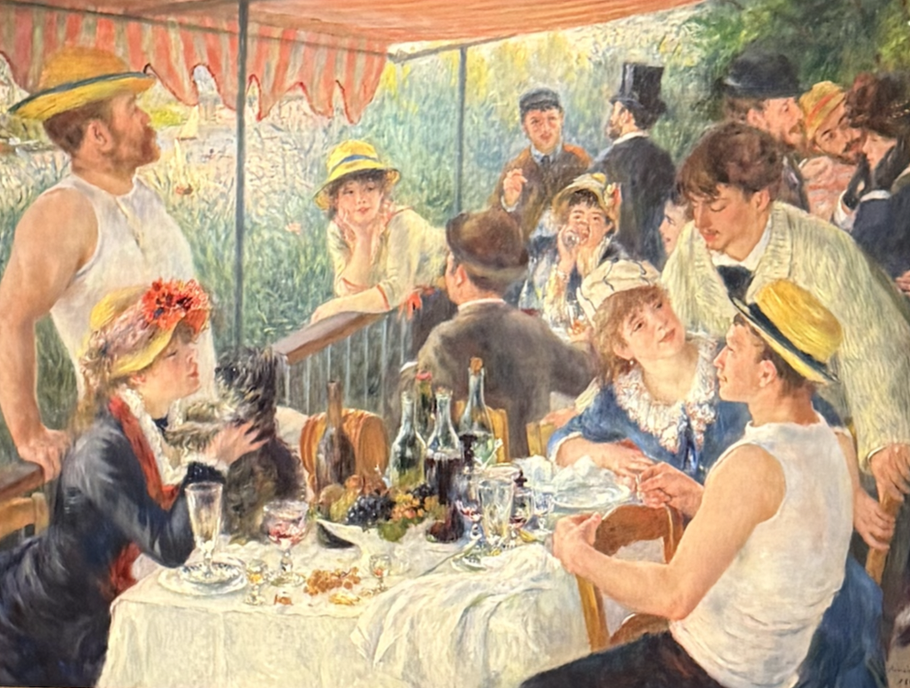
With his friend Claude Monet, Renoir would often visit the many lakes, ponds, and rivers surrounding Paris. His Impressionist friends would paint the scenery devoid of people, while he liked to imagine the banks of the Seine, or an island, filled with people enjoying a lazy, warm afternoon. In the 1870s, he discovered Chatou, the small town west of Paris, across the river from Reuil-Malmaison, with a small island that sits in the Seine. In 1837, the train line from Paris extended out to Chatou, opening the area to boating enthusiasts and artists. Between 1875 and 1881, Renoir produced thirty paintings, including his most famous, Le Déjeuner des Canotiers (Luncheon of the Boating Party).
In 1857, Alphonse Fournaise struck while the iron was hot and bought a small building on the island we know today as l’Île des Impressionnistes, to build and rent boats from. Over the years, he added to the house, including a restaurant and hotel, with the help of his wife and children.
Renoir discovered the island and wrote to friends saying it was the most beautiful place he had ever seen. Frequenting staying in the Fournaise hotel and bringing friends to model for him, including the entire Fournaise family.
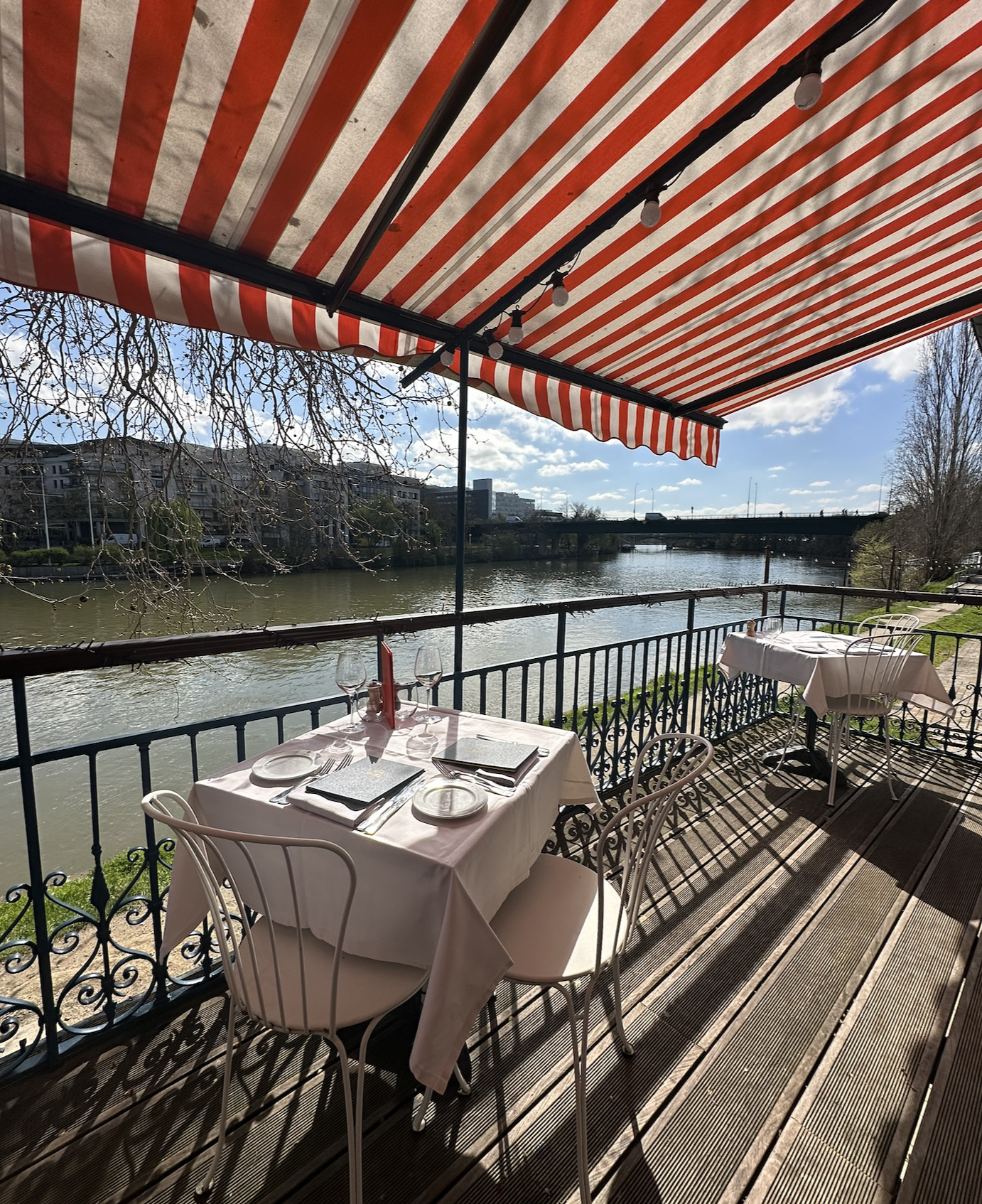
The balcony of the restaurant, with its tomato-red and white-striped awning, was added in 1877 and immortalized in Renoir’s painting. The well-known scene of figures follows the end of a long, leisurely Sunday lunch. Unlike the Moulin de la Galette, Renoir had not set up his canvas on the balcony for endless days, forcing his figures to hold the same pose; instead, it was pieced together one figure at a time, and we would never know that by looking at it.
Leaning on the railing are the owner's two children, Alphonse Jr and Alphonsine Fournaise. Aline Charigot, model and future wife of Renoir, plays with her dog at the table with model Ellen Andrée and a man who could be Gustave Caillebotte, while journalist Adrien Maggiolo leans over, rather closely.
Seated at the table behind with his back to the viewer is Raoul Baron Barbier, and model Angèle. Standing above, left to right, are poet and art critic Jules Laforgue and Charles Ephrussi, a wealthy banker, collector, and supporter of Renoir, who commissioned many paintings, including one of his daughter, stolen by the Nazis in WWII, and with quite a story. There are a few familiar characters that also posed for the Moulin painting, including Pierre Lestringuez, Paul Lhote and Jeanne Samary.
Again, he creates groups within the piece that interact with each other, giving it the very realistic look of an after-lunch gathering and perhaps a few bottles of rosé.
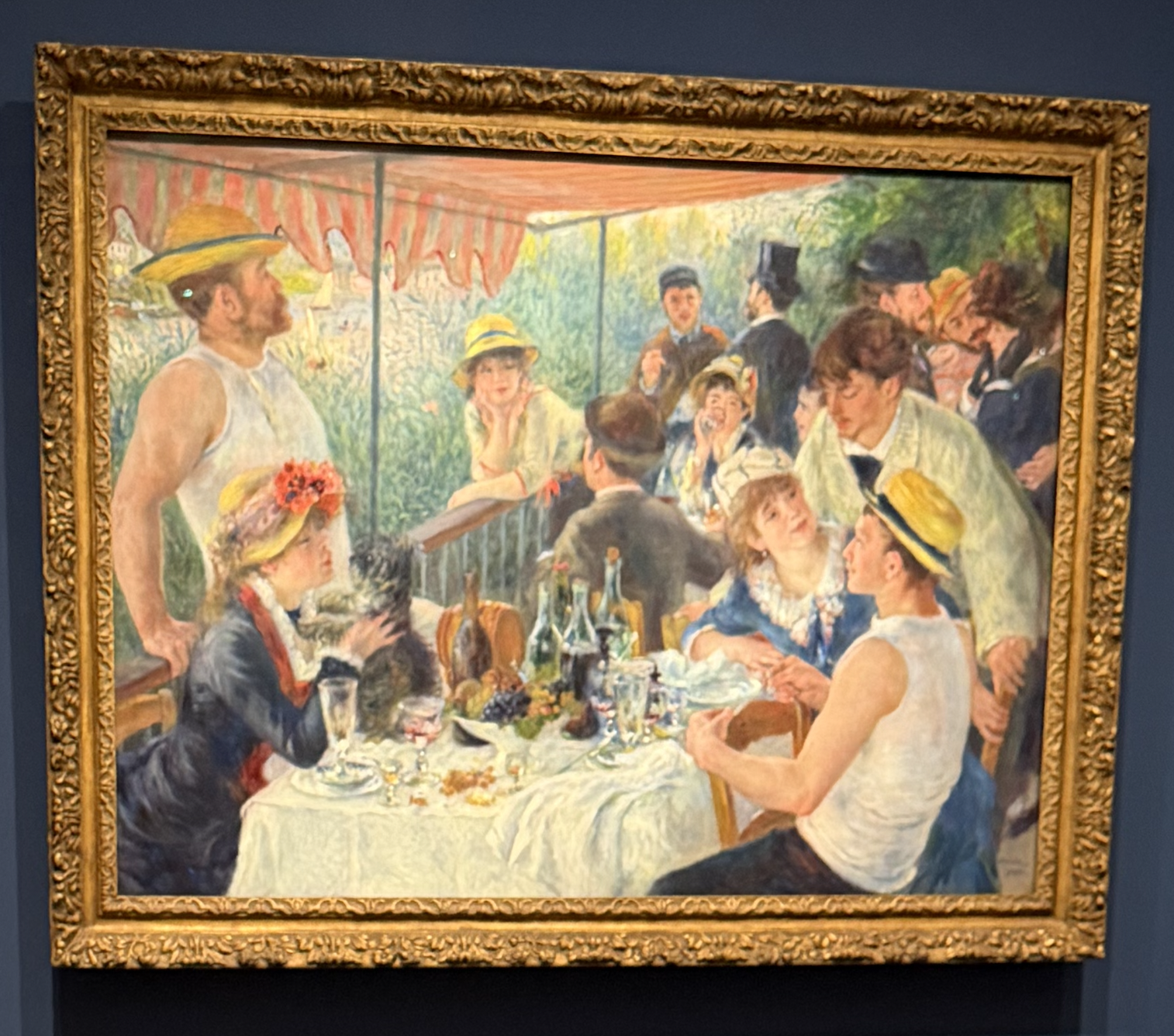
The painting was purchased on February 14, 1881, by Paul Durand-Ruel and featured at the 7th Impressionist Exhibition in March 1882. It remained with Durand-Ruel until his death in 1922 and was purchased the next year by Duncan Phillips and is held in the Phillips Collection in Washington DC.
The boating excursions took a hit at the advent of the bicycle at the end of the 19th century, drastically damaging the Fournaise business. The restaurant would close in 1905, and after the death of Alphonsine Fournaise in 1937, the property was split into rental units and fell into disrepair. The city of Chatou stepped in and purchased the building in 1979, saving it from destruction and continuing its heritage.
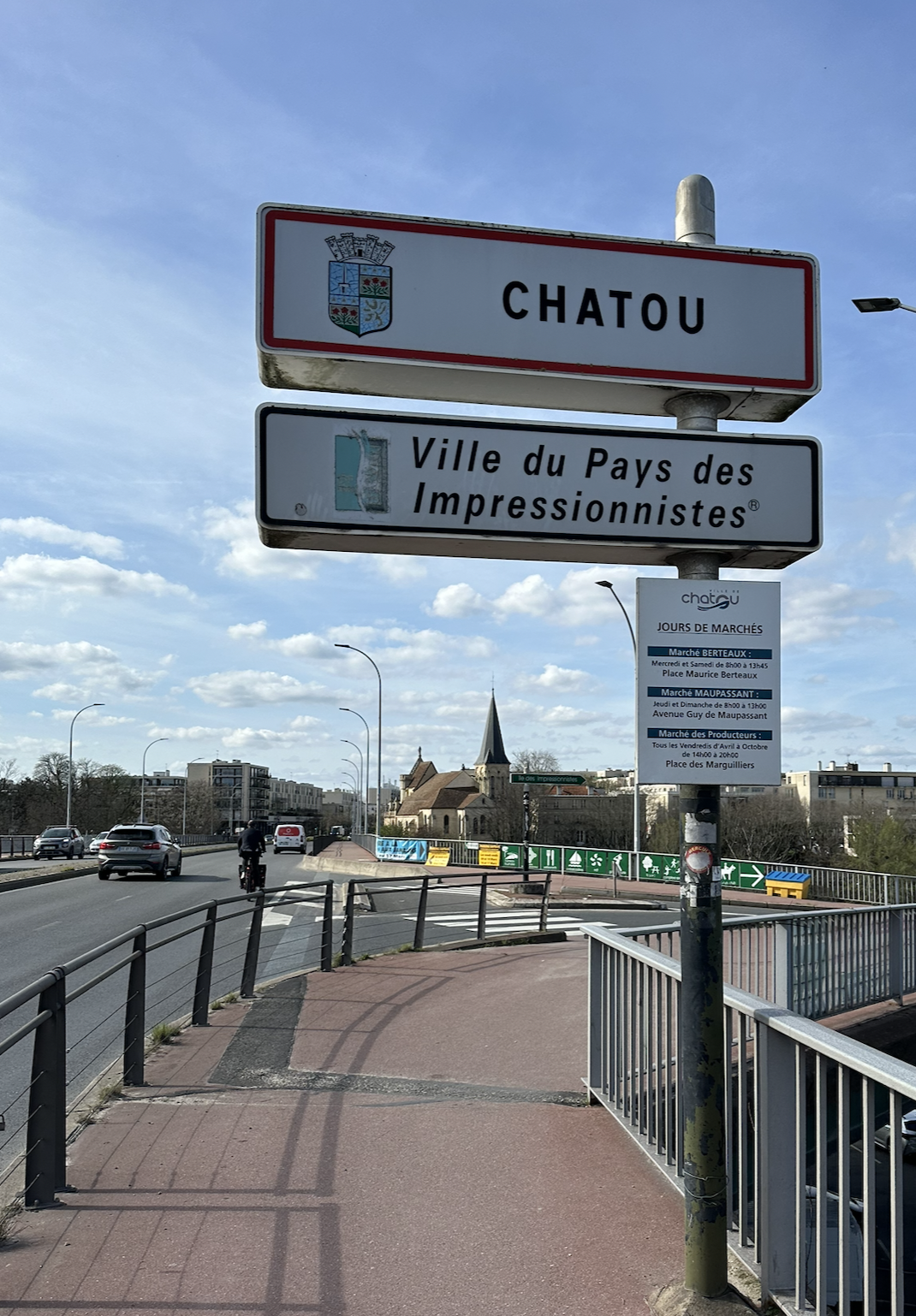
You can visit the fantastic restaurant at the Maison Fournaise on the Île des Impressionists, sit on the balcony, and see the same view that has barely changed in one hundred and forty-six years. Take a walk under the beautiful blooming wisteria and find a handful of plaques placed in the same location Renoir once painted, including a rendition of the piece, many of which are on display at the exhibit.
Most visitors are excited to see the Boating Party, which rarely leaves DC, but the one I had to find as soon as I walked in was the third of Renoir's trio of paintings, painted in 1883, known as The Dances. I was first drawn to these paintings after researching Suzanne Valadon's life many years ago. The model-turned-artist who had quite a time in Montmartre, modeling for Toulouse-Lautrec, Jean-Jacques Henner, Berthe Morisot, Théophile Steinlin to name a few, and a lengthy roster of lovers.
She first met Renoir in 1882 in Montmartre. The two would spend endless days in his apartment on Rue Saint Georges, and there might have been a more romantic involvement as well. Renoir imagined three life-size paintings featuring two figures dancing in different settings, inspired by his own Moulin de la Galette, painted six years earlier. Suzanne was originally going to pose for all three, but there was a bit of a disagreement with Aline, the then mistress but future wife of Renoir.
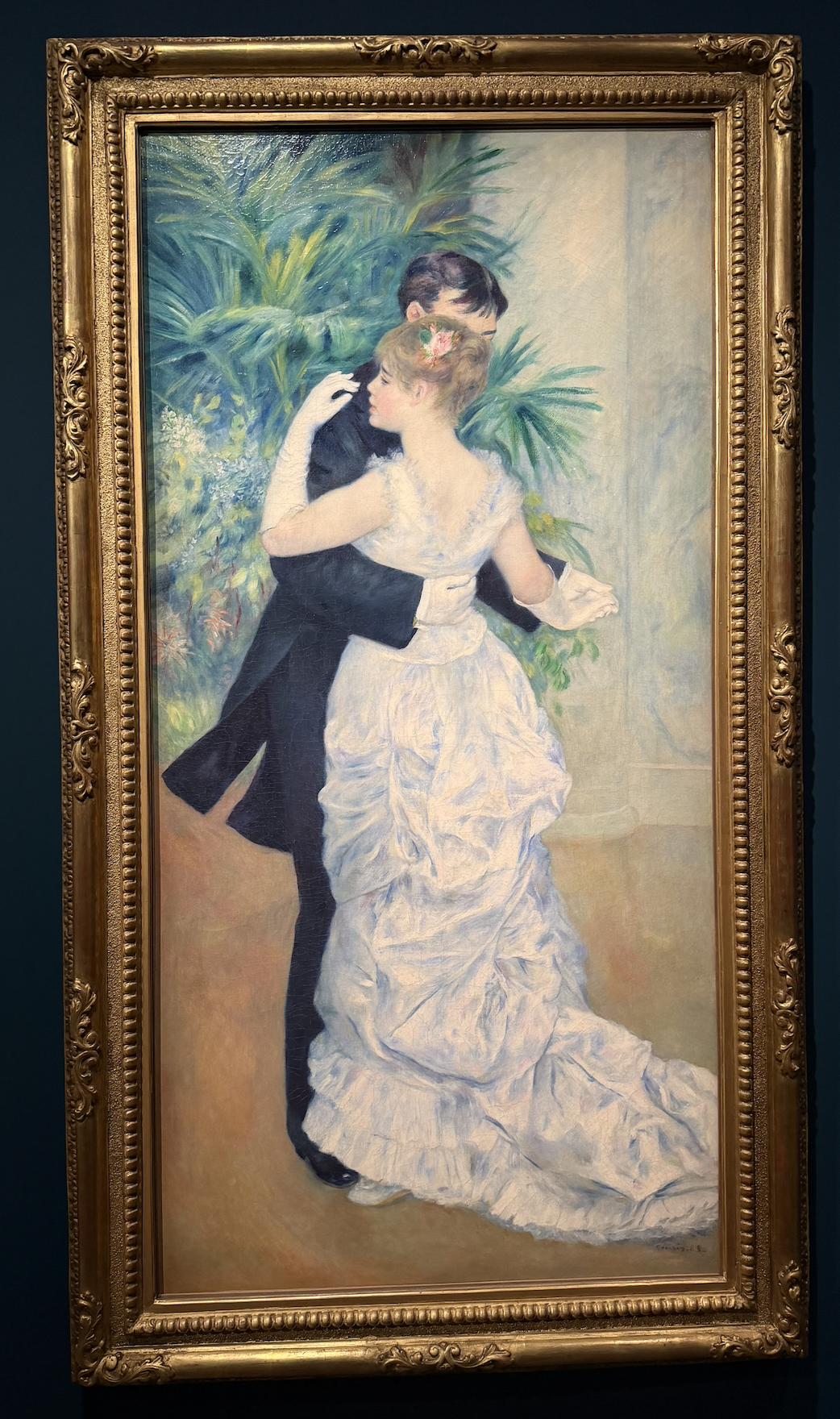
In the very elegant Dance in the City, Suzanne’s back is turned to us, showing the details of her beautiful, billowy white dress. The very formal setting of a high-society event includes only the couple, unlike the more informal paintings in the series. Paul Lhote, a close friend of Renoir, also appears in each of the group paintings I shared today, posing as the tall gentleman whose face is hidden.
Two of these paintings are held in the permanent collection of the Orsay. The Dance in the City and the Dance in the Country. In the Country, our female dancer is looking out and appears more engaged with someone in the distance. Renoir wasn’t known for his dancing abilities, but his mistress, Aline, loved to dance under the trees of the many guingettes of Paris. Jean Renoir recalls the story his father once told him about watching her dance for hours, and it brought him true happiness.
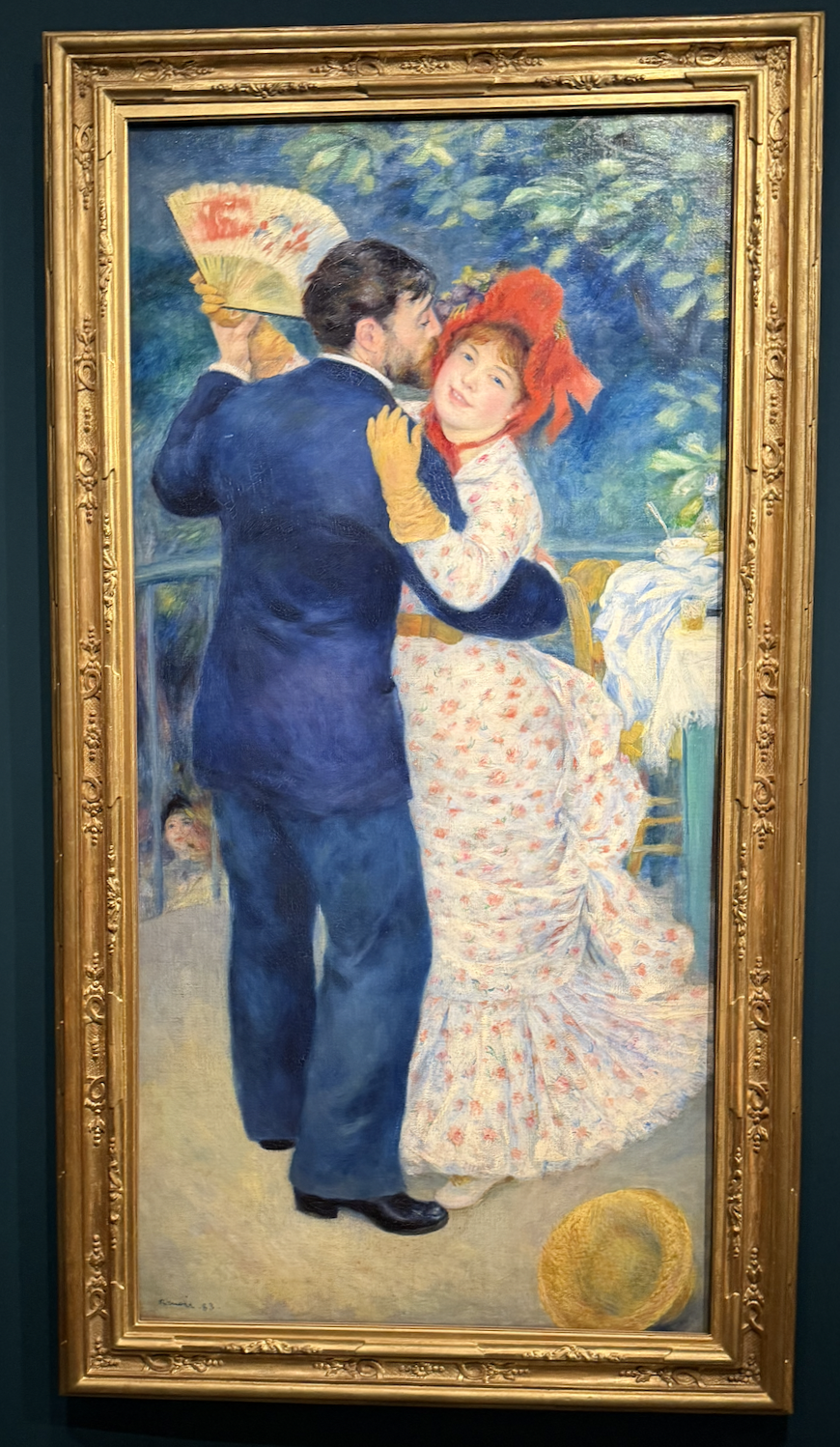
In the Dance in the Country, which looks like it was straight out of the Moulin de la Galette, Aline dances with model Paul Lhote, revealing a bit more of his face. The two appear to have just finished their lunch on a balcony where the music sweeps them into a dance. His hat is discarded on the floor, and a female figure watches from below.
The third painting in the series, the Dance at Bougival, was first called the Dance at Chatou before it was displayed, and it now lives in Boston at the Museum of Fine Arts. It had always been my dream to see the three together, and that dream comes true in this exhibit.
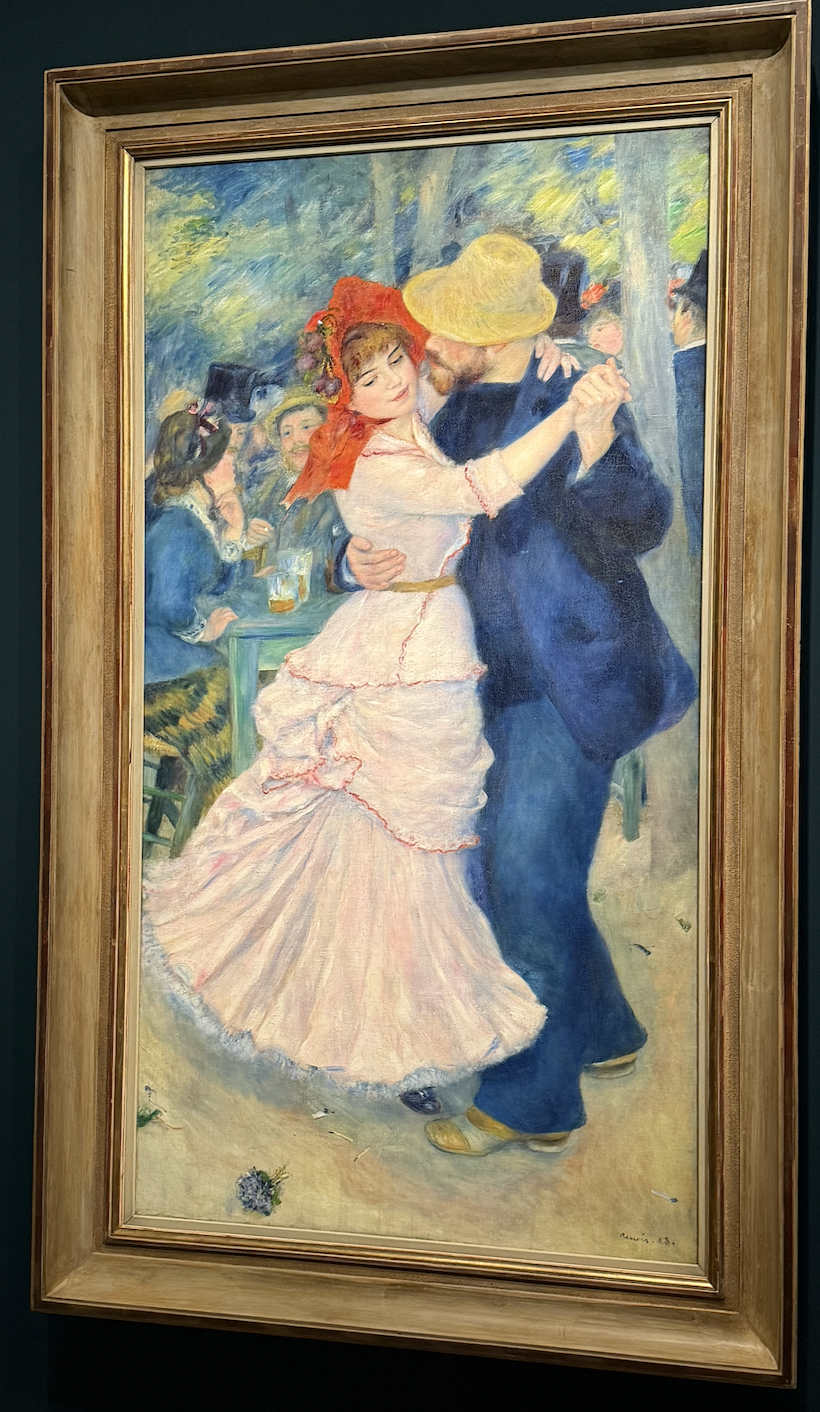
The Dance at Bougival was the last to be done, and missed the exhibition at the Durand-Ruel gallery in April 1883. The couple are captured mid-spin and held tightly together while others behind them enjoyed a chat, drink, and smoke on a warm autumn day. The female model is a bit of both Suzanne and Aline combined, and the male figure is thought to be Alphonse Fournaise Jr. Take a look back at the Boating party at the figure at the railing, the two both share the same reddish beard. The yellow straw hat we saw discarded in the Dance in the County is now on the male dancer's head.
Aline was a bit fed up with the lovely Suzanne in his studio for days and weeks on end, and one day walked in and attacked the painting, almost destroying it. Renoir had to recreate much of it and changed the face to look a little less like Suzanne.
The fantastic exhibits held at the Musée d’Orsay this year, dedicated to Renoir and Love, featuring the paintings I mentioned, are wonderful. However, do not miss the second exhibit dedicated to his drawings.
Of the three dances, Renoir only sketched out one of them, Dance in the Country. Many variations of Lhote’s hair and Aline's face were made with the smallest changes.
In November 1883, Renoir recreated the Dance in Bougival for Paul Lhote’s story, Mademoiselle Zélia, in La Vie Moderne, with slight changes to the figures. Many of these graphite drawings and the actual printing of Mademoiselle Zélia are on display, and I urge you not to skip it. The drawings exhibit is even better than the paintings exhibit.
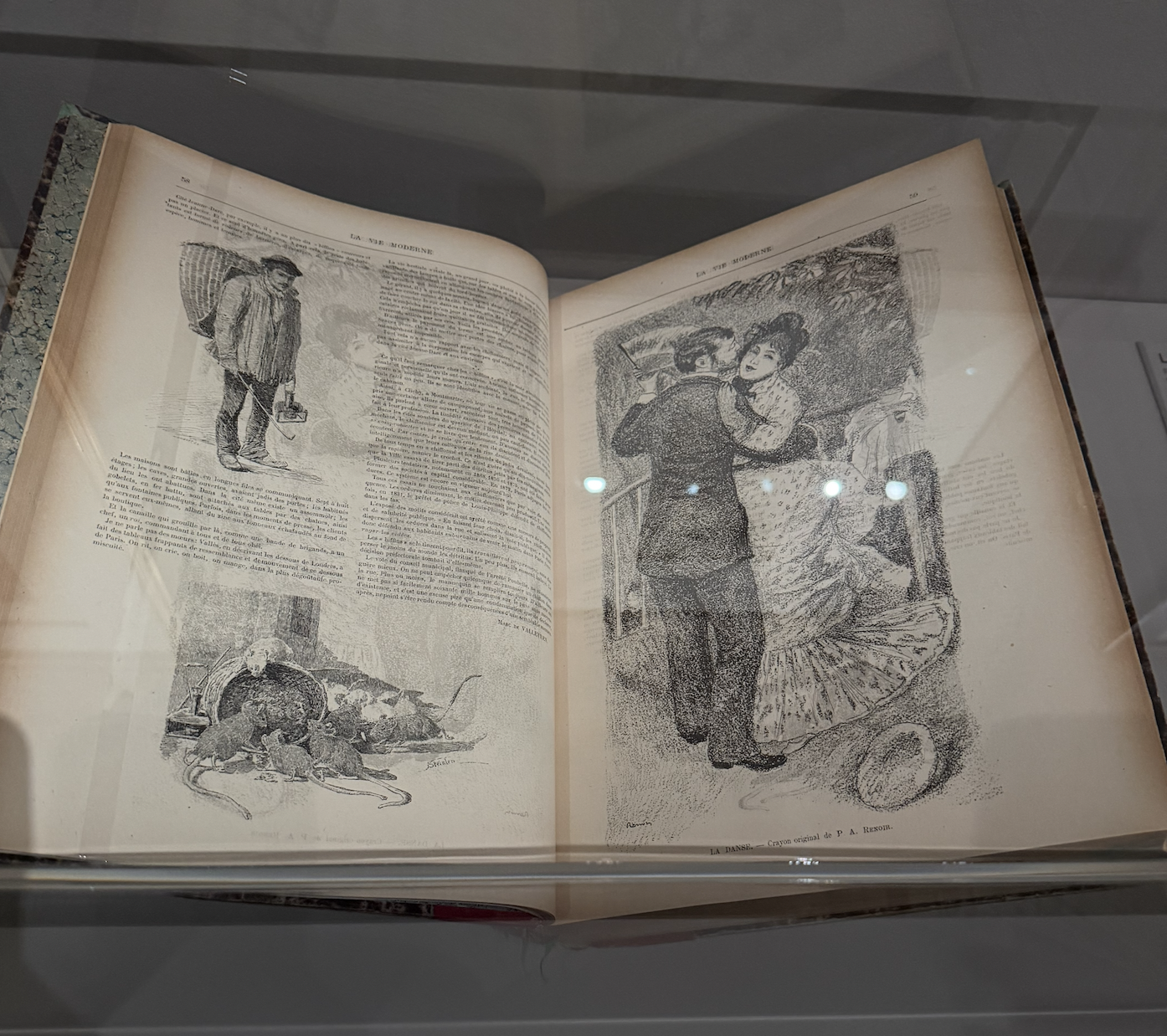
Orsay Renoir exhibits Renoir and Love until July 19 and Drawings until July 5