
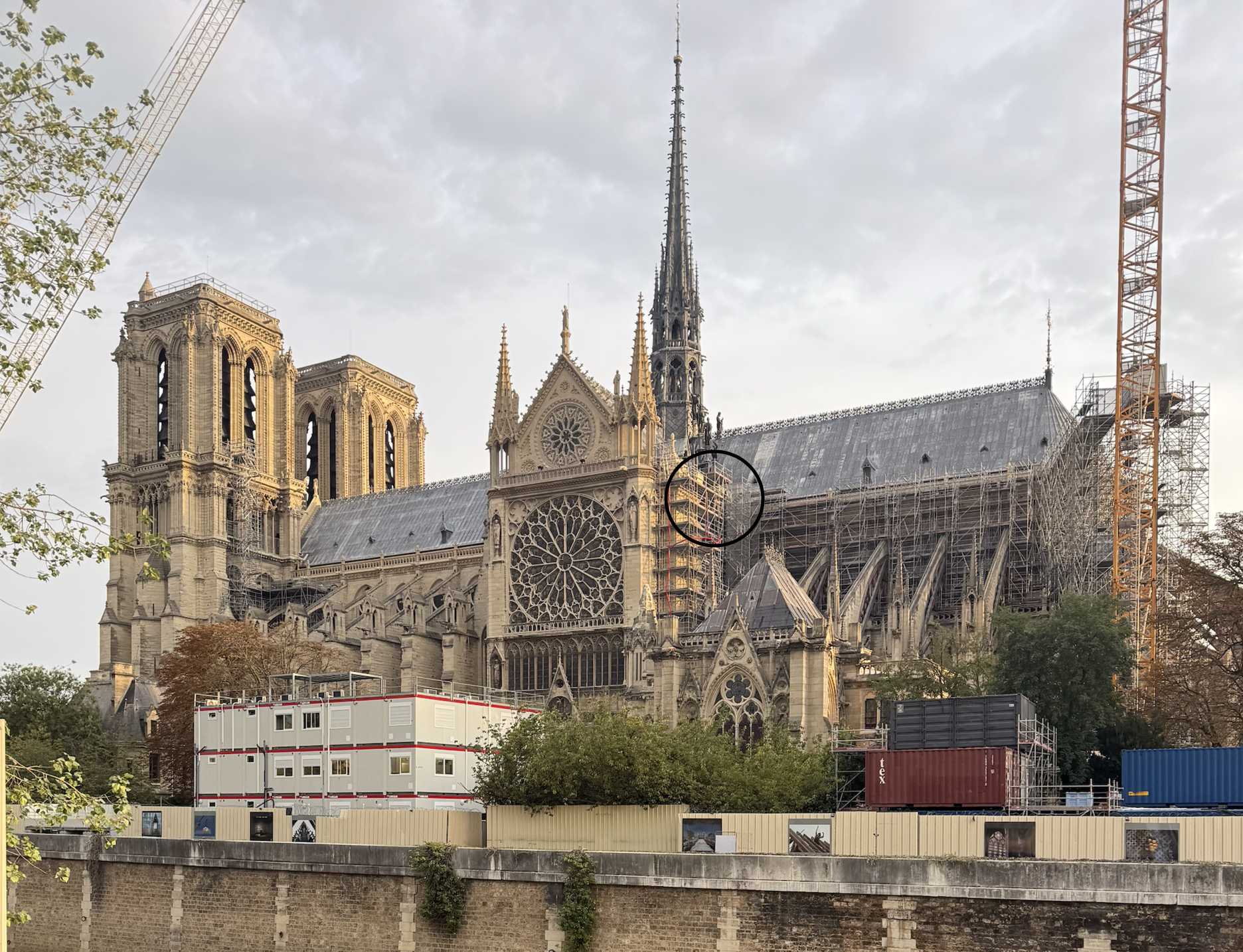
Seven years ago this week, a moment few will ever forget. At 6:18 pm on Monday, April 15, 2019, flames erupted in the roof of the Cathedral Notre-Dame de Paris, and over the following hours, the 12th- and 13th-century forest would be destroyed.
When the fire struck, the cathedral was just about to begin a restoration on the 19th-century spire. In a stroke of luck, the 16 statues lining the roof were removed on April 11 for restoration, and the scaffolding was built that would soon become a glowing web of melted metal.
In the last seven years, no definitive cause of the fire has been identified. After the theft of the crown jewels from the Louvre which we will go into more detail next week, multiple investigations and audits were conducted through the Louvre from every angle. That wasn’t done for the fire of Notre Dame. However, a few detailed reports have been uncovered, giving us a closer look and a glimpse into what actually happened that April evening.
The Cathedral Notre Dame de Paris is governed by several entities. Owned by the State and managed by the Ministry of Culture, the DRAC, and the Catholic Diocese.
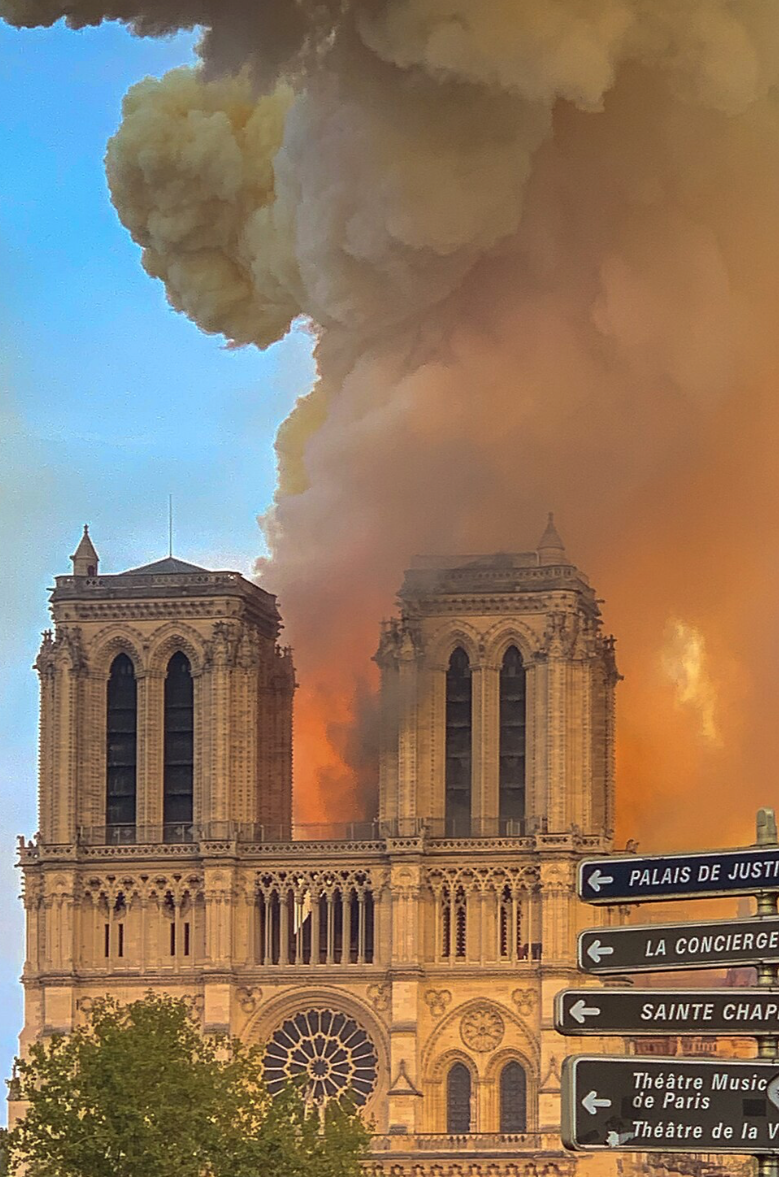
In 2010, the Ministry of Culture tasked Benjamen Mouton, the cathedral's chief architect, with installing a new fire system. By 2014, Siemens had installed the system, which included more than 160 smoke detectors that communicated with a complex security panel located in the Presbytery on the bedside of the cathedral. What did they skimp on for the project, you might ask? Well, that was the sprinklers and any firestop partitions deemed unnecessary by the architect.
The DRAC, the Regional Cultural Affairs Department, oversees the fire alarm system that was installed. The system itself covered four spaces, including the roof, crypt, towers, and the presbytery, although multiple locations were covered within the four zones. A security staff member was to sit in front of the large panels controlling the system of over 160 smoke detectors.
After the installation, the DRAC awarded the contract to maintain the fire system to Elytis, located in the South of France, rather than to one in Paris. When there was a problem, a subcontractor was used since they didn’t have an office located in Paris. From the installation, malfunctions and false alarms were recurring issues without a quick solution.
In the months before that dreadful day, the alarms in the towers and on the roof sounded more than a dozen times a day, prompting the DRAC to place the system in standby. A guard went on record to say, When we reported malfunctions to our boss, who was in charge of passing each alarm to the Ministry of Culture, it often caused tension, so we reported them less and less.
In 2016, the French National Center for Scientific Research alerted the Ministry of Culture that the cathedral's fire alarm system was not up to standard for protecting the structure and was vulnerable. “There was a risk that the roof could go up in flames,” said the author of the report. He continued, “There was no protection for the roof frame”. The report was never addressed or followed up on. In fact, the same year, DRAC decided to cut the daily security team that monitored the system from two people per shift to only one, during the cathedral's opening hours.
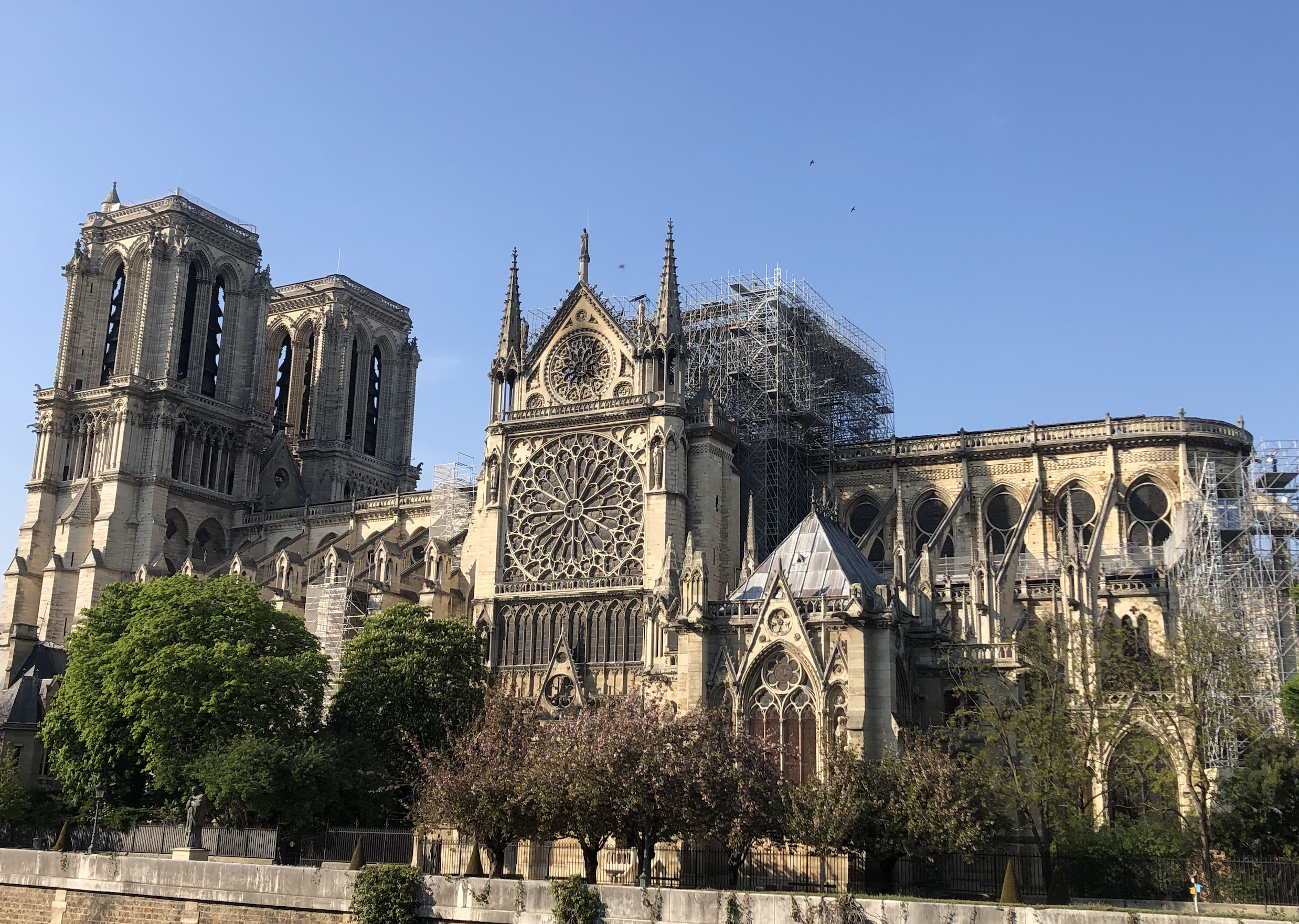
April 20, 2019
The Fire - Moment by Moment on April 15, 2019
April 15, 2019, was a sunny and beautiful Monday in Paris. At 6 p.m. on the first weekday of Holy Week, the nave below was filled with more than a thousand people. It started out like any other mass, with the cathedral priest delivering the sermon.
At 6:18 p.m., in the presbytery's security office, the alarm rang with the code ZDA-110-3-15-1 and the message “fire roof nave sacristy”. The Elytis security guard contacted the cathedral's security, Jean Paul B., and gave him the message.
Earlier, I mentioned there were four zones of the security system. Both the sacristy and the presbytery were in separate buildings from the cathedral, but the sacristy, where the treasury is held, is within the “roof zone” of the system. Adding confusion for people who weren’t intimately familiar with the system.
At 6:19 p.m., Jean Paul B makes his way to the roof of the sacristy and reports back a minute later that he didn’t see any smoke or fire and radios the security office. The on-site manager joins Jean Paul and confirms there is no fire, then visits the security room and asks the agent to contact his boss to find out what the alarm code means and where it could mean.
At 6:23 p.m., the fire alarm inside the cathedral sounded, and the parishioners and visitors were calmly evacuated. And the Elytis agent tries to reach his manager, Emmanuel, but there is no answer, and he left a message.
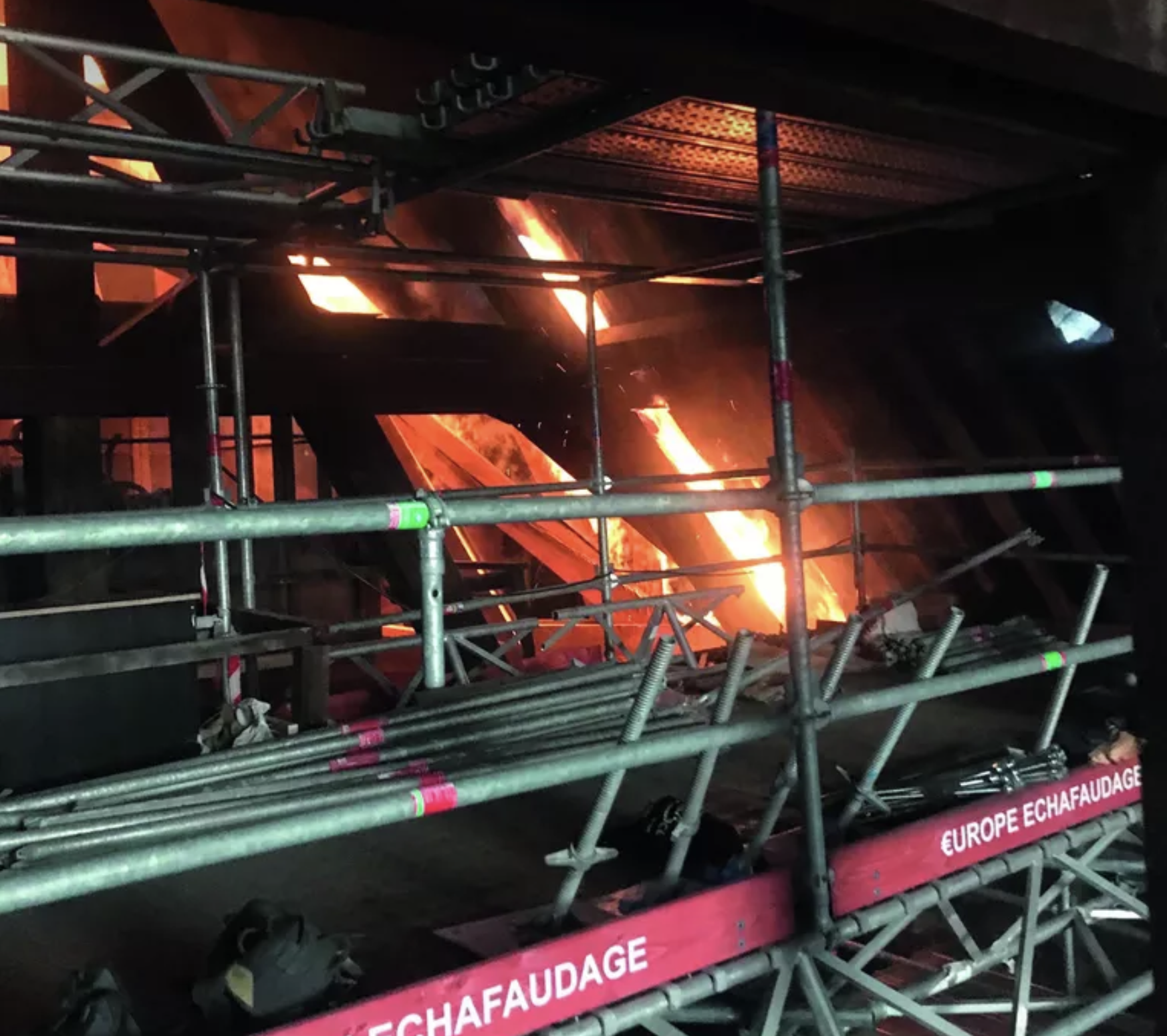
First photo of the fire in the roof; Le Figaro
6:32 p.m. Emmanuel calls his agent back and will look in the book to find out the meaning of the codes. (are you cringing yet)
Inside the cathedral, the crowd returned, and mass began once again.
6:43 p.m., 25 minutes after the fire started, Emmanuel calls Jean Paul and tells him to go to the cathedral's roof.
6:45 p.m., the alarm sounds once again inside the cathedral, and the cathedral is evacuated for the last time.
6:48 p.m., now 30 minutes after the fire ignited, Jean Paul and the manager climbed the 300 steps to reach the nave, and at that moment found the fire burning in the southeast side of the transept.
6:51 p.m., more than 30 minutes after the fire broke out, the call went out to the fire department. Due to the time of day and the restricted roads in the city center, it would be very difficult and take additional minutes to reach the cathedral.
At 6:55 p.m., the first black smoke plumes could be seen coming from below the spire.
At 7:03 p.m., the first station is on site and rushes to the roof, 45 minutes after the fire started in the 13th-century roof, made up of 1,300 oak beams dating back to the 8th & 9th centuries.
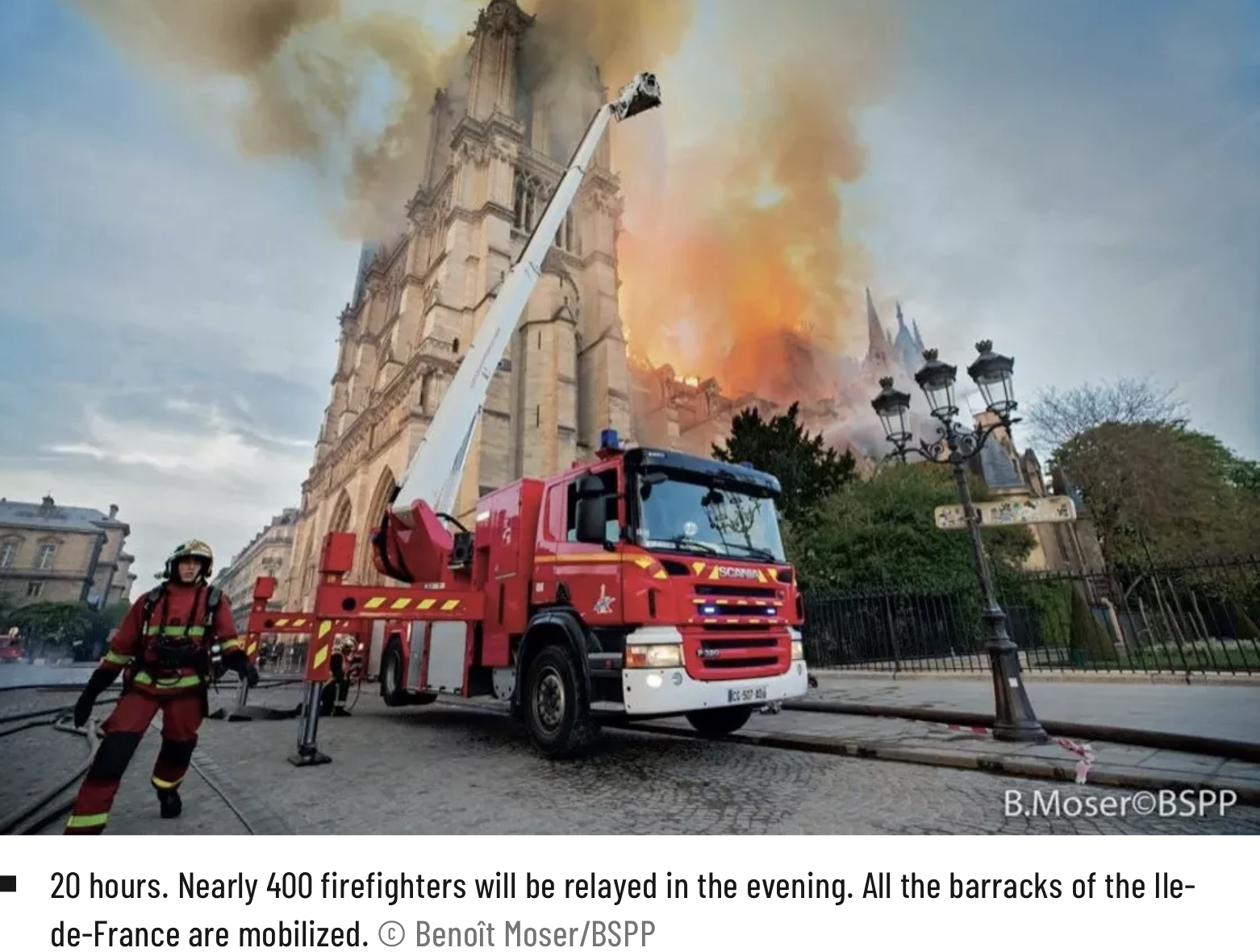
7:10 p.m. Captain Marc Porret Blanc of the 2nd company with the Louvre firemen arrives to protect and rescue the precious items of the church, including the most important Crown of Thorns and tunic of Saint Louis. They would have to wait until the fire is better under control to pull the items out. Thankfully, Abbé Jean Marc Fourner, the fire department's chaplain, was the man to do it, and a human chain of firefighters passed the precious relics out of the cathedral to safety at the Hotel de Ville and eventually the Louvre.
7:30 p.m. General Jean Claude Gallet of the Paris fire brigade orders 150-200 firefighters, 30-40 machines, including the fire boats on the Seine.
At 7:40 p.m., the fire is now burning the spire from the inside.
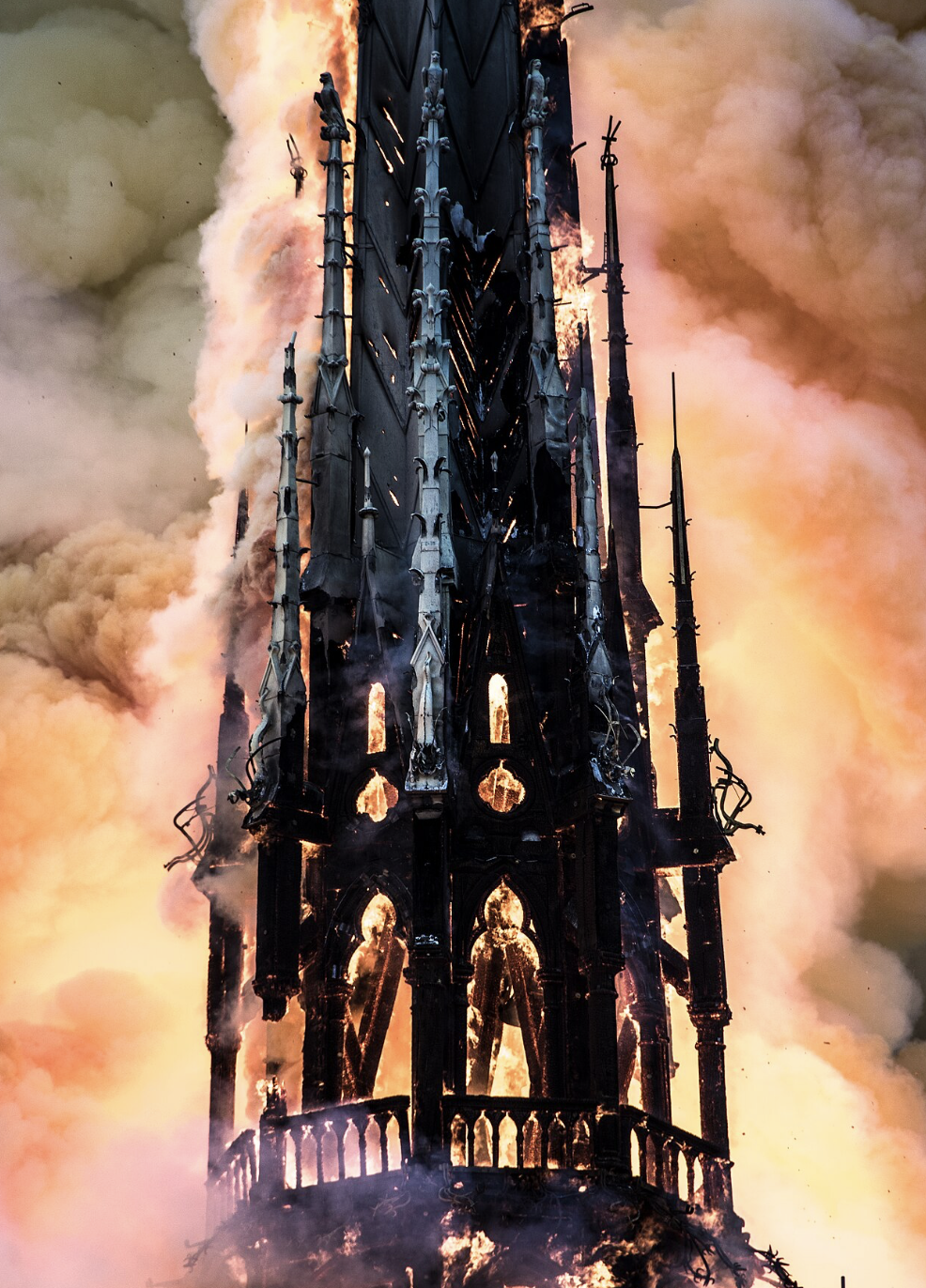
At 7:57 p.m., the spire engulfed in flames breaks in two, pierces the roof, and crashes onto the altar of the transept below. The threat of the burning embers destroying the interior was a real concern.
8:20 p.m. Firefighters ordered to get off the roof as it is far too dangerous
At 9:23 p.m., the firefighters return to the roof now with a new objective: the towers. After the flames engulfed and devoured the roof, the wind blew its fiery embers toward the towers, threatening utter disaster. It was announced at that moment that if the fire wasn’t controlled, it could burn the northern belfry and the eight bells, weighing a total of 36,733 pounds, would crash through the facade and take the church with them.
Twenty firefighters risking their lives climbed the south tower to reach the central platform and fight the flames, saving the belfry, the tower, and the entire cathedral in just under 20 minutes.
At 10:47 p.m., President Macron, Archbishop Aupetit, and Monsignor Patrick Chauvet walked into the entry of the church. Chauvet said, “It's a miracle.”
It wasn't until 3:30 a.m. on April 16th that officials declared the fire under control, even though some spots continued to smolder for hours.
In the light of day, the rest of the 1,350 pieces of the treasury were emptied, and many of the paintings were placed in the chapels. It would take weeks to safely remove the painting and statue of the Virgin at the altar.
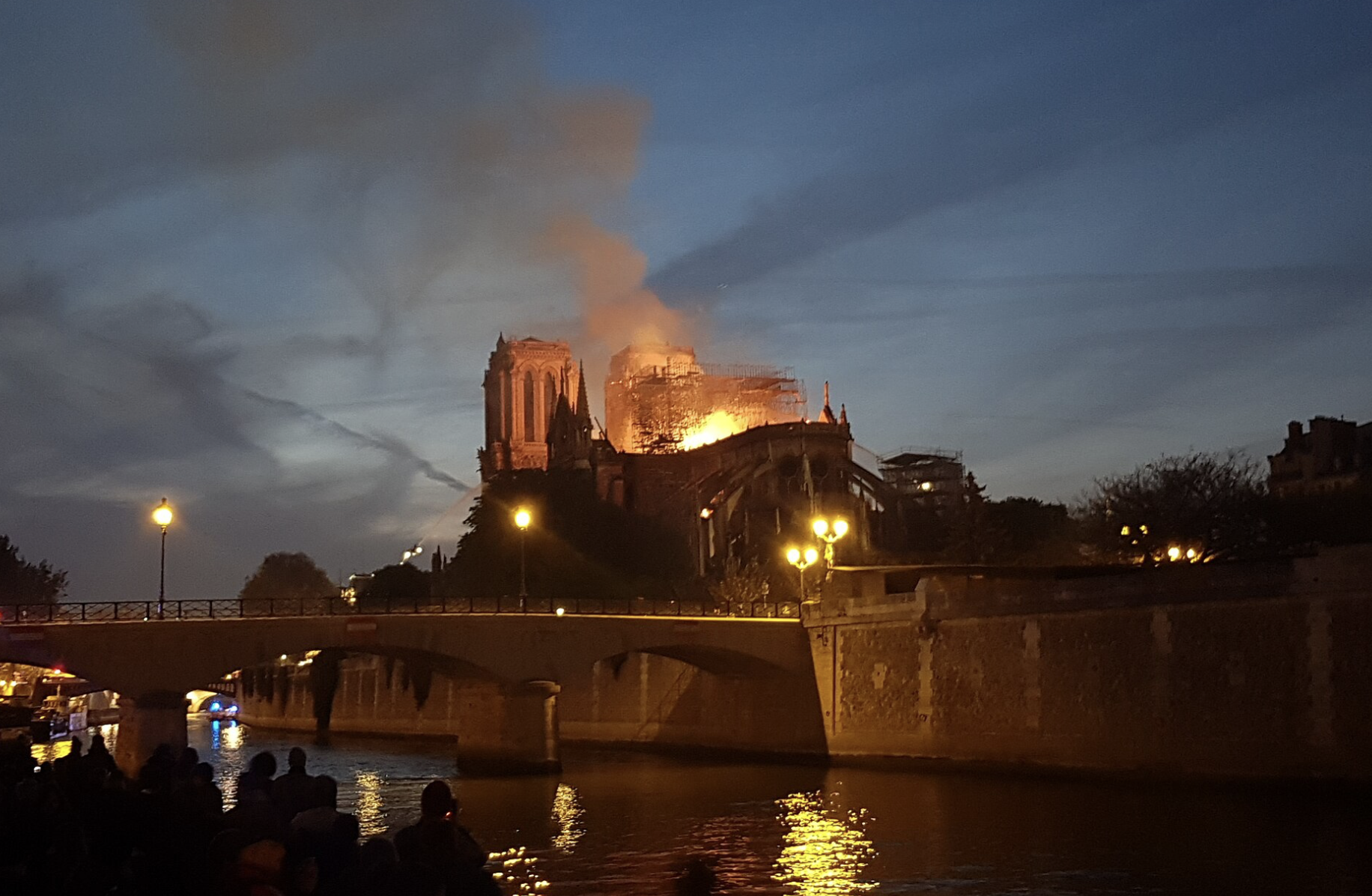
Where the fire started
The fire started in the lower part of the roof below the SE valley of the spire, where the statues are. “The sandpit of the drip wall of the choir, at the SE corner of the transept cross.”
Rémi Desalbres, heritage architect, believes the fire could have been smoldering for hours or even days before combustion when it came into contact with oxygen through a small opening burrowed through from the fire. “A hundred hours are needed for a pyrolysis to overcome a 5-meter-long wooden beam,” Desalbres said. A synopsis that General Jean Claude Gallet of the Paris fire brigade said could not be excluded. Pyrolysis is a type of fire that “follows the path of termites, insects, and jumps from nail to nail and needs little oxygen.”
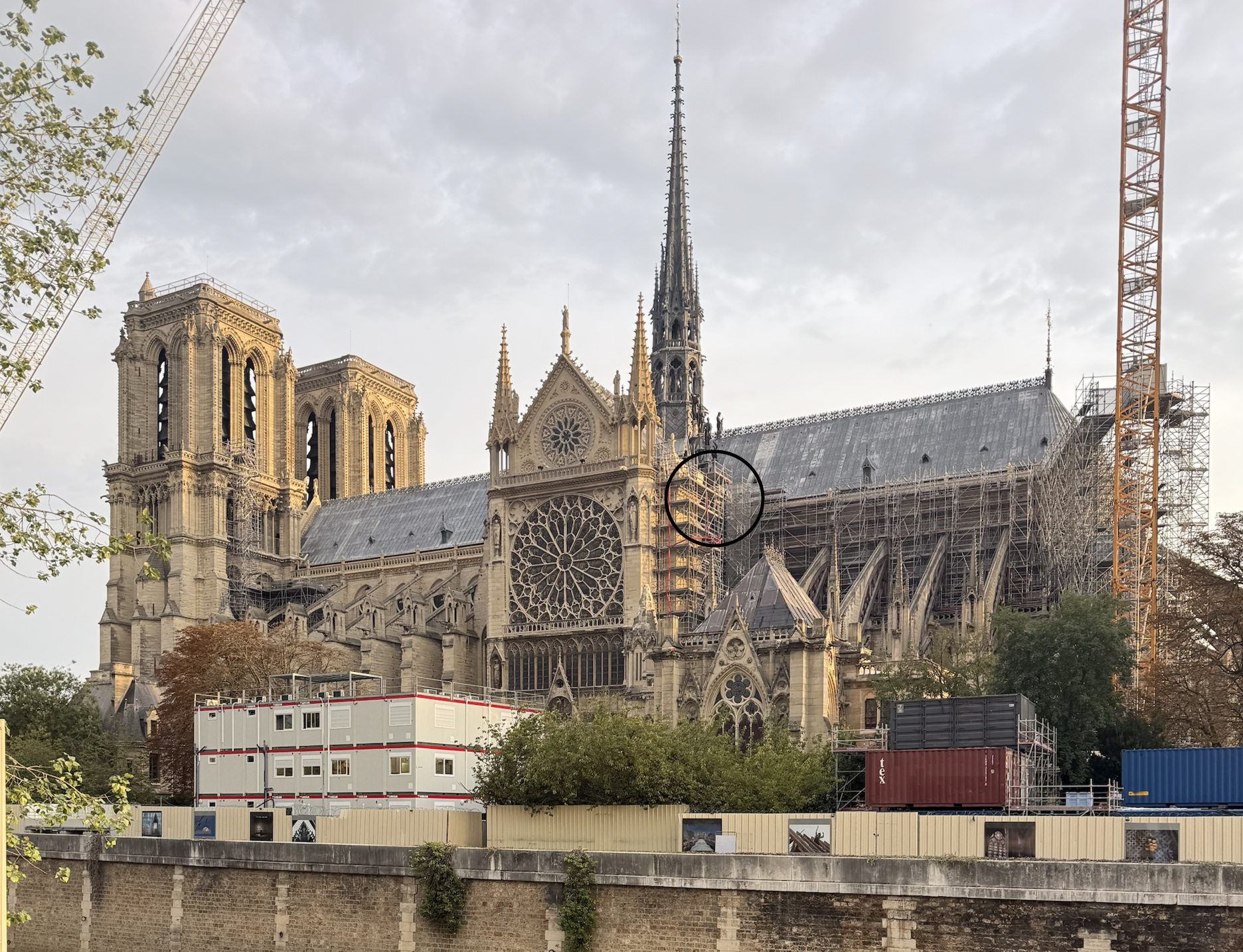
What could have been the tipping point? Remember the removal of the statues, which seemed to be a bit of divine intervention, on April 11th? Saving the statues just 4 days before the fire broke out might have actually been what sparked it.
The statues were created and installed during Viollet-le-Duc's restoration in the mid-19th century. Generous benefactors stepped in to restore the statues, and the SOCRA company was under a tight timeline to remove them from the roof. The skyline has been dotted with cranes for seven years now. In 2019, the crane on site was a temporary installation to bring the scaffolding to the roof and was utilized to remove the statues.
Work began on the Apostles in 1848, and they were a bit more than meets the eye. The inner structure was created with iron and then covered with copper sheets, making for a much lighter statue that could stand far above the streets. In 1861, the 16 statues of the apostles and the tétramorphs of the evangelists were welded onto a base where they remained until April 11, 2019.
The statues of the SE valley begin at the edge with the eagle of St Jean, followed by Saint Paul, Saint Jacques Majeur, and topped by Saint Thomas, the patron saint of architects, with the face of Viollet-le-Duc looking towards the spire. Yet another shocking coincidence if this was the reason for the fire. A fire even St. Thomas and Viollet-le-Duc could not stop or even imagine.
Beginning March 25, 2019, teams prepared the statues for their removal. Their heads were first cut off so a large hook could attach to the inner structure before each of the apostles flew through the sky about the cathedral. The job took two weeks to complete.
Could a spark from cutting away at the copper-covered statues or bases find its way into the rafters of the roof and smolder for the next four days?
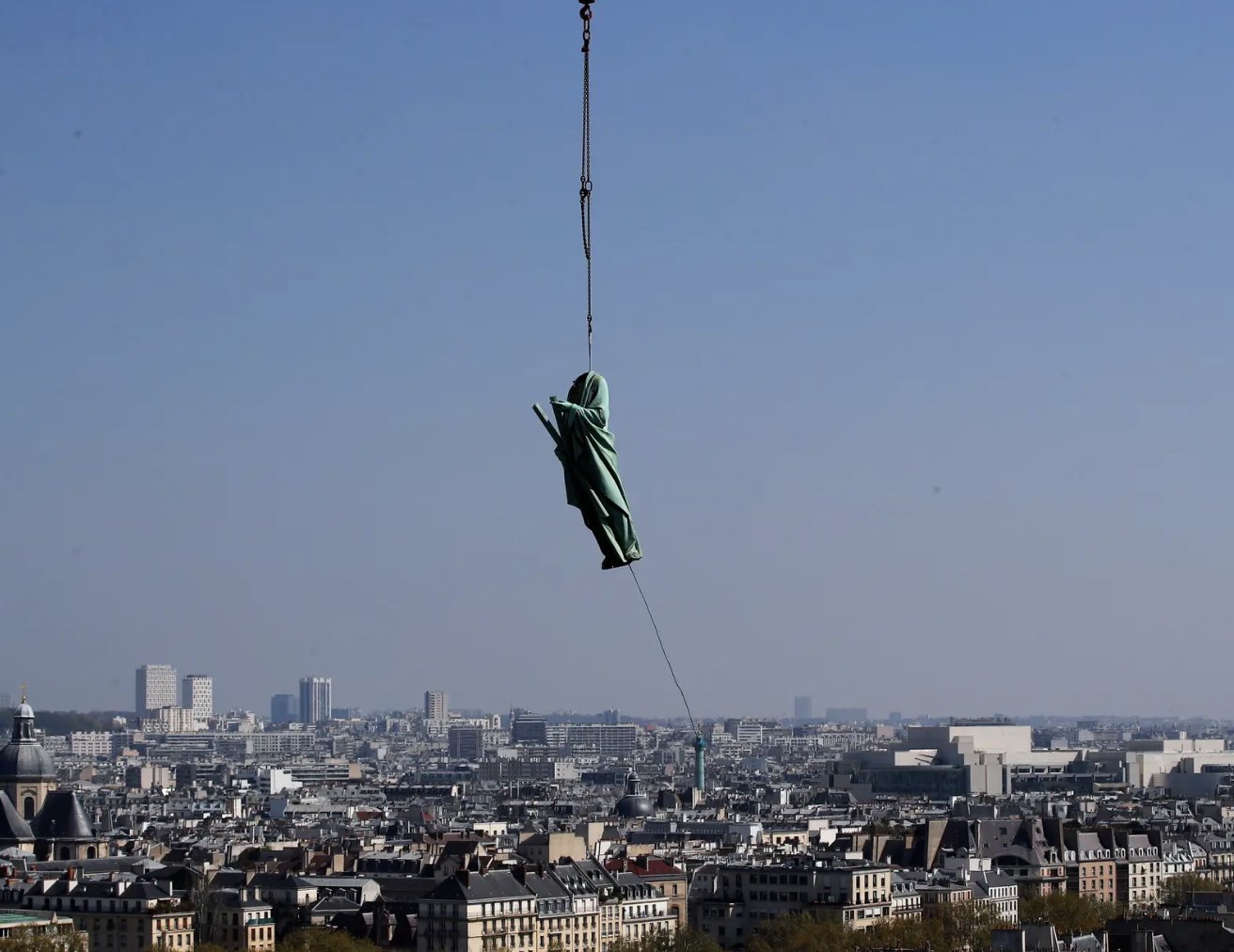
The head of SOCRA vehemently denies this, reminding every journalist, once a year, when called, that there were over twenty people on the scaffolding that day, including journalists documenting the moment the statues were removed.
We may never know. In an interview with Bishop Ullrich on the occasion of the cathedral's 2024 opening, he said it was time to move on. It doesn’t matter what the reason for the fire and it's time to turn the page. Since the church and its various entities in charge could be at least partly to blame for the reaction time, disregard for safety, and haphazard electrical installations, we can see why they may want to move past it.
The day after the fire, the world sprang into action. The largest & wealthiest companies in France donated more than 600 million of the total amount raised. Luxury giant LVMH gave 200 million euros, as did L’Oréal Paris and the Bettencourt Family. The Pinault family gave 100 million euros, and numerous other French companies contributed, totaling more than 3/4 of the total 864 million euros raised. A total of 350,000 donations rolled in over the first few months from just about every country in the world. The US was the next-largest contributor, but not the largest, according to 60 Minutes.
Many questions arose as the embers still smoldered and in the days that followed. How would the historic cathedral be restored? Was there enough lumber in France to recreate the roof, and were there even people who knew how to do it?
Immediately after the fire, the Notre Dame architectural team issued a call for donations of lumber. They had to be at least 100 m in length and 13 m wide. Oak and more than 2000 trees would be needed. A third of France is covered in forests, both privately and publicly owned. Within days, calls came in from hundreds of families with trees that fit the bill. In a few months, the trees began to be cut down, shaped, dried, and stored for their important role in the reconstruction of the roof and spire of Notre Dame.
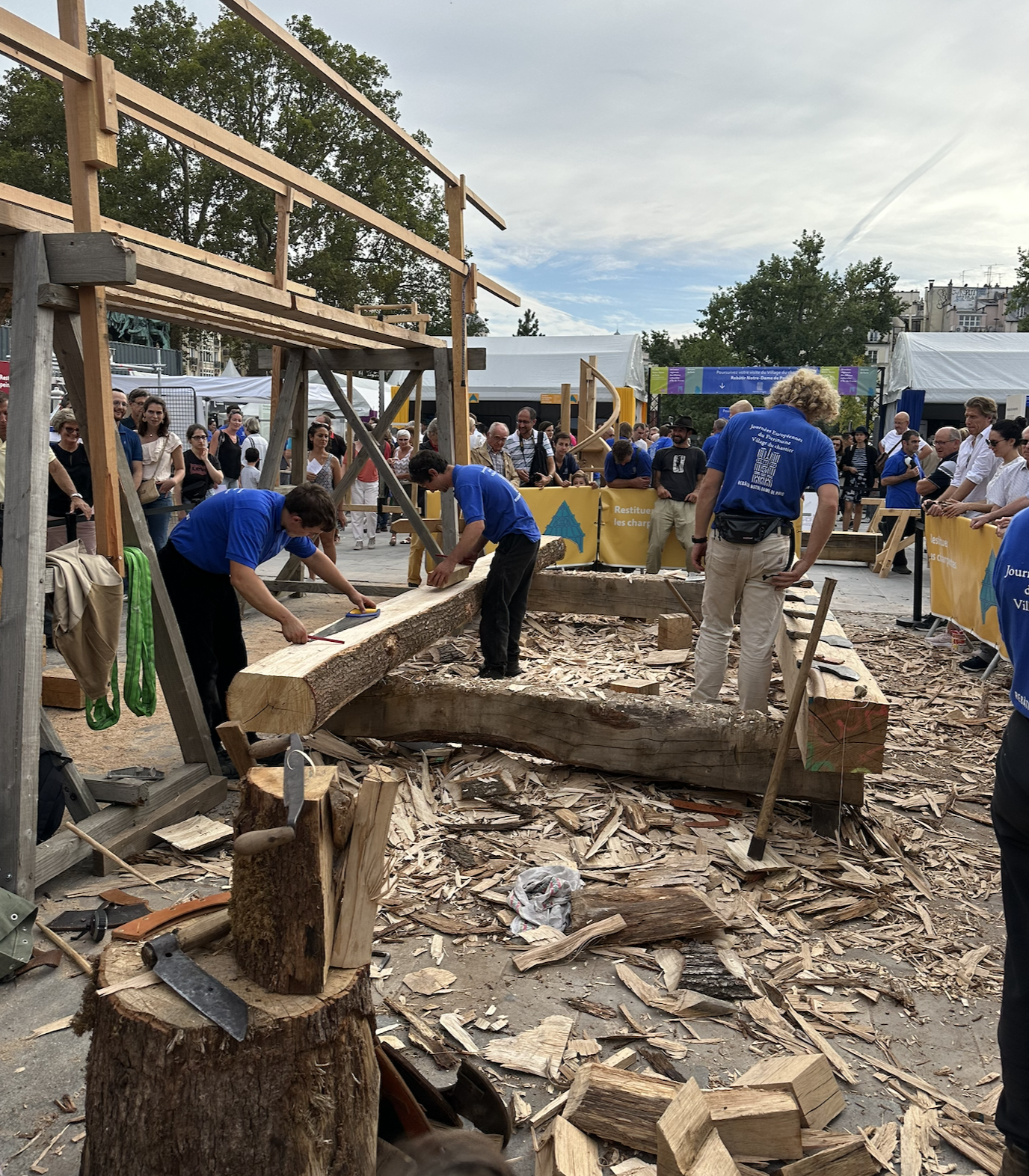
From 2019 to the reopening on December 7, 2024, over 2,000 artisans brought the cathedral back to life, from teenagers working during their summer apprenticeships to carpenters and stonemasons marking their last job before they retire. There is never a shortage of highly skilled jobs.
The night of President Macron called for the cathedral to be reopened in five years. A lofty goal, especially if you know how things work in France. It took a few months longer, but we did have a pandemic and multiple lockdowns for COVID and lead contamination.
During the closure, the entire interior of the cathedral was cleaned, the first time since the completion of the restoration of Viollet le Duc, 162 years ago.. Architects found revolutionary techniques used by VLD, markings from the 12th-century workers, and, in the most amazing discovery, the jubé screen destroyed in the 17th century. Under the marble floor of the transept heavily damage when the spire fell from the roof. Archaeologists were excited to find 1,035 fragments of the former screen created in th 13th century. Researchers are cleaning and cataloging each piece and will create a 3D rendering of what the jubé wall of the Passion once looked like. Can’t wait for that.
The roof and spire were finally completed last summer and recreated exactly as it was. 4000 m2 of lead was needed to recover the roof and additional lead to encase the spire once again. The statues that were left just days before the fire were all returned to their perch in June and July 2025.
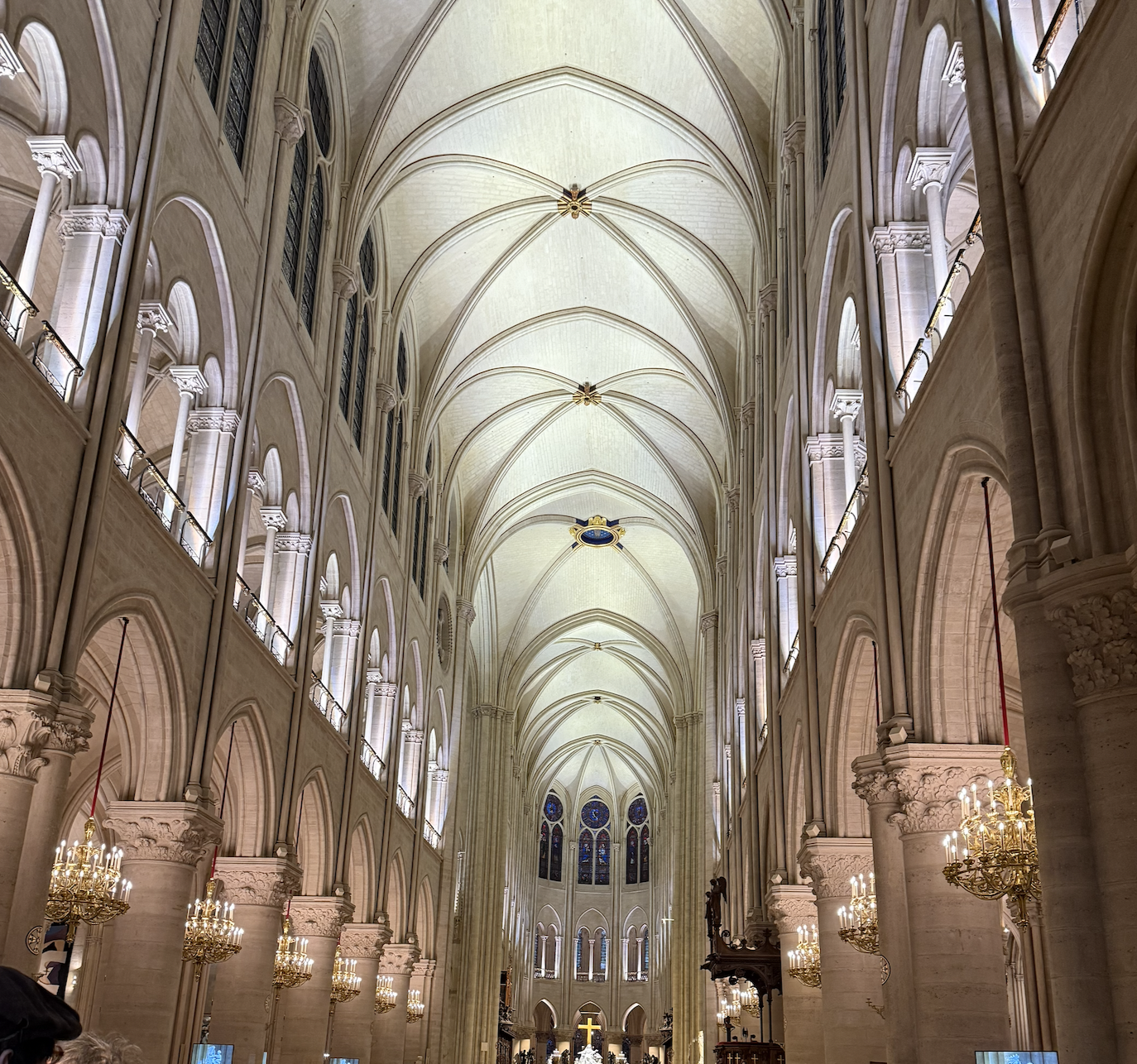
One of the most important elements of the restoration is one that you won’t even see. While the security and fire system before the fire was incredibly lacking, Notre Dame is now the most state-of-the-art church in the world. Thousands of flame-resistant cables, more than 300 sensors located throughout the cathedral and roof, are analyzing the air at every moment of the day. On the roof and spire, a massive fogging and misting system was installed, along with two large fire-resistant trusses on either side of the transept.
There are still years of work to go on the cathedral, and the surrounding area is far from finished. Phase 3 began in the summer of 2025 and is essentially phase 1 if there hadn’t been a fire.
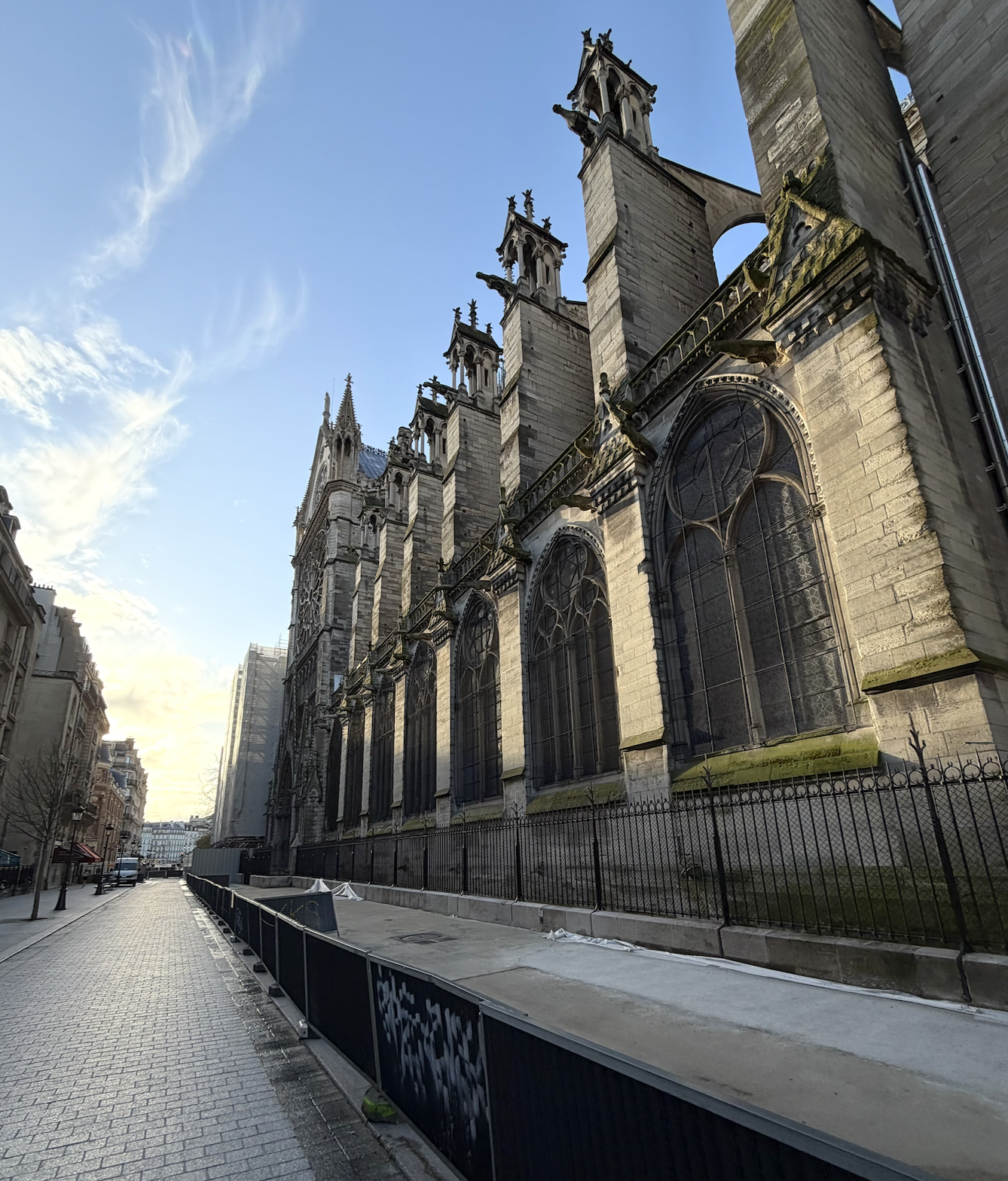
Work on the rear apse of the church, including restoring the 22 buttresses, five of which need to be completely rebuilt.
Pinnacles and gables restored or recreated.
Stained glass on the mid-level has been removed and is being cleaned and checked for damage
Northern and southern nave exterior and stained glass cleaned and gargoyles restored, and many need to be rebuilt on the northern side
Both the sacristy and presbytery buildings, built under VLD, have never been cleaned or restored since construction. The gothic sacristy needs a new lead roof, and pinnacles and sculptures will be recreated and replaced. The presbytery will also be cleaned.
The exterior walls and doors of the north and south transepts will be cleaned and restored. Unsure if the many sculptural elements of the doors, many damaged in the Revolution and not restored by VLD, will now be rebuilt. The three stained-glass rose windows of the cathedral, created in the 13th century, were checked after the fire and found undamaged, but they will all be removed, cleaned, and a new protective clear glass layer will be added for extra protection. The western facade window was damaged during the June 2025 hailstorm.
French artist Claire Tabouret was chosen to carry out the designs based on the theme chosen by the Archbishop of Pentecost. Tabouret draws on her love of portraits, nature, and faces, and combines them with light colors that will blend into the cathedral's walls.
This project isn’t without significant controversy.
The 1964 Venice Charter states that “Items of sculpture, painting, or decoration which form an integral part of a monument may only be removed if this is the sole means of ensuring their preservation.” And that “the valid contribution of all periods to the building of a monument must be respected.”
The windows of Viollet-le-Duc should not be removed or replaced, but we can still appreciate the designs of Claire Tabouret.
Painted examples of each window was on view at the Grand Palais until March 10. Each set of four tall windows features a scene set before the grisaille windows of Gérente. A blending of the old and the new.
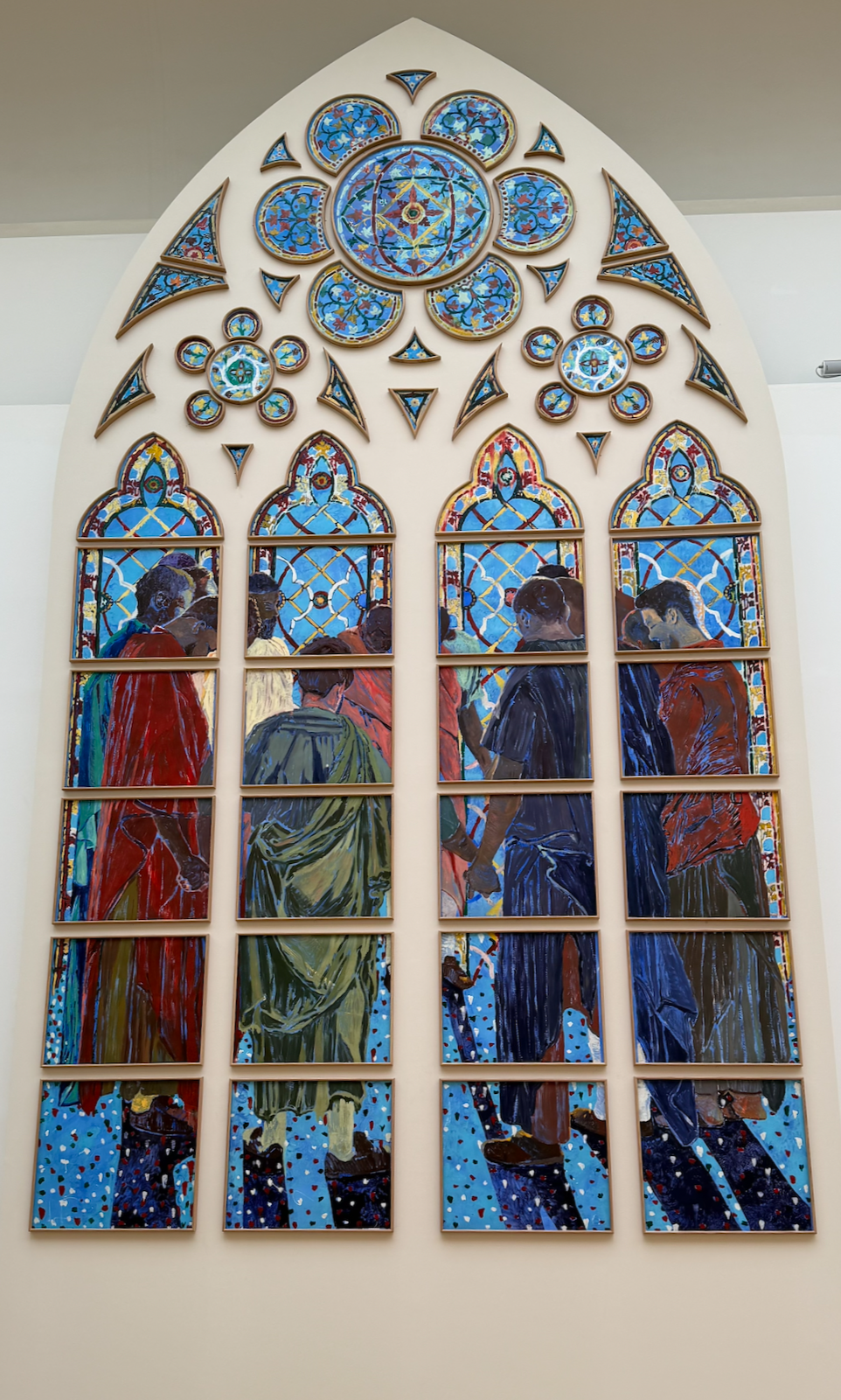
Saint Joseph, the apostles gather after praying for 50 days
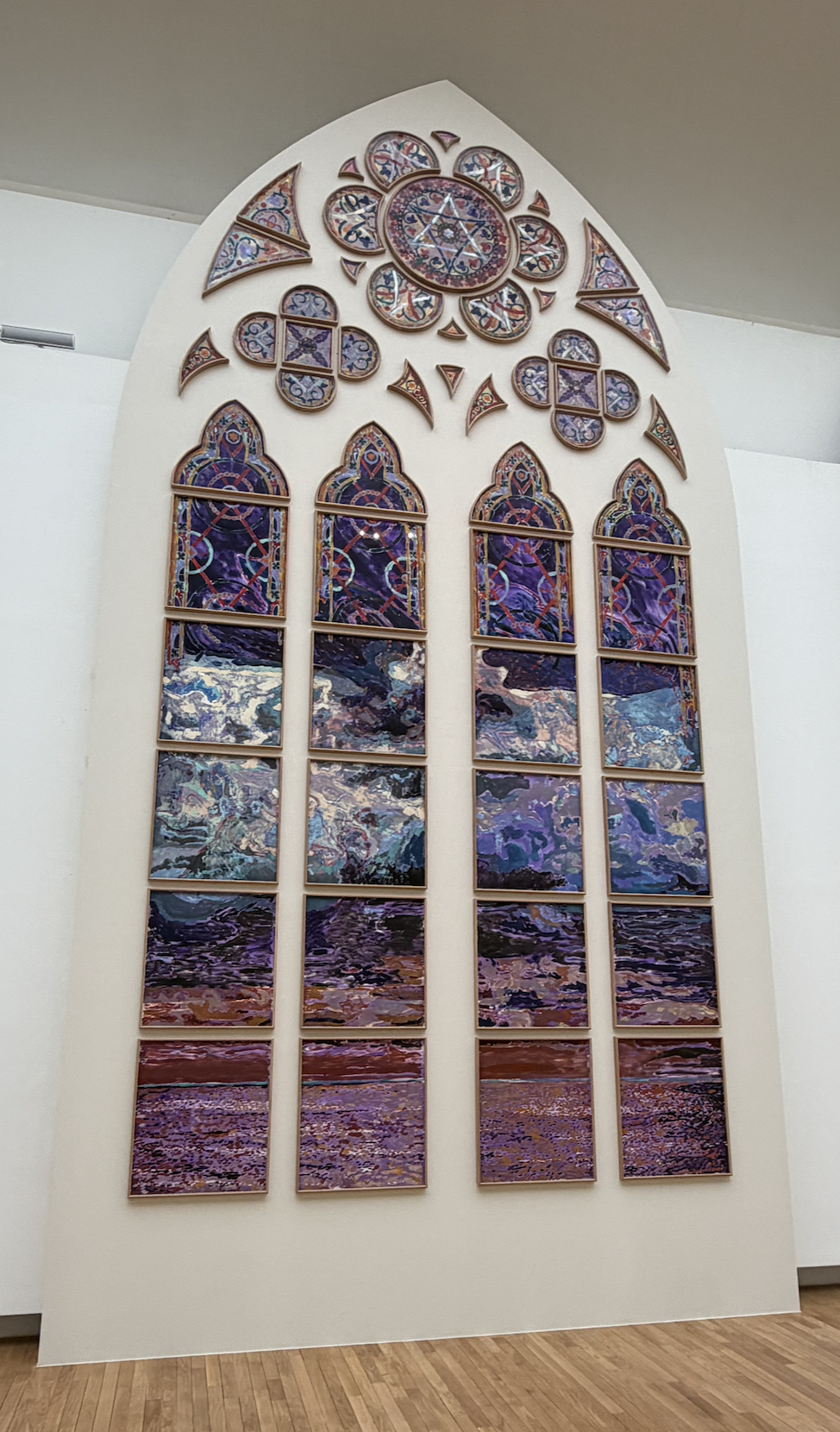
Sainte Clotilde, a wave of light and color, and the “sounds of many waters”.

Sainte Vincent de Paul, the sudden breath and movement of the spirit and wind blowing through the tree.
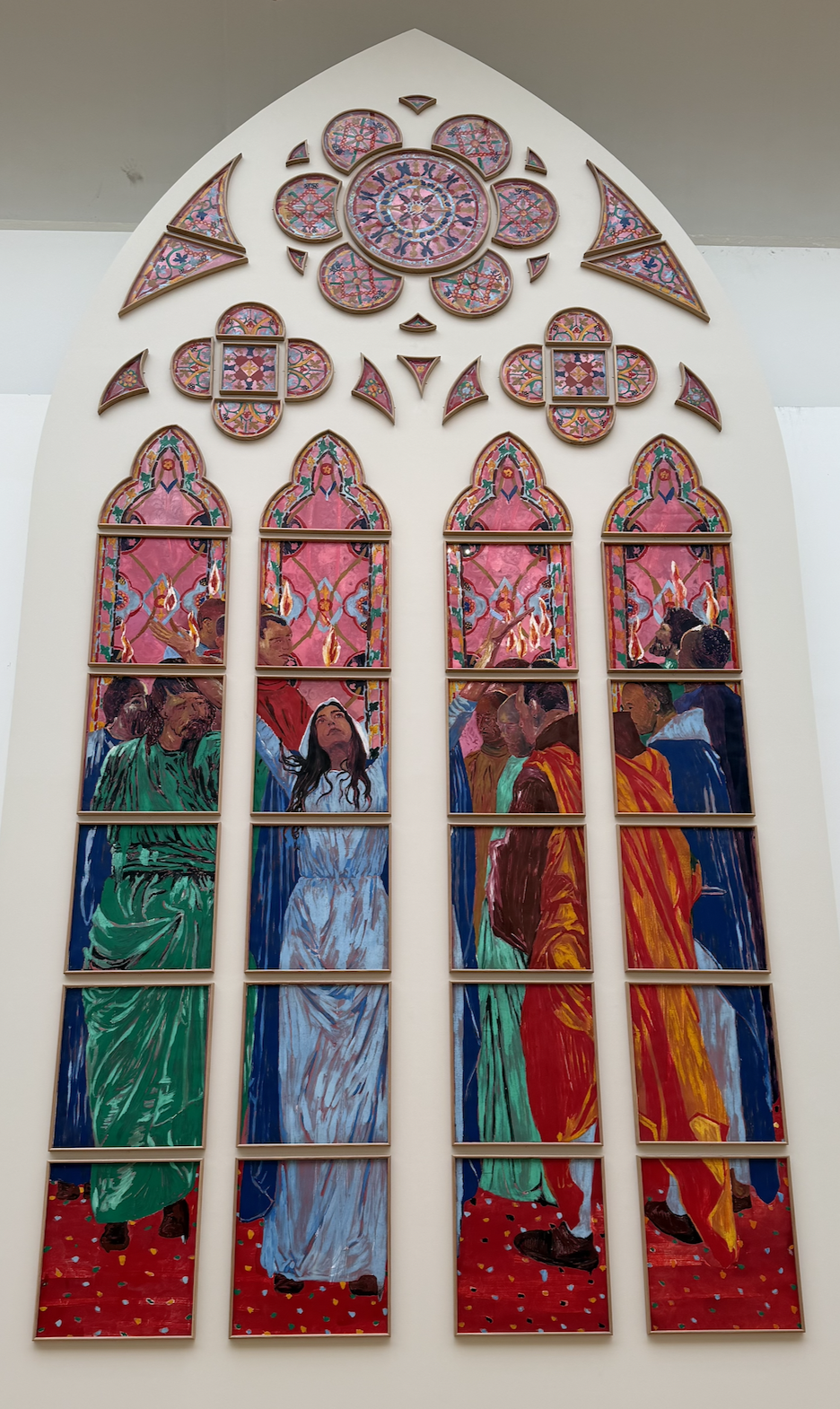
Sainte Geneviève, the Virgin Mary, with hair down and arms raised up. Twelve flames refer to Pentecost.
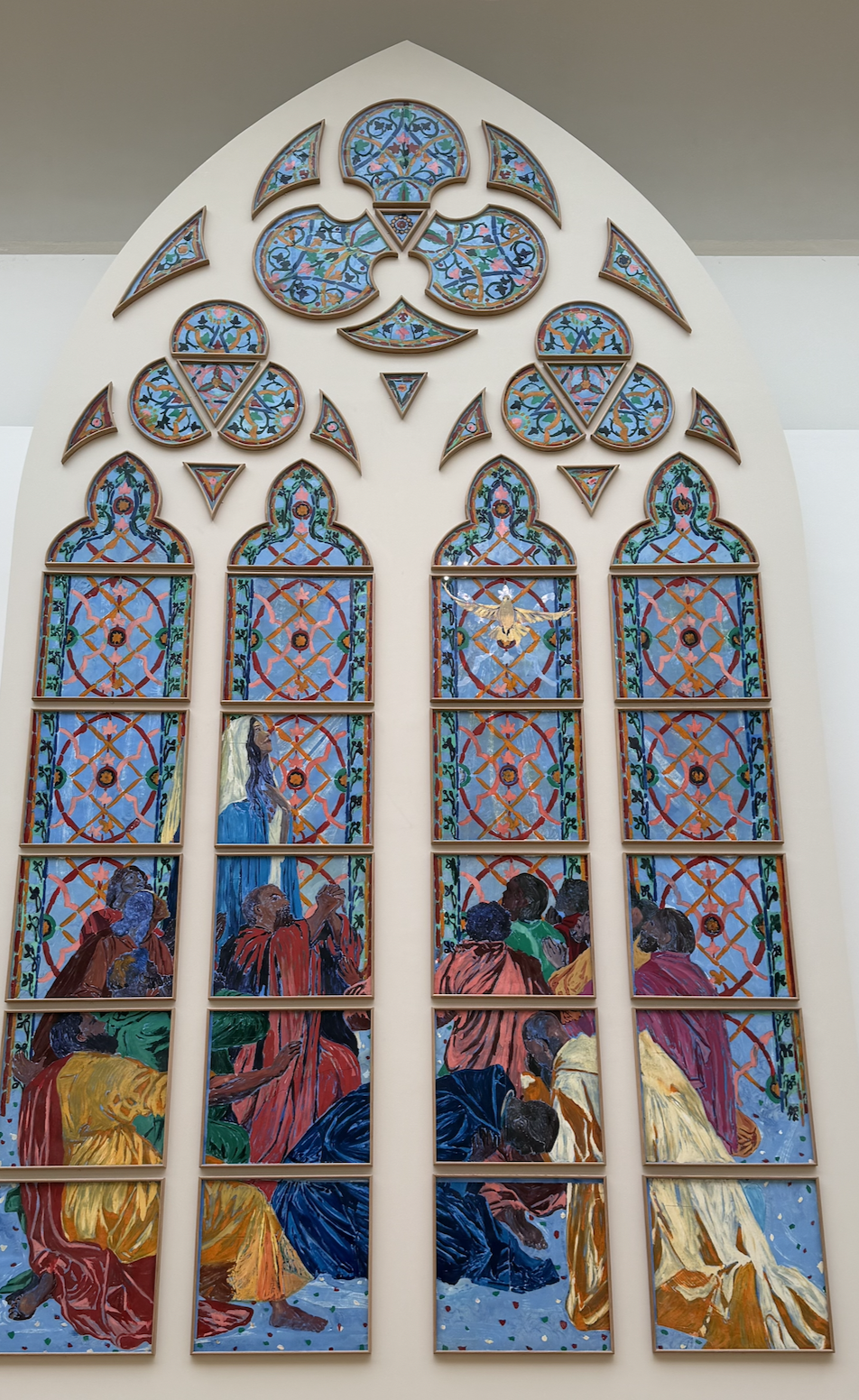
Saint Denis, Mary, and the apostles look up as the Holy Spirit descends.
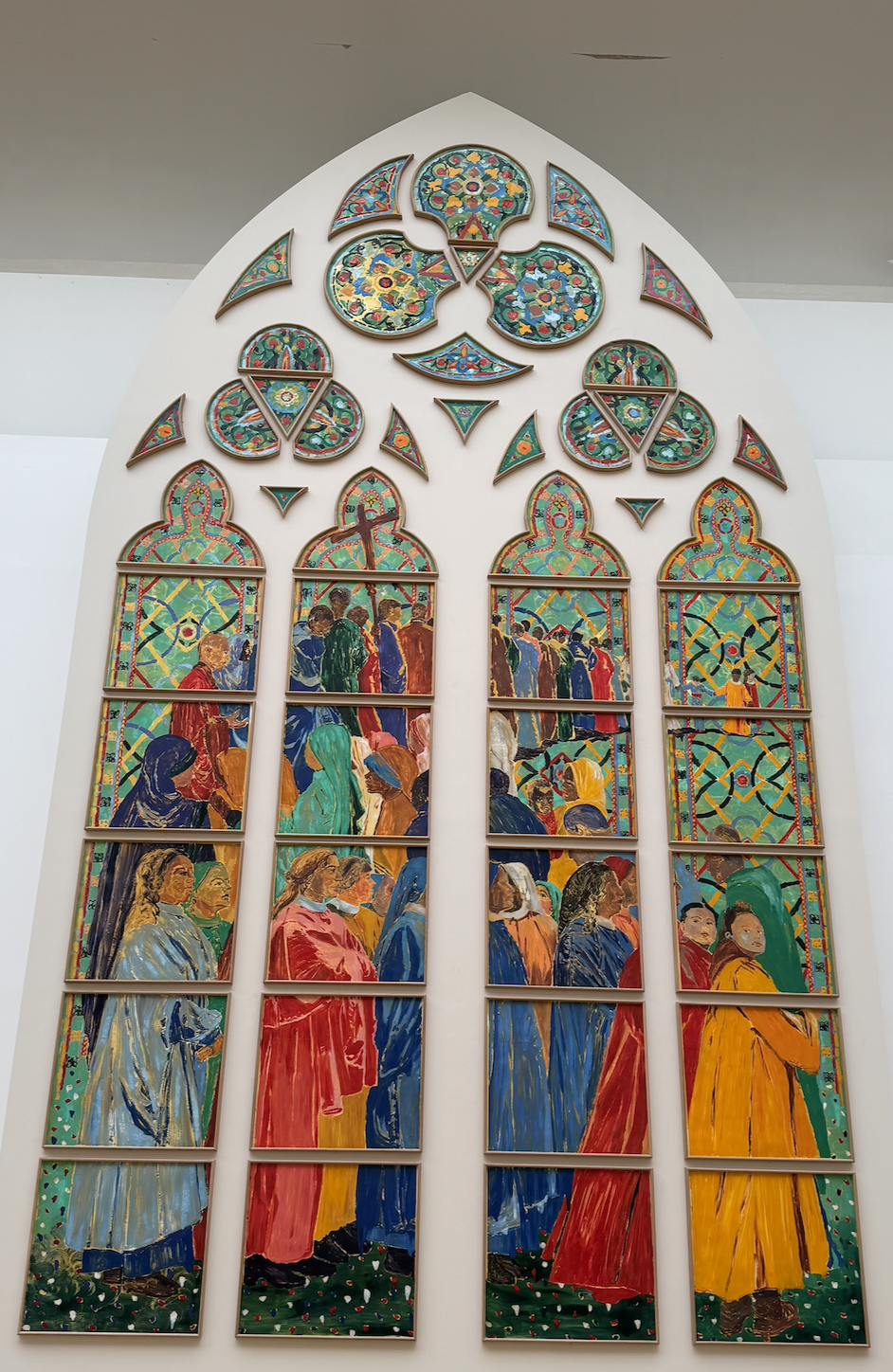
Saint Paul Chen, children lead a long procession representing faith, hope, and charity. Tabouret blends different cultures and periods
The loose recreation of the Gérente windows can be seen at the top of each of the four long windows. The very top will also be replaced, but in accordance with the original design.
The new windows designed and painted by Tabouret will be created by the Atelier Saint-Marq. The oldest atelier de vitraux, which opened in 1640, will take on the project this summer and will be installed on the 2nd anniversary on December 8, 2026