
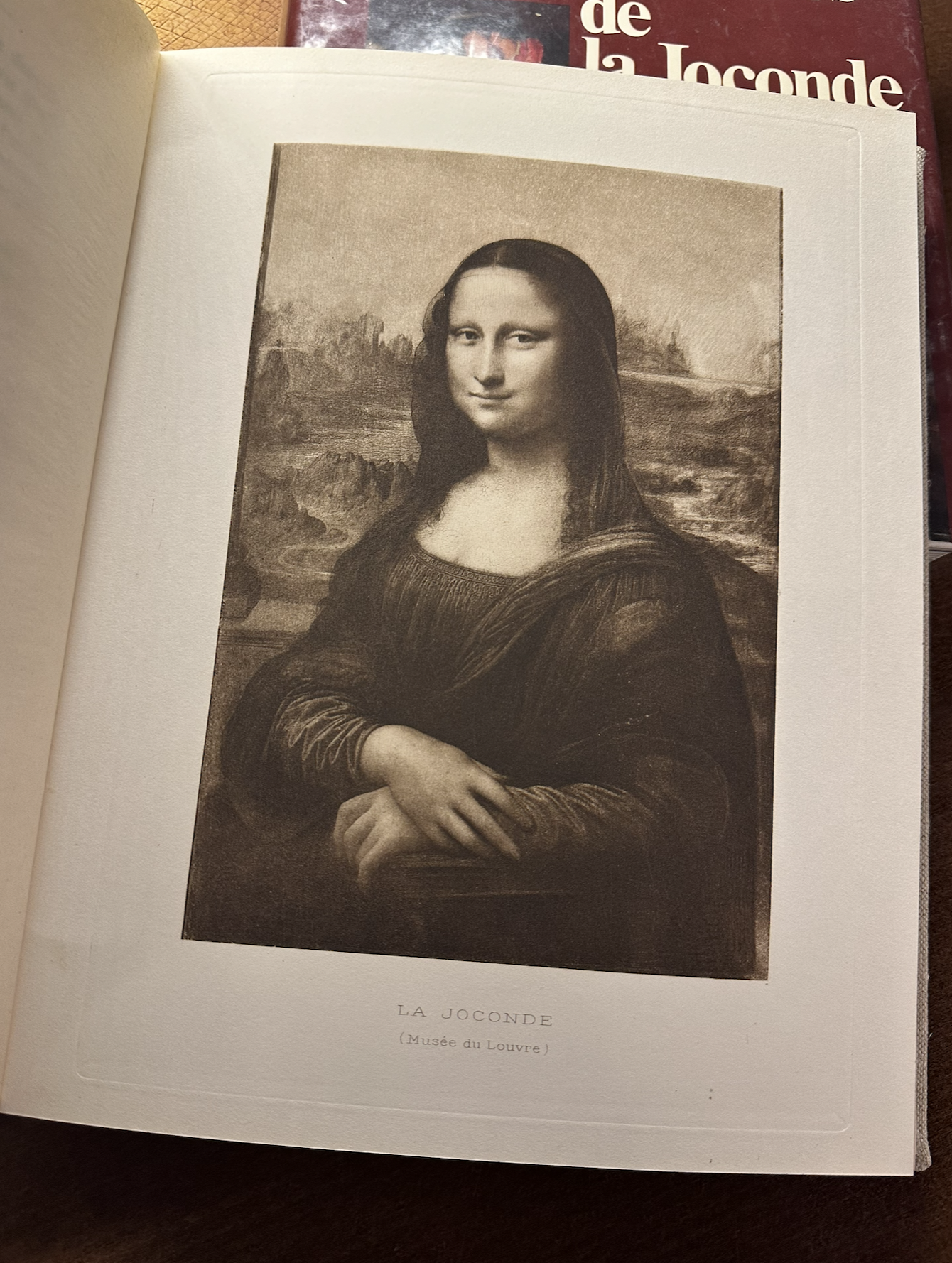
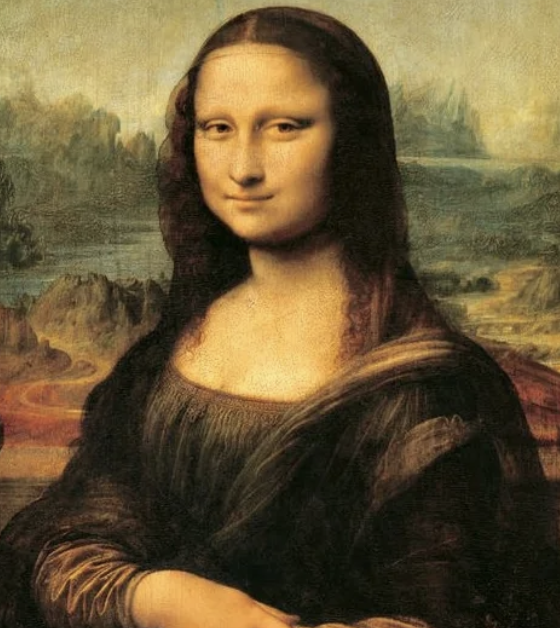
She is the most famous painting in the world, and everyone has an opinion of her. Are there better paintings in the Louvre? Sure, but she also deserves every bit of fame she has garnered for many reasons. Sadly, because of the chaos that surrounds her, you aren’t able to truly appreciate her the way you might other paintings.
Is she overrated, as found in an online poll a few years ago? Well, maybe a little, but you need to know her entire story and the reason why she is so famous, and also the reason she is revolutionary in the world of art. Over the next few months, I will share her story from every angle possible, and at the end, you can let me know if you still think she is overrated. I guarantee you will change your tune.
Years ago, I wanted to know more about the theft of the painting itself in 1911, which I will share in August, and it led me deep down the rabbit hole of all things Lisa, as just about everything I do does.
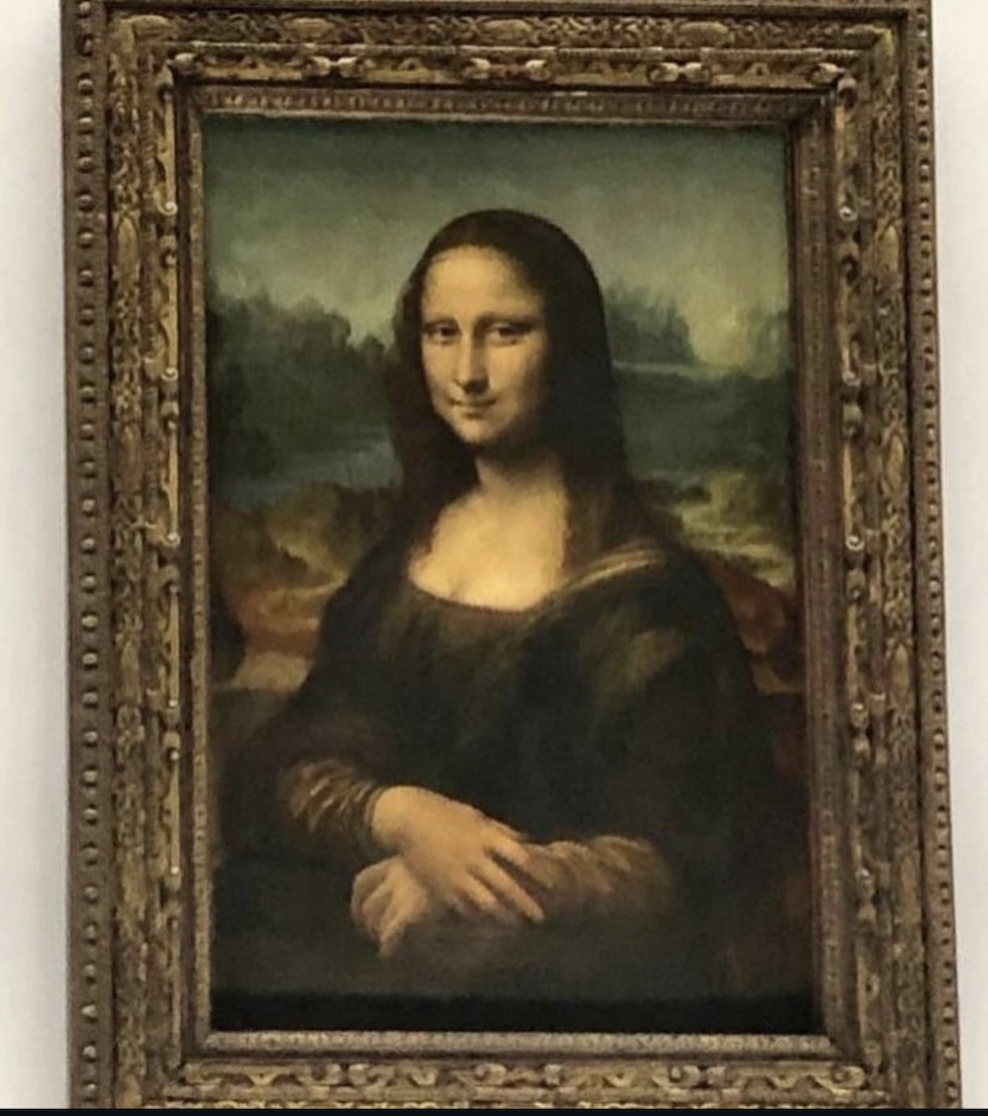
Today, we start with the story of the woman herself.
Who is the woman behind the most famous painting in the world? Was she the mistress of Giuliano de’ Medici? Leonardo da Vinci in drag? A wealthy woman of the Renaissance and friend to the artists? Or was she a Florentine woman and wife of a wealthy silk & wool merchant?
It is one of the greatest questions in art history, right up there with why she is famous in the first place.
You know this lady as La Joconde or as the Mona Lisa.
She hangs in the Musée du Louvre and every day, more than 25,000 people visit to snap a selfie and remark how small she is, but few realize she was a real person. Many don’t even know why they have to run up the marble steps, barely looking at Winged Victory on the way to take a picture and check Lisa off the list.
On Tuesday morning, June 15, 1479, Lisa di Antonio Gherardini was born in Florence at the corner of Via Maggio and Via Sguazza, not far from the Palazzo Pitti of the Medicis.
The Gherardinis were the typical Florentine family. They lived in the heart of the city, came from well-known and established families, and attended church regularly. Her father, Antonmaria, came from a long line of wool merchants and had been married twice before meeting Lisa’s mother, Lucrezia del Caccia. His first two wives died tragically during childbirth,
Lucrezia del Caccia was born in 1454 and was fifteen years younger than her husband. At twenty-five, she was practically an old maid. Lucrezia came from a well-off family that owned a prosperous wool business as well as farms and property in Chianti. Six more children would follow, and she also outlived her husband by just a year.
Hours after her birth, Lisa was wrapped up and taken in a long procession across the Arno River for her baptism at San Giovanni. Lisa di Antonio Marie Gherardini was named after her paternal grandmother, and her birth was recorded on a warm Tuesday afternoon in Florence. Little did her parents know that someday her name would be spoken around the world.
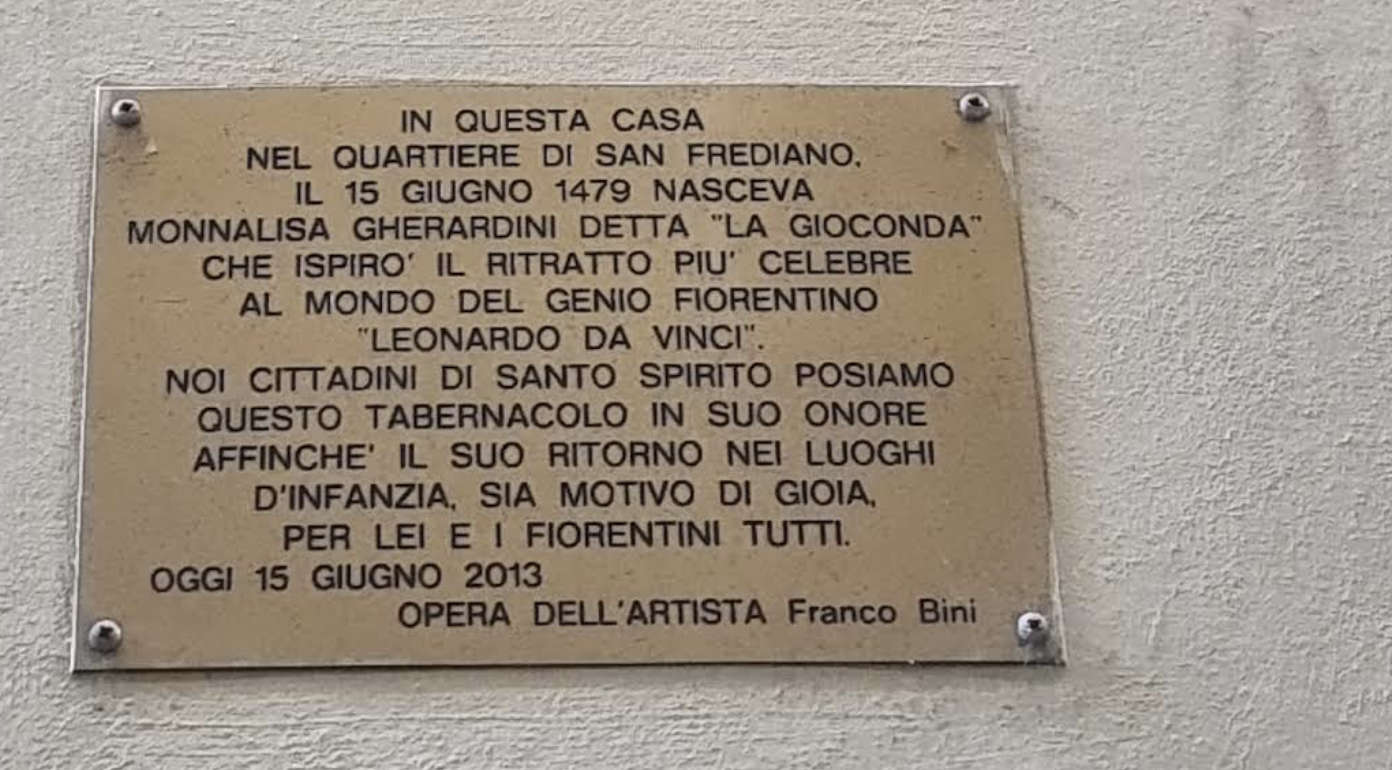
The building she was born in is now gone, but a plaque marks the address.
In 1494, the large Gherandini family moved to the other side of the Arno near Santa Croce, a move that would place her in the center of her destiny. Residing between via del Pepi and via Ghibellina, her father met their new neighbors, the Giocondos.
Francesco del Giocondo was born on March 19, 1465. The Giocondo family was also in the wool and silk business in Florence and owned multiple workshops in and around Florence. He had been married once or even twice before; the paperwork is a bit murky, and he lost both wives during childbirth, just like Lisa’s father. His first wife, Camilla, had a son, Bartolomeo, on February 24, 1493, but died on July 24, 1494, while delivering their second child; neither survived.
Eight months later, on March 5, 1495, at age 15, Lisa married the son of their neighbor, Francesco del Giocondo. The marriage ceremony in 15th-century Florence was a bit different from what it is today. It began with a “ring day,” when the bride would be taken to her future husband's home for the evening. If she spent the night, it was a successful match, and the next day her dowry would be transferred to her husband. Two days later, a wedding ceremony was held in the church with the entire town in attendance.
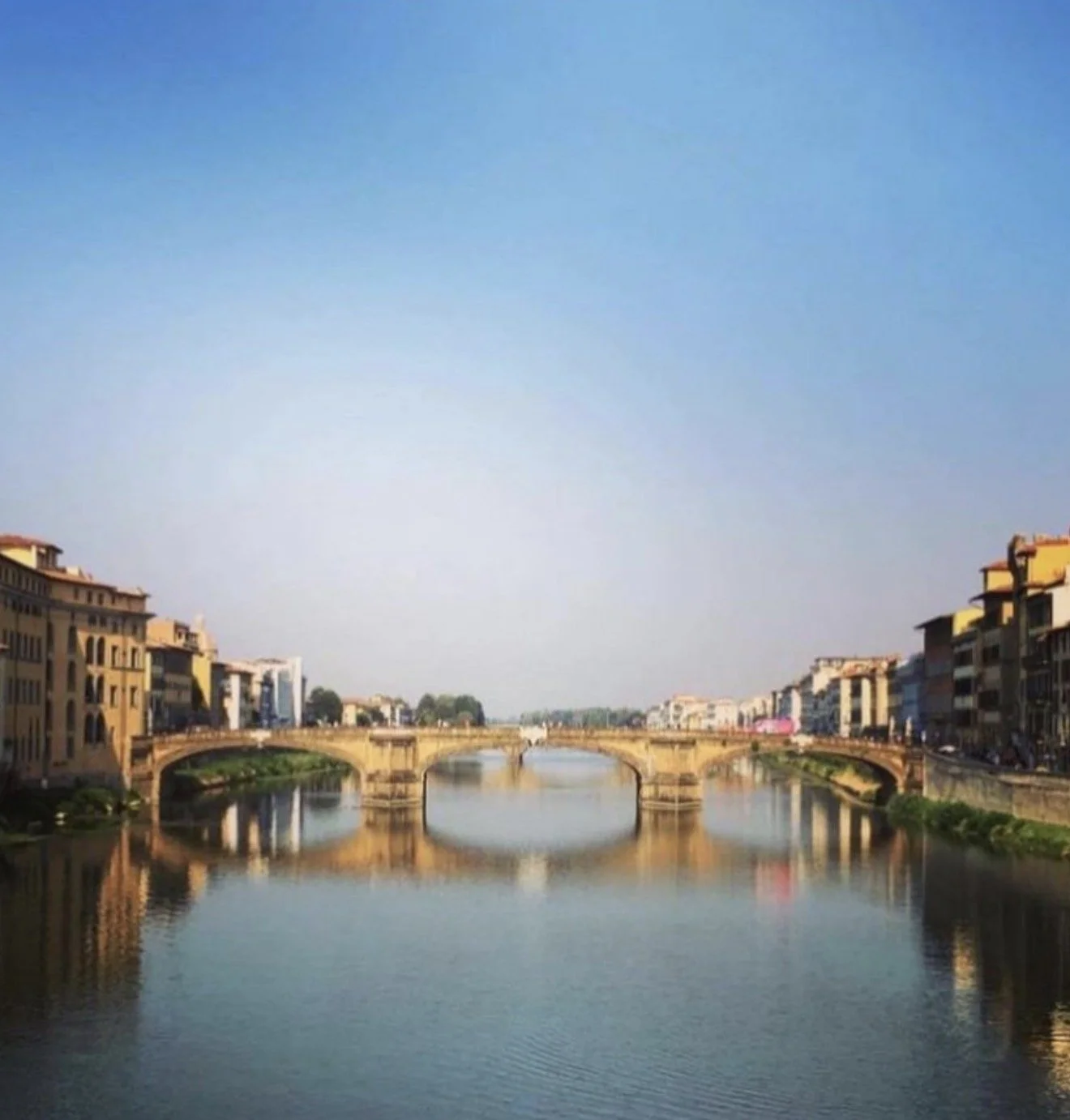
Arno river in Florence
A year later, they welcomed their first son, Piero, on May 24, 1496, quickly followed by a daughter, Piera, on May 5, 1497. Four more children followed: Camilla in 1499, Marietta in 1500, Andrea in 1502, and finally Giocondo in 1507. Sadly, only three survived to adulthood.
The Giocondos lived between Lisa’s parents and a gentleman named Ser Piero da Vinci. Ser Piero, notary, called the Medici family a client as well as Antonmaria Gherardini and Francesco del Giocondo. Ser Piero came from a long line of notaries dating back to the 13th century. Born in April 1426 and following in his grandfather's footsteps, he worked in Vinci and traveled between Pisa and Florence.
On one particularly hot July night in 1451, Piero met a young Caterina di Meo Lippi. She was 15 at the time, shocking today, but the normal age to be married or bear a child back then. The result of this hot summer night was the birth of one of the greatest artists of the Renaissance, Leonardo da Vinci, on April 15, 1452.
Piero didn’t marry the young mother, but his parents would take care of her and then little Leo once he was born. The union and result of that night was never anything shameful; the da Vinci family was very open about it and even helped with a dowry for Caterina to marry after the birth. Piero would eventually marry four times and have 11 more children.
Ser Piero shared an office in Florence on the Via Ghibellina starting as early as 1449. Traveling between the Tuscan cities until finally settling with his large family just a few doors down from his office in March 1480.
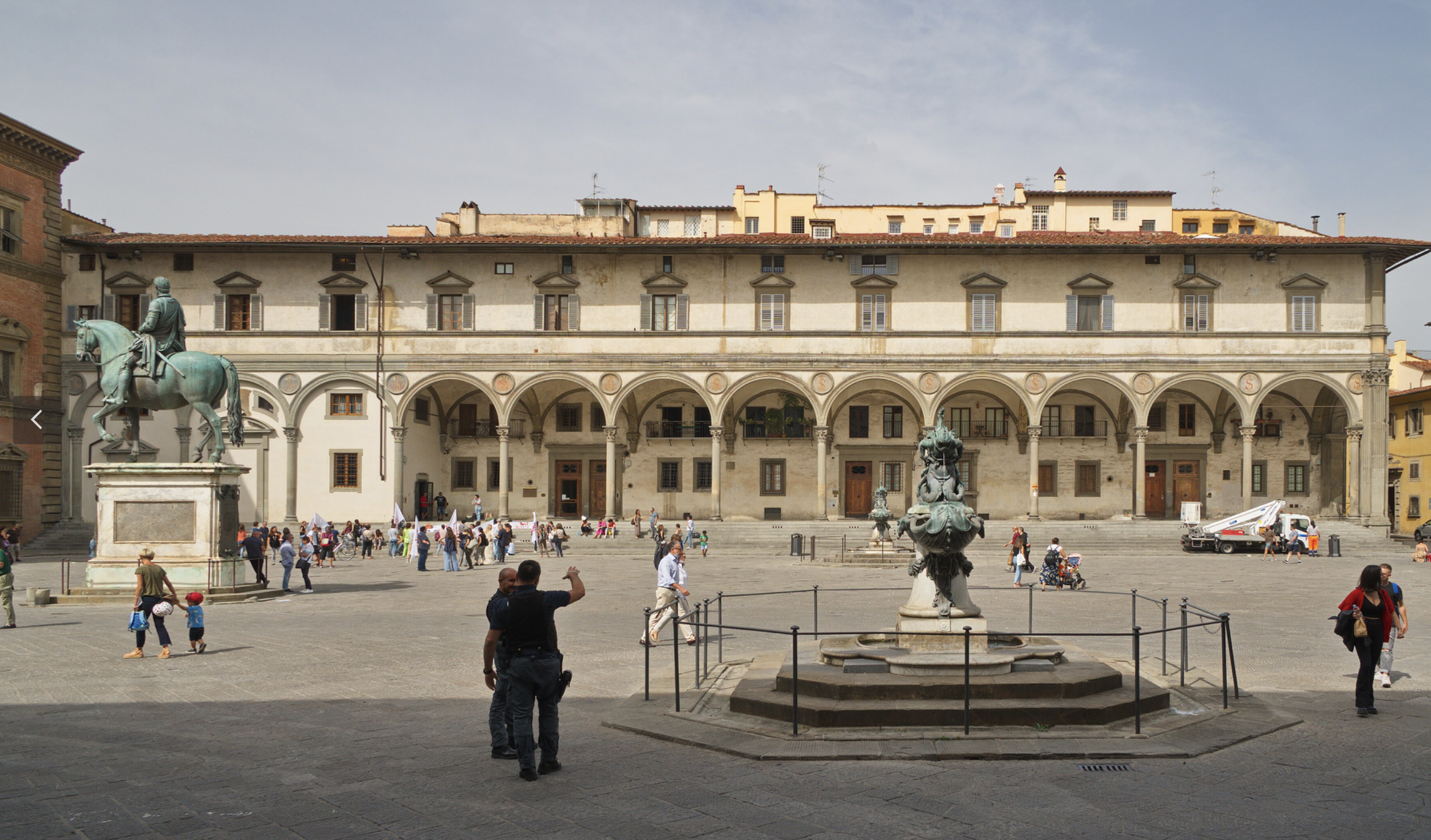
Between 1484 and 1497, Ser Piero served as referee and notary for Francesco and his brothers, a role he often filled within the family. He also worked for the Basilica of the Santissima Annunziata, where Francesco del Giocondo and his wife were frequent guests.
In the Spring of 1500, Leonardo arrived in Florence. His father’s house was clearly busting at the seams with children, and he stayed instead at the Annunziata. A place of worship, a convent, and also served as a hotel for visiting members of the church. Leonardo would have stayed until the autumn of 1501, when he was also going to paint a fresco within the church. It was during this time that the del Giocondos met Leonardo.
Leonardo was 51 years old and had completed the Last Supper in Milan just a few years before. Traveling between Tuscan towns, he was asked frequently to take on portrait commissions and turned them down. Even Isabella d’Este, the first lady of the Renaissance who amassed a large collection of art, some of which is in the Louvre including one that was the first target of Peruggia on that steamy summer night in August 1911, more on that in two months. Even with Isabella’s money and clout, he turned her request down.
Francesco del Giocondo climbed the ranks of society. Appointed to the consul of the silk guild, he became a civil servant and was elected to one esteemed post after another from 1499 to 1512. It is also thought that with Francesco’s connections, he helped facilitate the commission for the fresco of the Battle of Anghiari in the Palazzo Vecchio. Awarded in 1504, the fresco was fraught with issues, and he abandoned the project in 1505. Nothing survives today.
In turn, Leonardo da Vinci agreed to paint a portrait of his wife Lisa. He must have caught Leo on a good day.
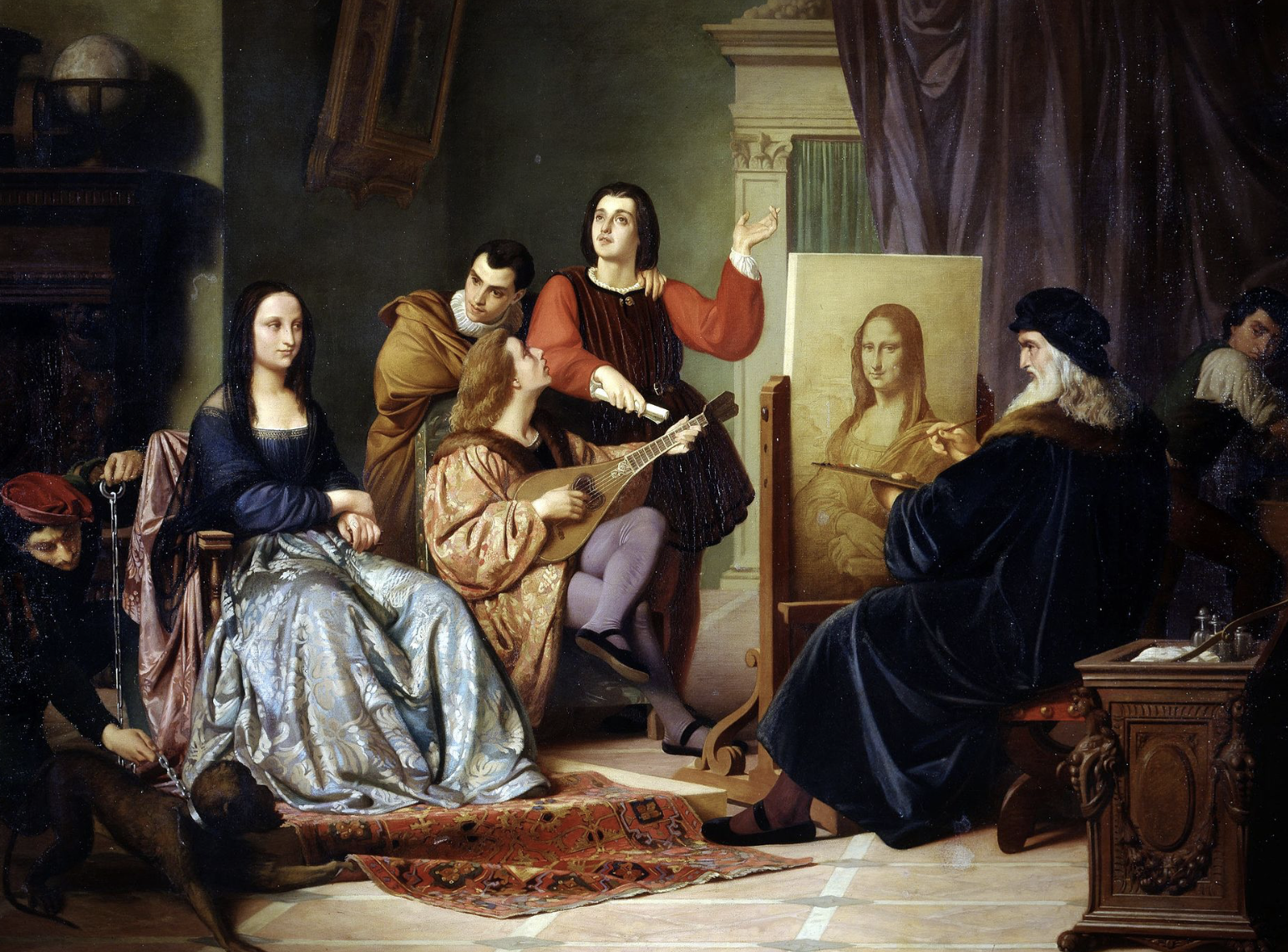
Leonardo began painting Lisa in February 1503, a little over two months after the birth of her last daughter, Andrea. For days on end, the lovely Lisa sat in front of him with her right arm over her left, turned slightly, and looked straight ahead. To keep Lisa entertained, Leonardo brought in a band of musicians, entertainers, and jesters, giving her a little smile, which is also the most notable and talked about characteristic of the painting.
A portrait of that size was rarely seen. Normally, they were much smaller, which is ironic because one of the most common responses to seeing her is that she is “smaller than people expect”.
Leonardo worked on the painting for four or five years before he set it aside.
Da Vinci liked to “meditate” on his paintings, work a little on a painting, then take a break to ponder what he would do next. So it wasn’t out of the norm that the painting of Lisa wasn’t finished.
During this period, Francesco ran into a bit of a problem. The Medici family was under attack, and Francesco was under suspicion of working for the exiled family. Arrested and tossed into prison until the Medici returned and bailed him out.
Francesco never paid Da Vinci for the portrait.
Years went by, and tragedy struck the family. Another son, Giocondo, was born on December 20, 1507, and survived only 19 days. Their daughter, Camille, entered the convent at 12 years old in 1511 and died on January 18, 1518. Worried for their lone surviving daughter, Marietta, born November 11, 1500, they took her to the nearby Sant’Orsolo convent.
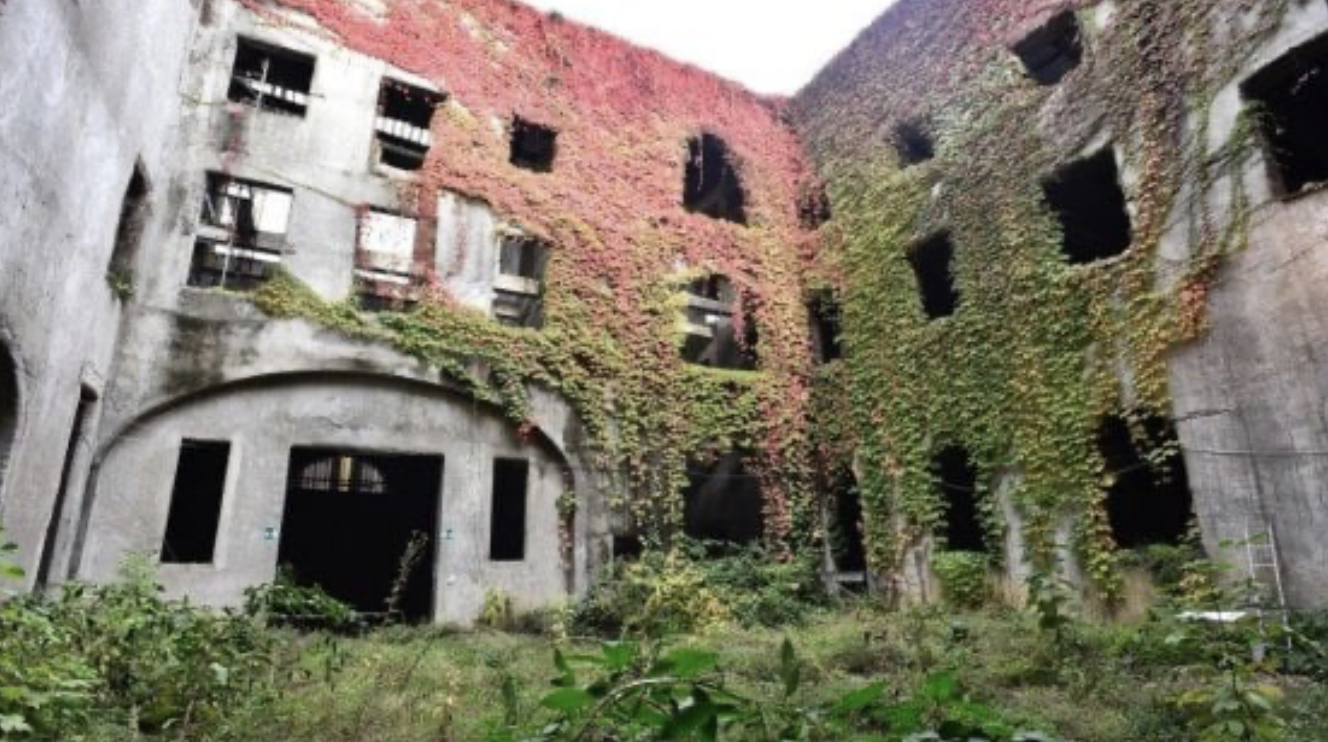
The Sant’Orsolo was the Ivy League of convents. Only the women of the top notch of society could enter as members. The family had to pay for their lodging, food, and anything else they needed throughout their lives. Marietta became Sister Ludovica on October 20, 1521, and lived there until her death in 1579. It would also become the final home of our Lisa.
It is thought that Francesco contracted the plague and died in March 1538. He was interred in a family vault in the Santissima Annunziata. In his will, he left everything to his children; only three had outlived him, including Sister Ludovica. Lisa’s dowry was returned to her, as was the custom, and all her clothing and jewelry were hers to keep. She was placed in the care of his first son, Bartolomeo, whom Lisa adopted after their marriage, and Piero.
Not much is known about the last years of Lisa's life. After her husband's death, she moved into the Casa Grande with her son Piero. In her final year, the convent of Sant’Orsolo (Saint Ursula) would be her home alongside her daughter.
Lisa never saw the unfinished painting that would make her a household name worldwide. She died in the convent on July 14, 1542. The cause of death is unknown.
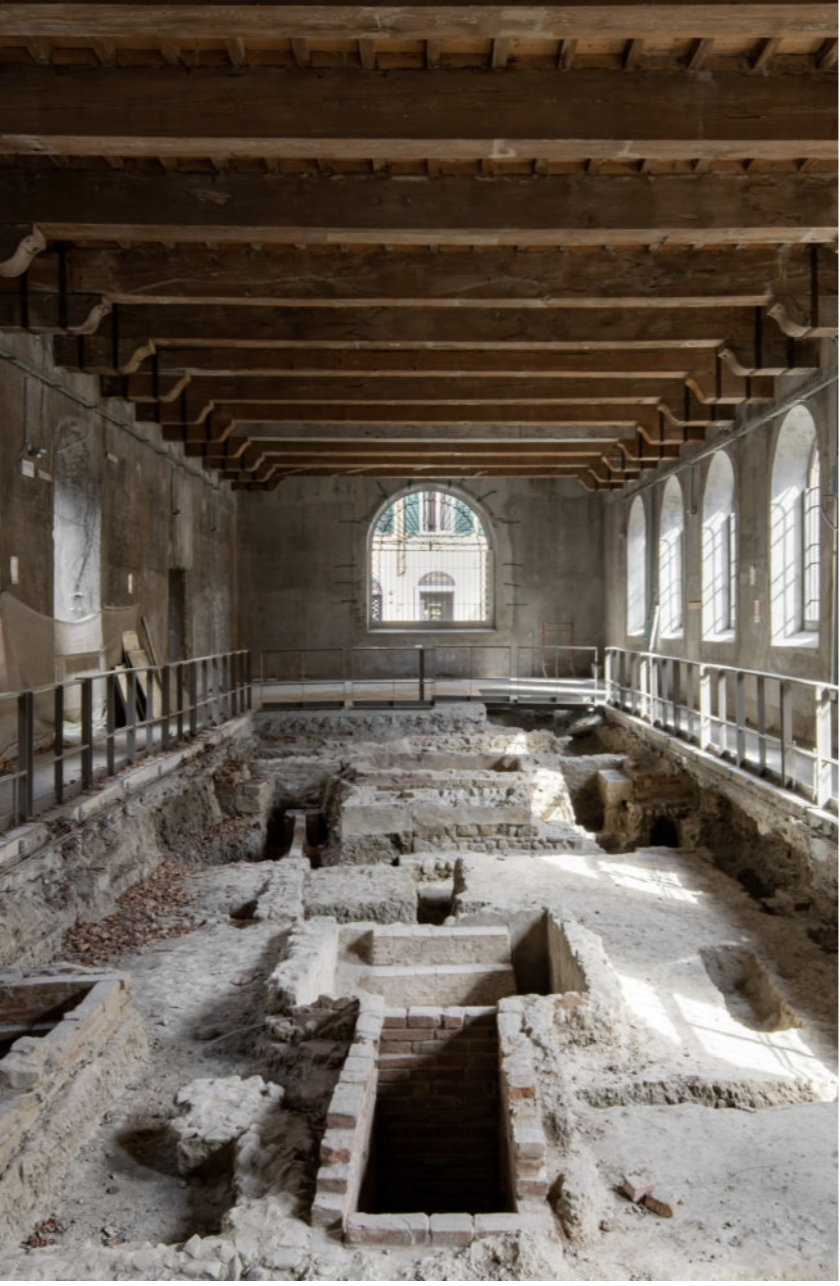
Recently, in September 2025, in the San Lorenzo area of Florence, a monumental discovery was unearthed. The convent of Sant’Orsola dates back to the 15th century. In 1810, Napoleon had the convent closed for many years, and during WWII it served as a tobacco factory. In the 1980s, it was purchased by the Italian Ministry of Finance and is currently being restored.
Less than a year ago, beneath reinforced concrete poured in the 1980s, a series of tombs was uncovered, including the tomb thought to be that of Lisa Giocondo. A few fragments of bone remain; the skull is missing, and it's unclear whether they can extract any DNA. We do know that on July 15, 1542, Lisa was interred here in the convent, not in the family vault with her husband.
How do we know the painting is in fact Lisa Giocondo? It’s a question historians and researchers have asked for over 500 years. The first mention of the portrait painting and its connection to Lisa was written years after the deaths of Leonardo and Lisa.
Florentine artist, architect, and writer Giorgio Vasari wrote one of the most definitive guides to the artists of the Renaissance. Published in 1550, Lives of the Most Excellent Italian Architects, Painters and Sculptors from Cimabue until our Time. It was a series of multiple books and editions covering the greatest artists of the time. The second edition was released in 1568, and the da Vinci chapter was greatly updated. Multiple sources, many close to Da Vinci himself, provided information, but the original description of the Mona Lisa is still used today as the certified account, although Vasari never actually saw the painting in Da Vinci's atelier.
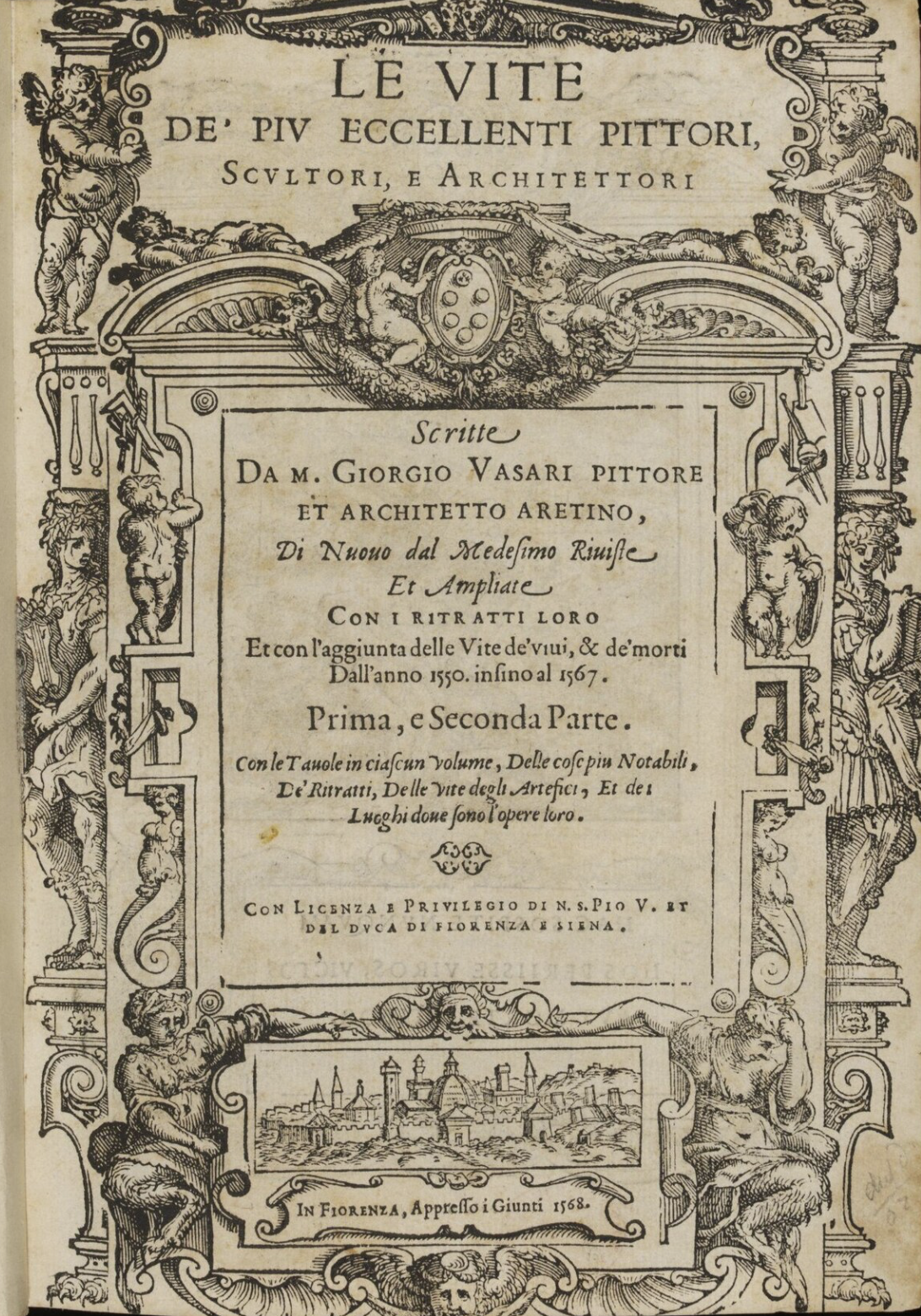
His account describes the painting:
“Seeing that the eyes had that luster and watery shine which are always seen in life, and around them were all the vivid rosy tints of the skin, as well as the eyelashes, which cannot be done without the greatest subtlety. The eyebrows, through his having shown the manner in which the hairs arise from the flesh, where more thick and where more sparse, and curved following the pores of the skin, could not be more natural. The nose, with its beautiful nostrils, rosy and tender, seemed to be alive. The mouth, with its cleft and its ends united by the red of the lips to the flesh-tints of the face, truly seemed to be not pigments but flesh.”
His account came from the subject's family members, as well as other artists who saw the painting between its creation and 1550.
One detail many notice today is that she doesn’t have eyebrows. What changed between this first account and today? In the last few years, Lisa has undergone multiple X-rays and wavelengths of light that have uncovered even more secrets and maybe a few answers. More on that in another episode soon, or we will be here all day.
In 1508, Leonardo carried the painting with him to Milan, then to Rome in 1513, and finally to France, where he spent the last years of his life.
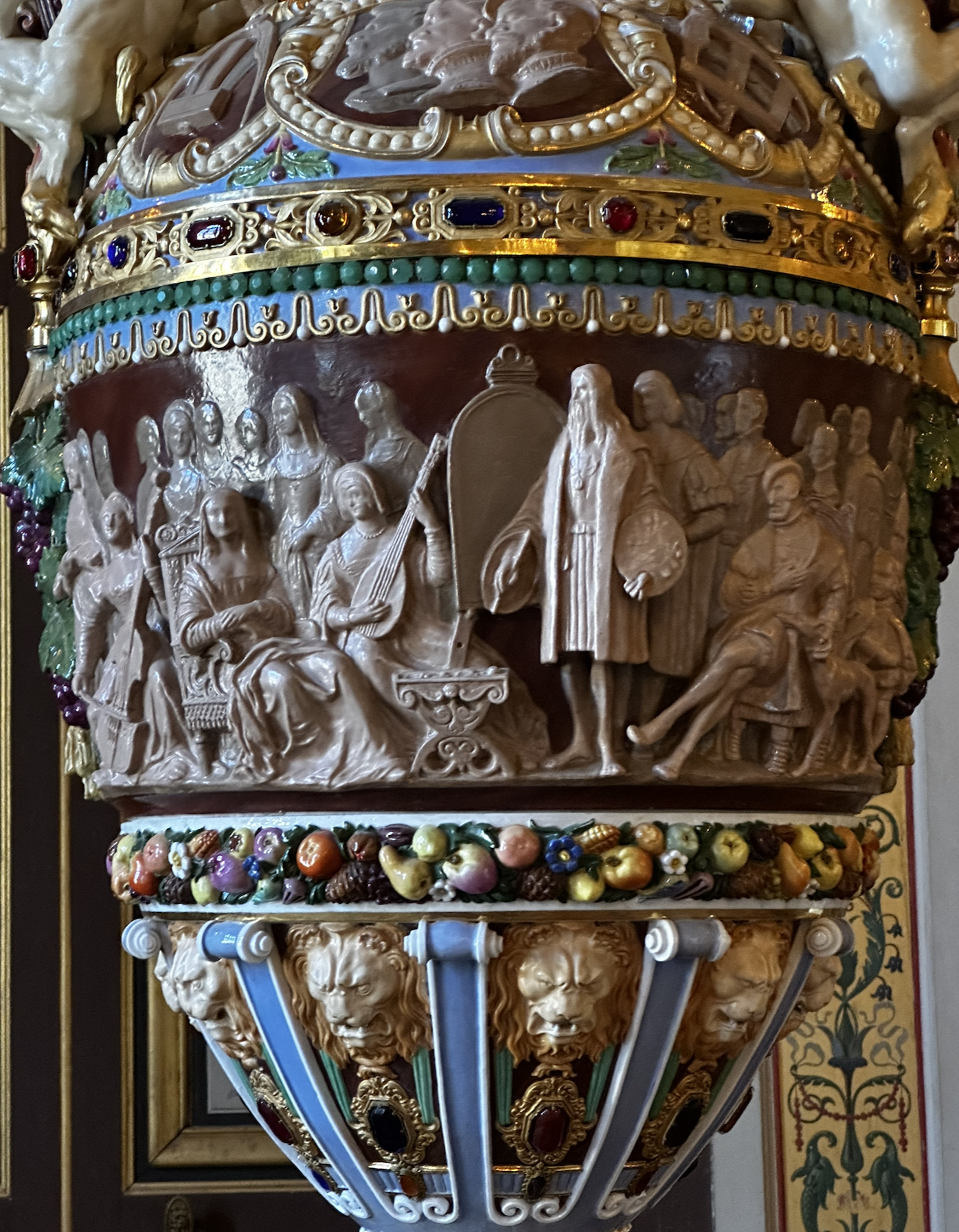
On December 9, 1515, Francois I arrived in Bologna to meet with Leo X after his recapture of Milan. This was the moment that a young French king met the Italian artist. At the time, Leonardo’s benefactors were falling out of power, and he needed to make a change.
Francois, I had asked in December 1515 if he wanted to move to France, but Leonardo declined. By the summer of 1516, Leonardo changed his mind and accepted the king’s generous offer of a palace to live in, money, and anything he needed.
On August 12, 1516, at 64 years old, Leonardo, with his assistants Francesco Melzi, Salai, as well as Ambassador Pallavicini and Battista de Vilanis, departed Rome for the long voyage to France. Nothing survives to this day that records the exact route or the trip's notes, but there are many theories about the path from Italy.
The 270 km journey from Rome to Florence took 9 days on foot, with about 30 km per day. Staying in Florence for a few days to say goodbye to friends and family before moving on to Bologna and Castelnovo, another 220 km. By September 6, the group had arrived in Milan and remained there for two weeks, during which Leonardo worked on the plans for the Sforza Castle. The castle wall had been destroyed by the Swiss army, and François asked Leonardo to redesign it.
From Milan, the route gets very murky. Many historians over the last 500 years have proposed different ideas. Traveling in the fall, the snow began to fall, and some of the routes would have been treacherous for even a young man. Possible ideas include traveling through Switzerland, and one sketch has survived of a bridge over the River Rhone. The lakeside wonderland of Annecy is also a possible option. Some reports state that Leonardo rode on the back of a mule for the 1500 to 2000 km journey, others that he was carried in a chair by his two assistants.
Packed in his bag were three paintings. Saint John the Baptist, Sainte Anne, and the Mona Lisa. As Leonardo liked to “meditate” on his paintings and also drift between mechanical sketches and his other pursuits, he took forever to finish anything.
Some researchers believe the background landscape was inspired by his travels through the Alps, but any notes supporting that were destroyed during the French Revolution.
On October 28, 1516, Leonardo and crew arrived at the Chateau d'Amboise to the delight of François I. Just a few weeks after Ambassador Pallavicini died of the plague, the traveling companions were all put into quarantine. Leonardo hadn’t added to his journal until a month later, at the end of November.
The King gave his beloved artist the nearby Château de Clos-Lucé, just a short walk away. He even created an underground tunnel linking the two together so he could visit Leonardo anytime.
Francois I was born on September 12, 1494, and was never destined to be king of France. After his father’s death, his mother, Louis de Savoy, contacted her husband's cousin, King Louis XII, and moved the family to the Palais du Louvre. Without an heir to the throne, the two decided to marry their children and named Francois I as the heir to the throne. Claude de France married Francois I in Saint Germain-en-Laye on May 18, 1514. On January 1, 1515, Louis XII died, and Francois became King of France at 20 years old.
François I's mother, Louis de Savoy, loved the Italian Renaissance, and at a very early age, he was raised with a love of the arts. Known as the Père et Restaurateur des Lettres (father and restorer of letters), this was no doubt due to the influence of his mother. As soon as he took the throne in 1515, he headed off to Italy, where he enjoyed the lavish meals and art.
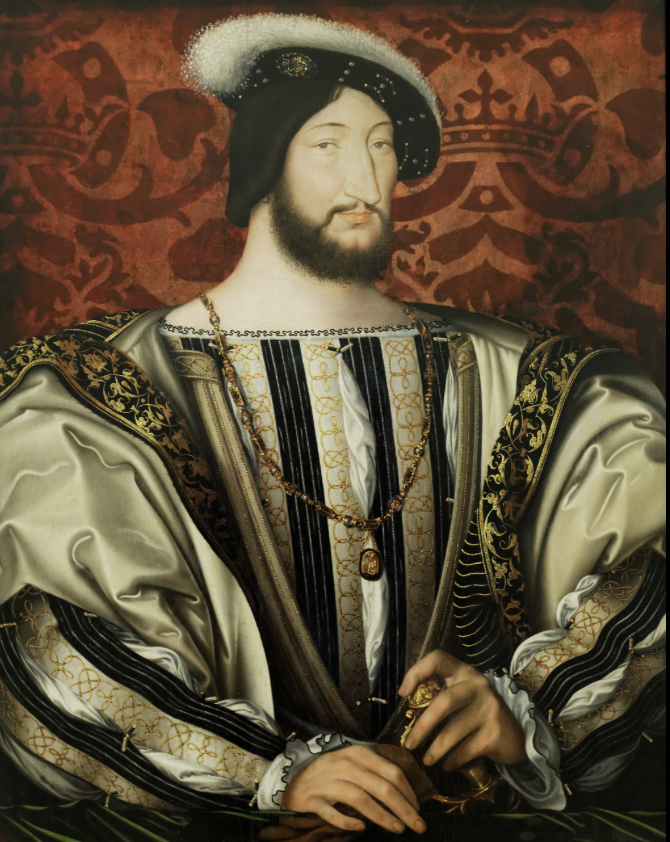
Up until Francois I, the kings didn’t have much of an adoration for art, and only a scattering of paintings decorated the medieval castles, but that was all about to change. I think of Francois as the Father of Art for France, the man who loved it so much that he brought Leonardo da Vinci back to France and began the collection that would later become the building blocks of the Musée du Louvre.
Leonardo da Vinci was only the first of the many artists who would move from Italy to France. The King also invited painter Niccolo Machiavelli, Michelangelo, the architect Sebastiano Serlio, and goldsmith Benicento Cellini. While living in France, Leonardo spent more time on party planning and costume designs for the King than on painting. At times, he picked up his brushes to work on the three paintings he brought with him, but in the last three years of his life, he spent little time with the canvas.
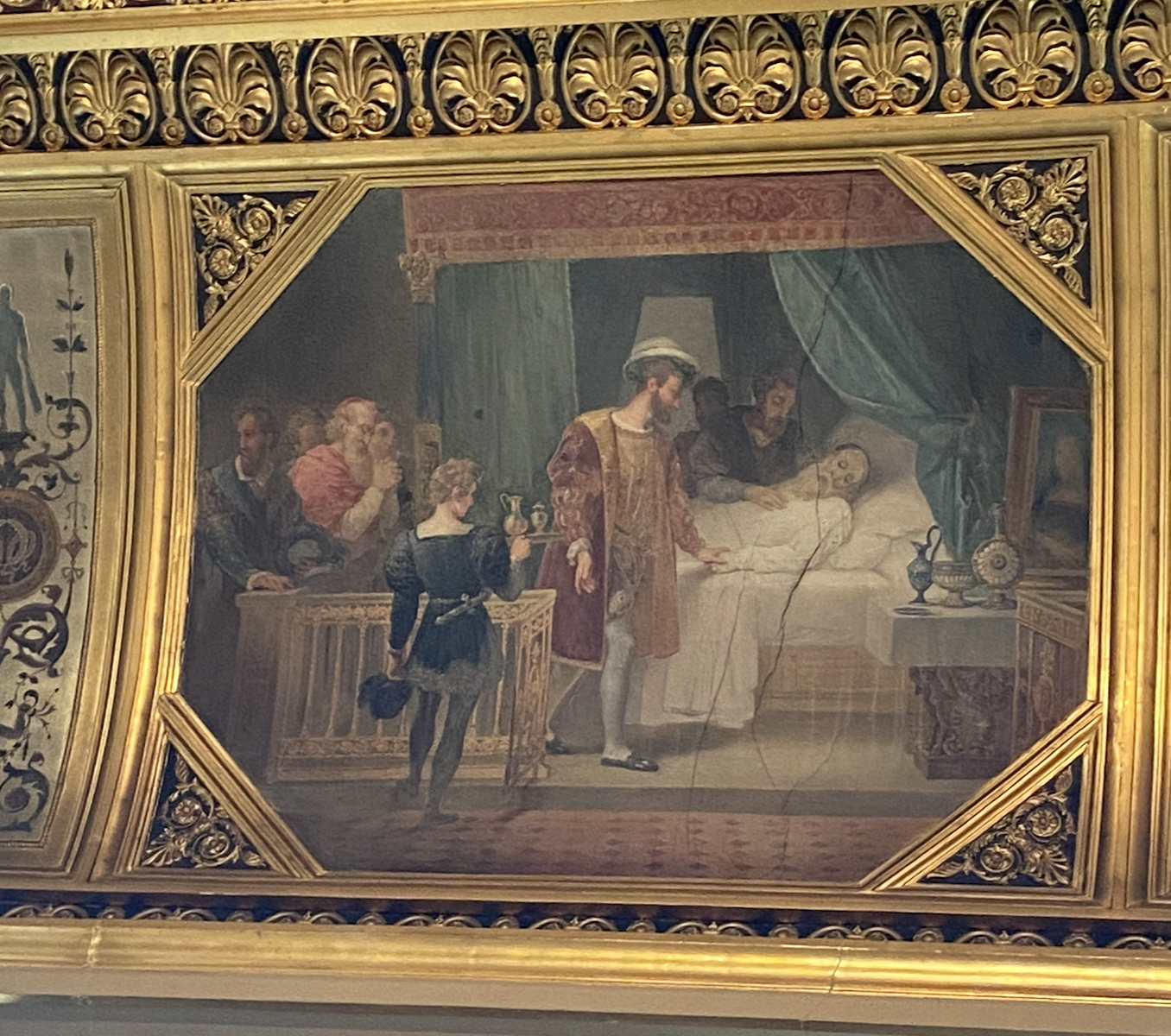
On May 2, 1519, Leonardo da Vinci took his last breath. Died of a stroke at 67 years old. He was long thought to have died in the arms of Francois I, as depicted in many paintings in the Musée du Louvre and the Petit Palais. The king and the artist were great friends, and he believed Leonardo to be the smartest man in the world and often called him father. At the time of the death, the King was in Saint-Germain-en-Laye and would not have been at the master’s bedside, but it was a nice thought.
Leonardo changed his will just 10 days before his death on April 23, 1519, leaving all his works to Melzi, including the three paintings. His close assistant and “servant”, Gian Giacomo Caprotti, known as Salai, also had numerous paintings and sketches in his hands after da Vinci’s death. Salai met Leonardo at age 10 and became a trusted member of his atelier, although he constantly stole from him as a teenager. Da Vinci taught him the fine craft of painting, and a few copies of Lisa are said to be by Salai himself.
Salai was killed in a street brawl on January 19, 1524. Without a will, an inventory of his belongings was created on April 21, 1525, and many paintings were listed, including “A Joconde” that most likely was done by Salai and not da Vinci.
What happened to da Vinci's paintings between his death and the years that followed is also a bit of a blur. Multiple reports had very different ideas before it came into François I's hands. Salai's sister is said to have had Lisa, but these are most likely copies done in da Vinci's presence. With so many copies out there at that time, it is hard to say.
In a 17th-century inventory of the royal collection, a note states that Francois had paid 4,000 gold crowns, or 9.7 million dollars today, for the painting. However, it is a bit harder to find the transaction date. Many date this to 1518, a year before Leonardo's death, but if so, would she have left France with Salai then?
For close to 20 years, the king of the Renaissance kept his prized lady in his Appartement de Bains (bathroom) at the Chateau de Fontainebleau. A lavish collection of rooms that included baths and steam rooms, the last place to keep a painting. Later, it moved to the Cabinet des Tableaux, renamed the Pavillon des Peintures, but damage had already been done. A 16th-century oil painting on a wooden panel was not a match for a cold chateau with horrible heating and ventilation. Many of the paintings from the original royal collection were destroyed due to neglect and a lack of understanding of proper art handling at the time.
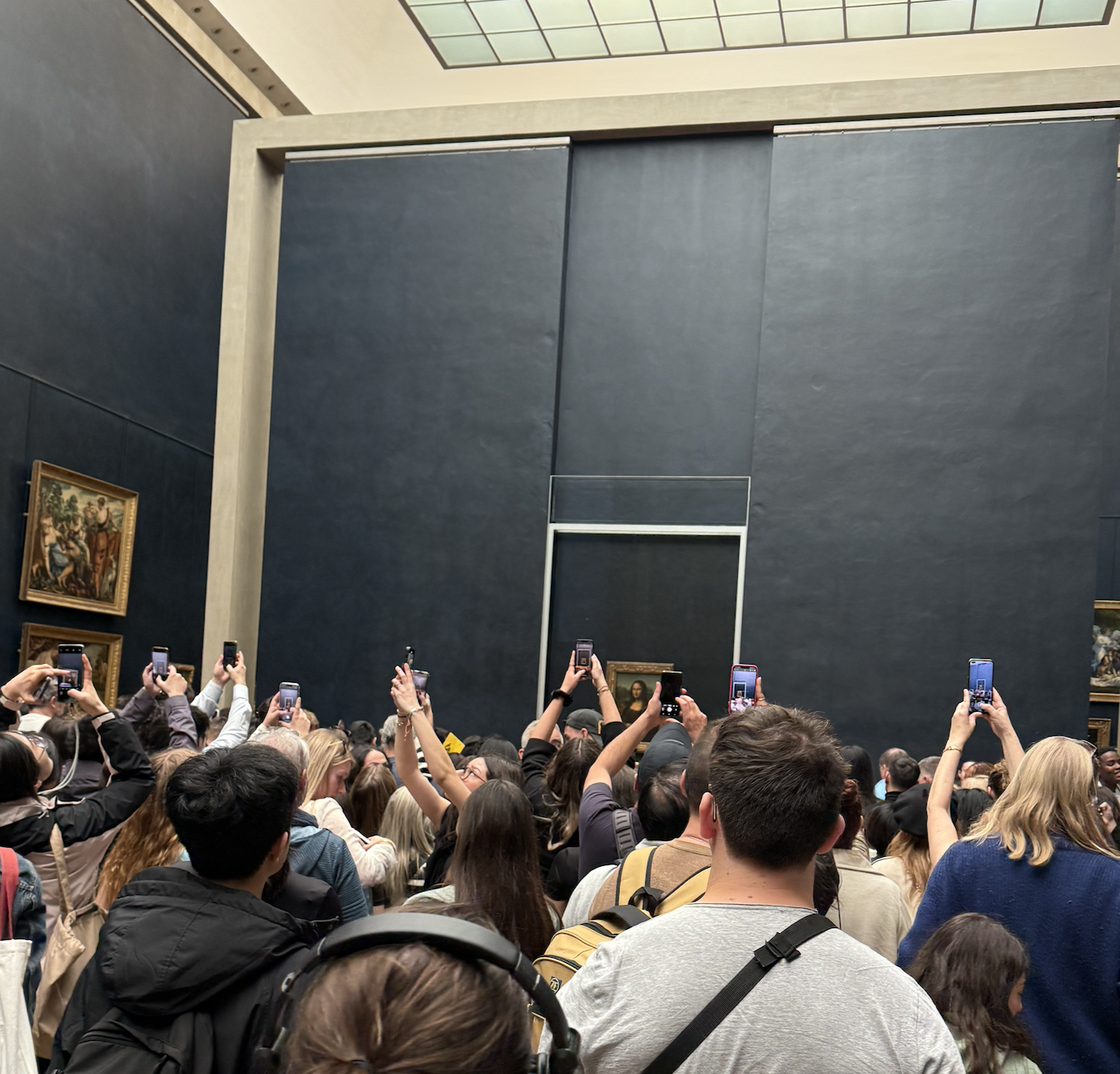
Today, she is held inside a concrete wall, behind two layers of triple-pained bulletproof non-reflective glass separated by a few centimeters. Within the wall, 25 pounds of silicone keep the masterpiece painted on wood at a perfect 55 degrees. Sensors for temperature, movement, and even sound. Each July, she is removed from her tomb and given a once-over under the tightest possible security.