
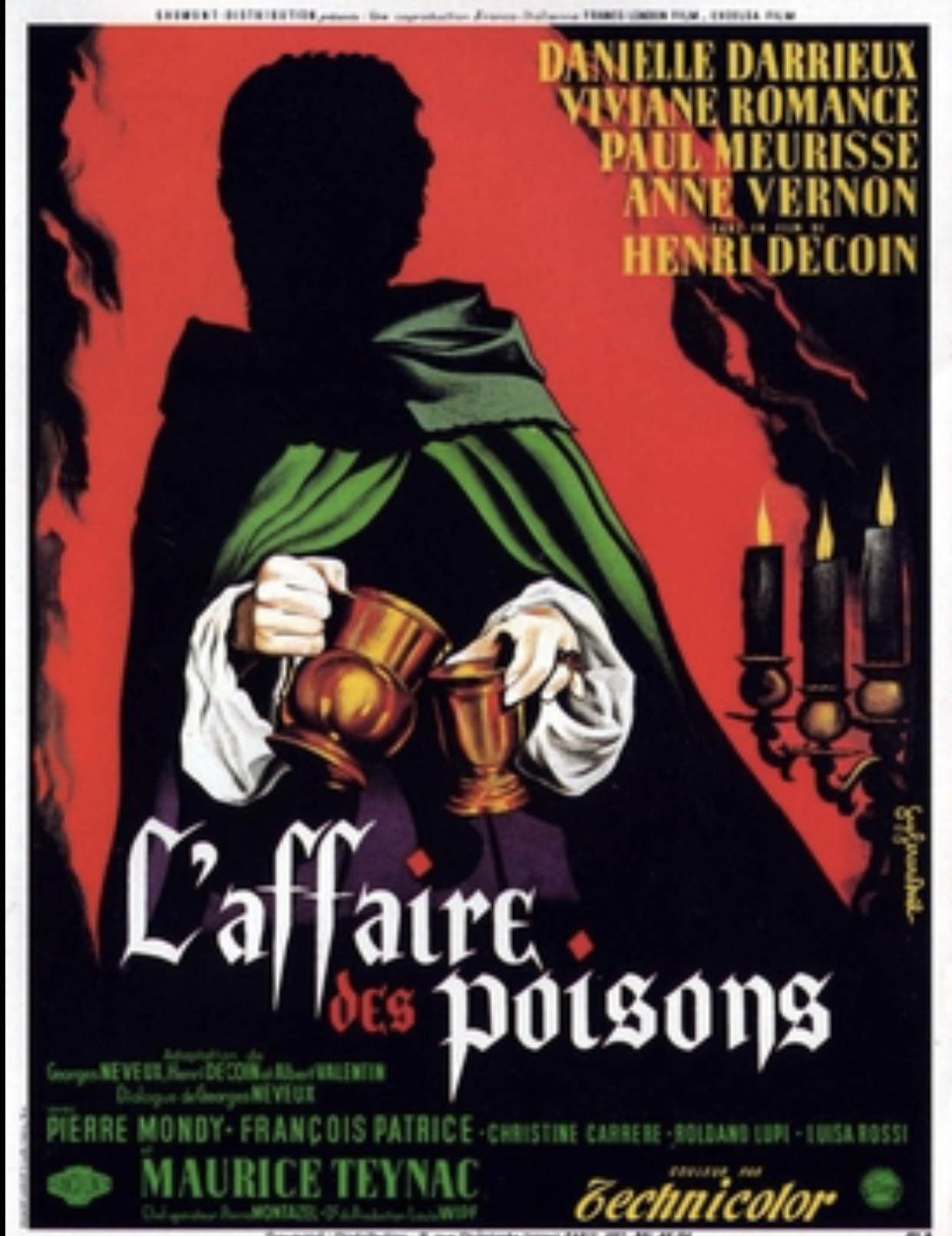
In the late 17th century, all of Paris and the court of Versailles were embroiled in the Poison Affair, and few were immune to its reach, including the Sun King.
It all began in 1662 when a gentleman named Godin de Sainte-Croix began an affair with Marie-Madeline Dreux d’Aubray. Marie-Madeline was born on July 22, 1630, in Paris to a very influential family. Her father served in the military, and her mother, Marie Olier, was the brother of Jean-Jacques Olier, who created the Society of Saint Sulpice.
The oldest of five children, her mother died shortly after giving birth to her youngest brother in 1637. Just 7 years at the time of her passing, her father expected her to help with her siblings and be in charge of the house. At the same age, she was raped by a neighbor, and at 10, she began to have sexual relations with her two younger brothers up to three times a week.
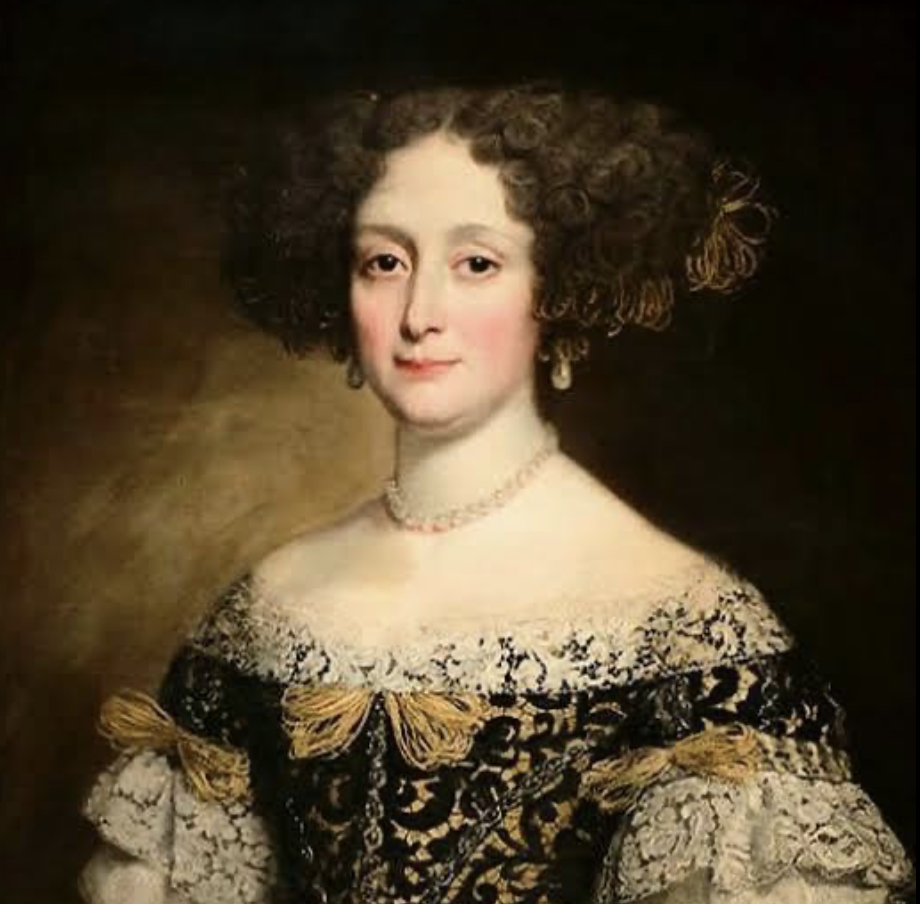
Thankfully, she was able to escape the family due to her substantial dowry, and at the old age of 21 on December 20, 1651, in the Église Saint Eustache, Marie-Madeline married Antoine Gobelin, Marquis de Brinvilliers. Descendant of the family that made their money in fabric dying and tapestry. The building and the manufacturing still hold their name today.
The marriage resulted in three children, and Antoine already had 4 illegitimate ones that she was to care for when he was away as commander of the Regime of Auvergne. They had a high standing in the Marais, where they lived, and held parties and salons that everyone wanted to attend. Although it all began to quickly slip away due to Antoine’s constant gambling, leading him to make a break for it and eventually flee France and his many creditors.
In 1662, Marie-Madeline was aware of her husband's infidelity as well as his gambling, and began to separate her own family money from him. One evening, her husband invited a fellow soldier to their home. Jean Baptiste Godin de Saint-Croix and Marie Madeline began quite the affair shortly after their introduction, around the same time her husband fled in the dark of night.
The two lovers did not hide their affair. Once her father learned of the relationship, he had Godin locked up in the Bastille for three months in 1663, an action that would lead to his own death. While there, Godin met Egidio Exili, who was in the Bastille for poisoning the sister-in-law of Pope Innocent X, Olympia Maidalchina, in Rome.
Godin was already fascinated by chemistry and poisons, and Exili taught him all he needed to know about creating tasteless, odorless poisons that could not be detected and would cause a quick death. Exili told him, upon his release, to visit Christopher Glasser, a master chemist at the Jardin Royale des Plantes, to get everything he needed.
A prison stint couldn’t keep these two apart, and as soon as he was released, he was once again at her side and teaching her everything he had learned in the Bastille.

Godin lived at no 5 Rue Hautefeuille, the Hotel des Abbes de Fécamp, they were a short walk to the garden to get their supplies. The two would test out their poisons mixed in with sweet cakes and take them to the patients of the Hotel Dieu, where they would track the symptoms, dosage, and length of discomfort before their victims’ deaths. Killing numerous people in their research just for the thrill of it. It is not known just how many were killed, but the list could be quite long.
Marie-Madeline took what she learned and tried it out on her father on September 10, 1666, killing him, and a few years later, in 1670, her two brothers, Antoine and Francois, and a sister were also victims of her potions. Although their fractured relationship after years of abuse left them a bit distrustful of her. Marie Madeline was able to place a trusted footman, Jean Amelin de la Chaussée, into their household to slowly poison and kill her brothers. The death of her sister followed later, as a way to knock out all obstructions to get to her full inheritance.
Saint-Crox also became concerned for his own life and began to document and make note of her actions, and even take evidence of her crimes and lock it all away in a red leather box. A note was left that if anything was ever to happen to him before she herself died, to go look inside the red box. Unfortunately for Marie-Madeleine, he died of natural causes on July 31, 1672, and it set off the Affair of the Poisons.
Upon his death, he left a long list of creditors seeking payment and demanded that the king intervene. A search was authorized of his property, and the note was discovered a week after his death on August 8. His trusted valet, Jean Amilin de La Chaussée, was brought in for questioning, and he corroborated all the mysterious evidence in the red box. His actions led to his own demise when he was sentenced to death and killed on March 24, 1673.
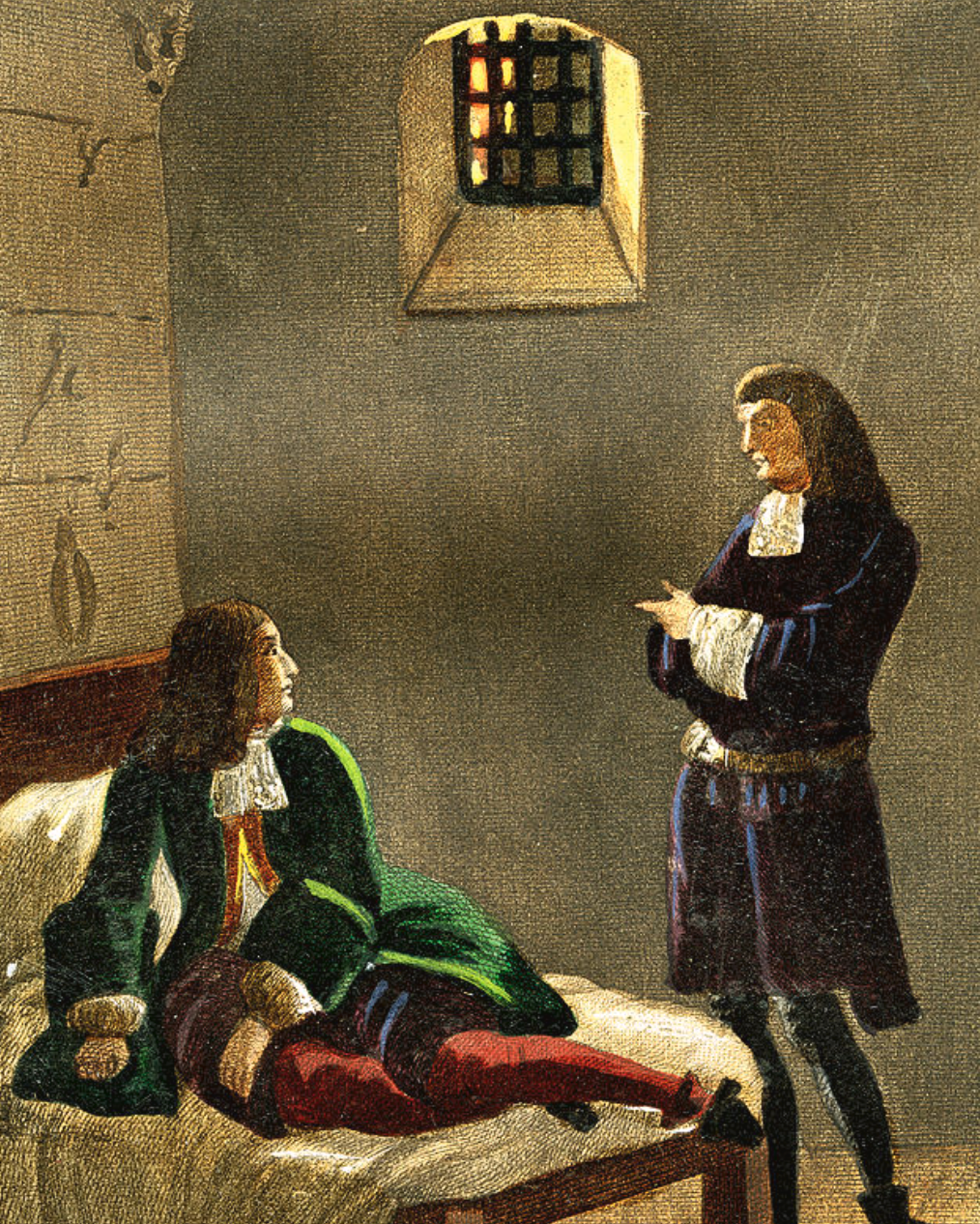
After the death of Saint Croix and the discovery of his letters, Marie quickly left for London and eventually frequently moved throughout northern France, but was finally caught in 1676 in Liege, Belgium. Charged with murder in absentia in 1673, a few determined investigators kept looking for her. One even dressed up as a priest and infiltrated the convent and waited for his moment to arrest her and bring her back to Paris on April 17, 1676.
On April 26, the questioning and torture began. At first, she pleaded her innocence, although a letter in her own hand was filled with her endless admissions to crimes. Her torture included “water cure,” pouring gallons of water from a tube into her mouth that could often end in a quick death. Think of a beer bong without an off switch. She admitted to killing her brother and father
A second trial began on April 29 and culminated on July 14, with Madame de Sévigné in the front row, taking notes on everything that was said. Sevigne, the lady of letters we covered before, was born in 1626 in the Place des Vosges. Spending time at the court of Versailles, her daughter, Françoise, could have been a victim if she had spent any more time under the watchful gaze of Louis XIV. Francoise married Francoise de Grignan and left Paris on April 19, 1678, thereby beginning the letters that would document all of Parisian society.
It was discovered in 1669 that Marie-Madeliene attempted to kill Jean-Baptiste Colbert twice, on February 18 and again on May 5. He was a close member of the court of Louis XIV and chief minister of state, but this was nothing compared to what his court at Versailles would soon endure.
When Henriette of England, wife of Philippe I, Duc d’Orleans, and brother of Louis XIV, died on June 30, 1670, it is believed that the poison came from Marie-Madeline. A glass of Chicory was given to Henriette by the Knight of Lorraine, who was also the lover of her husband and wanted her out of the way. Later that day, she died at just 26 years old. Upon her death, her autopsy revealed that she died from suspicious causes.
The entire ordeal captured the attention of all of Paris. The day's documenter, Madame de Sévigné, gives us the most detailed account. “Assassination is the safest; it is a trifle compared to the eight months of killing her father and receiving all his caresses and sweetness, where she always responds with doubling the dose.” Alexander Dumas also noted all the details of the trial and used them in his books.
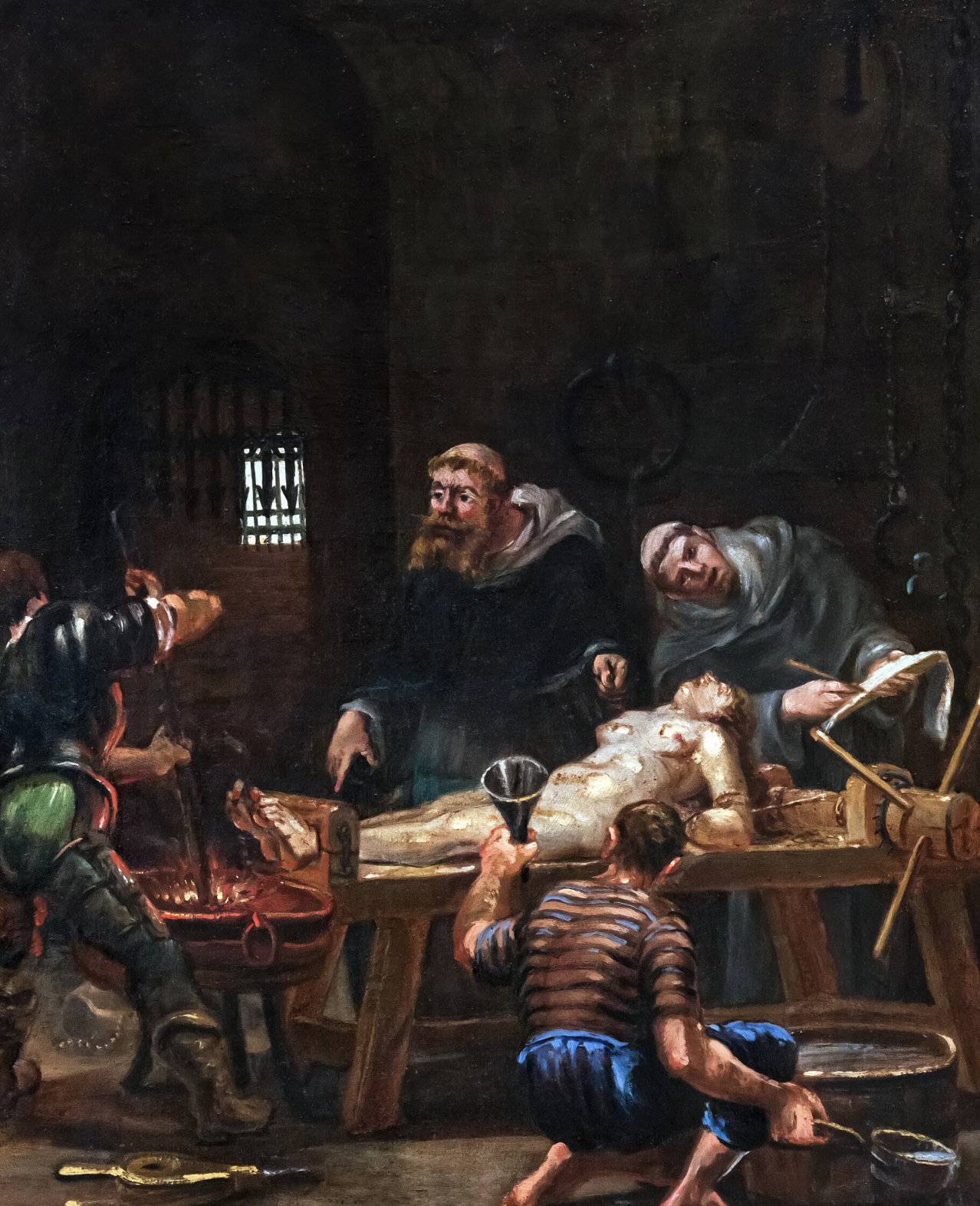
The Torture of Marie Madeline de Brinvillers Jean-Baptiste Cariven
On July 16, 1676, Marie Madeline met her final fate on the Place de Grève, now Place de l'Hôtel de Ville. Beheaded and burned on a stake, her ashes were tossed into the Paris wind. Sévigné said that “Never has the city been so aroused, so intent on a spectacle”. She also remarked that Paris had now inhaled her evil and that it would return in the next seven years.
As Marie-Madeline was taken the short way to her death, she said: “Out of so many people, must I be the only one to be put to death? Half the people in Paris are involved in this sort of thing, and I could ruin them if I were to talk”. When news reached the king, he ordered an investigation. Louis XIV appointed Gabriel Nicolas de la Reynie, the lieutenant general of the police, to create a group to look into the allegations. He never knew how close to home it would get.
Reynie first went to every alchemist in and around Paris, which led him to poisoners, and in no time, he was at the door of Catherine Deshayes Monvoisin.
Catherine was born in 1640 and married Antoine Monvoisin, a Parisian jeweler. They had one daughter, Marie-Marguerite, who would later turn against her mother. Catherine was first just a palm reader and fortune teller, but that quickly led to being a potion and poison maker and performing abortions.
Aphrodisiacs were her gateway drug. Providing for the many women of society used to arouse their spouses. Made with everything from chocolate to cocaine, cloves, and cannabis, and turned into a paste that could be rubbed on their intended love interest.
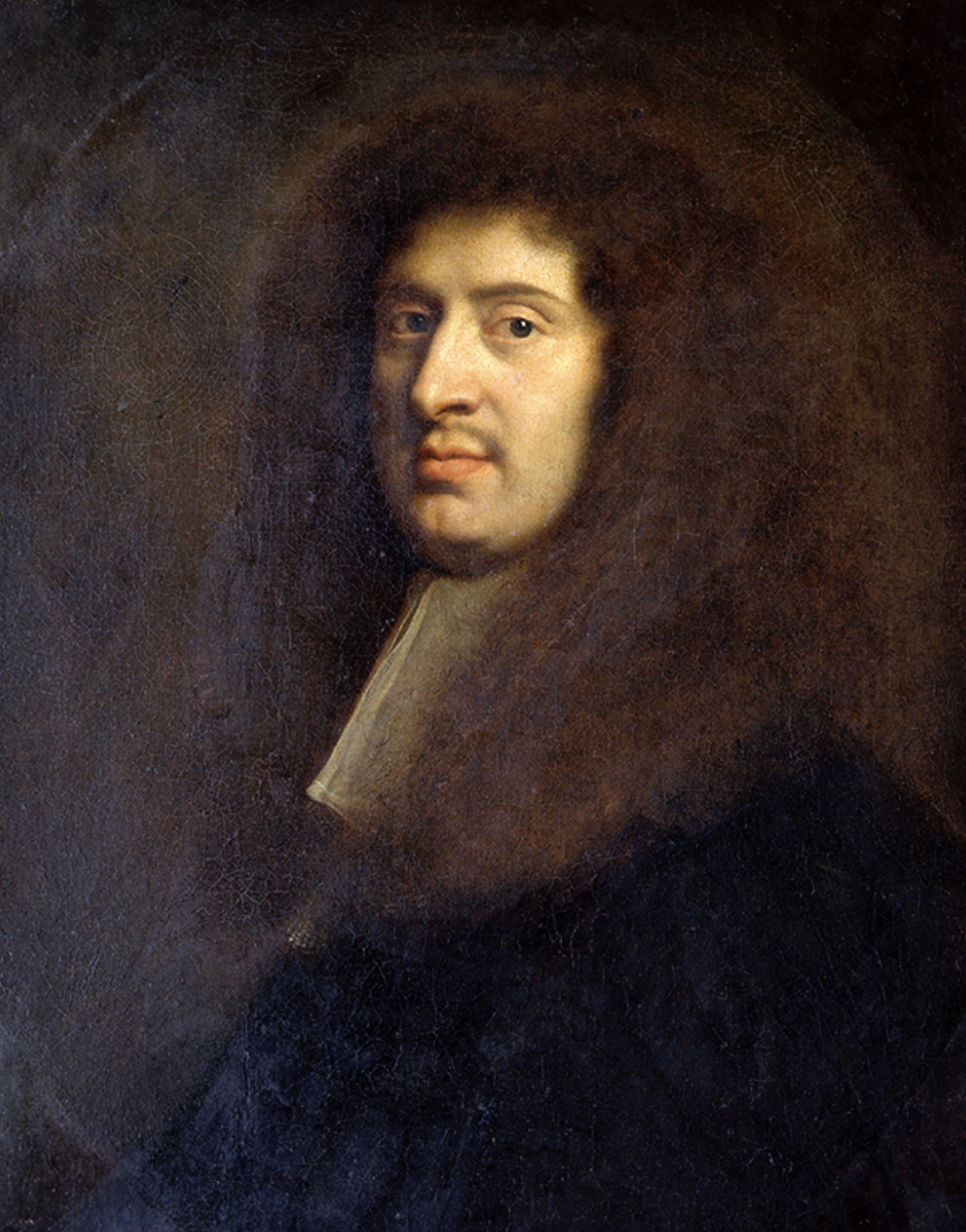
Gabriel-Nicolas de La Reynie by Pierre Mignard
Madame Monvoisin developed quite a fan base, and women of all ranks of society lined up at her door each day. Her practice began to expand into the darker arts. One of the most horrific acts during this time was the Black Mass, a practice that had been around for centuries but was given a name in the 17th century. Another woman who loved to dabble in the occult world, Catherine de Medici, was known to hold a Black Mass on May 28, 1574. During the time of the Poison Affair, a former priest, Etienne Guibourg, revived the practice in Paris with Monvoisin in 1673. It is not for the faint of heart to hear, and the practice involves the killing of a baby, which Monvoisin was never short of.
In 1658, Madame de Montespan was a lady-in-waiting to Henriette d’Angleterre, the wife of the king's brother Philippe d’Orleans. The beautiful Henriette and Louis XIV had a very close relationship, sharing an affection for music, parties, and the finer things in life. The TV show Versailles depicts the two in a very, very close relationship; however, there hasn’t been any proof they two were also sexually involved.
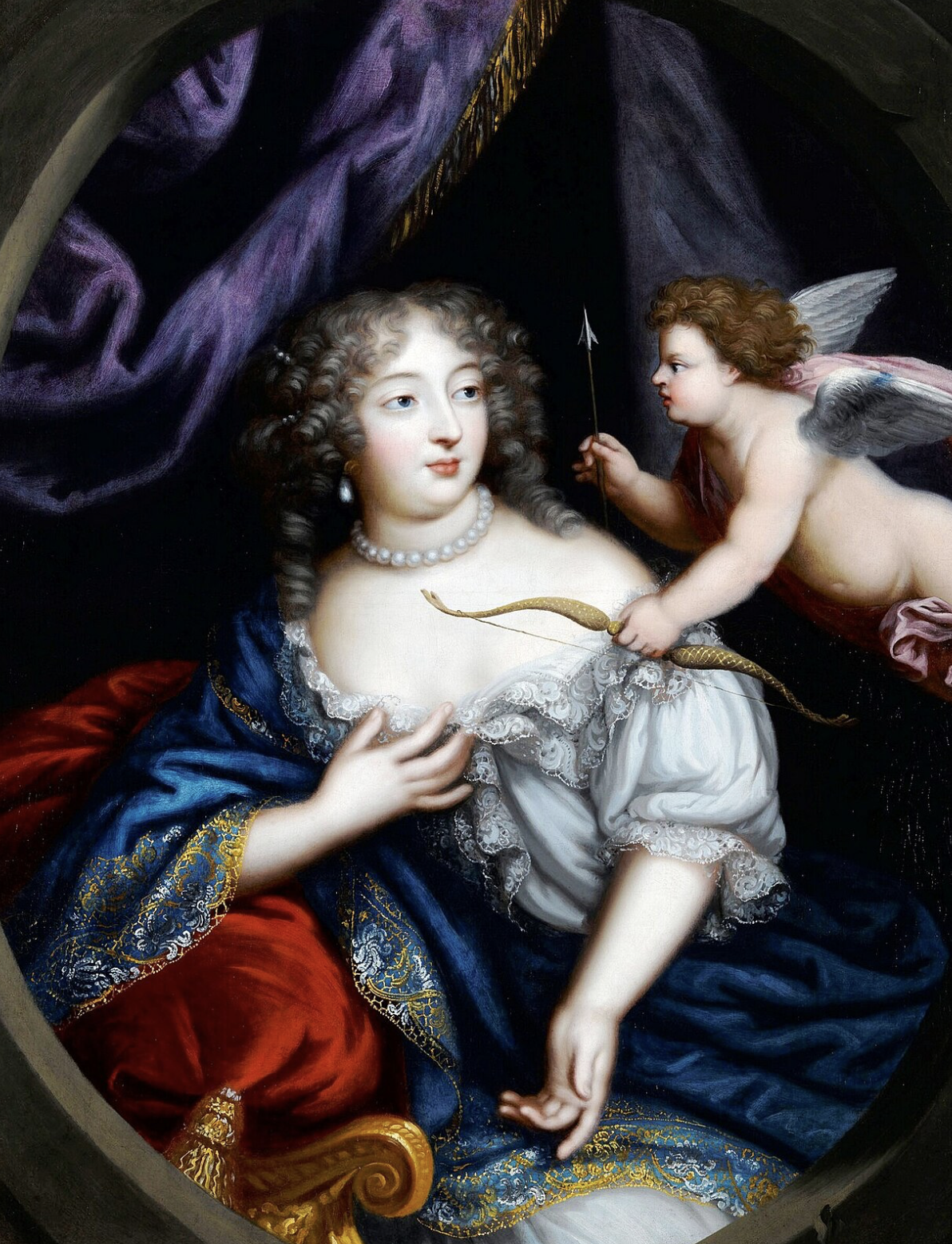
Madame de Montespan
Henriette died June 30, 1670, at 26 years old, of suspicious causes still contested to this day. At the time, it was imagined to be a poisoning orchestrated by the lover of her husband or Montespan herself.
Montespan had her eyes on the king, but needed to befriend Louise de la Valliere, the current headmistress. When Louise and Queen Marie Therese were pregnant by the king at the same time, the queen asked Montespan to dine with the king each evening. It was sending the fox into the hen house, and after the birth of the king's illegitimate child, Louise left the court as Montespan moved into her place.
La Voisin and Montespan first met in 1665, when she asked for a love potion to use on the king to attract his attention. The affair between the king and Montespan began in May 1667. Over the next eleven years, she gave birth to seven children with the king, all but one of whom survived to adulthood. In the final years, Montespan became a little rounder around the edges, and the king turned his eyes to some of the younger members at court.
Living in the glowing rays of the Sun King always came to an end for any of his mistresses, and Montespan wasn’t going to go quietly.
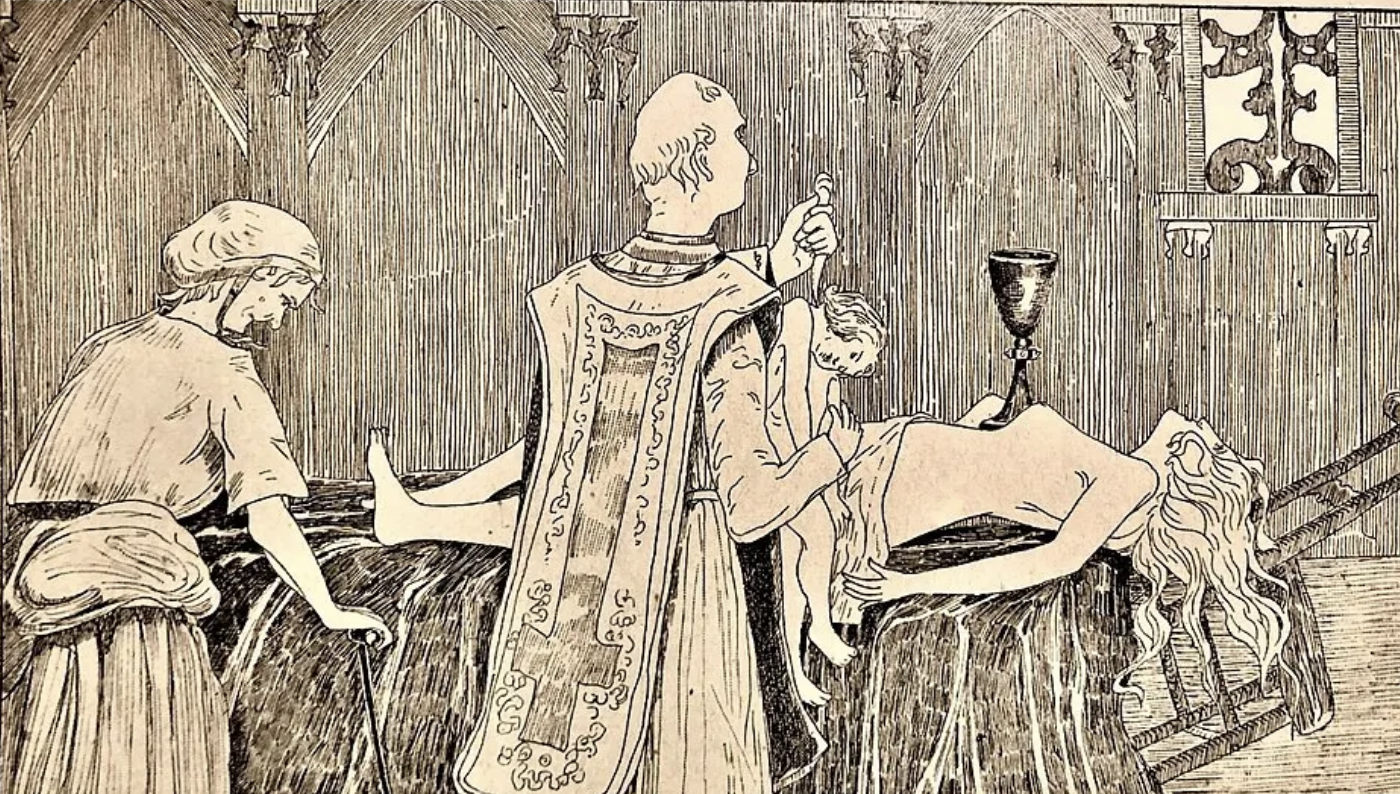
The Black Mass became well known throughout Paris after Monvoisin’s arrest, and everyone would learn the truth about her most famous client. In 1672, Guibourg and La Voisin, as she came to be known, found an empty chateau near Orleans and François de Rochechouart de Mortemart, the Madame de Montespan. Montespan lay on a stone slab, completely naked, with her arms out like a cross and holding a candle in each hand. Guibourg placed a silver chalice on her belly and above her, holding a baby that would bleed into the chalice.
Montespan had to chant, “Asmodée, prince of love, I beg you to accept the sacrifice of this child in exchange, I would keep the king’s affection, the favor of the princesses of the court, and the satisfaction of all desires.” The ritual was held three times: in 1673, 1677, and 1679. Her sexual relationship with the king ended in 1678, and she remained at court for her children until it all came crashing down after March 17, 1769.
On a sunny afternoon, La Voisin was walking out of the church and was arrested by Reynie. Although she was quite adept at the dark arts, she was also a very devoted member of the church and a high priestess. Believing her powers and actions were bestowed upon her by God, she easily walked away with the Lieutenant, thinking she had done nothing wrong. Her abilities were widely known, and every morning, people lined up outside her door to see her for one of many reasons.
At the time, women had little to no rights, especially over their own bodies, and were happy to pay her for fortunes or alleviate a pregnancy, making her a very wealthy woman.
An inspection of her home on Rue Beauregard in the 2nd, authorized by her daughter, found more than 2500 babies buried in her backyard.
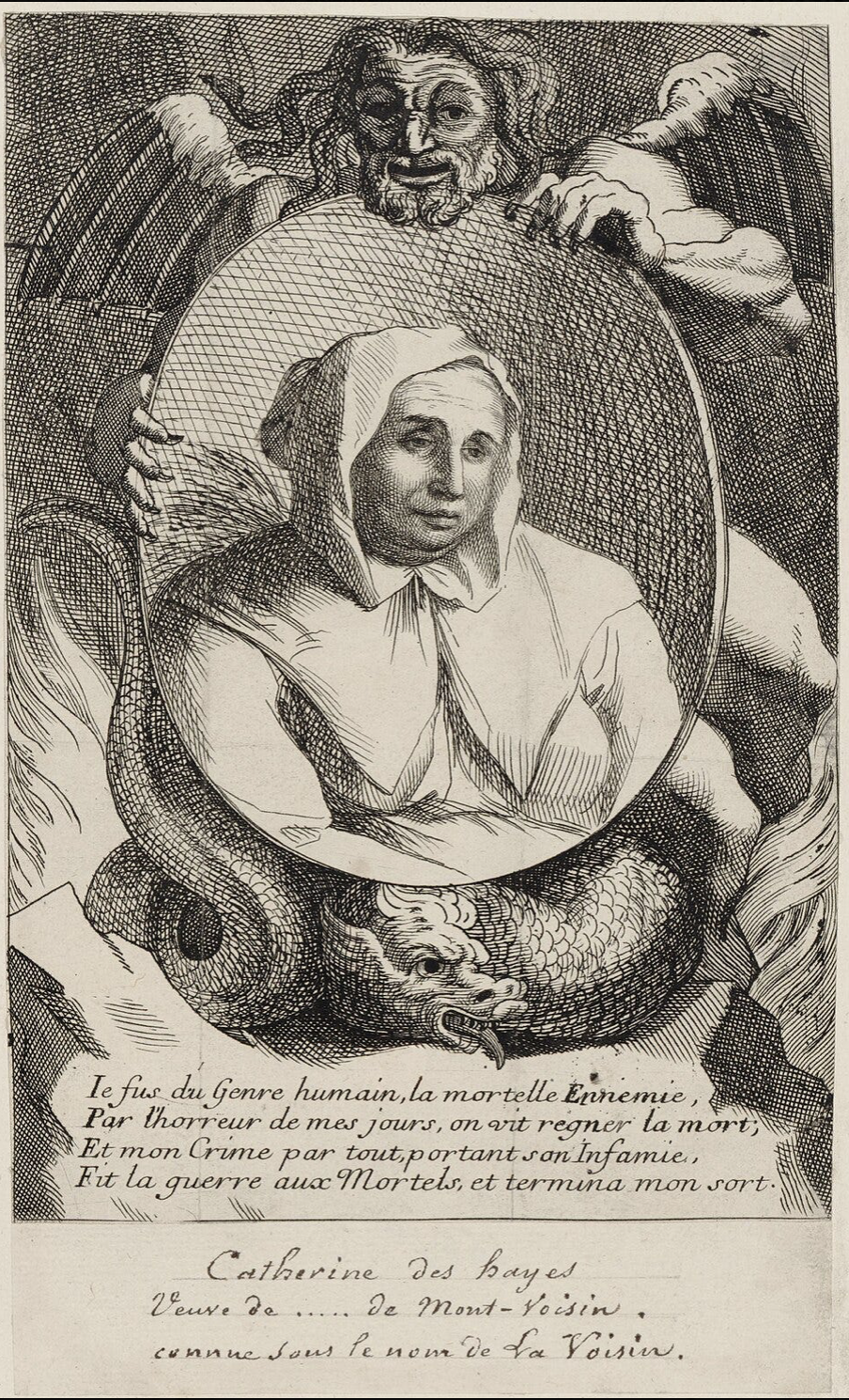
The court of the Chambre Ardente was held in the Arsenal in front of 13 magistrates interrogating hundreds of prisoners. Experts, including doctors, were on hand to help delve into the chemistry, poison terminology, and evidence. The windows were covered with dark cloth, as all of Paris watched day and night for a glimpse of the men and women being brought in.
The investigation, known as the Chambre Ardente, lasted over three years and resulted in a significant outcome. 442 people were accused, of which 319 were subpoenaed, 194 were arrested, and 36 were executed, and twice as many committed suicides.
Among these were a few closely associated with La Voisin. Françoise Filastre was arrested in 1680 and confirmed the involvement of Etienne Guibourg and the Black Masses. Francoise was sentenced to life in prison and died in 1686, but her testimony would lead to the incrimination of Montespan. After Voisin’s arrest, Montespan had contacted Filastre to supply her with poison to use at court.
Françoise de Dreux was of noble birth and married to a high-ranking member of the Parliament of Paris. However, she was in love with Armand Jean de Vignerot du Plessis, the duc de Richelieu, and she killed her husband so she could be with her lover. Arrested and brought to trial for another man, M. Pajot, she was accused of also ordering the poison to kill her lover’s wife, Anne de Richelieu. She was later acquitted, but another woman would bring it all back to light.
Margurite Joly was just as skilled and successful as La Voisin. Arrested, she was subject to water torture and gave up the names of many of her clients, including François de Dreux, who thought she was in the clear. Dreux was going to be arrested, but managed to flee France before she could be found.
Marguerite Leféron was the wife of a judge whom she didn’t like very much. She, like Dreux, killed her husband so she could marry her lover, De Prade. De Prade was only after her money, and so she needed to kill him as well. She was arrested and exiled, but not everyone went to the stake.
Marie Brosse, La Brosse, was known as the first poisoner arrested in the roundup and pointed her finger at La Voisin. One night at a party after a bit too much wine, La Brosse bragged to everyone how much money she had due to selling poison to many women in Paris who wanted to kill their husbands or lovers. Someone at the party reported it back to Reynie, and Brosse was arrested, as well as her daughter and sons. Marie met her fate on the Place de Greve on May 8, 1679.
Marguerite de Poulailon obtained poison from Marie Brosse to kill her husband, Alexandre de Pouaillon, but he survived and was able to hand her over to the police. Her beauty saved her from the same fate as many of the other women, and when Reynie heard of her lenient sentence of exile, he stepped in and had her sent to work at a holding house for former prostitutes in Angers, where she would spend the rest of her life.
The court of the Chambre
In 1678, the investigation was pointing in many directions to Louis XIV and the court of Versailles. Evidence mounted, and it was discovered that Louis XIV had been poisoned for 13 years. The Sun King ordered Reynie to only make notes on unattached paper so it could be destroyed.
On July 13, 1709, 29 volumes of evidence were destroyed in a fire. Much of it against Montespan, but we have all the notes of Madame de Sévignè and the files of Reynie are still held in the Prefecture of Paris.

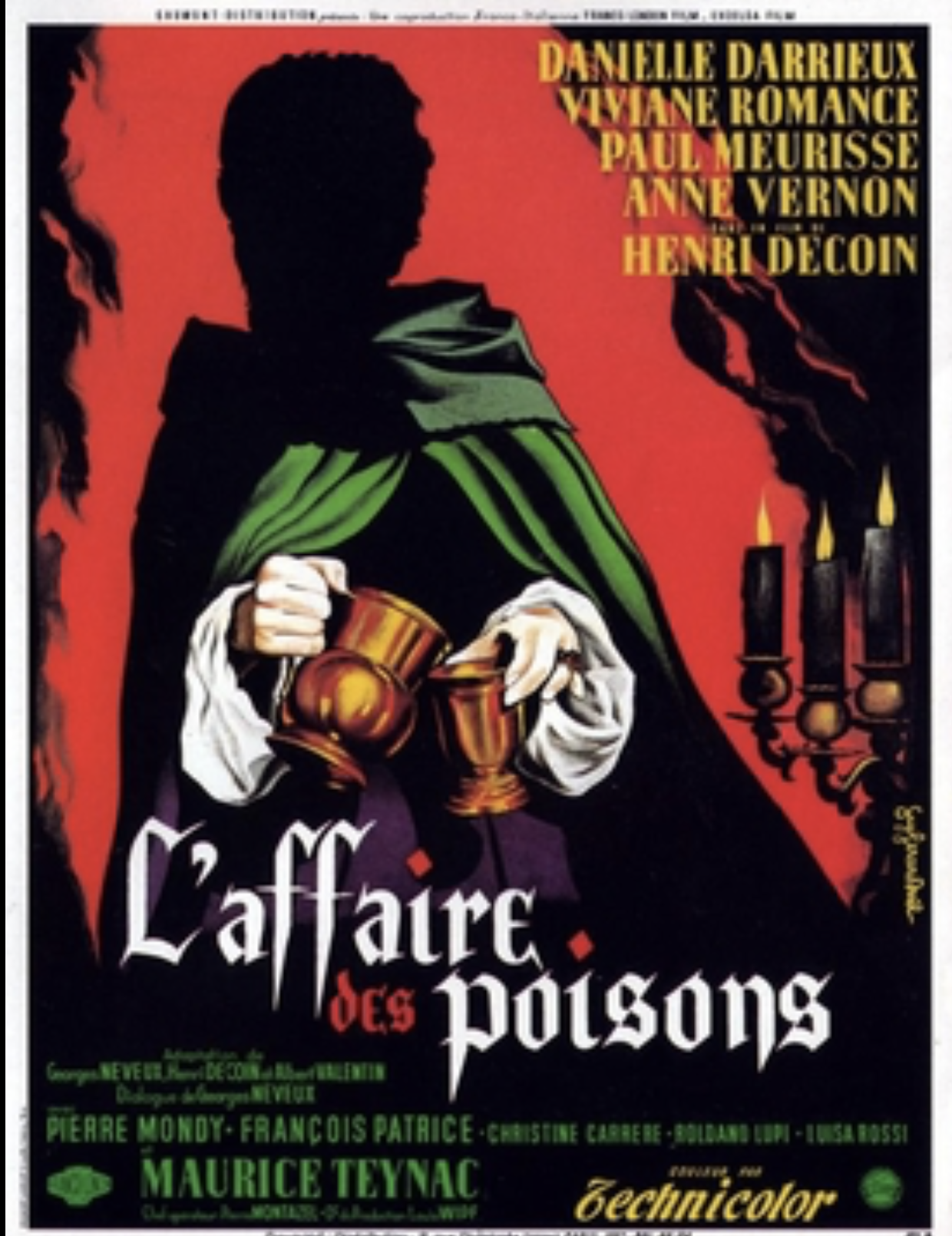
Versailles season 2 is all about the Poison Affair, loosely based on the facts, but fun nonetheless. The character Madame Agathe serves the role that would have been closer to La Voisin.
Episode 9. Black Mass