The restoration of Notre Dame after the 2019 fire was nothing short of a miracle. In just over five years, the cathedral opened its doors once more to the faithful, but in reality to millions of tourists. However, with any major project in France or anywhere in the world, there will always be a political or self-serving edge that sneaks in.
On December 8, 2023, President Macron announced, at the so-called urging of Bishop Laurent Ulrich, his intention to add new contemporary windows to the cathedral to reflect the fire and the Renaissance. At the time, it was thought that the windows might reflect the craftsmen and women and even the fire itself, but that was not at all what we would eventually see.
Ulrich was named bishop of Paris on April 26, 2022, and oversaw the restoration of the cathedral's interior, including its furniture and decoration. We were told by the diocese that whatever had been inside the cathedral on April 14, 2019, the day before the fire, would return. That has been far from true and a flat-out lie.
Over the last 161 years, since Viollet-le-Duc's restoration was completed in 1865, bishops and church officials have continued to erase his contributions.
In creating this week's podcast episode, I wanted to take a deeper look at the controversy surrounding the new windows at Notre Dame, but, as with anything, it led me down another road. The systematic vandalism of Notre Dame was done by the church officials who should be there to protect it.
Eugene Viollet le Duc, the man behind the restorations of many of the French monuments, including the Basilique Saint Denis. Notre-Dame de Paris. Built in the 13th century, barely survived the many conflicts and the Revolution, but was thankfully saved when Victor Hugo wrote Notre Dame de Paris in 1831. Suddenly, a light shone upon this cathedral, and a cry to save it from destruction sparked a competition among architects.
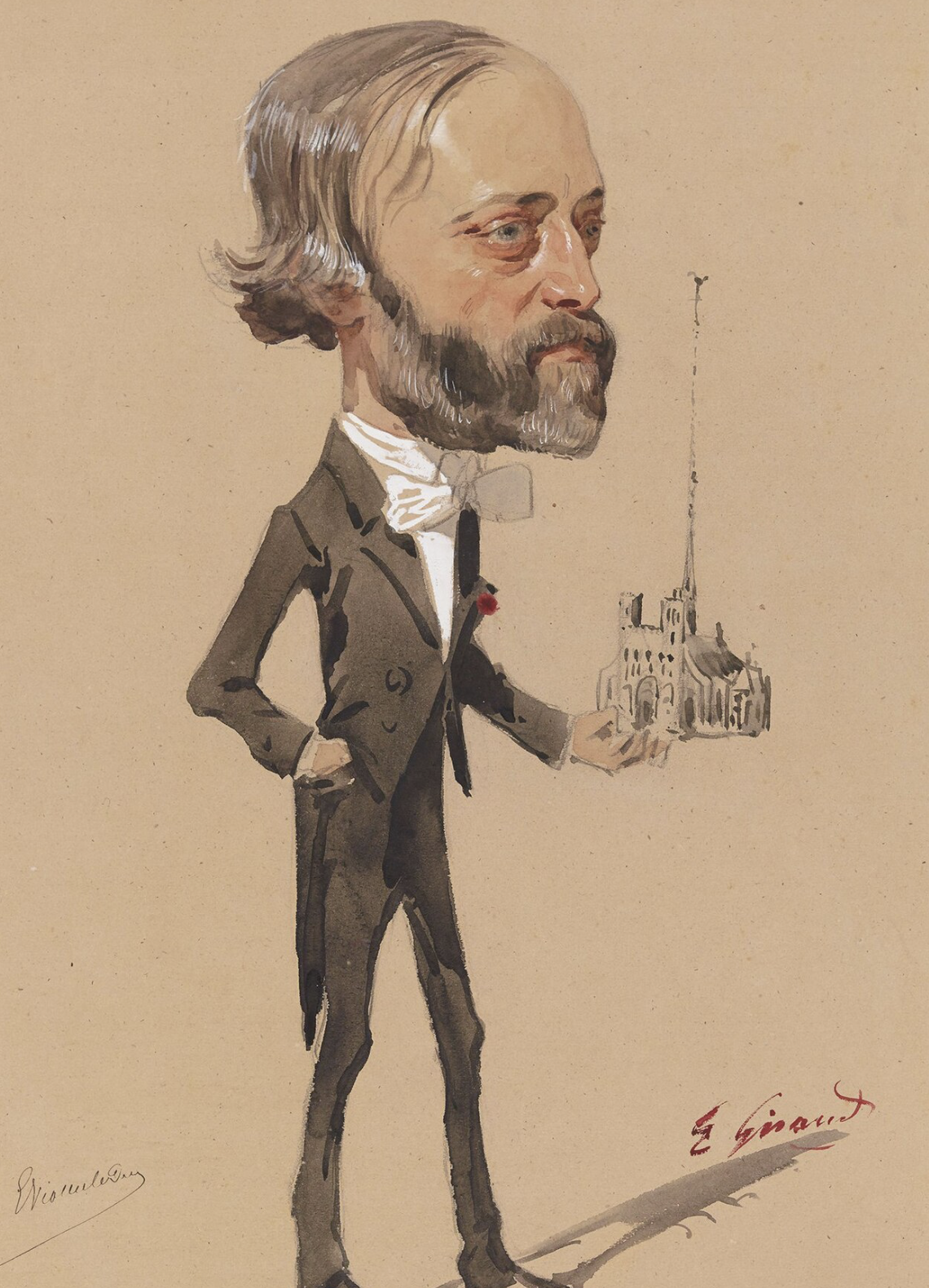
Viollet-le-Duc, the self-taught architect, and his partner, Jean-Baptiste Lassus, had just finished restoring Sainte-Chapelle and were primed to take on the monumental task. Viollet was just 29 years old and already had extensive experience with Gothic churches. They wanted to preserve as many 13th-century details as possible and restore each element and style.
Viollet wasn’t just an architect but also an artist, creating meticulous drawings of each statue, chimera, king, and stained-glass window. By hiring the best craftsmen in France, they could recreate each element lost over the years. Lassus died in 1857 during construction, leaving Viollet with the huge task and the voices of critics, which to this day have never been silenced.
The commission was awarded on March 31, 1844, and the project was completed in 1865. For over 20 years, VLD had the spire rebuilt, redesigned the lead roof, and the 16 statues of the Apostles & Evangelists. Added the gargoyles, returned the statues of the kings to the facade, and rebuilt much of the statuary around the doors of the cathedral.
The inside is where his brilliance really shines, none more so than in the chapels, or the chapels before 1950, I should say. Viollet looked at each chapel as a canvas, one that would incorporate all elements and combine them to tell a story, including a translucent, colored tapestry of stained glass.
When Viollet took on this massive endeavor, the cathedral had suffered through the Revolution, the destruction of the original stained glass under Louis XV, and the near-total loss when the city tried to sell the cathedral off for parts. Thankfully, there weren’t any takers. Breathing new life also meant a return to color.
The overall theme of a Gothic cathedral is light. The appearance of lightness that you see on the exterior, the capturing of light that fills the interior, and the guiding principles of Viollet le Duc.
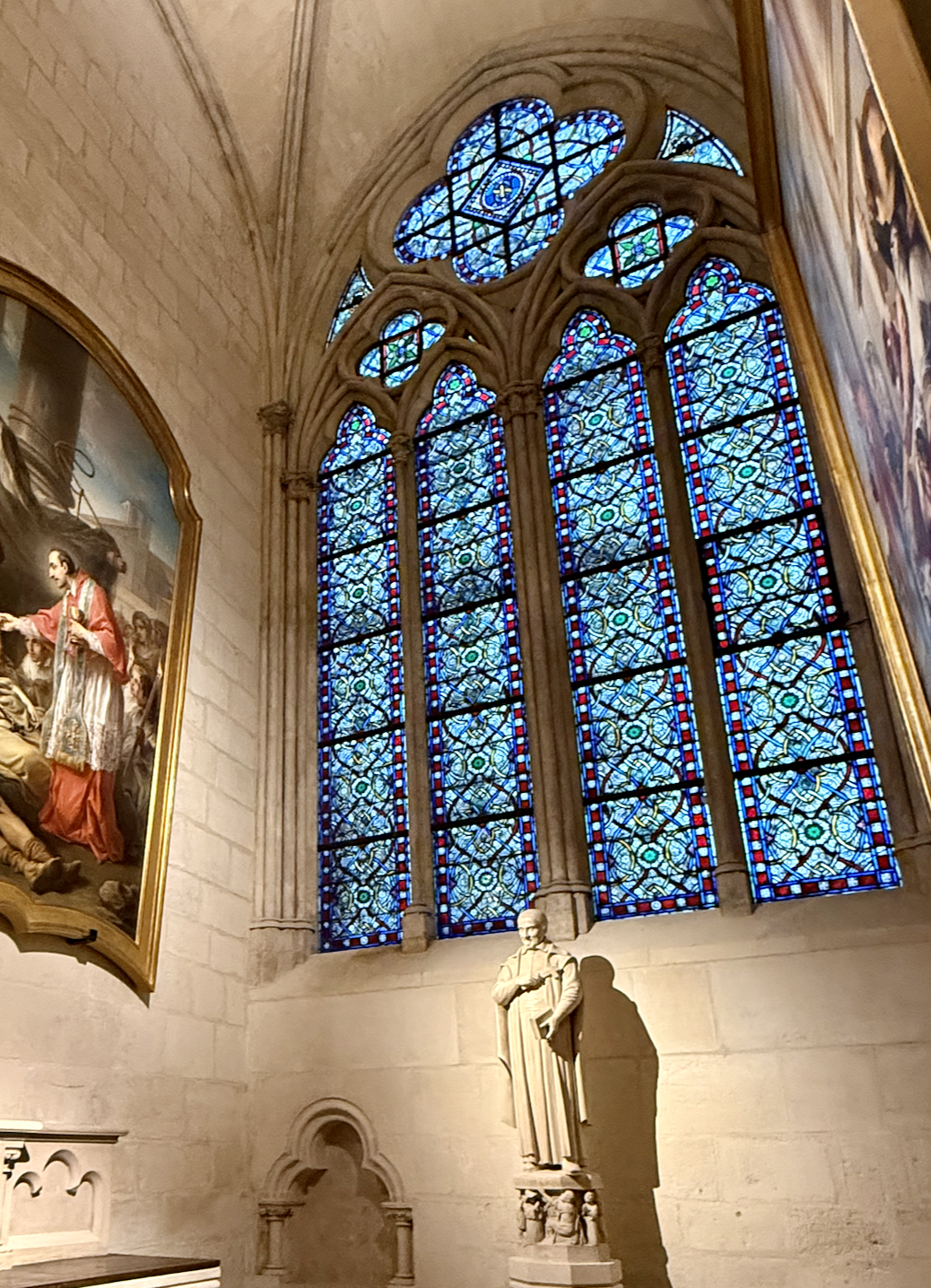
In the words of the architect himself: “First, the cathedral of Paris, as is well known, is oriented in such a way that one entire side of the monument faces south and the other north. One of these sides, therefore, receives a brighter and more colorful light than the other. It seemed necessary to take advantage of this arrangement to establish overall harmony. Rather than counteracting this orientation, it was deemed necessary to reinforce it. Thus, firstly, all the windows of the chapels facing south are decorated with grisaille in warm tones, while those facing north have grisaille in pearly and cool tones. From this, it follows that upon entering the monument, one sees one side in light, one side in shadow, one side warm and bright, and one side cold. This instinctively produces a generally tranquil effect on the eye. Nothing is more tiring for the eyes than an interior lit by contrasting light of similar qualities in terms of light intensity, tonal value, and color. The painting of the chapels had to naturally correspond to the system of light distribution. Following a general rule, the tonality of the paintings on the north side is cooler than that on the south side. However, as unity must be maintained, from distance to distance, on the south side, gray tones, green tones, and cool tones recall the general harmony of the north side, and, on the northern side, warm tones recall the general harmony of the southern side.”
Some look at the windows of the north and south nave that are predominantly grey or grisaille and might think they aren’t as beautiful as the type of colored stained glass you see in the chevet or Sainte Chapelle.
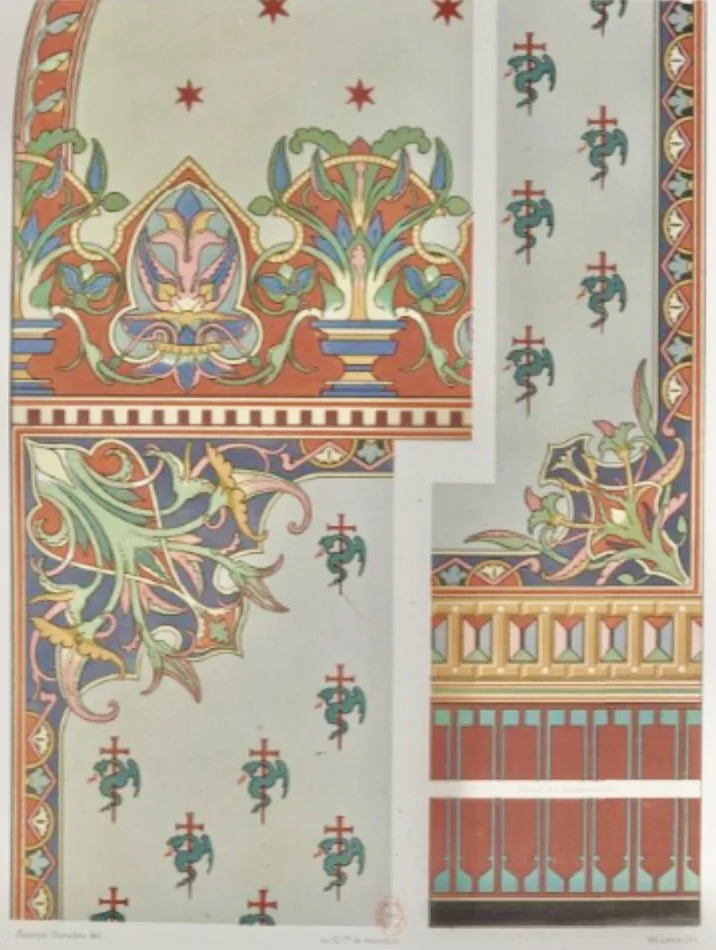
Here is VLD explaining the theory. “Indeed, the colored light from the stained-glass windows, even if they are, as we say, only grisaille, breaks down the pure colors, such as vermilion, yellow, and intense blue, weighing them down; it is necessary to counteract this influence by seeking tones that, on the contrary, acquire value from the translucent coloring of the stained-glass windows. Thus, for example, if the stained-glass windows spread a light lilac glaze with a slightly azure tint, and one wishes to obtain a blue tone, one must green the blue; a purple tone, one must warm this lacquered tone with a yellow; a green tone, one must keep this tone very light and transparent. If, on the contrary, these stained-glass windows color the light in a very slightly purplish yellow, the green tones must be almost blue; the blues, azure; the yellows, greenish; the reds, lacquered When these muted tones have the proper value due to the light illuminating them, the touches of pure color take on their true value and are not, or rather do not appear to be, decomposed by the quality of the day. It is, therefore, useful, we believe, to consider the examples we give in this collection of paintings in light of the location of the chapels and consequently the light they receive. Thus, one will have the explanation of certain harmonies of muted tones.
It is, of course, hard to envision this today in 2026 because the painted walls of the nave chapels were destroyed in the mid-20th century, less than 100 years after they were created.
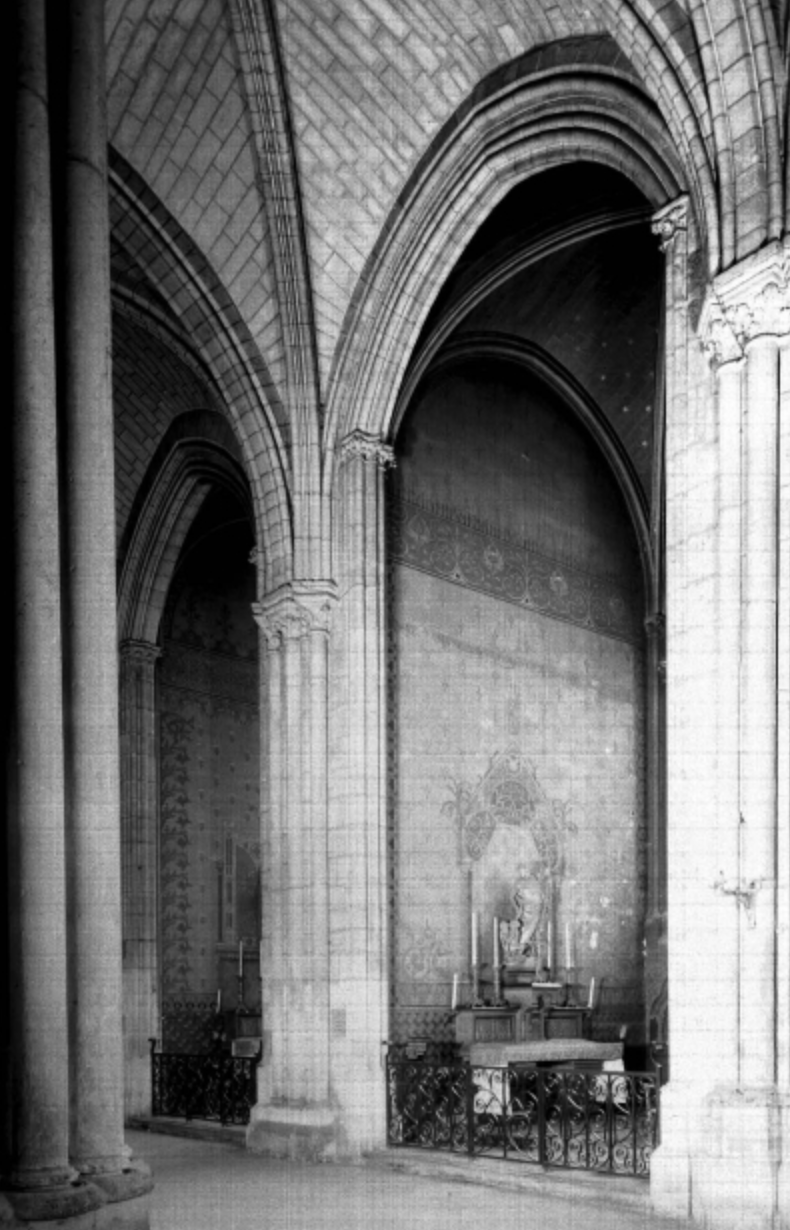
The bishop of Paris, Marie-Dominique-Auguste Sibour, wanted to restore the chapels and launched a fundraising campaign within the parish. Viollet, a lifelong atheist, was surprisingly close with the bishop, and the two developed a deep trust. The two developed a plan for the names of the chapels and the themes of each. Picking saints, figures, and those who had been attached to the church.
The chapels of the nave were never a part of the original plan of the 12th-century church. During construction, wealthy guilds and families approached the church and said they would pay to have a chapel built. Next thing they know, the wall of the nave and transept was destroyed and bumped out, creating fourteen chapels. It was up to the owner to decorate and maintain the interior, and most had carved wooden walls to close off from onlookers. To get an idea of this, visit Saint Eustache. High above each chapel are the family crests of the original owner, and one chapel still has its lovely carved entrance.
Once the church took over the chapels, there weren’t enough funds to pay for the decoration or to bring it into the style of the rest of the church. That wouldn’t be done until over 600 years after they were created.
Each and every chapel of Notre Dame was treated as its own little stage with every element working together, just as Viollet had described. From the altar to the gate to every painted element, and of course, the windows. Visit the chevet chapels at the eastern end of the church to get an idea of his vision.
For over 80 years, Notre Dame basked in its colorful glory. Weaving the stories of the saints and figures of the church with a beautiful motif that would inspire Art Nouveau and an American named Walt Disney.
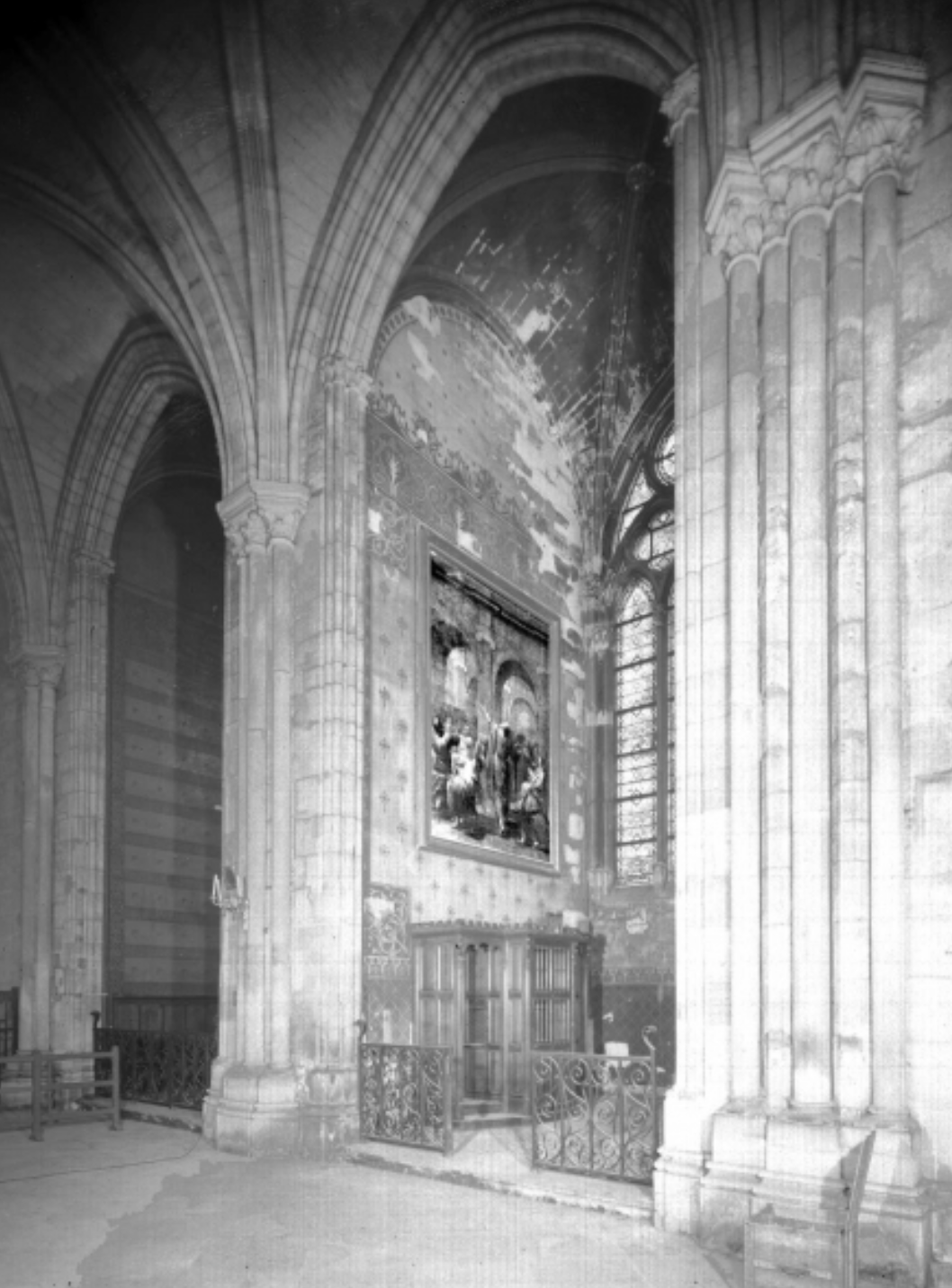
Then came the 1950s. A familiar story of neglect or poor cleaning led to a few loud voices claiming that the decor wasn’t up to the standard of the great cathedral and needed to be removed. Moisture, humidity, candle soot, and dirt, a problem churches still fight today, can have lasting effects that are hard to recover from.
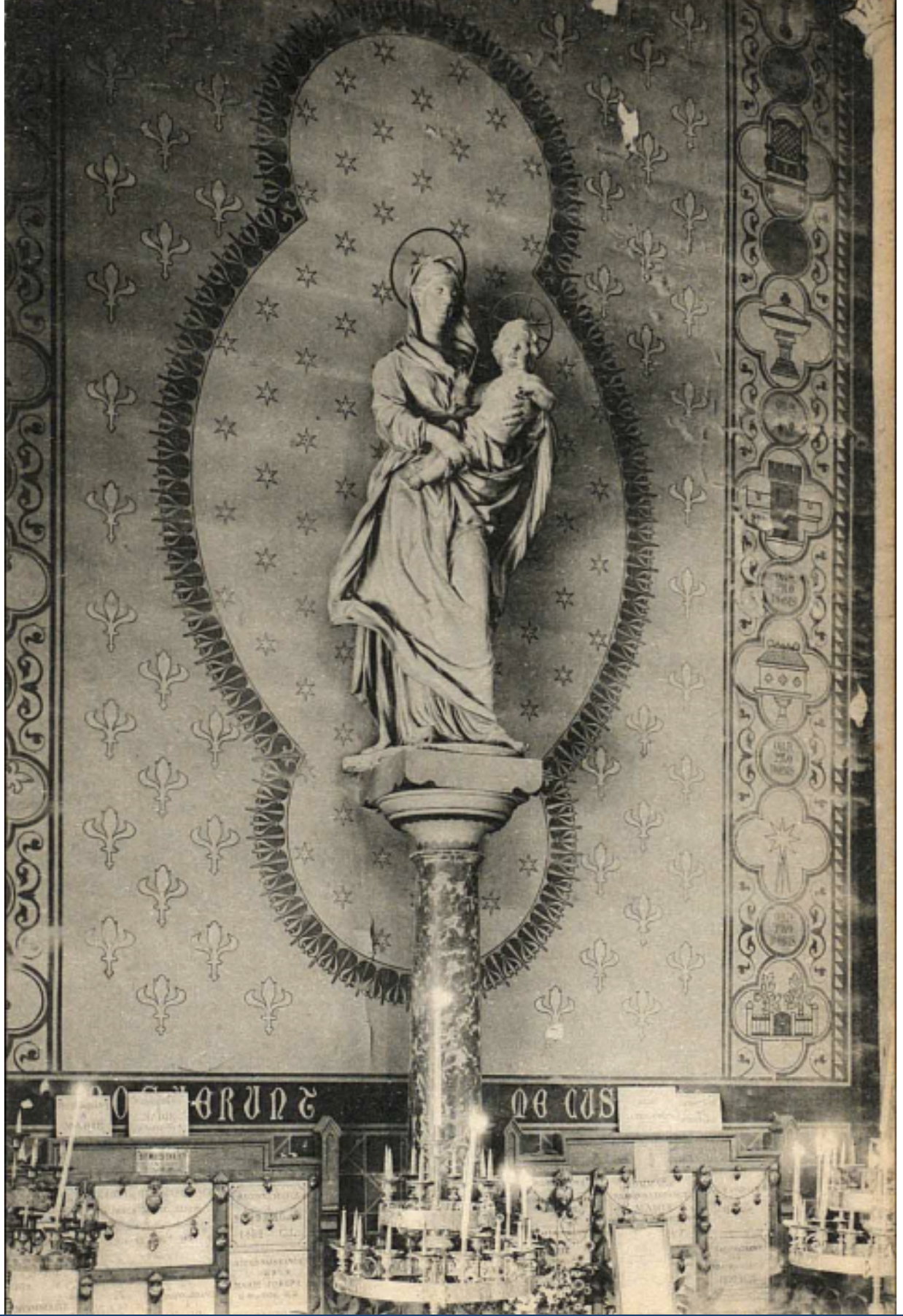
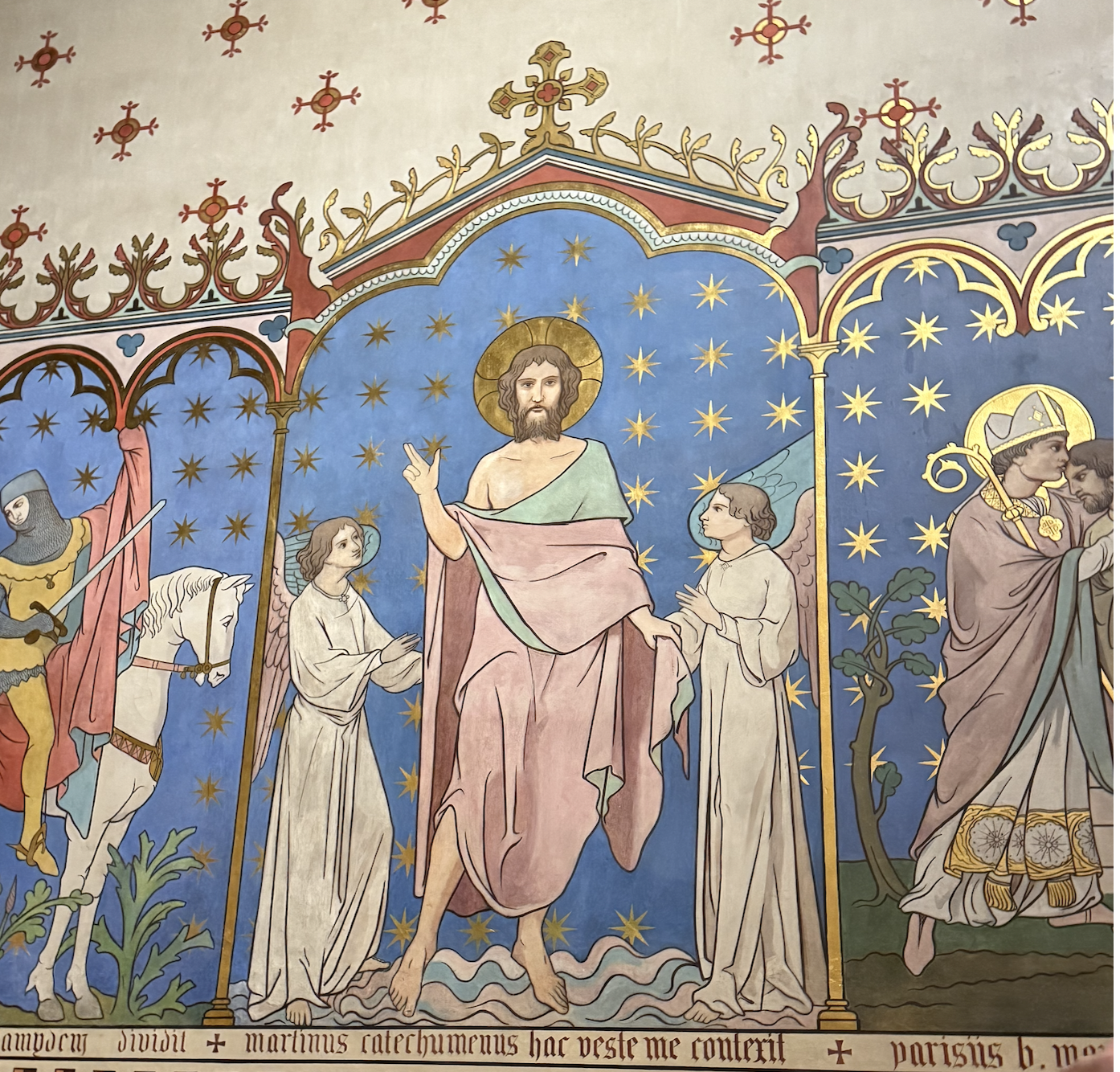
The fight was led by Pierre Maire Auzas, the inspector general of historic monuments, who claimed the work was “unworthy”. The first victim was the wall of the north nave just before the first chapel. A beautiful statue of the Virgin and Child that now greets you at the entrance was once against this wall painted with a light yellow, blue and brown motif with stylized fleur de lis, lilies, and reliquaries.
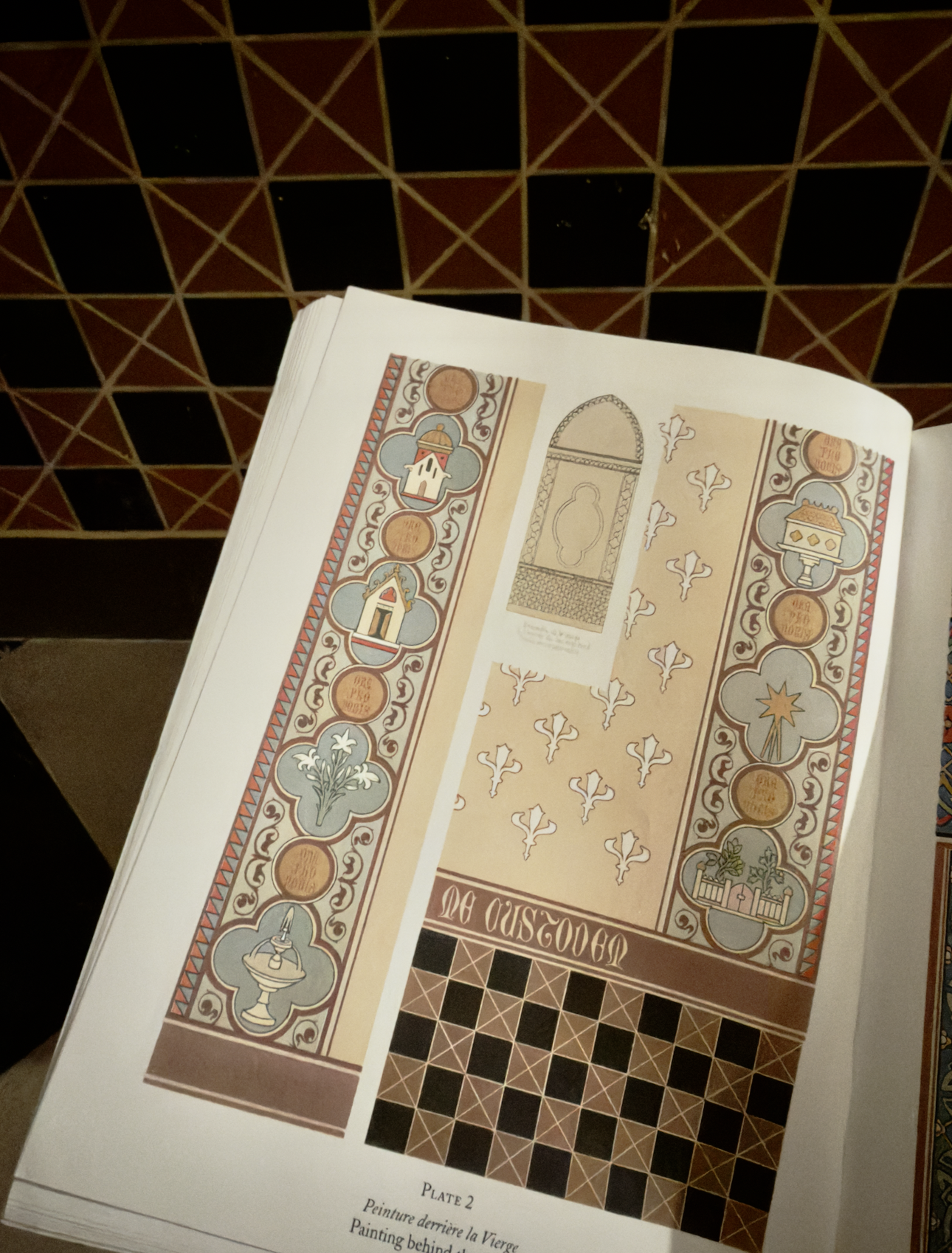
Auzas felt it took away from the statue, when in fact VLD painted it to enhance it. In 1951, it was the first work to be erased. Prior to the fire, this was where a large gift shop was set up for visitors leaving the cathedral. When the walls were stripped, there must have been some heavy furniture in the way that they couldn’t or didn’t want to remove. Lucky for us it has left a few reminders of what once was.
The lower part, painted with brown and black squares, remains and was found and restored after the fire.
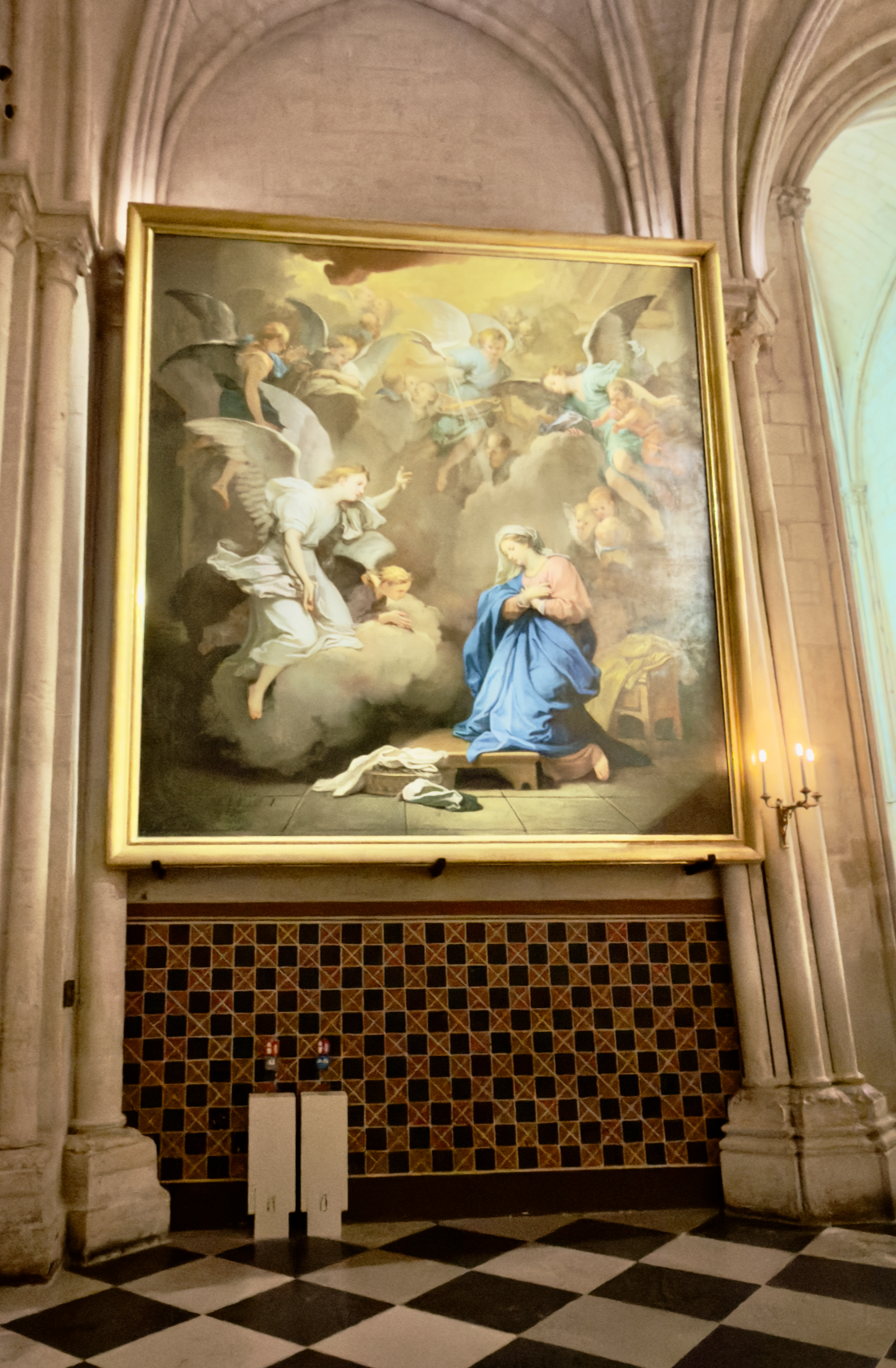
Bolstered by the success of their destruction, the chapels of the nave were next. One thing that VLD did during his restoration was to remove all of the Les Mays paintings that had remained in the church. Created in the mid-17th century, the Goldsmith Guild of Paris donated a large painting each year on May 1 for over 70 years. At one time, all 76 hung in the church. In the 1950s, Auzes wanted to reunite many with the cathedral for which they were created, and would clash with the 19th-century painted walls.
The chapels of the nave were covered from the roof to the floor with decorative paint, something that wouldn’t work with the reimagined chapels of Auzes. A unanimous verdict by the historical group was that the “artistic work, especially religious, during the Second Empire was considered uninteresting and without creative genius”. There is always a political and self-serving angle that weaves its way in.
So between 1959 and 1963, the fourteen chapels of the nave were whitewashed of any color or decor. Entire chapels stripped down to the stone, including the altars.
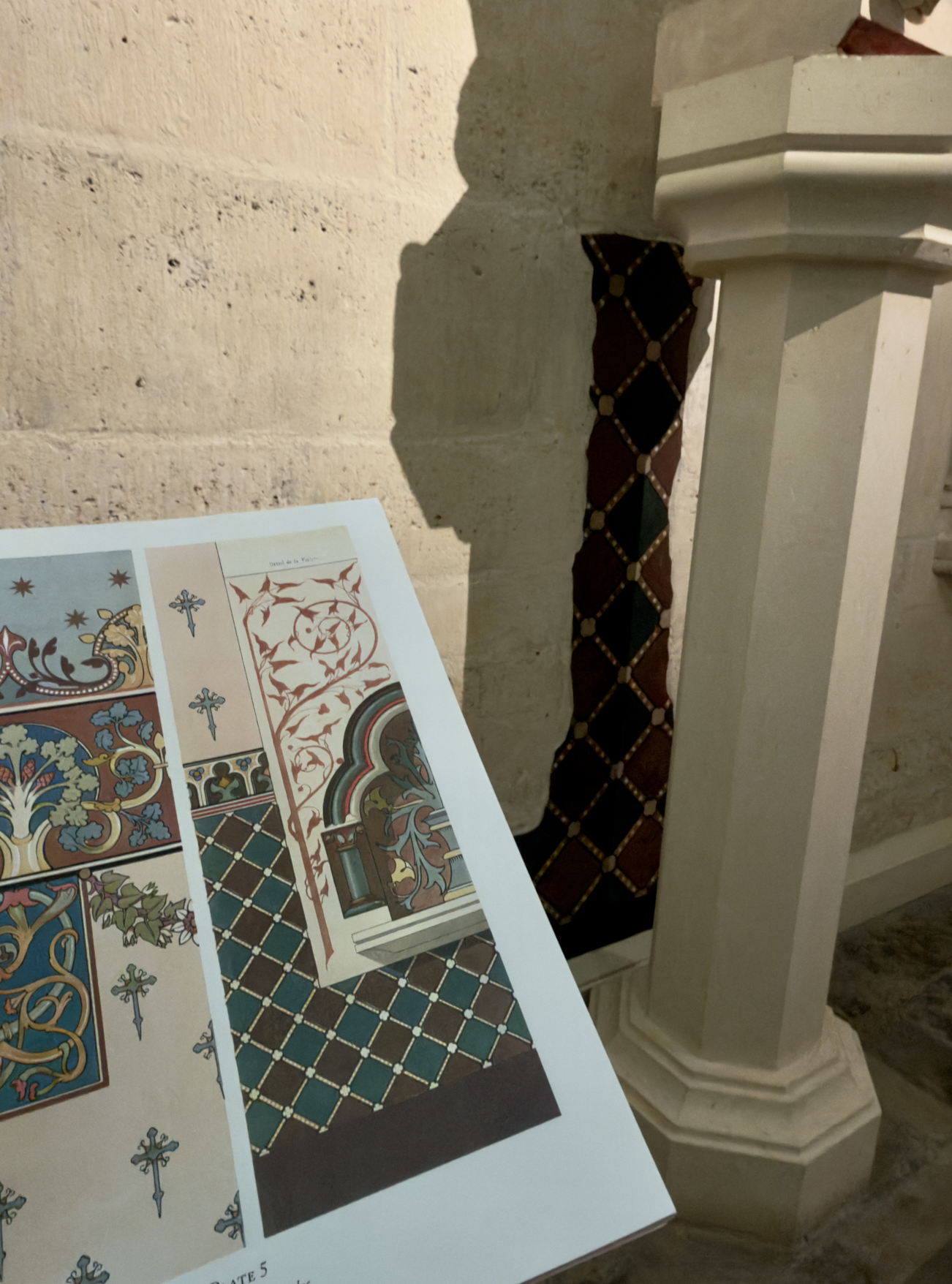
Today, in the 2nd chapel of the north nave and the 4th, there is a little reminder of what once was. Today’s chapel of Abrahm, once Saint Charles, holds a bit of the green-and-burgundy harlequin pattern behind the statue of Saint Francois-Xavier baptizing. In the 4th chapel of Isiah, below a statue of Saint Landry, bishop of Paris, who founded the Hotel Dieu, forest green “stones” outlined in cream, in what once was the chapel of Saint Vincent de Paul.
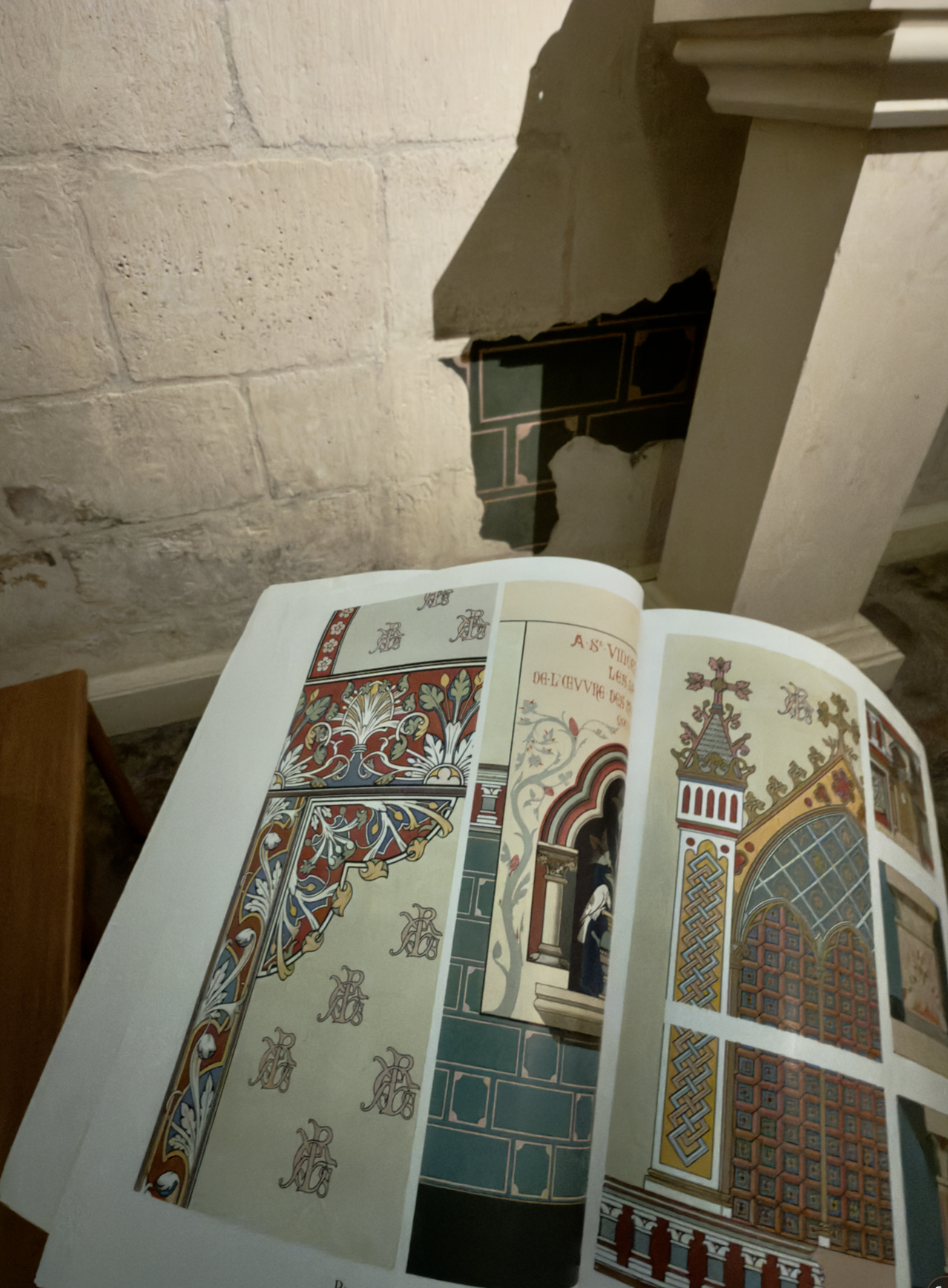
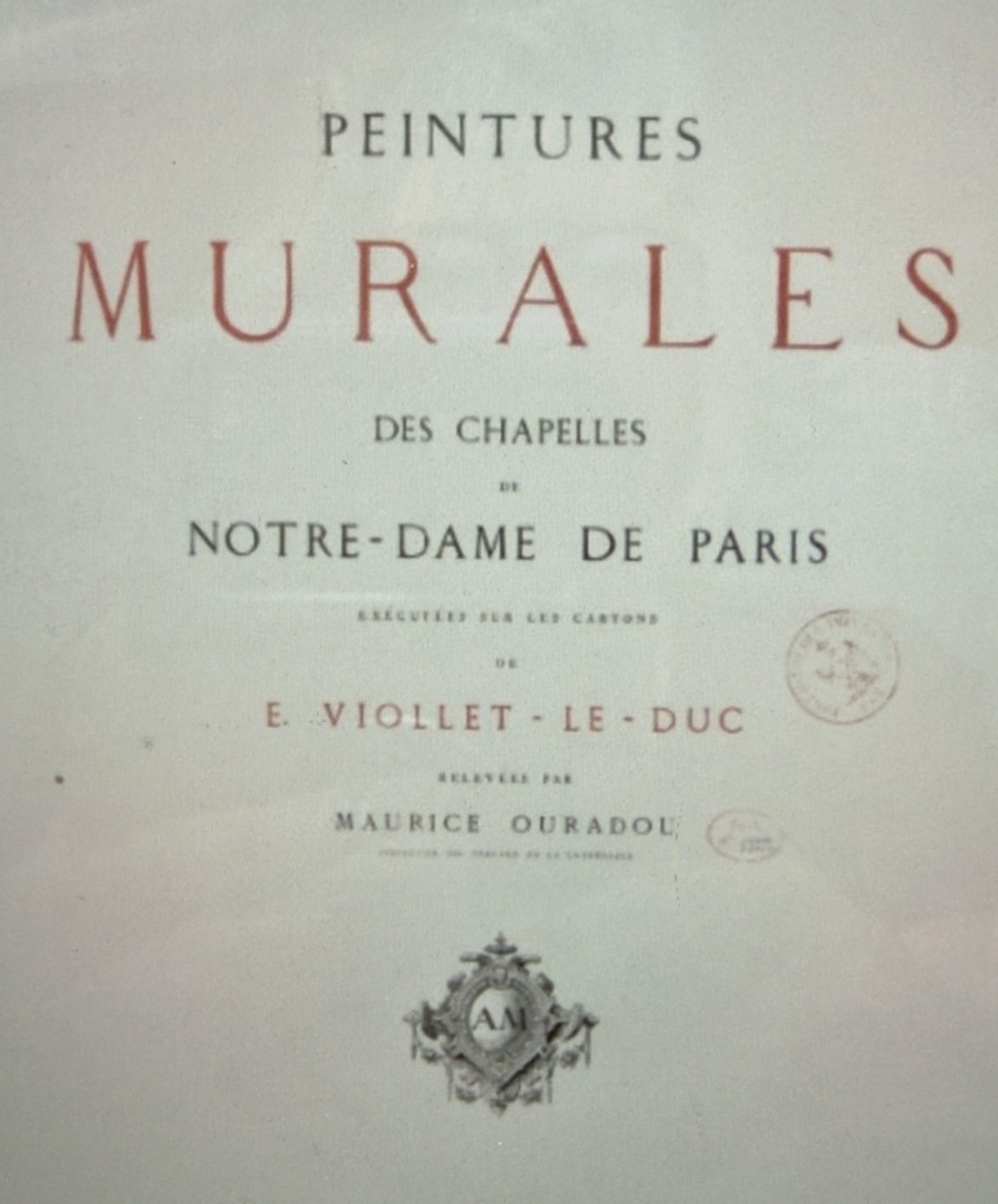
I have photos on my website, along with the original designs from a fantastic book by Viollet le Duc and Maurice Ouradou, featuring each of the chapels' designs and ornaments. I have a link to the original online version from 1870.
Although this systematic destruction and vandalism occurred in the 1950s and 60s there is very little photographic evidence that remains. Much like Chanel and their founders ties to Nazism, Notre Dame seems to want to also hide this period. I have many books about the history of Notre Dame, and only a few even mention this episode. Neither the original painting nor the destruction.
All of this brings us to the new controversy, but the past is a very important factor.
Notre Dame was designated a historic monument on December 31, 1862, during Viollet-le-Duc's work. A classification that protects all of the elements of the structure, including the art and decoration, whether it is original 12th or 13th century or created prior to the distinction. This also oversees how a restoration is handled and how it must be overseen by a national architect, and the respect taken to its heritage. Above all others.
This, along with another incredibly important distinction, should protect the cathedral. On May 31, 1964, the Venice Charter was adopted by conservators and outlined the rules governing historic monuments and buildings. The thirteen resolutions outline the protection, but also “ applies not only to great works of art but also to more modest works of the past which have acquired cultural significance with the passing of time,” as article 1 states.
The Venice Charter is one of the most important documents in the art world. It has been adopted as the rule not only for historic buildings but also for the restoration of paintings and sculptures. (listen to episode 13 Venus de Milo & 20 Delactoix’s Constantinople)
Two of the standout hits of the charter that apply heavily in the conversation today.
Article 8. Items of sculpture, painting, or decoration which form an integral part of a monument may only be removed from it if this is the sole means of ensuring their preservation.
Article 11. The valid contributions of all periods to the building of a monument must be respected, since unity of style is not the aim of a restoration. When a building includes the superimposed work of different periods, the revealing of the underlying state can only be justified in exceptional circumstances and when what is removed is of little interest, and the material which is brought to light is of great historical, archaeological, or aesthetic value, and its state of preservation is good enough to justify the action. Evaluation of the importance of the elements involved and the decision on what may be destroyed cannot rest solely with the individual in charge of the work.
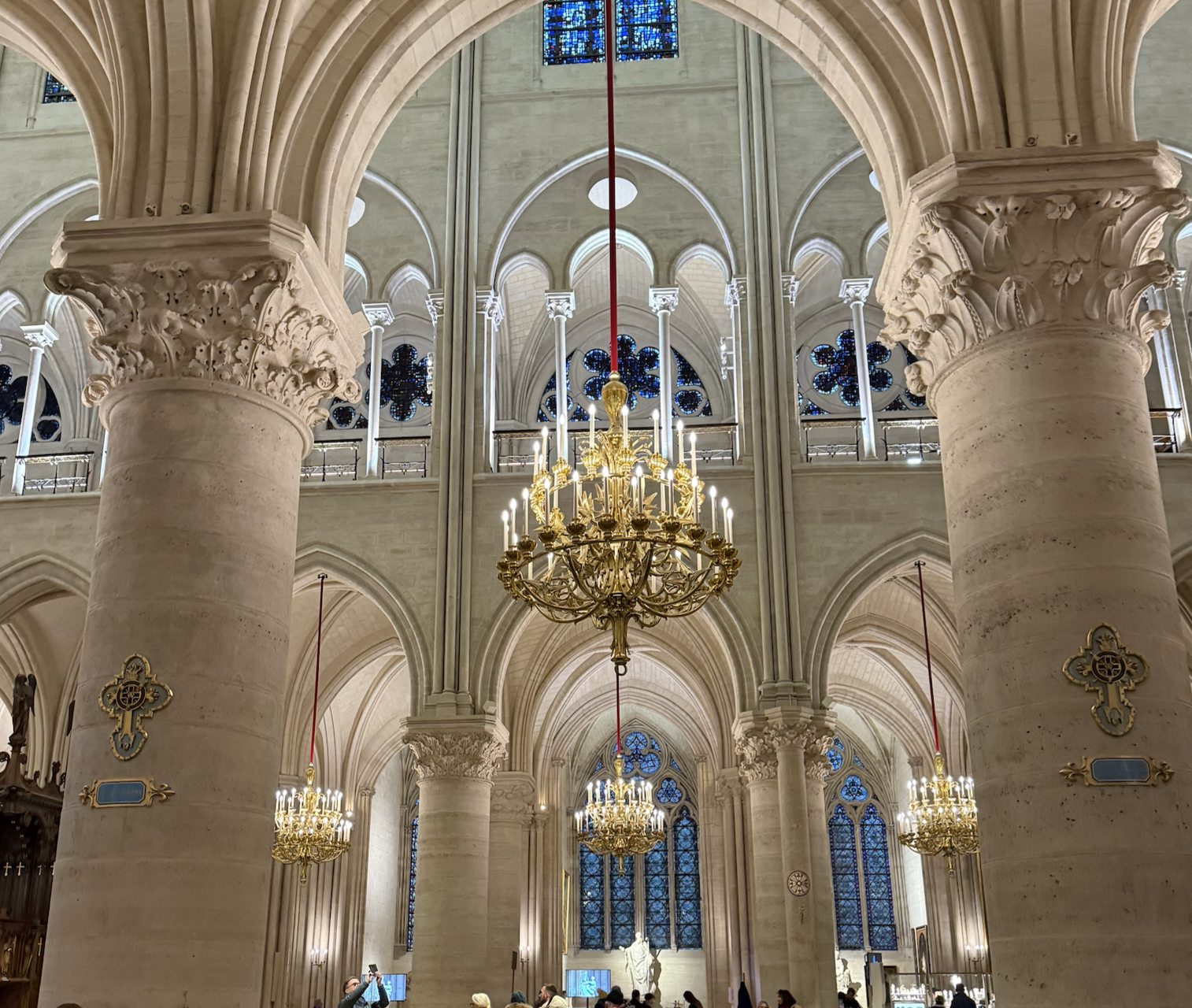
Since Notre Dame reopened in December 2024, the attacks on the chapels have continued. Before the fire, chapels were filled with numerous paintings, statues, candlesticks, reliquares and crucifixes. Today, they are devoid of any character, and nothing ties them to the names given for the reopening.
The idea of replacing the windows in the southern nave of Notre Dame was first discussed in 2021, after the fire. Michel Aupetit, archbishop at the time of the fire, placed Pere Giles Drouin in charge of the redesign of the cathedral interior. In a YouTube video I found recorded March 22, 2022, Drouin talks about the chapels that have very little use, “dead space,” and giving them more life. (They are far from that now.) It was also at this time that the idea of new contemporary windows for the south nave was first brought by Drouin.
When this idea reached the then-Minister of Culture, Roselyne Bachelot, she said NO and based her decision on the Venice Charter.
On April 23, 2023. General Gerorgelin and President Macron visited the Notre Dame worksite along with Bishop Ulrich. Macron brought up his wish for new stained-glass windows and said that “it must come from you,” or it will never happen.
On December 4, 2023, four days before Macron visited the site again, Ulrich sent a letter regarding the window. Four days later, Macron announced his interest in replacing the windows.
Exactly one year before the re-opening on December 8, 2023, Macron first spoke of the desire to “mark the 21st century.” It was first said that the windows would also mark the five years since the fire. (hoping it would be something like ND de Reims)
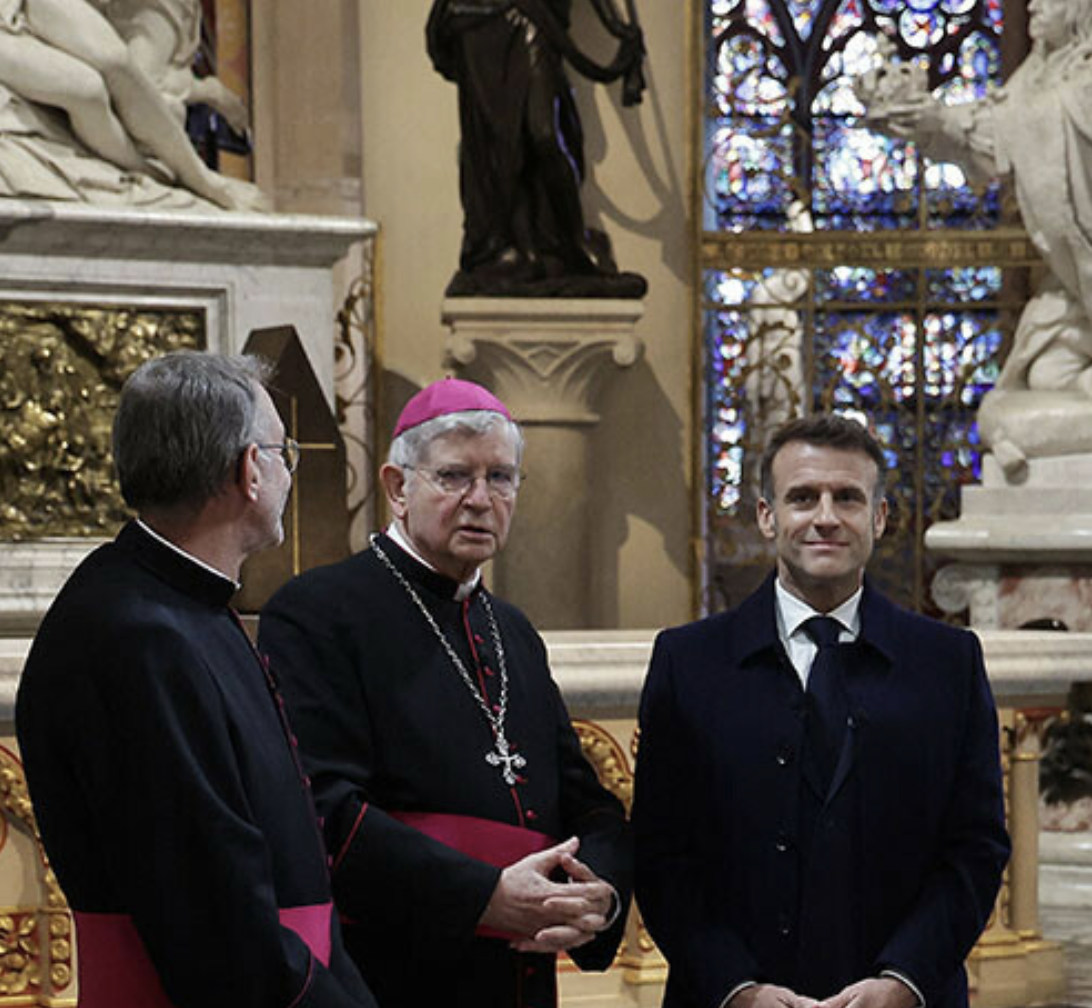
At the same time, Macron announced their intent to replace the windows. He also expressed his wish to have a museum dedicated to Notre Dame opened at the Hotel Dieu, just outside the cathedral's doors. The removed Viollet-le-Duc windows would be placed there. (more on that in a minute)
Shortly thereafter, on March 11, 2024, the Ministry of Culture, now under Rachida Dati, named Bernard Blistène, former director of the Centre Pompidou, in charge of the international competition for the artist to create the new windows.
It was swiftly brought to the floor of the national assembly on December 19, 2023, by Caroline Colombier after Macron’s announcement. On May 21, 2024, they concluded that the replacement under the governing bodies was accepted.
On July 11, 2024, the National Heritage and Architectural Commission unanimously issued a negative opinion, a very rare occurrence.
On December 18, 2024, President Macron announced the selection of French artist Claire Tabouret to create a set of six new windows. Born in 1981 in the south of France, she attended the École des Beaux Arts in Paris for a year, then the Union School of Arts in New York. She now lives in Los Angeles.
On that date, we saw our first glimpse of what the windows would look like.
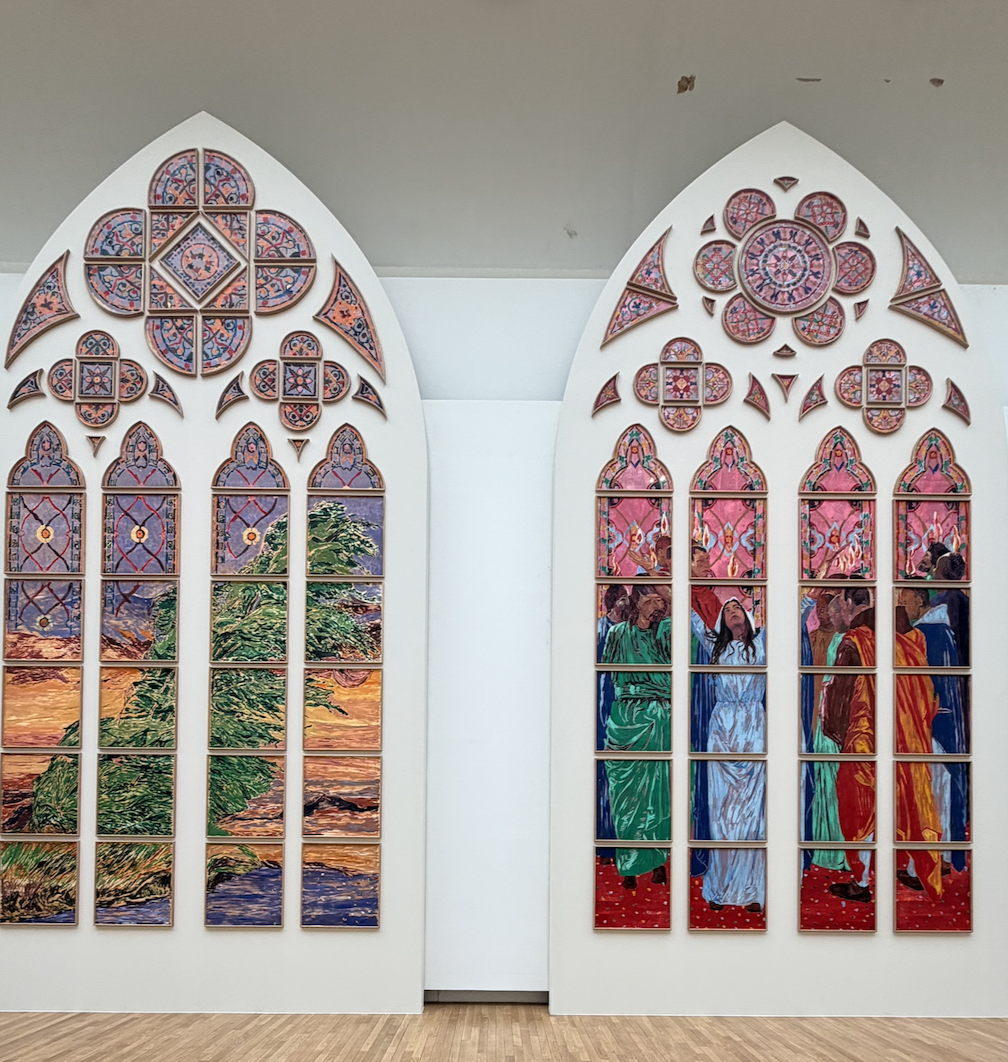
Windows for the Chapel St Vincent de Paul & Chapel Saint Genevieve
The chapels of the south nave were renamed before the 2024 reopening. Representing Pentecost, the visitor is to walk out of the cathedral “in the light”. Although the chapels take the names of saints or figures tied to Paris, well, kind of. Saint Joseph, Saint Thomas d’Aquin, Sainte Clotilde, Saint Vincent de Paul, my girl Sainte Genevieve, and fellow patron saint of Paris, Saint Denis, and ending with the real head scratcher, Saint Paul Chen. A wonderful story of an amazing man, but one that never came to Paris until his remains were transferred after he was beatified in 1908.
This past winter, the artist's final designs were on display at the Grand Palais. The full-size painted version on paper of each window, along with a behind-the-scenes look at how they were created. Hung on a white wall, the window was reimagined, including the top of the window, to pay homage to Viollet-le-Duc and the glass designer Alfred Gérente.
I visited the exhibit the day it opened on December 10, and of course, I went in with the idea of hating everything about their existence. On their own, they are lovely, they are bright and colorful, and the talent of the artist shines through. That said, I still disagree with the idea of replacing the windows, if you haven’t figured that out yet.
The Archbishop of Paris chose the theme of Pentecost and specific texts from the Book of Acts were given to the artist.
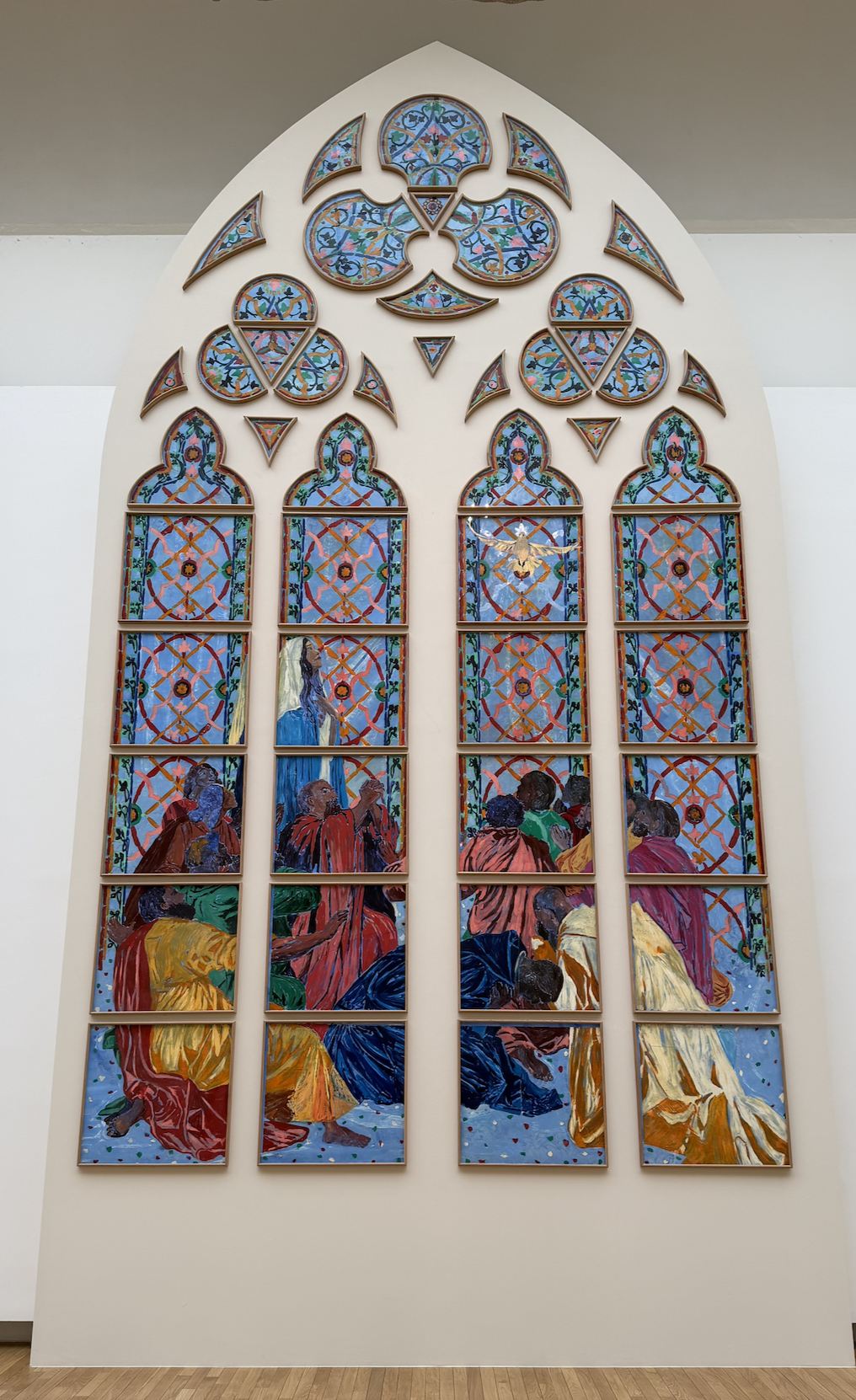
Window for the Chapel Saint Deni
Chapel Saint Joseph "All gathered together in one place." The apostles stand in a circle in front of the historic windows that are being removed.
Chapel Saint Clothilde "Suddenly a sound came from heaven." The windows are a rush of turbulent water, while calm in the lower section
Saint Vincent de Paul, "Like a violent gust of wind" represented by a tree bending in the wind against a bright orange background.
Chapel Saint Genevieve "Then tongues of fire appeared to them and rested on each of them." At first, I was excited because I thought she depicted Sainte Genevieve, as that would make sense, but it is the Virgin Mary dressed in her signature blue is depicted with long, loose hair, often more associated with Mary Magdeline.
Chapel Saint Deni:s "Those who heard had their hearts pierced." The Holy Spirit now appears as a dove above the design of the former windows. Mary in blue stands and looks above as the apostles are on their knees below.
Chapel Saint Paul-Chen "They spoke according to the gift of the Spirit." A long procession made up of many people winds its way through th windows and into the future.
I’ve added a link to the exhibit information on my website; it is in French.
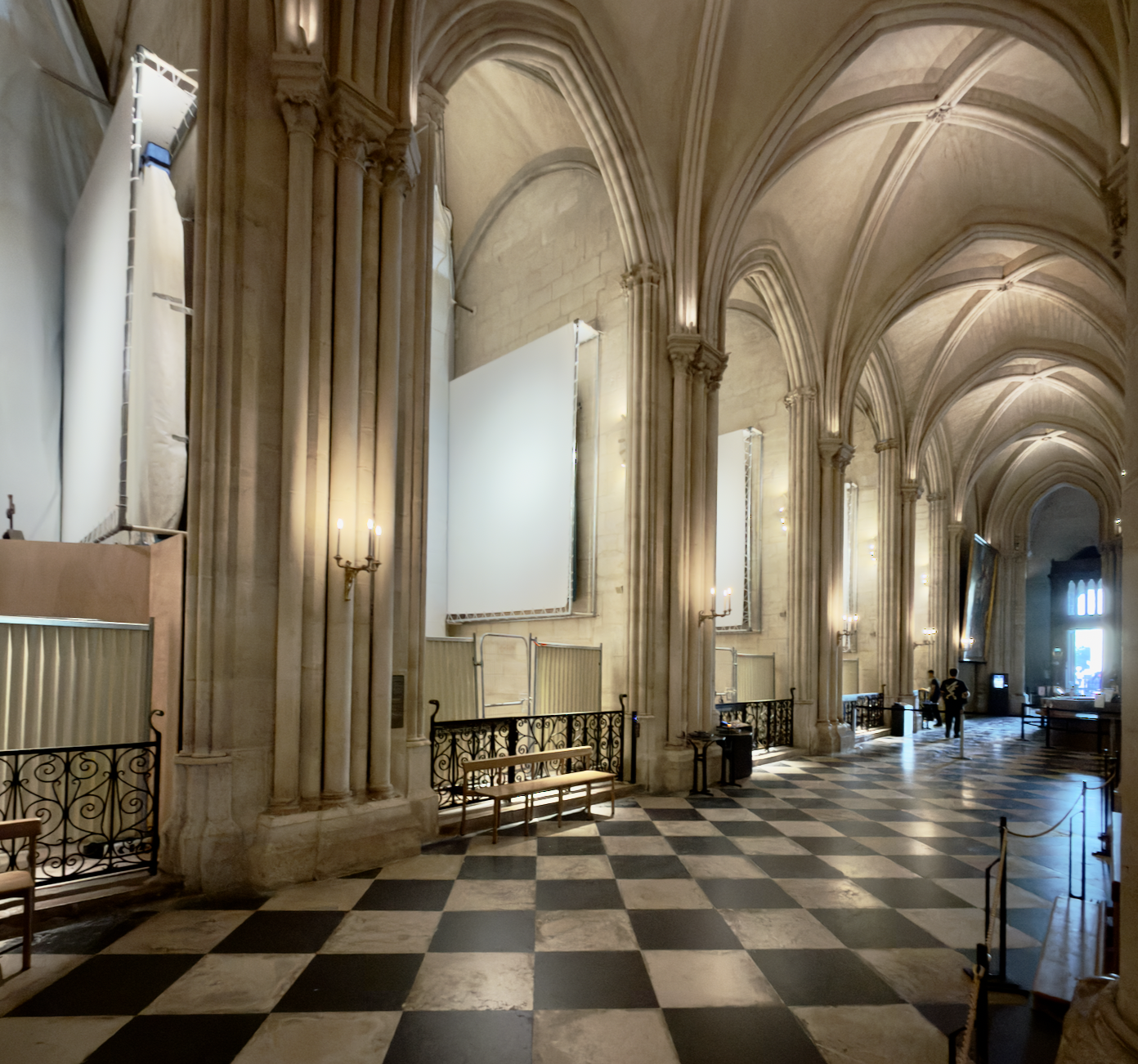
The fight against the windows sped up at the start of the year. Didier Rykner of La Tribune de l’Art, leading the fight, created a petition on December 12, 2023, and, as of today, it has more than 352,000 signatures. You too can sign it here
Notre Dame gave their overall approval on Feb 24, 2026 (an email sent that day from the recteur), they have no standing on anything outside of what is involved and affects worship
On April 17, 2026, the regional prefecture authorized the public establishment to remove the Viollet-le-Duc windows.
On May 5, 2026, two heritage-defense associations brought a case before the Paris administrative court to halt the project as a matter of urgency. They had to show the urgency of the situation, the legality, and raise doubt on the legality of the project
At 3 p.m. on May 12, 2026, Didier Rykner & Paul Lacaze of Sites et Monuments and SOS Paris had their day in the Paris Administrative Court, pleading that the replacement of the windows be stopped.
On May 19, the Administrative Court rejected the suspension of work by the Sites & Monuments and SOS Paris
The judge didn’t see the urgency since the structure itself will not be altered, and the windows can be removed. The lawyers for the project argued that “121 m2 out of 2050m2”, 6% of the 19th-century windows, 5% of the overall windows are what is at stake here. When a high percentage of those windows are high above and out of view of visitors, it’s a weak argument.
Not all hope is lost, and they, siding with the historical interest, remain optimistic that they can prevail, even if it is long after the windows are replaced.
On May 22, it was announced that the windows will now be displayed at the Château de Pierrefonds and the Cité de l’Architecture at Trocadéro.
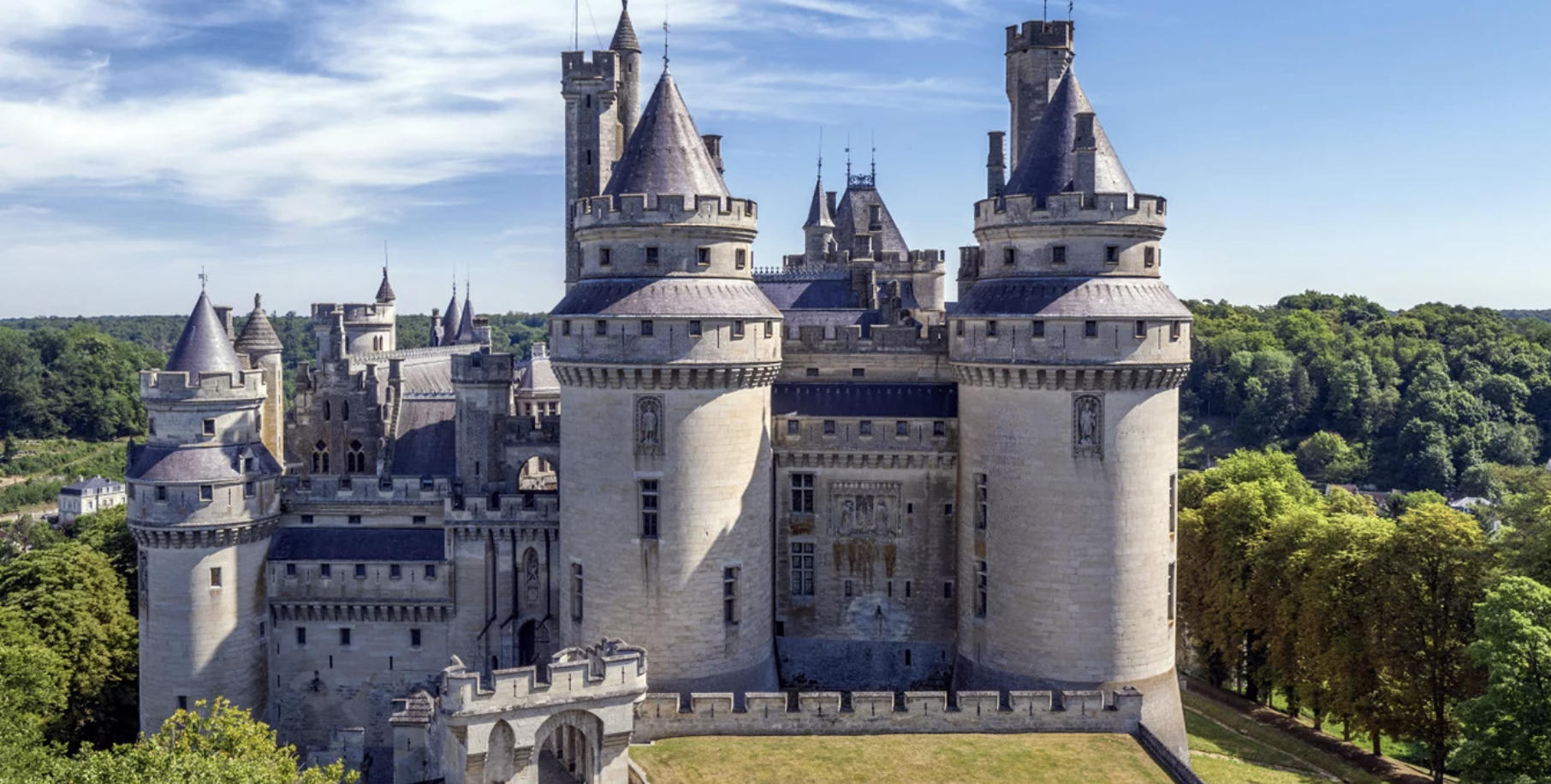
The Château de Pierrefonds was renovated by Viollet-le-Duc under Napoleon III from 1857 to 1879. Four of the windows are said to be installed with an explanation of their creation. The other two at the Trocadero, where the remains and copies of historic cathedrals and chateaux make sense.
In May 2026, the chapels of the south nave began to show signs of work. Paintings were covered and then protected in a metal cage, statues were covered, and the wood-carved walls of the chapel of Saint Vincent de Paul were hidden behind plywood.
Removal work will begin on June 22, and installation of new glass will not begin until October and will be completed by the 2nd anniversary
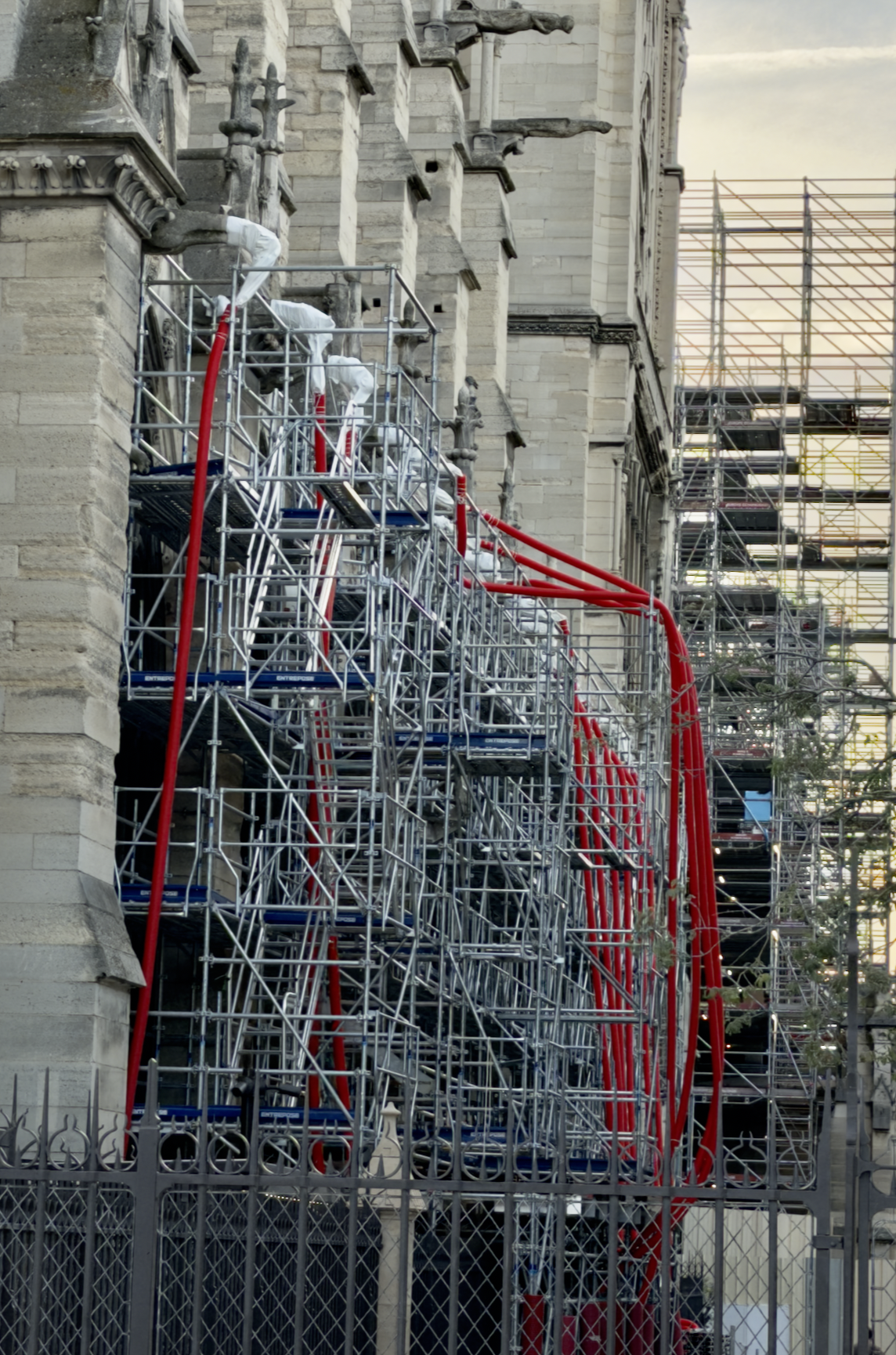
The new windows designed and painted by Tabouret will be created by the Atelier Saint-Marq. The oldest atelier de vitraux, which opened in 1640, will take on the project this summer.
The new stained glass windows will be placed into the existing framework, and the exact dimensions of the Viollet-le-Duc windows will be used, so the judges deem there is no emergency to stop the project, which also leaves this open.
Once the windows are in place within the state-owned cathedral, they become a public work, which will also make them very difficult to change or remove.
And the cost of all of this, at least 4 million euros, is paid by the state
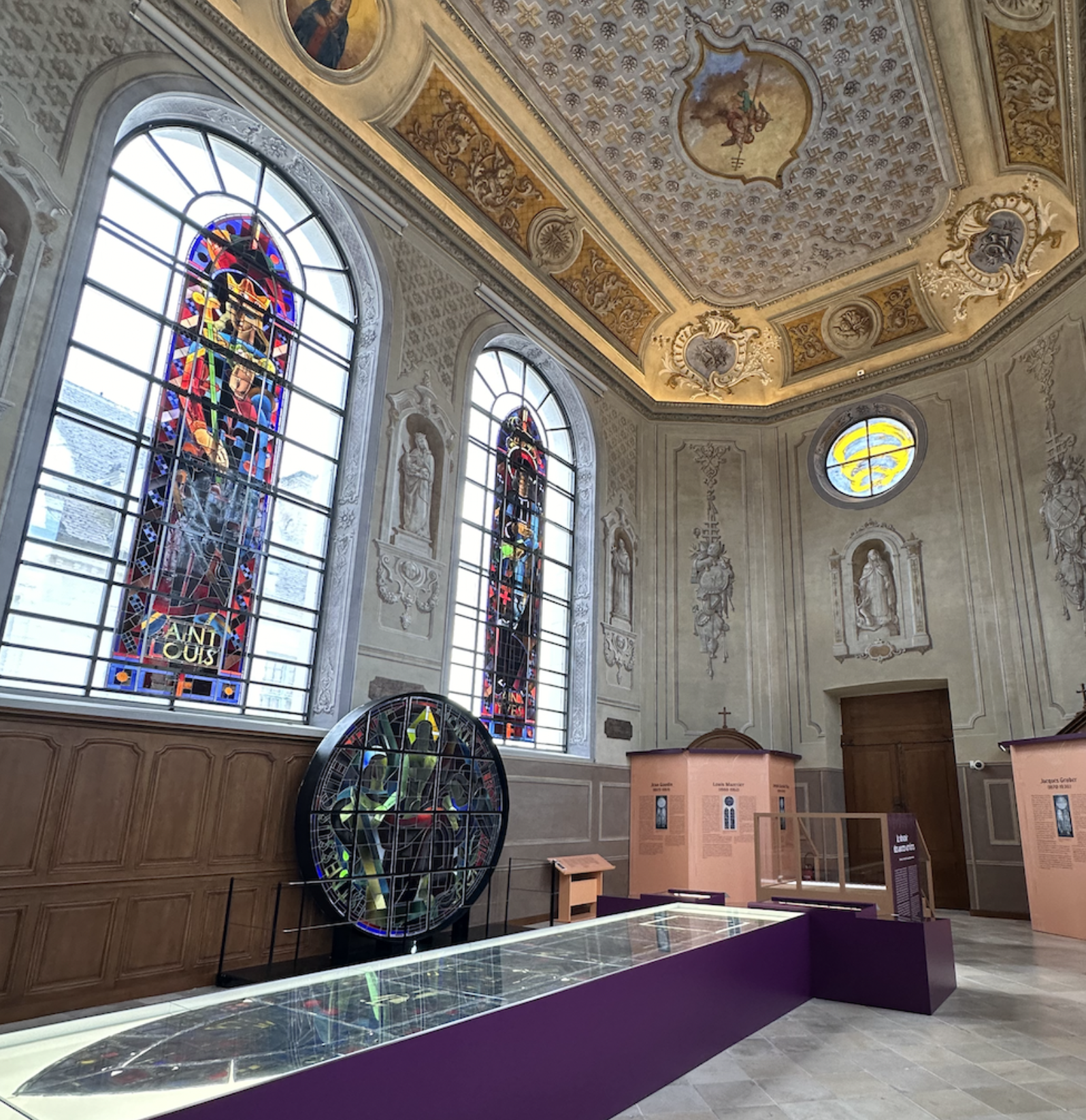
This is not the first time the stained-glass windows of Notre Dame have sparked controversy. In many ways, the two cases are very similar, but the earlier one is never mentioned in the press or in Notre Dame's history.
In 2020, a remarkable discovery was made in the gallery above the Notre Dame nave: long-lost stained-glass panels dating to 1935. These fragments were sent to the Manufacture Vincent Petit for analysis, reigniting interest in a lesser-known chapter of the cathedral's history.
In the 1930s, stained-glass artist Louis Baillet was tasked with selecting artists for Notre Dame's new stained-glass windows. However, the project faced resistance. The 19th-century Viollet-le-Duc windows were criticized for being too pale and not aligning with the cathedral's Gothic aesthetic. Despite these challenges, twelve artists took on the project, funding much of it themselves in hopes of leaving a lasting mark on one of the world’s most iconic landmarks.
The artists exhibited their designs at the Pontifical Pavilion in 1937 to garner support, yet the Commission for Historical Monuments rejected them, citing inconsistencies in design, proportion, and color. World War II further derailed the project, leaving much of the work incomplete.
While plans were initially made to replace Viollet-le-Duc’s windows in Notre Dame, including updates to its 13th-century Rose Windows, fragments of these windows remain today. Of the original twelve windows, only a few pieces, a complete rose window, and an almost-complete bay survive. Notably, Jacques Le Chevallier’s designs were among the few that were retained and reinstalled in 1965.
Not everyone agreed to replace the VLD windows. Gabriel Rupinich-Robert, Grand Inspector of Historical Monuments, believed they were in fine condition and did not require replacement. Similarly, Aléette de Maille, Vice President of La Sauvegarde de l’Art Français, opposed the removal of these unique art pieces.
Following the devastating 2019 fire, all stained-glass windows were found intact, aside from minor heat damage to the small rose windows. Restoration efforts began, focusing on cleaning, analyzing, and re-firing the glass using modern techniques. Of the twelve original artists, only works by Le Chevallier and Hébert-Stevens are known to exist today.
Le Chevallier’s family returned one of his windows to Notre Dame in 2013 to commemorate the cathedral’s 850th anniversary, later donating it to the Cité du Vitrail in Troyes. Additionally, crates of never-fired glass panels were discovered post-fire, offering a glimpse into these artists' incomplete vision.
As for the museum dedicated to Notre Dame, I mentioned earlier. On the same day in December 2023 when Macron announced his wish for new windows, he also mentioned the creation of a museum dedicated to Notre Dame. A fantastic idea in my opinion. There are thousands of items not on display within the cathedral and scattered across museums in France, not to mention all the items they removed and never returned after the restoration.
Just across the parvis is the Hotel Dieu, the oldest hospital in Europe, which covers a massive city block all the way to the Seine. Only a fraction is used for emergencies.
However, the project did not make it very far. The Paris city council didn’t even tee up the project, as it would have to go through a lengthy process of changing the Local Urban Planning Scheme. There has been little to no word since March 2025
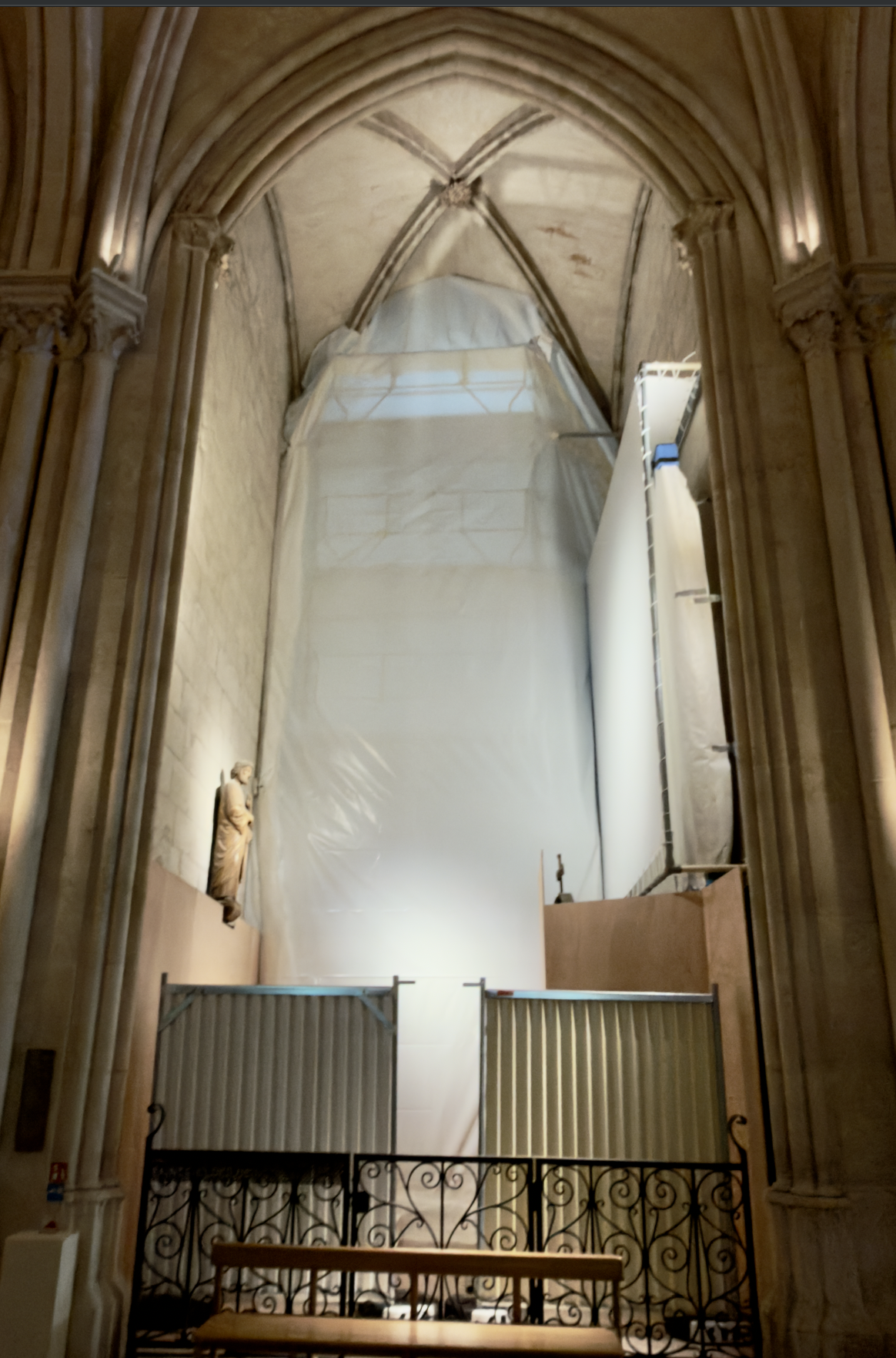
The work was to begin this year, with completion and opening in 2028. They haven’t even opened the competition for an architect. This project will most likely never happen. Maybe they should use the 4 million euros that the windows are costing for the start of the project.
Notre Dame has a difficult line to follow. It is once again the most visited monument in France. Following the fire, the crowds have returned in record numbers. However, Notre Dame is also still a cathedral and a religious structure. It is also a State-owned structure, but the interior is run by the church. These days, they are leaning further toward tourism, with a heavy dash of self-interest. I love Notre Dame and have been obsessed with the history and architecture of this beautiful cathedral long before I ever set foot inside. I just hope that history can survive a few more generations before it is completely erased.
In France, the country's history and heritage are among its greatest gifts. Every year, hundreds of French people line up for a glimpse inside the many buildings opened for one weekend only. That is why this systematic destruction is so surprising. All wrapped up in a few people's egos and self-interest, that will destroy something meant to be seen by future generations.