Napoleon has carried the brunt of most of the blame for the looting of art from Italy and other European countries, but not all of it lies on his shoulders.
The looting of art from country to country isn’t a new idea. It all started with the Romans and the Greeks and continues to this day. There are a few more international rules in place to stop this, but not everyone follows them. In the 12th century, Doge Enrico Dandolo looted treasures and the horses later known as the horses of Saint Mark’s while in Constantinople. Something Napoleon would steal as well.
Henry VIII and the English, well, they take the cake, and still to this day a huge controversy. Many would take things from the very places they invaded to fund their crusades against their enemies. Then there is WWII and Hitler; we won’t go into that today, but put it this way: Hitler was a big fan of Napoleon.
Napoleon was born on August 15, 1769, on the island of Corsica. Had he been born a year earlier, he would have been Italian, but on May 15, 1768, under the Treaty of Versailles, Corsica became part of France. His rise to greatness would come from his father cutting a few corners, allowing him to enter the prestigious military schools in Brienne and eventually Paris.
Quickly rising through the ranks, he got the attention of the leaders of the Revolution and the Directory. Paul Barras, one of the five members of the Directory, noticed the young, brash general and realized he could use him to his advantage. Within days, Napoleon’s name was being spoken in every corner of Paris. No longer was he being made fun of or bullied in class; now he was given anything he wanted.
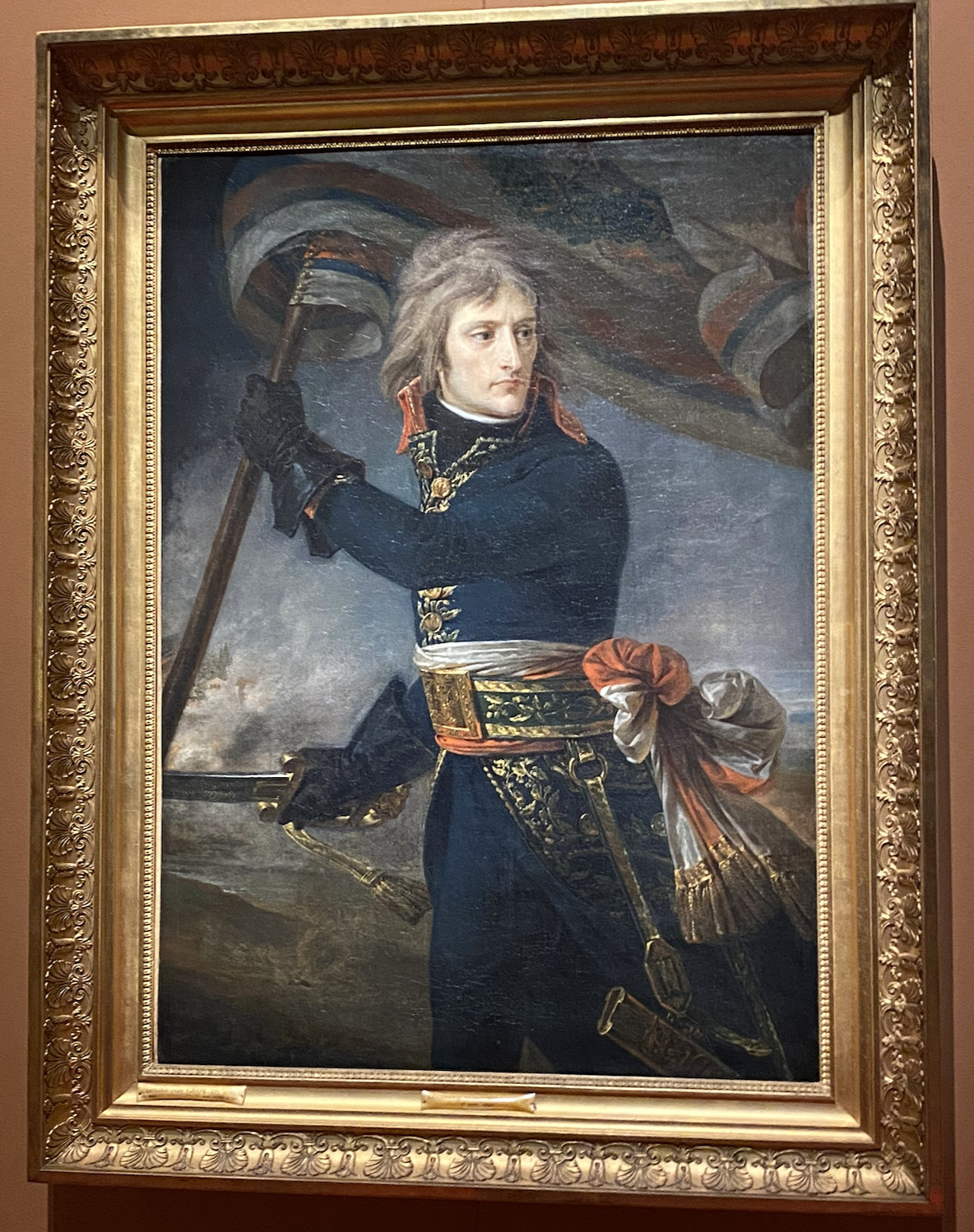
The young hotshot General Napoleon was given his first major appointment, leading an army of more than 48,000 soldiers into Northern Italy. The first Italian campaign under Napoleon was one of the most defining of his life. From March 24, 1796, to April 1797, General Napoleon forged through Italy, defeating the armies of Austria and Sardinia and forcing the Pope to his knees. A practice Napoleon grew quite fond of. Then there was all the looting, but before we talk about what Napoleon did, we need to go back a few years.
On August 10, 1793, the Musée Central des Arts de la République- you know this as the Musée du Louvre opened in the midst of the Revolution and less than a month after the death of Marat (if you missed that episode, listen to it after this one). The museum's foundation would be the King's Royal Collection, which began under François I and was greatly expanded by Louis XIV. The paintings of Italian artists made up the bulk of the collection, including those of Leonardo da Vinci, who moved to France at the request of François I and brought with him many of his unfinished works. A real Italian Renaissance fan, François I frequently visited Italy, often returning with many paintings he filled his palaces, including Fontainebleau.
In the 16th century, Henri IV became so enamored with art that he moved many of the artisans into the Palais du Louvre itself to work on pieces at his request. As for Louis XIV, the Sun King who loved performing and building massive châteaux, when it came to art, he just purchased what he was told to. German born collector Everhard Jabach held a large number of paintings and drawings of Italian and Northern artists and sold hundreds of pieces to Louis XIV in 1661 & 1671. He also advised him on art that was for sale in England and other cities he should acquire. In the 74 years of reign under Louis XIV, only a fraction of less than 5 years were focused on art, but one might never know when entire books are filled with the listings of paintings, sculptures, objets d’art, and drawings he acquired. Jabach’s name is all over the plaques of the Louvre and I wondered for years just who he was.
During the Revolution, once the museum opened, collections from those who fled France in fear of the guillotine and precious items taken from churches would also fill the Grande Galerie, but the leaders had loftier goals: to obtain the greatest art in Europe.
On June 26, 1794, the French army defeated the First Coalition, made up of the Holy Roman Empire (including Austria & Sardinia) and England, at Fleurus in what was then Austria. Drunk with power, they were ordered to take art, treasures, and military trophies. One of the most coveted items was Rubens' Descent from the Cross, painted in 1611, which was stolen from the Cathedral of Notre Dame in Antwerp.
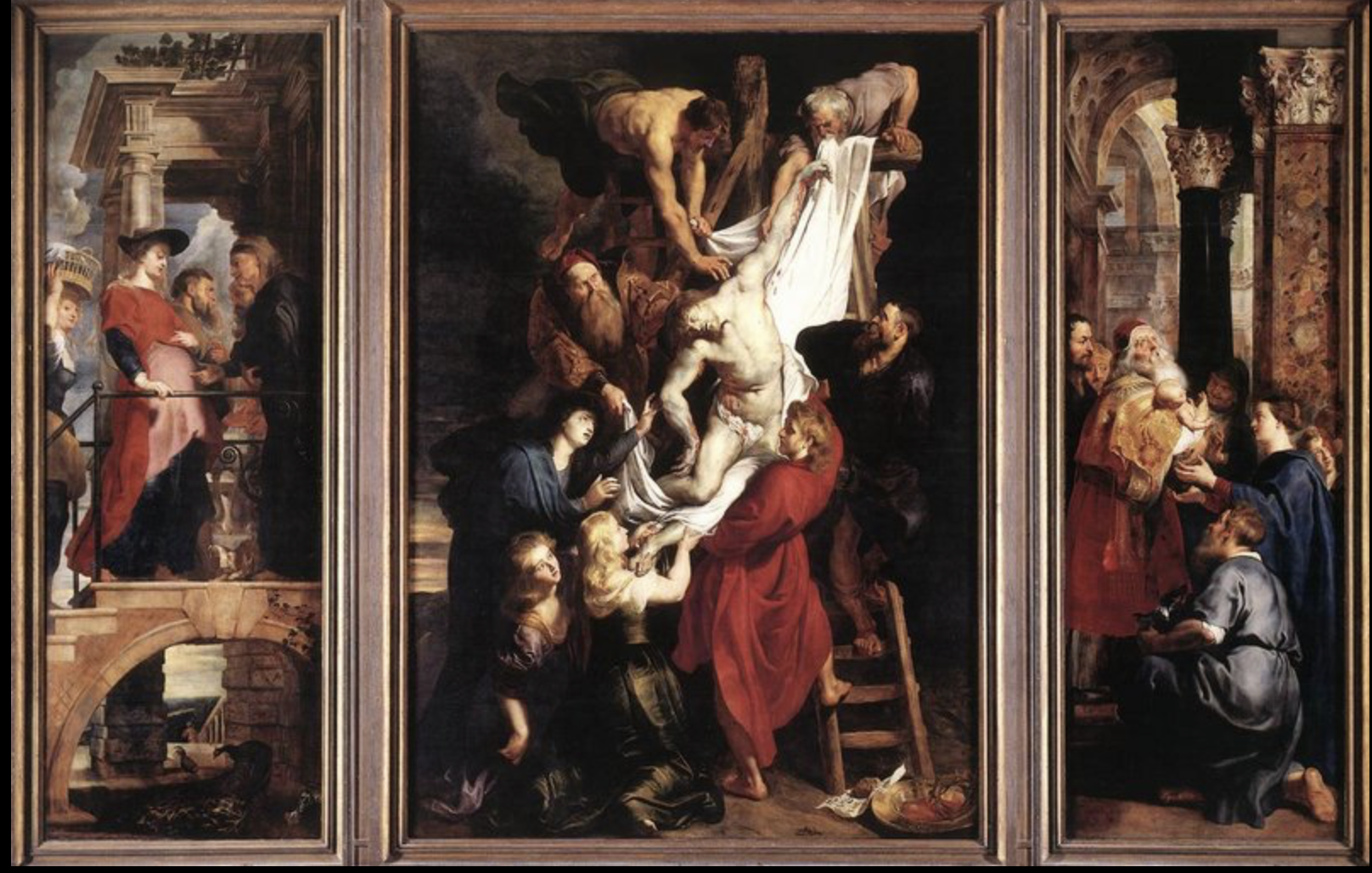
On September 20, 1794, the Descent of the Cross, among the 150 paintings by Rubens, Van Dyck & Rembrandt and other prominent artists, arrived in Paris and was placed in the museum. Their arrival was declared a triumph, stating that the arrival in the homeland of the arts and genius in the homeland of liberty and sacred equality. Although created by foreign artists, their absence from France was seen as a travesty.
They wouldn’t stop there. The collecting continued into Holland, Antwerp, Bruges, Aix la Chapelle, Liège, Bonn, Koblenz, and Cologne. All orchestrated by the Directory to obtain the greatest works in Europe. In Ghent, they grabbed the famed altarpiece by Van Eyck, the exact one that would be stolen again during WWII and five other times. They began to send art experts into the battle zones who would know what to grab, a bit of a reversed Monuments Men scenario, taking rather than saving.
The Committee of Public Safety gathered these experts from every corner and added additional specialties as needed. Botanist André Thouin and geologist Barthélemy Faujas de Saint Fond would both enrich the National History Museum with their finds. Architect Charles de Wailly also worked on the Eglise Saint Sulpice including the pulpit, and one of the many who updated the chapel of the Virgin knew what to take, including the columns of Charlemagne's final resting place. Many opposed this practice, but their concerns were ignored.
Entire collections were taken, belonging to fleeing leaders like Frederick, Prince of Orange in Holland, which consisted of 194 paintings by artists of the Northern School. And it went on and on and on.
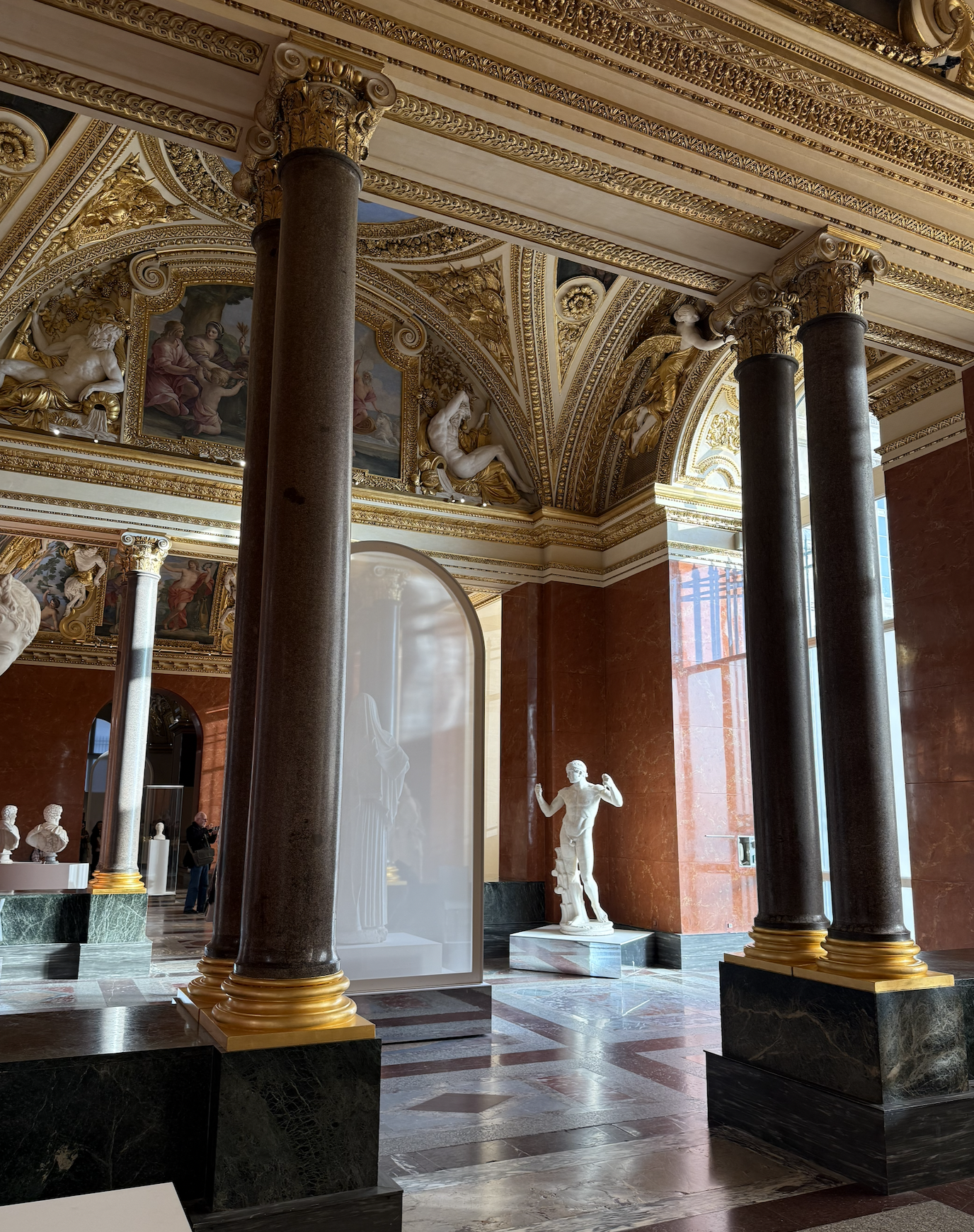
Columns of Charlemagne, a few remain in the Louvre
The Directory was off and running, and now with Napoleon in their pocket, they couldn’t be stopped. Although when Napoleon stepped in, he did it somewhat legally. Well, as legal as you can get. With each theft, he left behind treaties he had worked out with the city's leaders, who had been backed into a corner, which they would sign off on and, at times, hand over the art, gold and silver, weapons, and, quite often, horses for his soldiers, and even food.
The Directory ordered Napoleon to take everything he could. In a letter in May 1796, he was told to “Leave nothing in Italy which our political situation will permit you to carry away, and which may be useful to us”
Growing up, Napoleon was more focused on maps and history than he was on art. He quickly understood what art meant and, more importantly, what having it could do. At the end of May, Napoleon wrote a letter to Guillaume Faipoult and asked for “a list of the pictures, statues, cabinets and curiosities in Milan, Parma, Piacenza, Modena and Bologna.” In another letter less than a week later, Napoleon asked for a list of “three or four known artists to choose what is fitting to take to send to Paris.”
The Directory requests didn’t end with art; they extended into manuscripts, antiquities, plants and even animals. There were many who opposed the systematic looting, including the first director of the Louvre, Dominique Vivant Denon, who would later change his tune, take anything he could get his hands on, and become the first director of the Louvre.
The Directory took it up a notch and, on May 11, 1796, decreed an official commission led by Gaspard Monge, a mathematician and scientist who was more interested in amassing manuscripts than in art. Arriving in Italy as early as June 1796, he brought botanists and scientists as well as artists Jean-Simon Berthélemy, Jean-Guillaume Moitte, and future Napoleon artist Antoine-Jean Gros.
As quickly as Napoleon looted a city, he just as quickly left a treaty behind to give the appearance that what he did was legal. In every treaty, he tacked on a line requiring them to hand over at least 20 paintings to the French. When the battles kept swinging heavily in the direction of the French, Pope Pius VI conceded more art in appeasement and to hold off the outright plundering.
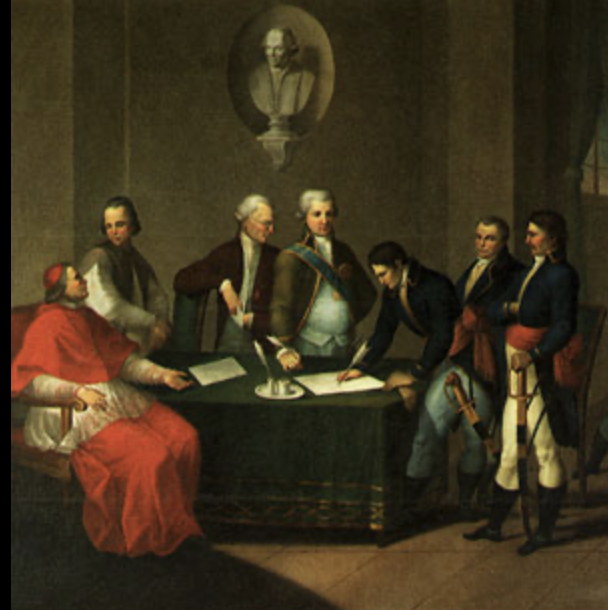
The Treaty of Tolentino, the treaty to rule all treaties, was signed on February 19, 1797, between the French and the Papacy of Pope Pius VI. Nine months into the campaign, seen as a success by the French in many ways, especially in the gathering of art. The treaty stated that the French would have full access to any building, including churches, public museums, businesses, and private homes, and could take whatever they wanted. Then they went to Venice.
For centuries, Venice had been known for holding some of the greatest art in all of Europe. Artists Veronese, Tintoretto, Titian, and Bassano all called Venice home, and the wealthy lines of Doges poured money into the art for the churches, palaces, and official buildings. With the treaty in place, it was time to visit the floating city.
At the time, there were many things, especially in the churches, that Venice took from other countries and cities, especially Constantinople. (Listen tp episode 20 Siege of Constantinople here)
Within the Monastery of San Giorgio was the massive creation by Paolo Veronese depicting the Wedding at Cana and the first miracle performed by Christ, turning water into wine. Commissioned by the wealthy abbot of San Giorgio, Girolamo Scrocchetto, on June 6, 1562. Veronese painted the masterpiece on canvas, which was unusual for Renaissance artists.
Until then, paintings were often done on wood, but the damp conditions of Venice made that difficult. Fresco was almost impossible in the humidity, and canvas was becoming more mainstream and accessible.
The massive painting stretches out over 32 feet across by 22 feet high. The same measurements as the wall itself. Finished by October 6, 1563, the painting is in the High Renaissance style and is filled with 130 figures, including Christ and the Apostles, as well as leaders of Europe at the time, including Francois I and many of the great Venetian artists, but Veronese never stated who anyone was.
For over 230 years, the Wedding at Cana hung on the wall of the San Giorgio until 1797, when Napoleon’s soldiers entered and removed the painting, cut it in half, rolled it up, and added it to their art booty.
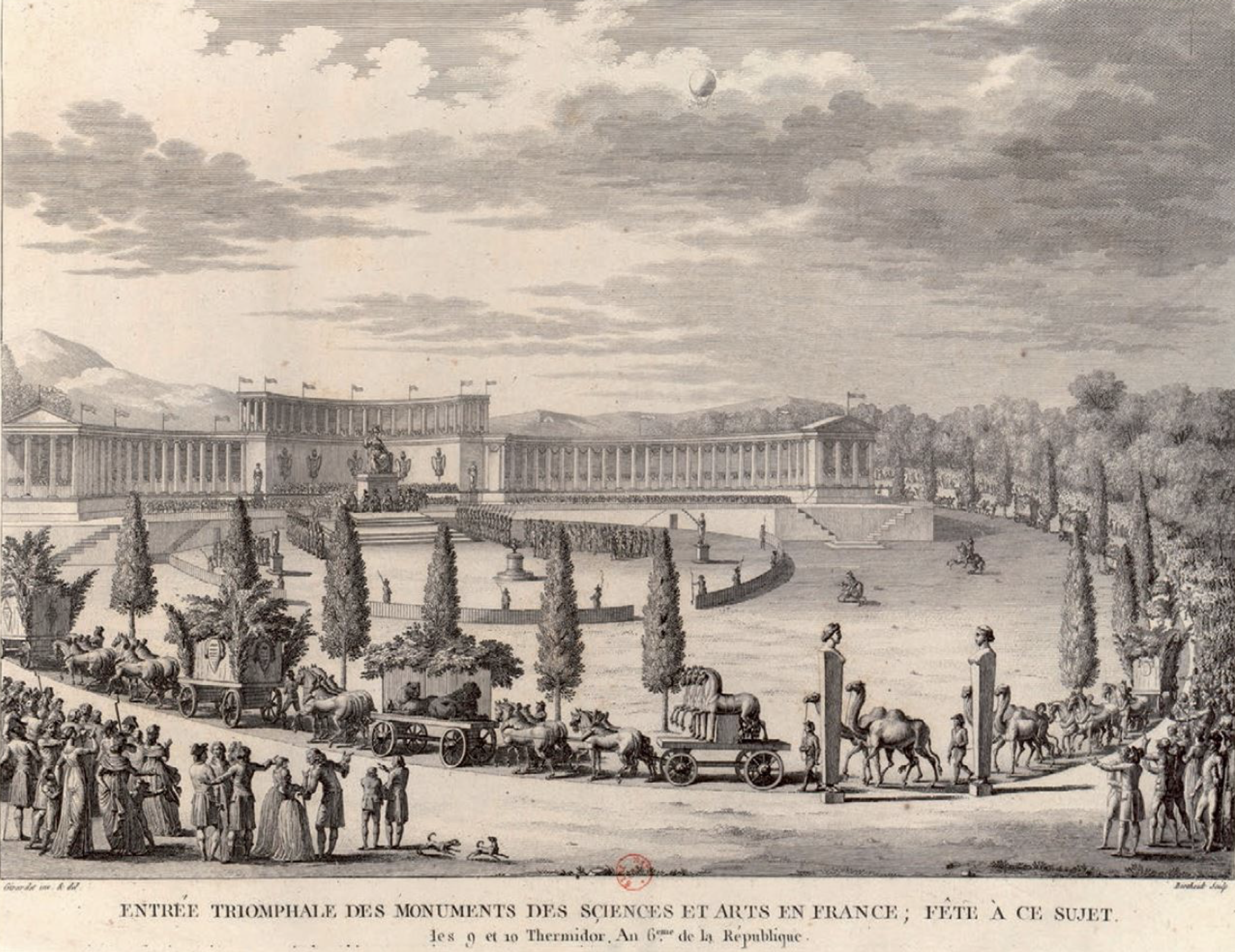
In December 1797, 640 crates were sent from Italy in a mass convoy and arrived in Paris on July 27 & 28, 1798, and were greeted with a two-day celebration, the Festival of Liberty and the Arts. For two full days, the convoy drove through the streets of Paris. The Apollo Belvedere stood tall and held a banner that read, “Greece lost them; Rome lost them. Their fate has changed twice; they won’t change again”.
Many years ago, I came across the lithograph by Pierre Gabriel Berthault of the long procession in an unrecognizable Champ de Mars, as we know it today. The four horses of Saint Mark’s take pride of place in the center, and on either side a cage of lions and even a few camels.
Napoleon returned as a hero, and within a few short years he would be ruling France.
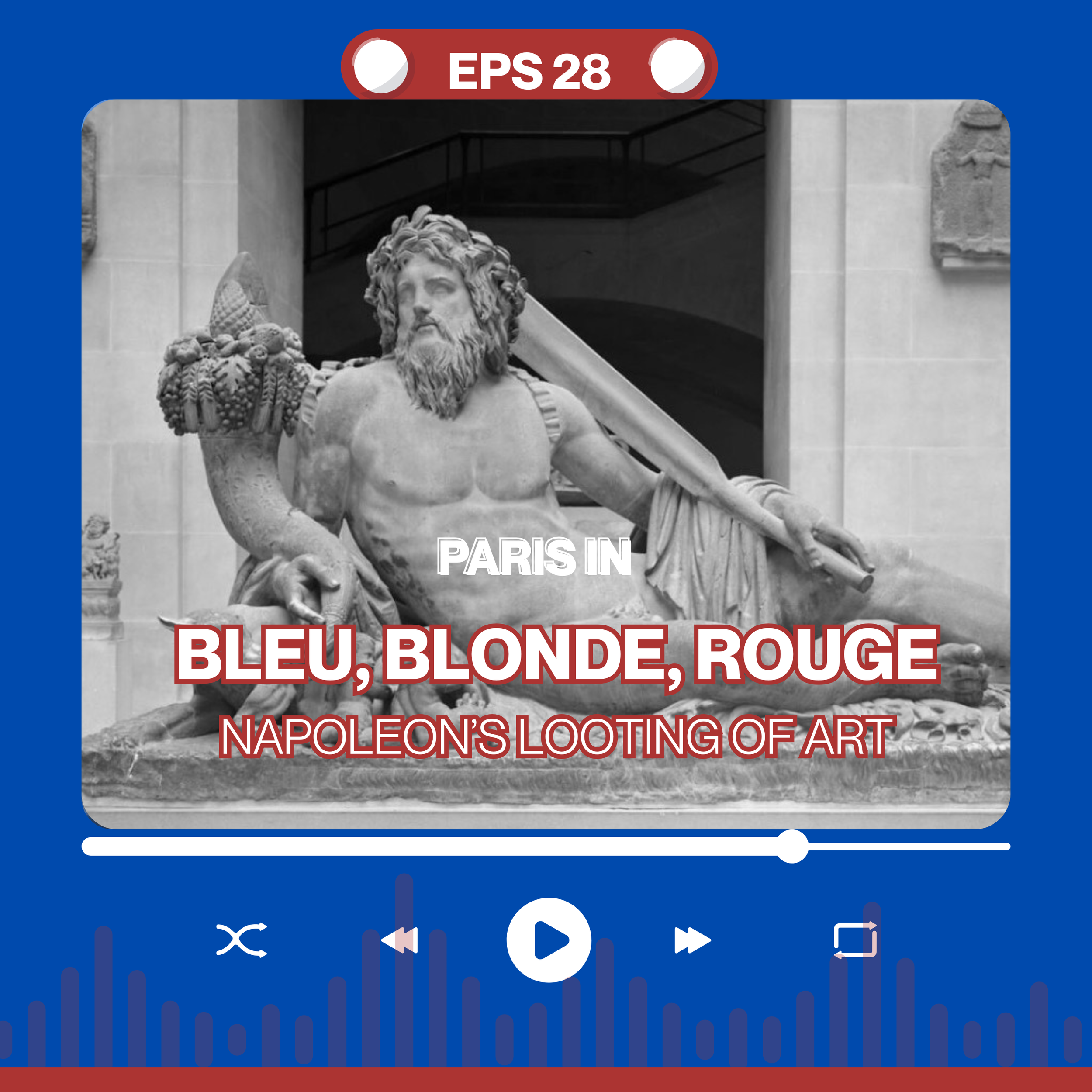
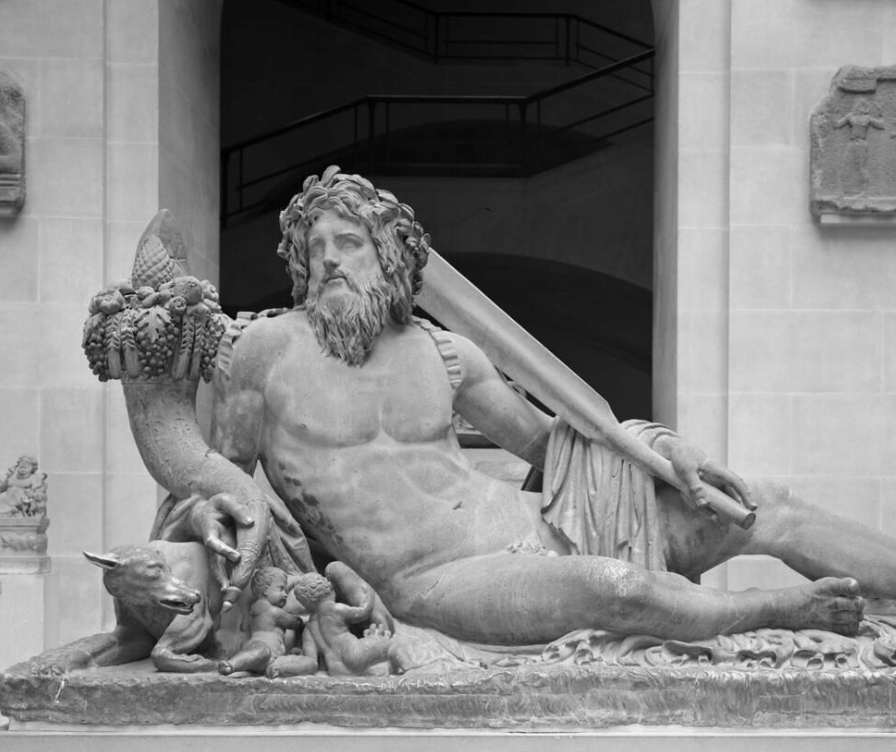
On July 22, 1803, the Musée Central des Arts de la République was renamed the Musée Napoléon and filled with his personally captured booty from Italy. The former summer apartment of Anne of Austria held the many Roman statuary, including the large Tiber taken from the Vatican along with the statue of the Nile. (In 1815, the Nile was returned to Rome, but the Tiber remained in the Louvre and still in the Anne of Austria rooms, but currently in storage. You can see copies of each created in the 17th century in the Tuileries.
The looting continued into the start of the 19th century. Dominique Vivant Denon opposed it early on but later became one of its most prominent advocates. In the summer of 1811, Denon visited Tuscany and Pisa, and removed the 13th-century masterpiece by Cimabue, the Maestà,from the church of Saint Francis, along with Giotto’s Saint Francis of Assisi Receiving the Stigmata. Today, both are still in the Salon Carré of the Louvre.
Denon took paintings of Fra Angelico, Fra Filippo Lippi, and Botticelli from Florence, all legally, under the condition of the Treaties of Tolentino and Campo-Formio. All still in the Louvre.
After the fall of Napoleon in 1814, Louis XVIII, brother of Louis XVI and a Bourbon, returned once more to the throne of France. Trying to wipe away the memory of the First Empire, he began removing many of the effigies and reminders that Napoleon had added to Paris, but stopped short of returning any of the art that had been taken.
The first Treaty of Paris, signed on May 30, 1814, marked the end of strife between France, England, Austria, Prussia, and Russia. The end of Napoleon launched the return of the Bourbon king & reshaped the French territory to what it was before the Revolution in 1792, including returning Venice to the Austrians. One clause was left out, that of the art. It wasn’t going anywhere.
Napoleon’s surprise return from his first exile didn’t sit well with the countries that agreed with the first treaty, especially when he headed to Waterloo.
The Prussians took matters into their own hands. They were really riled up about the massive loss of life they endured due to Waterloo, and Napoleon was to blame. Arriving in Paris in the last few days of the Waterloo campaign, a Prussian envoy visited the Louvre and Denon and demanded the return of works. Denon refused unless he was told by the king of France and turned them away.
On the morning of July 11, Prussian soldiers returned to the Louvre and physically removed many of the paintings & sculptures that had been taken by the French in 1794.
All the graces of the first treaty were now in jeopardy, and a second Treaty of Paris was drawn up over five months. Since the subject of looted art was completely ignored in the first treaty, it would be in the second. Signed on November 20, 1815, it returned the rights to the artwork to its country of origin. However, because of changes in borders and even in who controlled the area in 1815 as opposed to who had it at the time of looting, this threw a kink into the plan to France's benefit.
Even with the treaty in place and clearly written that the art needed to be returned, Louis XVIII and the director of the Louvre Dominique Vivant Denon, were slow, or more like immovable, in the action of actually doing so.
Klemens von Metternich, an Austrian diplomat, had once orchestrated the marriage between Napoleon and his second wife, Marie Louise, and later signed the treaty of his exile. Now in Paris, he ordered that the artwork be returned to Austria, which included Venice. Here is where it got tricky: at the time of the looting, Venice didn’t belong to Austria; it didn't until the Treaty of Campo-Formio on October 18, 1797.
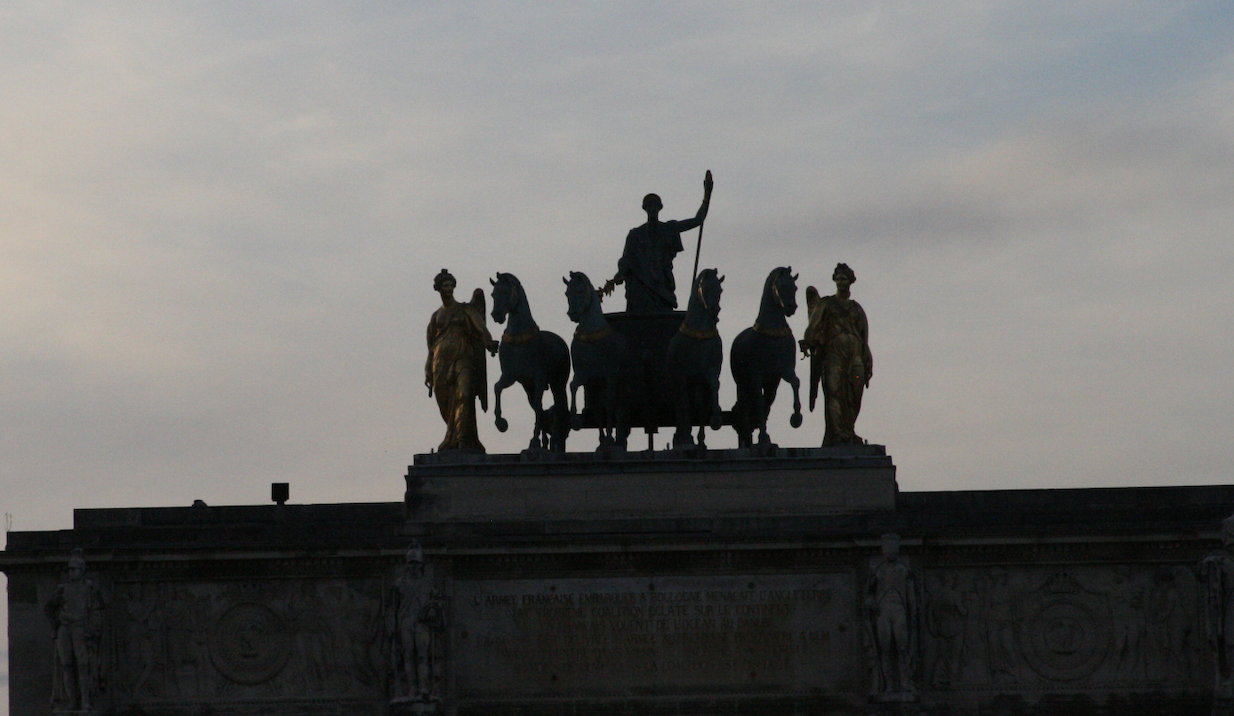
The Horses of Saint Marc’s were removed in September during a second attempt. The Austrians arrived to remove them in the middle of the day, banging and cutting at the sculptures and arc. Parisians, outraged, tried to stop them, and soldiers had to be brought in. They were finally removed days later in the dark of night, leaving lasting damage to the horses and the arc. Although shouldn’t they actually go back to Istanbul? Today there are copies, recently restored; more on that soon.
Venetian sculptor Antonio Canova was tasked by Pope Pius VII himself with collecting and returning the thousands of pieces taken from the Vatican. Canova believed that Napoleon violated the terms of the Treaty of Tolentino by holding Pope Pius VII captive in France following Napoleon's coronation in 1802. Because of this, any and all art, manuscripts, treasures, gold, and stones taken from the Vatican must be returned. The problem was, nobody else believed that, at least not in Paris. Eventually he did find one ally, the British William Richard Hamilton. A man himself known for his own looting throughout Greece, including the major pieces of the Parthenon, still a lively debate today.
In September, the Belgians were also calling for the return of their own art but met with a very stubborn Denon, who was protecting the Louvre. Finally allowed in on September 18, 1815, and for two weeks reclaimed more than 80 paintings that had been taken mainly from churches between 1794-1796.
Canova was finally allowed to enter after lengthy negotiation on October 2, 1815.
For days, they loaded up paintings and sculptures along with the hundreds of manuscripts. Three weeks later, on October 24, a convoy of 41 vehicles left Paris and headed back to Italy. Although only a fraction of what was taken was returned.
Canova kept an inventory, completed in Italy, of what was taken. He noted 506 paintings, taken from Italy between 1796 and 1814, although the bulk was taken in the first two years. A handful of paintings & sculptures were lost, and in the end 294 were returned to Italy. Of the ones that remained in the Louvre, they were either gifted by the Pope or traded; such is the case with the largest painting in the Louvre.
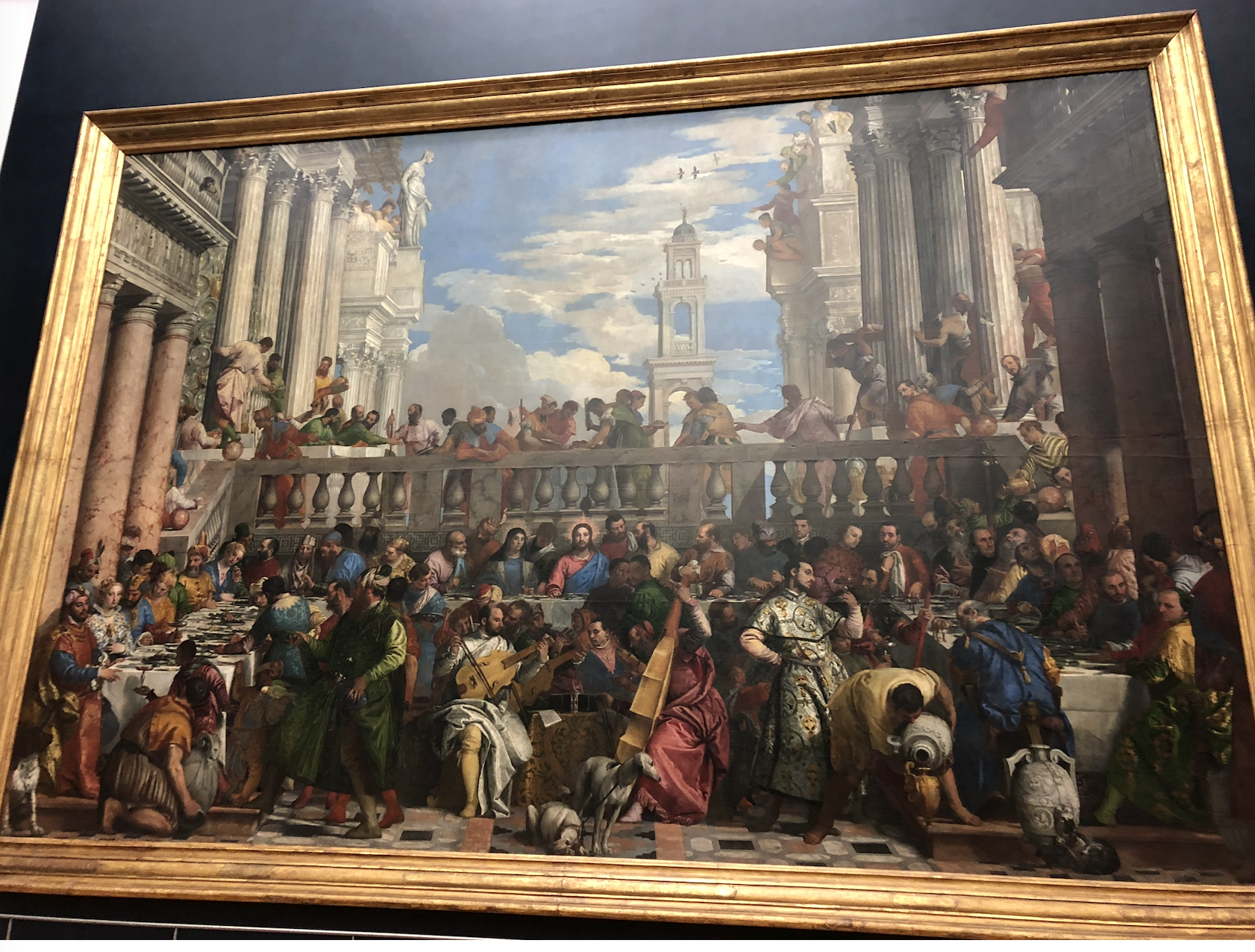
Once the Wedding Feast of Cana arrived at the Louvre on July 31, 1798, it was glued back together, placed on a stretcher, placed into a frame, and hung in the Salon Carré. When it was noted that the painting was on the list to be returned in 1815, Denon stated that it was far too large to send back and that attempting to ship it to Venice would be damaging to the piece. Clearly the Venetians & Austrians didn’t want it cut up again and allowed the painting to remain in the Louvre in exchange for a much smaller painting by Charles le Brun of Le Repas chez Simon now kept in the Gallerie dell’Accademia in Venice.
Canova was able to return many of the sculptures, including three that Napoleon held in the highest regard and that formed the basis of his Antiquite collection in the museum. The marble Apollo Belvedere was a 2nd-century Roman copy of a Greek statue. Pope Julius II placed it in the Belvedere Palace in the Vatican. The very tall Apollo stretches out his arm that once held a bow ready to strike.
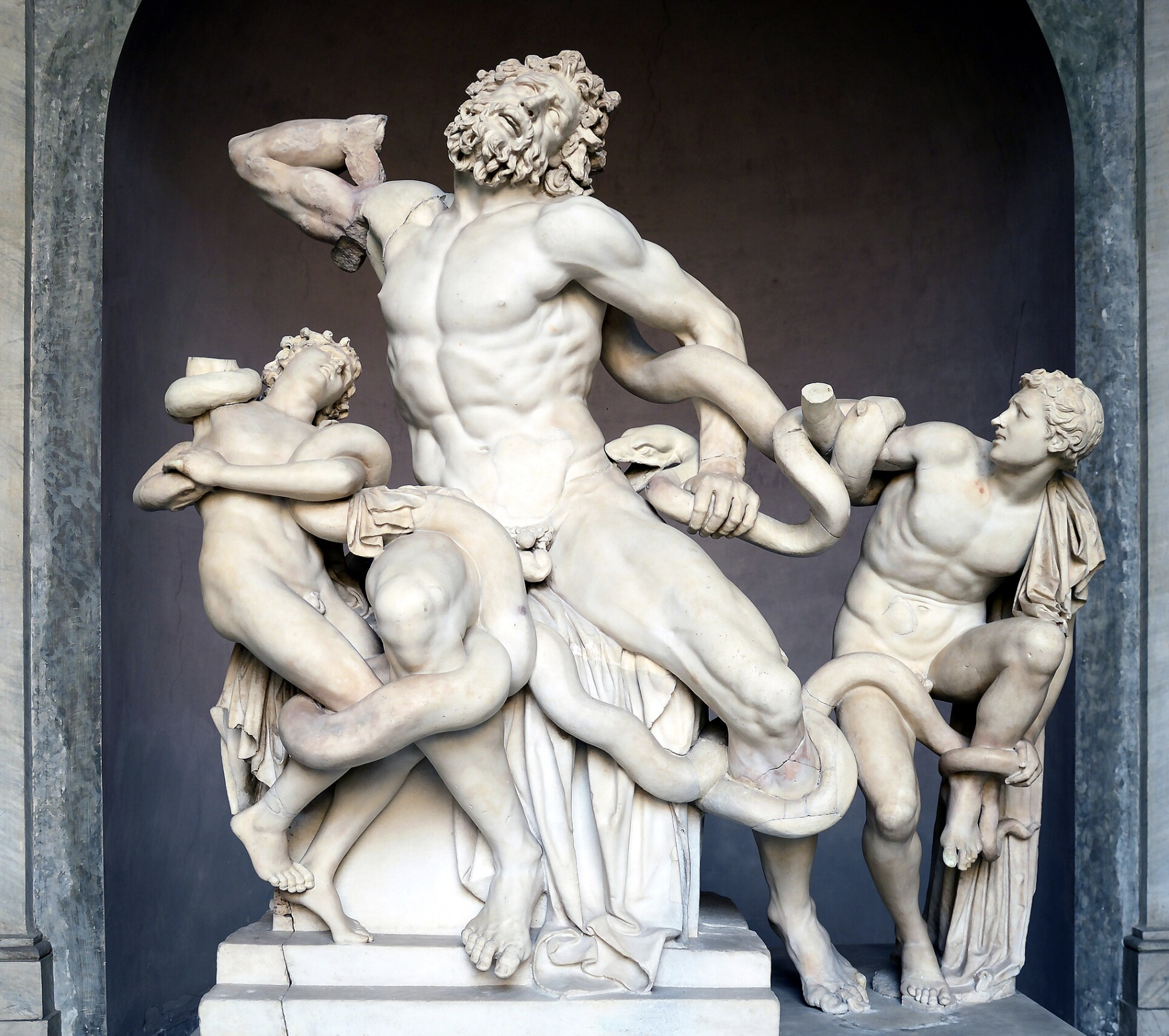
The Laocoön is a group sculpture that includes the Trojan priest of Poseidon, Laocoön, and his sons as they are attacked by snakes. Also placed in the Belvedere by Pope Julius II and was first noticed by Francois I in 1515, who asked the pope if he could have it. It would be quite the accomplishment for Napoleon to finally obtain the statue for France, even if only briefly.
The Louvre may have the Venus de Milo, but it originally also had the Venus de Medici. Copied in the 1st century from a Greek statue of Aphrodite. The once definitive example of Venus it was copied many times, including by Louis XIV, and copies can still be found all over France, from the Tuileries to Versailles. Part of the Villa Medici collection in Rome, it was taken from Palermo, where it was hidden to avoid Napoleon’s reach, but was still discovered and taken to Paris in 1803.
Today, many still remain in the Louvre, but have remained through diplomatic treaties and exchanges. Should they have been taken in the first place? That is up for more debate. There are the things that normally happened during the periods of conflict and war between many countries.
On July 29, 1899, at the first Hague Peace Conference, a formal decision and Regulations concerning the Laws and Customs of War on Land was adopted and signed by 23 states, including France, Italy, Belgium, Germany, Greece, the Netherlands, and Spain.
Article 56 specifically stated:
The property of the communes, that of religious, charitable, and educational institutions, and those of arts and science, even when State property, shall be treated as private property.
All seizure of, and destruction, or intentional damage done to such institutions, to historical monuments, works of art or science, is prohibited, and should be made the subject of proceedings
At the 2nd International Peace Conference in 1907, an updated version was signed on October 18, 1907, and adopted by 101 states. It has become the rule, even if it's not always respected.
In the 1930s and 40s, Hitler and his ERR would toss the entire regulation out as he carved his way through Europe, taking anything he wanted, including many of the same things Napoleon once took and had been returned.