The most recognized painting by the Romantic master Éugène Delacroix, La Liberté Guidant le Peuple au 28 Juillet 1830, depicts the event of this day, 196 years ago. Painted in 1830 for the Salon of 1831, the painting commemorates the Paris uprising of 1830, known as the Trois Glorieuses (Three Glorious Days), which ousted King Charles X.
France's timeline is marked by more than one Revolution. Most know of the big one that resulted in the beheading of Marie Antoinette & Louis XVI, which began in 1789. Four decades later, the people would rise up again against the brother of Louis XVI. After the fall of Napoleon in 1814, the Bourbons returned. First with Louis XVIII in 1814 and again in 1815 after Napoleons less than triumphant return, and ruling until his death on September 16, 1824. Without an heir, Louis’s brother the Comte d’Artois would take the name Charles X and the throne of France.
Charles X started strong with removing the censorship of the press; his reversal of that six years later would be his demise. A lover of the arts, he added his own museum within the Louvre dedicated to Egyptian antiquities, created in 1826 and advancing the purchasing of collections to add to the Louvre. The rooms of Charles X still stand today with lavishly decorated ceilings and are filled with Egyptian and Roman antiquities and are steps away from the Galerie d’Apollon.
While Charles X's rule began with popular measures, he would eventually return to the more monarchical ways of his Bourbon roots. Citizens began to realize that things were not getting better as promised. Unemployment was high, food prices were soaring, all leading to rising poverty, and the generation made up of the children of the French Revolution was tired of it.
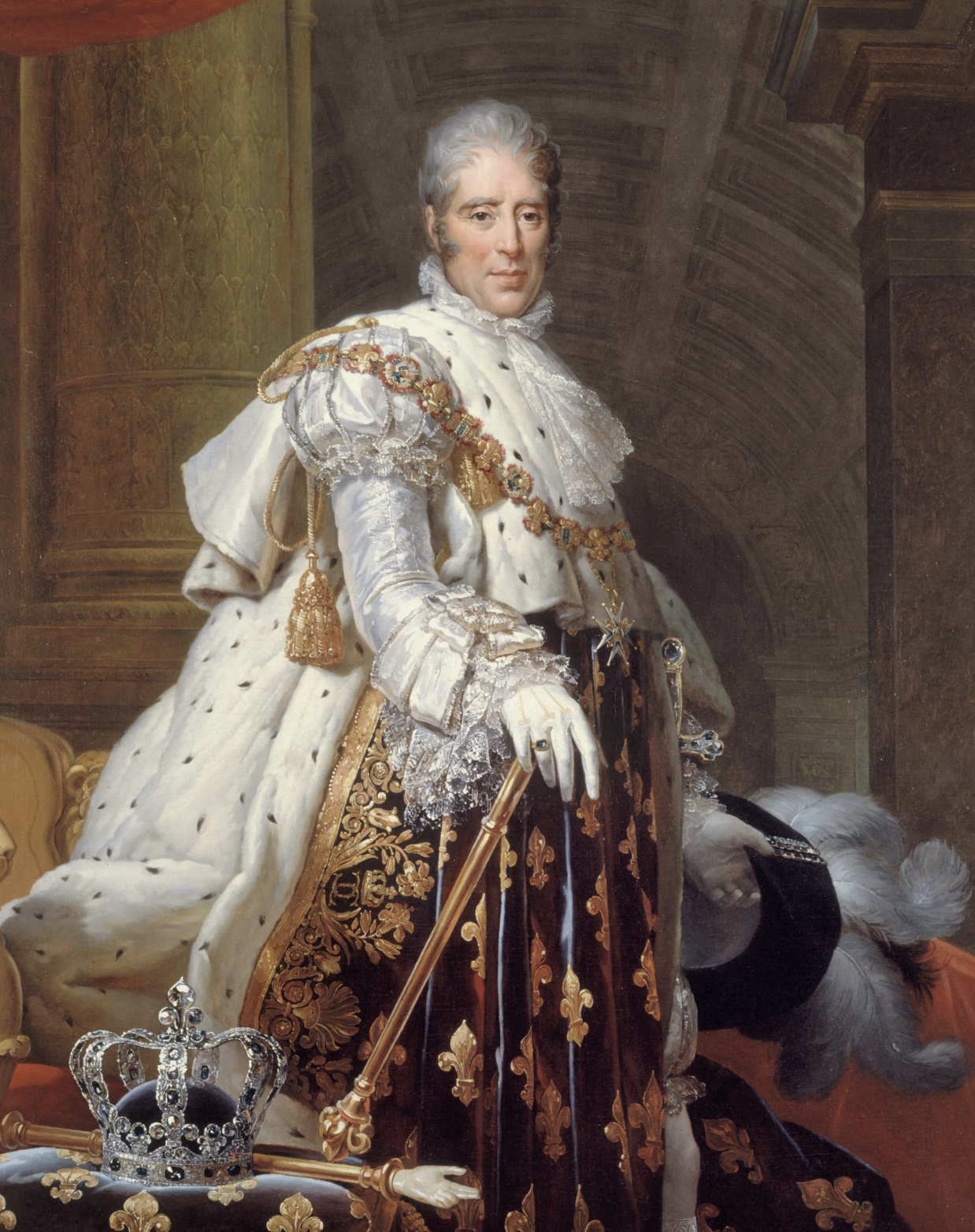
Charles X by François Gérard
To gain control, Charles X wanted to restore the Absolute Monarchy, the same one that ended with his older brother, Louis XVI. Clearly Chuck forgot how that worked out for Louis. The parliamentary government of the Chamber pressed back against him when they convened on March 2, 1830. Believing his announcement of entering Algiers to reclaim the port would unite everyone behind him.
Charles X made many missteps along the way, including putting Prince Jules de Polignac in the role of the President of the Council of Ministers. If the last name sounds vaguely familiar, it may be because of his mother. Polignac was born on May 14, 1780, and raised at Versailles. His mother, Madame de Polignac, was besties with Marie Antoinette, a relationship that alienated many at court and even spread rumors of an affair. Madame de Polignac was also very close to the Comte d’Artois, future Charles X, even spreading the rumors that he was the father of Jules de Polignac.
After fleeing Versailles and France during the Revolution, he remained in close contact with Louis XVIII and Charles X. When the Bourbons returned to Paris and the throne, Jules was one of the most trusted advisors and would ascend through the government.
When the people began to mistrust the king and government, having such a close reminder of the major Revolution and the monarchy's excesses would work against Charles. The ministers and chamber members quickly backed away from the crown and sided with Adolphe Thiers and the more progressive members, who were becoming increasingly outspoken.
After the king's announcement at the opening and the backing by Polignac, a vote was held a few days later. Known as the Address of 221, in regard to the 221 votes for and 181 against the king's decrees. In response, on March 19, 1830, the king suspended meetings and adjourned the chambers, sending them all home. Sitting on it for two months, he eventually dissolved the entire chambers on May 16, 1830. 430 chamber members were all out of a job. He set a new vote for July 5, 13 & 19, at which 430 new officers would be elected, with the majority being the Liberal party and the Ultraroyalists, led by Polignac, in the minority.
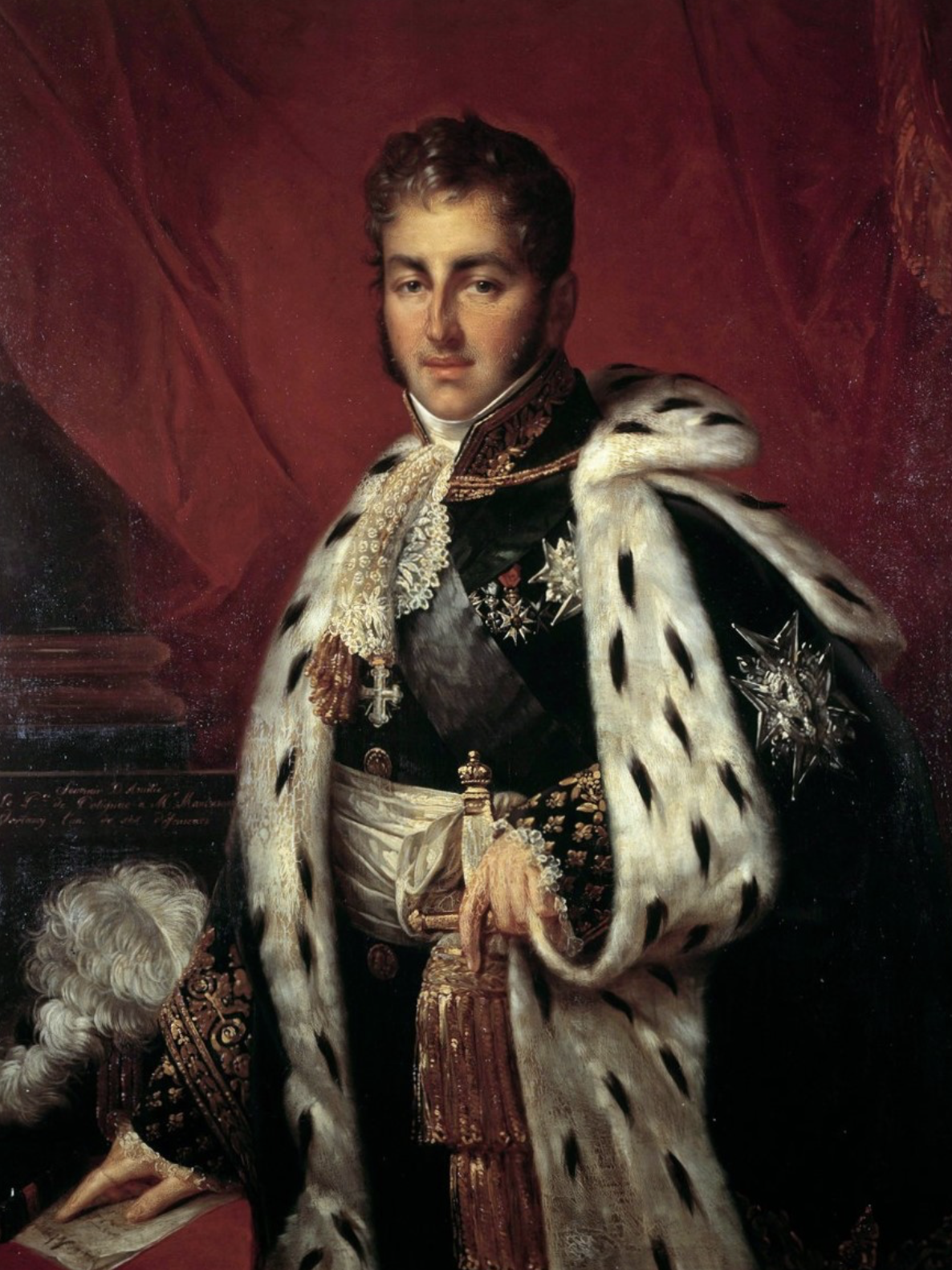
Jules de Polignace by François Gérard
Charles X was really upset at this point and, in response, issued four decrees that would put the nail in the coffin of his reign. Issued on July 25, the first would cripple the press, essentially ending the freedom of the press by ordering that journalists and papers had to have a license issued by the king. The second, once again, dissolved the Chamber of Deputies and called for another election in September. The third would change the election law altogether, and the fourth would give the king full power to appoint his Ultraroyalist members to any office he wished. (Any of this sound familiar?)
On Monday, July 26, more than 50 newspapers were forced to stop the presses, but not all of them obeyed. Many published articles spoke out against the king and the crackdown on the press, provoking further ire at the throne.
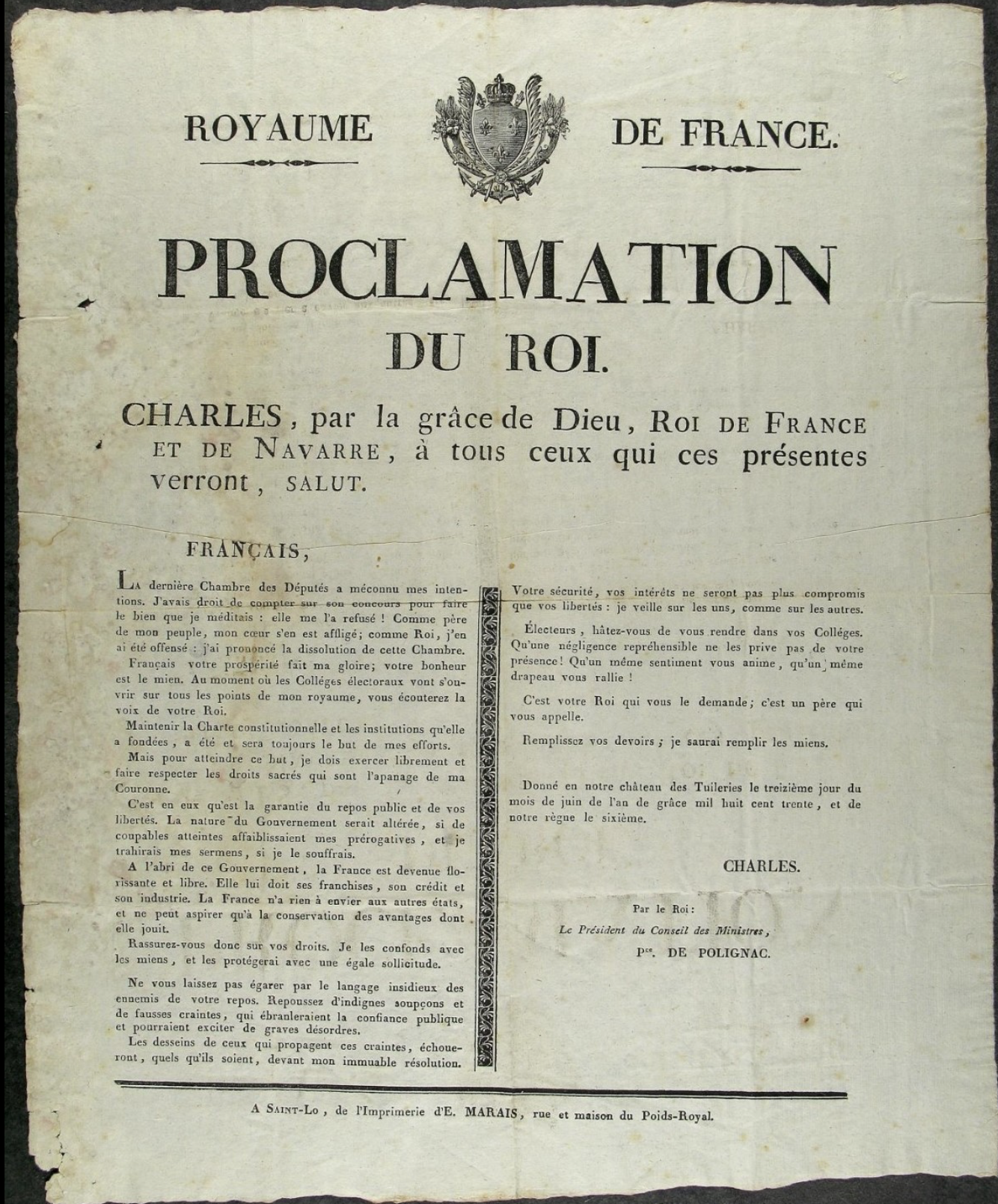
The next morning, the press gathered and vowed to fight back. Claude Mangin. Prefect of Paris and another good ol’ boy of Polignac and the King, was ordered to seize their presses from the twelve newspapers that published pieces overnight against the king. As the officers of Mangin arrived, they were met with workers who were waiting for them and were not going to go down easily.
By the afternoon, one by one, the editors, owners, typesetters, journalists, and printers began to march into the center of Paris. The Place Vendôme, Place de la Bastille, and Place du Carrousel saw large crowds of outraged citizens that the police were no match for.
July 28, the pivotal day of the uprising, brought everyone together. People traveled from outside of Paris to support and speak out against the King and Polignac. What made this Revolution different than the one at the end of the 18th century is that it united everyone. The rich, the poor, and even past supporters of the king and monarchy.
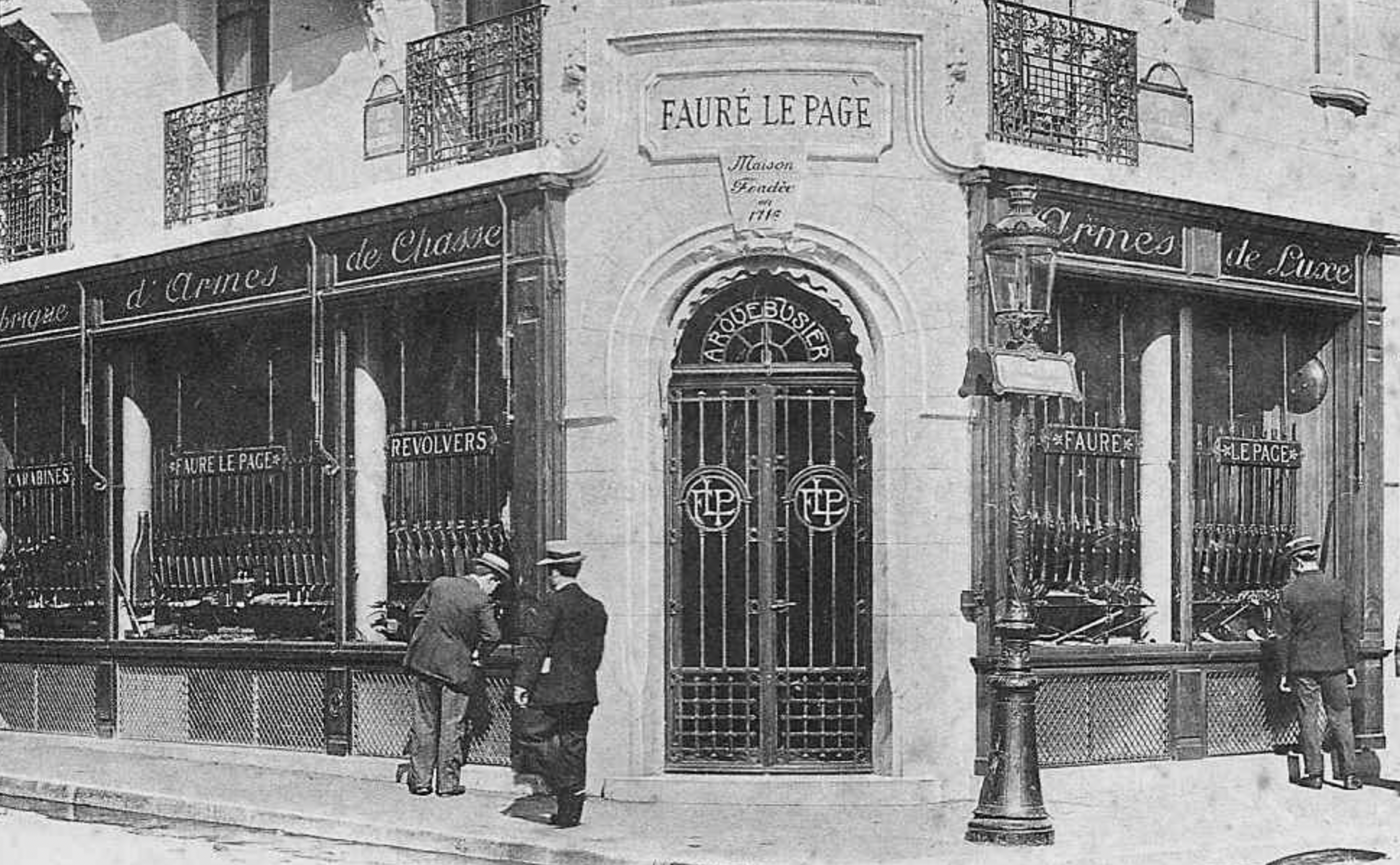
On the Rue de Richelieu, across the street from the Palais Royal, sat the gunsmith Fauré le Page, who had serviced the crown since Louis XV, including Charles X. On the morning of July 27, third-generation owner Jean André le Page and his employees worked around the clock to melt down and forge weapons and ammunition to give to the protestors to fight against the Garde Royal.
With weapons in hand, the crowds gathered in front of the Hotel de Ville, and the Garde Royal was quickly outnumbered. The angry crowd gathered every cobblestone and projectile to build barricades, and also tossed them at the police force. At 1:30 p.m, the crowd entered the Hotel de Ville, seized control, and raised the tricolor flag.
The significance of this moment and the return of the French flag we know today marks the symbolic end of the Bourbon reign. The tricolor flag was adopted in February 1794, in the midst of the major Revolution. Prior to that, the flag had been solid blue or white with fleur de lis or white with the coat of arms of the monarchy. To rid itself of anything associated with the king, the Tricolor flag was created and inspired by the ribbon cockades the fighters wore on their hats at the time.
The colors have many meanings and have changed in size over time until Napoleon decreed they should all be the same size. The bleu for Paris, the bourgeoisie, and fraternité. Blanc for Saint Martin, the clergy, egalité, and the Royalists. And finally rouge for the city of Paris or Saint Denis, the nobility, and even liberté. You can take your pick, as there are many versions.
When Louis XVIII and the monarchy returned, so did their blue flag with fleur de lis, so the triumphant moment the tricolor returned in 1830 was quite significant. A fantastic painting at the Petit Palais by Léon Cogniet captures the transformation of the flag from the Bourbons to the flag we know today that also represents the 1830 uprising.
As the sun rose on the morning of July 29, the Royal Guard, King and Polignac knew they had been beaten. A third of their 8,000 soldiers had been killed, and they were outnumbered, with even more protestors arriving overnight. Charles X and Polignac fled to the Château de Saint-Cloud and discussed how they would survive this. Other leaders were proposed for the chamber, but back in Paris, Adolphe Thiers and the leaders of the liberal party weren’t having it.
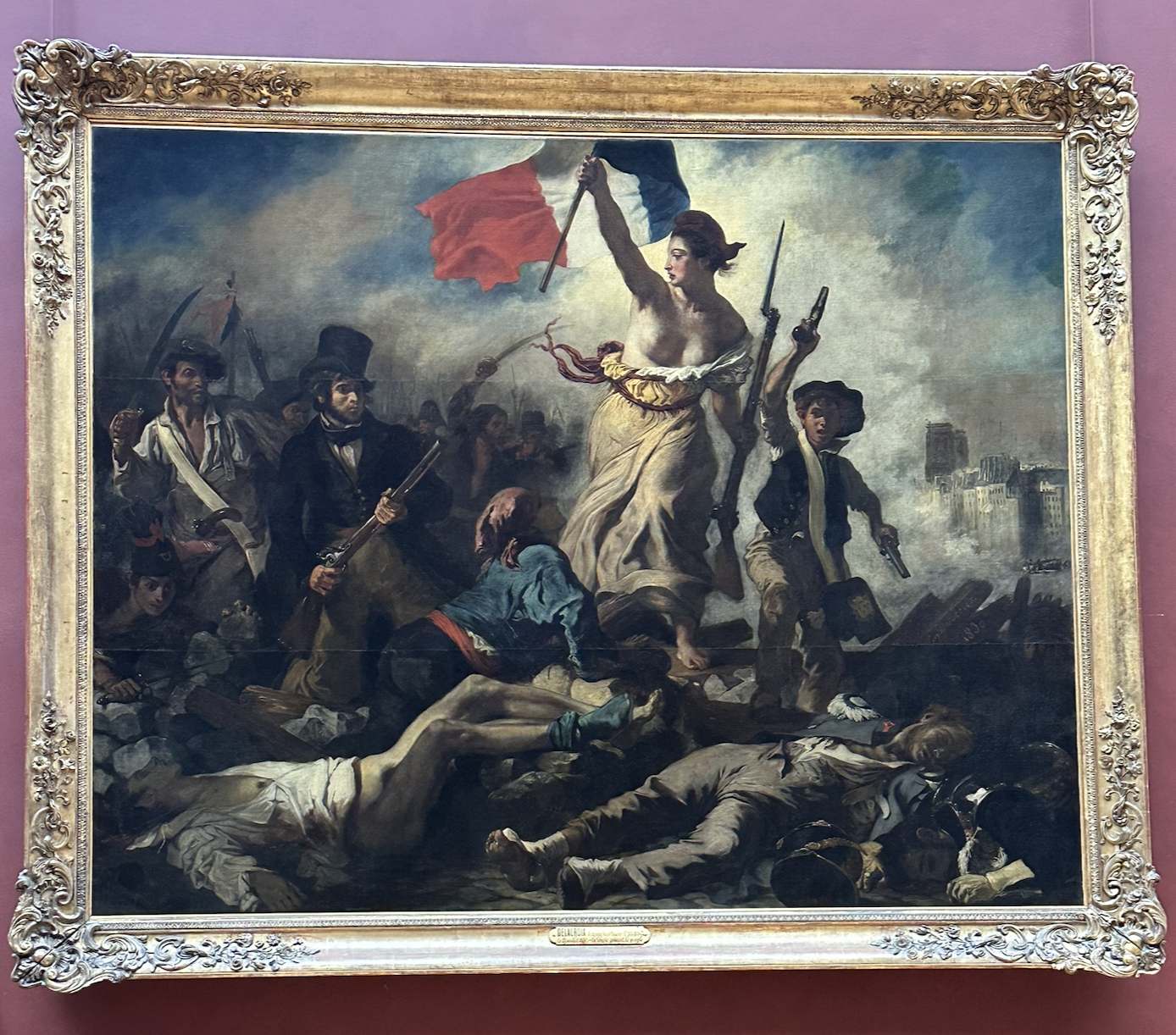
Before Restoration
The Marquise de Lafayette, war hero and member of the chamber, had been opposed to Charles X and his move to absolute monarchy. At the start of the uprising, Lafayette was hoisted as the leader of the newly restored National Guard, even at 73 years old. As the hours ticked by on July 29, leaders including Thiers and Lafayette met with the Duc d’Orleans in the Palais Royal, and put their support behind the “man of the people”
On July 30, the deputies voted 47 to 3 to name the duc d’Orleans the Lieutenant General of the Kingdom. Meanwhile, Charles was still holding tight and naming his own government. It took quite a bit of convincing, but the duc accepted on July 31. Charles X would finally abdicate the throne on August 2 but tried to name his son, Louis de France, Louis XIX, as heir to the throne, followed by his 9-year-old grandson, Henri d’Artois, as his heir. (His story and that of his mother are a great one; I will add it to my list for an upcoming episode) It involves hiding in a chimney.
Since there was never a Louis XIX or Henri V, king of France, you know that didn’t quite work out how Charles wanted it to.
The Duc d’Orleans, on August 9, 1830, in the Palais Bourbon, took the name Louis Philippe, King OF the French. The July Monarchy would reign for 18 years until another revolution took him down in 1848, and in comes Louis Napoleon Bonaparte.
It was on the penultimate day of the uprising that inspired the 32-year-old artist, Eugène Delacroix, sitting in his atelier, a mile down the river at 15 Quai Voltaire, Delacroix was moved to capture this moment of the Trois Glorieuses Jours.
In 1818, Delacroix’s good friend Théodore Géricault painted the monumental Raft of the Medusa. (listen to the past episode for more) The current-events painting won over plenty of fans and skeptics. History paintings in the lexicon of art were deemed the pinnacle of artistic styles, but they were rarely painted so close to the moment of the event. Another thing his pal Géricault did.
After the untimely death of his friend in 1824, Delacroix was thrust upon his own throne, as the leader of the Romantic movement, although reluctantly.
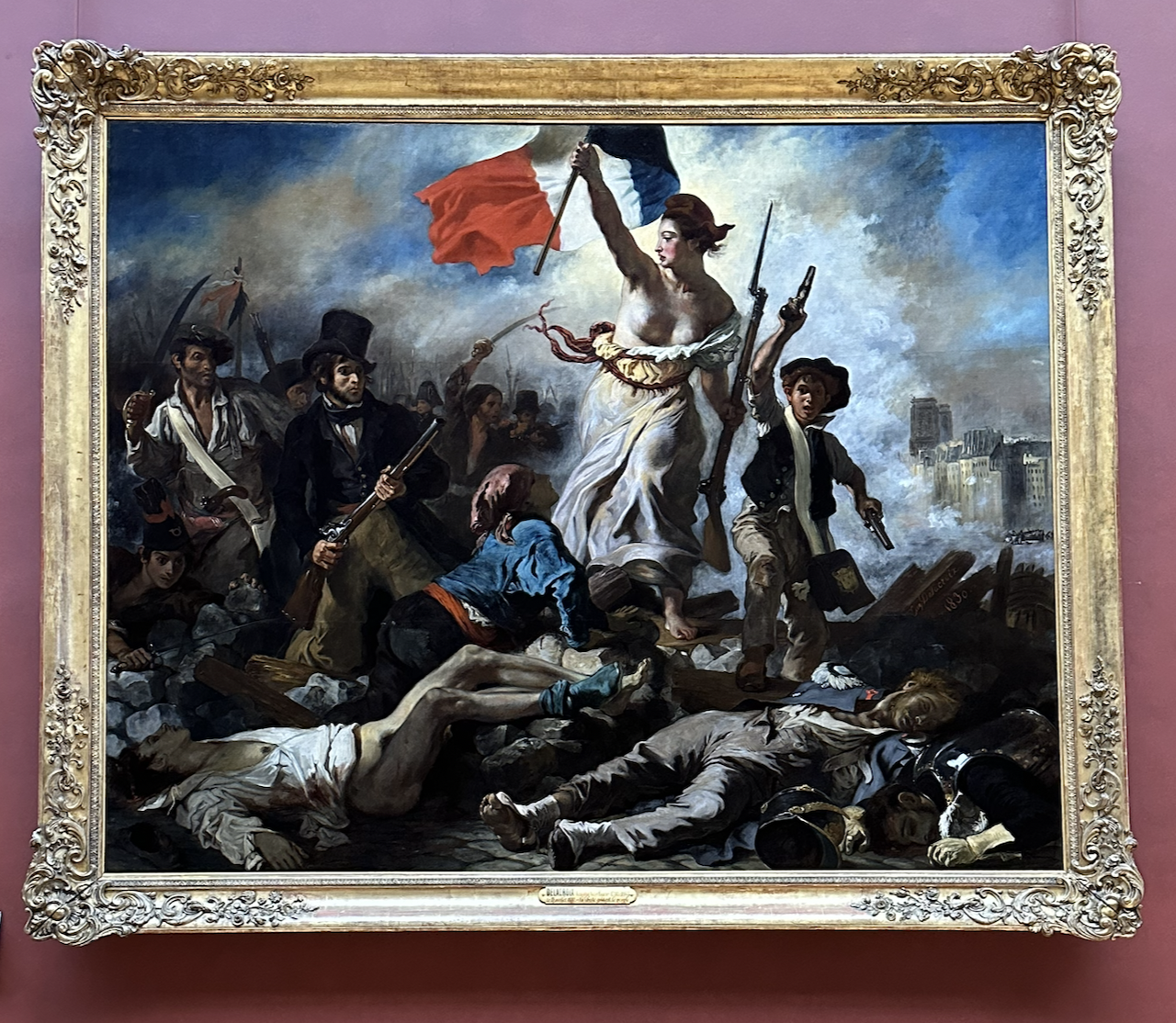
After Restoration
On October 12, 1830, in a letter Delacroix wrote to his brother Charles Henri, “I have undertaken a modern subject, a barricade, and if I have not conquered for the fatherland, at least I will fight for it. This has put me in a good mood,” and he did just that.
For three months, he sketched and painted from September 20 to mid-December 1830. An astonishingly quick period to create such a large piece and bring the entire moment to life.
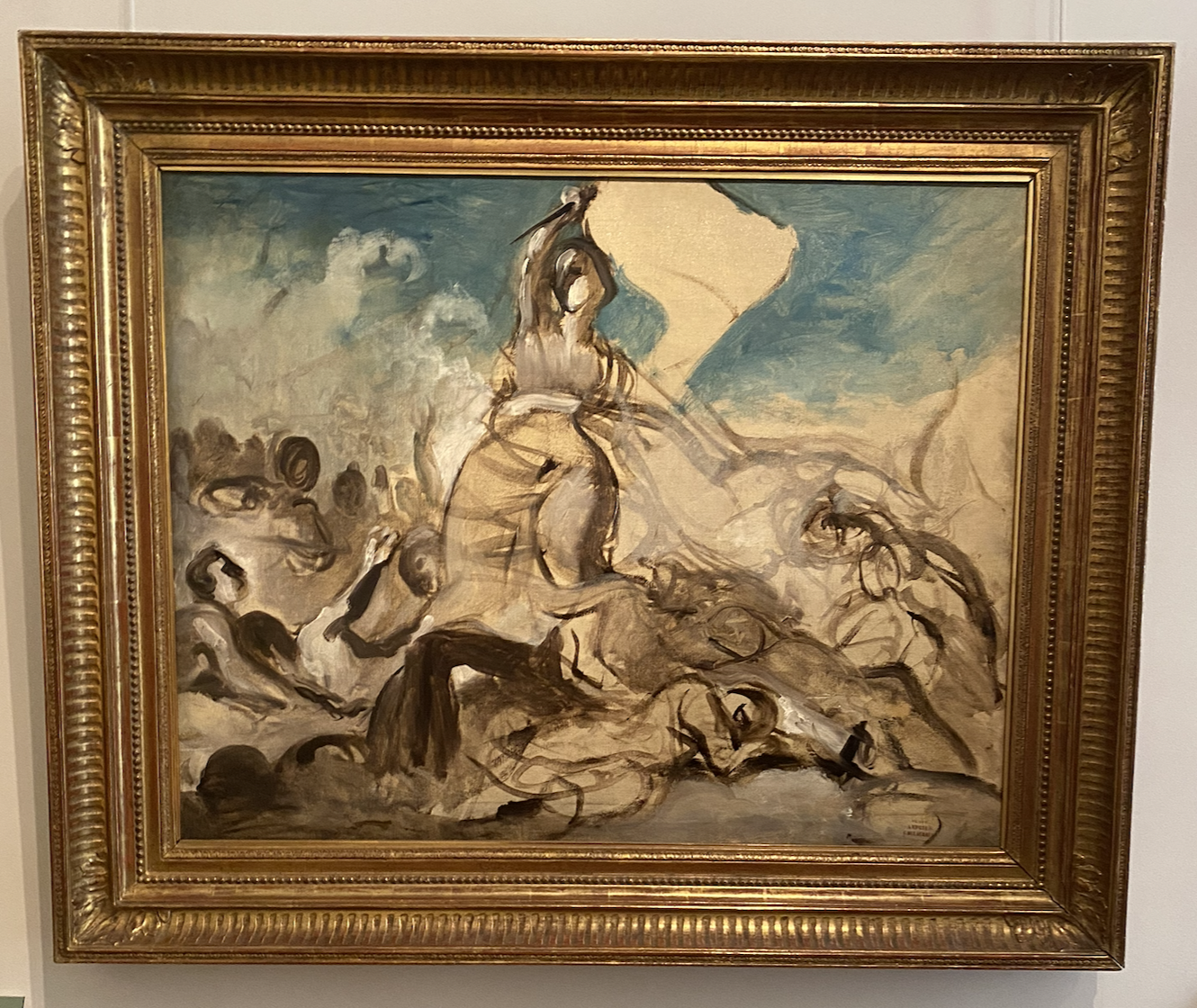
The entire scene was one of the lower and upper classes, as well as men of all ages, united. This was exactly why the Three-day Revolution is marked as such a defining moment in French history, as told in art and also remembered by the July Column in the Place de la Bastille. It was the mix of all classes that stood up against the monarchy. While the first Revolution began with the poor vs the monarchy, the July Revolution saw all classes in arms together.
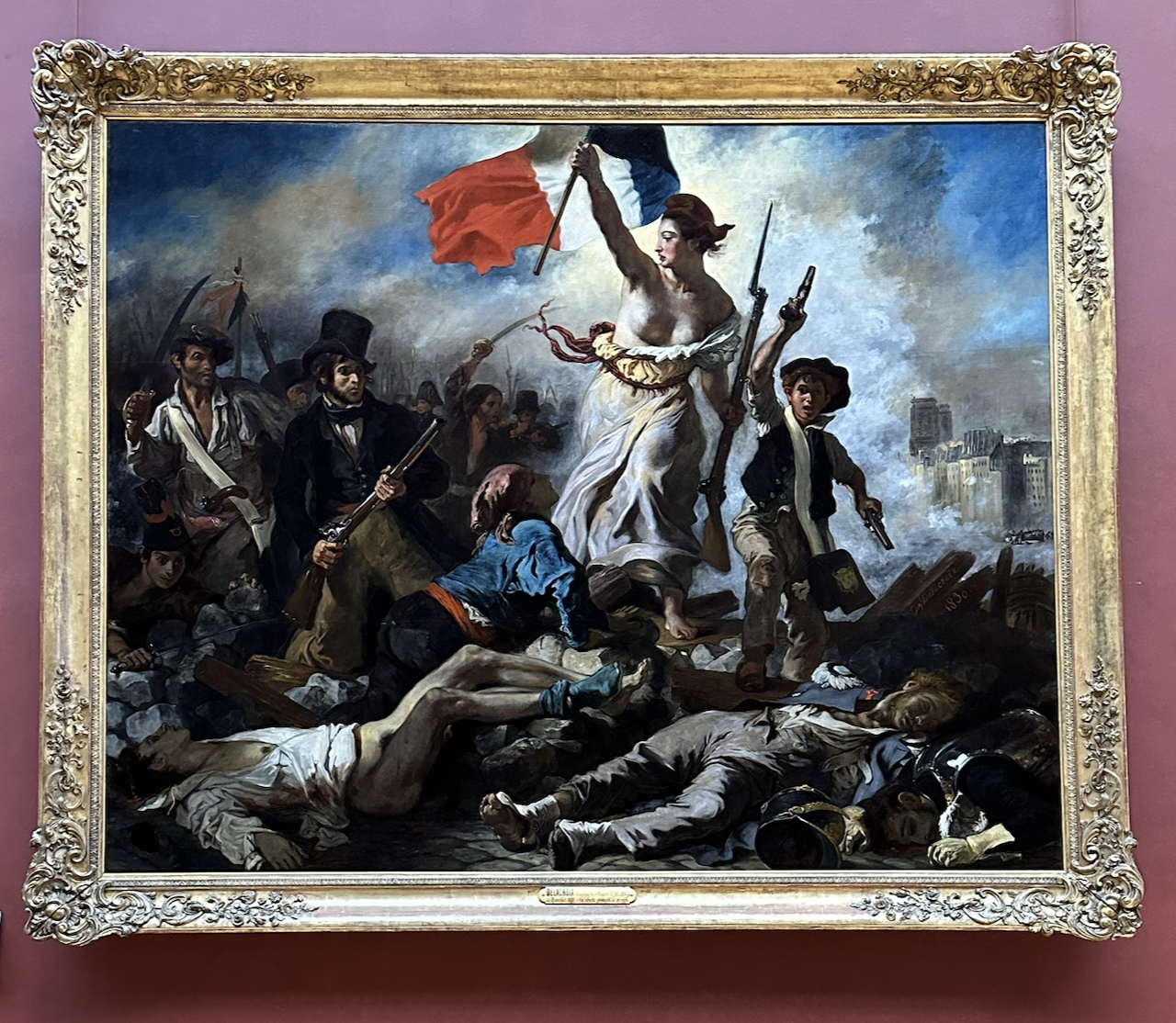
Delacroix perfectly captures that in his grand tableau. To the left of center, we see what appears to be a wealthy man wearing a top hat. Many incorrectly identify it as a self-portrait of the artist, but it’s most likely Delacroix’s close friend, Frédéric Villot, artist and curator of the dept of paintings at the Musée du Louvre. Villot was the first to write the record of paintings of the Louvre and a description of each in 1851.
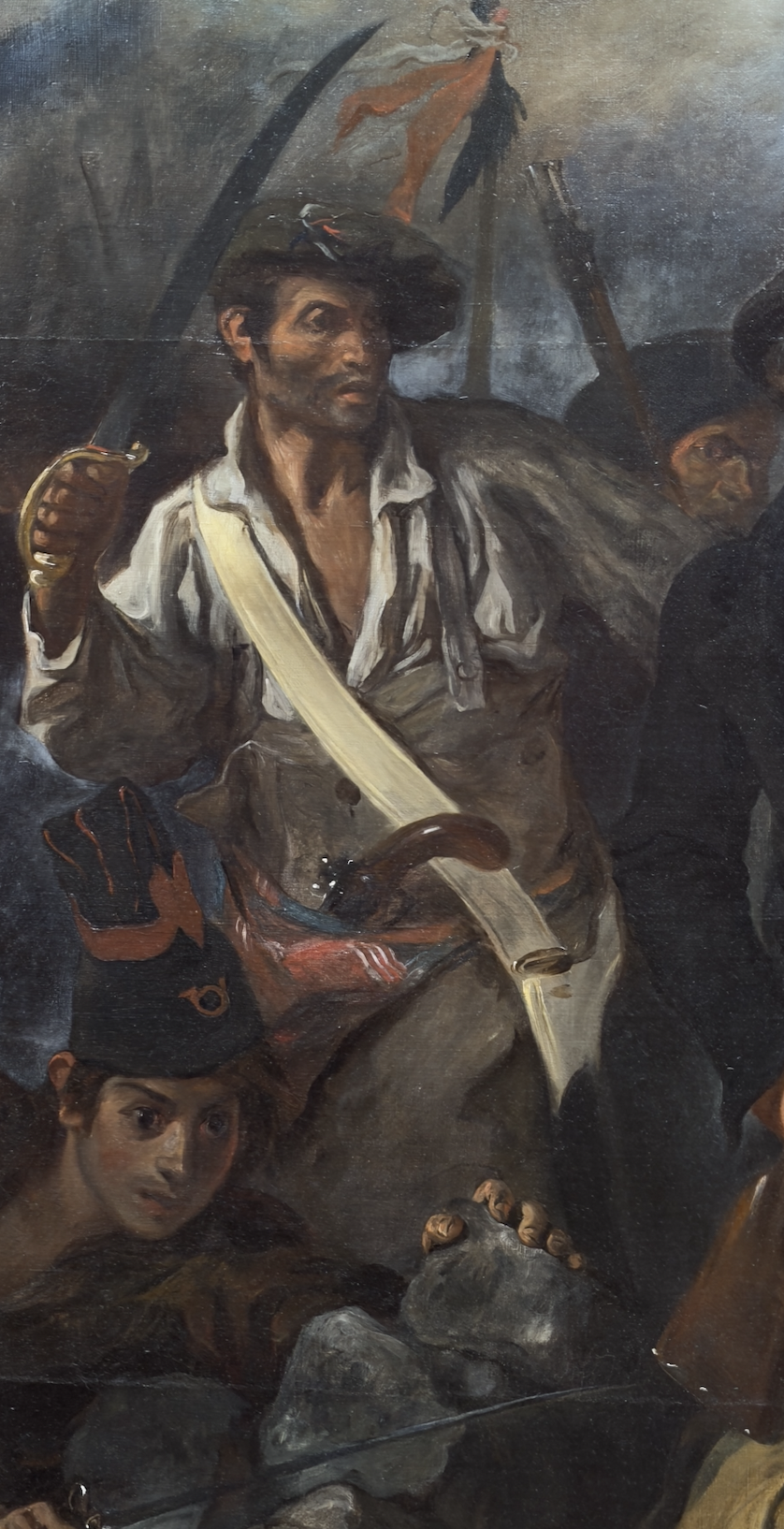
Delacroix was a Bonapartist; his father, Charles François Delacroix, served under the Empire as a prefect, and a man rumored that could have been his father, Talleyrand, was a minister of Napoleon until he turned on him. A few things were added to the painting that give a nod to Napoleon. The man on the left in the white shirt carries a briquet sword used by the Napoleonic armies. Representing a print worker, Delacroix added a few details that link the 1830 revolution to the Vendée War of 1793. Adding the handkerchief of Cholet, a very notable symbol and rallying cry, at his waist that holds his gun. In the background, now clearly visible since the most recent restoration, is a gentleman wearing a Napoleon bicorne hat.
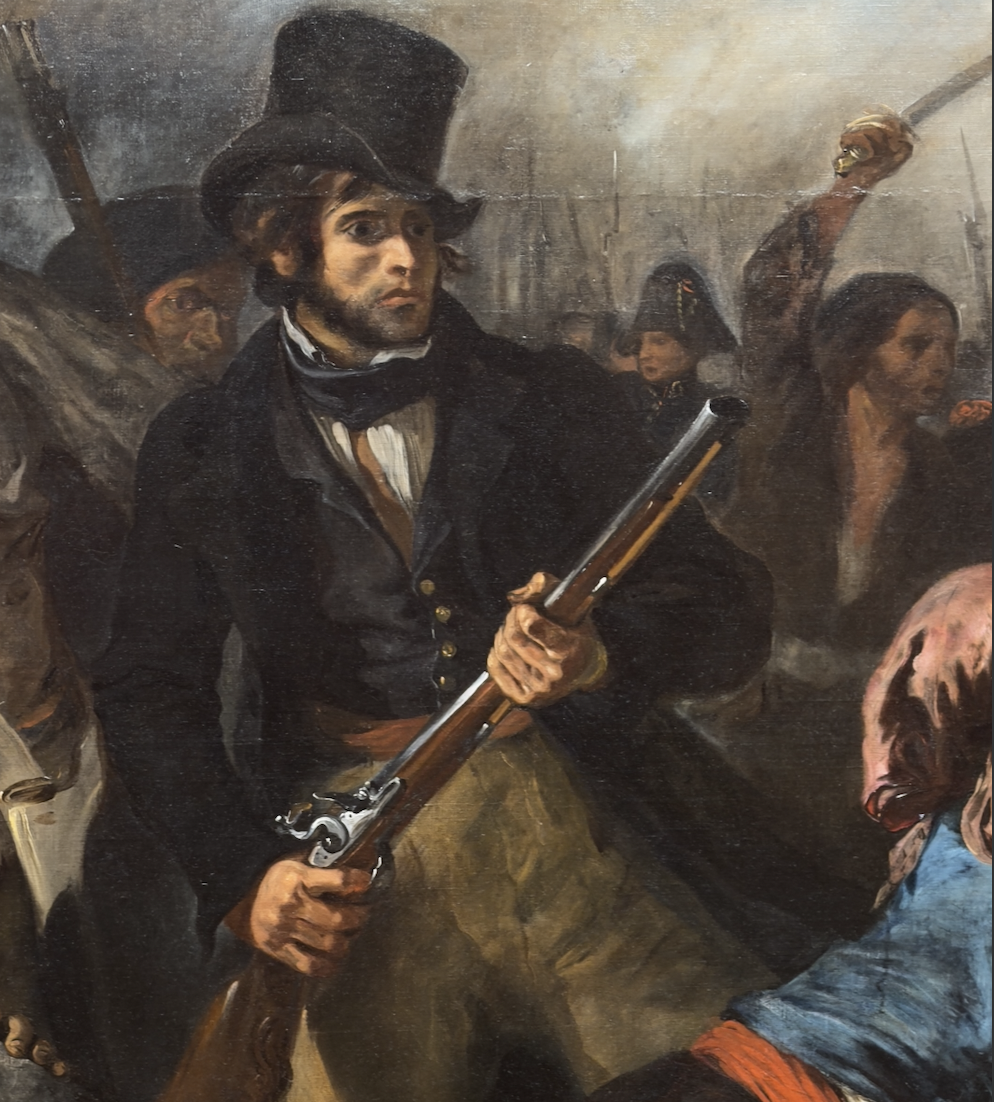
Just below, crawling from the edge of the painting, a young boy wearing a National Guard cap, the same guard the King dissolved at the start of the year, but the people and leaders of the left brought back.
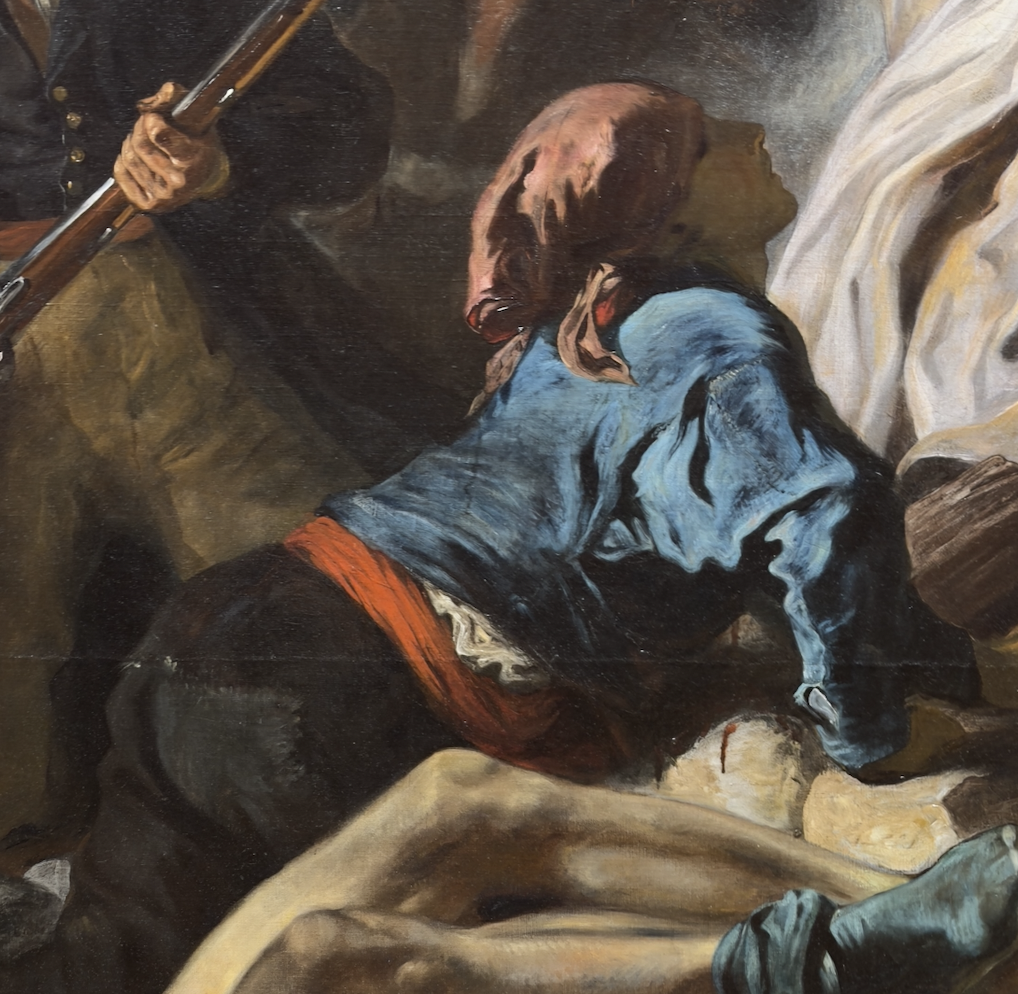
Below on the left edge of the painting is the figure often called “Hector” in reference to the poem by Homer’s Iliad. Hector is killed and dragged behind Achilles' chariot, a scene depicted many times, including by Jacques-Louis David. For Delacroix, it’s another artist that he was paying homage to, Théodore Géricault. While painting The Raft of the Medusa, Géricault had such trouble painting the feet of one of the figures that he gave up and covered them with socks. Delacroix put one blue sock on the man, which signifies the men the soldiers were pulling from their homes and killing on the streets.
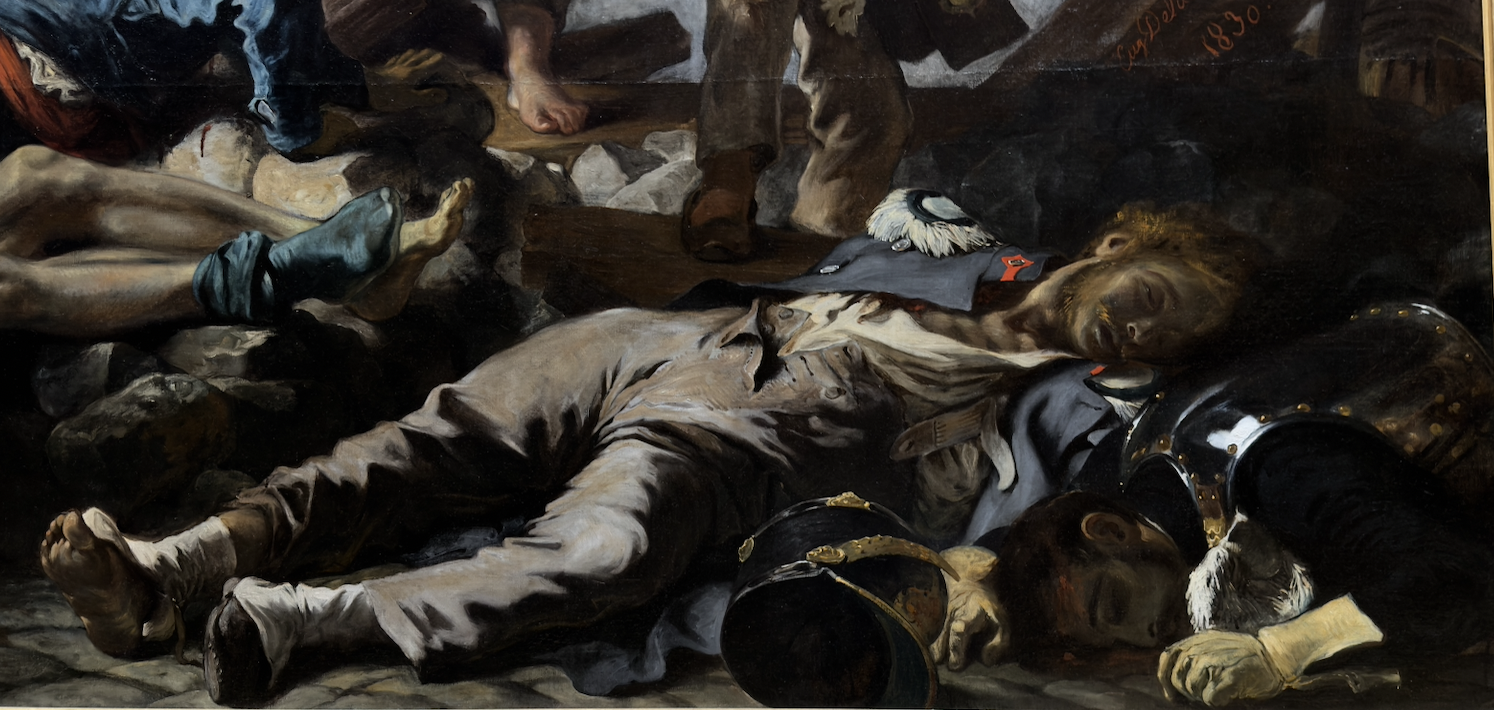
On the lower right, a Swiss soldier of the Royal Guard in his coat recalls the Swiss guards who were killed in the August 10, 1792 siege of the Tuileries. Beside him, a French Cuirassier soldier head down in his chest armor. Walk down a few steps to the left of Liberty to see another Géricault painting, the Wounded Cuirassier ( 1814), for a full look at his uniform.
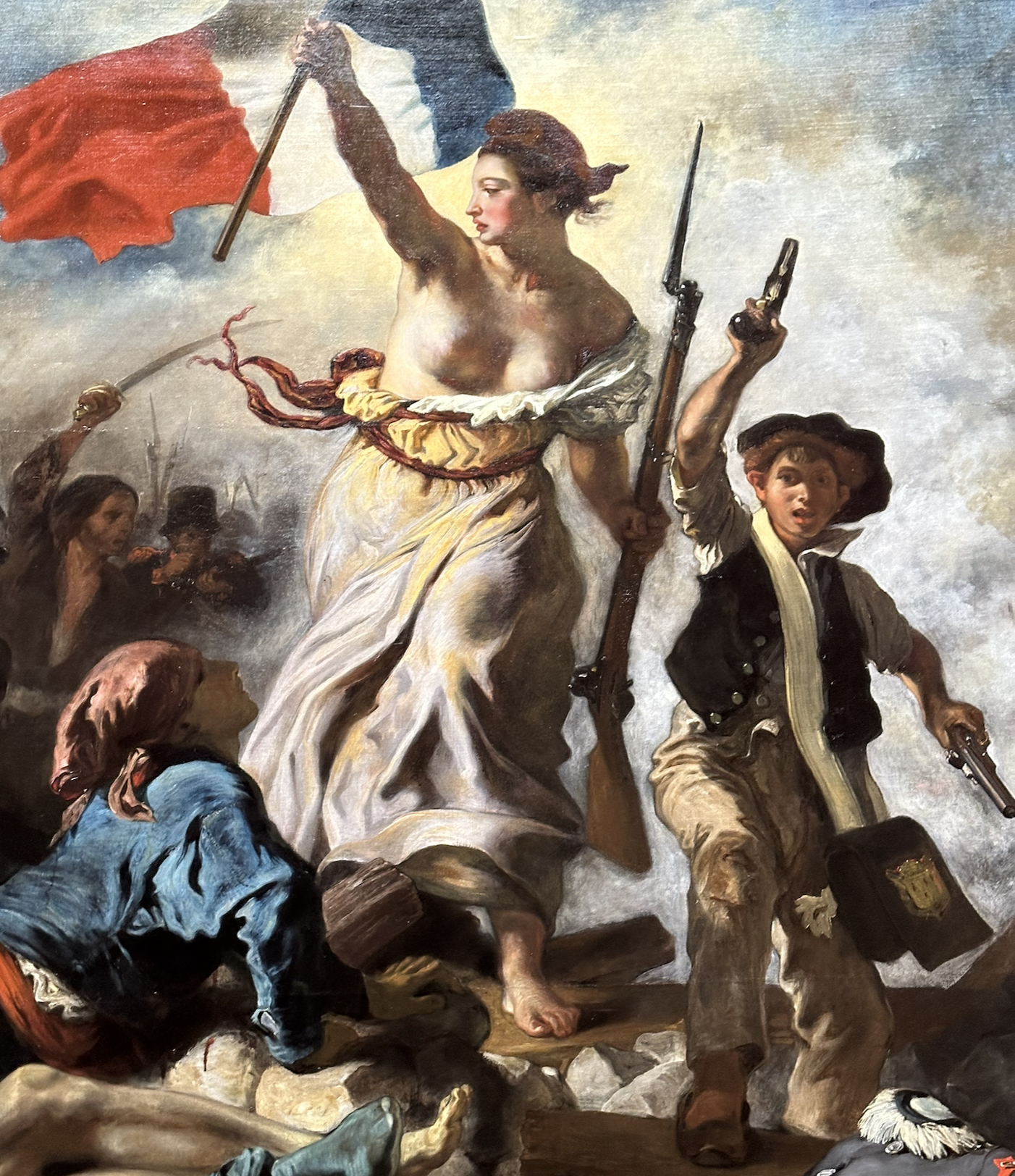
In the center, it is impossible not to be drawn to the lovely allegory of Liberty, which is also known as the symbol of the Republic, Marianne. In her yellow-tinted cream dress, she bares her breast in homage to motherhood and the birth of the nation. Inspired by the Greek statuary and the goddess Victoire, the beautiful draping of her dress is reminiscent of my other favorite in the Louvre, the Winged Victory of Samothrace. However, Delacroix never would have seen this beauty. Discovered in 1863, the same year of Delacroix’s death, only her surviving torso was on display from 1865 to 1871.
Delacroix was the master of colors and uses them perfectly in this painting, but with very few hues. Bleu, Blanc et Rouge stands out in this painting, exactly as they should, and every variation of gray from the darkest to the lightest. Using color and light, he directs your eye to what he wants you to see first: the figure of Liberty and the French flag.
Delacroix also uses it on the man below who is crawling up the barricade and looking up at the Goddess Liberty. The last figure Delacroix painted, the print worker in his blue shirt with a bit of white peeking out and his red sash, also evokes the flag and that of the people devoting themselves to liberty.
When the painting was first exhibited, her Phrygian cap was a much brighter red, and he was asked to mute the color to a deeper shade in 1855. The cap itself dates back to Roman times when it was placed on freed slaves and thus an image of freedom. In her left hand, she holds a rifle that brings the classic Greek & Roman image to the contemporary moment.
While Liberty holds up the French Tricolor, she turns her perfectly sculpted face of a Roman coin back to the crowd that has gathered to follow her. At her side is a young boy with two pistols in the air and an ammo bag around his torso, which he took off a guard and was ready to take up the fight today and into the future.
The classic pyramid structure, much like Gericault’s Raft of the Medusa, is a mix of hope and despair. At the top of the pyramid, you have the flag, and as your eye travels down to the base, there is death. In the top right, don’t miss the towers of Notre Dame de Paris. The symbol of France and the conservative monarchy was topped with a tiny French Tricolor, visible against the smoke, as the rise of the French Republic was underway.
Accepted on April 13, 1831, for the Salon, it would be unveiled in the Salon Carré of the Louvre on May 1 under no 511. One of the largest Salons, with 3,211 pieces exhibited. Of which 52 reflected the July Revolution, in paintings, drawings, or sculpture.
Displayed under the title Scenes de Barricades, it was met with a wide mix of criticism. Many thought the allegorical woman was dirty, displaying her hairy armpit and filthy feet while the nude man and his visible pubic hair were right at eye level.
At the Salon, the painting was purchased by the State for 3,000 francs, but it was displayed only briefly at the Musée du Luxembourg in 1833 & 1834. Adolphe Thiers was worried it would inspire another uprising and had it removed and returned to Delacroix in 1839. The painting was hidden away in the Val d’Oise with his aunt, Felicité Riesener, until 1848.
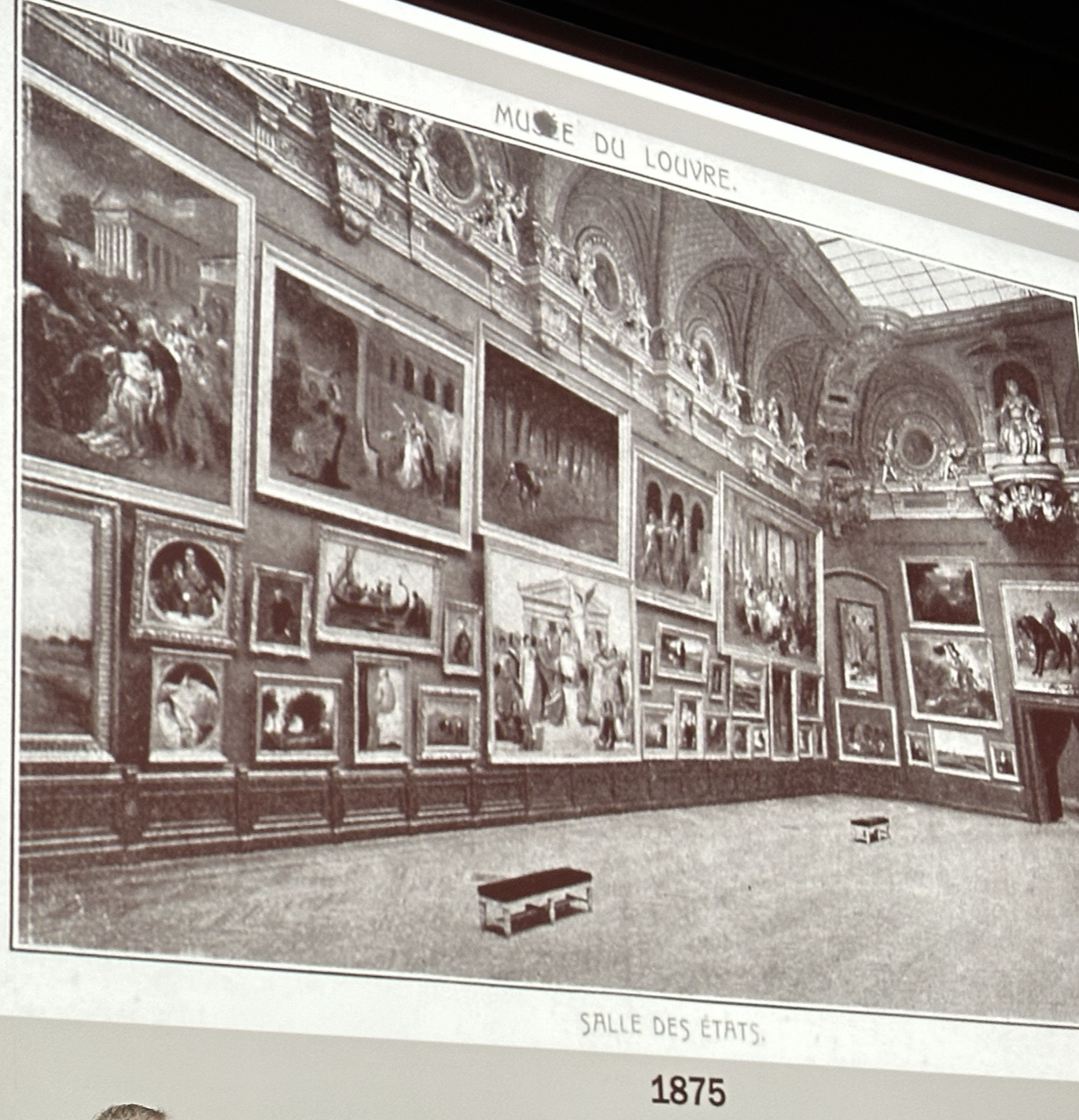
Returned to the Musée du Luxembourg, but it was kept hidden until the 1855 Universal Exhibition, when he also had to darken her cap. Special permission had to be obtained for the unveiling, and after the painting went back into storage. In 1863, when it was finally returned to the public with the Luxembourg, it was too late for the master to see it hung; the father of the Romantic movement was gone on August 13, 1863. In November 1874, , it finally appeared in the Musée du Louvre in the Salle des États, eventually moving to the Salle Mollie, where you can still see it today.
Restoration
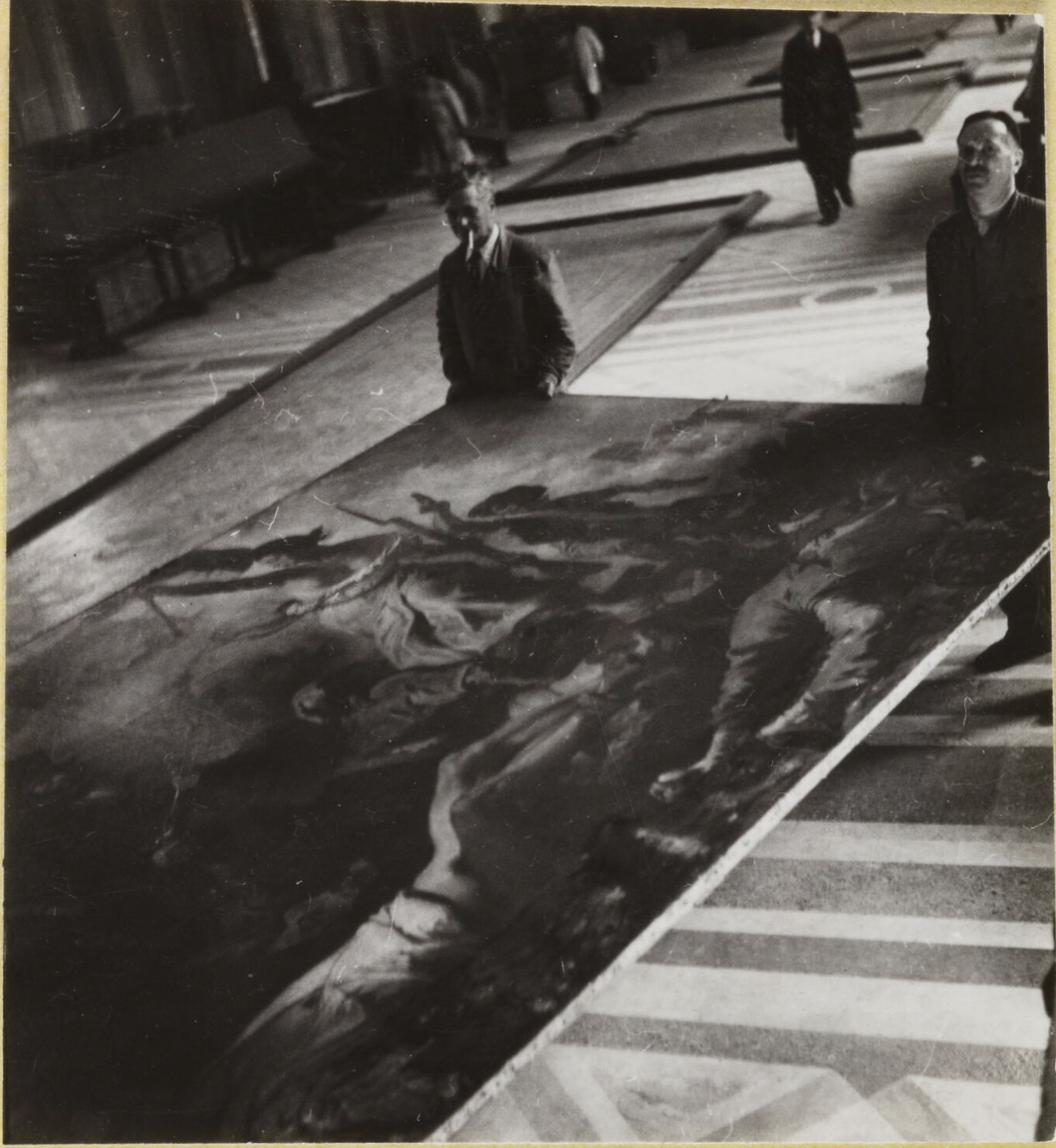
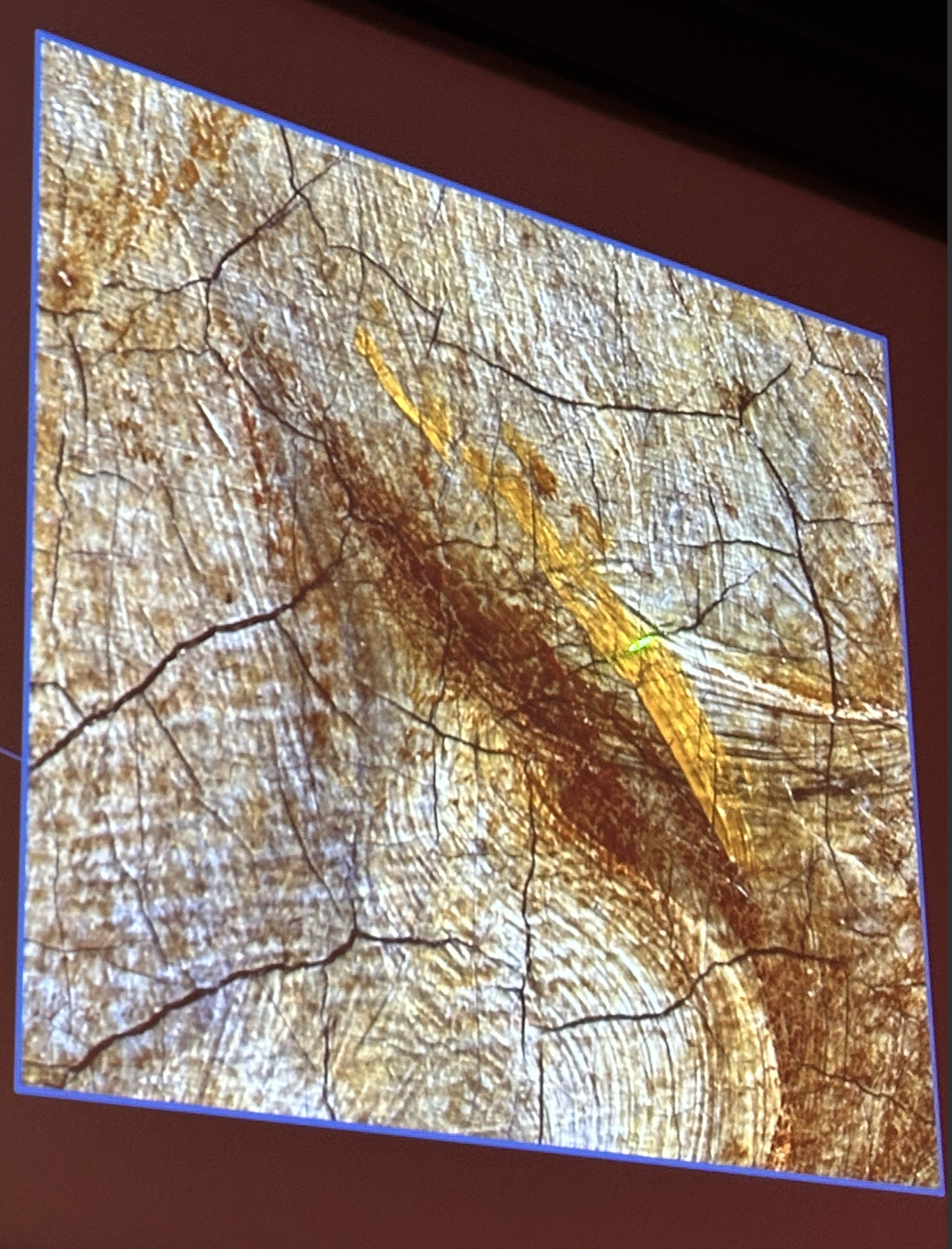
The last restoration of Liberty Leading the People was done in the summer of 1949, following World War II. The varnish was lightened, but multiple overpaintings were discovered, done by the restorer at the time, Michel Zezzos. (ZAY-ZO) The art of restoration has changed since the mid-20th century. At the time, Zezzos added orange highlights to the dress to create folds and green to the sky that altered the clouds and smoke that weren’t noticeable until under the watchful eye of the C2RMF restorers in 2024.
The restoration took 6 months, from mid-October 2023 to April 2024, and was on view Thursday, May 2, 2024, when I was there first thing in the morning to see its beautiful return.
Today, with the help of advanced technology, restoration starts long before they touch the canvas. With the assistance of ultraviolet, infrared reflectography, and false-color infrared
Through the X-rays, they can see the multiple adjustments Delacroix made before the final composition, many of them in the positioning of the key figures' faces. Originally, the face of Liberty was looking a bit more straight ahead, and both eyes were visible. An early sketch held by the Musée Delacroix shows Liberty looking straight ahead, with the flag flying to the right. The artists would do dozens and dozens of sketches; by the time it was ready to paint, the subject was worked out. Although there were a few changes found under the X-ray. Just below, the man in the blue shirt was also changed to be captured in profile.
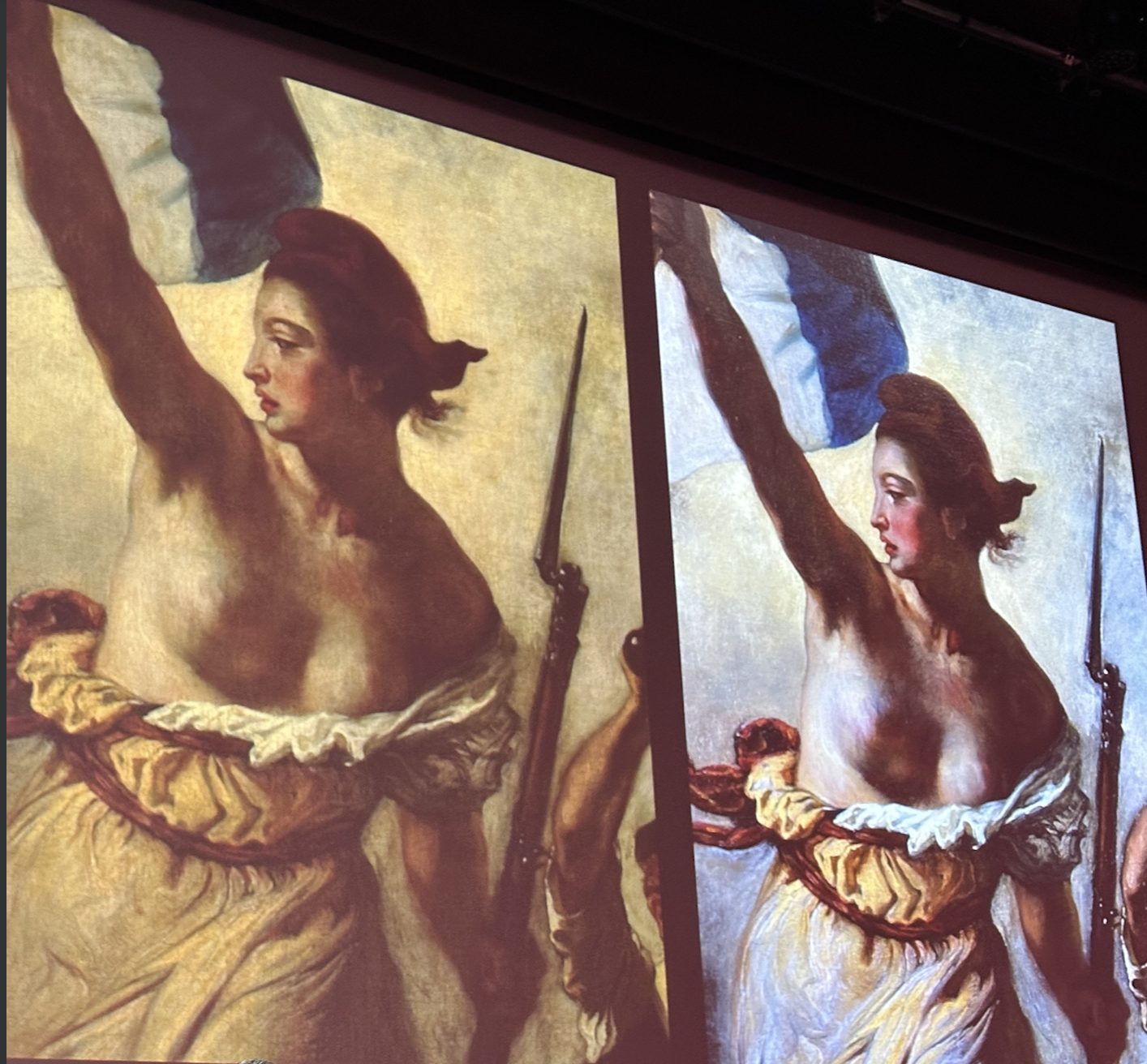
The young boy next to Liberty was initially sketched closer to her but later separated from her, allowing him to stand on his own and giving him greater importance. In the 2024 restoration, once ther layers of varnish were removed, the figure of the young boy literally stepped in front of Liberty. Prior to it, it was as if they were side by side; once cleaned, the depth was revealed.
The last addition was the man in the blue shirt, looking up at Liberty as if he had crawled into the scene, giving him a sense of movement.
The restoration of Liberty was the fourth in the undertaking of bringing the master of color painting back to their vivid creation. Normally, large companies and benefactors contribute to the high cost of restoration, but with a painting that can signify the very essence of France, the Louvre and the state took care of the cost.
Stand back and take in the entire painting. The lower parts are dark and reflect the reality of the uprising, conflict, and death. In the center, the glowing warmth of Liberty represents the dawn of a new day, a path forward, and better times ahead.
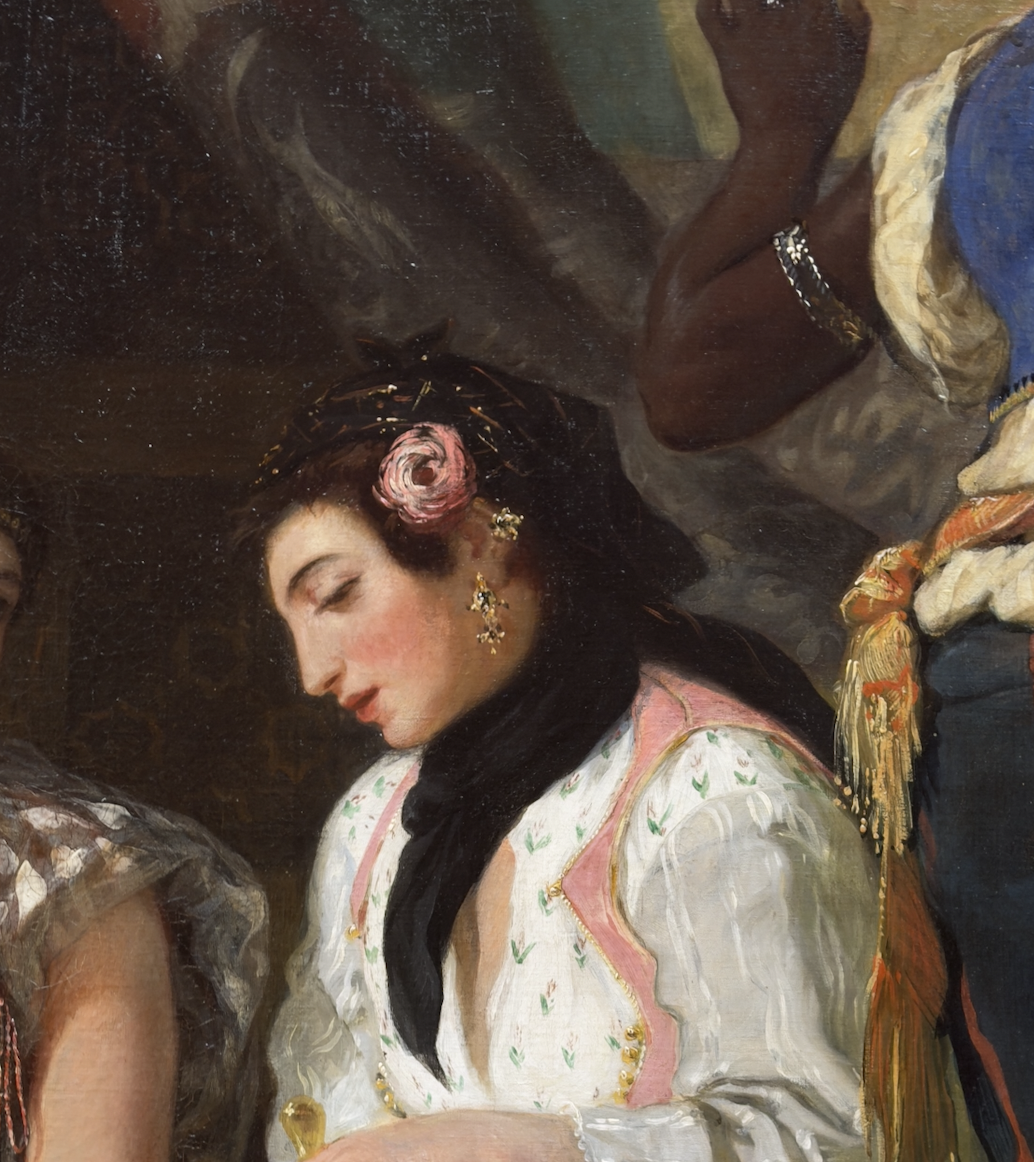
Women from Algiers in their Apartment
Within the Salle Molien, four other paintings tie in to Delacroix’s Liberty. Another restored Delacroix masterpiece is just behind. The Women from Algiers in their Apartment, painted four years after Liberty. Delacroix uses the same profile on the seated woman on the right in the white shirt.
In 1808, Antoine Jean Gros painted Napoleon on the Battlefield of Eylau , February 9, 1807, commissioned by Denon to be used to create a large tapestry. Multiple figures inspired Delacroix, including the bodies in the lower center and the gentleman on his knees looking up at Napoleon.
Then there is Géricault’s Raft of the Medusa and the figure with socks alongside his Wounded Cuirassier.
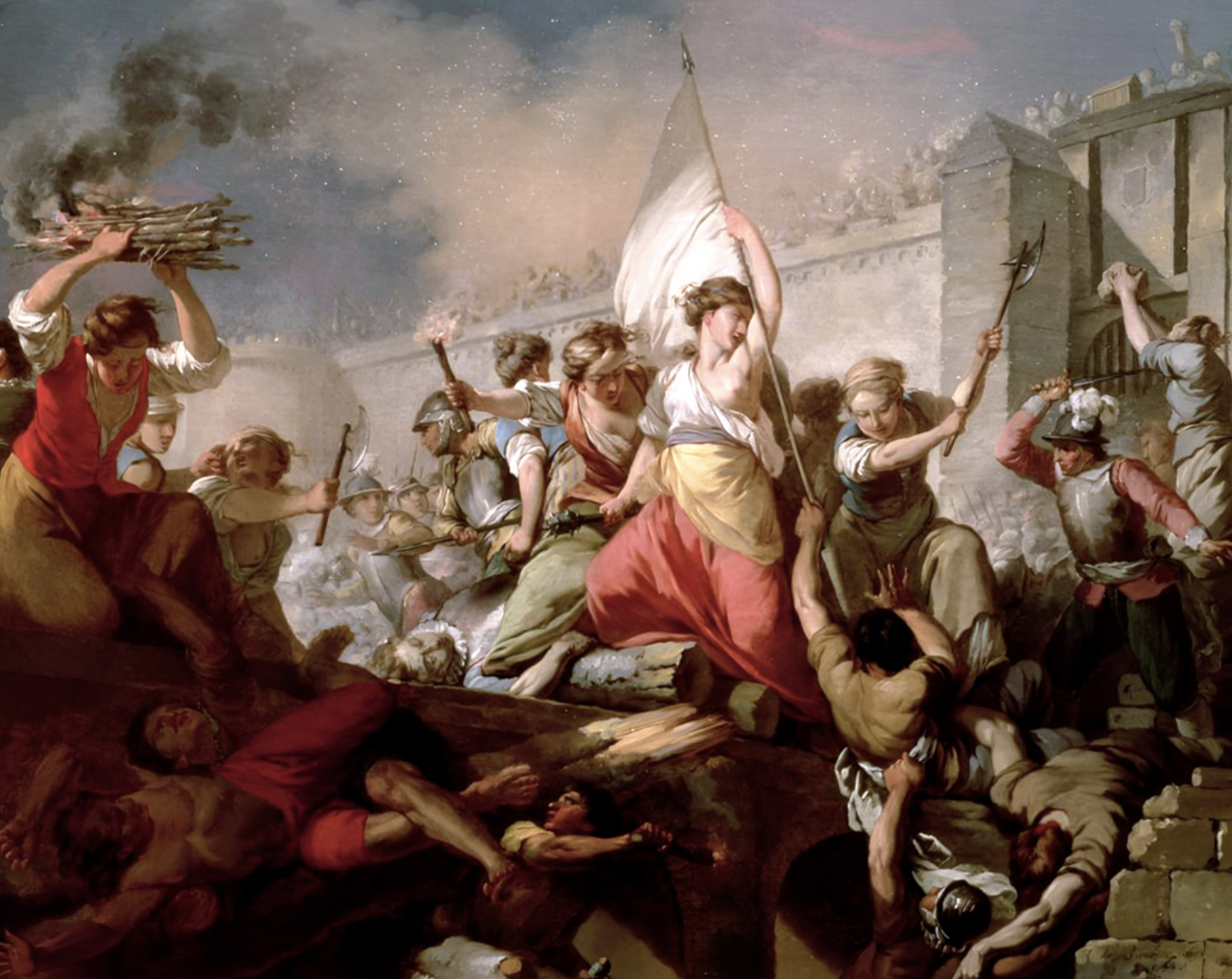
Jean-Jacques le Barbier’s Jeanne Hachette au siege de Beauvais en 1472
One painting that might have inspired Delacroix for the entire scene is Jean-Jacques le Barbier’s Jeanne Hachette au siege de Beauvais en 1472. Sadly destroyed in 1940.
In the last 196 years, Delacroix’s masterpiece has continued to inspire. Frederic Bartholdi visited the Musée du Luxembourg and saw our lovely Delacroix Liberty, which inspired the design of his very own, the Statue of Liberty.
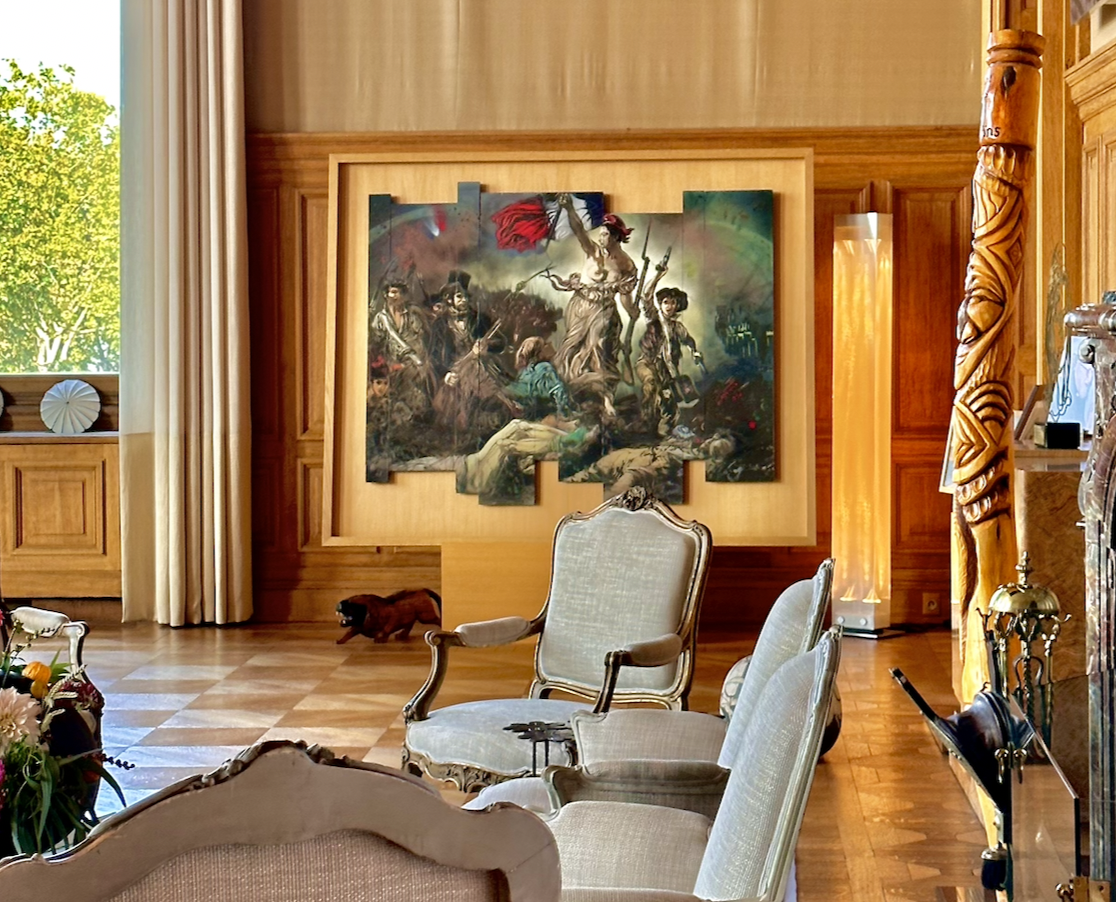
Liberty Leading the People by Christian Gumy in Hotel de Ville
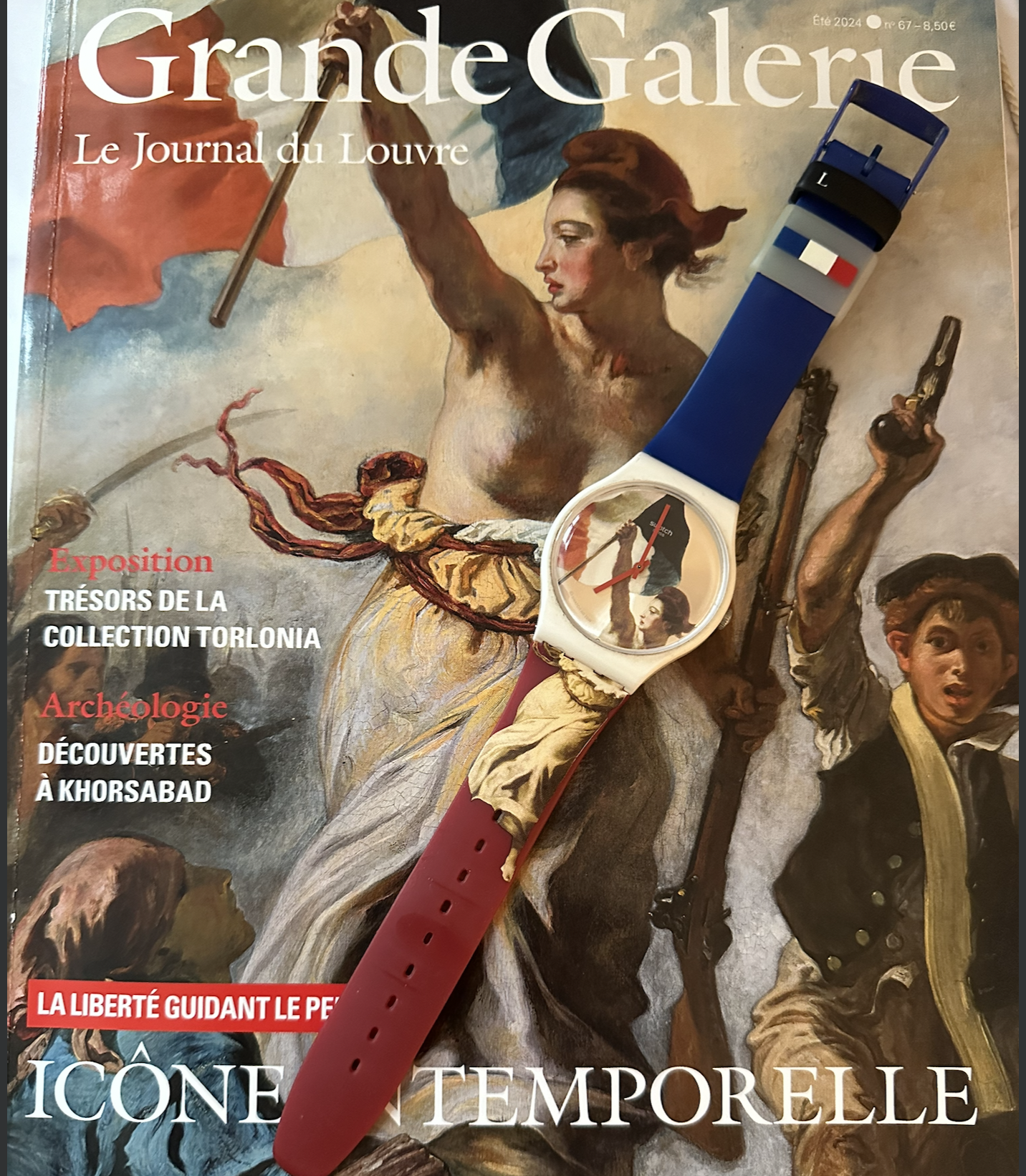
Today, Delacroix’s well-known painting has been copied onto clothes, reimagined on billboards, inspired other artists to adopt it as their own, projected onto the side of a plane, and even applied to my beloved Swatch watch. The former mayor of Paris, Anne Hidalgo, had a great contemporary version created using stencils by Christian Gumy in her office at the Hotel de Ville. Apropos, as the event takes place outside her window. Then there is the cover of Coldplay's 2008 album Viva la Vida.
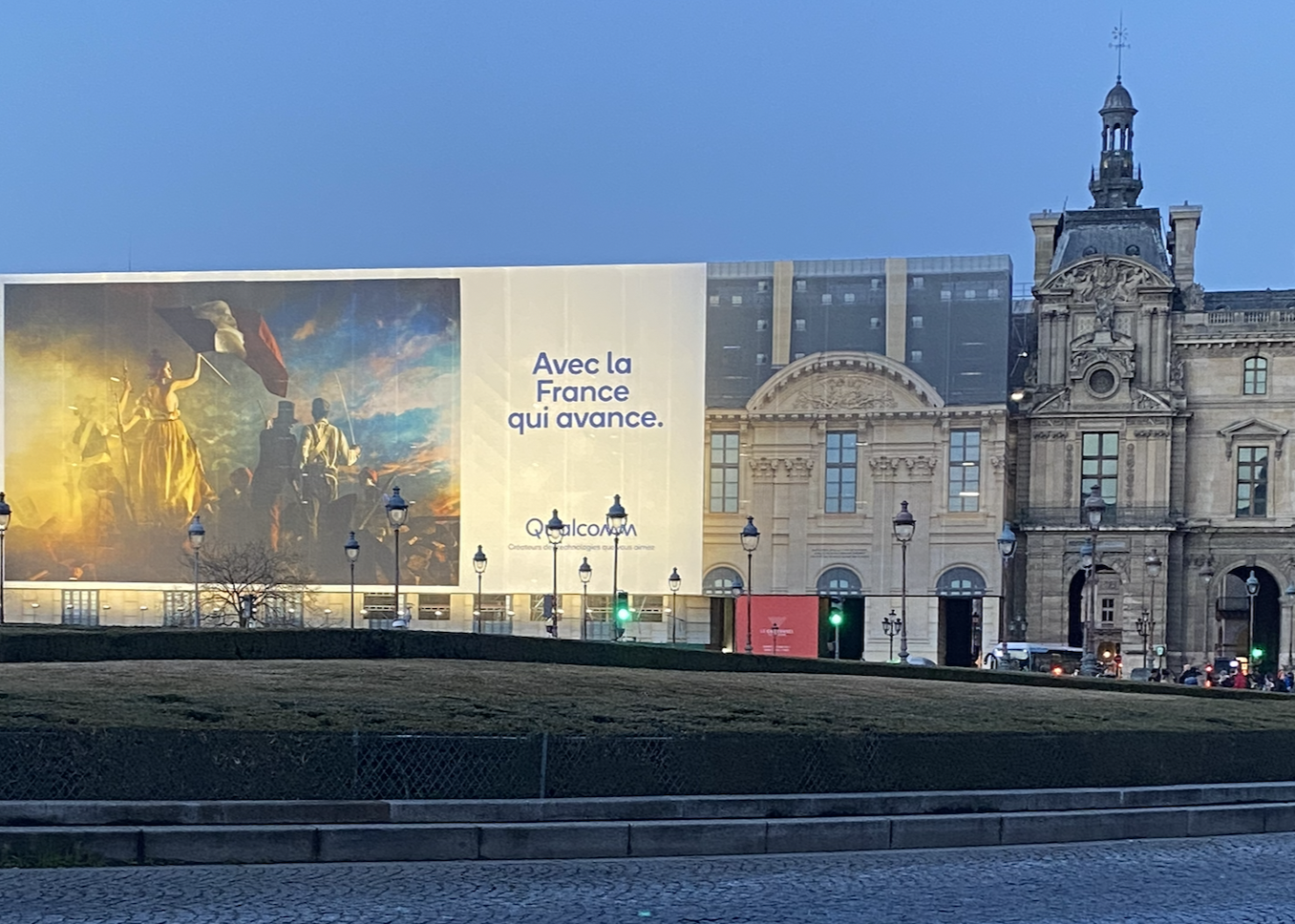
Another favorite was an advertising campaign by Qualcomm technology that reimagined the scene from the other side. The photo was hung on the Palais du Louvre outside the windows of the Musée des Arts Décoratifs in December 2021.
It is the only painting Delacroix created in his entire career that represented Paris, and in turn he represented the liberté, egalité and fraternité of France