Almost 2 years ago, the Cathedral Notre Dame de Paris reopened once more to the faithful. The devastating fire of April 15, 2019, damaged much more than just the roof and spire; it also broke the hearts of people around the world.
Under thé 12th and 13th-century roof once known as the forest, inside the stone walls, hold countless historic pieces of art, stained glass, and statuary. Within the choir, a set of three statues marks a historic moment in French history dating back to the 17th century that is still remembered every year to this day.
Louis XIII, son of Henri IV and Marie de Medici, was hoisted to the throne on May 14, 1610, after the death of his father. His mother would step in as regent until he came of age, plus three more years. After the death of Hot Legs Henri IV, in an effort to repair the fractured relationship between France and Spain, Marie de Medici orchestrated the “exchange of the princesses”. In March 1612, her daughter, Elisabeth de France, was betrothed to Prince Phillip IV of Spain and his sister Anne d’Autriche to the Dauphin, Louis XIII.
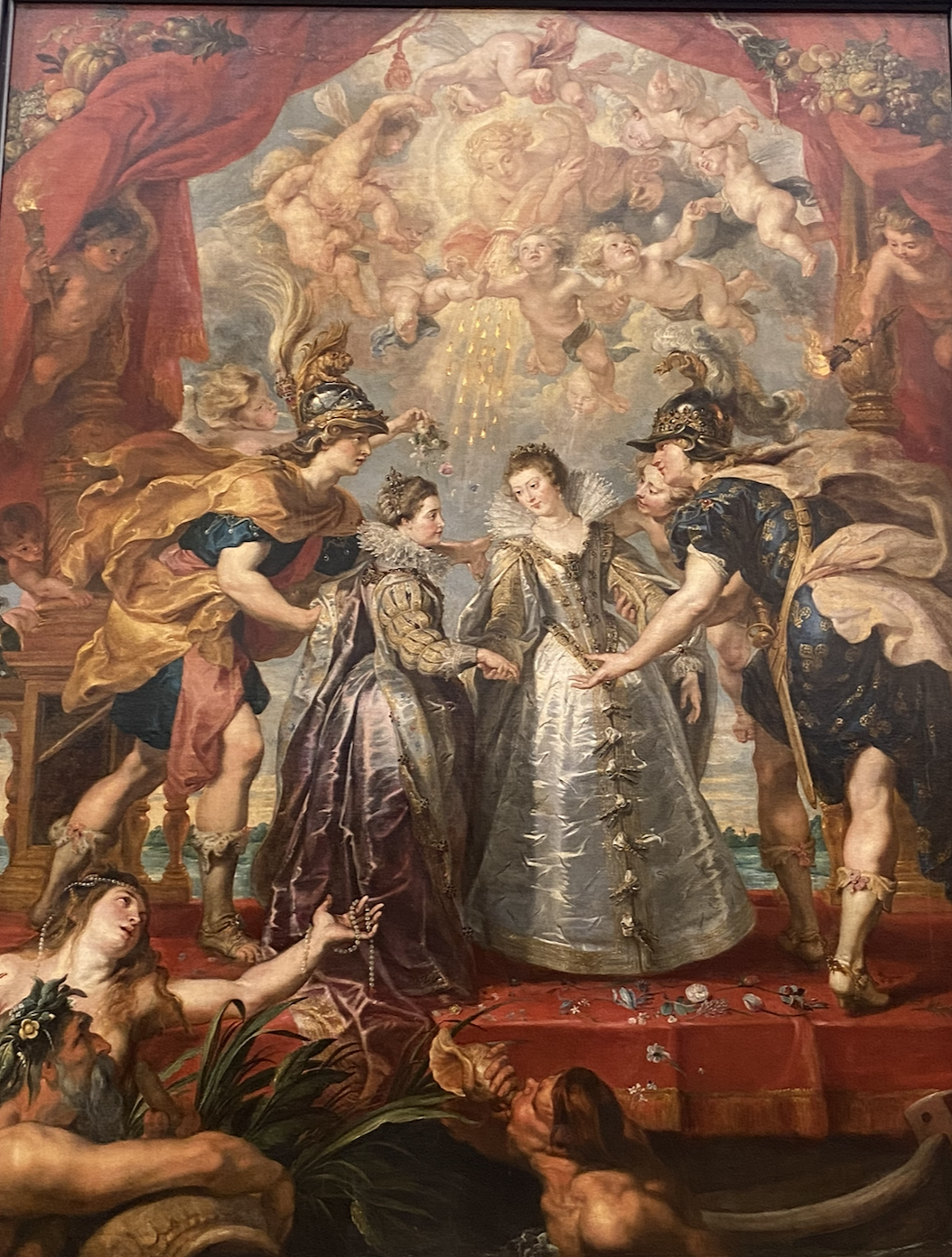
The big exchange would occur three years later on November 9, 1615, on the Ile des Faisans between France and Spain and captured in Rubens ’ Medici Cycle of the Louvre. Married by proxy on October 18, they would finally meet face to face at their wedding celebration on November 21, 1615, in Bordeaux.
Anne and Louis were both born in September 1601, five days apart, and barely 14-year-olds the evening of their nuptials. Marie de Medici and other officials stood in the royal bedroom waiting for the young couple to consummate the marriage. Unsure of what to do, the night was a disaster, and depending on the account you read, its unsure if it was a success. Either way, it left the future king and queen of France traumatized and took at least four years before they shared a bed again.
The new princess had little interest in anything French and surrounded herself with Spanish ladies in waiting, asking for Spanish foods and dressing in Spanish clothes. Mommy dearest Marie de Medici eventually put a stop to that and expelled anything and anyone Spanish from the Palais du Louvre. An heir to the throne was needed, and now it involved the many advisors to the king.
Without an heir to the throne, other family members could have their own dreams of royalty, and the clock was ticking. Anne did become pregnant a few times, and all ended in miscarriages. For her part, Anne, who was very pious, had many abbeys, monasteries, and churches built, including Saint Sulpice and Val de Grace in hopes that God would bestow a child onto her, and he may have done just that.
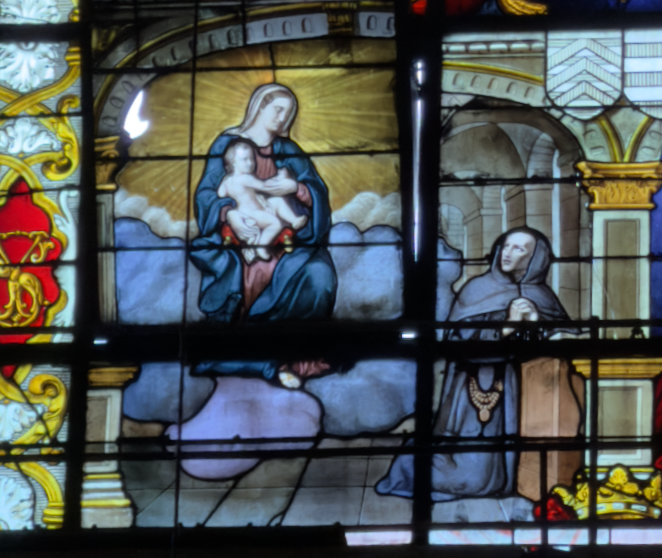
Window of Notre Dame des Victoires
On October 27, 1637, Friar Fiacre de Saint Marguerite at the Basilique Notre Dame des Victoires in Paris had a vision of the Virgin for four days. Mary told the friar that God was going to give France a son and that he needed to tell Queen Anne, who had now been married for 23 years, and she would need to visit three specific churches to pray. At each, the Notre Dame de Paris, Notre Dame des Victories in Paris, and Notre Dame des Graces in Cotignac , she must pray and ask for navenas of the rosary.
From November 8 to December 5, 1637, Louis XIII and Anne traveled to the three churches, doing just as she was told. A month later, Anne discovered she was pregnant; today they believe that December 5 was the day of conception. However, there are two alternative versions of this miraculous moment, both of which might not even be true, but both are pretty great.
True love between kings and queens was a rarity. Marriages were about property, money or power and never love. The relationship between Louis XIII and Anne was no different. If the two slept together, it was out of obligation, but they always had separate bedrooms. On December 5, 1637, the King had left his small hunting lodge at Versailles to head to the Château de Saint Maur, on the eastern side of Paris.
As Louis passed through Paris, a storm rolled in, flooding the streets. His carriages headed to the Louvre to stay the night and ride out the storm. Then in the sultry candlelight of the stone walls of the Louvre….. Well, you know what happens next.
Scenario no. 2 brings in Cardinal Mazarin, the close advisor to Louis XIII, who had become a confidant and friend to the queen as well. Some thought, very close. Many rumored that the Sun King was the result of that close relationship, but Mazarin was in Italy at the time, which would throw a whole Da Vince Code kink into the Royal Lineage of Louis XIV.
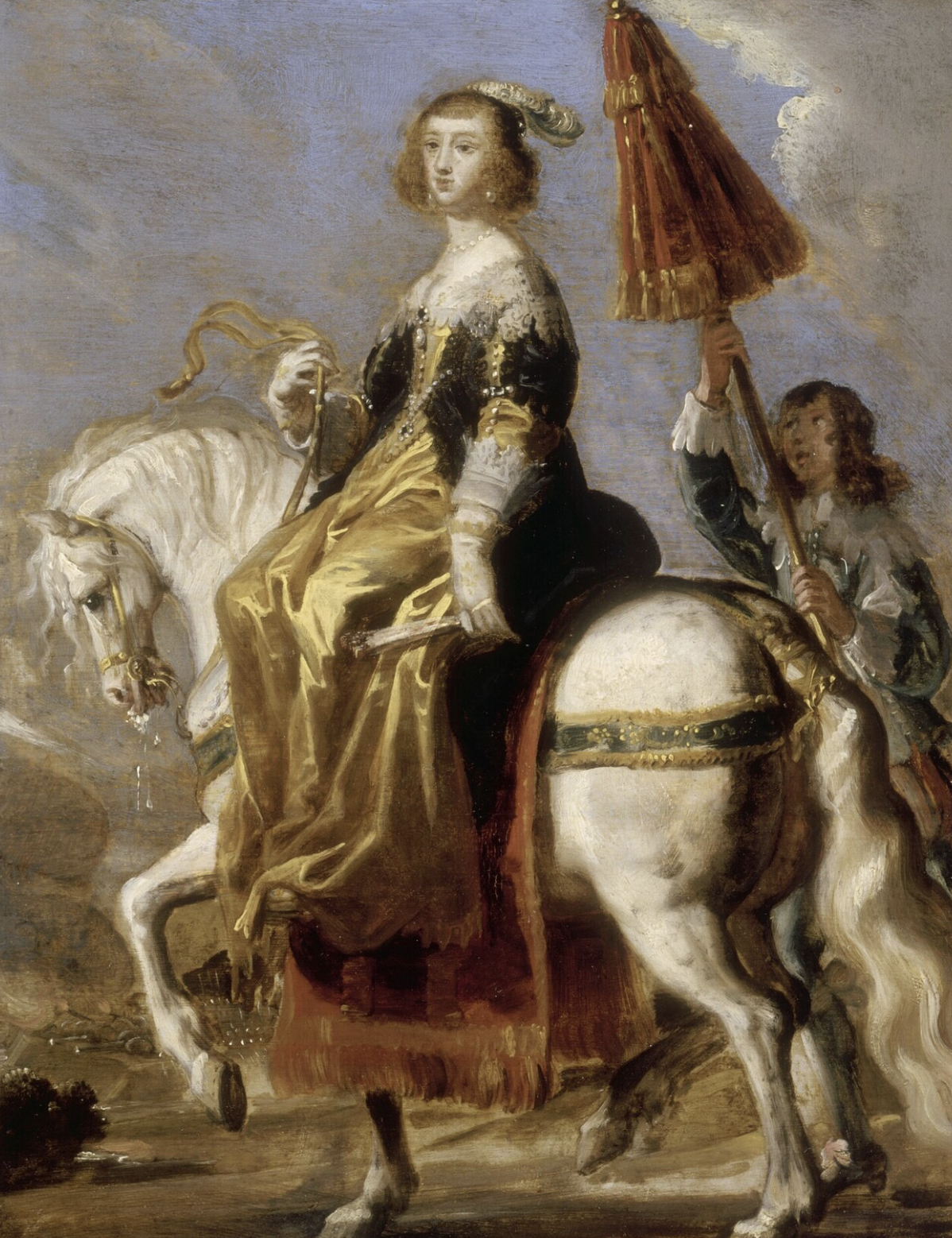
Anne d’Autriche by Jean de Saint-Igny
Louis XIII first wrote of a Vow as early as 1630 and in Latin at that. Seven years later, he returned to the Vow under the influence of Cardinal Richelieu and Joseph du Tremblay. The long-running French Wars of Religion ended after more than 36 years in 1598, but the effects lasted far longer. Richelieu and Tremblay, known as shadow leaders under Louis XIII, believed a formal decree would help move the church forward.
On November 11, 1636, the Spanish & Bavarian troops surrendered to the French at Corbie in the midst of the Thirty-Year War. A year later, in December 1637, the repeated wars with the House of Habsburgs and Ferdinand II led the king and his shadow advisors to bring the Vow back to the forefront.
Add in the desperate need for an heir to the throne, it was also around the same time that Anne of Austria was finally with child.
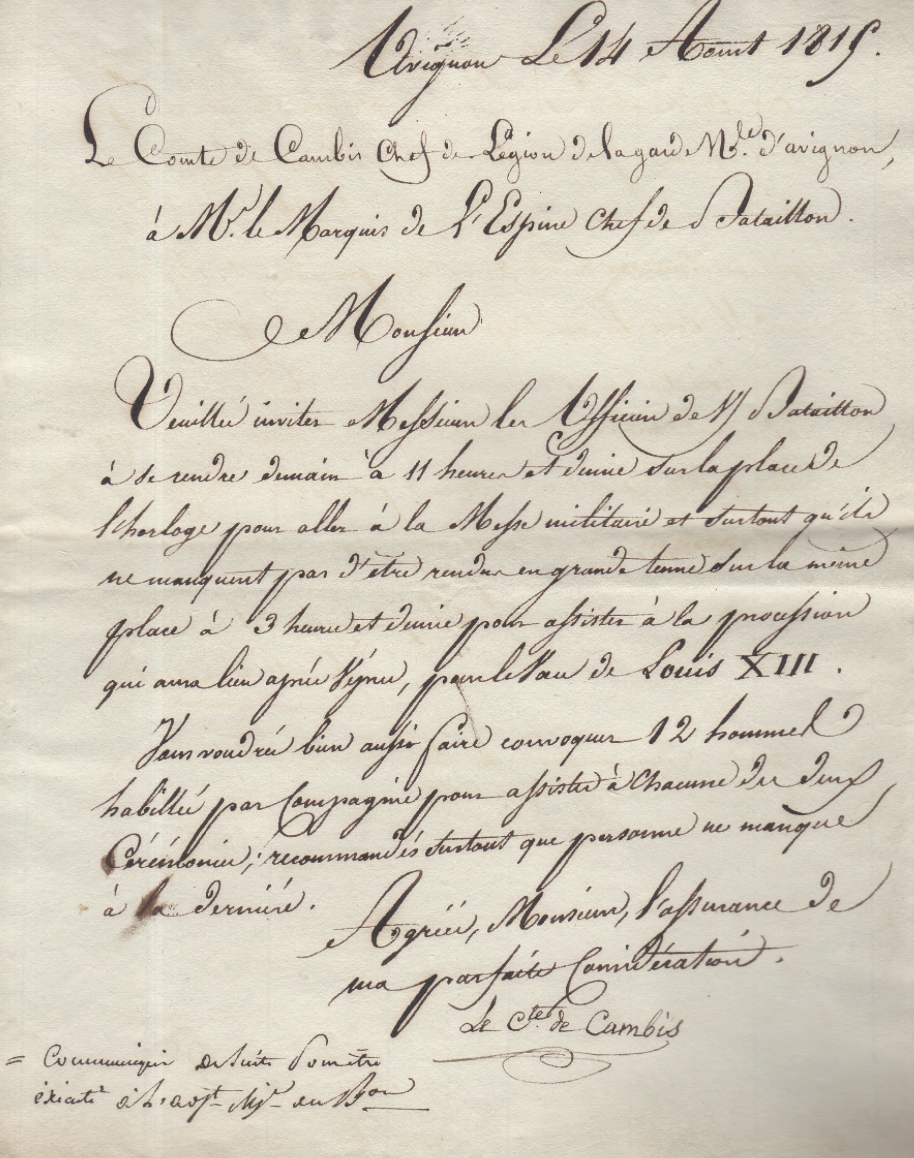
On February 10, 1638, in the Château de Saint Germain en Laye, King Louis XIII signed the decree putting “his state, his crown and his subjects” under the protection of the Holy Virgin with a celebration each year on August 15, the Assumption of the Virgin.
The decree also stated that every Catholic church in France had to devote the largest chapel sitting behind the choir to the Virgin Mary. The highest honor would go to the Cathedral Notre Dame de Paris, where the choir itself would be transformed, and a sculpture to represent the Vow would be created.
The first ceremony was celebrated on August 15, 1638, in the Minimes Convent chapel of the Virgin in Abbeville in the north of France. Followed by a long procession through the streets with Louis XIII and Cardinal Richelieu leading the way. The same day, Monseigneur de Gondi performed the same consecration in Notre Dame de Paris.
On September 5, the same year Louis Dieudonné was born at the Château de Saint Germain en Laye. From his birth, Louis Dieudonné, meaning God given, could only be destined to become one thing: the Sun King of France.
Louis XIII jumped right into the dedication and immortalizing the Vow in art. He commissioned paintings he hoped to place in notable cathedrals.
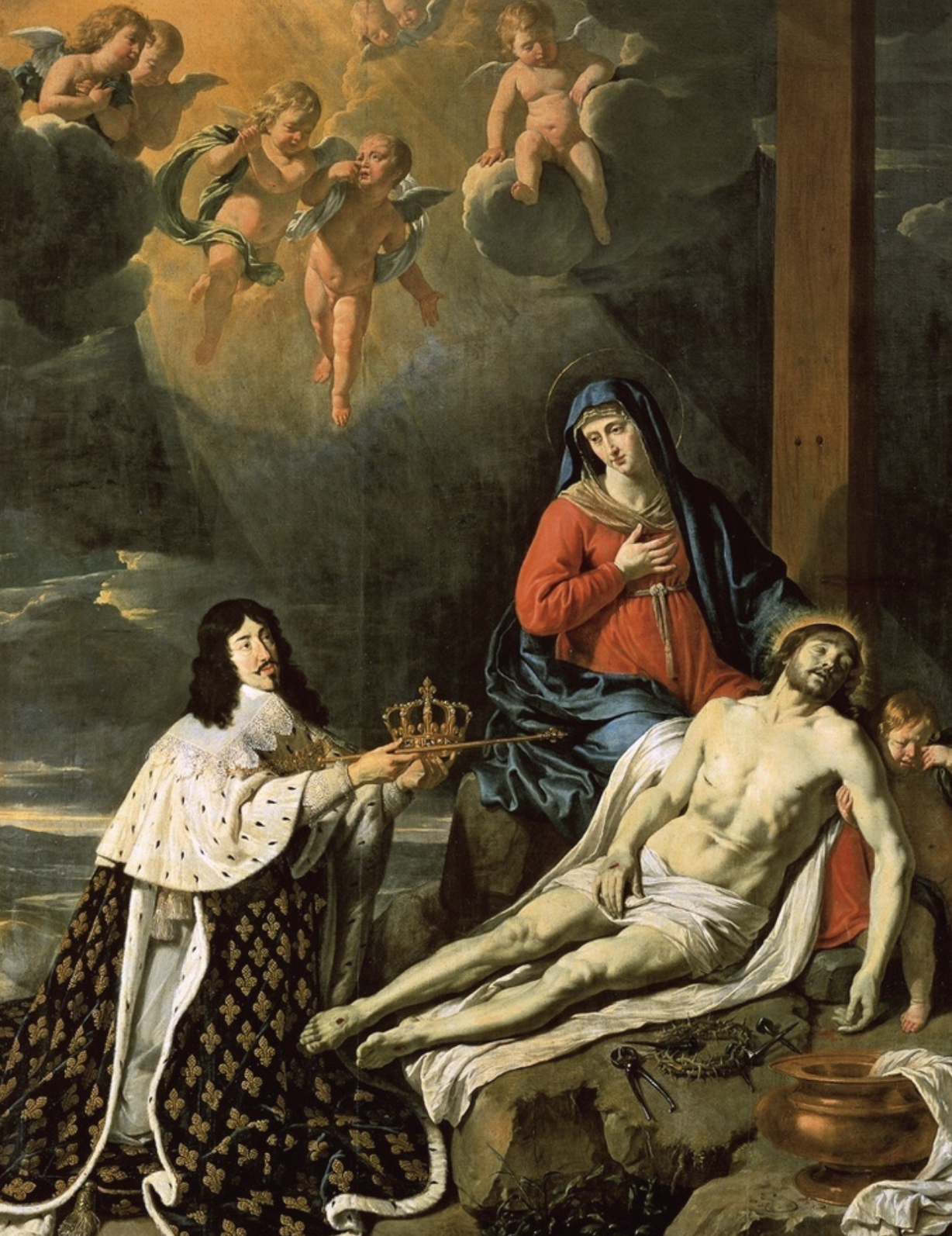
One of the best representations of the Vow is the painting and the first commission of the event from Louis XIII to the painter Philippe de Champaigne in 1638. Commissioned to be hung on the southwest transept of Notre Dame, Champaigne, the personal painter of the king and Cardinal Richelieu, beautifully links the king to the life of Christ. On the right, Christ lies against the legs of the Virgin while a small angel holds his arm and wipes away a tear. Above, a choir of angels looks down with a glowing light behind them. On the left, Louis XIII in full coronation robe kneels before Christ and presents his crown and scepter. Removed during the Revolution, it would be sent to the Musée des Beaux Arts in Caen in 1803 after the Concordat.
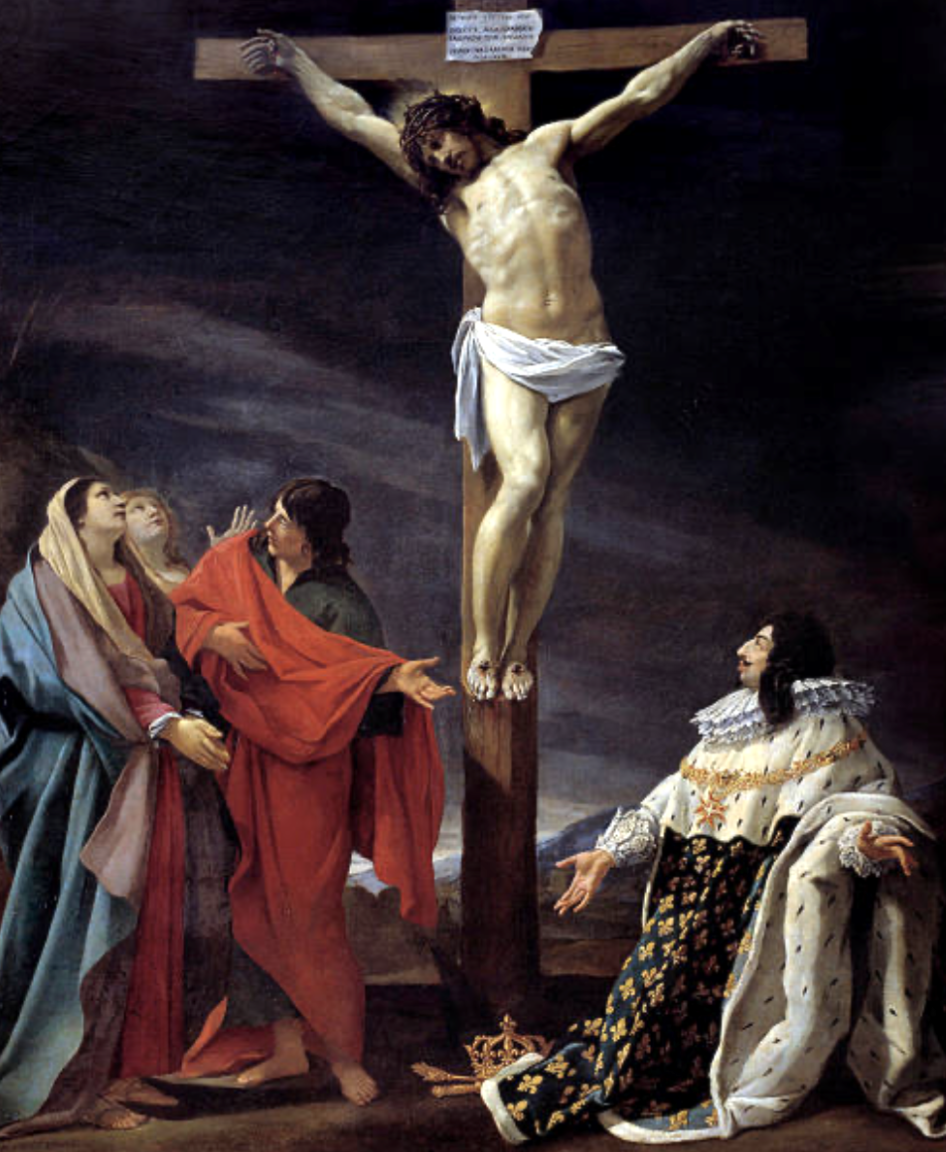
Another version commissioned by the King, painted in 1638 by Simon Vouet, and originally placed in the Église Neuilly Saint Front. Christ is on the cross, and on the lower right, Louis XIII kneeling in devotion. Jean and Mary Magdalene are on the left.
The 1638 Vow wasn’t the first one Louis XIII dedicated. Ten years before, during the Siege of La Rochelle, with Cardinal Richelieu at his side, Louis XIII pledged that if they were successful, he would have a church built and dedicated to the Holy Virgin and be named the Notre Dame des Victoires. The same church that the royal couple would visit in 1637 under the orders of the Virgin herself.
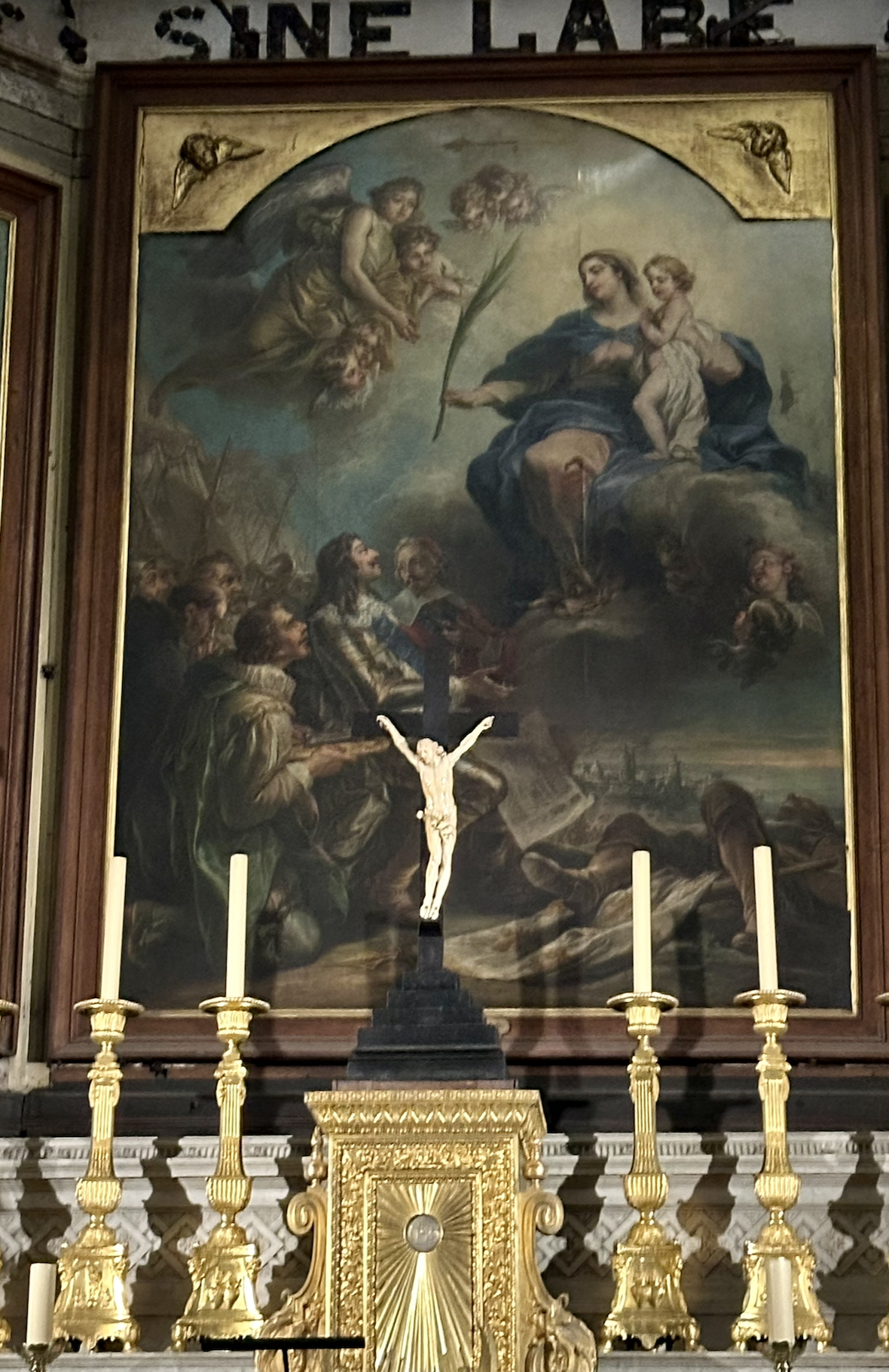
In the back choir, a painting by Carl Van Loo commemorates the earlier 1628 Vow. Painted under Louis XV in 1746. Louis XIII, on his knees, holds his hands open as the Virgin above hands a palm frond to the king. On his left, Cardinal Richelieu looks back at the military and religious leaders, and on the right of the king, Jean Guiton, the Alderman of La Rochelle, presents the keys to the city to the Virgin. Removed during the Revolution, the painting found its way to Versailles, which refused to return it to the church. Napoleon made a call, and the painting returned to the church where it belongs the next day.
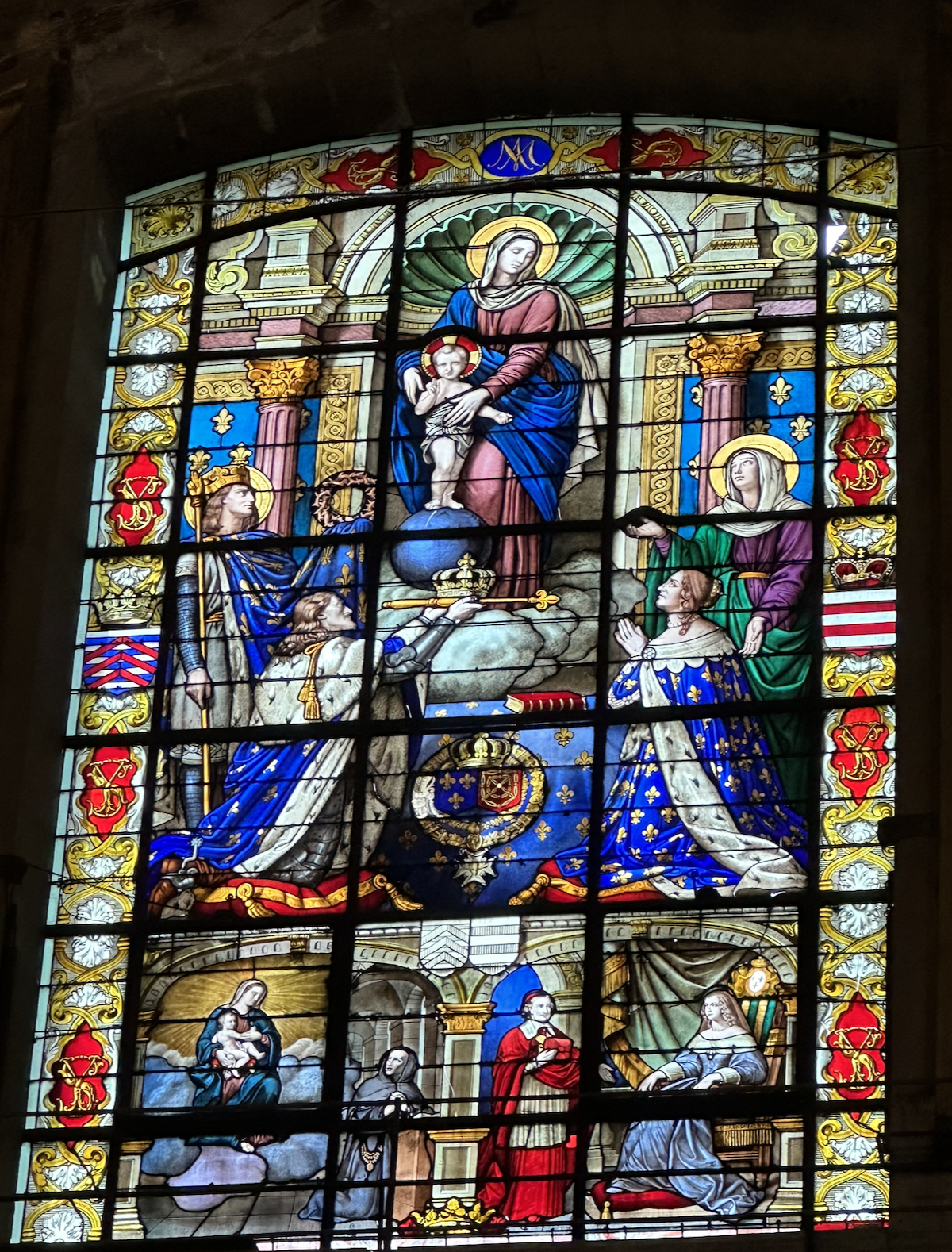
In the transept high above the chapel of Saint Augustin, a stained glass marks the importance of the church, now a basilica, on Louis and Anne and the promise of the next king.
Louis XIII on the left kneels and presents his crown and scepter while Louis IX presents the ultimate crown, the Crown of Thorns. The Virgin and Child in the center above an altar with the crest of the king of France surrounded by the Order of the Saint Esprit insignia. Anne d’Autriche kneels on the right with Sainte Anne, the mother of the Virgin at her side.
On the lower left, the scene of Brother Fiacre in prayer as the Virgin and Child came to him in a vision foretelling the birth of a child to the royal couple. On the right, Anne sits on her throne as the Cardinal de La Rochefoucauld comes to hear the news. Created in 1854, it was commissioned and donated by Sosthènes II La Rochefoucauld, descendant of the Cardinal and his wife, Yolande de Polignac, daughter of Jules de Paulignac, who was involved in the Three Glorious Days Revolution in last week's episode.
The church was elevated in 1927 to the title of Basilica and is home to more than 37,000 ex votos. Located a few blocks from the Palais Royal, it’s a must see in Paris, and I will share more soon.
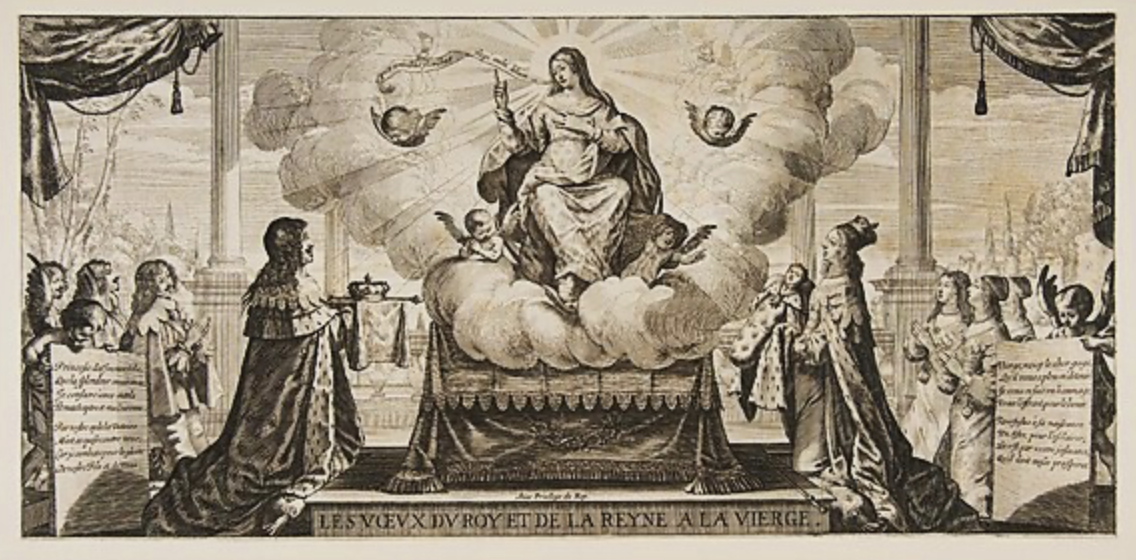
Other depictions include a lithograph by Abraham Bosse in 1638 with Louis XIII with crown and scepter on the left and Anne d’Autriche on the right presenting the newborn Louis XIV.
Louis XIII had health issues most of his life; chronic stomach issues as well as bouts with tuberculosis ended with his death on May 14, 1643. The same date as his beloved father, Hot Legs Henri IV, in 1610. His wish of having the great choir of Notre Dame would not be fulfilled before his death.
Louis XIV hadn’t even hit his fifth birthday at the time of his father's death. On March 25, 1650, at the age of 12, Louis XIV announced that he would renew his father's wish.
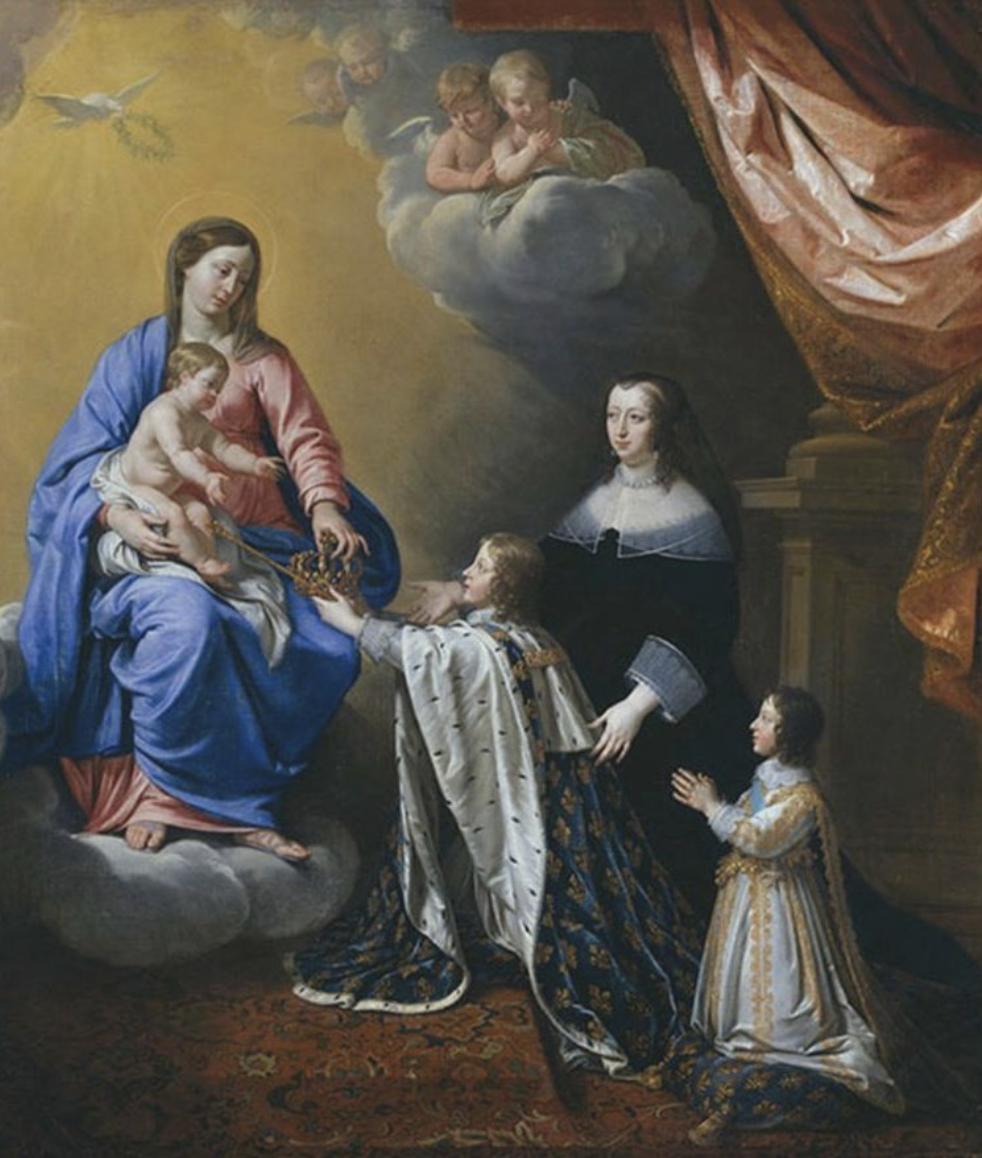
Philippe de Champaigne painted a second tableau in 1650 marking Louis XIV's renewal and promise of the Vow his father had made in 1638. Louis kneels and presents his crown and scepter, just like his father had to the Virgin and Child. Behind him, his younger brother Philippe d’Anjou and his mother Anne were dressed in a morning gown.
On February 21, 1660, Louis XIV and his mother returned to Notre Dame de Graces in Colignac, praying and thanking the Virgin for his life.
On June 7, 1660, in the village of Cotignac in the Var, shepherd Gaspard Ricard came across an old man who told him that under a large stone was a water spring. It had been known that the entire area was dry, and no source could be found for miles.
A large spring began to rise from the earth. Just 3 km from the vision, Notre Dame de Graces, a chapel dating to 1519, became a pilgrimage site for followers, including the king.
While Louis XV renewed the vow again on March 25, 1650, it would take 60 years to begin to bring the wish to life. Wth the insistence and money of Cardinal de Noailles the project finally began in 1699, 61 years after the Vow.
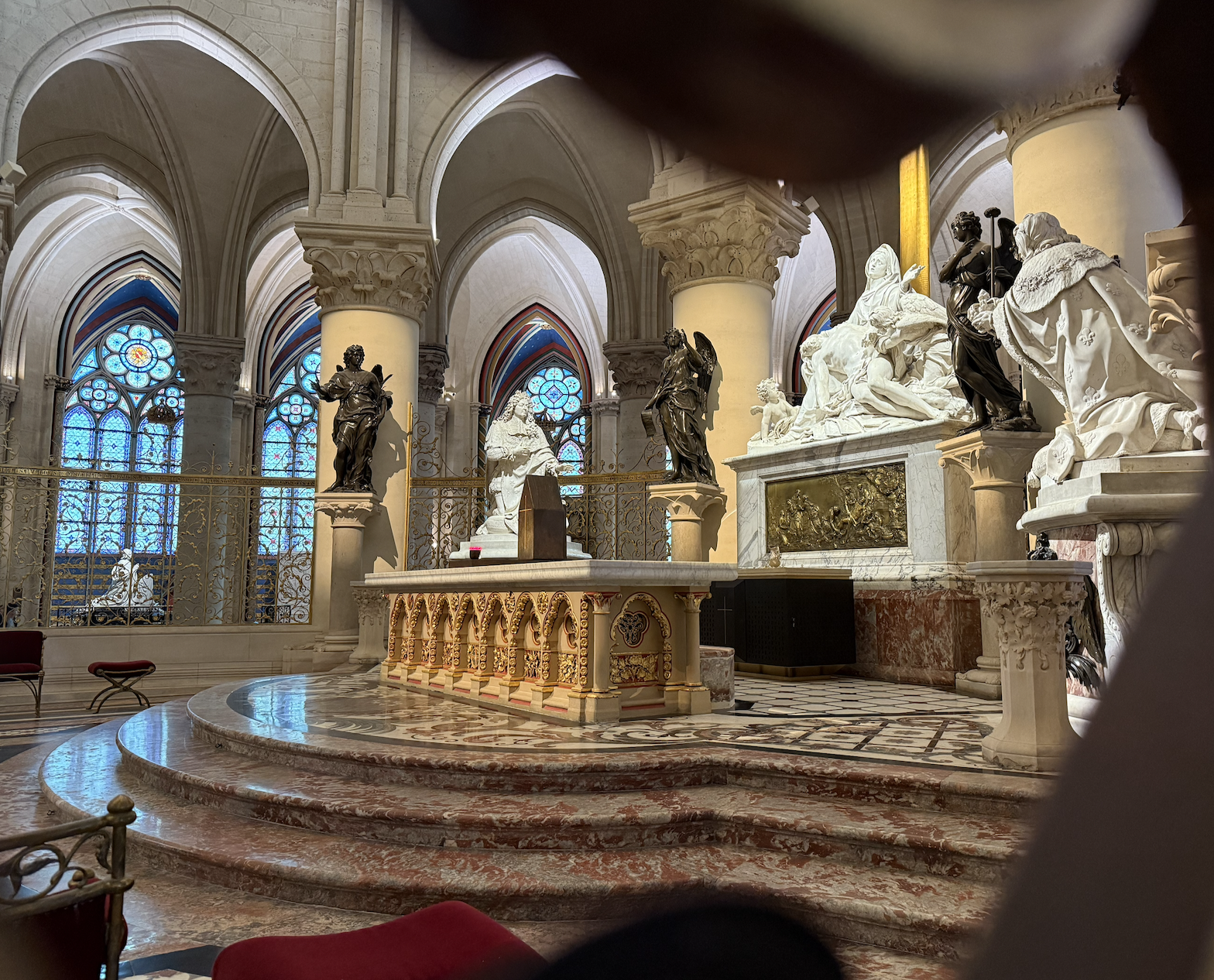
On December 7, 1699, following Mass, Cardinal de Noailles laid the first stone of the new altar, marking the beginning of the work on the choir of Notre Dame de Paris. A plaque was added: “Louis Le Grand, wanting to fulfill the vow of the King, his father, and add a mark of his piety, had an altar made in the Cathedral Church of Paris, with its ornament of a magnificence above the first project.” Gold medallions of the two kings were added at each end of the altar.
The work on the choir began under the king's architect Jules Hardouin Mansart with a lavish Baroque altar and canopy much like the one you can find in Val de Grace today. Mansart passed away on May 11, 1708, before the work was complete. His son-in-law, Robert de Cotte, completed the vision of the entire choir, adding Campan red and green Languedoc marble and an Egyptian marble altar.
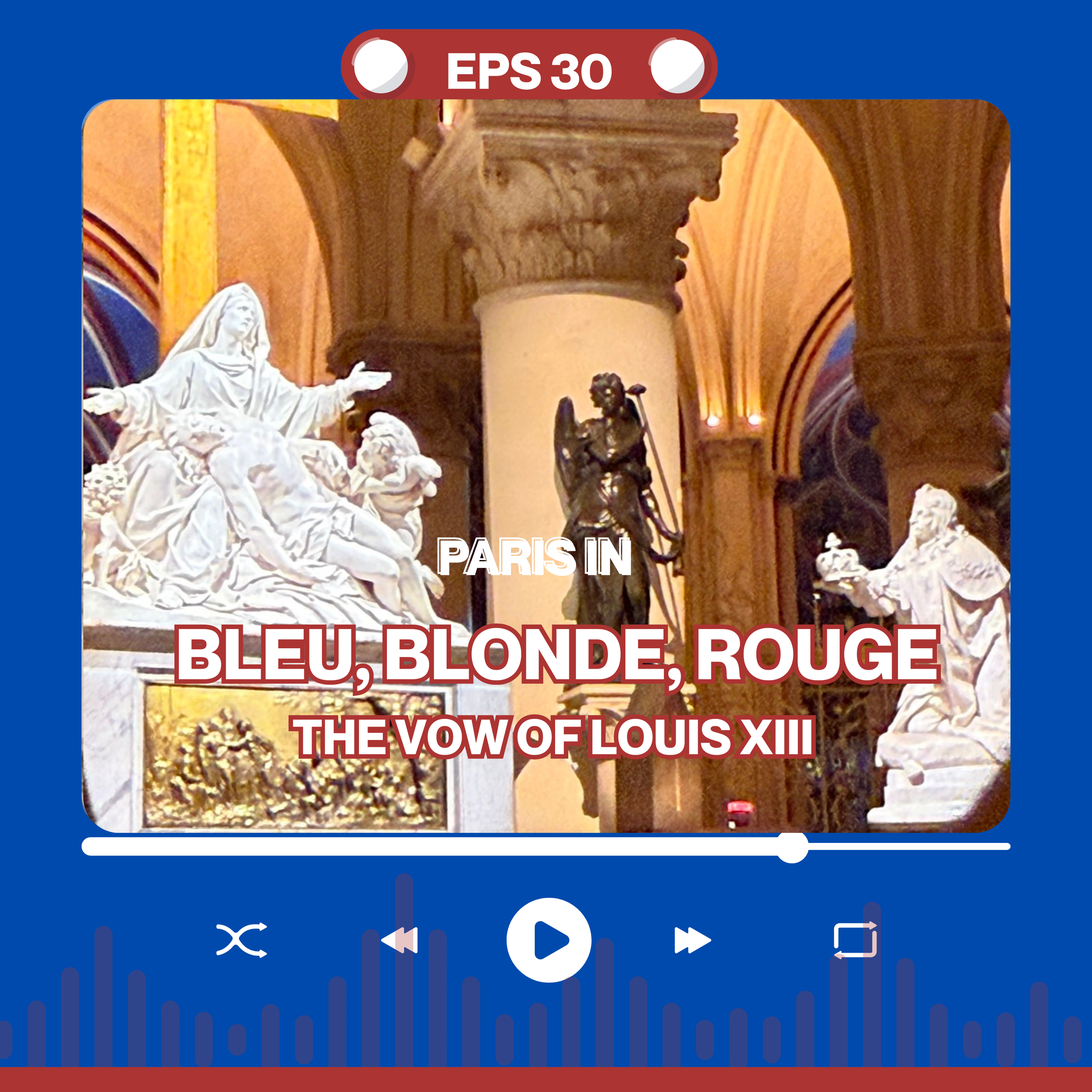
The choir is crowned by three sculptures representing the Vow, created by the Coustou family. Louis XIII had specifically requested that a statue of the Virgin and Christ be added as the central part of the holiest part of the cathedral.
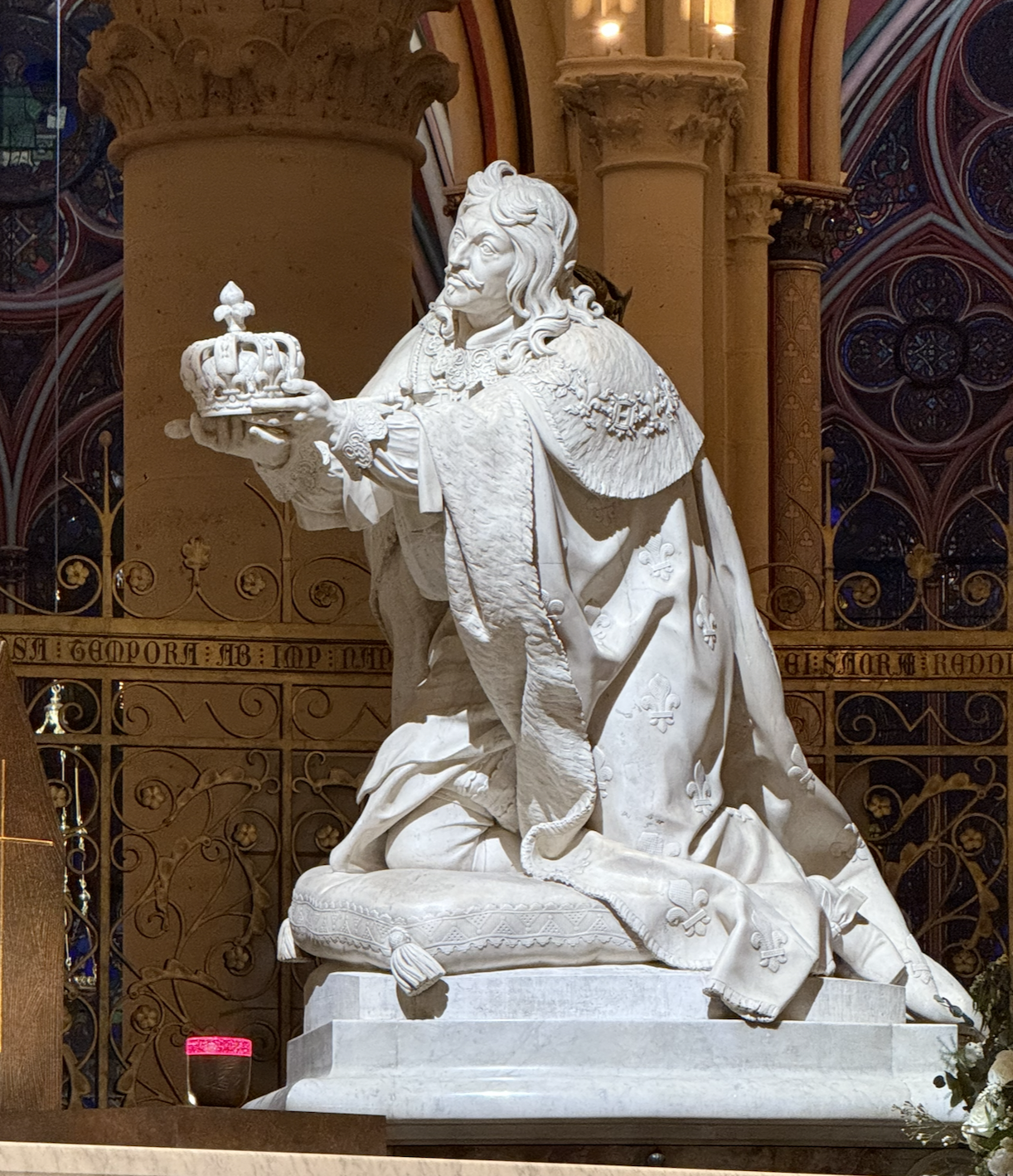
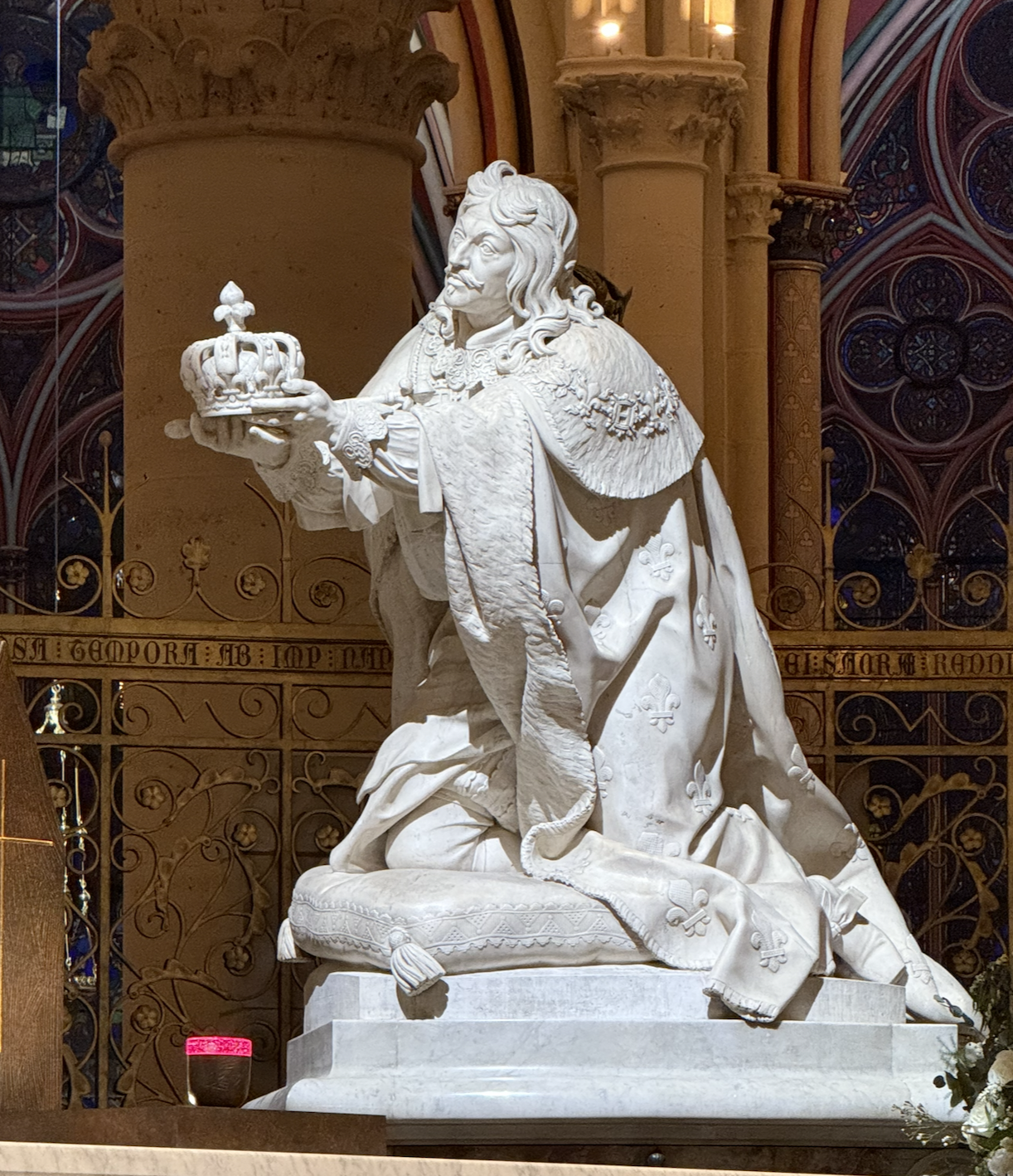
The original altar was destroyed in the Revolution and a new one added by Viollet-le-Duc in the mid-19th century. To the right of the altar, Louis XIII, carved by Guillaume Coustou, kneels and presents his crown and scepter to the Virgin and Christ. Using the earlier paintings for reference, although for Notre Dame, Christ appears after his death and not as a young child, also projecting the importance of the Vow throughout the years.
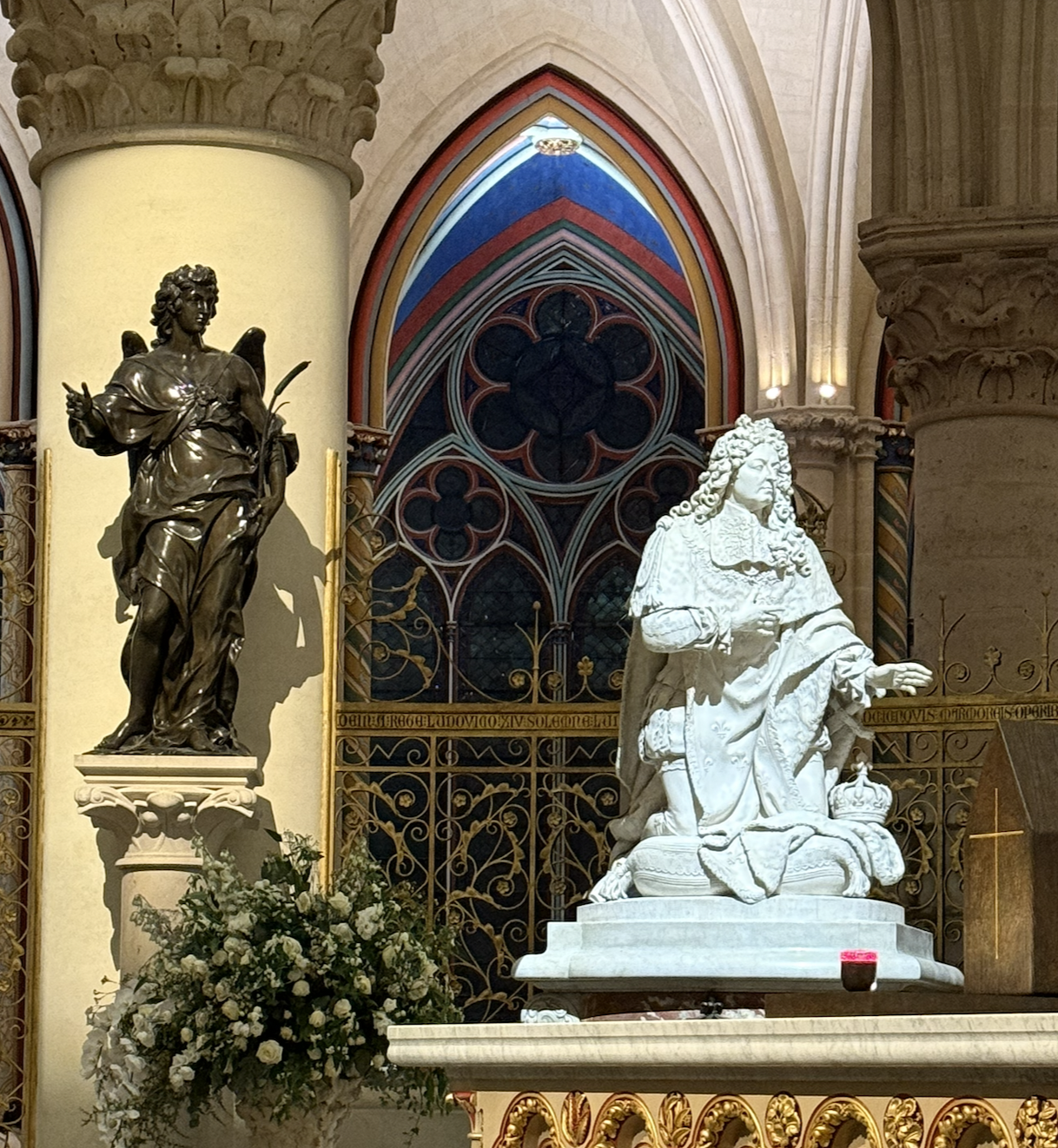
On the left, Louis XIV wouldn’t be Louis Dieudonné if he didn’t also include himself in the scene. On the left, Louis XIV, with his trademark curls and his Bourbon crown at his side, holds his right hand to his chest and extends his left toward the Pietà. Created by Antoine Coysevox, uncle to the Coustou brothers.
Both kings were completed in 1715 and placed within the choir.
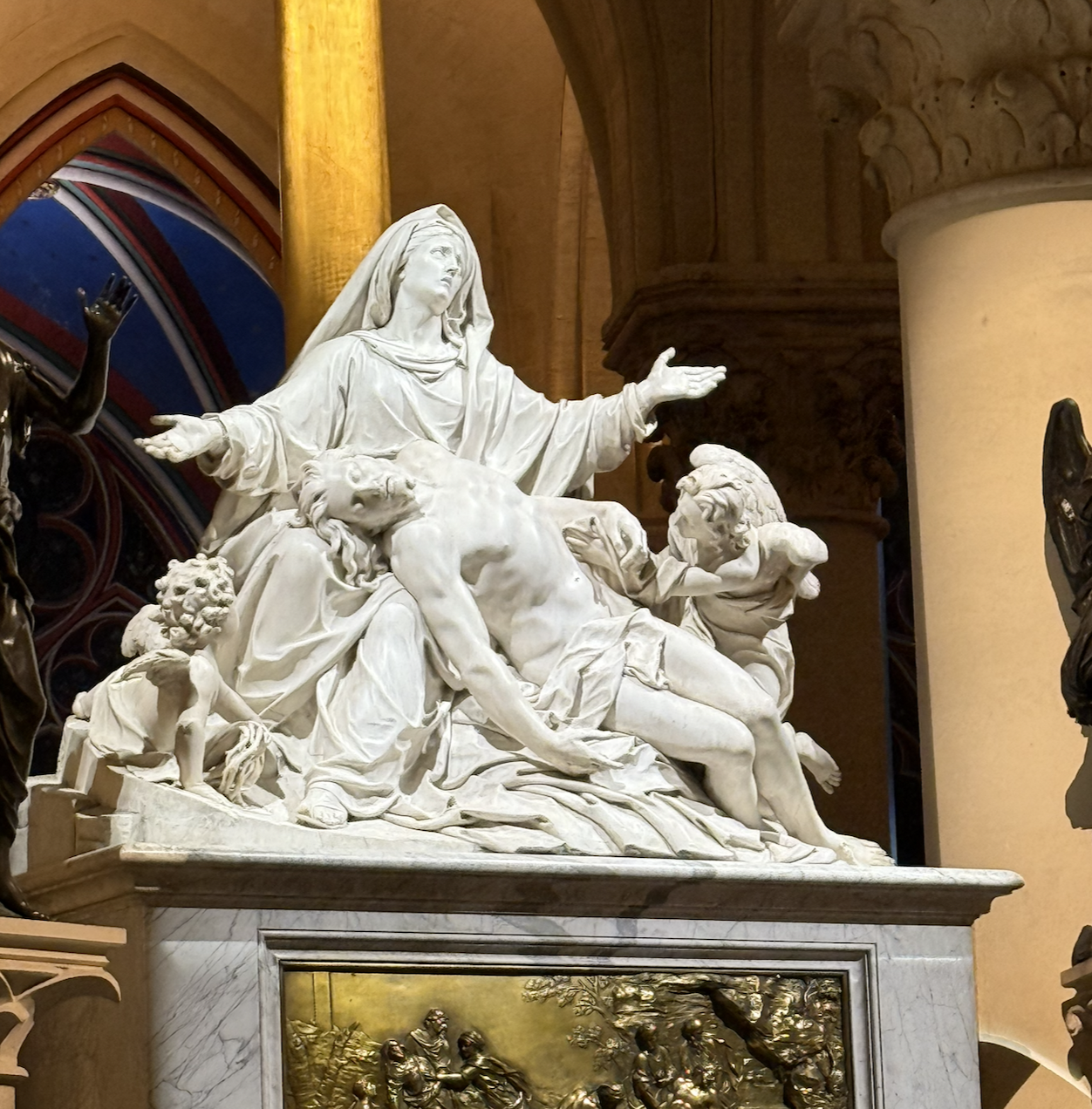
The Pietà, a fixture in Catholic churches and often varied. Nicolas Coustou, who won the prestigious Prix de Rome in 1682, spent countless hours studying and sketching Michelangelo’s Pietà in the Vatican. In his own interpretation, the Virgin Mary gazes towards the heavens with arms outstretched reminiscent of the cross, while her son rests against her legs. Two angels flank them, their eyes turned toward the mother and son. Before the Revolution, the Virgin’s upward gaze met a sculpted angel and a marble cross rising behind her.
The Pietà took longer to complete, with Nicolas Coustou finishing it in place within Notre Dame in 1723. The choir design was finally completed at the same time, eighty years after the death of Louis XIII and eight years after the death of Louis XIV.
During the Revolution, the two kings were removed and taken to the Petit Augustin by Alexandre Lenoir, who single-handedly saved many of the important monuments of France. From there they were taken to Versailles in 1815 and eventually placed in the Louvre in 1849. Under Viollet-le-Duc, they returned to the choir of Notre Dame on July 4, 1861.
The statues and cross that once hung over the pietà, were destroyed with the altar in 1790 during the French Revolution. For over two centuries, Notre-Dame was without a cross behind the Pietà. That changed in 1994, when Cardinal Jean-Marie Lustiger commissioned a new one.
Created by artist Marc Couturier, the six-meter-tall Cross of Glory, gilded in gold leaf, was inaugurated on October 16, 1994. Above it floats a delicate, white-gold gilded fish, symbolizing the soul.
The day after the fire, when we got our first glimpse inside the cathedral in photos, there she was. The Pietà in front of the large gold cross, with each king on either side, rising above the embers.
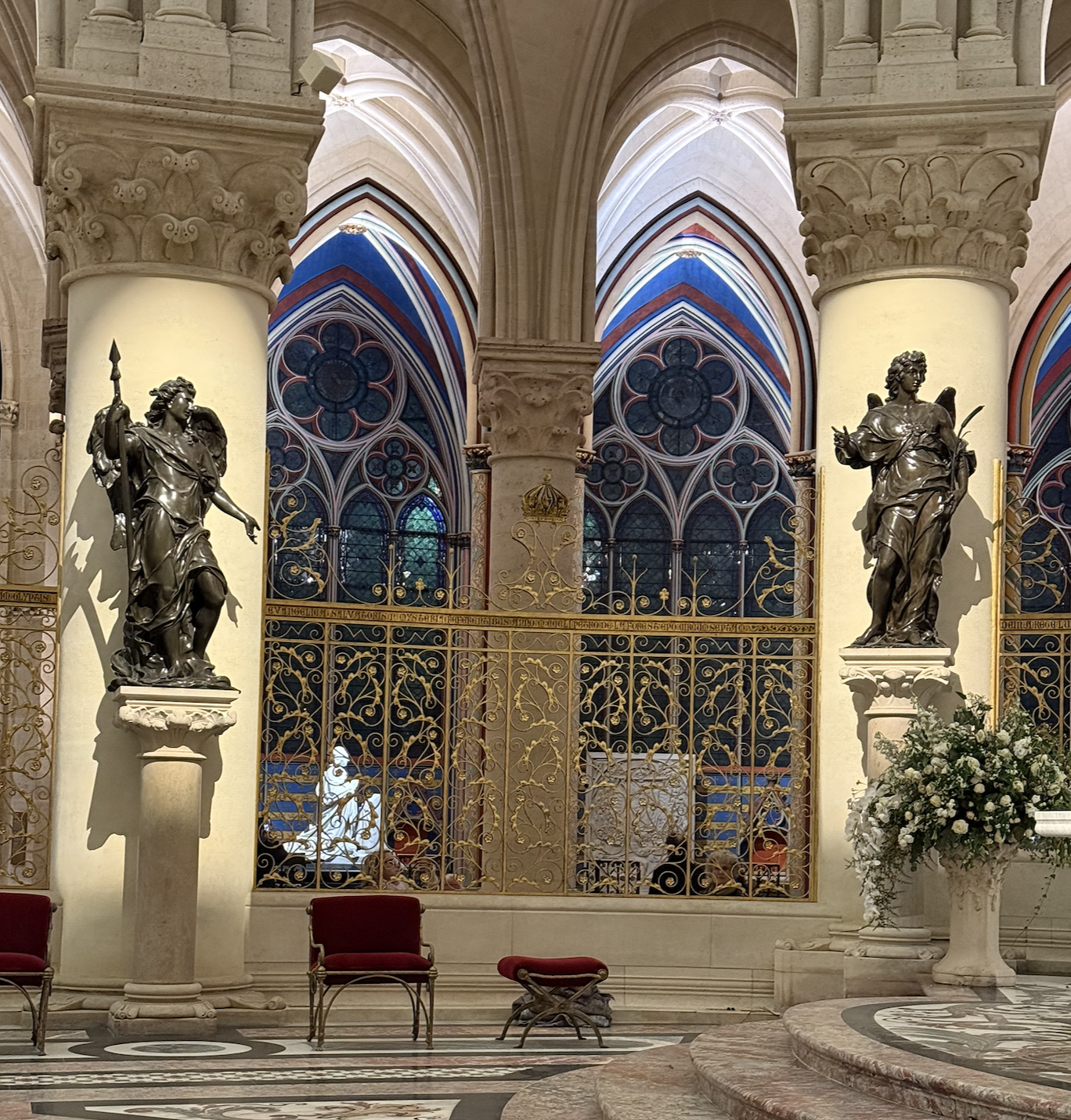
Surrounding this sacred scene are six bronze angels holding the Instruments of the Passion: the Lance, the Rods of the Flagellation, the INRI inscription, the Sponge soaked in vinegar, the Nails, and the Crown of Thorns. These were designed by Antoine Vassé and sculpted by several artists: Claude Cayot, Corneille Van Clève, Poirier Simon Hurtrelle, Philippe Magnier, and Anselme Flamen.
During the Revolution, on August 14, 1792, the Vow was abolished. In August 1814, Louis XVIII reestablished the Vow once again within a crumbling Notre Dame de Paris. Louis Philippe decided to abolish the Vow in August 1831. In 1922, Pope Pius XI announced that France would once again recognize the Holy Virgin as its Patron Saint and the Vow of Louis XIII.
For more than one hundred years, she has remained the Patron Saint of France. Former Archbishop Jean Marie Lustiger called for the procession to return to the Assumption of the Virgin celebration beginning August 15, 1988.
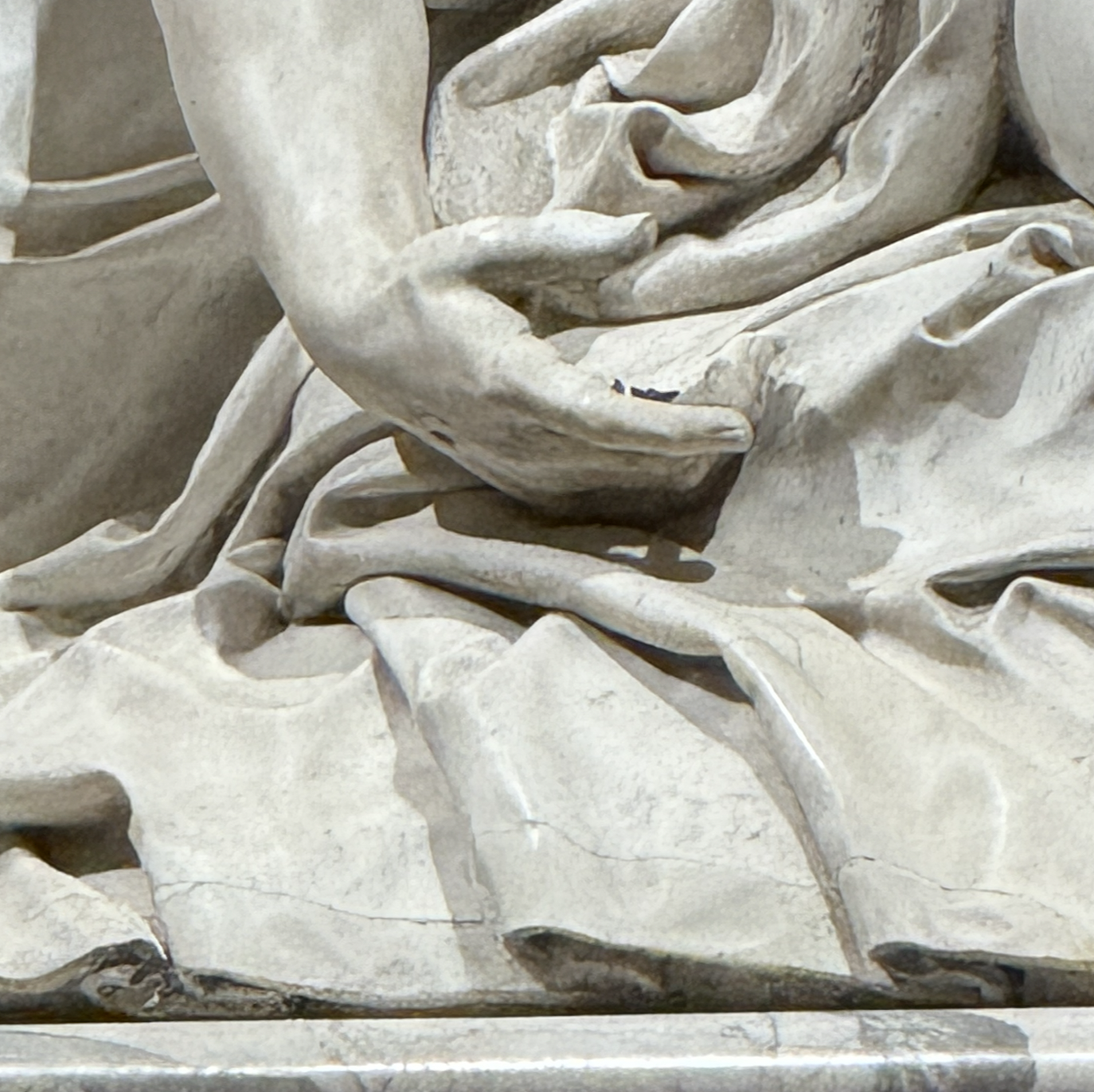
Today, this ensemble remains not only a profound artistic and devotional centerpiece but also one of the few poignant reminders of the 2019 fire. A keen observer might notice, nestled in the right hand of Christ, a small bit of melted lead—fallen from the burning roof. It is a subtle yet powerful nod to the tragedy of that night, and to the resilience and beauty that rose from its ashes, perhaps renewing the Vow of Louis XIII once again.
The vow is still celebrated at Notre Dame each year for the August 15 celebration of the Assumption of the Virgin.
The reading of the Vow will be on Saturday, August 14th at the end of the Mass for the Assumption in Notre Dame de Paris at 8:15 pm (the Cathedral is only open for prayer that afternoon and the 15th).
Today you can see the sculptures through the beautiful iron gate recreated under Viollet-le-Duc. You can enter the choir, but just for prayer, and no phones are allowed.
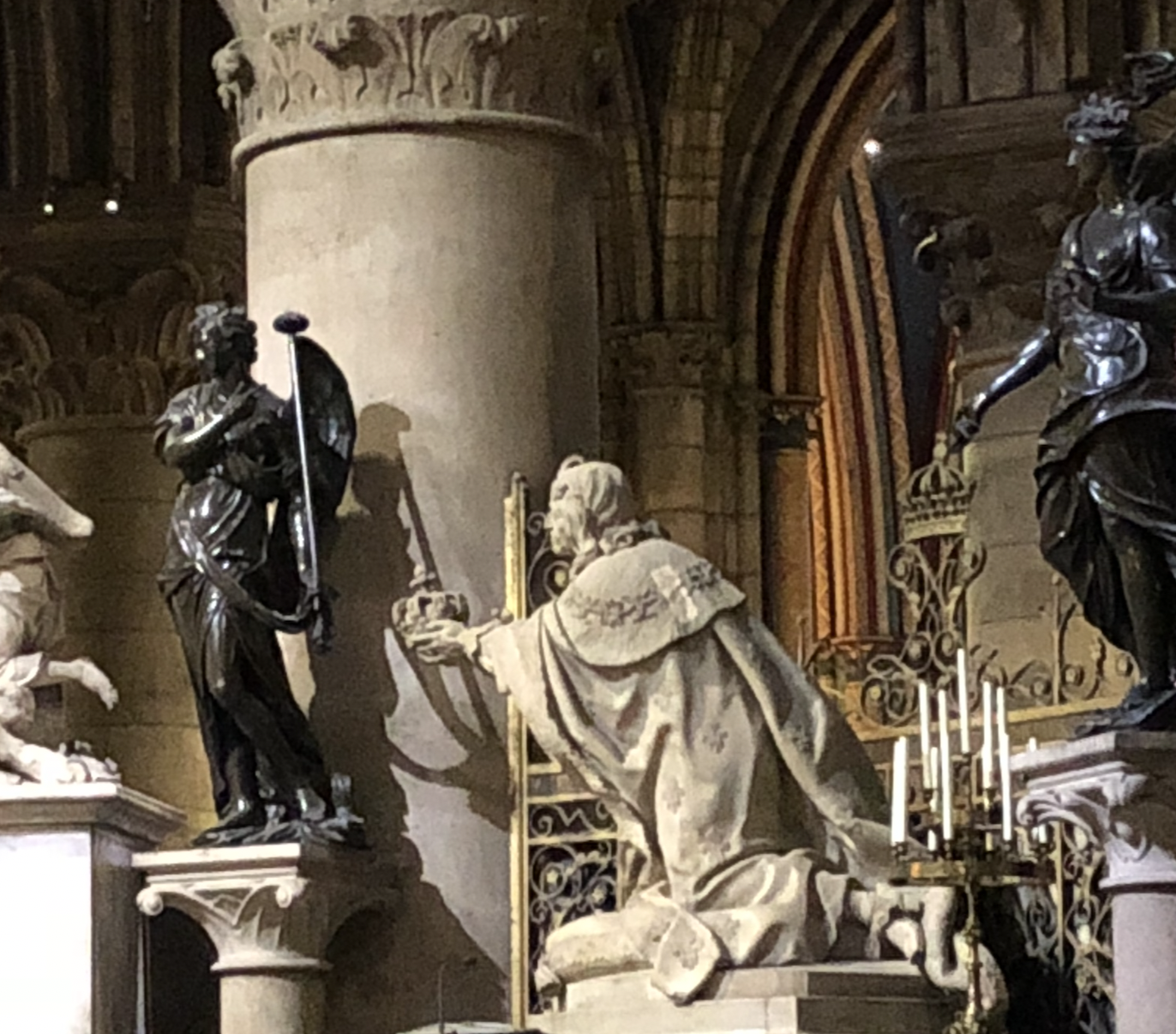
September 22, 2018, before the fire.
On a visit to Paris in 2018, I stayed near Notre Dame so I could visit every morning after it opened at 7:45. I wanted to research every single inch of the historic cathedral. Before the fire, the mornings were very quiet. Normally, just a few people were cleaning and getting ready for the morning Mass. Each day I would poke my head into the back gate of the choir, dying to get a closer look at the statues and decoration. Knowing it was reserved for prayer, I never wanted to disrespect the space. One morning, after two weeks of visits, I saw a sweet man cleaning the floors, and we were so familiar that we always had a quick bonjour and smile and went our separate ways.
This one morning, my sweet friend saw me pass by the choir gate, rested his broom against the column, walked over, and asked if he could take me inside. For a few minutes I stood within the choir in complete silence and looked at the statues created under the wishes of two kings and dedicated to the Queen of the Heavens.
It is still a moment I will never forget and one of my very favorites, and one I think of every time I am in Notre Dame.