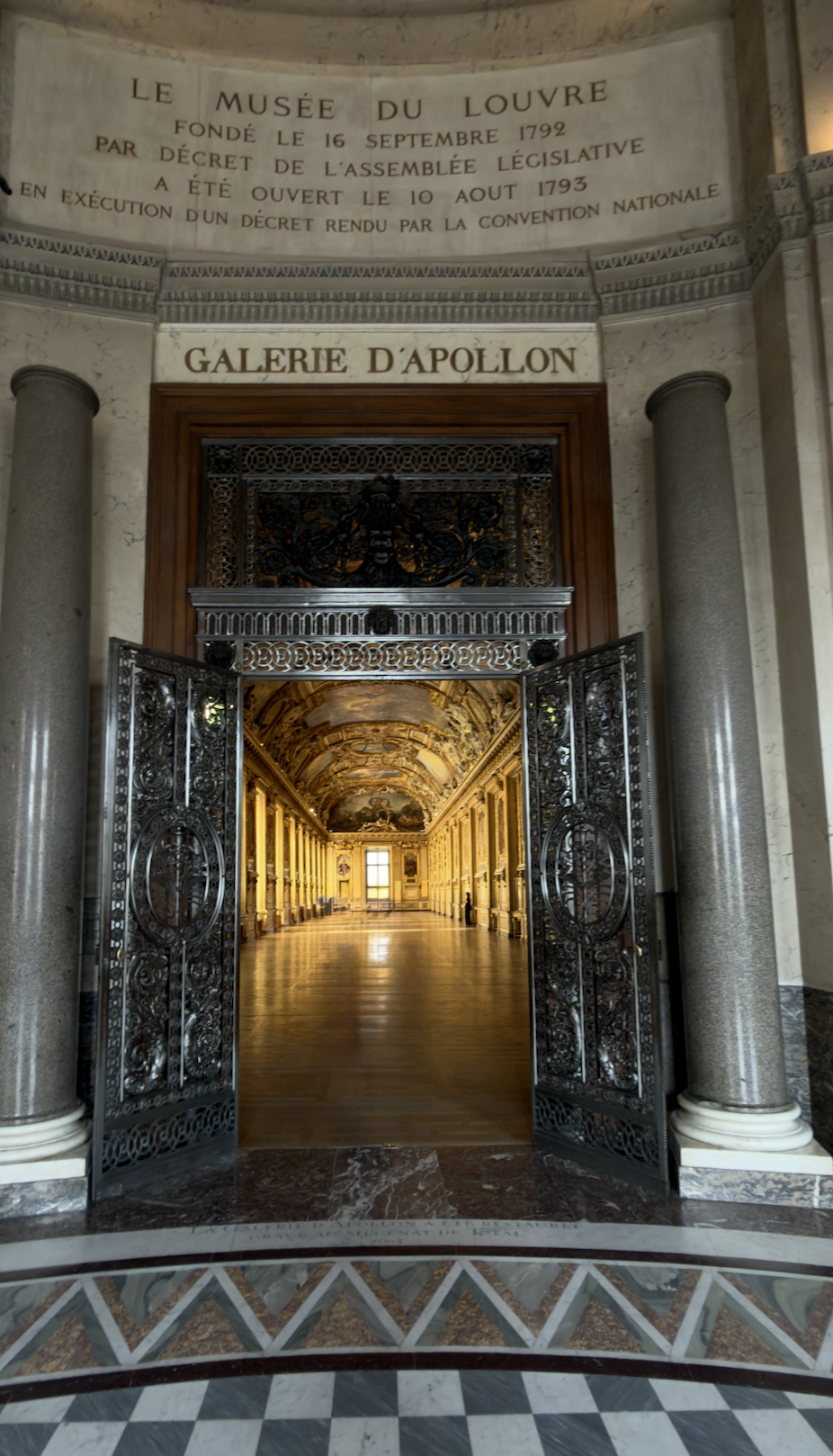
Most people walking into the stunningly beautiful and reopened Galerie d’Apollon are looking at the golden ceiling and may miss one of the most important markings on the entire Palais du Louvre. Just above the Iron gates that were once a part of the Château de Maisons is an inscription noting the decree of September 16, 1792, and the opening of the museum on August 10, 1793.
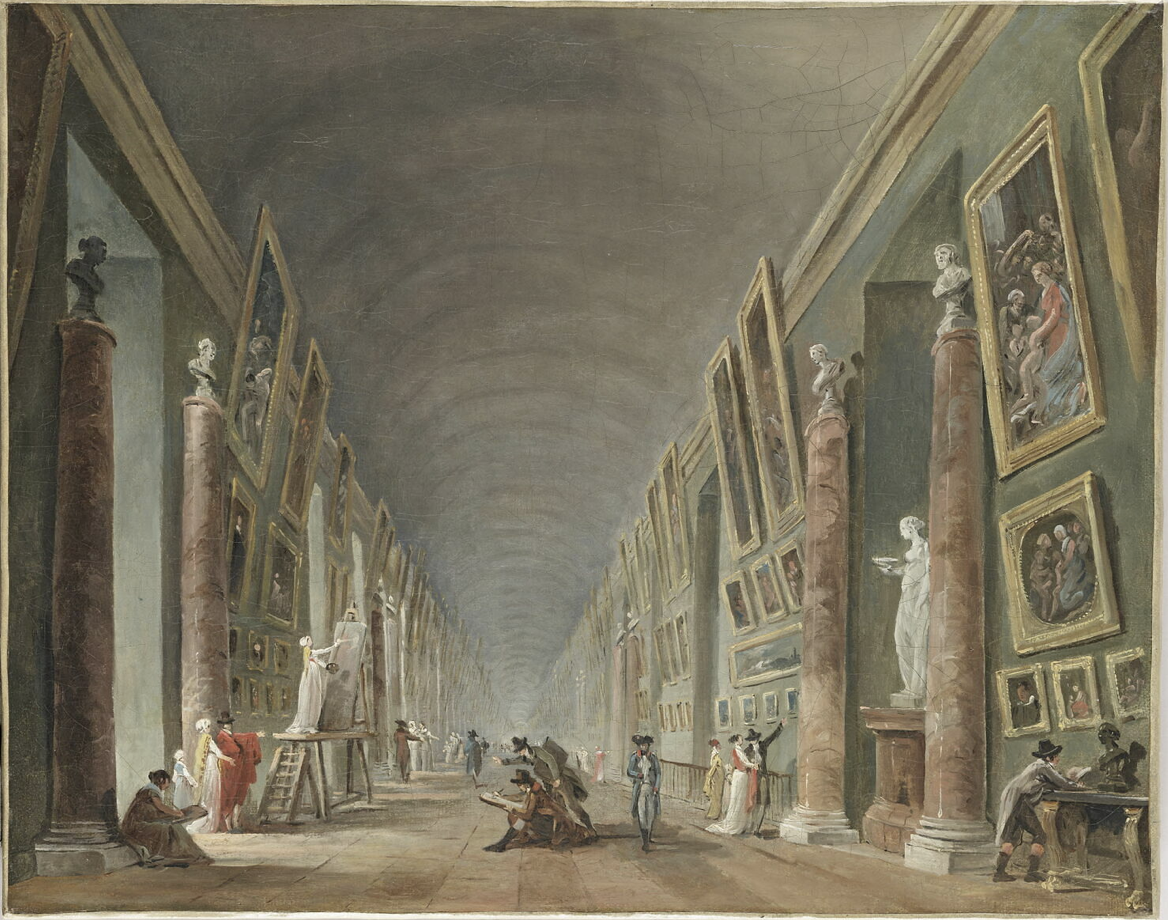
On a warm summer day in the midst of the French Revolution, the Grande Galerie was opened to visitors. A chance to view what once hung on the walls of the great châteaux of the kings. The Musée Central des Arts de la République was opened to the public; you know it as the Musée du Louvre. It was August 10, 1793, the one-year anniversary of a very symbolic day marking the end of the French monarchy.
At its opening, the museum held 538 paintings, 48 sculptures from the Salle des Antiquities, 39 antique and modern busts, and 29 hard stone tables with 36 hard stone vases, 37 porcelain as well as many bronze clocks, objets d’art, and two large Sèvres vases filling the Grande Galerie, and no Mona Lisa in sight.
Although it was opened as a gift to the citizens of France, they were only allowed to visit a few days a week. These were the Revolutionary years, and the ten-day calendar was in place. The first five days of the week were for artists and copyists, followed by two days of cleaning; the last three days of the week were for the public. Opening hours depended on the daylight. During the winter, the museum would have much shorter hours as they hadn’t installed lighting yet.
On that first day, the large doors of the Rotunde de Mars opened. While the people were fighting against the monarchy and blood was being shed in the streets, visitors inside could view paintings by Da Vinci, Raphaêl, Veronese, and Titian. Where did all this art come from? A few weeks ago, I shared the story of the looting of art done under Napoleon and the Directory (episode 28). But the opening collection dates to a much earlier period.
It all began with Francois I, who changed everything about the monarchy. Rising to the throne on January 1, 1515, at 21 years old, following the death of his cousin Louis XII. He was raised by his mother, Louise de Savoie, with an appreciation of art, architecture, music, poetry, and all things of the Renaissance. During his rule, he began the transformation of the Palais du Louvre into what we know it as today.
It was on August 2, 1546, 480 years ago, that architect Pierre Lescot was given the task of building a palace fit to reflect the French Renaissance and outshine anything the Holy Roman Emperor Charles V had. Francois I died the next year, but his son Henri II would continue his vision, as did each king that followed. Francois didn’t just want a palace; he also wanted a place to showcase his art.
With a fondness for Italian art, Francois began to amass many of the paintings of the Italian masters and even a few of the masters themselves. The most famous being Leonardo da Vinci, whom he was able to convince to pack up his paintings and move to France. (For more, listen to the past episode 23). Other artists, including Rosso Florentino & Francesco Primaticcio, also moved to France and worked on the Château de Fontainebleau.
François I is credited not only with the creation of the royal collection of art but also with the Crown Jewels of France. However, there were a few pieces already attached to the throne when he arrived in 1515.
Louis XII obtained Fra Bartolomeo’s Noli me tangere, or Le Christ jardinier et la Madeleine, in 1506 from Père Perini, a Dominican monk, and passed it to his cousin Francois I, who would succeed him. Another well-known painting, often called La Belle Ferronière by the one and only Da Vinci, also most likely arrived in the hands of Louis XII, a few years before the master himself moved to France. The title of the painting was given by Ingres a few hundred of years after it was painted, when he thought the painting was that of one of the mistresses of Francois. These names stick even if they aren’t correct.
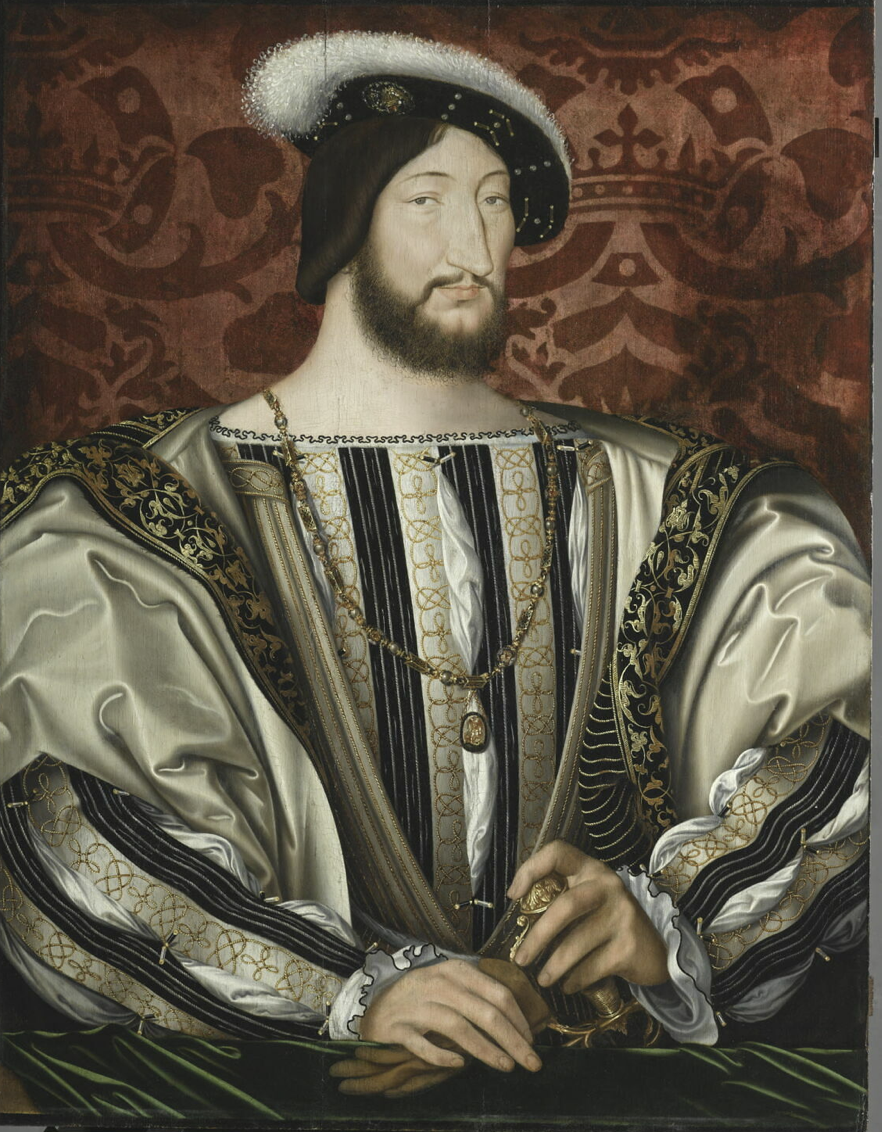
François I by Jean Clouet
Francois gathered many more paintings that sadly didn’t survive. Châteaux were drafty and damp and not the best climate for paintings predominantly painted on wood. Francois hung many of his paintings in one of his favorite rooms, including the Mona Lisa, the appartement des Bains. If you know a little French, then you know that is a bathroom.
This wasn’t the bathroom we think of today; it was a very large room, with basins but also without running water, fans, or drains. Pretty much the last place you want to hang a portrait painted on poplar wood. Many of the exquisite paintings he once had, sadly, never survived. We don’t even have a complete inventory, but from what did survive the years of steam and humidity, it would have been pretty great.
His surviving collection includes a few more Da Vincis. The Virgin and Sainte Anne, Madonna of the Rocks & Bacchus are now associated with his atelier more so than Da Vinci. Andre del Sarto’s Charity. La Visititation by Sebastiano del Piomo and Fra Bartolomeo’s Incarnation of Christ. He once had a painting of Saint Sebastian by Bartolomeo that was one of the many lost. Then we have Raphaël.
The great Italian artist most likely met Francois I in Bologna. The king was also gifted a few paintings by Raphaël from Pope Leo X. Within the Grande Galerie, displayed near each other, the Raphaëls of the king include a favorite Saint Michel Slaying the Demon, La Grande Sainte Famille de François I, La Belle Jardinière, Portrait of Jeanne d’Aragon, Portrait of two artists including Raphaël and unknown friend and Sainte Margarite in honor of the king's sister.
After the death of François I, his son Henri II acquired a few pieces but didn’t have the fervent passion for art that his father had. His three young sons who followed barely ruled or lived long enough to collect and were more focused on war than anything else.
Henri IV didn’t add as much to the collection of paintings, but we can attribute the Galerie du bord de l'eau, built to link the Palais du Louvre to Catherine de Medici’s Palais des Tuileries. Begun in 1595, the 1500-foot-long corridor was used by the young Louis XIII for fox hunts; maybe they should bring back a fox or two in the high season.
After the death of Henri IV in 1610, Marie de Medici made up for lost time. She commissioned large projects, including the Rubens cycle intended for her Palais du Luxembourg. Her son Louis XIII added a few pieces, but it was really a pair of cardinals that ramped up the collecting into overdrive. Cardinals Richelieu and Mazarin each became great advisors to Louis XIII and later Louis XIV.
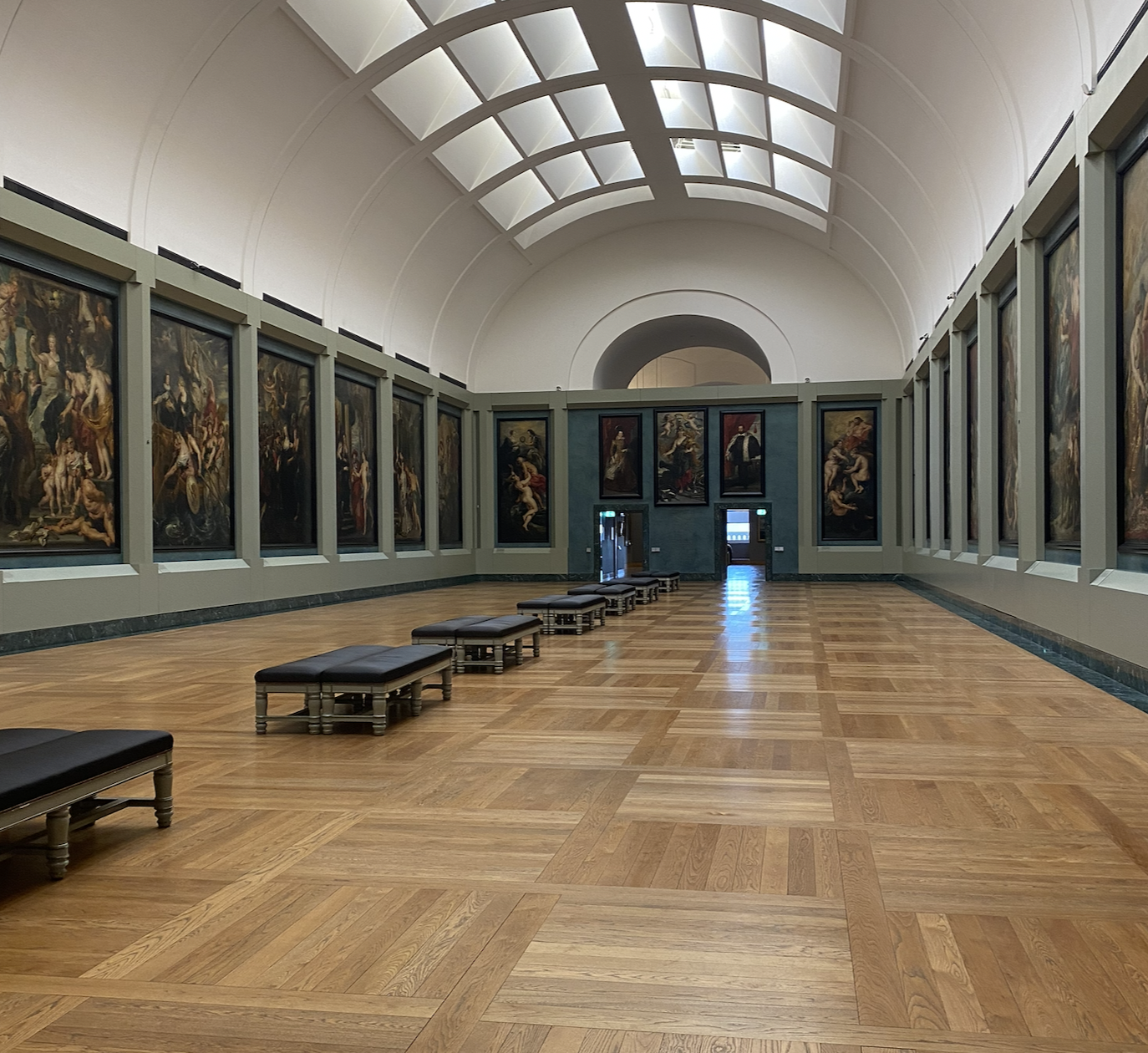
Medici Cycle
They commissioned and purchased so much art that they each had to build palaces just to hold it. Richelieu with the Palais Royal, across the street from the Louvre and Mazarin with what is now the Bibliothèque Nationale de France on the Rue de Richelieu. After each of their deaths, their collections became property of the king of France.
Their collections were so vast that entire rooms of the Louvre today are filled with sculptures Richelieu once owned, and the Galerie d’Apollon once held the massive collection of glass and hard stone vessels Mazarin acquired. Mazarin had close to 600 paintings that fed into the Royal Collection.
One of my favorite paintings that once belonged to Cardinal Mazarin. Raphaël’s Baldassare de Castiglione. In 1528, Castiglione published his “Le Livre de Courtisan,” filled with the stories of court life in Italy, a 16th-century Downton Abbey.
Today he hangs in the Tribune of the Grande Galerie, once home to the Mona Lisa, a painting he also has a tie to; I’ll share more about that next week. Recently, Baldassare spent a few months in New York at the Met exhibit dedicated to Raphaël, but I was very happy to see him at home in the Louvre this last week.
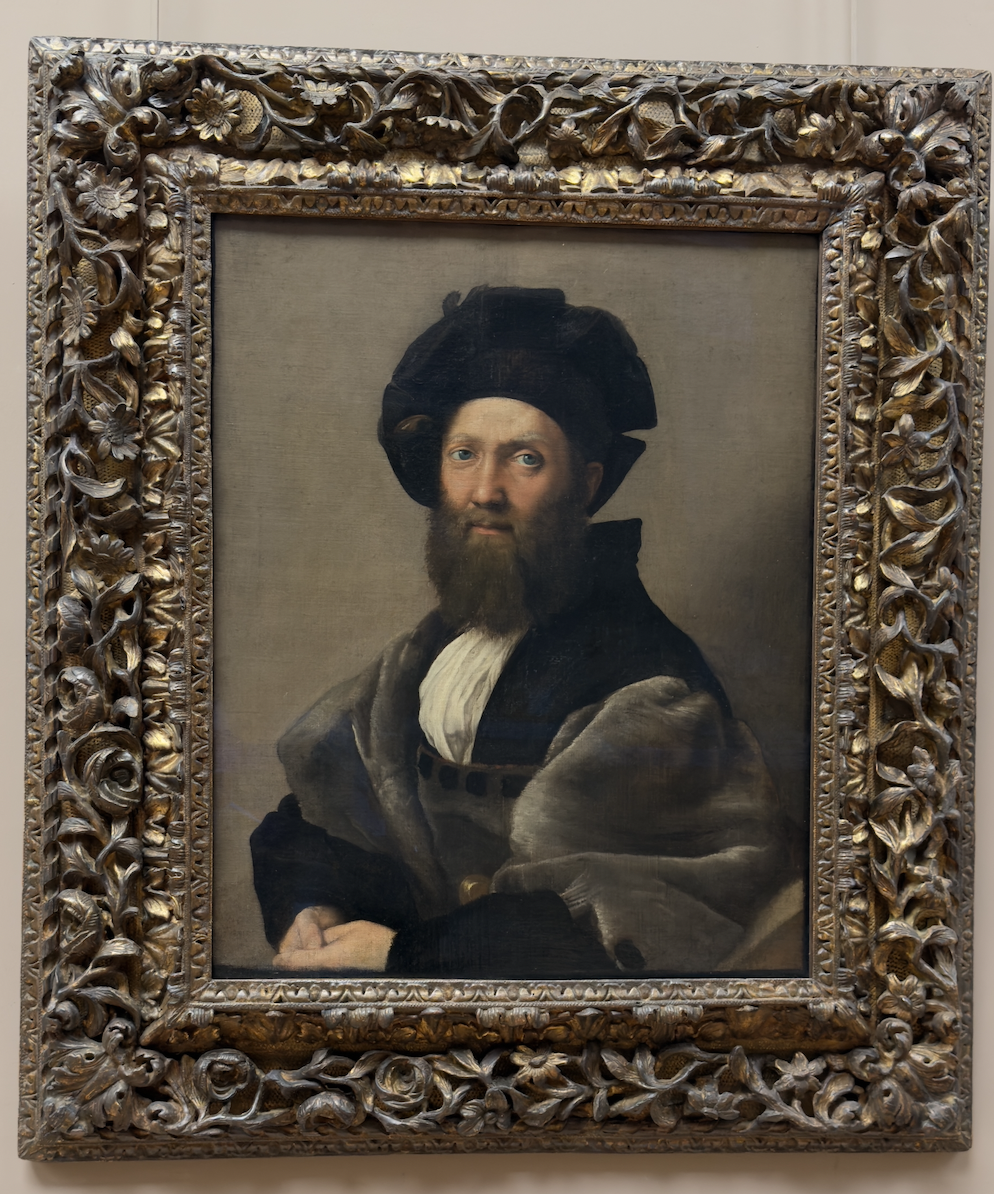
Baldassare de Castiglione by Raphaël
While Louis XIV loved music, dance, and architecture, when it came to art he let others tell him what he should collect. German-born collector Everhard Jabach held a large number of paintings and drawings of Italian and Northern artists and sold hundreds of pieces to Louis XIV in 1661 & 1671. He also advised him on art that was for sale in England and other cities he should acquire. In the 72 years of his reign under Louis XIV, only a fraction of less than 5 years were focused on art, but one might never know it when entire books are filled with listings of paintings, sculptures, objets d’art, and drawings he acquired. Jabach’s name is all over the plaques of the Louvre and I wondered for years just who he was.
Many of the most famous pieces Louis XIV gathered came through Jabach, including Saint Jean Baptiste by Da Vinci, Caravaggio’s Death of the Virgin, and The Country Concert by Giorgione that inspired Manet to paint Dejeuner sur l’herbe. Veronese’s Holy Family with Marie Madeleine in Renaissance clothing. Bernardino Luini’s Salomé receiving the head of Jean the Baptist, one that always catches people's eye. The Man with a Glove by Titian and plenty of paintings from the Northern school, including Hans Holbein le Jeune's recently restored portrait of Anne de Clèves.
Louis XV added a few pieces to the Royal gallery, including Raphaël’s Virgin with a Veil or Virgin in the blue tiara, as it's more commonly known. However, his focus was more on parties and ladies than art. It was his favorite mistress, Madame du Pompadour, who was a great friend and champion of the artists and began the subtle whispers to create a museum to hold a portion of the Crown's collection.
Louis XV’s grandson Louis XVI did have an interest in art. A very inquisitive young man who loved to read and create maps, he had an appreciation for art. Seeing a large void within the collection of French art, he instructed his many advisors, including the Comte d’Angivillier, to acquire more French artists.
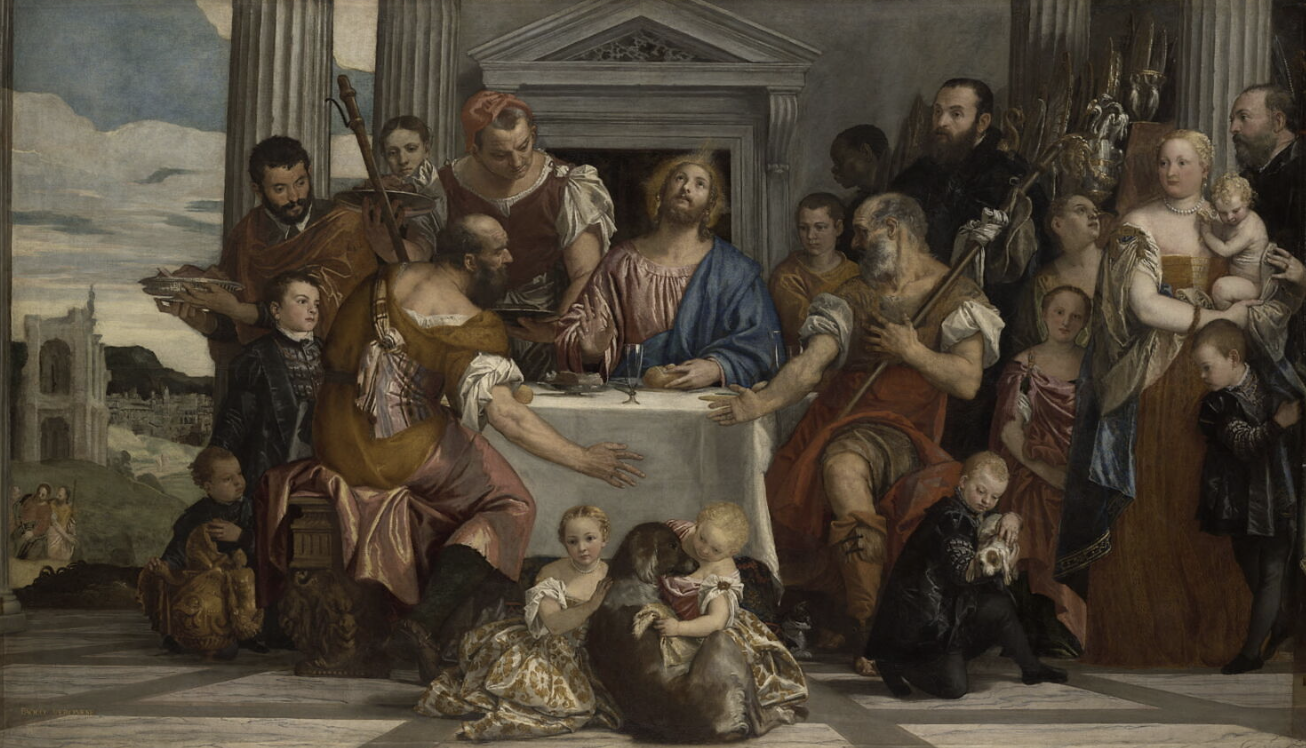
There were two paintings in the Royal Collection that became the favorites of Louis XIII, XIV, XV, and XVI and even traveled to Paris after the royal family was forcibly taken from Versailles. Veronese Pilgrims of Emmaus, painted in 1559. It depicts a scene after the Resurrection of Christ, sharing a meal with a few of his disciples and the wealthy family that commissioned the painting. Today it hangs on the eastern wall in the view of the Mona Lisa.
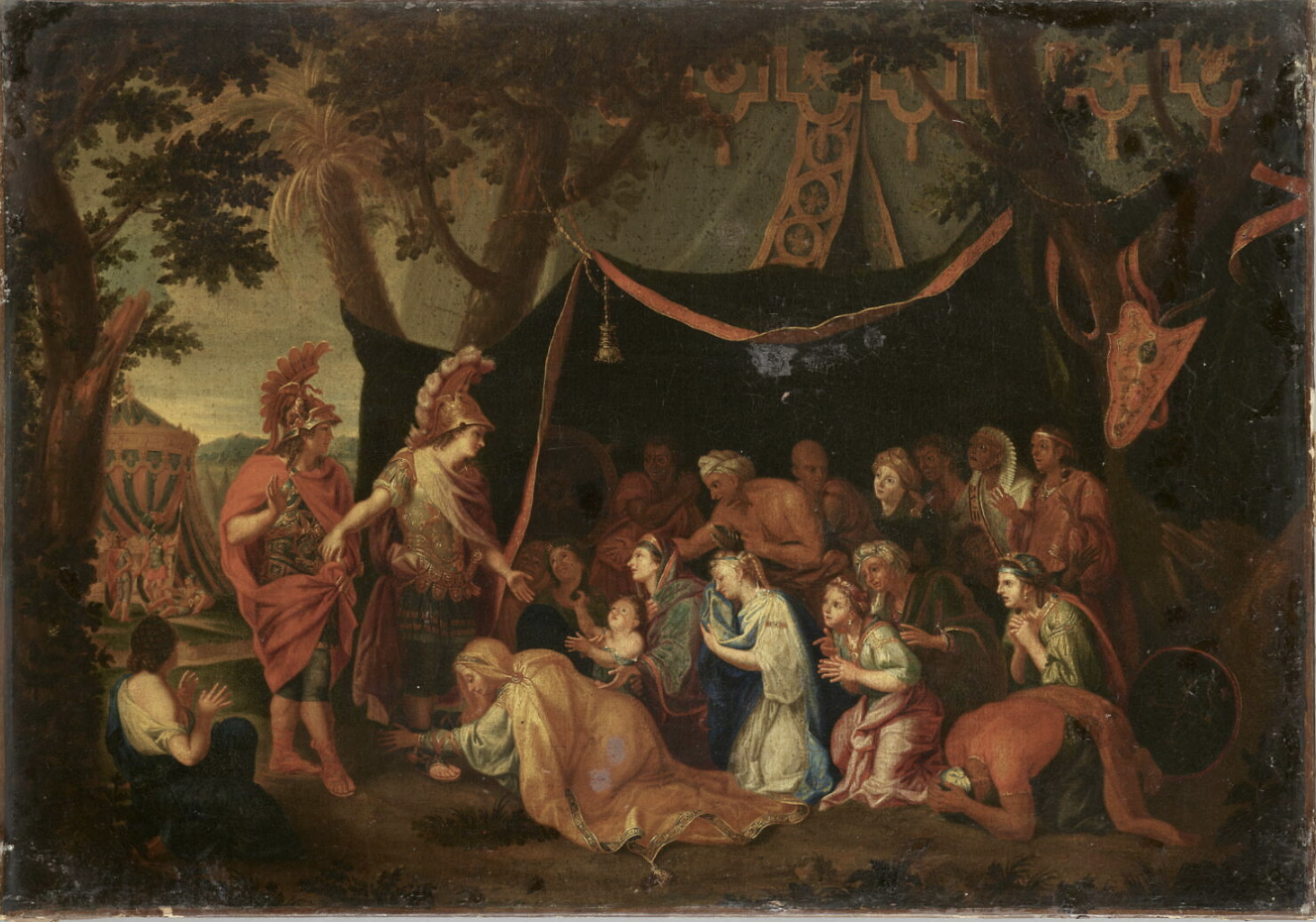
The other painting, Charles Le Brun's, Tent of Darius, was painted in 1661 at the Château de Fontainebleau. The painting depicts Darius' mother throwing herself at the feet of the King of Macedonia. Louis XIV loved paintings and sculptures of great leaders and warriors.
Both paintings were first hung in the king's bedroom at Versailles, and Louis XVI personally had them included in a handful of paintings he wanted at the Palais des Tuileries in 1791. They would also be two of the first added to the collection on the day the Louvre opened. The Le Brun painting is sadly not on display and was hung in the Élysée Palace until the start of WWII.
The first museum available to the public opened on October 14, 1750, within the Palais du Luxembourg. Located in the east and west wings, it included Rubens' cycle of 24 large paintings of the life of Marie Medici. It was made up of the leftovers of the Royal collection that weren’t hanging at Versailles and included fewer than 100 paintings and a handful of drawings. Twice a week on Wednesdays and Saturdays, the public could visit for three whole hours.
At the time of the opening of the Luxembourg, the Royal Collection expanded into over 1800 pieces, a bulk added under Louis XIV. Many were so tightly linked to Versailles it was out of the question to move them. Imagine being the king and sleeping alongside Raphael, Veronese, and Charles le Brun.
Meanwhile back at the Louvre, when Louis XIV decided to flee to Versailles in 1678, he gave up the Palais du Louvre to the artists and academics. Sculptors, painters, tapestry weavers, engraving workshops, and even a doctor and his son were on hand to give the artists lessons in anatomy. Filling the ground floor and grand galerie of the Denon wing as well as the Galerie d’Apollon and all the way to the Colonnade on the eastern edge, even when it was without a roof. They helped pave the way for the idea of the once grand palais becoming a museum.
The Musée du Luxembourg closed its doors in 1779 as the future Louis XVIII was moving in. A greater interest in creating a public museum had been gaining traction. None more so than Charles Claude Comte d’Angiviller, minister of the king's buildings under Louis XVI. Beginning in 1775, he started to dream up a plan to fill the long Galerie Bord de l’eau with the greatest art, including portraits of the king and high-ranking ministers and officials.
Angiviller's idea of a museum lost ground when he was forced into exile on July 28, 1789. He returned a year later to only end up in exile again just before the king and queen would be forced from Versailles. While France was turning away from the Absolute Monarchy and to the rights of the people, a group of Royal Academy artists suggested that art should be added to the three pillars of the new French society. Liberté, Égalité, Fraternité.
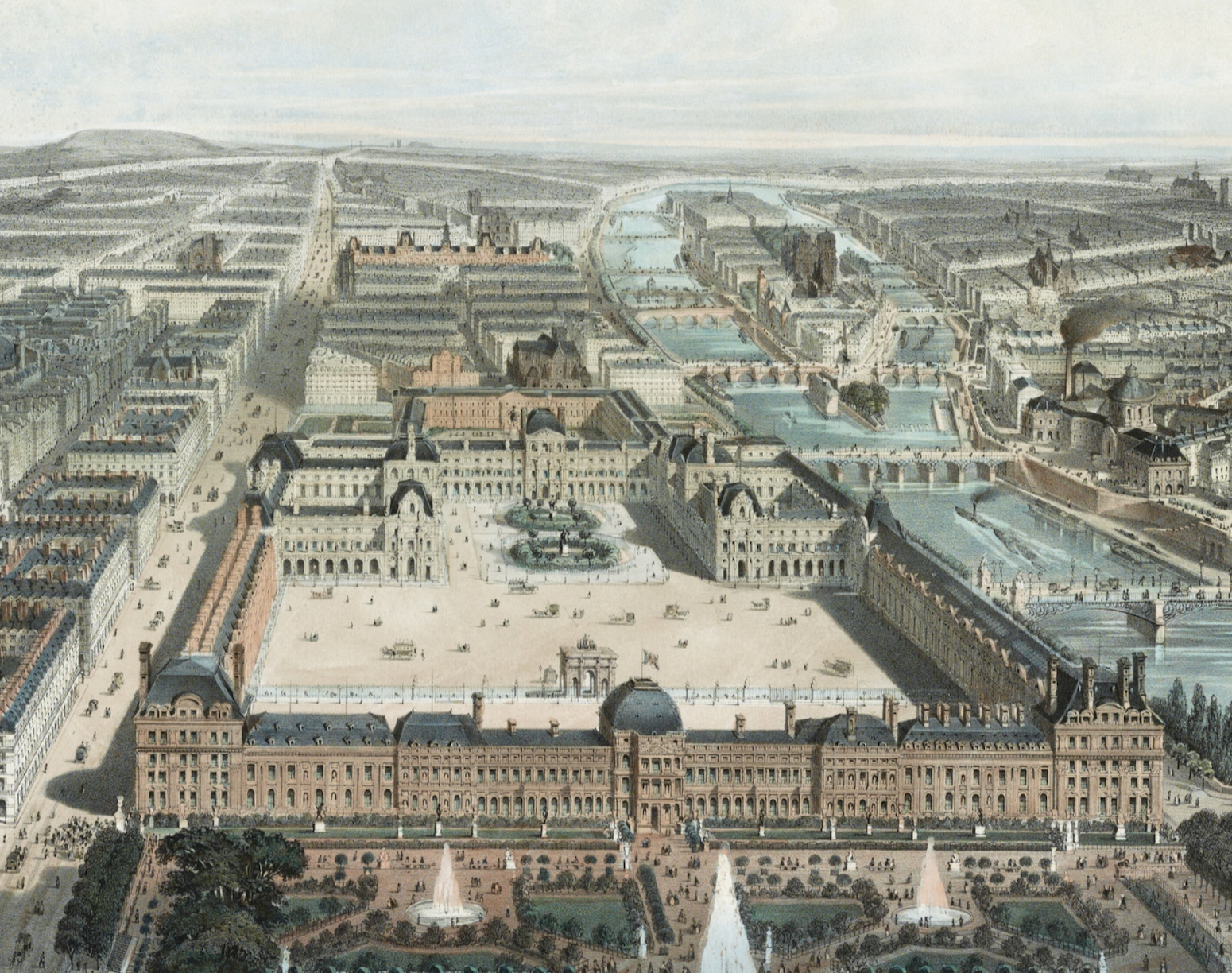
On August 9, 1792 the new government of Paris, the Paris Commune, moved into the offices of the Hotel de Ville. During the night, they met to come up with a plan to “save the state”. Meeting until 3 a.m., one side wanted to attack the king and the other fought against it. Louis XVI wasn’t playing along with the changes in the government, and it was all about to end.
At 8 am on August 10, 1792, thousands of men, women, and even children armed with weapons charged the Palais des Tuileries. Louis XVI had the 950 Swiss Guards moved inside the palace to guard the family and left 930 gendarmes and 2000 national guards outside to keep the angry mob at bay. One little issue: they had very little ammunition. The royal family was able to escape and ran through the garden to the Assembly for safety.
It was the end of the monarchy as the Legislative Assembly ended all rights of the king. On the same day, they voted to destroy all items and properties tied to the monarchy. The next day, on August 11, a commission was created to halt the process and search for and care for these items of national heritage.
On September 16, 1792, three years into the French Revolution, the National Assembly of France declared a museum would be created “bringing together monuments of all science and arts”. For the next year, things would move slowly, although art from the churches and emigrant families that left France had already begun to be amassed.
In 1793, the Royal Academy of Paintings and Sculpture created the General Commune of Arts led by Jacques Louis David and Jean Bernard Restout. The Royal Academy would be disbanded, as it was tied to the monarchy, but the artists still united now to form a museum. Many believed the new museum also needed to be a place for the artists themselves. One where they could copy the masters, learning the very techniques that would hopefully one day see their art in the national museum.
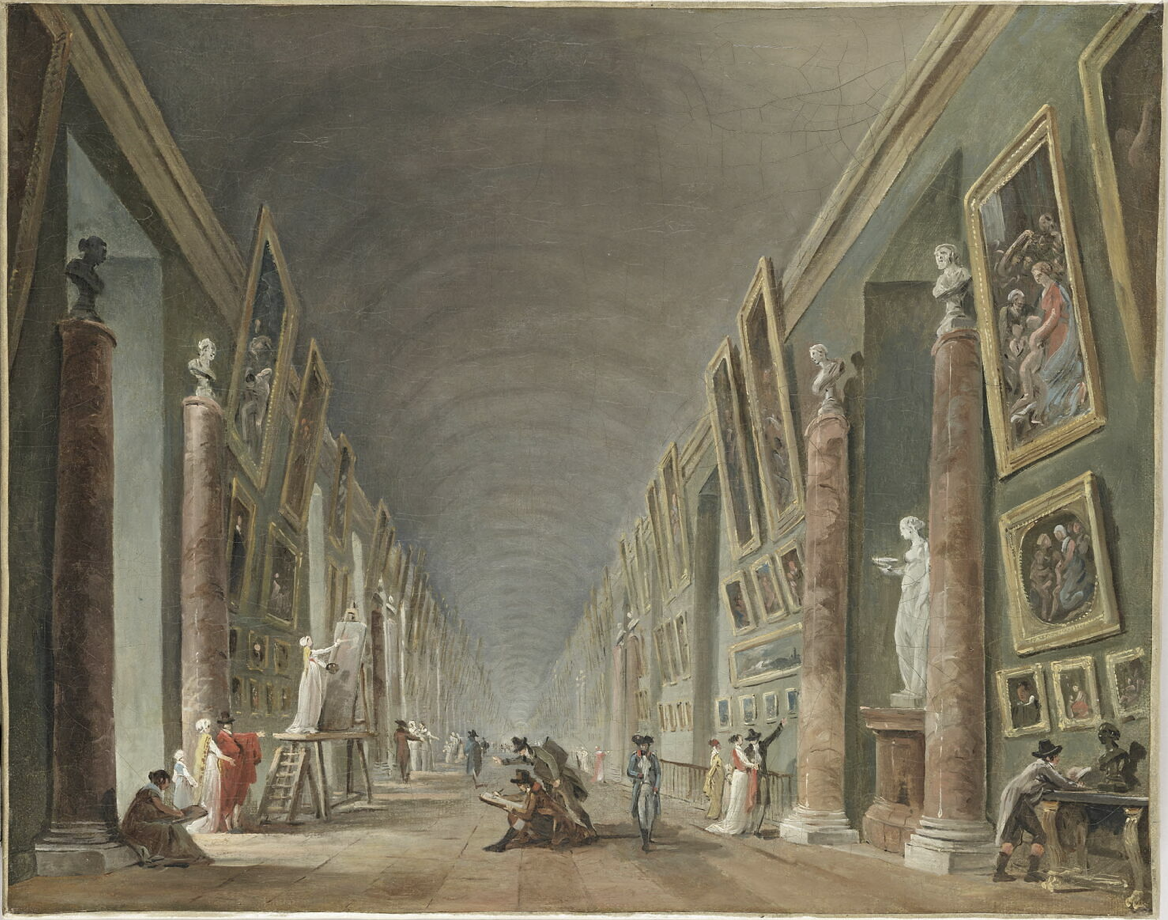
Artist Jean François Garneray even suggested a library be added to the museum for the artists to study art history as a fundamental portion of their education.
All were in agreement that the museum should not have a political agenda of any kind, just a focus on art and the artists themselves. I think we all know how that works out.
Jean Marie Roland de La Platière served as the Minister of the Interior from the very day that the Monarchy fell until just after the death of Louis XVI. He proposed a new idea for a museum that would be smaller in scale and should be known as the Musée Girondin for the political party he founded. Paintings of historical matters would be admitted on approved subjects. Roland appointed a group of artists, many of whom were a part of the General Commune of Arts as well as many former members of d’Angiviller’s circle.
To say the museum opened in turbulent times is an understatement. On January 21, King Louis XVI was guillotined; the Girondins and the Montagnards were fighting for power. Ending with the arrest of the Girondins on June 2. War in the Vendée, the Death of Marat on July 13, and the imminent trial of Marie Antoinette.
Roland was replaced with Dominique Joseph Garat as Minister of the Interior and announced that the museum would open on August 10, 1793, the same day as the 1793 Salon, and marks the one-year anniversary of the fall of the monarchy.
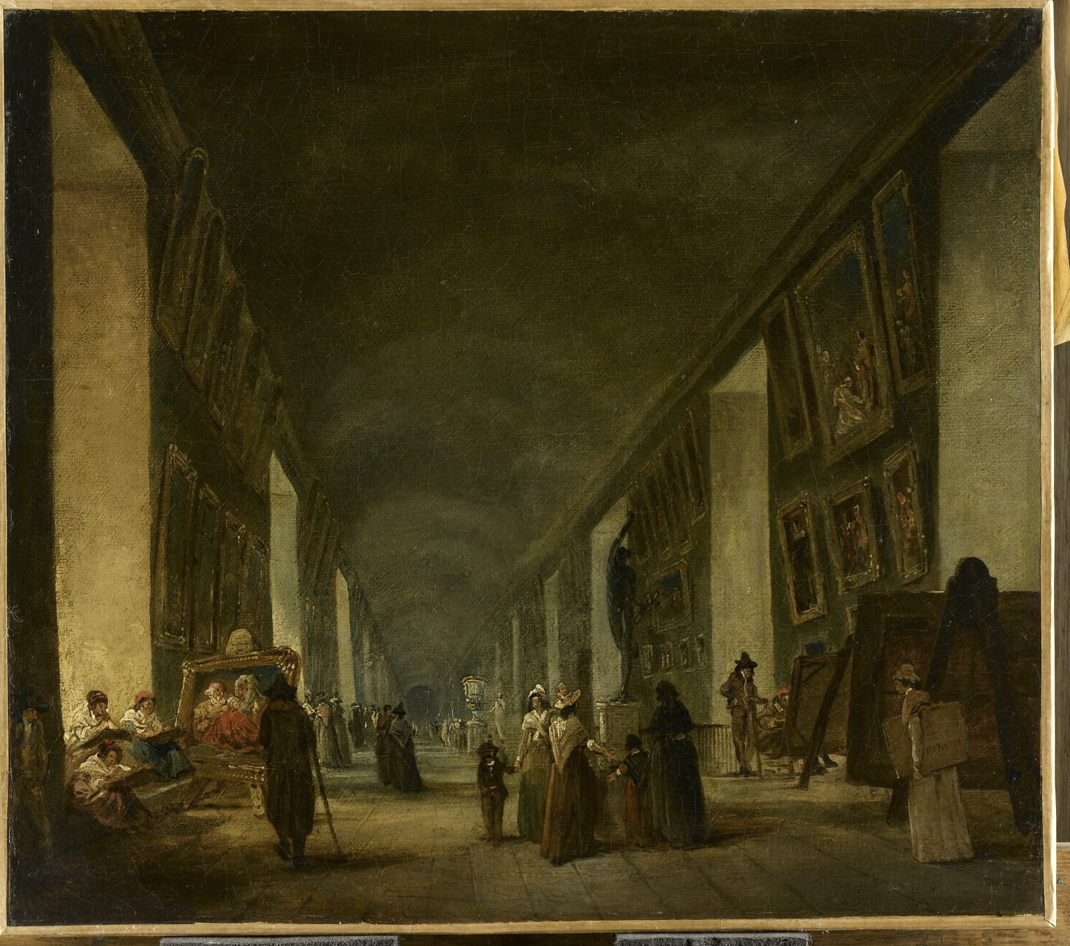
The original museum was much smaller and different from the stunning temple of art seen today. Much of the art was added and in place by the start of February 1793. While there were over 700 pieces in the Grande Galerie, only half of the space was used. The gallery itself was in bad shape, and all plans to restore it before opening were abandoned. Lighting was an issue, and at the time the ceiling was solid and without windows. Only the side windows were used and didn’t adequately light the space, and also the southern windows let in damaging direct sunlight.
Between each window or bay, only twenty-eight sections were used. On the North side from the door of the Salon Carré, seventeen bays were used, and on the south side just nine. Partition walls were added to shrink the space. The three hundred-year-old floors creaked and at times even gave way just enough for objects displayed on tables to fall off and break.
The majority of the 538 paintings were split between the Northern School and Italian masters. 190 of the Northern School, including Van Dyck’s Venus Having Arms Forged and plenty of Rubens. The Italian masters included Da Vinci, Raphaël, Titian and Veronese of course. France was represented by Nicolas Poussin, Champaigne, Eustache le Sueur and Charles le Brun and many more. The day after the decree was signed, the commission removed all of the paintings held at the Château de Versailles and brought them to Paris.
The paintings were hung with the largest at the top of the wall, with the smaller at eye level. They filled each bay, almost from frame to frame
While the museum opened on August 10, 1793, it didn’t last long; in fact, it only opened for one day. On August 11, the doors closed and didn’t reopen again until November 18, 1793. Outside, the Terror was raging through Paris and the government was in total disarray.
The Palais du Louvre survived the anger of the Revolution and Terror unscathed. The supreme figure of the royal family of Paris was left without a mark because it was given back to the people of France in the middle of one of its darkest times.
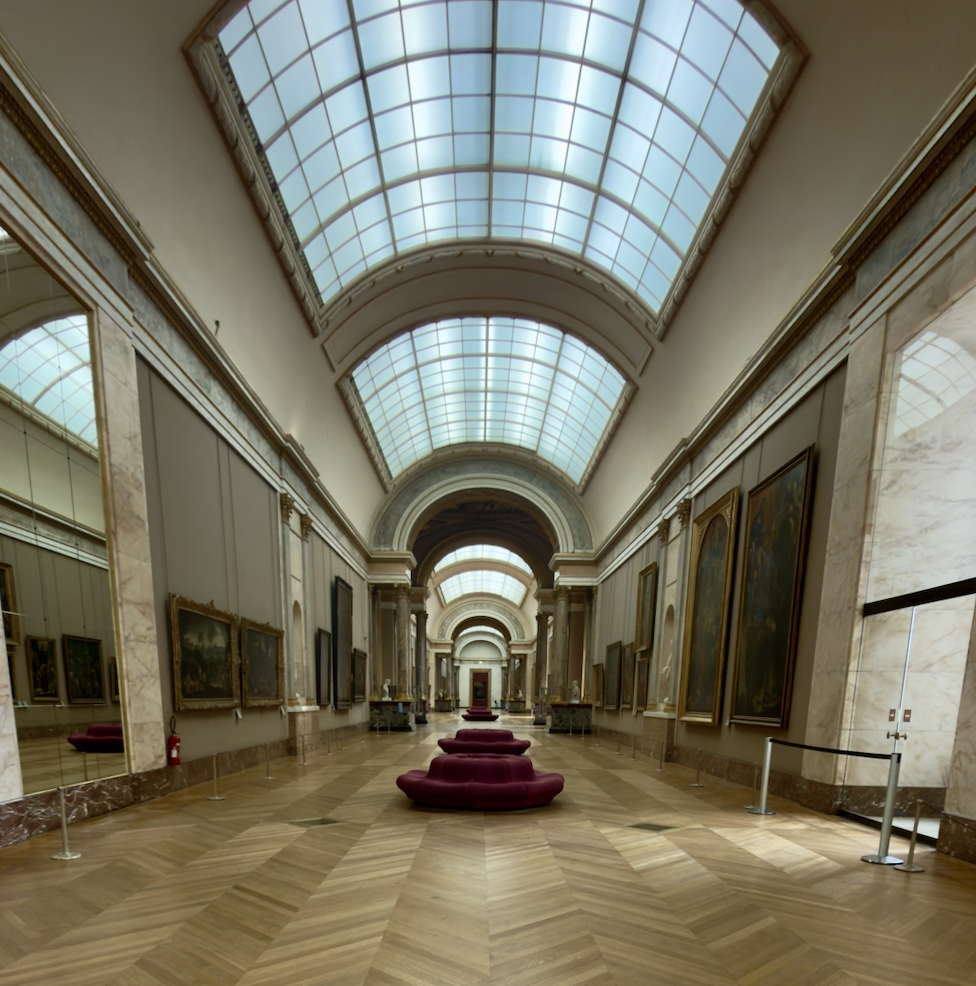
The museum had to close on April 26, 1796, when the building was falling into disrepair. It was one thing to have a public palace turning into a shrine to art; it was another to dip into the purse of the government to keep it going. Over the next five years, it would open and close many times until July 14, 1801, when it was once again fully open for everyone to visit.
As time went on, more and more art was added to the museum. The Château de Versailles held all of the art and paintings of the French school while the Louvre focused those first few years on the International school, mostly made up of Italian and Northern European artists.
In November 1800, the Musée des Antiques moved into the summer apartments of Anne of Austria below the Galerie d’Apollon and was inaugurated by Napoleon. He would, of course, rename it the Musée Napoléon during his rule and even bring the Mona Lisa to his bedroom in the Palais des Tuileries.
Today, when you visit the Louvre, the Grande Galerie is still filled with the paintings that were picked and adored by the kings of France. However, on this date, August 10, 1793, 233 years ago today, the birth of my beloved Musée du Louvre came to be, and she continues to evolve and grow.