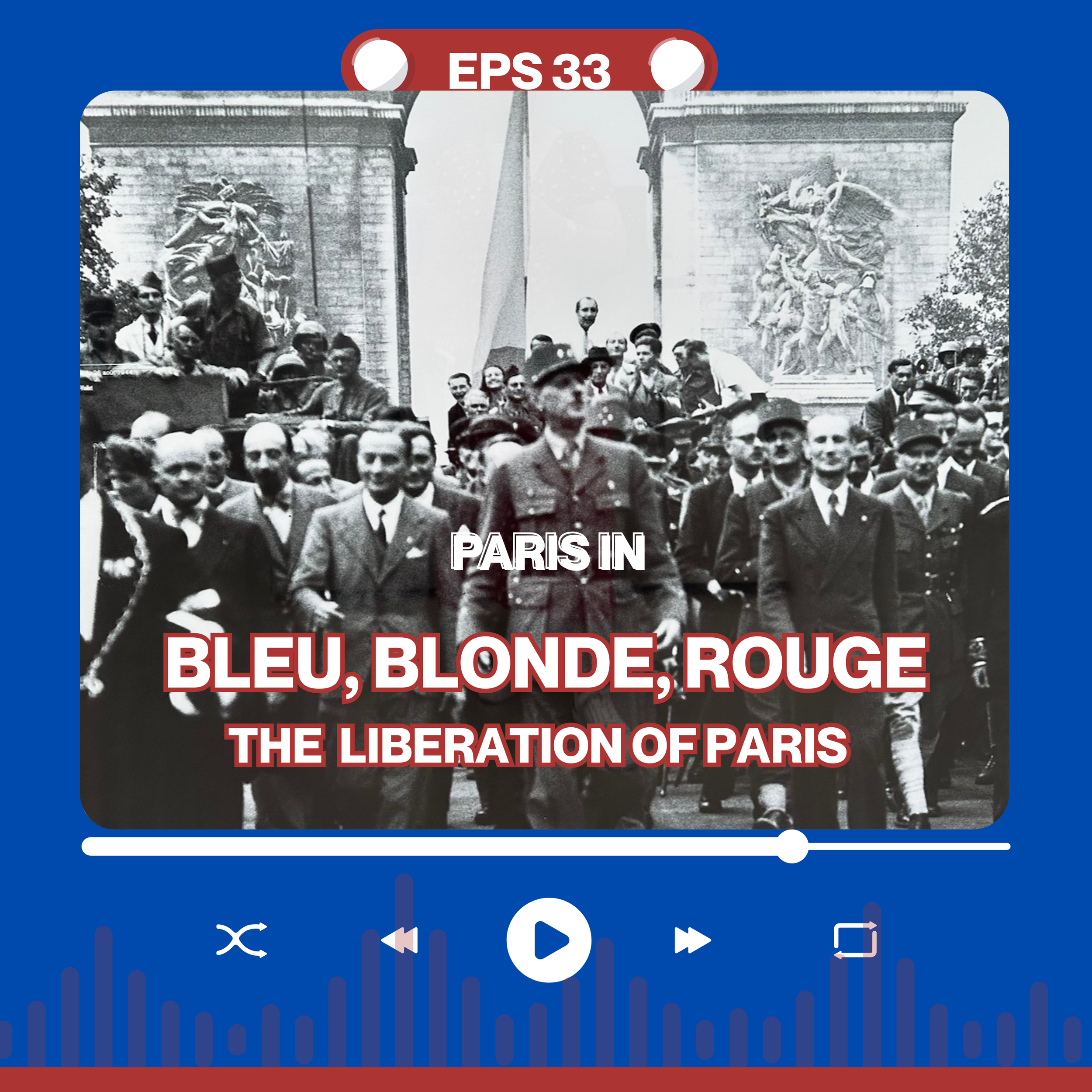
There are many events that truly altered and changed the entire trajectory of hundreds of thousands of people's lives. Every five years, we mark the rounded anniversaries of the Armistice, VE Day, D-Day, and the Liberation of Paris. While the clean numbers on the 5s and 10s look good, we should be reminded of many things every single year.
At the end of August 1944, the Parisians had had enough, and after four years of occupation, they were going to take matters into their own hands.
It all began in the most French way possible: strikes. On August 10, 1944, the SNCF metro and train workers went on strike. The trains had been an integral part of the Nazi looting of art, furniture, and the deportation of French citizens. The resistance frequently blew up train tracks and disrupted the lines as often as possible over the four years of occupation.
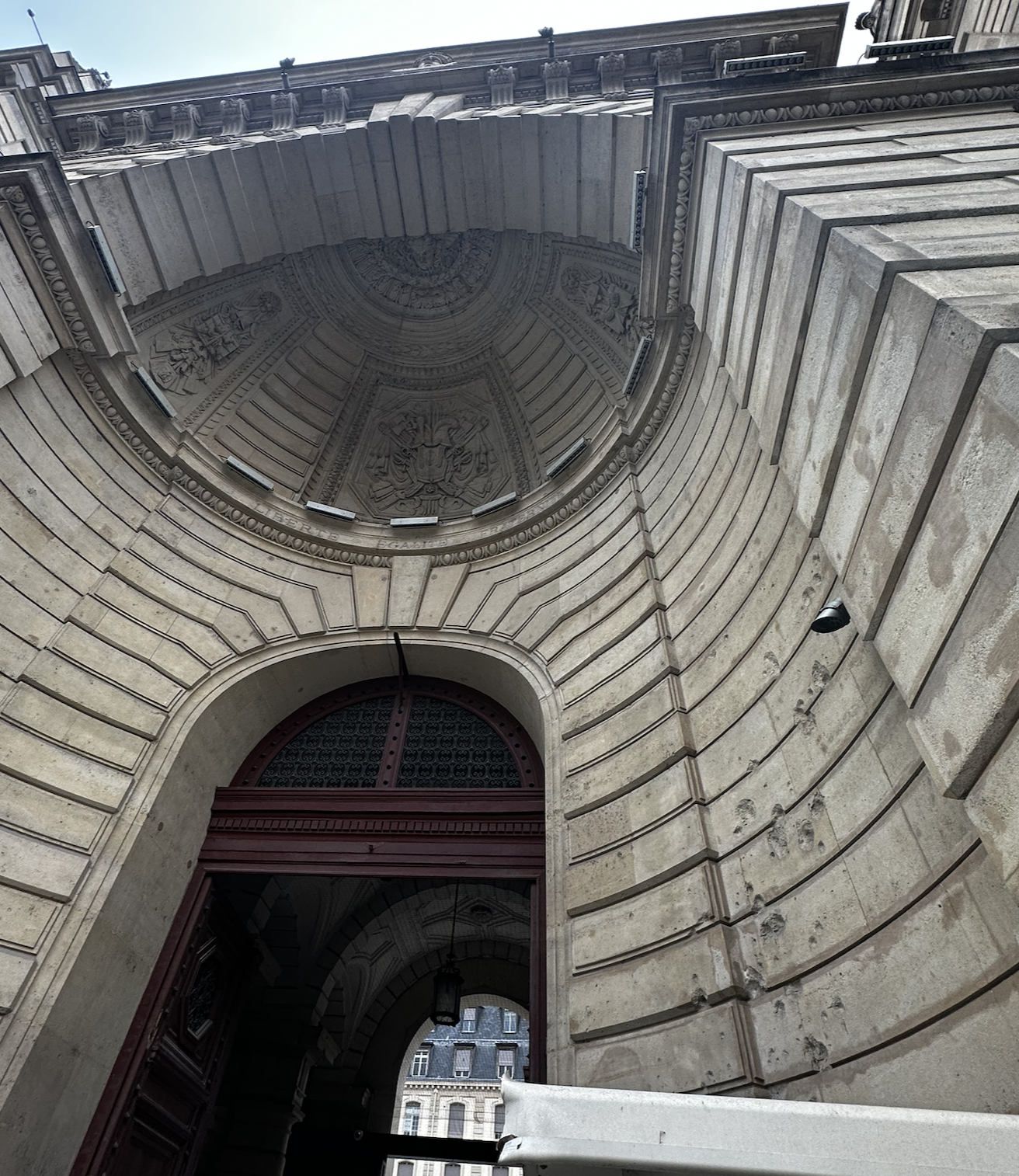
Prefecture of Paris with reminders of the Liberation
After the SNCF began to strike, the Parisian police and national Gendarmes followed on August 15. The next day, La Poste and the telegraph followed. Paris came to a grinding halt.
Since June 6 and Operation Overlord on the beaches of Normandy, there was a quiet rumble of hope that the end of the war was coming. On July 14, 1944, more than 100,000 people marched through Paris and the surrounding area. For the first time in four years, the people marked the Fête Nationale together and in public, singing La Marseillaise.
The Germans were not giving up their hold and control. On August 16, after leading Resistance fighters into a false meet up in the Bois de Boulogne, they executed all 35 members, sending a message. Although the writing was on the wall, they still managed to get the last train of deportees out of Drancy, including over 2000 people.
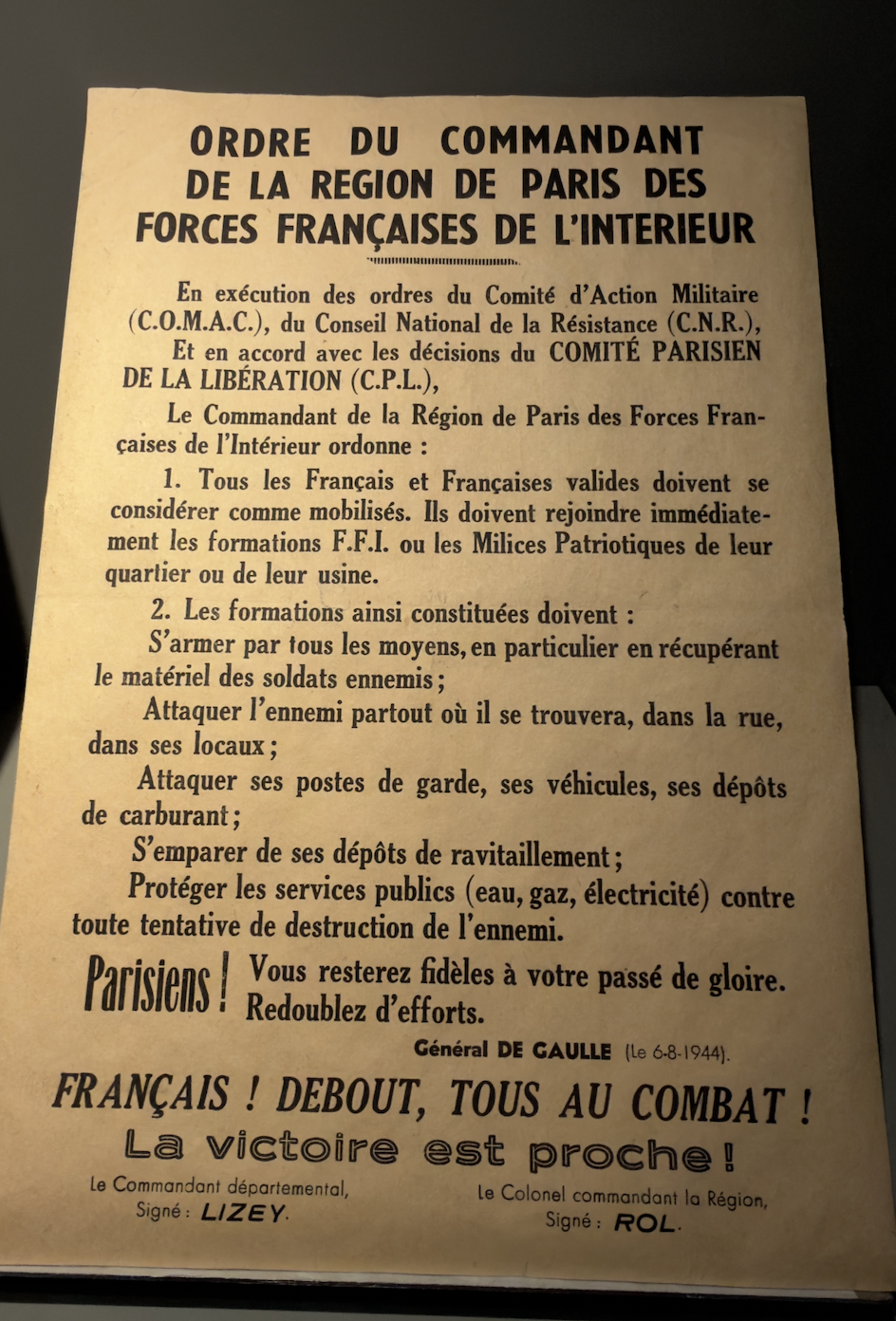
Everything changed on August 18. Colonel Henri Rol-Tanguy, head of the French Forces of the Interior, known as the FFI. With the backing of General Leclerc and General de Gaulle, Rol-Tanguy released a plea to the French people ot mobilize and revolt. In the dark of night, posters were hung on walls and published in newspapers, although the collaborationist papers declined to print them.
The order called for “all able-bodied French men aged 18 to 50, to arm themselves by all means, in particular by recovering equipment from enemy soldiers”; To “attack the enemy wherever they are in the street or in their premises, their vehicles and fuel depots.” They also needed to protect all public services from attack, such as water, gas, and electricity.
The lack of artillery was a major concern within Paris; Rol-Tanguy counted around 600 rifles up against more than 20,000 armed Germans. That wasn’t going to stop the people. Barricades were built using anything they could find, cobblestones, the heavy iron tree grates, furniture, and even cars.
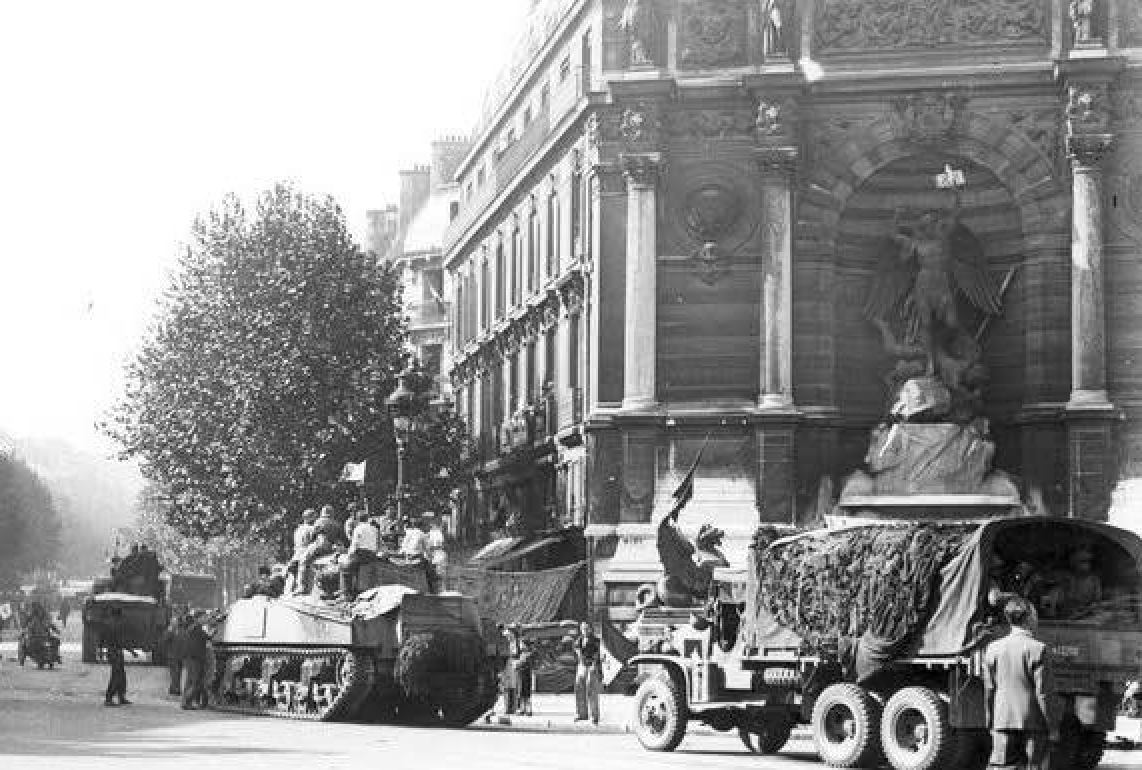
On August 19, at the Paris Prefecture in the shadows of Notre Dame de Paris, 3000 of the striking police, dressed in plain clothes, stormed the prefecture and launched the battle to liberate the capital. The FFI encircled the Prefecture with barricades built on the left and right banks. From the Square Viviani to the Fontaine Saint Michel on the left bank, to the Hotel de Ville and Place du Chatelet on the right.
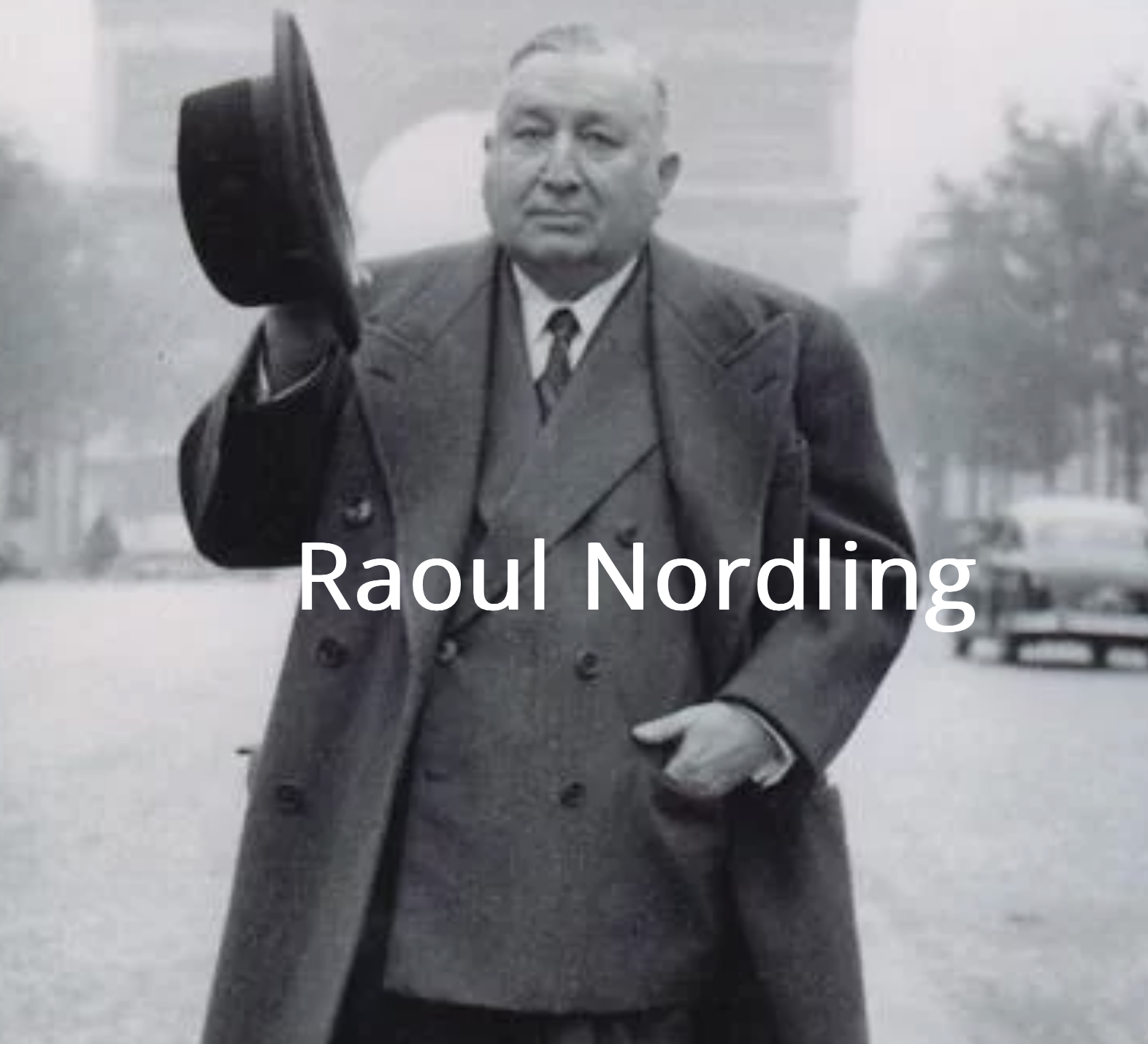
The same day, Swedish Consul General Raoul Nordling paid a visit to General Dietrich von Choltitz at the Hotel Maurice on the Rue de Rivoli. Choltitz had been appointed the General of Paris by Hitler on August 7, 1944. Nordling was born in Paris in 1882 to a Swedish father and French mother. In 1905, he was named the vice consul of Sweden and later the consul general in 1926. With a gift of diplomacy, he spoke for Sweden with the French. In the later years of WWII, Nordling was a trusted spokesperson, mediating between France and Germany. Trying to urge Goering and Vichy leader Marshal Pétain to convince Hitler to retreat after D-Day wasn’t getting anywhere
On August 17, the two would meet for the first time. Nordling was able to negotiate on behalf of the French Red Cross with Choltitz for the release of all of the prisoners in the surrounding prisons. Just 10 days after his arrival, he knew the German position was losing ground quickly. Choltitz wanted to know what he would get in return. Nordling promised they would release all German prisoners, although Choltitz had no idea it was just a handful of people. Nordling sent trusted aides to the prisons of Drancy, Compiègne and Romainville to order the release. He was too late at Compiègne; the train had already left, but would be intercepted in a few days. Nordling's efforts gave 4,231 people their freedom from the Germans.
On August 19, in the hours after the FFI took control of the prefecture, the inevitable couldn’t be avoided much longer. Georges Bidault and Alexandre Parodi, leaders of the National Council of the Resistance, wanted to negotiate a ceasefire with Choltitz. The FFI were unwilling to deal and wanted to keep the fight going. They had brought the Germans to their knees on their own before either army arrived.
Nordling, within a few short days, had proven to be the Choltitz whisperer and asked again to pull off the ultimate win. Representatives from all sides gathered at the Hotel de Ville in central Paris, recently restored to the French. Nordling negotiated between all the parties and by noon had an agreement.
The ceasefire was to start on August 20 at 3:30 pm and was announced over loudspeakers across Paris. Although many on both sides chose to ignore it and kept fighting. Rol-Tangy, leader of the FFI, said as long as the Germans are in Paris, we will keep on fighting.
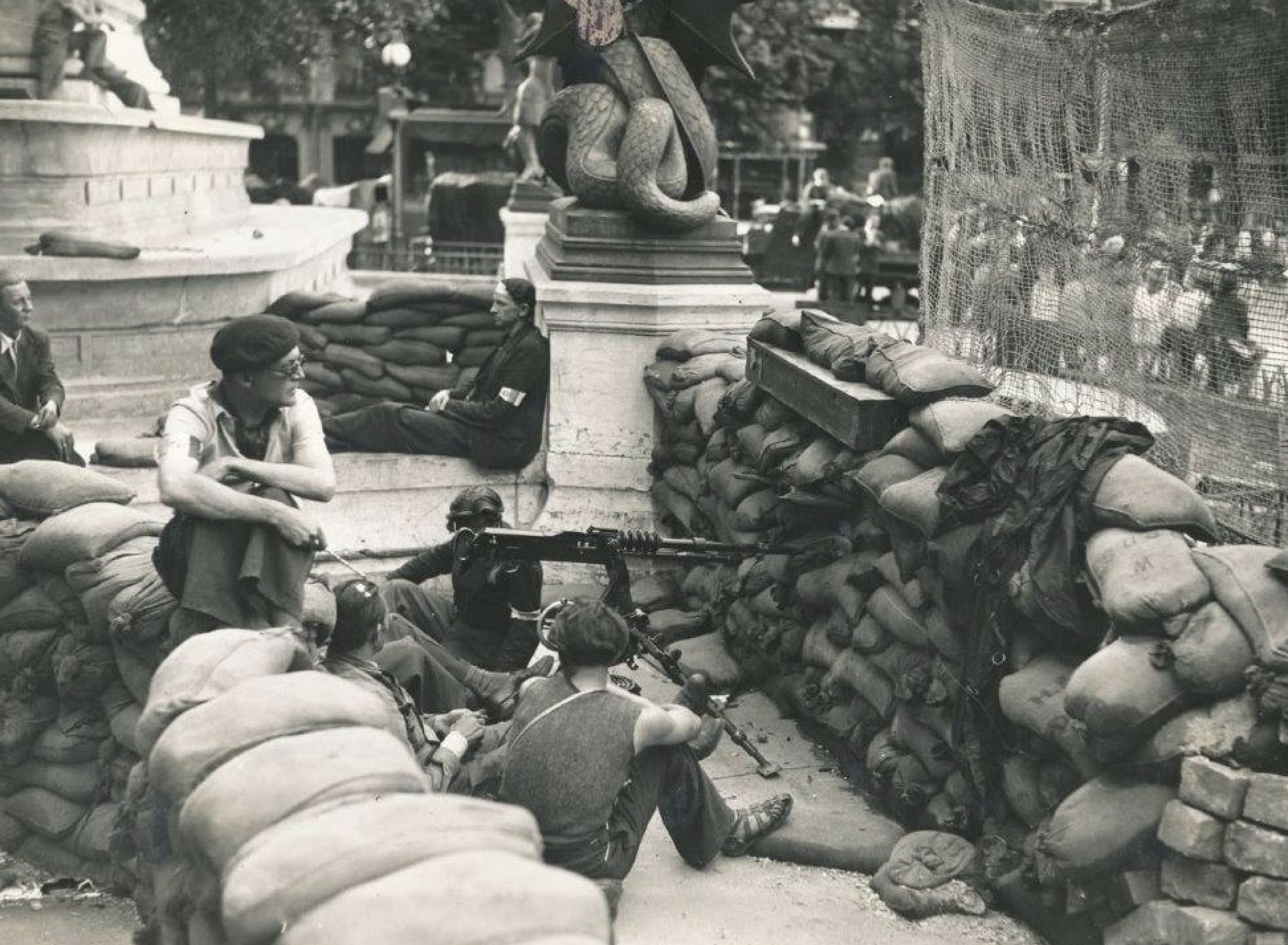
As the uprising poured into the streets, German soldiers with white flags on their cars drove up to the barricades at the corner of the Square Viviani, opposite Notre Dame, and began to shoot and kill anyone they came across. With the reports of arrests of Nazi soldiers on the horizon, they weren’t going down without a fight.
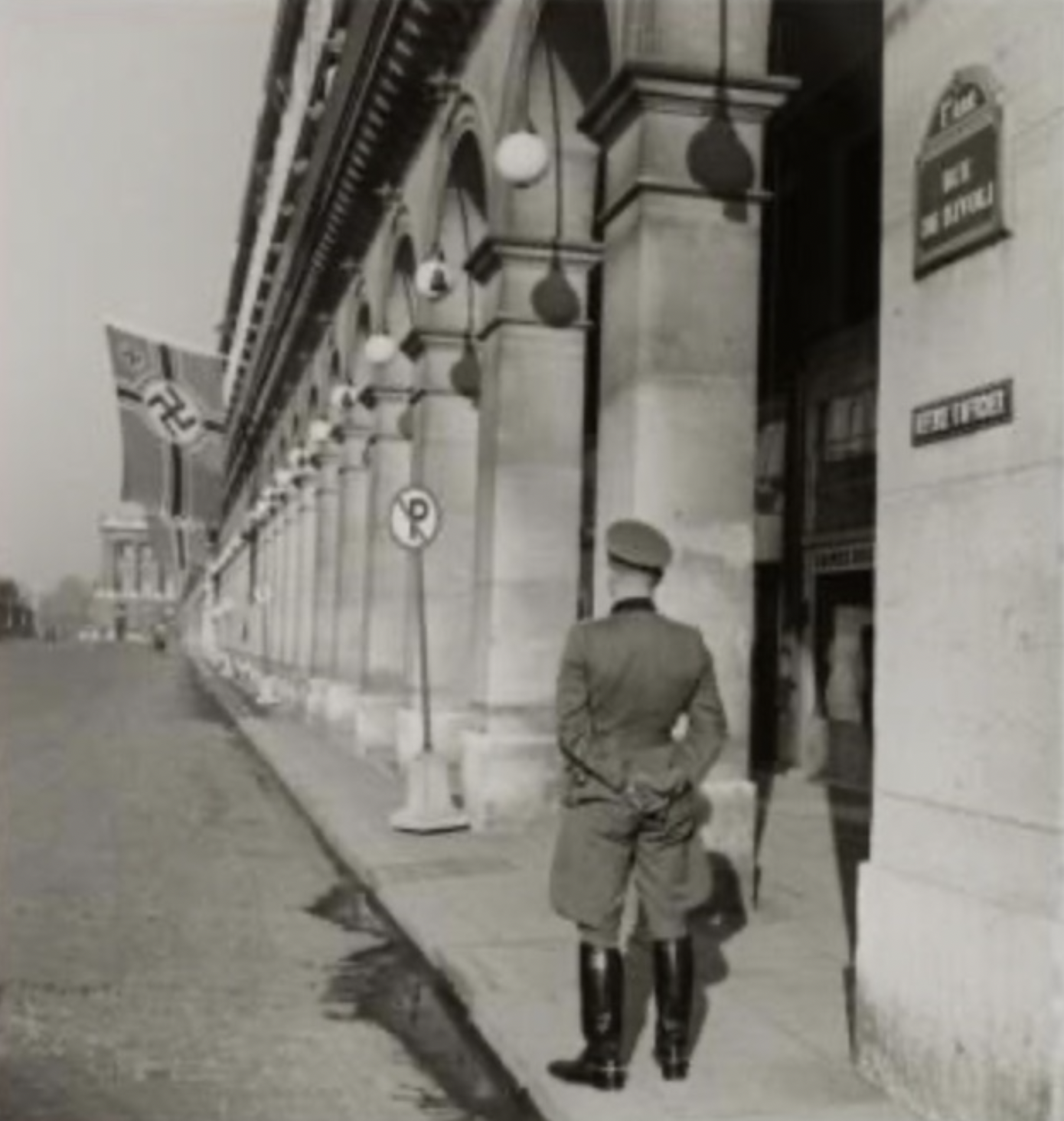
At the same time, German soldiers had been spending the last few weeks attaching explosives to the many monuments and all the bridges in central Paris. Three tons were brought to Notre Dame, two tons to Les Invalides, and another two at the Arc de Triomphe, all from the direct order of Hitler. Hitler gave the order to destroy Paris: “Paris must not pass into the Allies' hands except as a field of ruins”.
General Charles de Gaulle returned to France on August 20, landing in Cherbourg at 8 am and heading straight to meet with General Eisenhower. Ike wanted to avoid Paris as he didn’t see it as a priority, and taking the Germans in the city would be a logistical nightmare. At Ike’s headquarters in Tournières, just outside of Bayeux, De Gaulle met with Ike to try to convince him. General Leclerc arrived earlier and started the ball rolling, and Ike would not budge.
On August 21, De Gaulle wrote up another plan and sent in an admired general to hand deliver the proposal. General Koenig successfully led the campaign in Bir Hakeim. Over the next 24 hours, the news from Paris and the FFI capture and control of many of the streets and former Nazi strongholds, as well as the likely surrender of Choltitz, convinced Ike they just might head to Paris after all.
On August 22 at 2 pm, it was agreed between Ike and De Gaulle that General Leclerc’s 2nd Armored Division of the French army, along with the American 4th Infantry, would make their way to Paris.
Just after 6 am, before the sun rose on August 23, the 2nd Armored Division, which included more than 16,000 soldiers, set off from Rambouillet, 48 kilometers SW of Paris. With 200 tanks and 370 cannons towed to Paris, the drive took nearly a full day. The American forces of 14,000 soldiers included 30 tanks and 350 cannons and one American writer, more on that in a minute.
On August 24 at 8 pm, before the French and Americans arrived at the capital, a group of Spanish fighters known as “La Nueve” reached the cobblestones first. A part of Leclerc’s 2nd Armored Division made up of 208 Spanish Republican and French soldiers. By 9:22 pm, the group arrived at Hotel de Ville to great applause. Led by Lieutenant Armando Granell, who would also be a part of the downfall of Choltitz the next day.
It was on the 24th that for the first time since the war and occupation, the bells of the churches of Paris began to ring. At 10:10 pm, Emmanuel, the largest and oldest bell of Notre Dame, rang out for the first time, followed by the bells of Saint Sulpice, Saint Germain des Prés and on and on and on. People in the street sang La Marseillaise and screamed Vive la France, although the Germans and armed militia still stood their ground in Paris.
As the French and American soldiers traveled to Paris, every town and road they passed through was lined with thousands of thankful French citizens. Open jeeps were filled with bottles of wine, champagne, and beer, so much so that once they entered Paris, they were handing it out to anyone who approached. At 7:45 am on the morning of August 25, in southern Paris, the 2DB arrived. Coming through the Porte d’Orléans and Port de Gentilly. In Paris, the FFI now numbered 20,000, as did the police and security forces. Later that evening, the British Army and American 4th Infantry arrived. The 17,000 German soldiers that remained were highly outnumbered.
By August 25, the tide had turned. The arrival of the French, British, and American armies was more of a parade than a way to bring the Germans to their knees. The FFI had already done that.
Around 1 pm, FFI soldiers and Henri Karcher of De Gaulle’s army entered the Maurice on the Rue de Rivoli and demanded to see Choltitz. Threatened that he would be tried as a war criminal, he was taken into custody. At the prefecture on the Ile de la Cité where the FFI first rose up just six days before, Choltitz signed his surrender at 2:45 pm.
At 5 pm at Gare Montparnasse, with General Leclerc and General de Gaulle, Choltitz ended the occupation by surrendering the German army. Choltitz would be sent to London with other high-ranking German officers while many others were rounded up, arrested, and held outside in the Salon Carrée of the Louvre.
At 7:30 pm in front of the Hotel de Ville, Charles de Gaulle would make a speech that would follow him the rest of his life and be immortalized in stone and bronze.
"Paris! Paris outraged! Paris broken! Paris martyred! But Paris liberated! "
That night, Paris was filled with an energy few had felt in over four years. But the war wasn’t over, and there were still the last German holdouts, and the militia was growing. During the war, the militia, known as Milice and created in 1943, was made up of soldiers and devotees of the fascist Vichy regime. Given carte blanche to detain and deport Jews and others they felt were unworthy of remaining in France with the Nazi ideals. They were given incentives to join and appealed to angry men who also needed money.
Led by former French WWI war hero Joseph Darnand, who became an SS officer and pledged his allegiance to Hitler, he was told "to create special courts martial to try on the spot" persons caught in violent acts against the state. The law was "without precedent in modern French legal history."
By the end of the war, others joined in the Militia, including Japanese, Americans, Germans, and many other angry men and women who hid behind masks.
Durnand was arrested in Italy by the British in July 1945 and later tried and executed for his collaboration.
(History, you can’t make this up)
In the final days of the Liberation, the Militia joined the remaining Germans in a fight to the death. There was one man who took on the Militia in Paris.
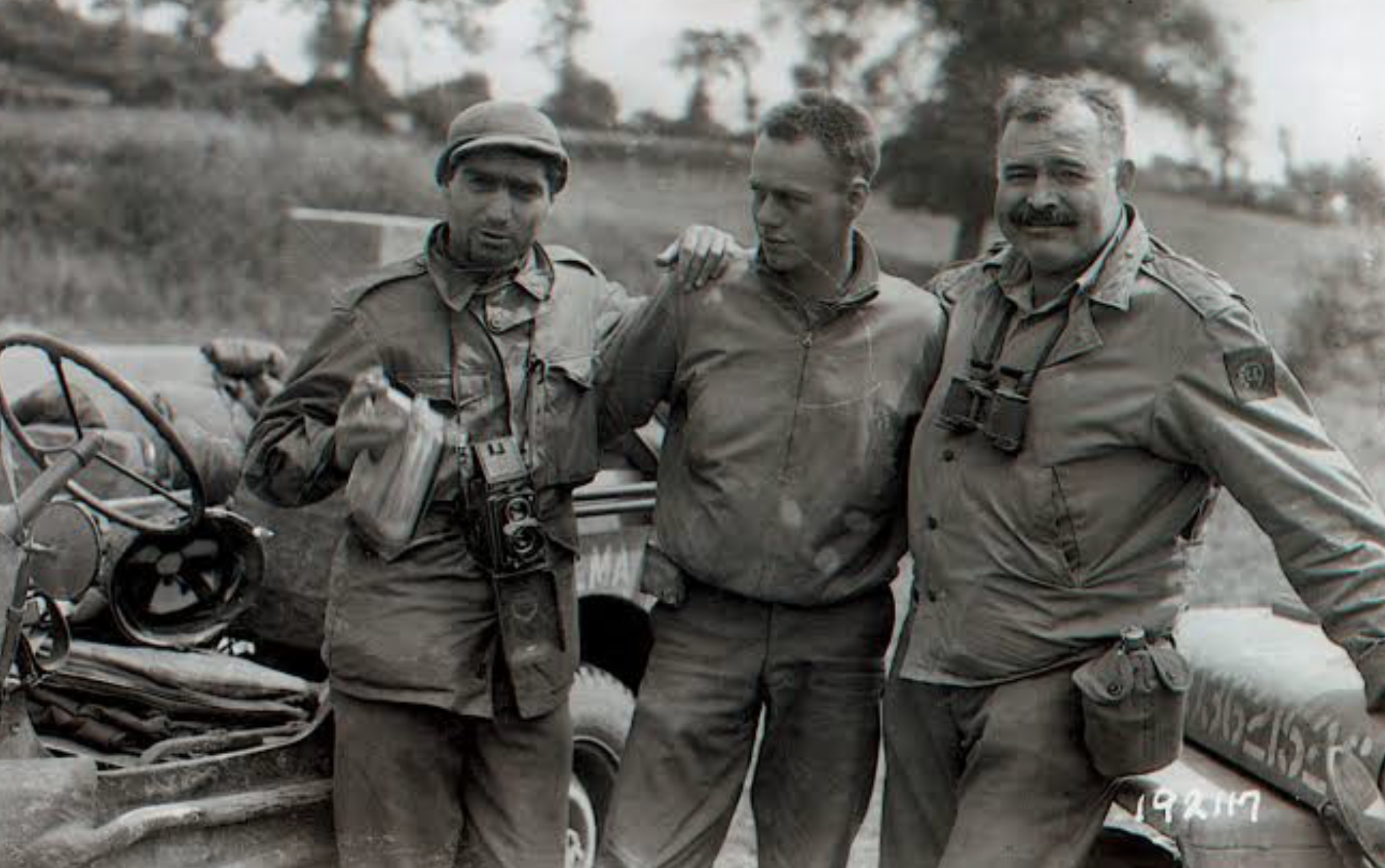
Ernest Hemingway was staying in the city of Rambouillet, with his makeshift troop of men composed of Americans and FFI soldiers. As the days to the Liberation of Paris got closer, he wanted to head back to the center of the action and celebration. A convoy of soldiers, including Hem, headed towards the City of Light.
Just after Noon, Hemingway and his band of men crossed into Paris over the Seine at the Pont de Sèvres. It was August 25. 1944, and the drive into the city was filled with people standing along the road, cheering the soldiers as they passed by. His first stop was to see a dear friend, Sylvia Beach. Living at 18 Rue de l’Odeon, Hemingway came barreling down the street, yelling out her name. Sylvia ran down the street, brought her dear friend upstairs to the 4th floor, and wondered what he could do for her. Sylvia and Adrienne asked him if he could remove the Germans & militia still firing from the roofs of the Odeon. Hemingway returned to his liberated Mercedes, grabbed some men and guns, and returned to the roof of her building. Gunfire was heard for a few minutes, then total silence; Odeon was liberated, and the nightmare was over.
The story of where he went next is a story many “think” they know.
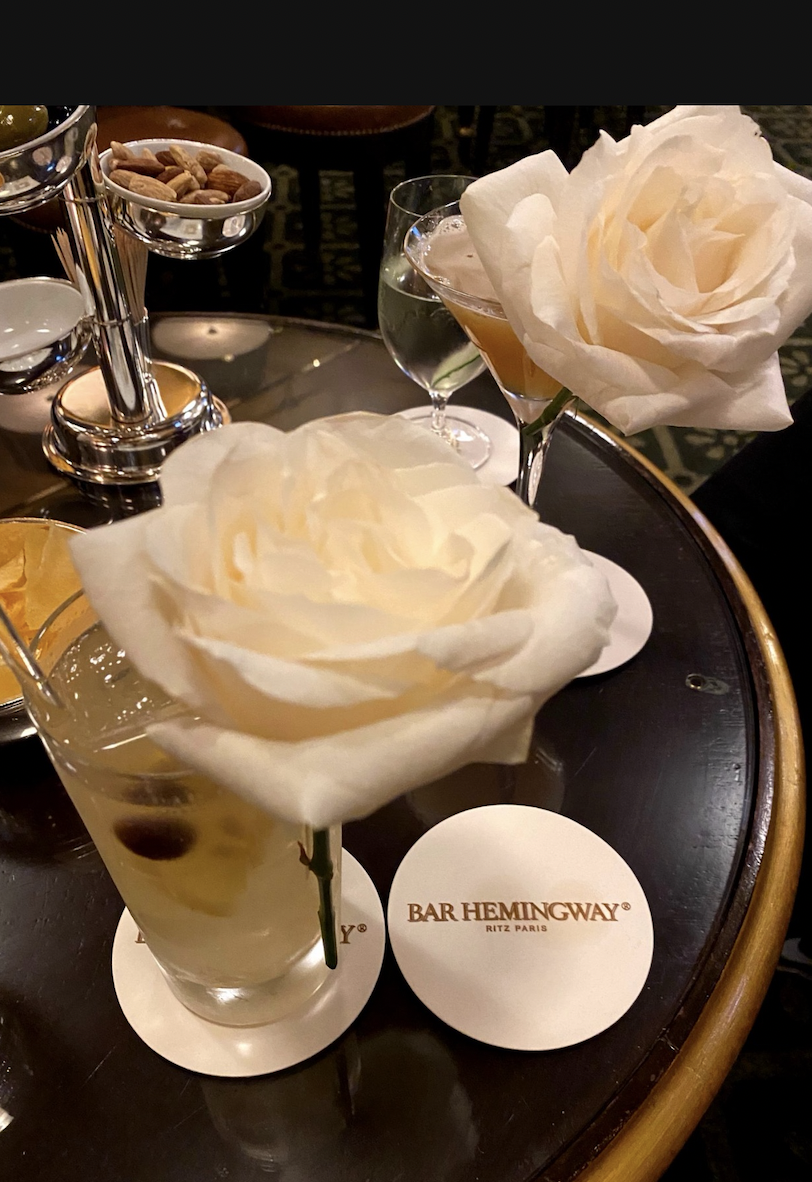
As the story goes, Hem wanted to be the first American to liberate the Ritz. He pushed his way to get an audience with General Leclerc to ask for men and weapons. Leclerc told him to “buzz off,” but he wasn’t to be deterred. With his driver, Sergeant Red Pelky, and a handful of soldiers and journalists, they swung into the door of the Ritz. With machine guns in hand, he saw manager Claude Auzello and asked where the Germans were. “Monsieur, they left long ago”. He invited them in but had to leave the machine guns in the Mercedes.
Hem and his men marched into the Ritz Bar and instructed the barman to make them the Montgomery Martini: 17 parts Gin, 1 part Vermouth, which is how British Marshal Montgomery liked to face his Germans: 17 men to 1 German. Everyone, including the Ritz, says Hem himself drank 51 of these alone. In fact, his entire party drank them together. The Bar Hemingway was named in 1994 in the former ladies’ bar space. The bar where he drank these martinis is now the Ritz patisserie.
A few years ago, I found a website dedicated to capturing the stories of those who lived through the WWII occupation in Paris and the small towns of France. As the Greatest Generation disappears, it's more important to inscribe these recollections before they are lost forever.
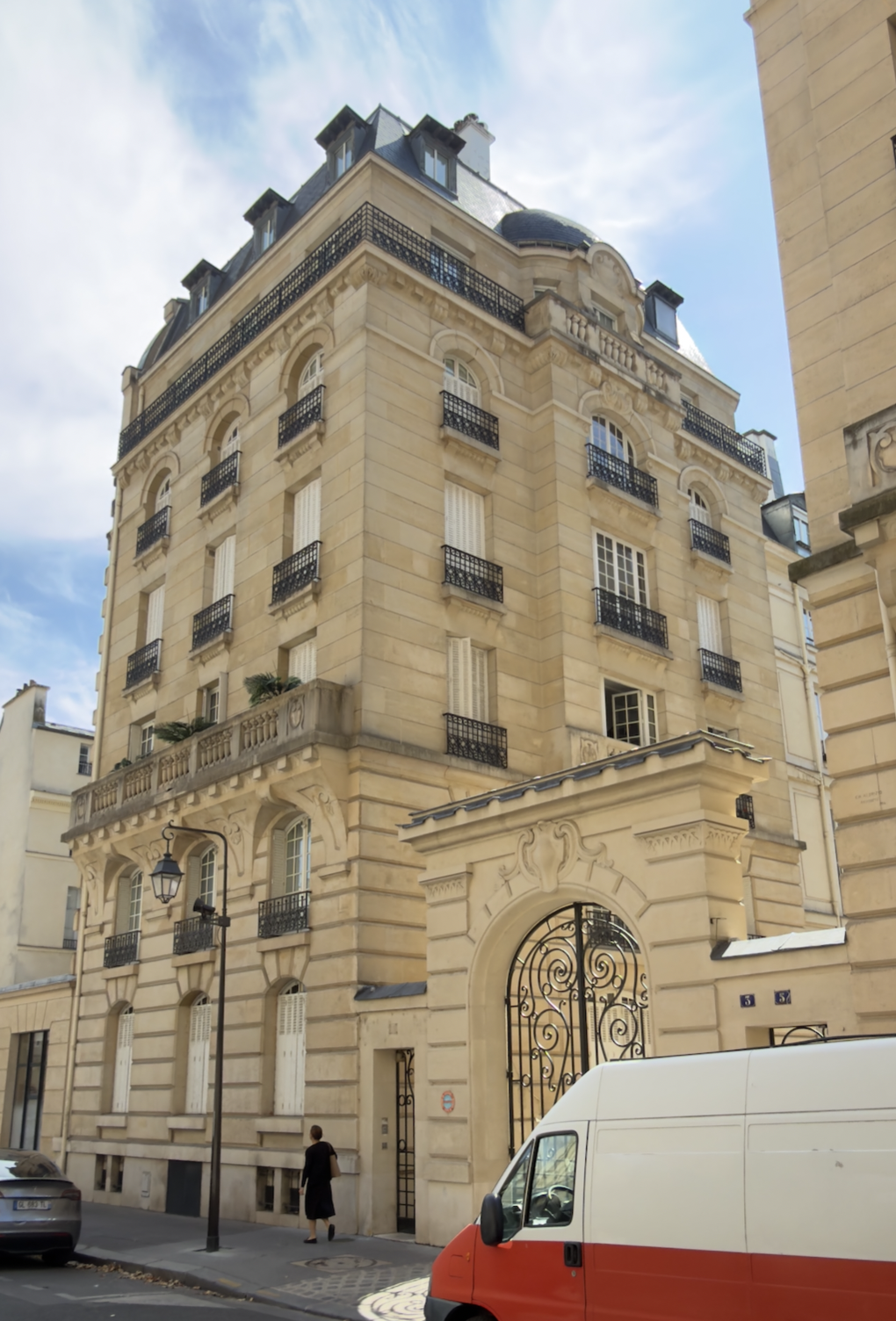
3 Rue Palatine
One I uncovered I have never forgotten. André Auvinet was a 56-year-old lawyer for SNCF and lived at no 3 rue Palatine across the street from the south side of the Église Saint Sulpice. Auvinet kept a detailed account noting the days leading up to August 26, specifically in his Saint Germain des Prés neighborhood.
Each morning, he walked with his colleague Tricot down the Rue de Seine to the Pont des Arts. On August 19, he noted that the air in Paris had changed. What had once been calm and quiet, with people hiding in their homes, now carried a bit of agitation. A young girl they passed in the street told them she just saw German soldiers machine-gun a crowd of people on the Rue de Bac.
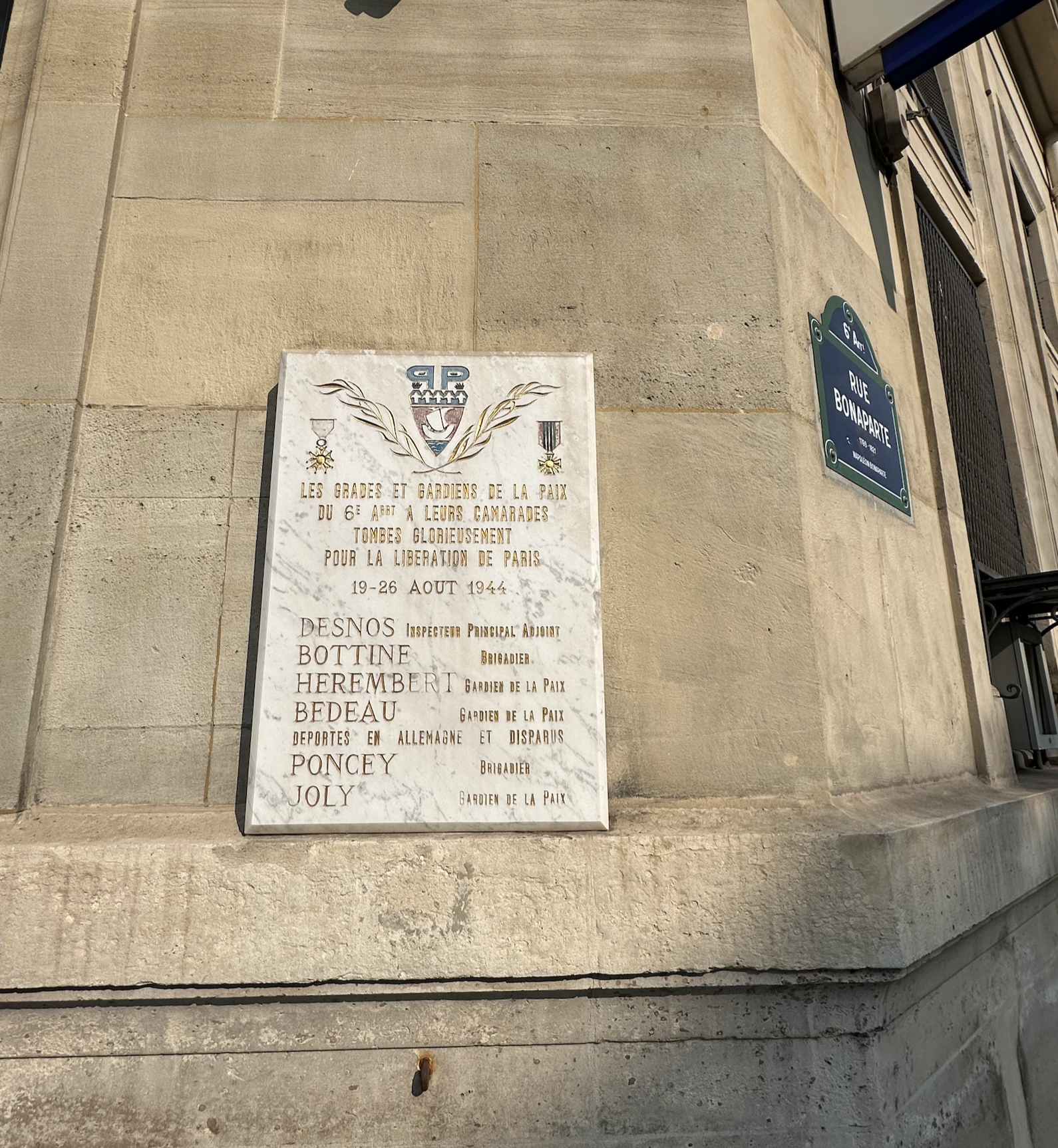
On August 20, Auvinet saw posters calling for French aged 18 to 50 to grab arms and join the fight to take back Paris. At the same time, another mass shooting occurred on the corner of Rue Vaugirard with the Germans on the roof of the Senate. The truce was in place, but they didn’t care. The shots continued in front of the Eglise Saint Germain des Prés up Rue Bonaparte to the Place Saint Sulpice.
On August 21, the FFI began to outnumber the Germans, but the gunfire increased. People sheltered in the dark corners of their homes as the Germans and militia could be seen on the roofs running from building to building. On August 22, French tanks increased their presence on the Boulevard Saint Germain and Boulevard Saint Michel where the barricades were built.
On August 23, Auvenet noted “Roof shooters out our window for the 4th night. They were Germans dressed in civilian clothes with women and Asisans of the Darnand Militia”. The French papers began to publish again on this day, adding a return to normalcy.
August 24, Auvinet and his wife have dinner, then begin to hear cries and screaming in the street. This time it wasn’t out of fear, a sound they hadn’t heard in a very long time. People in droves were heading to the Hotel de Ville to see General Leclerc. At 10:10 pm they heard the bells of Notre Dame followed by the bells of Saint Sulpice just out their window.
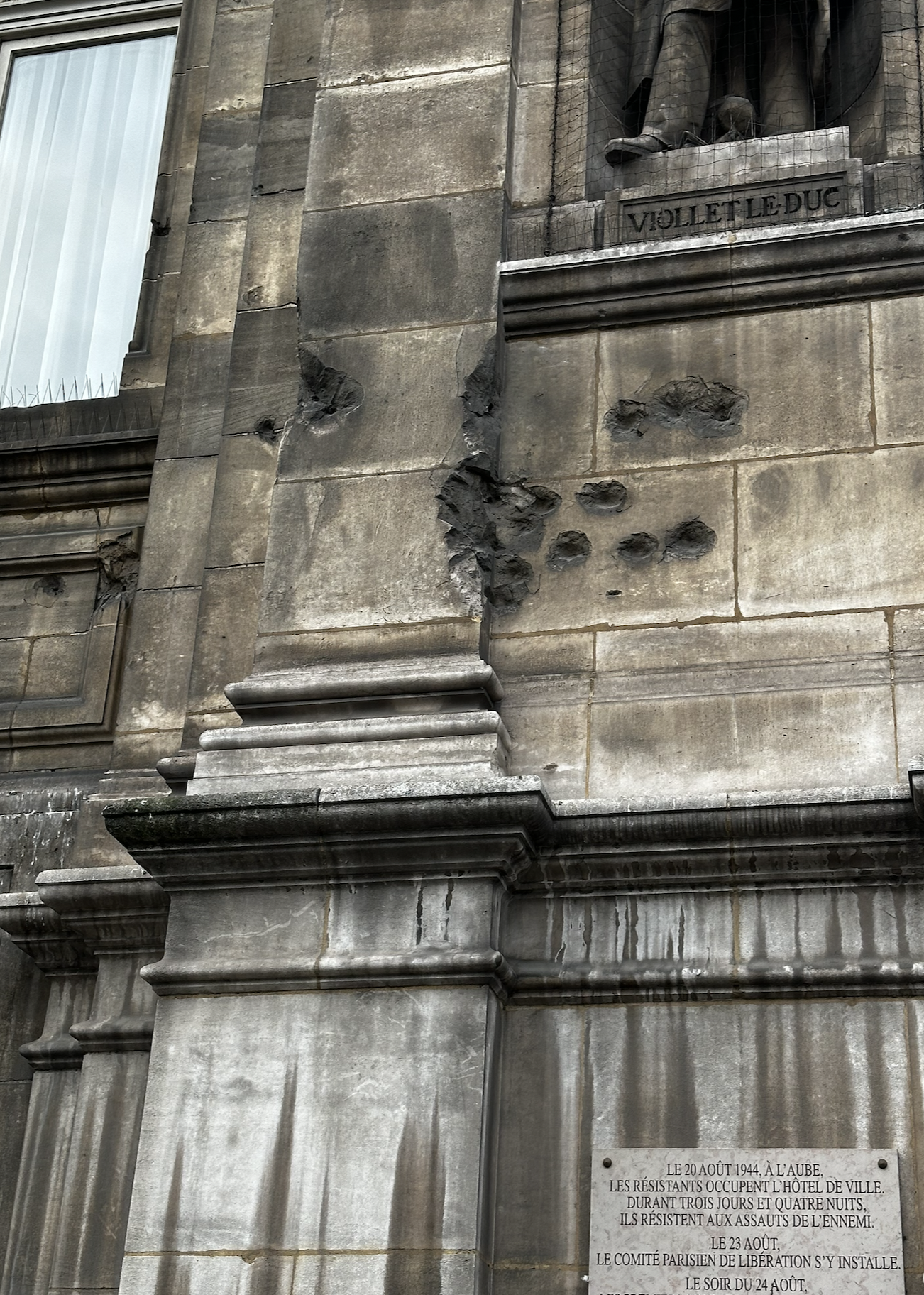
August 25, “tanks of Leclerc roll through the Rue de Four and Rue du Buci. A walk through the neighborhood that evening, André found the markings of the gunfire along the buildings on Rue Bonaparte, Rue de Fleurs, and one of the worst on the Rue Auguste Comte along the walls of the Lyceé Montaigne. These reminders all remain to this day all over Paris, but especially in the 5th, 6th and the Ile de la Cité.
On the very early morning of August 26, André and his family left at 3 am to walk to the Avenue de Champs-Élysées to join in the parade led by Charles de Gaulle.
There isn’t a day I walk through the same streets Auvinet mentioned and don't think about his words.
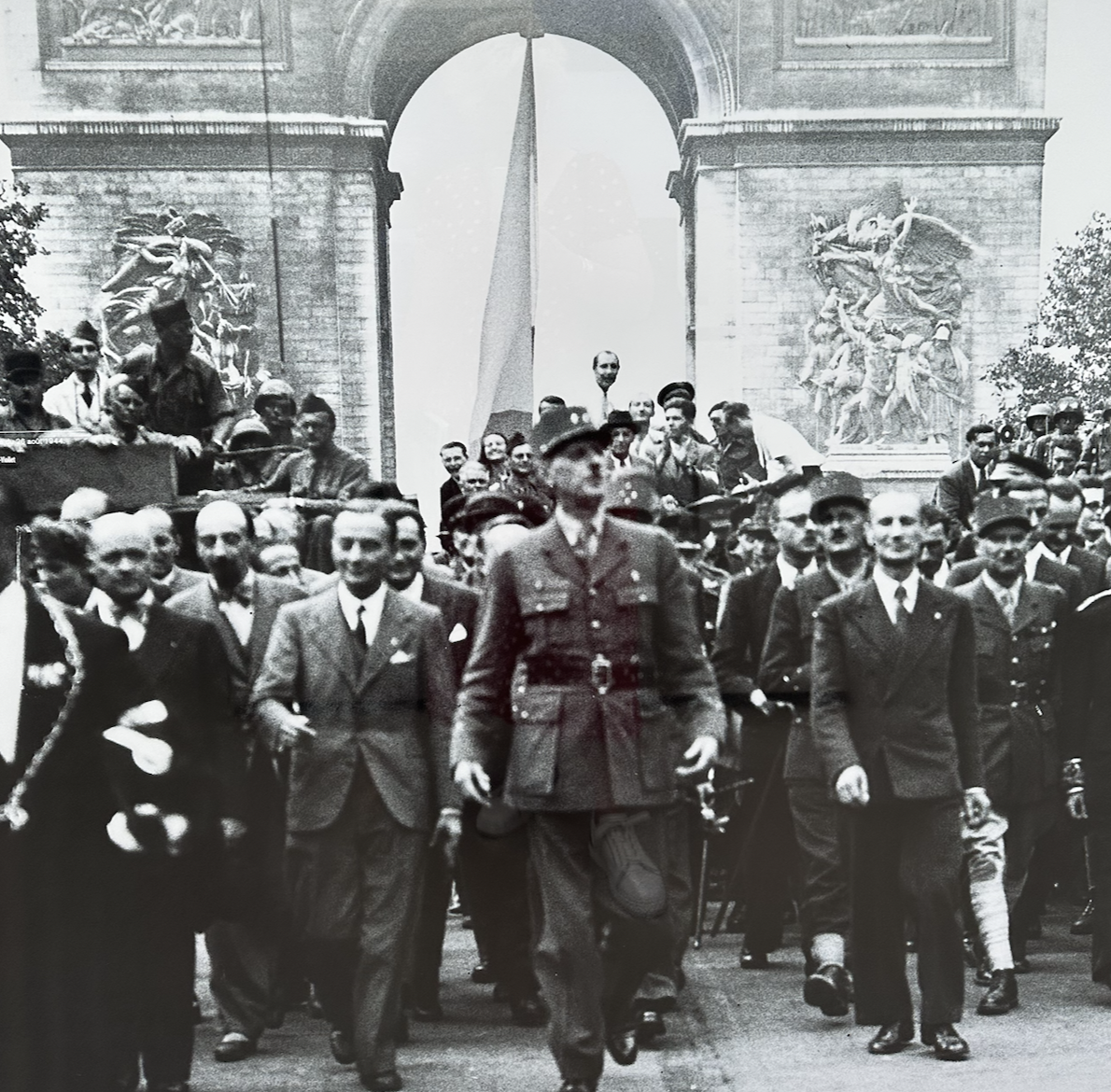
On August 26, Paris celebrated the final defeat of the Germans and the end of the Occupation of their city. WWII in Europe would end on May 8, 1945, but on this August day 86 years ago, they celebrated.
At 3 pm, De Gaulle arrived at the top of the Champs-Élysées. Laying a wreath at the tomb of the unknown soldier and took a brief moment. Shortly after, alongside General Leclerc and other members of the Free French and resistance, he took his tall 6.5-foot stature and strolled down the Champs-Élysées towards Notre Dame.
Over two million people lined the avenue and the Place de la Concorde. The city may have been liberated, but the German snipers still fired down into the crowd, killing 582 people in the days of the liberation.
Arriving at Notre Dame, De Gaulle carried on unfazed by the German gunfire. Inside the cathedral, the crowd sang Te Deum as they hid under their hymnals as Germans shot at them inside the church.
Today at the edge of the Champ Élysées, a tall statue of De Gaulle in a perfect depiction of his wide gate looks ahead. Created by J. Cardot, it was inaugurated on November 9, 2000, the 30th anniversary of his death. Before his death, he expressed his wish that no monuments be dedicated to him. His son later agreed that they should have at least one marking the great man at a very heroic and monumental moment. On the side emblazoned in bronze are his words of Augst 24,
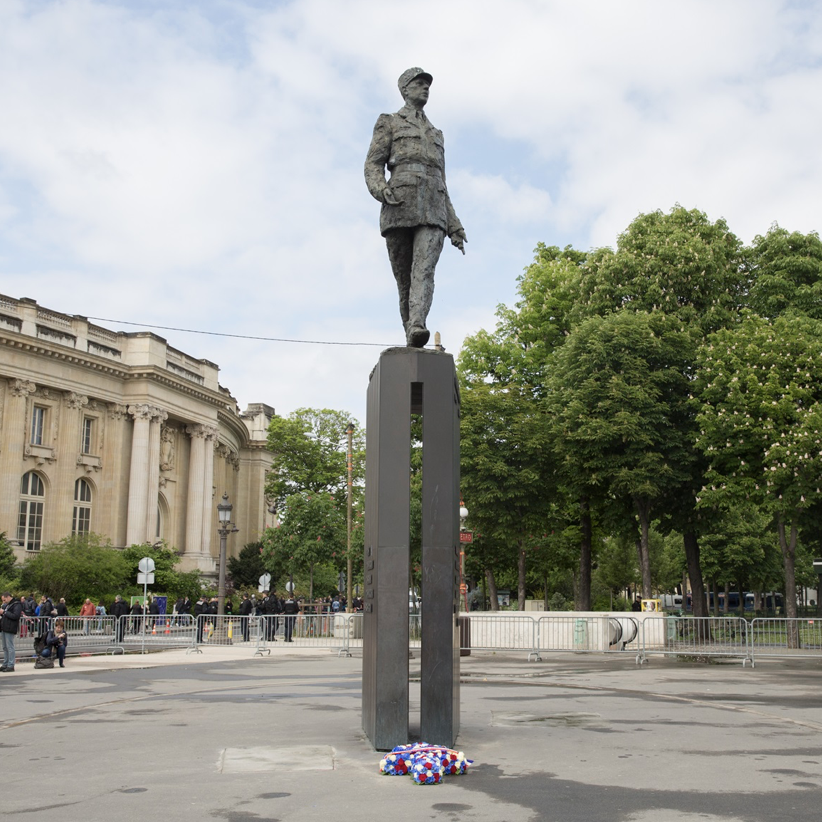
"Paris, Paris outragé, Paris brisé, Paris martyrisé, mais Paris libéré."
Around, Paris, over 2,000 plaques are scattered throughout Paris today, and everyone has a story. Below each plaque is a small ring on which the city places a bouquet each year on the anniversary of the Liberation
Paris did not waste any time installing the plaques, and they began to appear as soon as October 1944. Placed on buildings and in parks, family members left flowers and inscribed the walls with memories of those they lost.
Georges Bailly, a student at the age of 24; Michel Mouchet, a member of the Sapeurs-Pompiers; Jean-Claude Touche, age 18; and Madeleine Brinet, a nurse, and so many more all died for France on August 25, 1944. When you come across these plaques in Paris, stop and take a minute to look at them. The pleasure of strolling the streets of Paris is partly due to their sacrifice.
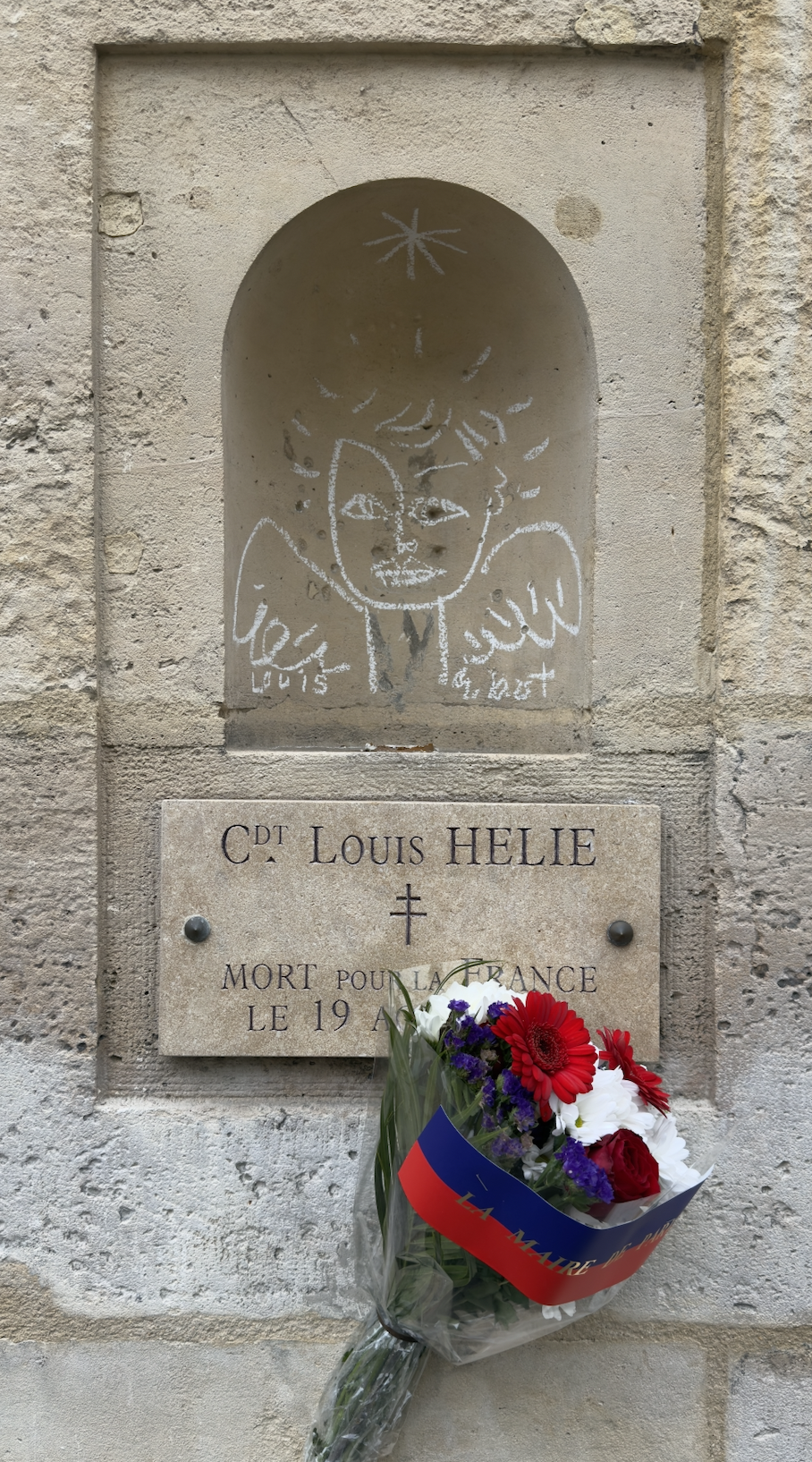
On the Rue de Seine, on the wall of the Institut de France, is a small niche with a plaque for Commander Louis Helie, killed on this spot on August 19. The 55-year-old resistance fighter survived being captured by the Germans in WWI and fought against them. The niche also holds one of my favorite drawings of a guardian angel by John Charles de Castelbajac.
During WWII many women stood up to fight for France in any way they could and for many years they were left off from the pages of history.
Marie Madeleine Fourcade, born November 8, 1909, followed the path of most young girls. She attended the Couvent des Oiseaux, where all good girls went to become the perfect wife. At 18, she married Colonel Méric, and five children quickly followed. Being a wife and mother was not all she hoped and dreamed it would be, so she became a journalist at first for the Vichy papers. When she realized what was truly behind the far-right movement, she moved into the Resistance.
In 1939 she met George Loustaunau-Lacau, a high-ranking official and friend of Charles De Gaulle, and became his chief of staff of the Alliance Resistance. By 1940, they had to go underground. Marie would become the head of the Alliance and recruited over 1500 people to serve in the network as pilots, couriers, and radio operators. Known as Hedgehog, she was fearless and faced death every day. When the Germans figured out who she was and found her in a chateau and arrived to arrest her, she convinced them she needed to take a bath first. When the officers went outside to smoke, she slipped out the door and made her way to Lyon.
Arrested in November 1942, she was able to escape on the way to the Castres prison thanks to a few compliant officers. With each attack on the Alliance, she would constantly rebuild the network time after time. Highly decorated after the war, she would live a long life until 1989.
Cécile-Rol-Tanguy was born on April 10, 1919, in Royan to activist parents. At the start of WWII, she was a “godmother of war,” essentially a pen pal, to a young soldier named Henri Tanguy. The two finally met face-to-face and were married on April 19, 1939. In 1940, they moved to Paris and began working underground for the Resistance. She strolled through checkpoints with her baby stroller, which could be filled with guns, money, and grenades. After changing her name and papers, she stayed one step ahead of the Germans.
When the war ended, and de Gaulle arrived in Paris and marched down the Champs Élysées, he held a reception in the Hotel de Ville. Cécile was the only woman in attendance, and this was only because of her husband. After WWII, she became a Friend of the Fighting Spanish, and when François Hollande wanted to award her for her bravery, she initially declined. Eventually, she decided she would accept it but only on behalf of the women who had fought in the resistance.
After the war, she and Henri continued their commitment to fighting fascism. With her daughter, she led Les Amis des combattants de l'Espagne république and lived to the age of 101.
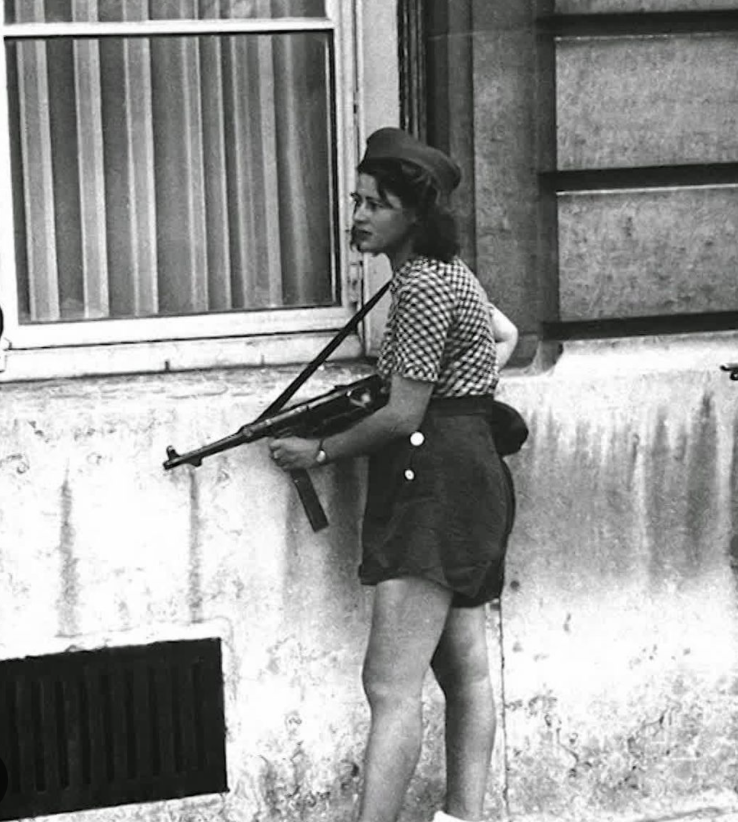
Simone Segouin could be the most recognized of the ladies of the Resistance. Her father worked in the Resistance and in the local government. She was just 16 years old and dared to blow up bridges, lay traps, and damage German held villages. In Chartres, she stole a bicycle, repainted it, and spent a year riding all over the Loire delivering messages. On August 23, 1944, she took part in the Liberation of Chartres and two days later arrived in Paris for the big fight, the Liberation of Paris. Her most famous image was shot on the streets of Paris. A young girl standing against a wall holding a large German machine gun taken from a soldier.
Photographer Jack Belden captured this moment on film, and it was featured in Life Magazine, making it the most famous image of the Resistance. After the war, she became a nurse, had six children, and never married. When she was offered the Legion of Honor award, she initially refused it, but accepted it in 2021. Simone lived to be 97 years old on February 21, 2023
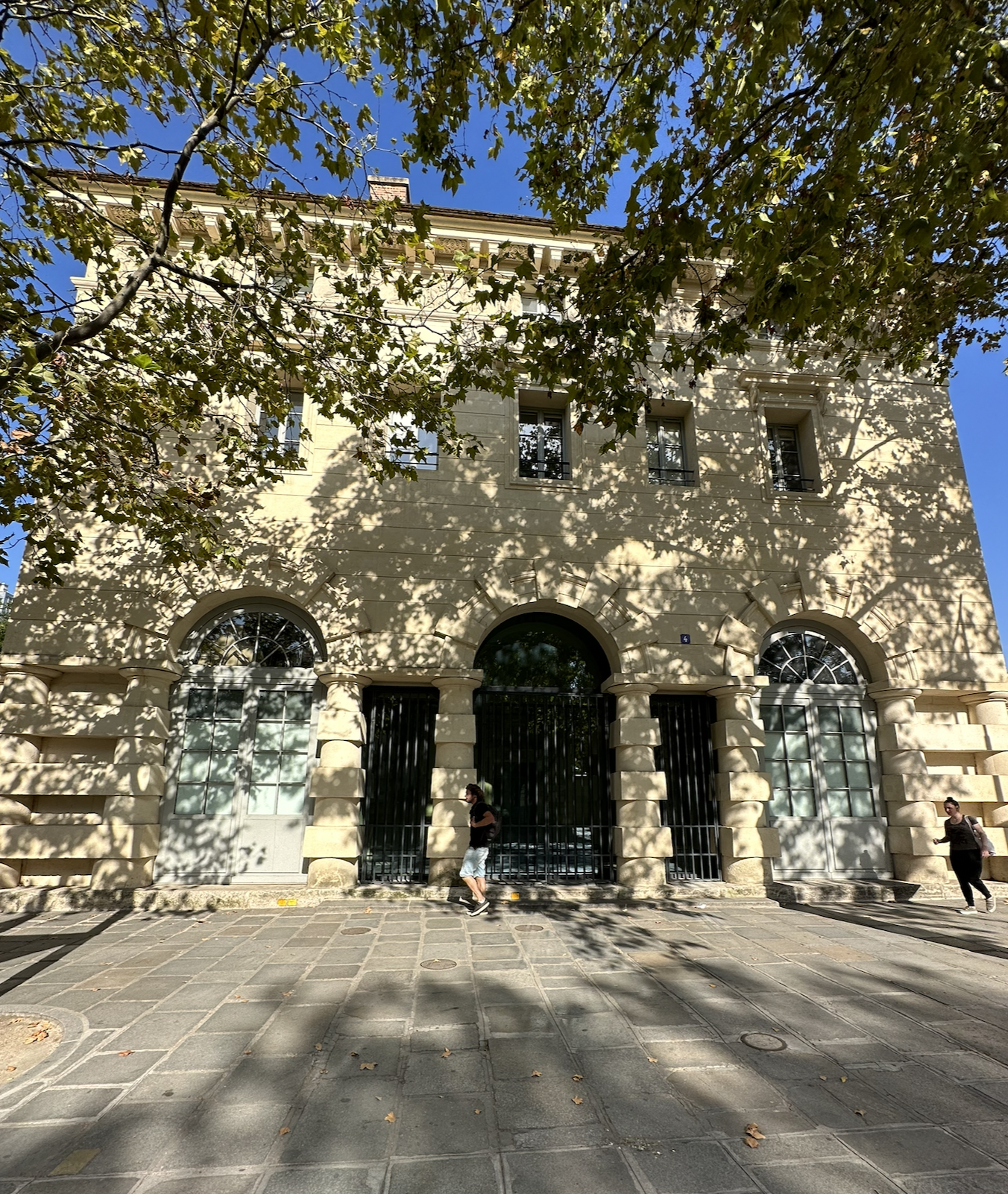
Musée de la Liberation
In Paris visit
The Liberation museum in the 15th http://www.museeliberation-leclerc-moulin.paris.fr/
Musée de l'Ordre de la Libération ( at the Musée de l’Armée)
https://www.ordredelaliberation.fr/fr
Musee de l’Armée (open 7 days a week)