
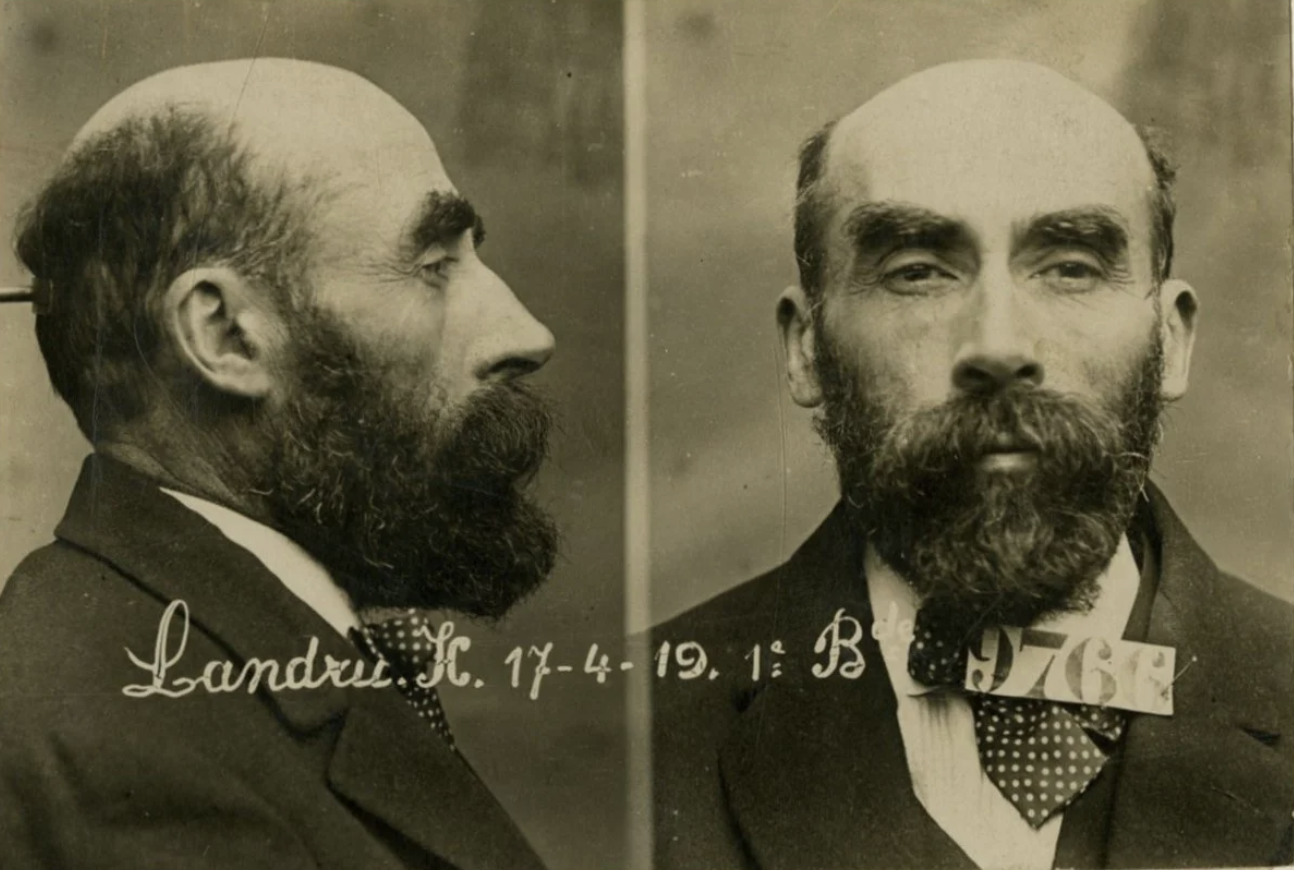
Henri Désiré Landru was born on April 12, 1869, in Paris, near the lovely Buttes Charmant. As a child, he seemed destined for a life in the church, but his path took a sharp turn along the way.
Shortly after his birth, his family, which included an older sister, moved to the Île de la Cité to the Rue du Cloitre Notre Dame, the street that runs along the north side of the cathedral. Henri attended school on the Île Saint Louis, was a devout member of the Église Saint Louis en L’Ile, and even served as sub-decan in 1888. His parents wanted him to follow the seminary path, but he had other ideas.
In 1889, Henri’s began a relationship with his cousin Marie Catherine Rémy, who lived on the mean streets of Île Saint Louis. The young lady was a laundress, like his mother, and a common job for ladies at the time. Their first child, Marie Henriette, was born in 1891, around the same time Henri finished his three-year military service.
Upon his return, the two were married on October 7, 1893, in the Église Saint-Louis-en-l’Île. Three more children followed: Maurice Alexandre in 1894, Suzanne in 1896, and Charles in 1900. During this time, Henri had over fifteen different jobs, everything from contractor to cartographer, but none gave him the money he needed to take care of his growing family.
His first scam was obtaining a patent for the “Landru with a Renouard engine” oil bicycle. He rented multiple offices and a factory and ran ads offering a special intro price, asking for a third of the money up front. As the orders came in, he took all the money and disappeared.
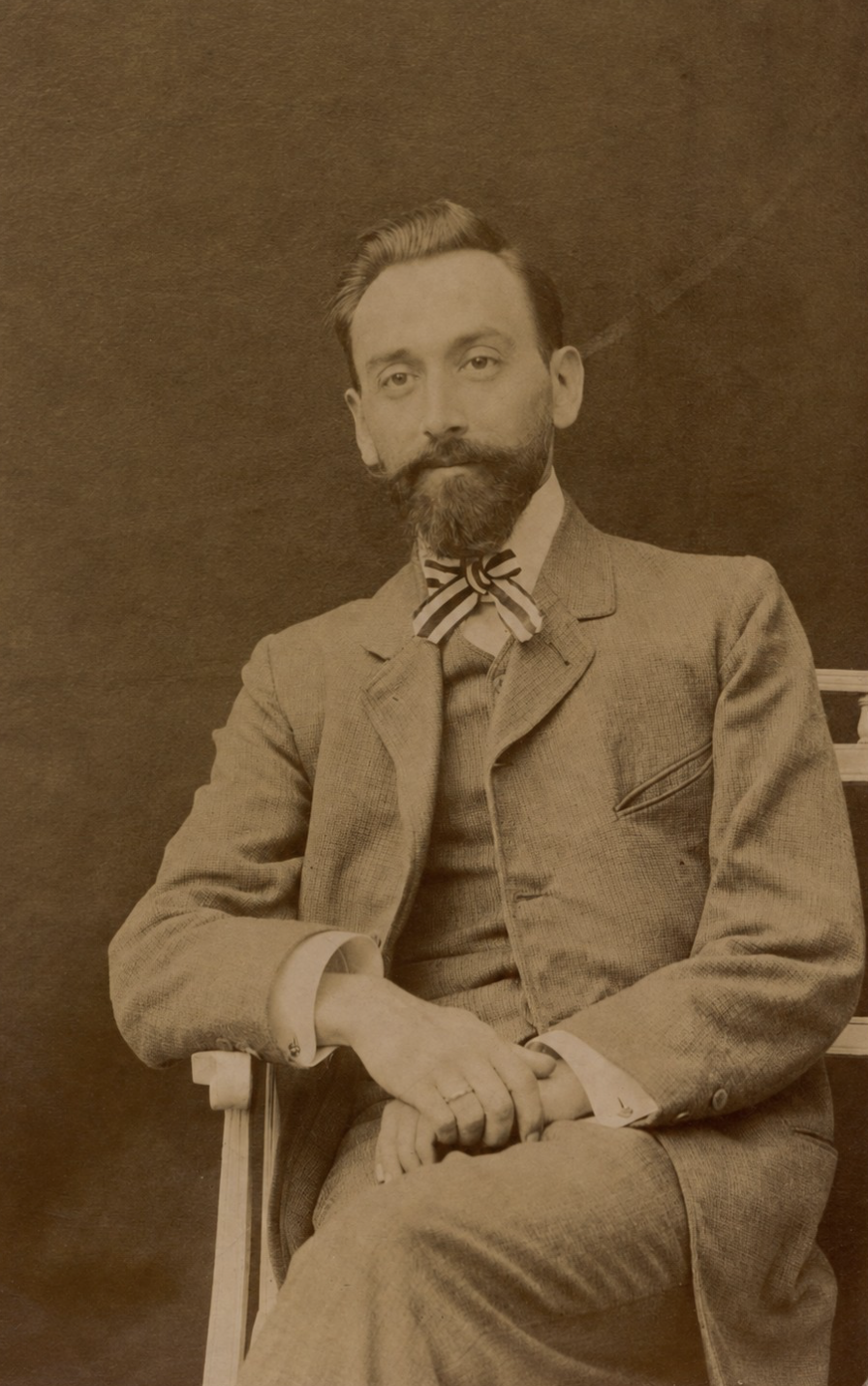
One fake name after another, and more scams, led to his arrest and three prison sentences between 1904 and 1906. A psychiatrist confirmed he was in a “sick mental state” and could sidestep being sent to Guyana, in South America, where many prisoners died. Evading the law again, he bought a garage and quickly resold it but never paid the original owner. As the First World War started, he was sentenced to 4 more years in prison in absentia.
He rarely served any of his terms and evaded capture, outsmarting authorities and changing his name. It was his last sentence that inspired him to take his criminal activity up a notch, and it would be his undoing.
It was the start of the Great War, and the men were dying on the battlefield, leaving women behind in Paris in need of new companions.
Henri used this to his advantage. In 1914, he posted his first ad. “Serious man, with nice income, wishes to marry widow or misunderstood women, between 35 and 45 years old, well in all respects, related situation”
Henri used close to one hundred aliases, placing ads in dozens of papers. With such an enticing ad, the ladies were clamoring to meet this wealthy stranger.
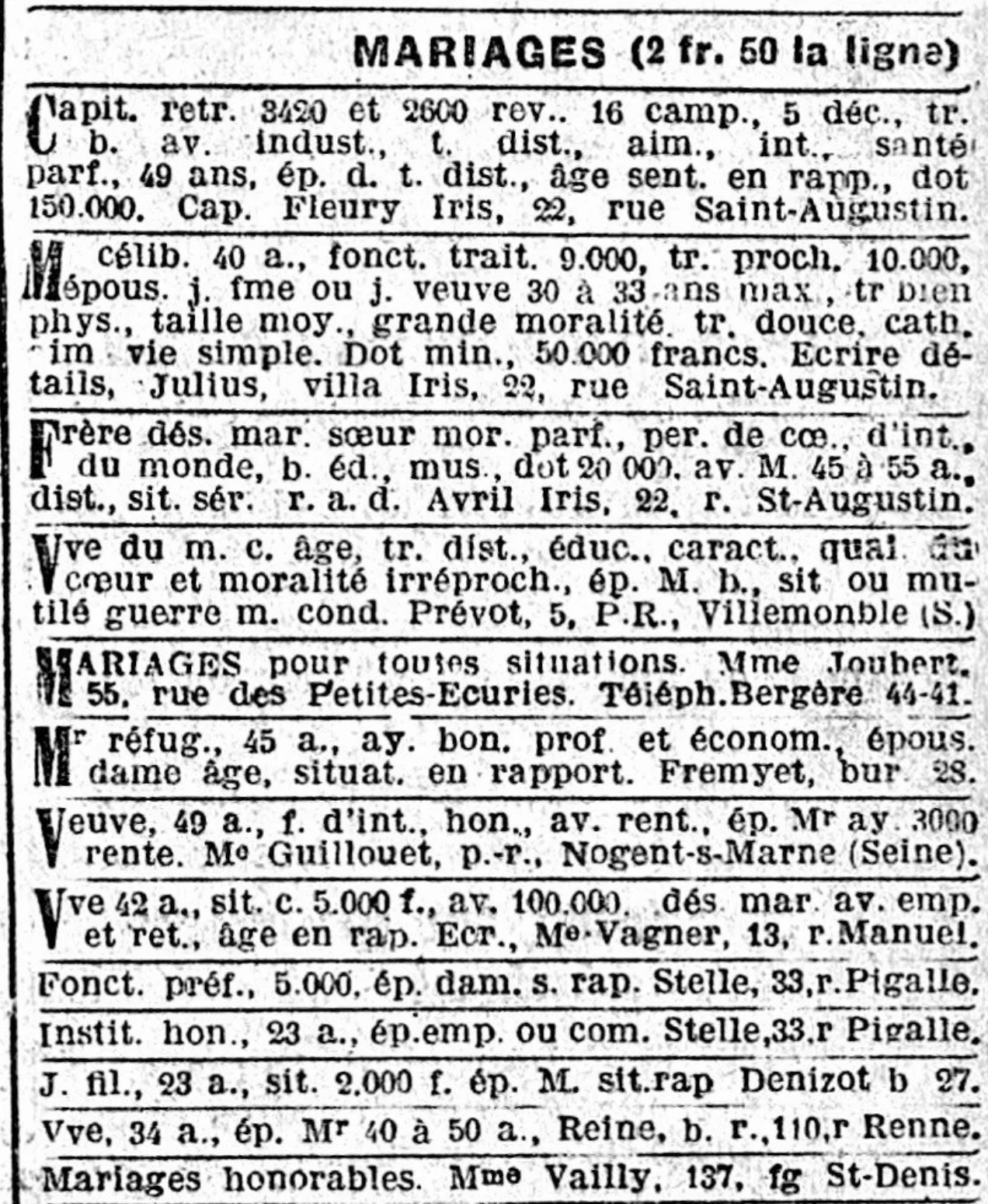
283 women answered his ad, and we know of 10 victims, but many believe, now examining the police documents, that there were far more. Henri worked fast; he stacked his days with meetings with the madams, hoping to meet the man of their dreams. Carefully noting every single detail in journals that would come back to haunt him.
From his diary for May 19, 1915
9:30 cigarette kiosk, Gare de Lyon Mademoiselle Lydie
10:30 Café Place St Georges Mme Ho…
11:30 metro Laundry Mme Le C…
14:30 Concorde north Mme Le…
15:30 Tour St Jacques Mme du
17:30 Mme Va…
20:15 Saint Lazare Mme Le…
The women needed to be lonely and without a circle of friends or family that may miss them, as well as having money. With each meeting, he would size them up quickly and decide if they fit the criteria.
The short man with a pointy, scraggly beard had a way with the ladies and could be very charming when he needed to be. A proposal of marriage quickly came, and then a trip to the bank to add Henri to their bank accounts and also a power of attorney.
Relationships worked quickly back then. From first date in the park to engagement in a matter of days. Once Henri got access to their bank account and home, he would offer to take them away for the weekend before they returned to be married.
His first victim, or victims, as it was a package deal, was Jeanne Cuchet and her son. Jeanne was a 39-year-old widow and worked as a laundress in Paris. The two met by chance in the Jardin du Luxembourg in February 1914
He first rented a house in La Chaussée-pres-Gouvieux near Chantilly, north of Paris, but quickly moved to a more remote location in Vernouillet, NW of Paris and near the Seine. Renting under an alias and keeping to himself, the neighbors at first thought he was a German spy.
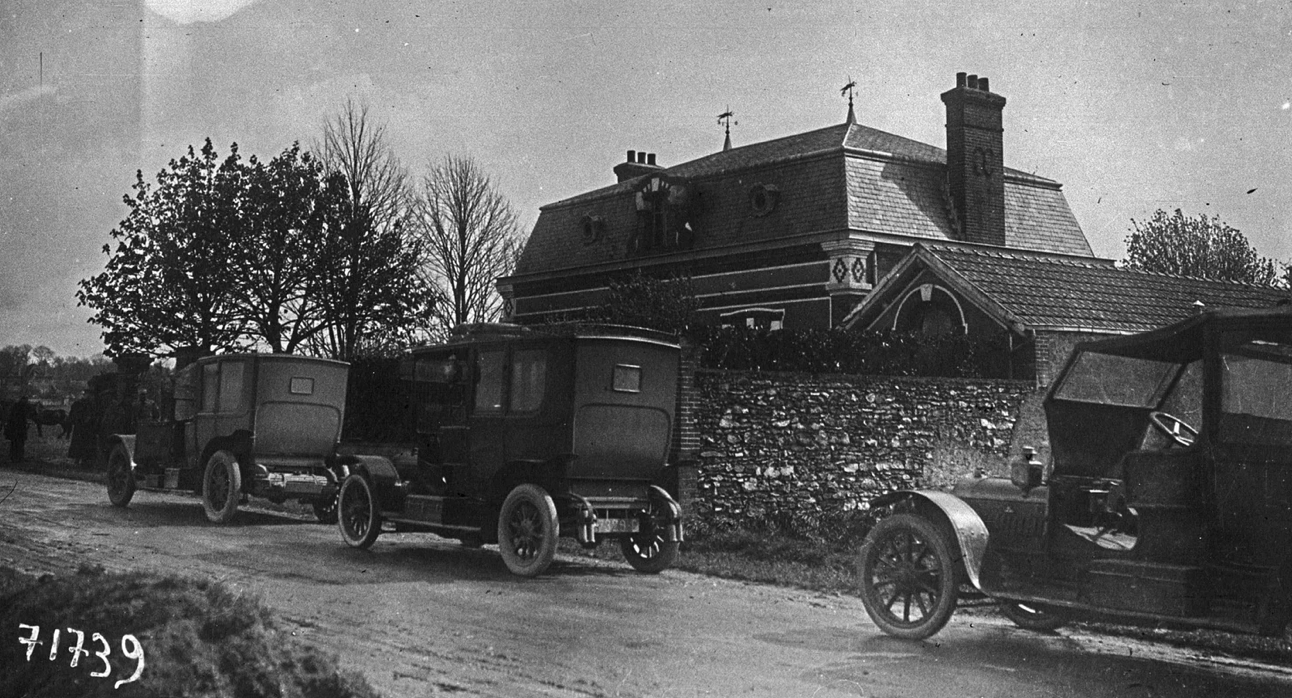
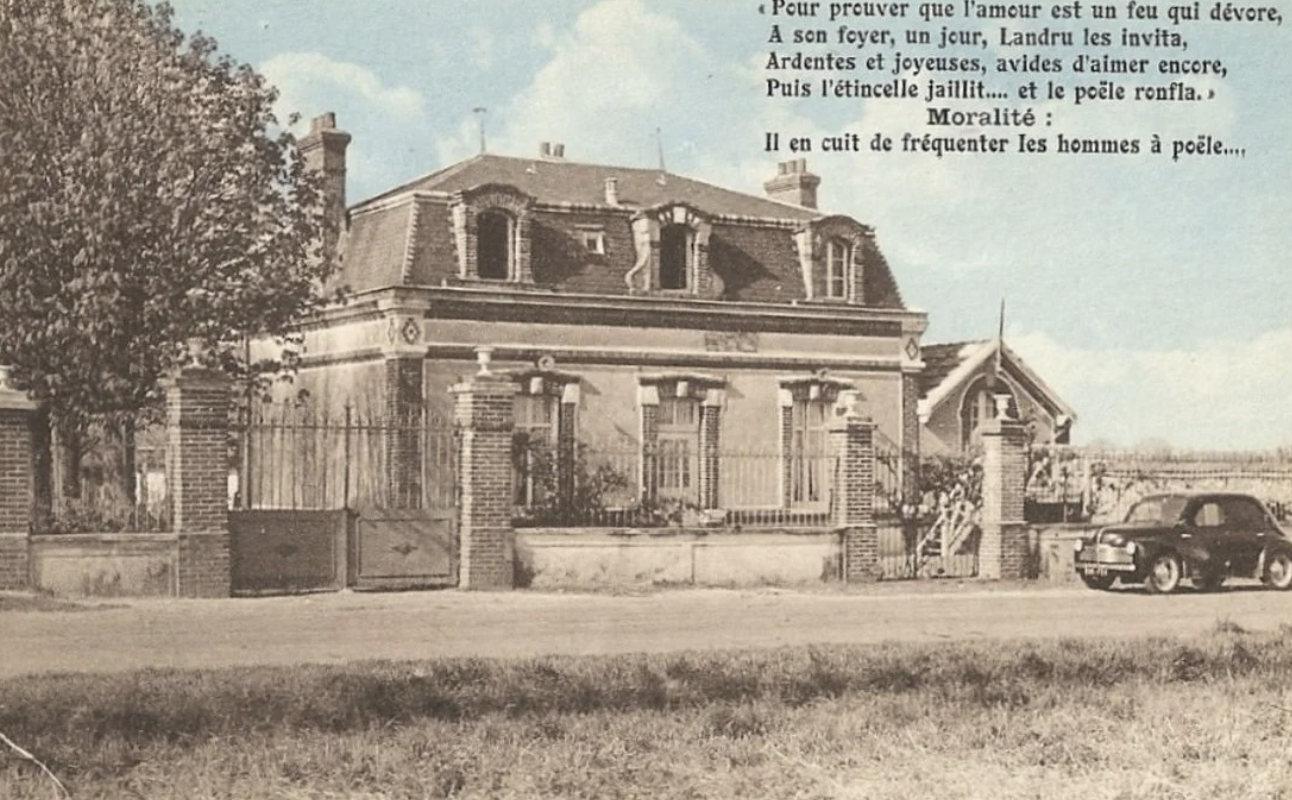
In 1917 he moved to Gambais, west of Versailles and even more remote. The Villa Tric sat alone in the country, which the neighbors were thankful for. Soon after he moved in, the neighbors noticed a very large stove being delivered. The town thought he was rather odd and never saw the same woman with him twice. For weeks there was nothing, and then Landru appeared with a woman on his arm, and for a few days they would be seen in the garden, then nothing except for a horrid odor coming from the chimney.
In the small town of Gambais, years before, Father Thibaud lived alone and liked to have endless glasses of wine sitting in front of his large fireplace. One night he had a bit too much, and he passed out and fell into the lit fire. Father Thibaud burned to death, and the horrific smell spread through the village. The people of Gambais sadly knew the smell had returned once more.
Worried his victims could identify Landru, he cut their bodies up and burned their heads, hands, and feet in the oven and tossed the rest of their bodies in a nearby lake.
World War I allowed him to slip through the law, as the focus was on the war and police were less than three-quarters as many as normal. Gambais had only 1 man on their police force.
In 1918, Mrs. Pellat sent a letter to the mayor of Gambais asking about her friend Mademoiselle Anne Collomb, who had become engaged to a Monsieur Dupont and moved with him to Gambais. They had no record of Dupont and replied that they didn’t know either of them.
Months later, another letter arrived, this time from Mademoiselle Lacoste, looking for her sister Celestine Buisson, who had moved there with Monsieur Frémyet.
Now the mayor thought this was odd; he didn’t know any of these people, so he put the families in touch with each other. They learned that their loved ones had answered an ad in Le Journal on March 16 and May 1, 1915. Too many things began to add up, and they filed an official complaint with the prosecutor’s office of the Seine.
The prosecutor’s office appointed the “Tiger Brigade” to the case. Created under Le Tigre, Georges Clemenceau, the squad comprised police who had spent their careers working the streets of the Île-de-France.
Inspector Jules Belin visited the home “l’Ermitage” that was owned by Mr. Tric and rented to M. Frémyet. Frémyet hadn’t been seen in weeks, even though neighbors rarely saw him. The first break came when Belin learned that Frémyet’s mail had been forwarded to a Paris address, Boulevard Ney in the 18e. The address belonged to Célestine Buissons, another victim.
On April 8, 1919, Mademoiselle Lacoste was walking down the Rue de Rivoli and noticed Landru and a woman coming out of Le Lion de Faïence tableware store. Jules Belin called the police right away, but when they arrived, the store had already closed. After finding the clerk's name, they went to the suburbs, woke him up, and asked whether he kept any records. Sure enough, Lucien Guillet had purchased two sets of dishes to be delivered to his address at 76 rue de Rocherchouart in the 9e.
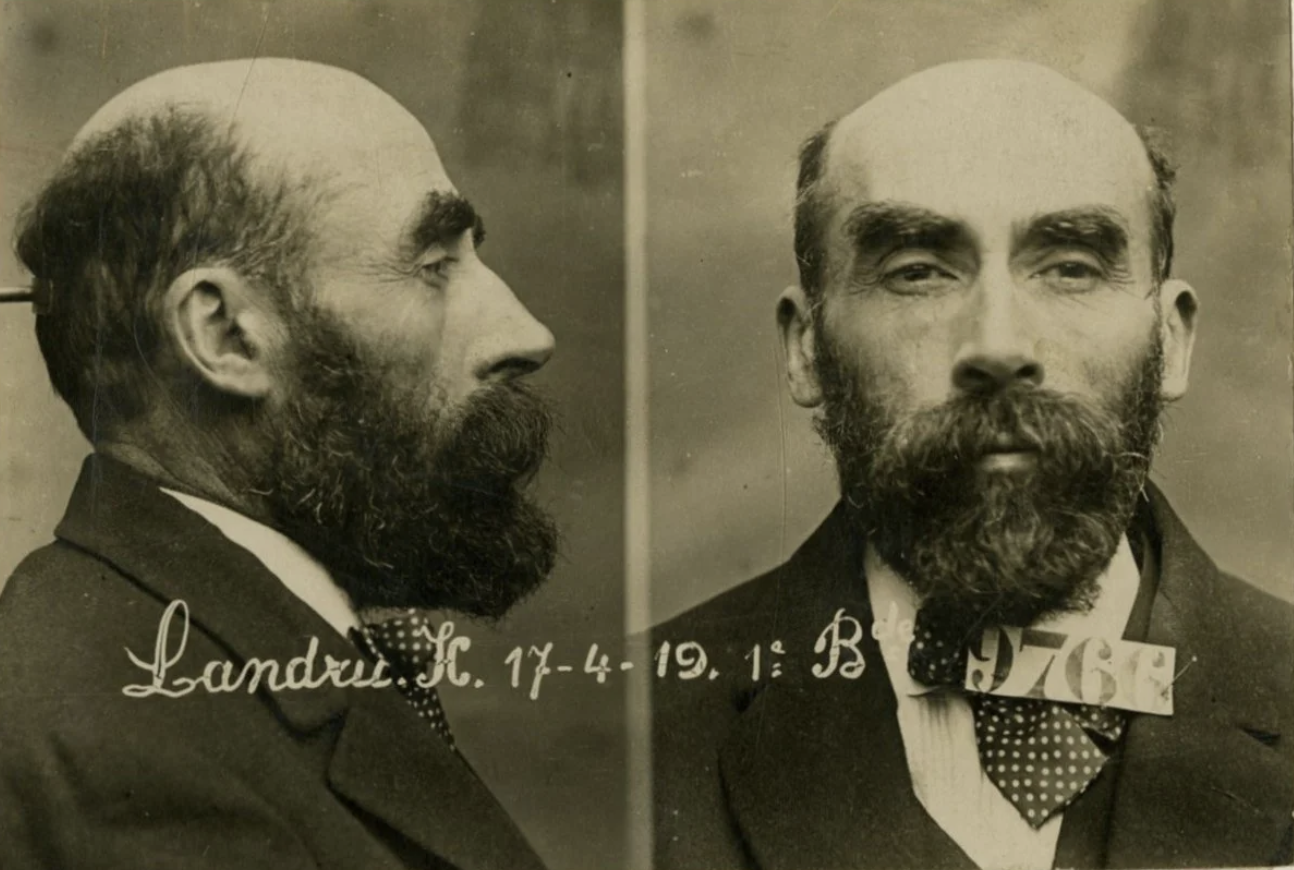
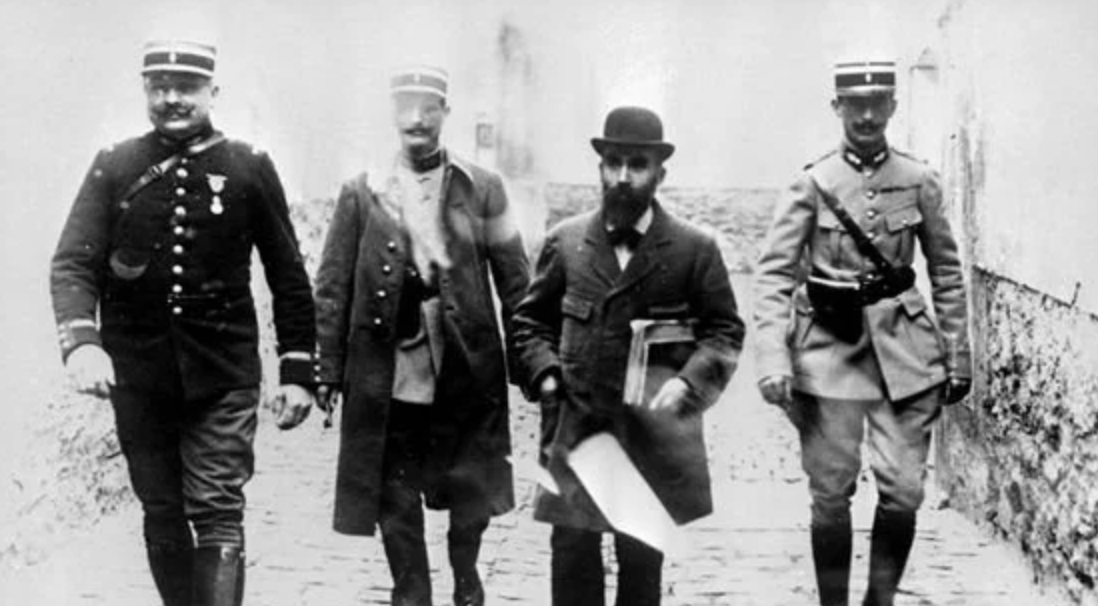
It was late at night, so Belin waited on the street for two days with no sight of Henri. In the early hours of April 12, 1919, Belin decided to wait on the landing outside his apartment. Just after 8 a.m., he knocked on the door. Landru yelled through the door and told him to come back as he wasn’t dressed, but Belin wasn’t going to take no for an answer. After he persisted, Landru finally let him in. Standing in his pajamas, Belin and his men interrogated him and the young woman who was with him. Fernande Segret was distraught at the questions and fainted in the kitchen. The man she knew was lovely, although she would learn later that he did try to poison her, twice.
It was his 50th birthday.
During a search of his apartment and storage units, piles of women’s clothes, wigs, and even dentures were found. However, the most damaging piece was a locked trunk with business logs and details of his crimes.
At the central police station on the Île de la Cité, when he was questioned for 24 hours, he offered no information, including his real name. Day turned into night, and still nothing. Back at his apartment, detectives found photos labeled with Henri’s name and brought the info to the investigator. When confronted, Landru finally admitted that was his real name. A search found eight convictions and an endless list of crimes he was wanted for.
On April 14, 1919, Belin charged him with murder.
As the investigation began, detectives discovered the link to Gambais, where they uncovered a pile of remains in the ashes of the fireplace and stove. Combined, it was more than 9,000 pounds of charred debris, of which 3,300 was thought to be human remains, including 47 teeth.
In a shed, at the far edge of his home, detectives discovered three dogs with a rope around their necks under a pile of papers. They belonged to his last victim, Marie-Therese Marchandier. Landru told the authorities that he was asked to kill them
It was all very calculated. After he killed them, he would return to Paris to their home and clean it out with the help of his son Maurice. Filling two storage units with their furniture, clothes, and anything the unfortunate victims had owned. Landru took exacting notes of everything. He noted each and every piece he sold, the date, and how much he was paid. Also noting when he bought saws and coal. All of this would be a slam dunk today, but this was over 100 years ago, and forensic science wasn’t quite as advanced.
At his arrest, he had two small black notebooks on hand. One, hidden in the lining of his coat, documented the names of all the women he met.
He kept every piece of paper and receipt, and the train tickets exposed his entire crime.
Courtship with Landru always had the same timeline. They would meet and have a few simple dates, and once he realized they had means, he would propose, visit the bank, then go away for the weekend together to his country house, and never return. Landru would buy two tickets in one direction but only a return for himself. As investigators went through box after box they found the single train ticket over and over. He clearly intended to return to Paris alone, and his excuse was rather flimsy.
It was now the spring of 1919. World War I was behind them now, and the press had a new tool at their disposal: photography. As soon as the story hit the papers with photos of Landru, more families wondered if he could be the reason for the disappearance of their loved ones.
Mademoiselle Freedman contacted the police on April 16, 1919, saying she recognized him and that he dated her sister, whom she hadn’t heard from in four years. And this was just the start.
Newsstands couldn’t stack the issues fast enough, and Le Matin named him the Le Barbe-Bleue de Gambais (the Blue Beard of Gambais) based on the 17th century story by Charles Perrault
TRIAL
On August 18, 1920, a year and a half after his arrest, Judge Bonin filed charges. The supporting documents were over 7,000 pages, and the evidence was close to 5,000 pieces.
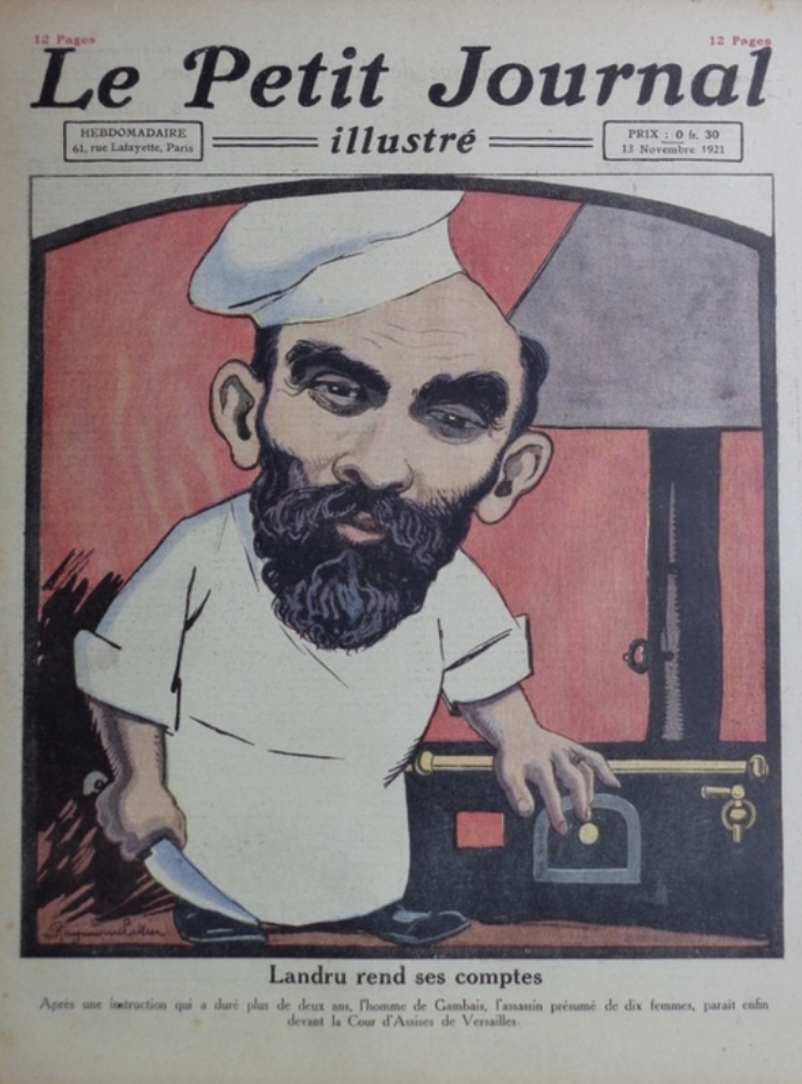
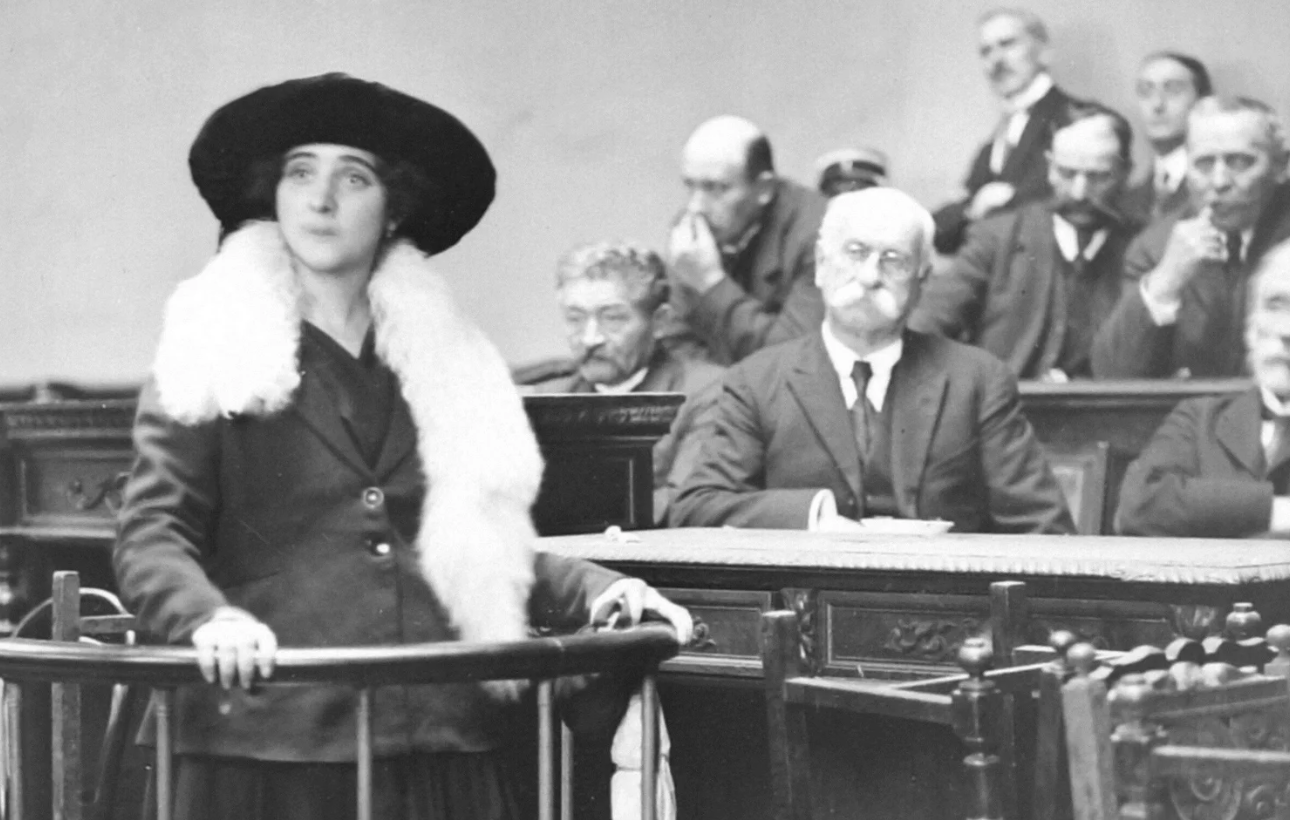
On November 7, 1921, his trial began in the Assize Court in Versailles. After 2 and a half years of daily coverage in the newspaper, it was the place to be. All of society wanted a seat, including Maurice Chevalier and Colette, who was dispatched from Le Matin. Colette covered many high-profile murder cases, and another was coming up soon. Bien Sur, Colette couldn’t tell the story like anyone else and always gave a little extra empathy to her subjects and their life.
Regarding Landru, she wrote: “Did he kill? Then it is while whistling a little tune, and wearing an apron for fear of stains. . . . We remain stunned in front of the tranquil and gentle murderer, who keeps a diary of his victims and rested, perhaps, while at work, with his elbow on the window and feeding the birds some bread.”
His popularity and obsession resulted in over 800 marriage proposals and close to 5000 fan and love letters.
For twenty days the train from Paris to Versailles was filled, and as the trial came to a close, the public hung on every detail. On November 21, the courthouse was filled for the testimony of Fernand Segret, his one-time lover who was a lucky survivor of Landru. She couldn’t get through her first day on the stand and returned on the 22nd. She told how they met on the tram one day, and he followed her until she acknowledged him.
On November 30, 1921, at 6:40 pm, the jury was sent to deliberate. At 9:10 pm, the jury returned with a guilty conviction, although there had never been a body to prove he had killed a single one of these ladies.
On February 25, 1922, Landru was led to his death in front of the courthouse of Versailles. Sentenced to death by guillotine, his lawyer asked him once more if he wanted to confess anything. Landru told him it was a suitcase he was taking with him. Also asked if he wanted a shot of rum and a cigarette, but replied they were bad for his health.
At 6:10 am on February 25, Anatole Deibler dropped the blade, and the life of Landru ended like his victims, without a head. Deibler was a third-generation executioner
After his family declined burial, he was added to the death row cemetery near the courthouse. Years later, his family moved him to a hidden location. In Hollywood, the Museum of Death displays Landru's head, or so they say. Much like the penis of Napoleon, can we really know for sure it is his?
Where was his family?
His wife/cousin Marie Catherine Rémy Landru tried at first to plead ignorance, but during the investigation, another side emerged. At first, Landru fooled his family into thinking he was a traveling antique salesman, and that was partially true. He did travel and sold all the items he stole from the women he scammed, then killed. Checking back in every few months until their assistance was needed.
His son Maurice was arrested when he was found with jewelry that belonged to a few of the victims that his father gave him. After serving two years in prison, he was released and went back to helping his father clear out the apartments and selling the belongings of his victims.
His wife, Marie Catherine, would dress in the missing woman's clothes and accompany her husband to the bank, pretending to be the missing woman and emptying her accounts.
His daughters at first pleaded their innocence, but records found that they would rent buildings and homes under other names for their father.
Fernande Segret never really recovered after the trial. She moved to Lebanon to be a teacher but returned to Paris and sued the director Claude Chabrol for her depiction in his movie about the killer. On January 21, 1968, the anniversary of the day she met Landru, she killed herself by jumping into the moat of the Cathedral de Flers.
The Bluebeard of Gambais continues to inspire. Charlie Chaplin made Monsieur Verdoux in 1947, and countless movies and documentaries have come out every other year.
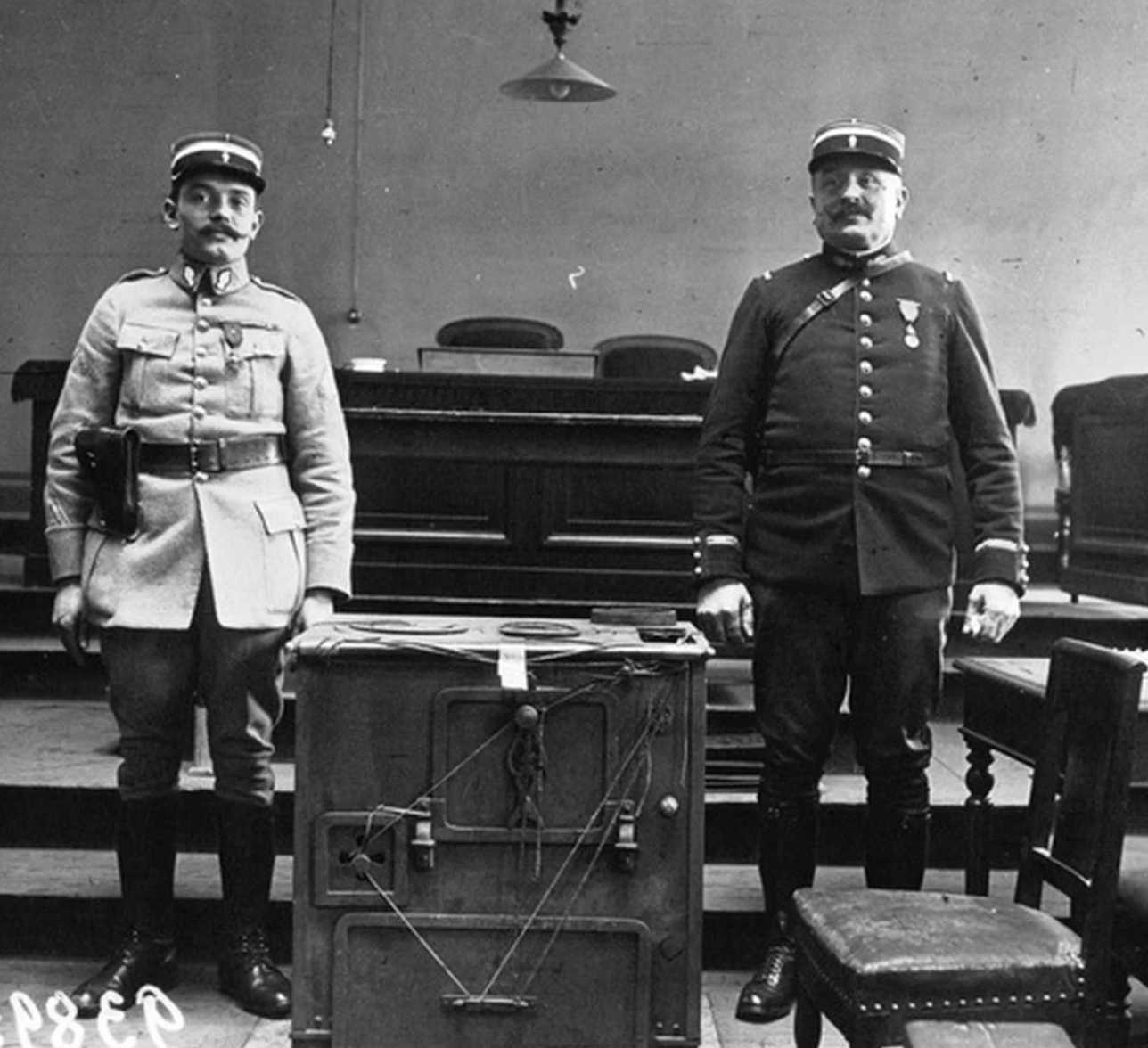
As for the oven that was the scene of so much horror and brought to trial in November 1921, it was auctioned off not long after. On January 23, 1932, the director of the Musée Grévin, the Paris wax museum, was the winning bidder with 4200 francs. (They also had the bathtub that Marat was killed in) Later, Laurent Ruquier bought it and wrote a play inspired by the story in 2005.
And on a more touching note, the French doctor who was called to inspect the pile of ashes later buried a box of bones and remains silently under a weeping willow in the Jardin des Plantes. I will be sure to find that tree and give a little prayer to those victims of the Bleue Bearde of Gambais.
The house of horrors in Gambais is still there. The Villa Tric was sold and became a restaurant for a few decades, and now it is a private residence. Not sure I would want any food from that kitchen or to live there, but maybe they got a good deal. Neighbors say people are always stopping to look and walk around the property where so many horrific acts occurred.
Recently, in 2018, RF1 and a team of investigators believe that, from looking through all the documents, he may have had more victims. Of the 283 names in his journals, 72 of the women were never looked into. A few more victims could have died at his hands, but we may never know.
Victims
February 1915: Jeanne Cuchet 39, missing in Vernouillet
February 1915: André Cuchet, son of Jeanne Cuchet, 17 disappeared in Vernouillet
June 26, 1915: Thérèse Laborde-Line, born on August 12, 1868, in Chascomús, Argentina, missing in Vernouillet;
August 3, 1915: Marie-Angélique Guillin, born April 15, 1863, in Bellavilliers, Orne 52, missing in Vernouillet
December 8, 1915: Berthe-Anna Héon, 55, born in Le Havre, missing in Gambais
December 27, 1916: Anna Collomb, 44, widow, missing in Gambais
April 12, 1917: Andrée-Anne Babelay 19, disappeared in Gambais
September 1, 1917: Célestine Buisson, missing in Gambais
November 26, 1917: Louise-Joséphine Jaume, 38, disappeared in Gambais
April 5, 1918: Anne-Marie Pascal, born on November 5, 1880, missing in Gambais
January 13, 1919: Marie-Thérèse Marchadier, born on October 27, 1881, in Bordeaux, former prostitute, owner of a passing house on rue Saint-Jacques in Paris, known as the beautiful Mytèse, 37, who disappeared in Gambais